Have a personal or library account? Click to login
Solid Rocket Boosters Separation System Development for the ILR-33 Amber 2K Rocket Cover

Solid Rocket Boosters Separation System Development for the ILR-33 Amber 2K Rocket

Open Access
|Sep 2023

Figures & Tables

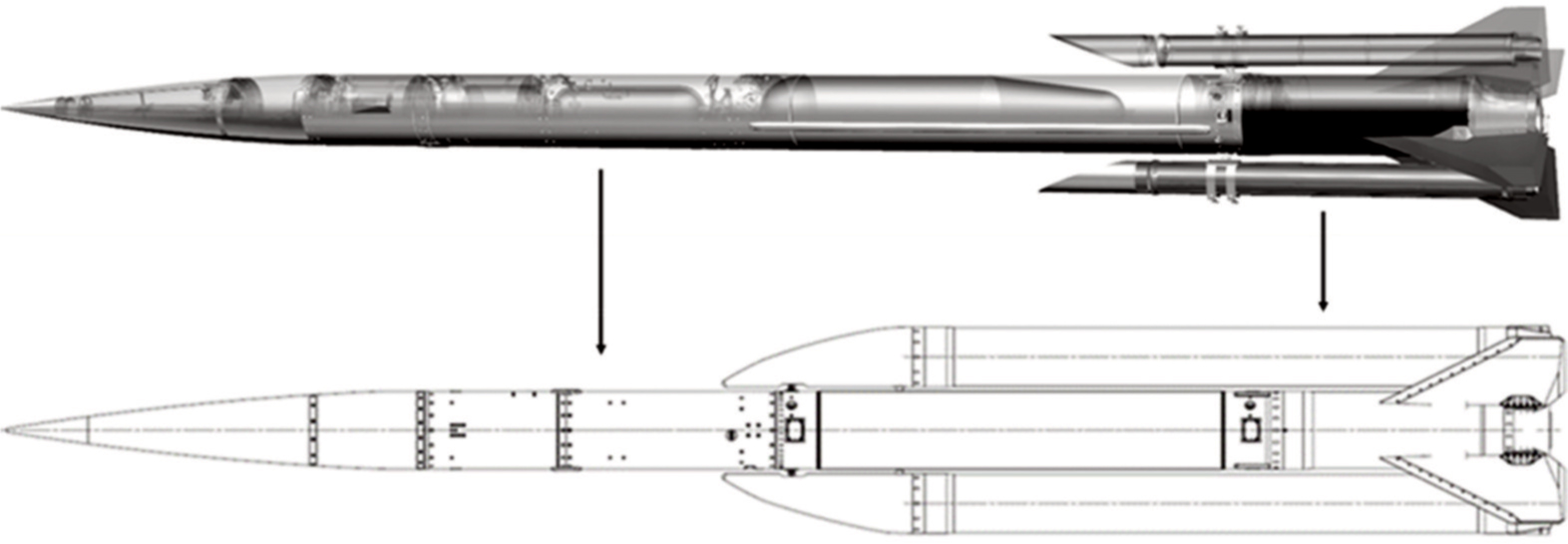
Figure 1.

Comparison of both versions of the ILR-33 AMBER rocket: top – original design; bottom – 2K version.
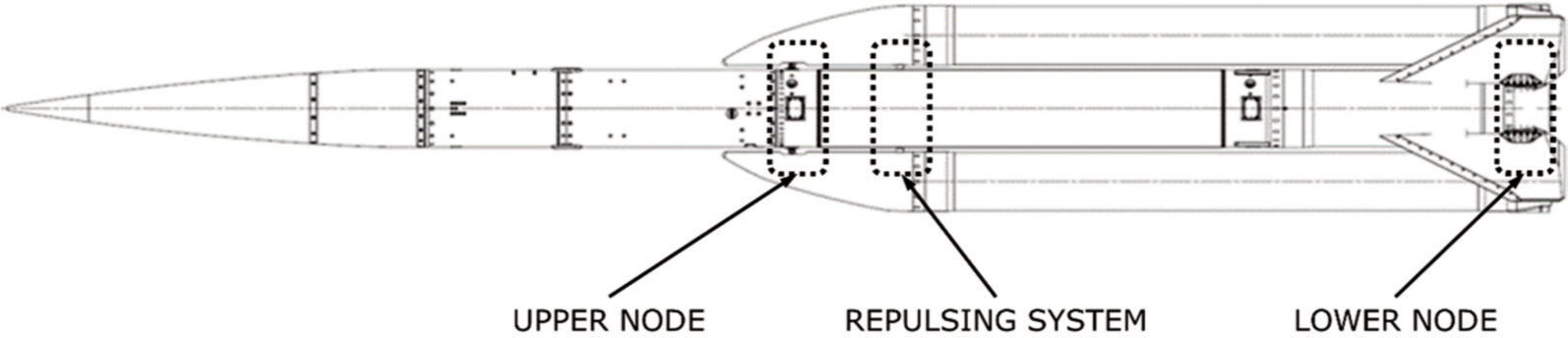

Figure 2.

Components of the separation system.
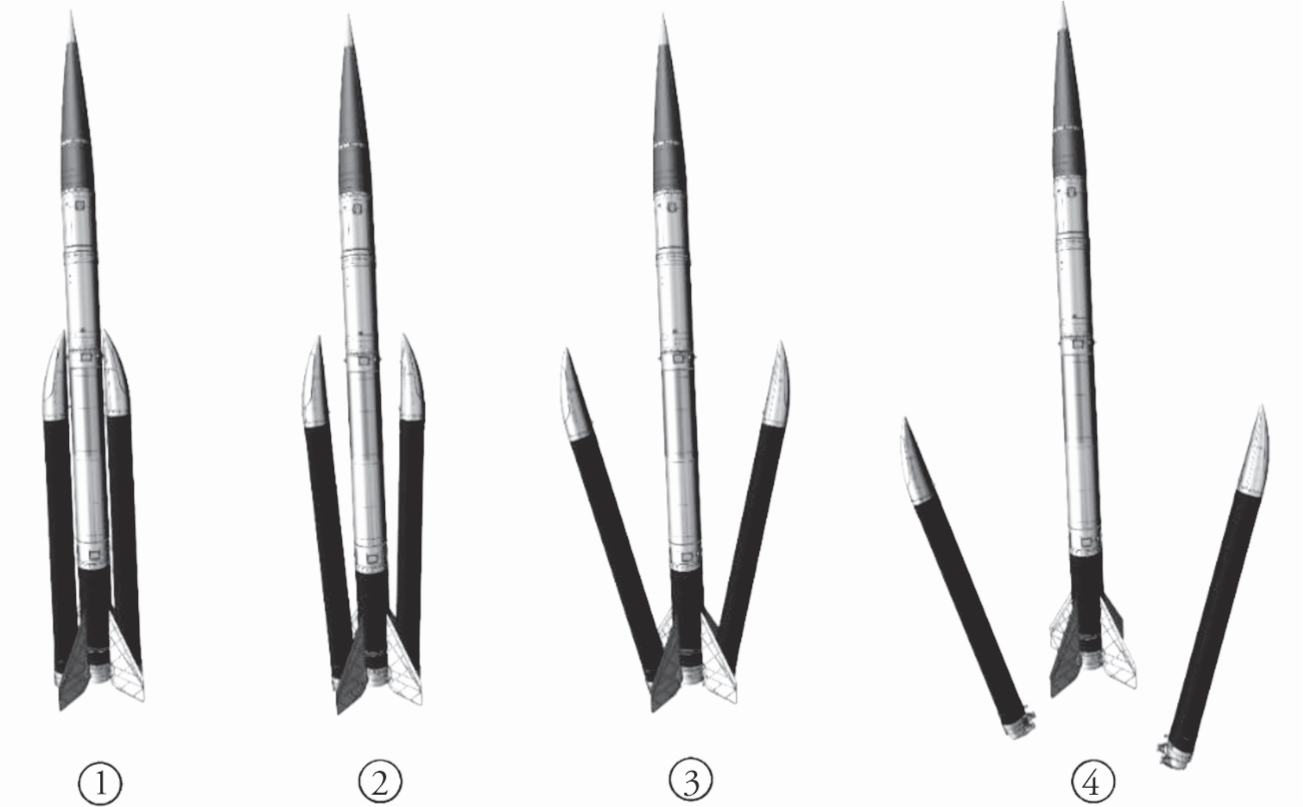

Figure 3.

Phases of the separation process – 1. Initial flight configuration. 2. Upper node pyrotechnic release, the gas springs are pushing the boosters outwards. 3. Maximum deflection angle of the SRBs while being attached to the core, lower node release. 4. SRBs’ separation and their ballistic flight (no recovery systems for SrB foreseen). SRB, solid rocket booster.
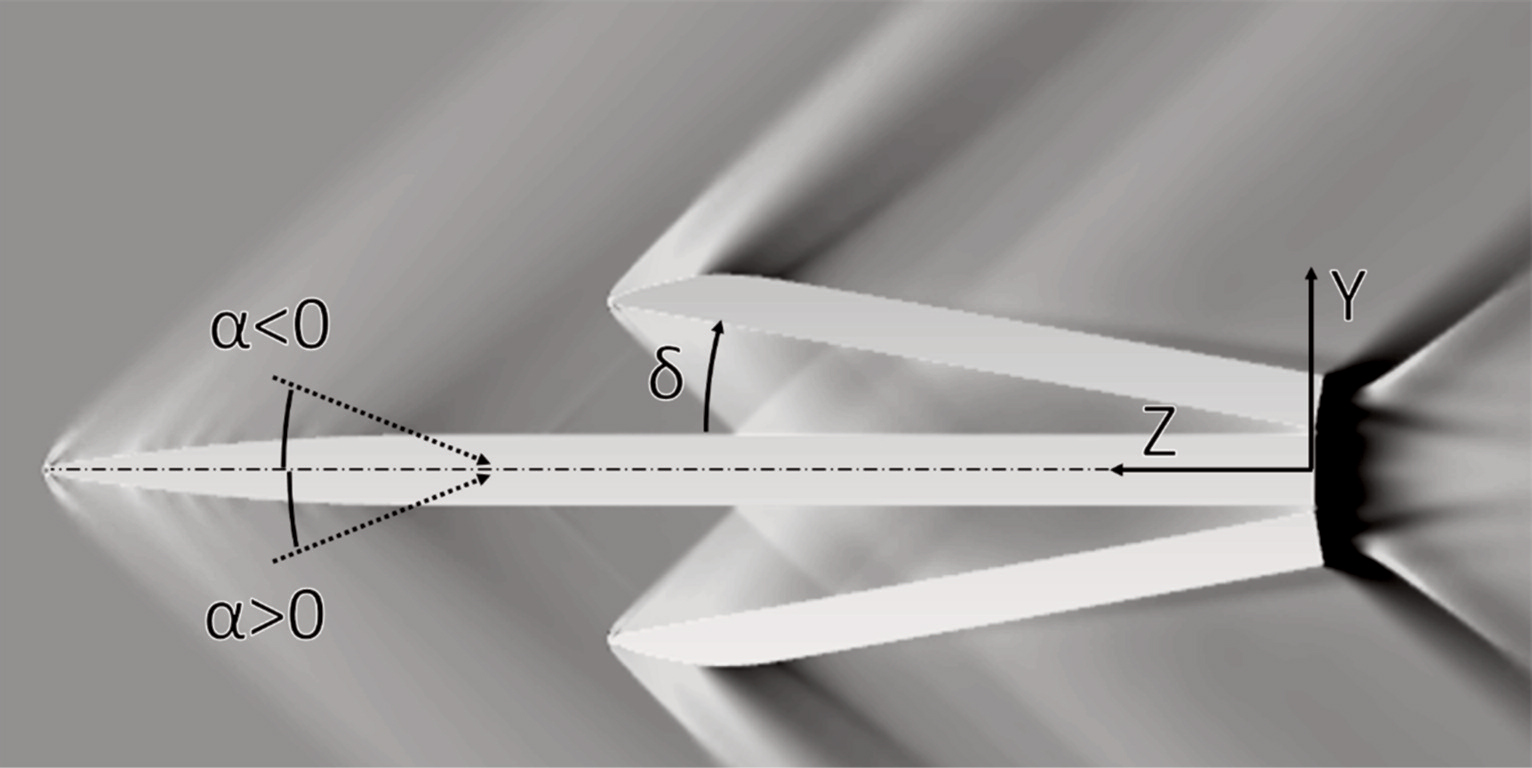

Figure 4.

Velocity map contours (ANSYS Fluent) for a supersonic case with coordinate system and angles definitions. 3D symmetry was applied in all cases.

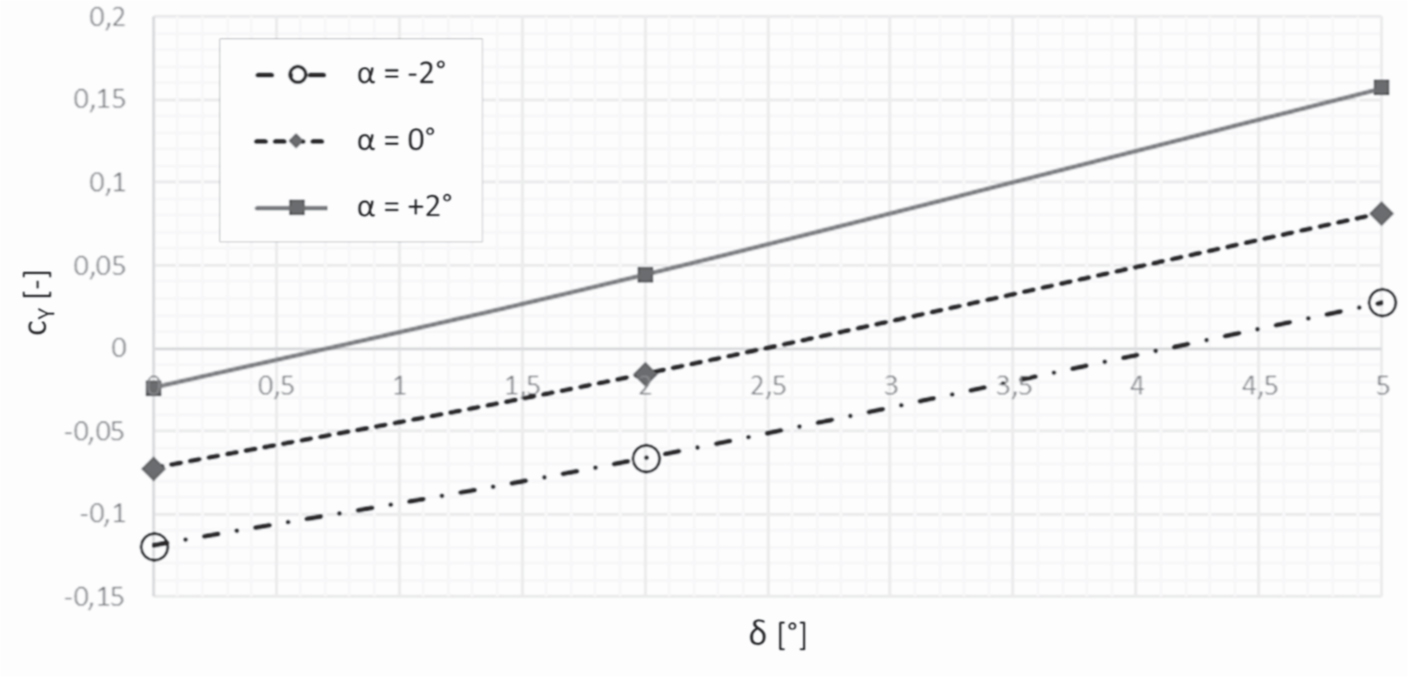
Figure 5.

CFD results for SRB normal force behaviour at supersonic velocity (nominal separation conditions). Positive values support the separation, whereas a negative one pushes the SRB towards the core. CFD, computational fluid dynamics; SRB, solid rocket booster.
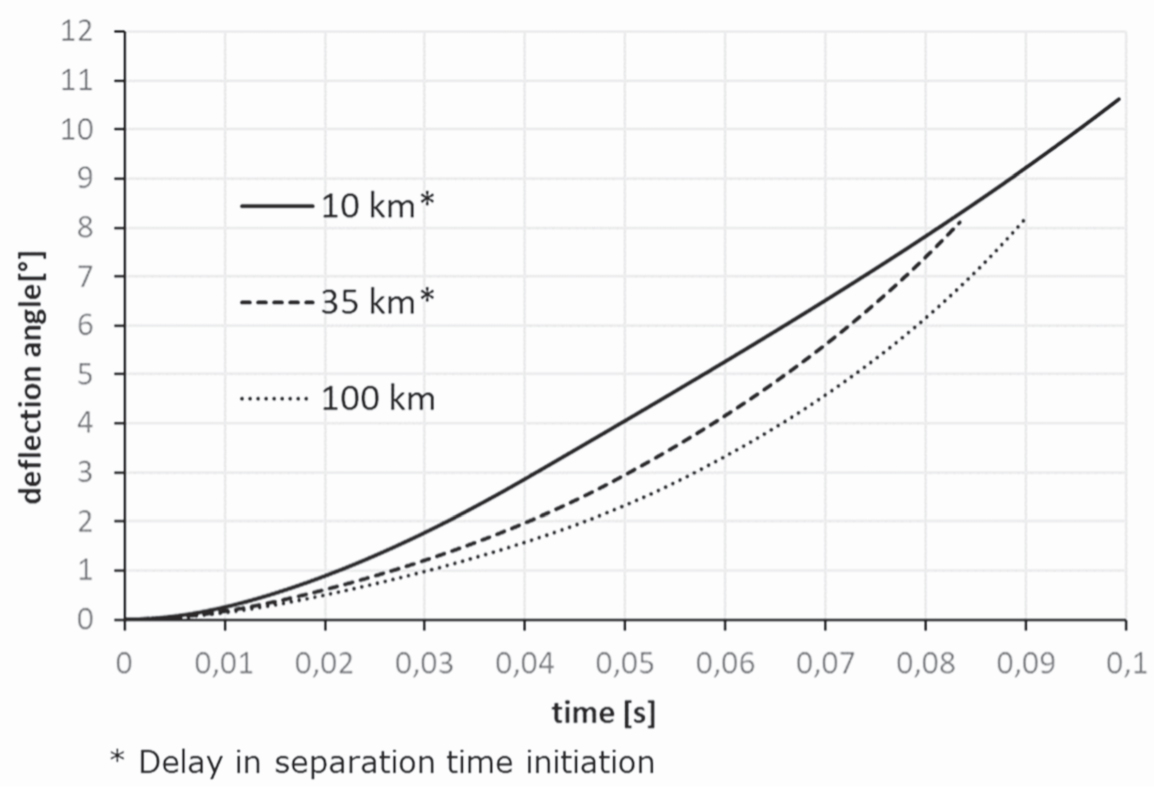

Figure 6.

Deflection angle as function of time since separation initiation for chosen flight cases.
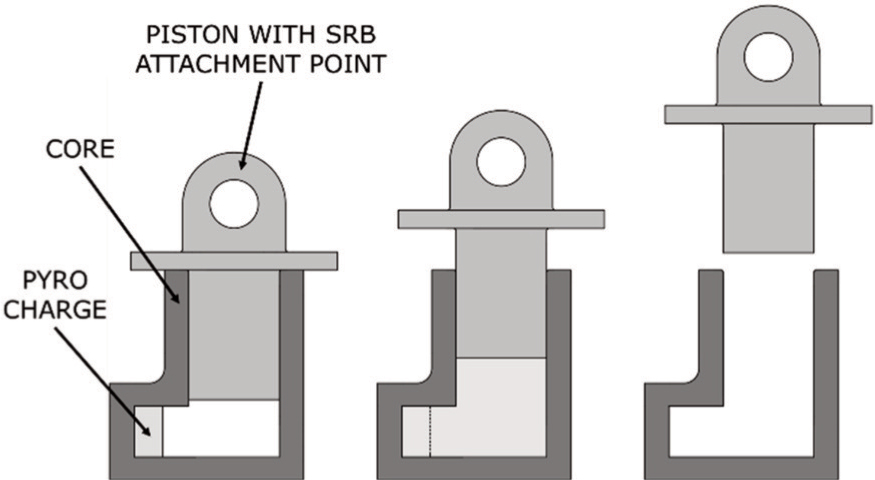

Figure 7.

Upper node principle of operation.
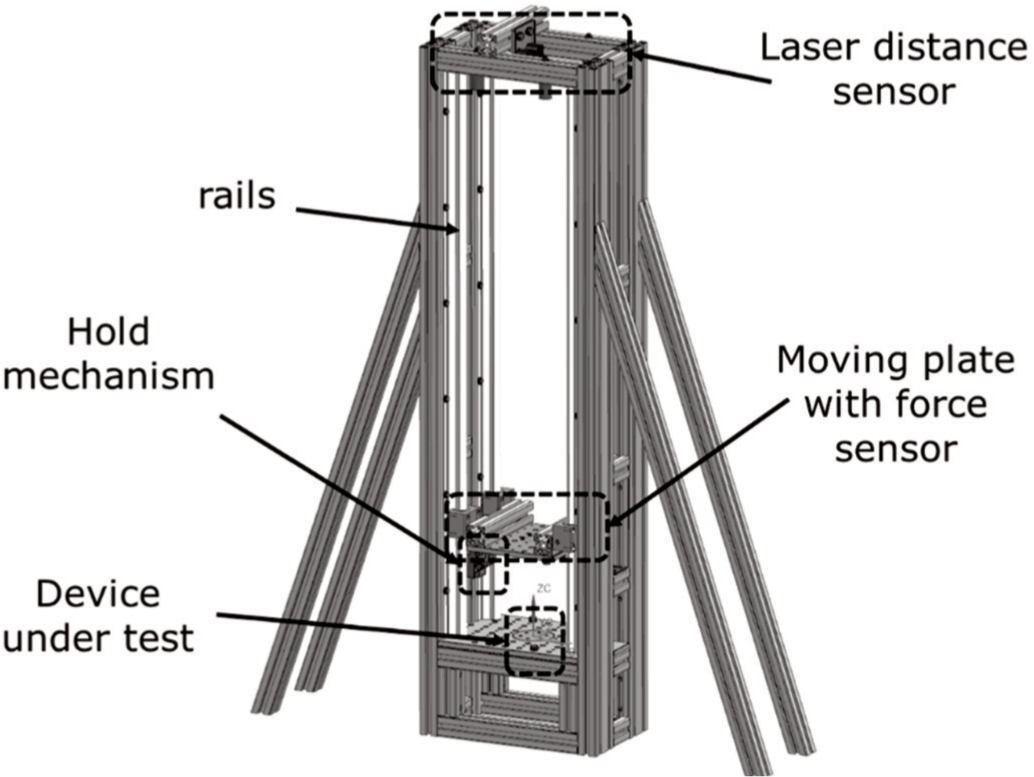

Figure 8.

Upper node release mechanism functional test stand.
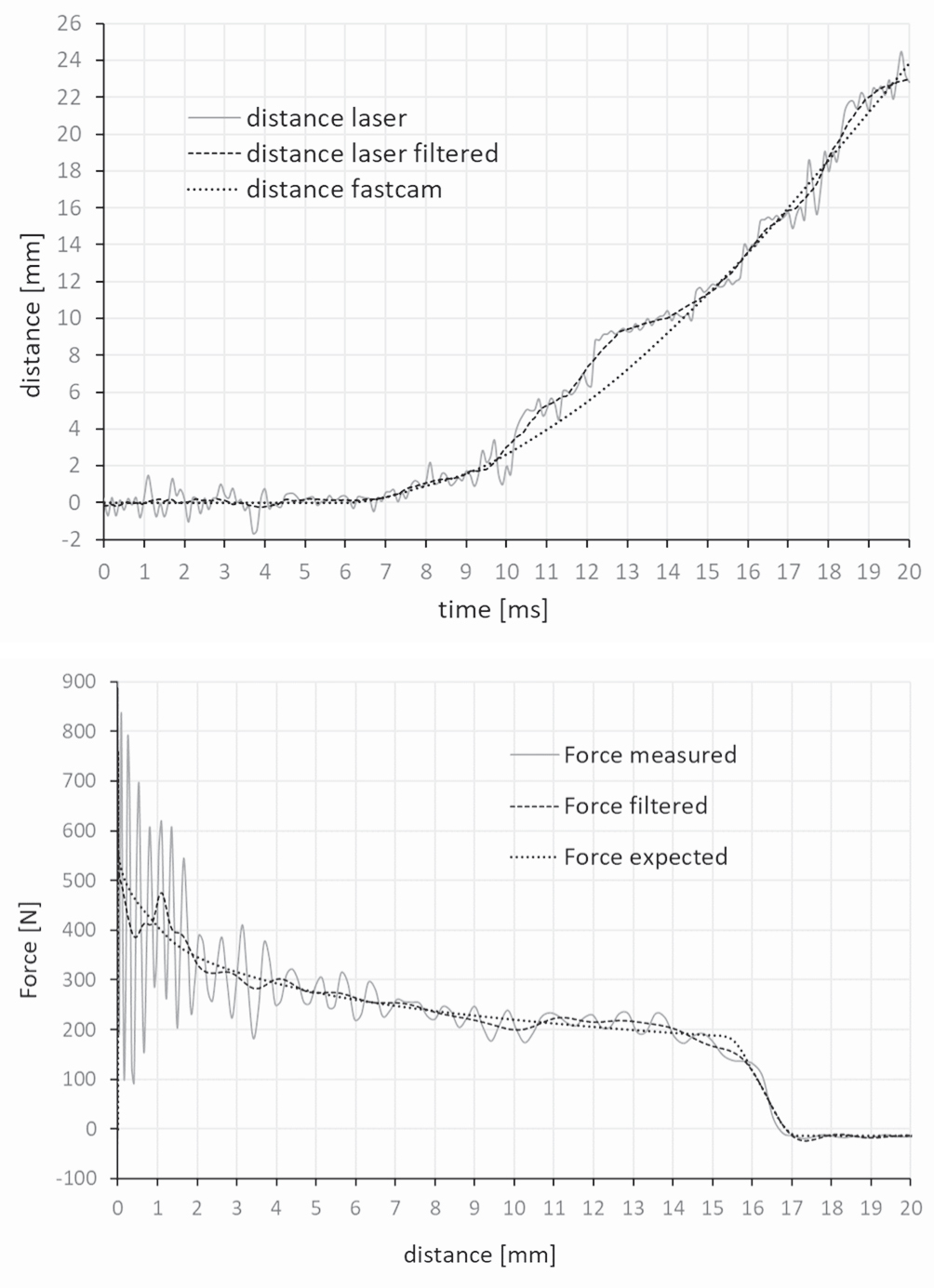

Figure 9.

Upper node test results.
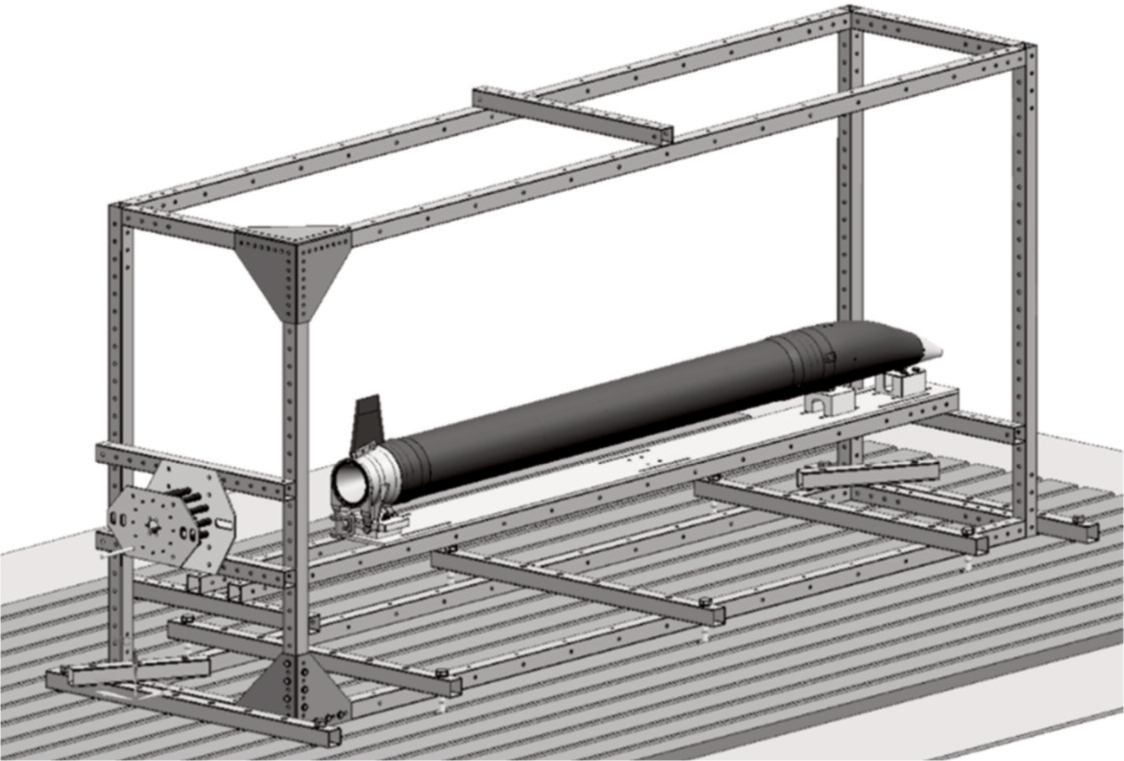

Figure 10.

Separation system functional test stand.
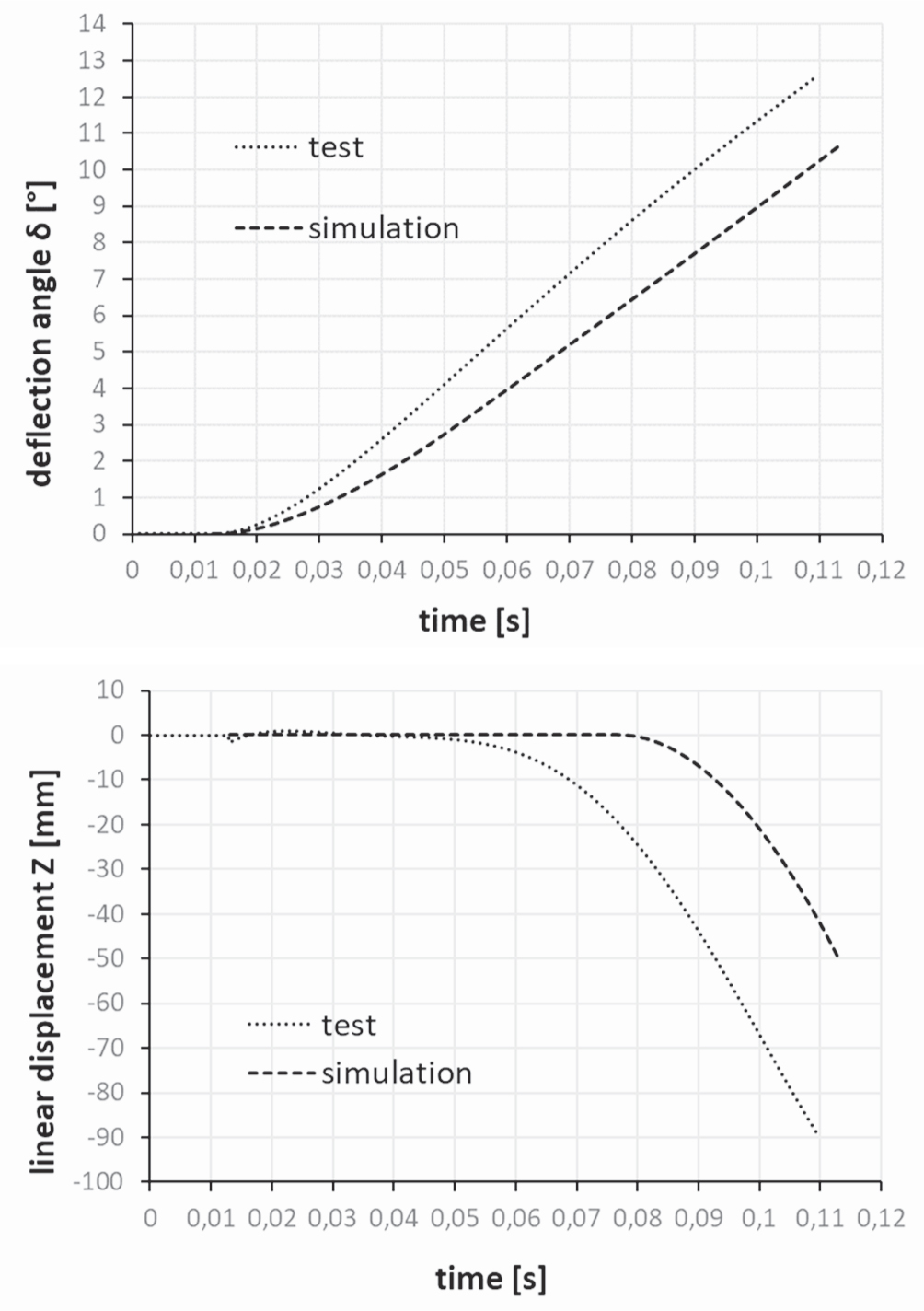

Figure 11.

Functional test – comparison between the test and simulation data.
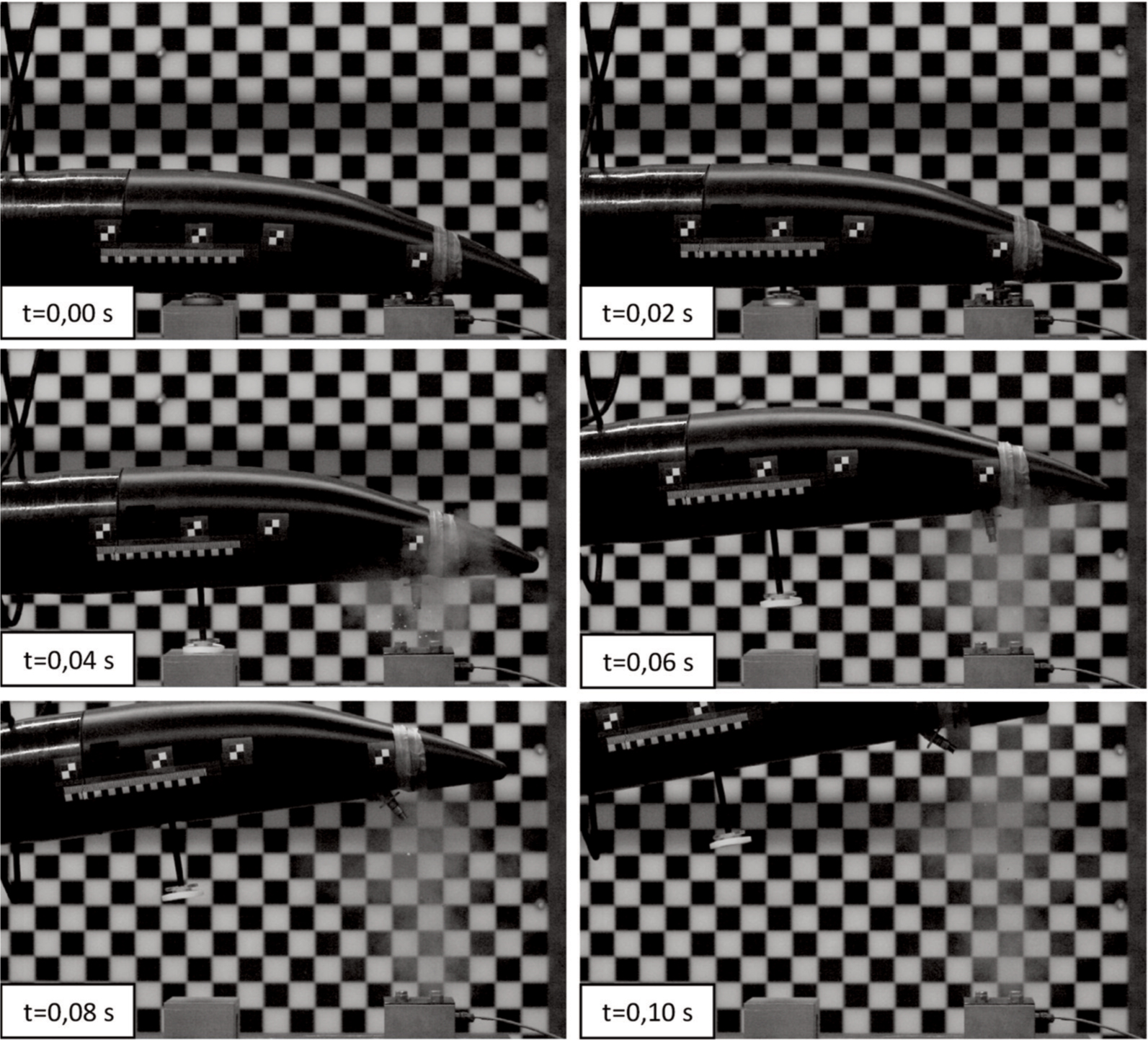

Figure 12.

Different separation phases – frames from the high-speed camera.

j_tar-2023-0014_utab_001

Normal force coefficient (–)cY (α,δ)
Axial force coefficient (–)cZ (α,δ)
Centre of pressure location (m)ZCP (α,δ) and YCP (α,δ)

j_tar-2023-0014_utab_002

Linear displacementx(t)
Time of operationtop
Initial forceFp = F(xp)
End forceFk = F(xk)
WorkW=xpxkF(x)dx

j_tar-2023-0014_utab_003

Linear displacementZ(t) (sign convention shown in Figure 4)
Angular displacementδ(t) (sign convention shown in Figure 4)
Release angleδgr
Time of operationtδgr
Language: English
Page range: 16 - 27
Submitted on: Sep 26, 2022
|
Accepted on: May 29, 2023
|
Published on: Sep 13, 2023
In partnership with: Paradigm Publishing Services
Publication frequency: 4 issues per year

© 2023 Jan Kierski, Arthur Pazik, Dawid Cieśliński, published by ŁUKASIEWICZ RESEARCH NETWORK – INSTITUTE OF AVIATION
This work is licensed under the Creative Commons Attribution-NonCommercial-NoDerivatives 4.0 License.