

Table 1.
Participants' professional and working background
| Professional background | Working field | Population they are working with | Number of experts |
|---|---|---|---|
| Public health expert | National Institute of Public Health | Children, adolescents and adults | 3 |
| Child and adolescent psychiatrist | University medical centre | Children and adolescents | 1 |
| Psychiatrist | Community mental health centre | Adults | 1 |
| Psychiatric hospital | Adults | 1 | |
| Psychiatric clinic | Adults | 1 | |
| Psychologist | Health promotion centre | Adults | 1 |
| Clinical psychologist | Community mental health centre | Children and adolescents | 1 |
| General hospital | Adults | 1 | |
| University Rehabilitation Institute of the Republic of Slovenia | Adults | 1 |
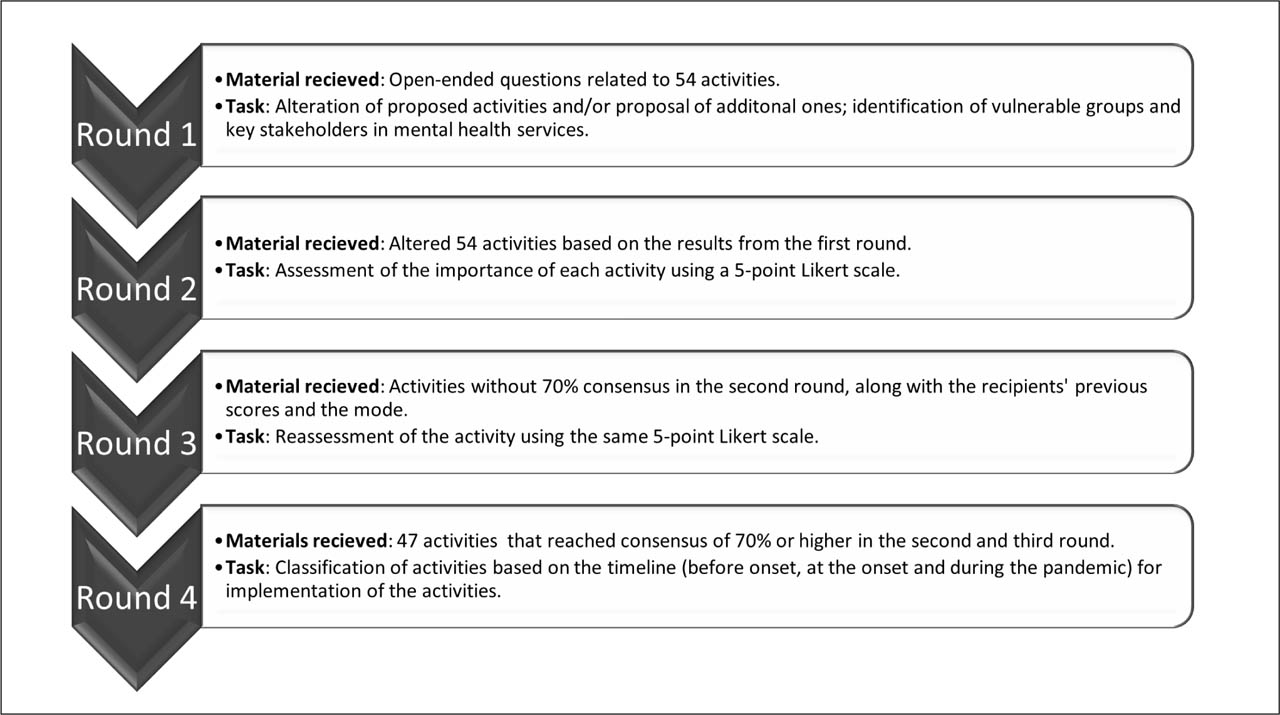
Figure 1.
Overview of the Delphi study procedure.
Table 2.
Final consensus-based recommendations for the organisation of mental health services during a pandemic in Slovenia, structured by implementation phase.
| Measure | Activity |
|---|---|
| System-strengthening measures – Implementation before the onset of a pandemic | |
| Systemic measures | Ensure funding for healthcare services (including appropriate costs for labour and materials) and infrastructure (including premises, ICT equipment, vehicles). |
| Establish a legal framework for work in the field of mental health (psychotherapy, psychiatry, psychological services). | |
| Ensure appropriate ventilation of the premises. | |
| Develop standards for ICT equipment needed for telemedicine. | |
| Encourage collaboration and coordination among stakeholders, professionals, and service users across all service types and levels; ensure effective design, development, and delivery of services. | |
| Ensure access to services for all residents of Slovenia across all levels of care. | |
| Establish preventive services and activities to protect and strengthen public mental health. | |
| Strengthen services at the primary level of healthcare. | |
| Strategically plan human resources in the field of healthcare (including backup staff for emergencies). | |
| General measures | Establish or adapt cooperation protocols between different mental health services. |
| Establish or adapt cross-sectoral stepped care protocols for people with mental health problems. | |
| Establish or adapt clinical guidelines, clinical and care pathways for treating a range of mental health conditions during a pandemic. | |
| Establish protocols for access to pharmacotherapy based on the epidemiological situation. | |
| Promotion and prevention measures | Implement activities to raise awareness and literacy in the field of mental health. |
| Include mental health topics in various professional guidelines. | |
| Implement destigmatisation initiatives in the field of mental health (with an emphasis on vulnerable groups). | |
| Education measures | Provide additional training for mental health professionals in evidence-based interventions to address mental health problems during crisis situations. |
| Train non-mental health professionals in psychosocial support, psychological first aid, and the recognition of symptoms of stress and/or trauma. | |
| Treatment measures | Expert guidelines for the provision of mental health services during crisis situations have been prepared by relevant professionals. |
| Telemedicine measures | Develop telemedicine as part of the overall system, not as a separate service. |
| Train professional staff to deliver services via telemedicine. | |
| Address potential inequalities in access to telemedicine. | |
| Crisis-specific measures – Implementation at the onset of a pandemic | |
| Systemic measures | Ensure sufficient protective equipment for unhindered service delivery in line with professional recommendations. |
| Ensure sufficient space for service delivery. | |
| Encourage, at the level of policy and implementation during a pandemic, the collection, exchange, and use of data among stakeholders, including mental health data. | |
| General measures | Identify vulnerable groups and their mental health needs. |
| Provide systemic support for identified vulnerable groups and their mental health needs. | |
| Involve mental health experts in the development of key public messages related to the pandemic. | |
| Involve mental health experts in pandemic strategy development and measure implementation. | |
| Work organisation measures | Introduce staff rotation across work assignments based on stress levels and employee risk factors, while ensuring continuity of multidisciplinary care. |
| Pair experienced with less experienced staff (to guarantee intrapersonal support), with the option of regular supervision. | |
| During escalating situations, ensure continuous and optimal service delivery at all levels of care. | |
| Minimise, insofar as possible, the redeployment of mental health professionals. | |
| Provide additional professional support (supervision) for professionals providing psychosocial support. | |
| Promotion and prevention measures | Deliver psychoeducational activities for the general population, especially for vulnerable groups. |
| Ensure cross-sector collaboration for early detection of mental health issues. | |
| Provide psychosocial support to the population, especially to vulnerable groups. | |
| Disseminate professional content for safeguarding and strengthening mental health via various communication channels to different population groups. | |
| Treatment measures | Ensure continuity of care for existing patients. |
| Ensure continuous psychosocial support for patients, especially for vulnerable groups. | |
| Follow instructions for preventive (self)protective measures during service delivery. | |
| Ensure safe, continuous contact of hospitalised patients with their loved ones in accordance with the epidemiological situation and professional recommendations. | |
| Limit hospitalisations to urgent cases and keep stays short, without compromising the care quality standards. | |
| Support patients in managing their mental health issues independently. | |
| Crisis-specific measures – Implementation during a pandemic | |
| Work organisation measures | If hospitalisations are low, hospital staff should support primary care where emergency cases are treated within 24 hours. |
| Organise a hierarchical crisis response based on professional competence profiles and levels of distress. | |
| Telemedicine measures | Maintain face-to-face care where possible, with a gradual introduction of hybrid and telemedicine services as the crisis worsens, in line with professional guidelines. |
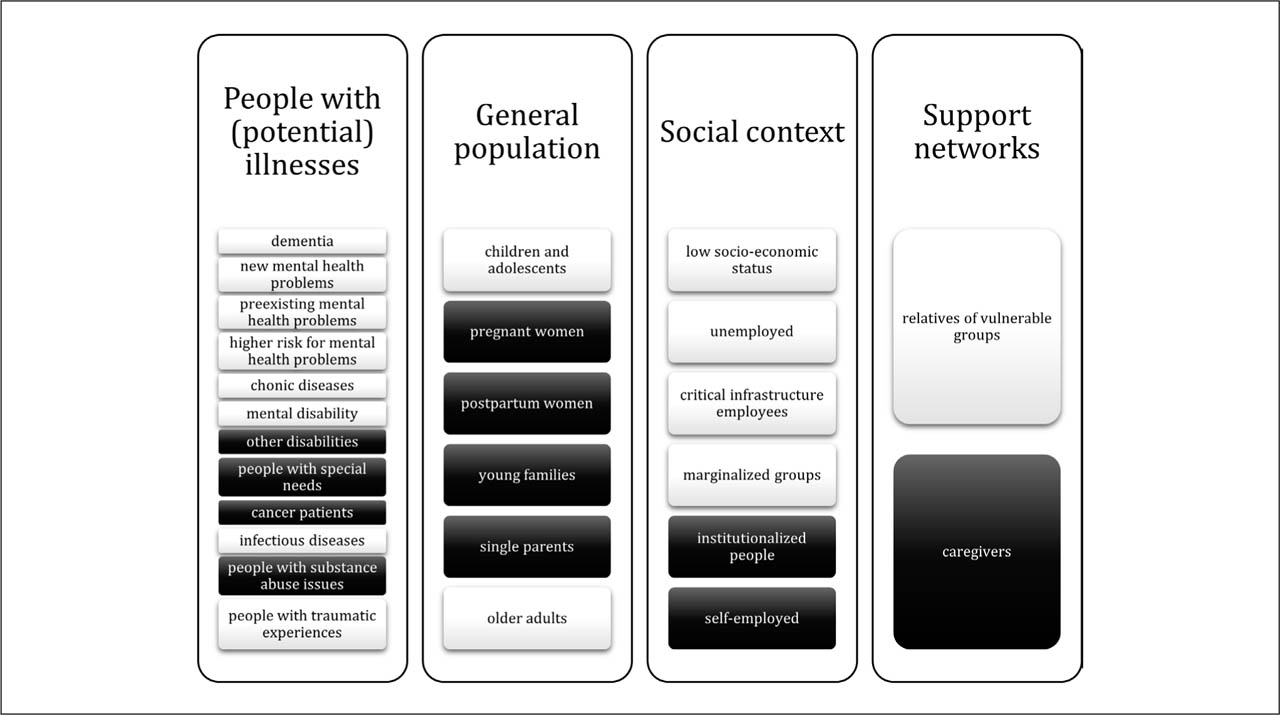
Figure 2.
Identified vulnerable groups relevant to the organisation of mental health services during a pandemic in Slovenia.
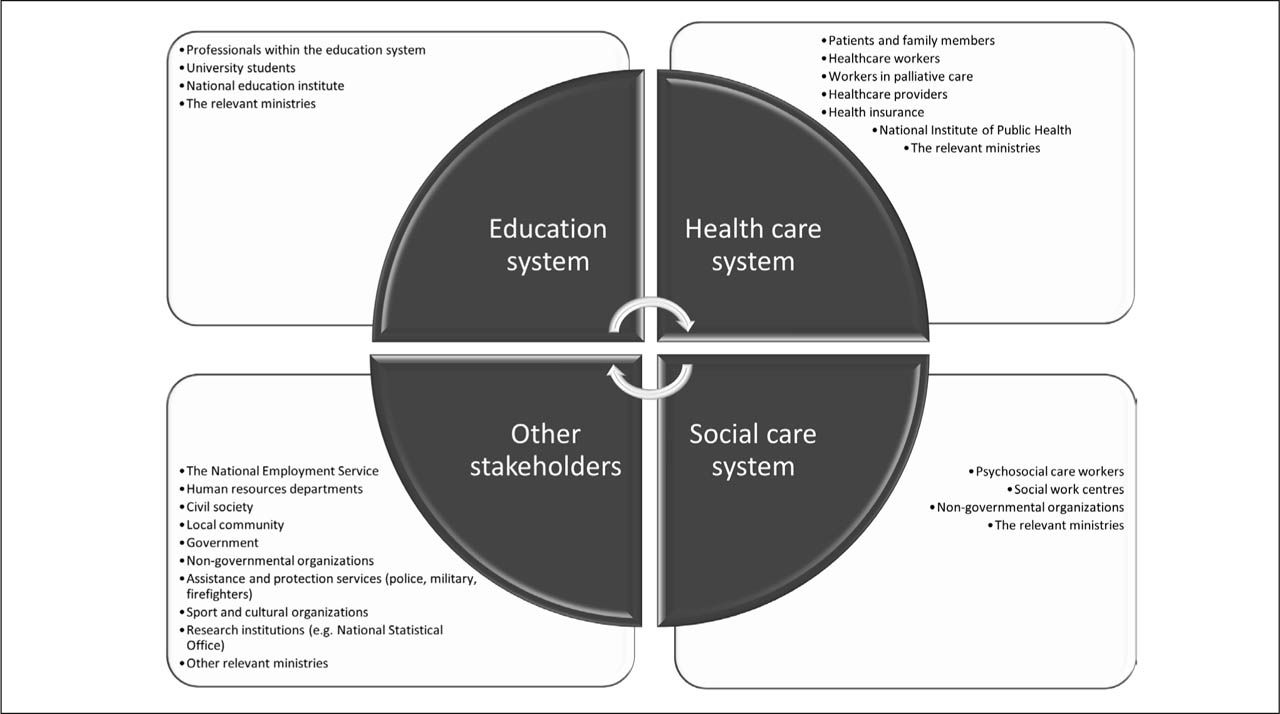
Figure 3.
Identified stakeholders relevant to the organisation of mental health services during a pandemic in Slovenia.