
Introduction
Attention Deficit Hyperactivity Disorder (ADHD) is the most common neurodevelopmental disorder in childhood. It has an estimated worldwide prevalence of around 5% among children and adolescents, with more boys being diagnosed than girls (1,2). The main symptoms are age-inappropriate levels of inattention and/or hyperactivity-impulsivity. ADHD is a complex and heterogeneous disorder, and its underlying pathogenesis remains unclear. A potentially relevant biological factor is Brain-Derived Neurotrophic Factor (BDNF), which is the most abundant and widely distributed neurotrophin in the central nervous system (CNS). BDNF is a growth factor with essential roles in neuron proliferation and survival, synapse formation and synaptic plasticity, differentiation of neural pathways, and long-term potentiation (3,4). It is important for the function of frontostriatal, cerebellar, and ventral striatal circuits, all of which play important roles in the pathogenesis of ADHD (5,6,7).
BDNF can cross the blood-brain barrier in both directions (8,9) and can be measured in the blood. Peripheral BDNF exists in two distinct pools: Bound BDNF that is stored in platelets and unbound BDNF that circulates freely in plasma. Blood serum contains the total measurable bound and unbound blood-borne BDNF, whereas blood plasma contains only free unbound BDNF. The contribution of plasma to circulating levels of BDNF is considerably lower than that of serum (10), but the small fraction of unbound BDNF in plasma represents bioavailable BDNF that is free to associate with the BDNF receptors TrkB and p75 (10,11). Also, there is a positive correlation between plasma and brain BDNF levels (12).
Altered blood BDNF levels in children with ADHD have been observed, but findings are inconsistent and discrepancies between studies and their procedures are marked(13,14). Some studies reported higher levels of BDNF in children with ADHD than in healthy controls (15,16,17), others did not find significant differences between the groups (19,20,21,22), and a few studies found reduced levels (23,24). Whereas the general evidence is not clear, some trends emerge in the literature. Notably, studies of BDNF in plasma have often found increased levels in children with ADHD, whereas most studies of BDNF in serum have found no differences to control groups. Studies that measure BDNF in plasma are not necessarily comparable to serum studies because the contents and functions of BDNF in plasma and serum are not equivalent. Platelets undergo physiological alterations, which can result in inter-individual variations of serum BDNF that are unrelated to ADHD pathophysiology. Because of this, and the fact that plasma contains the bioavailable BDNF that is potentially responsible for important biological effects, this measure is arguably more reliable and informative of neuropathological processes.
The interaction between BDNF levels and pharmacological treatment of ADHD is a related question of large interest. Methylphenidate (MPH) is the most widely used pharmacological option for management of ADHD in children (25,26).
The clinical effects of MPH are well documented and manifest as improvements in attention deficits, distractibility, and motor hyperactivity in patients with ADHD (27), but the underlying biological mechanisms mediating the clinical improvements are unclear. MPH ingestion leads to an increase in extra-cellular levels of monoamines within hours, but the clinical effects of MPH are delayed and response to treatment typically requires weeks. Therefore, other mechanisms are believed to mediate the treatment responses. Associations between BDNF and dopaminergic function, which is a primary target of MPH treatment, have been shown (28,29), and several authors have suggested that BDNF is involved in mediating the effects of MPH (30,31,32). Despite the potentially important role of BDNF in ADHD pathophysiology and treatment response, only five previous studies have investigated the effects of MPH treatment on BDNF levels in children with ADHD, and the results are inconsistent (13). One study (24) found that baseline serum BDNF levels in the ADHD group were significantly lower than in the control group. After five months of MPH treatment, no changes in BDNF levels were observed in the ADHD group overall, but in the predominantly inattentive subgroup a significant further decrease in BDNF levels was observed. Another study (20) found no differences in baseline serum BDNF levels between the ADHD and control groups, but after two months of MPH treatment BDNF levels decreased significantly. Gumus et al. (33) found significantly higher serum BDNF levels at baseline in the ADHD group, but a significant decrease after MPH treatment. In contrast to these results, two studies (34,35) that measured serum and plasma, respectively, found that eight and six weeks of MPH treatment led to a significant increase in BDNF levels. In sum, previous studies have reported differing effects of MPH on BDNF levels, and the varied results and methodological approaches make it difficult to draw general conclusions from the evidence.
In the present study we sought to address limitations in previous research on ADHD, BDNF, and MPH treatment by implementing several methodological improvements. To enhance reliability, we focused on measuring BDNF in plasma. Contrary to earlier studies with shorter treatment durations of only six or eight weeks, we extended the treatment period to 12 weeks. This allowed for more stable end-doses titrated in accordance with patients’ individual needs. Recognizing that BDNF levels are influenced by diurnal variations (36,37), physical activity (38), hormonal variations (39), and food consumption (40), we also controlled for these factors. Additionally, our results were compared against a matched control group to strengthen the validity of our findings. To the best of our knowledge, this is the first well-controlled study to investigate plasma BDNF levels before and after MPH treatment in children with ADHD.
Due to the inconsistent findings in the literature on BDNF and children with ADHD, it is difficult to set up strong predictions for the results of the present study. However, there seems to be a trend of finding elevated baseline levels of BDNF when measuring in plasma. One aim of the present study was therefore to test this hypothesis using a more reliable research design than in previous studies. Concerning the effect of MPH treatment on plasma BDNF levels, only a single previous study has been conducted (35), which found a significant post-treatment increase in BDNF. There were several important limitations of this study, including a short treatment period and no control group, so strong predictions about the effects of MPH treatment could not be made prior to our study. Still, given the important clinical implications of this issue, a well-controlled investigation seemed to be warranted.
Methods
This study was a part of the larger interdisciplinary project “Attention to Dopamine: From Psychological Functions to Molecular Mechanisms”. It was approved by the Regional Committee on Health Research Ethics and the Danish Data Protection Agency (journal number 2012-58-0004). Written informed consent was obtained from the parents of all participants in accordance with the Declaration of Helsinki. All participants provided blood samples for BDNF measurements as part of a larger test battery that included biological samples (blood and saliva), cognitive testing, and questionnaires.
Study design and participants
This prospective, non-randomized, non-blinded, controlled 12-week case-control study included participants from the Capital Region of Denmark, aged 7–12 years. The study involved 21 participants (19 boys and 2 girls) medication-naïve children diagnosed with ADHD and 25 neurotypical control children (20 boys and 5 girls) matched on sex, age, and residential area (ZIP code). After baseline assessments, patients were treated for 12 weeks with MPH in accordance with national guidelines, while the control group received no medication. Patients were recruited at the ADHD outpatient clinic in the Child and Adolescent Mental Health Centre at Bispebjerg Hospital, and the children were referred here to begin their treatment with MPH. Participants in the ADHD group met the diagnostic criteria of both the tenth revision of the International Statistical Classification of Diseases (ICD-10) and the Diagnostic and Statistical Manual of Mental Disorders (DSM-5) for either combined type ADHD (ICD-10: F.90.0; DSM-5: 314.01; n = 17) or the predominantly inattentive subtype of attention deficit disorder (ADD) without hyperactivity (ICD-10: F.98.8; DSM-5: 314.00; n = 4). Among the 17 children with ADHD combined presentation, 2 had comorbid oppositional defiant disorder (ODD, F.91.3). Of the 4 children with ADHD primarily inattentive presentation, 1 had ODD and 1 had comorbid abnormal separation anxiety (F.93.0). The characteristics of participants are shown in Table 1. Patients were given a primary diagnosis of ADHD at the Child and Adolescent Mental Health Center at Bispebjerg Hospital and were recommended standard treatment with MPH. The diagnostic procedures were completed by interdisciplinary teams of doctors and psychologists as part of a comprehensive psychiatric assessment. As part of the referral, children had a complete Wechsler Intelligence Scale for Children – Fourth Edition (WISC-IV) test performed by the referring psychologist. Control participants were recruited from the Danish Civil Registration System (CPR) using a randomly generated list. To ensure that control children fulfilled the inclusion criteria before participating, they were screened for psychiatric symptoms using the child and parent versions of the Kiddie Schedule for Affective Disorders and Schizophrenia for School-age Children-Present and Lifetime version (KSADS-PL; Kaufman et al., 1997). Additionally, to certify that their intelligence quotients (IQs) were in the normal range, the children were assessed with two verbal (similarities and vocabulary) and two non-verbal (block design and matrix reasoning) subtests from the WISC-IV. Inclusion and exclusion criteria as well as study flows are shown in Tables 2 and 3.
Clinical measures
ADHD-rating scale
The ADHD-rating scale (ADHD-rs) (41) was administered at baseline (before MPH treatment), and at weeks 4, 8, and 12 during MPH treatment. For the control children, the ADHD-rs was administered at baseline and follow-up (12 weeks). The ADHD-rs is a psychometric instrument with 26 items, assessing the severity of inattention, hyperactivity, and impulsivity (18 items), as well as conduct issues (8 items) at home and in school. Parents and teachers rate each item on a scale from 0–3 (never/rare – sometimes – often – very often) leading to a total score of 0 – 78 divided into three subscales of inattention, hyperactivity/impulsivity, and conduct. The ADHD symptoms are based on DSM-IV criteria, and high scores indicate more severe ADHD symptomatology. The ADHD-rs has been widely used in both clinical and research contexts in Denmark. Psychometric validation of the Danish version has been documented in several studies, including a nationwide clinical validation (42), a large-scale norming study in Danish school children (43), and a subsequent psychometric evaluation of its factor structure and measurement invariance (44). Furthermore, we acknowledge the recent publication of Danish percentile norms for the ADHD-rs-IV in children aged 6–9 years (45), which adds to the evidence supporting the scale’s utility in younger Danish populations. However, in the present study, we used T-scores based on previously validated norms from the earlier studies, which are more consistent with the age range of our sample (7–12 years).
TABLE 1.
Participant characteristics
| Patients | Controls | p-values (Pt. vs. C) | |||||
|---|---|---|---|---|---|---|---|
| n | Mean | SD | n | Mean | SD | ||
| Age (years), baseline | 21 | 10.44 | (1.33) | 25 | 10.26 | (1.33) | .643 |
| Boys/Girls | 19/2 | 20/5 | .335 | ||||
| ADHD-C /ADHI-I | 17/4 | ||||||
| Children with a comorbid disorder | 4 | ||||||
| Methylphenidate mg/day | 20 | 27.63 | (9.34) | ||||
| Tanner stage, baseline | 21 | 1.47 | (.79) | 25 | 1.76 | (1.24) | .361 |
| Tanner stage, follow-up | 17 | 1.40 | (.66) | 24 | 1.83 | (1.19) | .152 |
| BMI, baseline | 21 | 19.31 | (3.66) | 25 | 16.54 | (2.74) | .006 |
| BMI, follow-up | 15 | 18.98 | (3.89) | 23 | 16.76 | (2.24) | .058 |
| Systolic blood pressure, baseline | 20 | 103.95 | (6.43) | 23 | 101.70 | (10.65) | .414 |
| Diastolic blood pressure, baseline | 20 | 64.80 | (4.79) | 23 | 65.00 | (8.58) | .924 |
| Systolic blood pressure, follow-up | 17 | 106.41 | (8.14) | 24 | 111.63 | (13.29) | .159 |
| Diastolic blood pressure, follow-up | 17 | 67.88 | (6.90) | 24 | 66.92 | (7.95) | .688 |
| Physical activity score (median, IQR) | 20 | 3.0 | [2.0; 4.0] | 24 | 3.0 | [3.0;4.0] | .179 |
TABLE 2.
Inclusion and exclusion criteria
| Patients |
|---|
Inclusion criteria
|
Exclusion criteria
|
Controls
|
Exclusion criteria
|
[i] Note. MPH = methylphenidate; IQ = intelligence quotient; KSADS-PL = Kiddie Schedule for Affective Disorders and schizophrenia for school-age children - Present and Lifetime Version; ADHD-rs = Attention Deficit Hyperactivity Disorder -Rating Scale; BRIEF = behaviour rating inventory of executive function.
Kiddie Schedule for Affective Disorders and Schizophrenia for school-age children (Present and Lifetime version)
The K-SADS-PL (46) is a widely used semi-structured diagnostic interview tool. It gathers information on current and past episodes of child and adolescent psychiatric disorders and allows diagnoses to be made. In the present study, it was used as a part of a comprehensive psychiatric assessment when the children were being assessed. For control children, the K-SADS-PL was used as a screening tool for psychiatric symptoms before study inclusion.
Wechsler Intelligence Scale for Children, fourth edition (WISC-IV)
The WISC-IV (47) is an intelligence test for children and adolescents aged 6–16 years. In the present study, WISC-IV results were used as part of the diagnostic process and as an exclusion criterion (IQ < 70) (the mean score for a full-scale IQ test is 100 and the standard deviation is 15).
When patients were referred for assessment, a WISC test administered by a school psychologist formed a part of the referral. A WISC produces a full-scale IQ score along with four index scores (verbal comprehension, perceptual reasoning, working memory, and processing speed). Prior to participating in the study, the control children were tested using four WISC-IV subtests: two verbal (similarities and vocabulary) and two non-verbal (block design and matrix reasoning) tests to estimate IQ and confirm eligibility.
Physical activity
Physical activity has been shown to elevate BDNF levels (38,48). Therefore, all parents of participants were instructed to fill in physical activity forms daily during the 12 weeks of the study. Physical activities included sports activities and play like tag games and jumping on a trampoline. For every week, the number of hours of physical activity was calculated and activity levels were divided into four categories: 0 = No physical activity; 1 = 1–2 h/week; 2 = 3–5 h/week; 3 = 6–8 h/week; and 4 = more than 8 h/week.
Tanner stage
Plasma BDNF levels may be influenced by hormonal status reflecting pubertal development (39). To ensure comparability between the ADHD and control groups regarding pubertal development, and to control for any potential effects of MPH treatment on pubertal progression, Tanner staging (49) was assessed at baseline and follow-up. Participants (or their parents) were presented with schematic drawings of secondary sex characteristics associated with the five standard Tanner stages (score range: 1–5) and asked to select the image that best matched the participant’s current development.
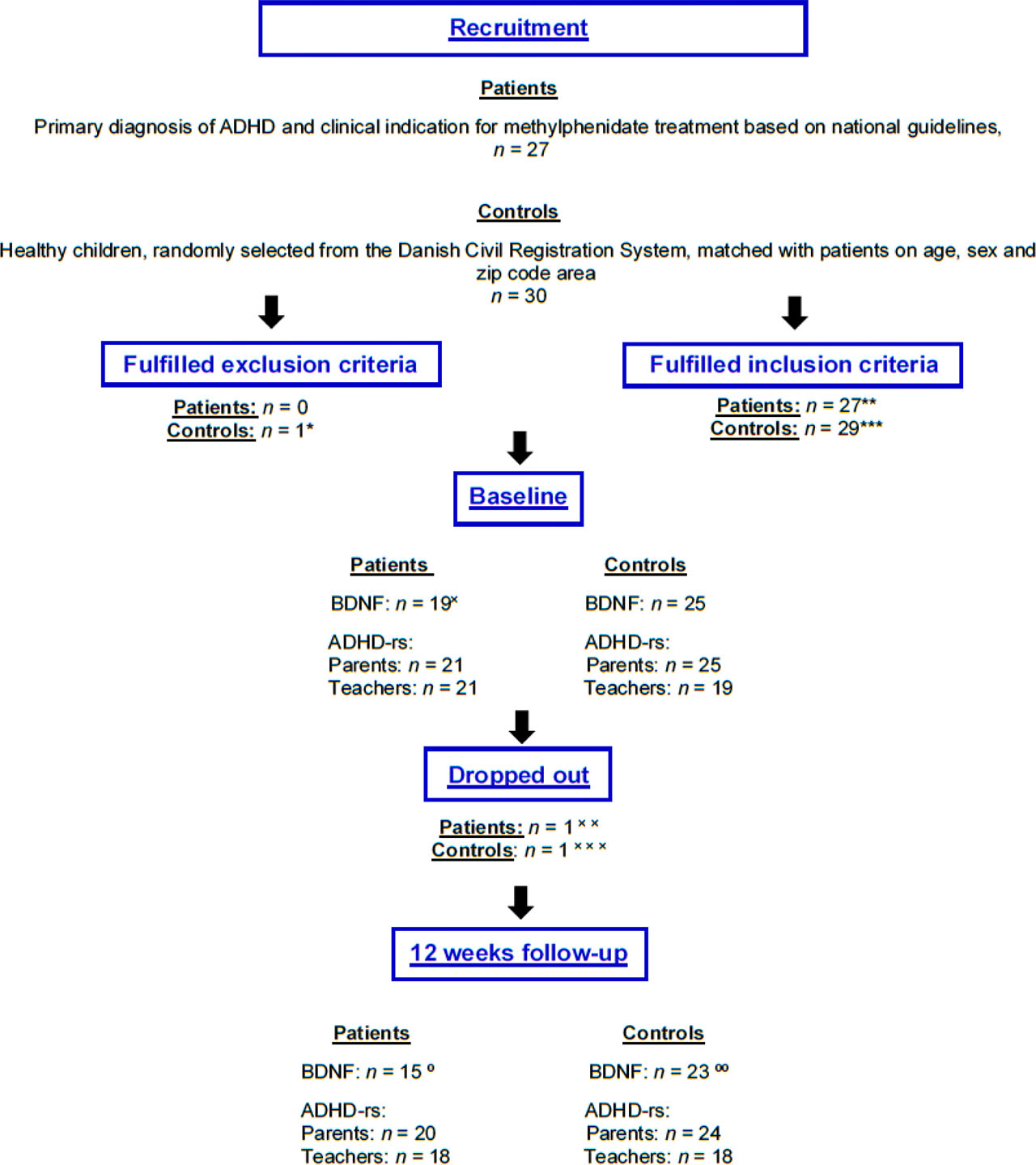
FIGURE 1.
Study flow
* Excluded due to suspected autism
** Six patients declined blood sampling
*** Four controls declined blood sampling
⁰ Three patients did not want to undergo blood sampling.
⁰⁰ Blood samples could not be obtained from one control participant.
˟ Two patients could not be pricked for blood sampling at baseline.
˟ ˟ One patient dropped out because he did not want to take the prescribed medication.
˟ ˟ ˟ One control dropped out due to time concerns from the family.
Blood samples and measurement of plasma BDNF
BDNF levels exhibit circadian variations (50) and are also affected by physical activity (38,48) and food consumption (40). To control the influence of these factors, all participants had blood samples drawn from their antecubital veins at 9 am after an overnight fast. Additionally, on each day where blood samples were taken, parents were asked to wake their child at 7 am, children were asked to refrain from physical activity before arrival, and they were transported to the outpatient clinic. Two 2 mL blood samples were collected in cold tubes containing ethylenediaminetetraacetic acid (EDTA) buffer, placed on ice, and processed immediately after sampling. The tubes were centrifuged at 3,500 rpm for 15 min at 2–8°C. Supernatants were transferred to Eppendorf tubes and an additional centrifugation step at 10,000 rpm for 10 min at 2–8°C was used to complete platelet removal. Supernatants were transferred to fresh Eppendorf tubes and stored at −80°C until the samples were analysed. Plasma levels of BDNF were determined in duplicate using commercial enzyme-linked immunosorbent assay (ELISA) kits (R&D systems, Minneapolis, MN, USA; lot number P204174), in accordance with the manufacturer’s instructions. Patient and control samples were run together on the same plates. All assays were performed in duplicate using the manufacturer’s recommended buffers, diluents, and substrates. Plasma BDNF levels were reported in pg/ml.
Medication procedures
MPH was administered according to the national guidelines of the Danish health authorities (26) and titrated according to individual needs. Treatment with MPH was initiated after baseline assessments.
Initially, all patients were treated with immediate-release (IR) formulation MPH (Medikinet). Due to difficulties associated with multiple daily doses, three patients were switched to depot MPH (Equasym) prior to the final assessment. One patient had not been titrated to a sufficient MPH dose at the end of the 12-week course. The mean final MPH dose was 27.5 mg per day. There were visits to the clinic at baseline and weeks 2, 4, 8, and 12, where height, weight, blood pressure, and adverse effects were assessed. ADHD symptoms were evaluated using the ADHD-rs at baseline and at weeks 4, 8, and 12.
Statistical analyses
All statistical analyses were performed using SPSS software (ver. 29.0; IBM, Armonk, NY, USA). Because plasma BDNF exhibited a skewed distribution, non-parametric statistical analyses were used accordingly. Background participant variables and ADHD-rating scale symptom scores were analysed using t-tests. A two-tailed significance level of p < .05 was applied across all analyses.
Changes in BDNF levels were calculated as within-subject differences, based on individual change scores (follow-up minus baseline). Group-level comparisons of change were therefore based on the distribution of individual-level changes, rather than the difference between group medians at baseline and follow-up.
Correlations between baseline BDNF levels and changes in the clinical variables of ADHD symptom scores were assessed using Spearman’s correlation tests.
All plasma BDNF samples were collected in a standardized fasting state, and analyses were controlled for body mass index, pubertal status (Tanner stage), and physical activity levels (monitored weekly using parent-reported activity logs throughout the study period), all of which may influence peripheral BDNF levels.
Results
Baseline BMIs (kg/m2) were significantly higher in the ADHD group than in the control group (p = .006). However, the mean baseline BMI in both groups was within the normal range. At follow-up, there were no significant differences in BMIs between the groups (p = .058). In the ADHD group, the average diastolic blood pressure increased significantly from baseline to follow-up (p = .019). Within the control group, the systolic blood pressure increased significantly from baseline to follow-up (p = 0.008). Importantly, all blood pressure measurements for both groups at baseline and follow-up were within the normal range.
Comparison of BDNF levels between patients and healthy controls
Table 3 and Figure 2 show median BDNF levels in patients and healthy controls at baseline and follow-up. At baseline, BDNF levels (pg/mL) were significantly higher in the ADHD group (median = 47.12, IQR = [37.70; 58.61]; n = 19) than in the control group (median = 41.22, IQR = [22.61; 49.71]; n = 25) (p = .044; d = 0.66).
At follow-up, BDNF levels remained significantly higher in the ADHD group (median = 42.58, IQR = [29.91; 70.47]; n = 15) than in the control group (median = 26.38, IQR = [21.73; 34.32]; n = 23) (p = .007; d = 1.04). Additionally, there was a significant difference in BDNF change from baseline to follow-up (p = .026) between the ADHD group (median = 0.70, IQR = [−10.81; 26.11]; n = 13) and the control group (median = −0.56, IQR = [−16.26; 2.93]; n = 23). Within-group analyses revealed no significant difference in BDNF levels between the baseline and follow-up in the ADHD group (W = 48, p = .86). However, in the control group, BDNF levels decreased significantly from baseline to follow-up (W = 52, p = .016).
TABLE 3.
Fasting plasma BDNF levels (pg/ml) in the ADHD and healthy control groups at baseline and follow-up
| Patient group | Control group | Patients vs. controls | |||||||
|---|---|---|---|---|---|---|---|---|---|
| n | Median | Q1 | Q3 | n | Median | Q1 | Q3 | p | |
| Baseline | 19 | 47.12 | 37.70 | 58.61 | 25 | 41.22 | 22.61 | 49.71 | .044 |
| Follow-up | 15 | 42.58 | 29.91 | 70.47 | 23 | 26.38 | 21.73 | 34.32 | .007 |
| Baseline to follow-up change | 13 | −0.70 | −10.81 | 26.11 | 23 | −0.56 | −16.26 | 2.93 | .026 |
Measures of ADHD symptoms
At baseline there were significant differences between the two groups in all ADHD-rs subscales for both parent and teacher ratings (all ps < .001) At follow-up, these differences remained highly significant, except for the teacher ratings of hyperactivity and behaviour as well as the parent ratings of behavior, which were now only significant at the levels of p = .008 to .024 (See Figures 3A and 3B). An ADHD-rs t-score below 60 is considered within the normal range. At baseline, neither parent nor teacher ratings for the patient group were on average below 60, whereas at follow-up teacher ratings of inattention and behaviour were on average below 60, with hyperactivity averaging 60.66. For parent ratings at follow-up only behaviour scores were below 60. Within the patient group, there was a significant improvement (p < 0.001) from baseline to follow-up in all ADHD-rs clinical outcome scores rated by both parents and teachers. As expected, for the control group, no significant differences from baseline to follow-up were found. Taken together, after MPH treatment the patient group exhibited significant improvements in symptoms of attention, hyperactivity, and behaviour. This was true for both parent and teacher ratings; however, the symptom scores were not reduced to control group levels.
Correlations between BDNF levels and ADHD-rs symptom scores
In the patient group, baseline BDNF levels showed significant negative correlations with improvements in parent-rated ADHD-rs scores for inattention symptoms (r_s(18) = −0.564; p = .015; see Figure 4A) and for hyperactivity symptoms (r_s(18) = −.617; p = .006; see Figure 4B). Thus, higher baseline BDNF levels were associated with greater improvements in inattention and hyperactivity resulting from MPH treatment. In the control group, we found no correlations between baseline BDNF levels and changes in ADHD-rs clinical outcome scores.
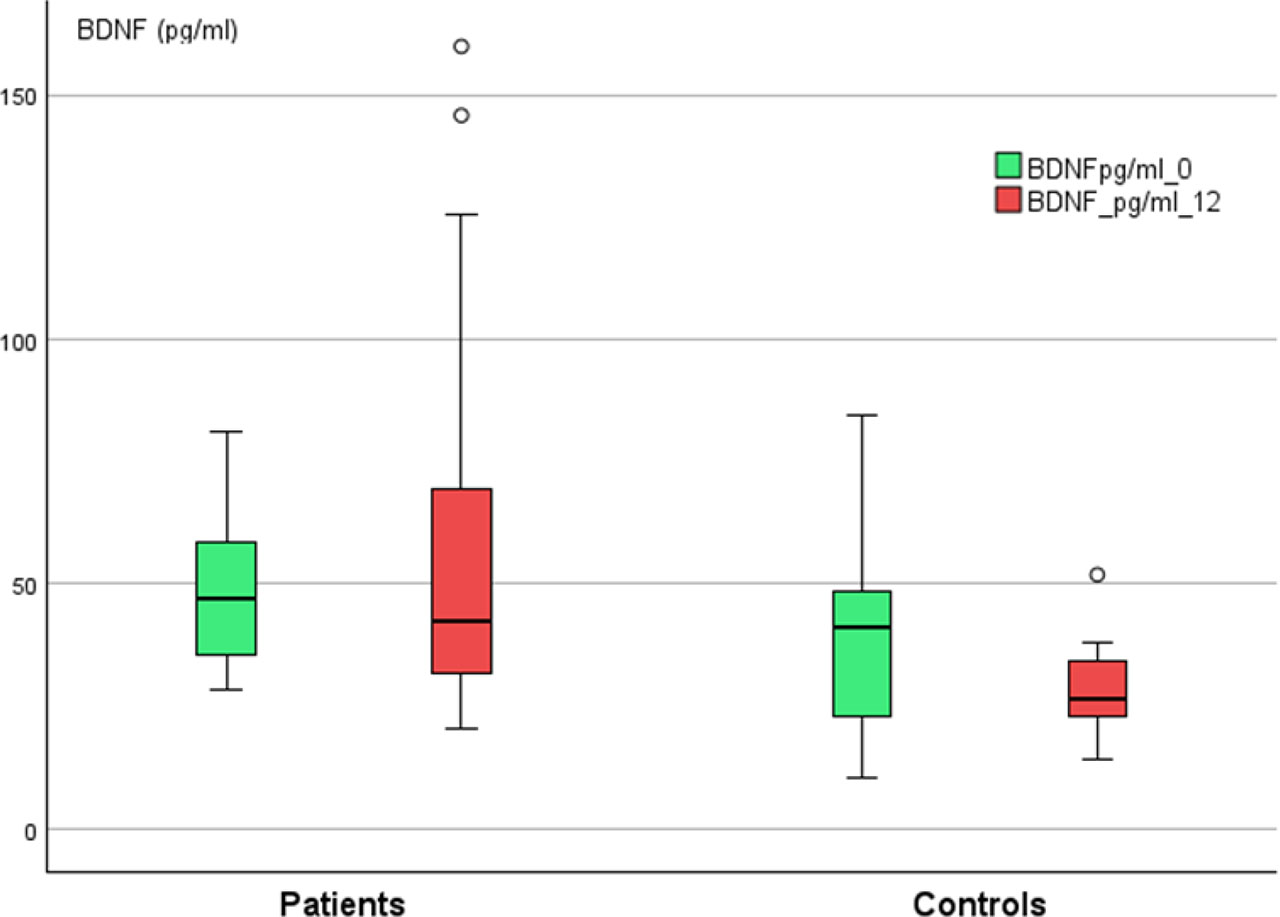
FIGURE 2.
Fasting BDNF levels (pg/ml) in patients and healthy controls at baseline (0_green) and follow-up (12; red).
We found no significant correlations between baseline BDNF levels and any of the baseline scores of ADHD-rs in the patient group (r_s(18) correlation values ranging between −0.05 and 0.44, all ps > .058). Likewise, no significant correlations emerged between the difference in BDNF levels from baseline to follow-up and any ADHD-rs symptom change scores in the same period (as rated by both parents and teachers; see Table 4 for an overview of these correlations). We also found no significant correlation between BDNF change from baseline to follow-up and final MPH dose (r_s(14) = −.123; p = .688). Similarly, there were no significant correlations between MPH dose and any change in ADHD-rs symptom scores, as rated by either parents or teachers.
Discussion
In the present study we investigated whether medication-naïve children with ADHD have elevated plasma BDNF levels, and if treatment with MPH is associated with up- or downregulation of these levels. We focused on plasma levels as it reflects the bioavailable, free unbound BDNF believed to be the biologically active component and is arguably a more reliable measure than serum BDNF. We also implemented several methodological improvements on previous studies, in particular controlling for a wider number of variables unrelated to ADHD that could influence BDNF levels.
Our finding of increased BDNF levels in medication-naïve children with ADHD adds to the previous literature on this topic. To our knowledge, eight prior studies have compared plasma BDNF in children with ADHD with a matched control group. Four of these studies (15,16,17,18) found higher baseline BDNF levels in the ADHD group, two studies (23,51) found lower levels, one study (52) found no difference, and Wang et al. (53) found that boys with ADHD had higher baseline levels, whereas girls had lower levels compared to the control group. The results thus show considerable variability, likely related to differences in study populations, comorbidities, number of measurement time points, and timing of sample collection. In addition, the inconsistencies may also reflect variability in BDNF levels associated with factors such as physical activity, BMI, pubertal status, and diurnal variations. These variables have typically not been systematically controlled for in previous studies, and the present study may therefore contribute more robust evidence to the existing literature. In our study baseline BMI was significantly higher in the ADHD group compared with controls. Circulating BDNF levels have been associated with metabolic factors such as body mass and dietary intake. Controlled human intervention studies indicate that polyphenol-rich interventions (e.g., flavanol-rich cocoa and berry extracts), as well as caloric restriction and Mediterranean-style dietary patterns, may be associated with modest increases in circulating BDNF concentrations, although results are inconsistent (40). In parallel, several clinical studies have reported reduced peripheral BDNF levels in individuals with higher BMI or obesity, suggesting a potential influence of metabolic regulation on neurotrophic signaling. However, meta-analytic evidence indicates that this association is not consistent across populations or biological matrices (54). In the present study, plasma BDNF levels were higher in the ADHD group despite higher baseline BMI, a finding that does not support a simple metabolic explanation, as increased body mass has in some studies been associated with reduced circulating BDNF concentrations. Furthermore, BMI values remained within the normal range in both groups. Thus, BMI is unlikely to account for the observed group difference, although residual confounding by metabolic-related factors cannot be entirely ruled out.
Our observation of elevated baseline BDNF levels in children with ADHD is consistent with the compensatory theory of BDNF. According to this view, increased BDNF levels may function as a neuroprotective response to the brain imbalances that are characteristic of ADHD (55). Evidence supporting this theory has been observed in Alzheimer's disease, where BDNF levels are elevated during prodromal and early stages of the disease (56,57), but reduced in more advanced stages (56,58). Among psychiatric conditions, major depressive disorder (MDD) is the illness in which BDNF has been most extensively studied. Although data on BDNF in prodromal depression are limited, it is well established that BDNF levels are reduced in patients with manifest MDD, and that treatment with selective serotonin reuptake inhibitors (SSRIs) can normalize or increase BDNF expression (59).
The second main question of our study was how baseline BDNF levels are affected by MPH, the standard pharmacological treatment of ADHD. We found that after 12 weeks of MPH treatment, BDNF levels did not change significantly compared to baseline for the children with ADHD, though the BDNF levels remained significantly higher than in the control group. The only previous study that has measured plasma BDNF levels before and after MPH treatment (35) found that plasma BDNF levels were increased after MPH treatment. This study, however, did not include a control group, and the treatment period was only 6 weeks.
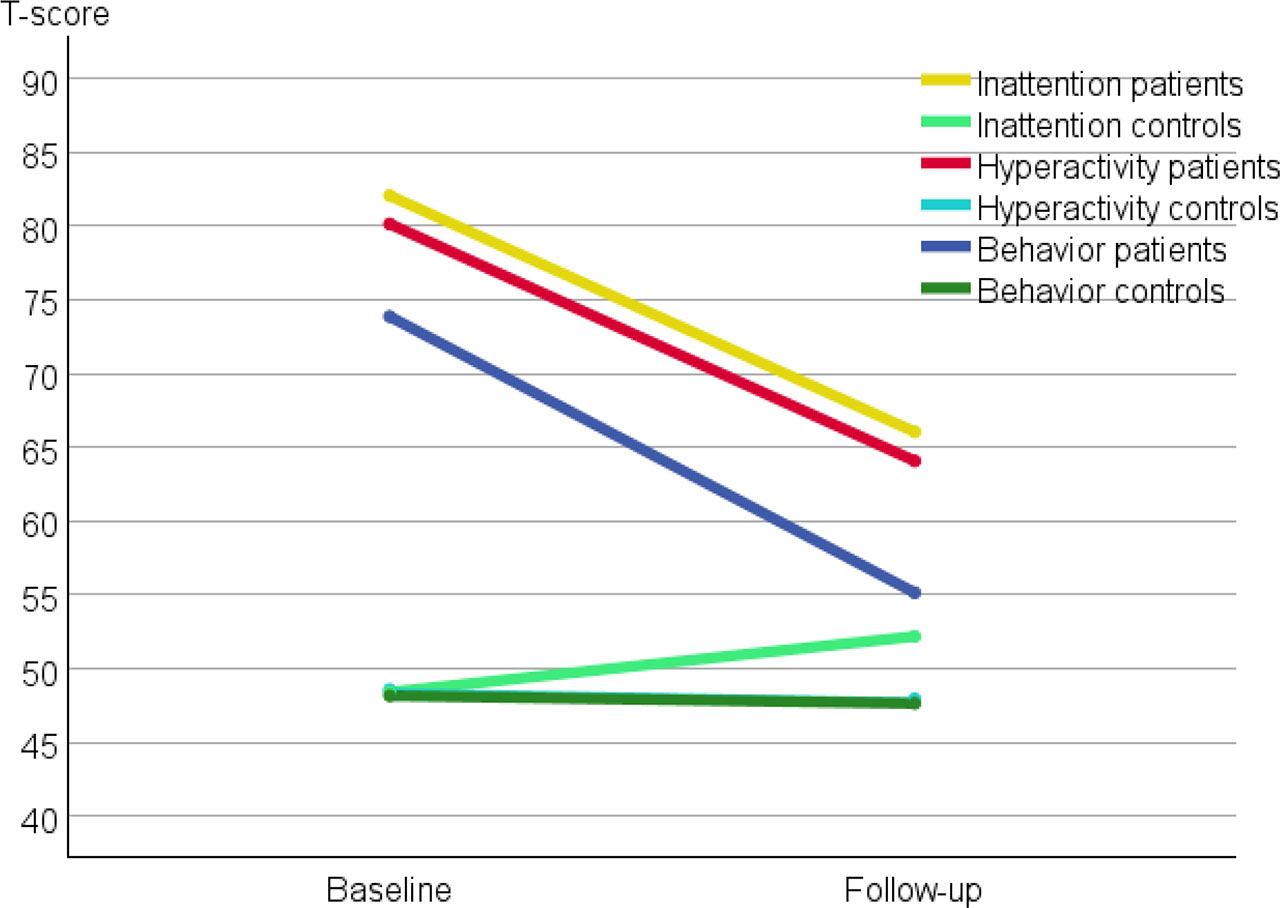
FIGURE 3A.
ADHD-rs scores, rated by parents.
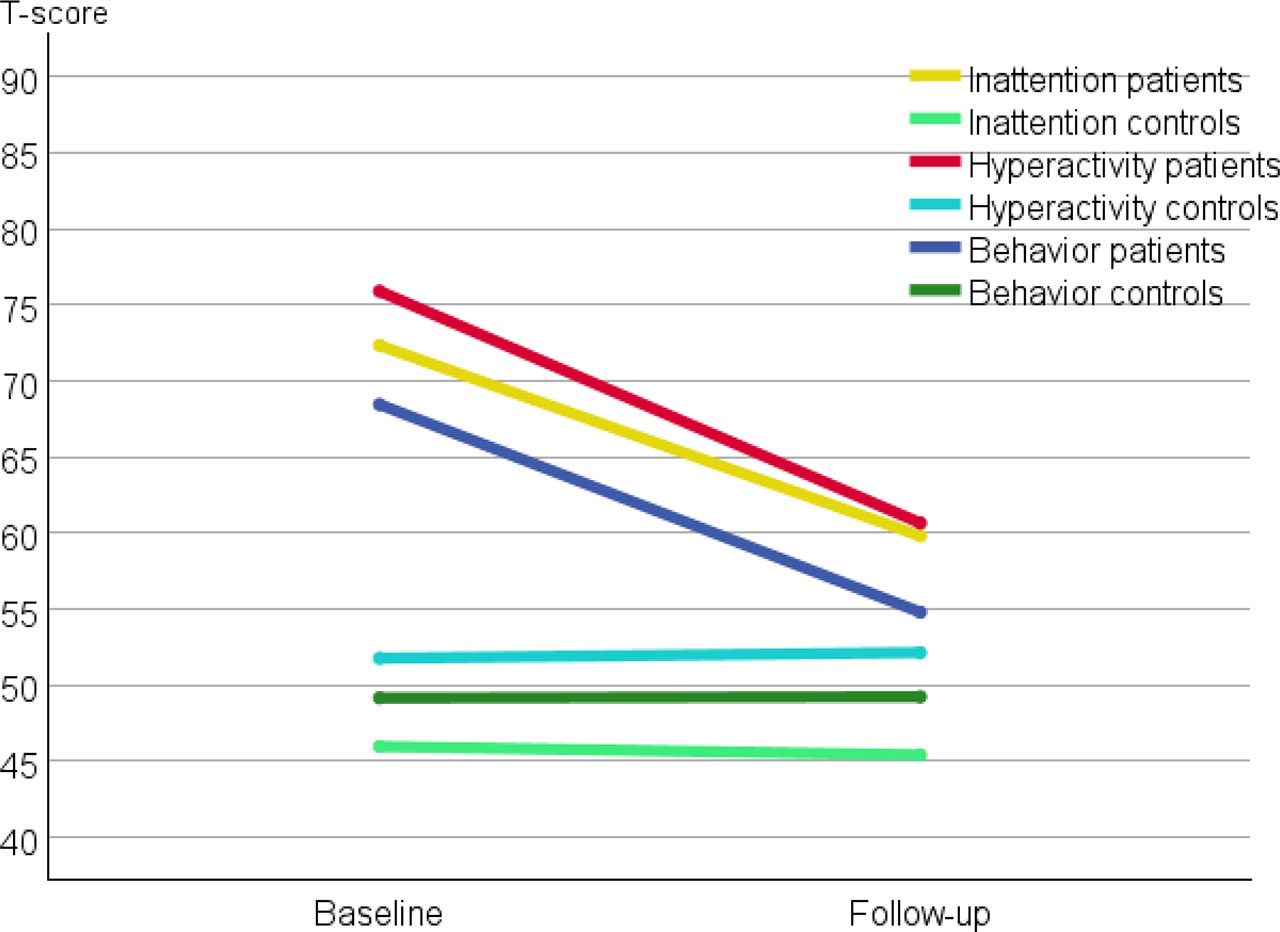
FIGURE 3B.
ADHD-rs scores, rated by teachers.
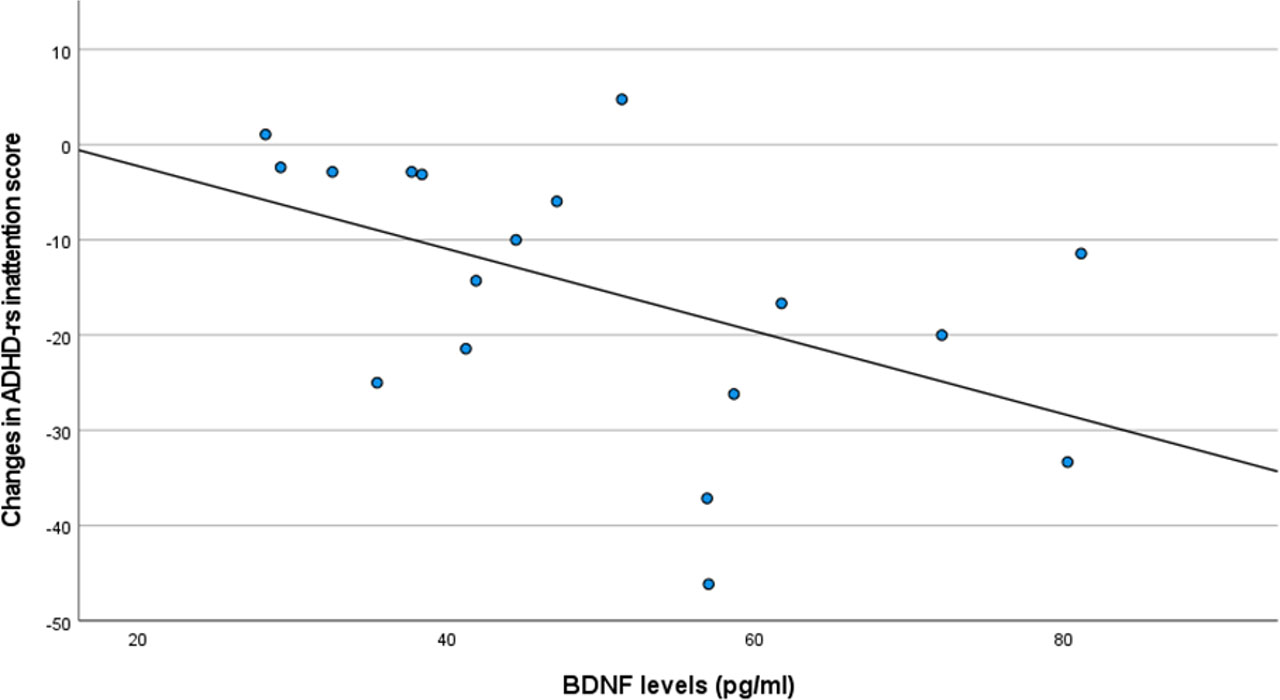
FIGURE 4A.
Correlation between baseline BDNF levels and improvement in parent-rated ADHD-rating scale inattention symptom scores.
Note. BDNF = Brain-Derived Neurotrophic Factor; ADHD-rs = ADHD-rating scale.
In the healthy control group, plasma BDNF levels decreased significantly over the 12-week period. The basis for this finding remains unclear. Despite strict standardization of sampling procedures, peripheral BDNF levels may still be influenced by residual within-individual variation in habitual physical activity patterns, ongoing pubertal maturation, and platelet-related pre-analytical variability, all of which may contribute to longitudinal fluctuations in circulating levels. In relatively small samples, such biological variability may lead to apparent group-level changes over time. Therefore, the observed change in the control group should be interpreted with caution. Importantly, BDNF levels remained consistently higher in the ADHD group across both time points, indicating preservation of the overall between-group difference.
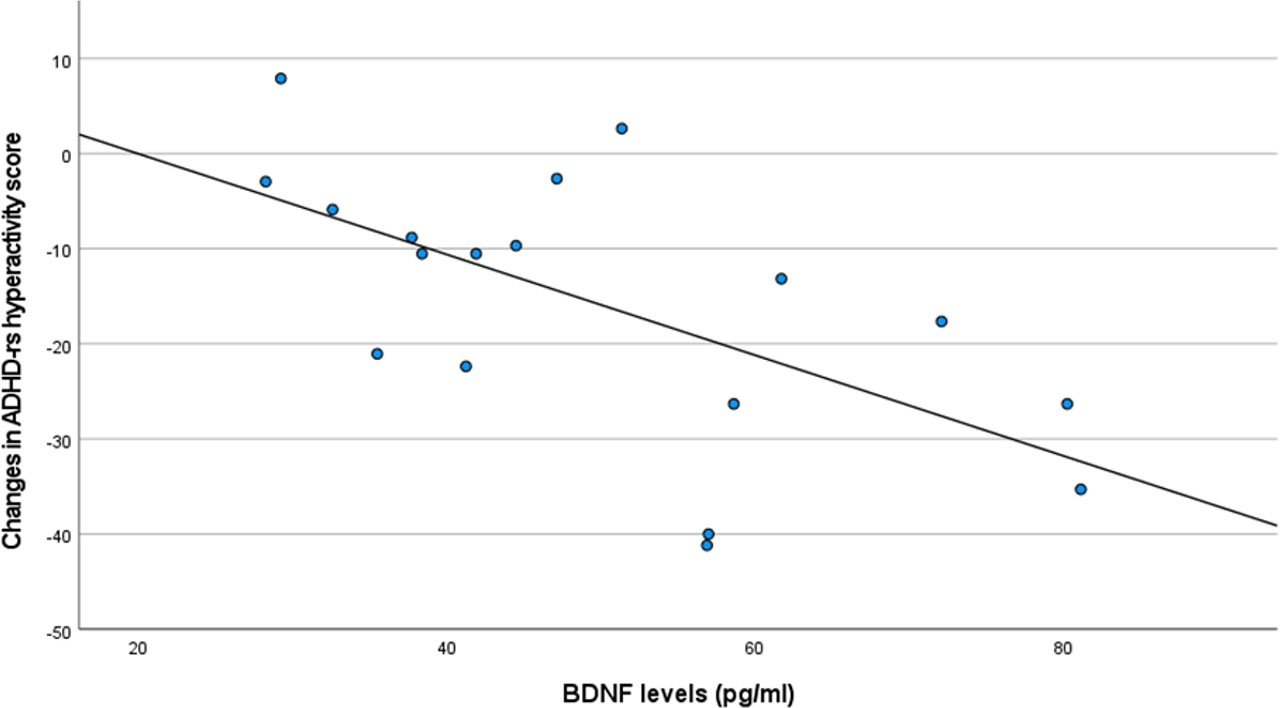
FIGURE 4B.
Correlation between baseline BDNF levels and improvement in parent-rated ADHD-rating scale hyperactivity symptom scores.
Note. BDNF = Brain-Derived Neurotrophic Factor; ADHD-rs = ADHD-rating scale.
TABLE 4.
Spearman correlations between baseline-to-follow-up changes in plasma BDNF levels and ADHD symptom scores in the ADHD group.
| Symptom change scores | r | p |
|---|---|---|
| Inattention (parent) | .32 | .29 |
| Hyperactivity (parent) | .52 | .07 |
| Behaviour (parent) | .23 | .44 |
| Inattention (teacher) | −.11 | .73 |
| Hyperactivity (teacher) | .04 | .90 |
| Behaviour (teacher) | .21 | .51 |
Preclinical studies provide a biological rationale for the influence of psychostimulant treatment on BDNF regulation. Experimental animal models have demonstrated increased central BDNF expression following chronic methylphenidate exposure (32,60), and dopaminergic receptor stimulation has been shown to upregulate BDNF expression and secretion in neuronal cell models (61,62) thereby supporting a theoretical link between stimulant-induced dopaminergic modulation and neurotrophic signalling.
From this theoretical perspective, one might have expected methylphenidate treatment to be associated with changes in plasma BDNF levels. The fact that we did not observe a significant increase in our patient group may reflect limited statistical power due to the relatively small sample size. Alternatively, it is possible that clinical improvement and functional normalization during treatment reduced the need for compensatory upregulation of BDNF, thereby attenuating potential stimulant-related effects on circulating BDNF levels.
Our study also showed that higher baseline BDNF levels were associated with greater improvements in parent-rated inattention and hyperactivity symptoms after MPH treatment. This result deviates from that of Amiri et al. (2013), who found the reverse pattern: that low baseline BDNF levels predicted larger improvement in hyperactivity symptoms. Viewed from the compensatory theory of BDNF, our finding can be interpreted such that children who generate higher compensatory BDNF levels have a superior starting point for MPH treatment and thus respond better to treatment. Alternatively, patients with higher levels of BDNF before treatment may have more profound neurotransmitter dysfunction, leading to a greater compensatory increase in BDNF. In this case, there would be greater room for clinical improvement following MPH treatment. However, as we found no significant correlation between high baseline BDNF levels and more severe ADHD symptomatology scores, we find the first possibility more likely.
The findings from the current study should be interpreted in the light of several major methodological limitations, the most important being the small sample size. A formal a priori power analysis was not performed due to the exploratory nature of the study and the lack of reliable effect size estimates for longitudinal plasma BDNF changes in paediatric ADHD populations. Consequently, the study may have been underpowered to detect small-to-moderate effects. This also prevented subgroup analyses such as differences by sex, ADHD subtype, or comorbidity.
Additionally, the predominance of boys with the combined ADHD subtype strongly limits the generalisability of the findings to girls with ADHD, and to other ADHD subtypes. Given the fact that ADHD is a highly heterogeneous disorder, this is a major considerable limitation of our study. The fact that the treatment-related research design was open-label and lacked randomization is also a limitation of the study, as is the lack of objective measures of physical activity. Furthermore, the absence of an untreated ADHD comparison group limits the ability to isolate medication-related effects. However, such longitudinal designs are generally not considered ethically feasible in clinically referred paediatric populations due to the need to provide indicated pharmacological treatment.
In addition, baseline BMI differed significantly between groups, although values remained within the normal range. As circulating BDNF concentrations may be influenced by metabolic factors, a potential residual confounding effect of BMI cannot be entirely excluded. Despite these limitations, our study has several important methodological strengths compared to previous research. Two recent meta-analyses by Zhang et al. (2018) and Lucca et al. (2023) have highlighted large discrepancies in previous BDNF studies due to heterogeneity among study populations and wide variations in methodological approaches. Our study was designed to be more rigorous and systematic in several respects. This included controlling for daily physical activity (albeit only by subjective reports) and diurnal variations on BDNF levels. Furthermore, to prevent BDNF levels being affected by food consumption, participants fasted overnight before the day of the blood sample and was that day awakened at 7 am. In addition, pubertal status was controlled for, the clinical profiles of patients and control children were comprehensively assessed, and participants in the two groups were matched on key variables.
In this paper, we have presented the results of a longitudinal cohort study. We found that baseline plasma BDNF levels were higher in children with ADHD than in healthy control children, and that the difference persisted after 12 weeks of MPH treatment. We did, however, not find that MPH treatment further increased BDNF levels in the patient group. In addition, we found that baseline BDNF levels predicted the effectiveness of MPH treatment on clinical ADHD symptoms. Our results are generally consistent with the compensatory theory of BDNF, which suggests that BDNF is upregulated to serve as a neuroprotective factor against neuronal imbalances. However, further research with larger, more diverse samples is needed to validate our results, both to understand the physiological mechanisms that lead to changes in BDNF with ADHD, and to explore whether plasma BDNF levels can serve as a predictor of MPH treatment responses.
Notes
[6] Financial disclosure Funding
The study was supported by grants from the University of Copenhagen, Lundbeckfonden, Dagmar Marshalls Fond, Albion Fondet, Carl og Ellen Hertz Legat, Familien Hede Nielsens Fond, Fru C Hermansens Mindelegat, Grosserer L.F Foghts Fond, Torben og Alice Frimodts Fond, Direktør Kurt Bønnelycke og hustru fru Grethe Bønnelyckes Fond, and Helsefonden.