Have a personal or library account? Click to login
Struggling to be heard: A scoping review of user participation in ADHD mental healthcare for children and adolescents Cover

Struggling to be heard: A scoping review of user participation in ADHD mental healthcare for children and adolescents

Open Access
|Jul 2025

Figures & Tables

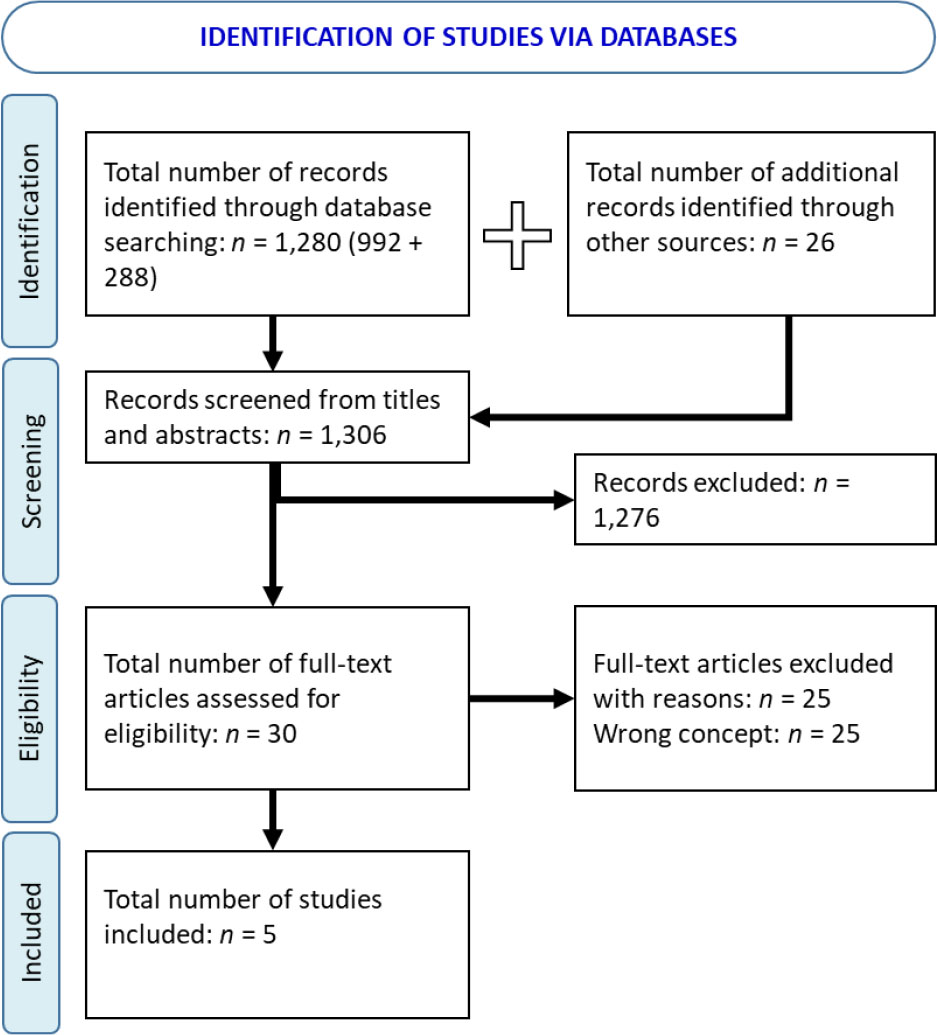
FIGURE 1.

PRISMA-ScR flow diagram

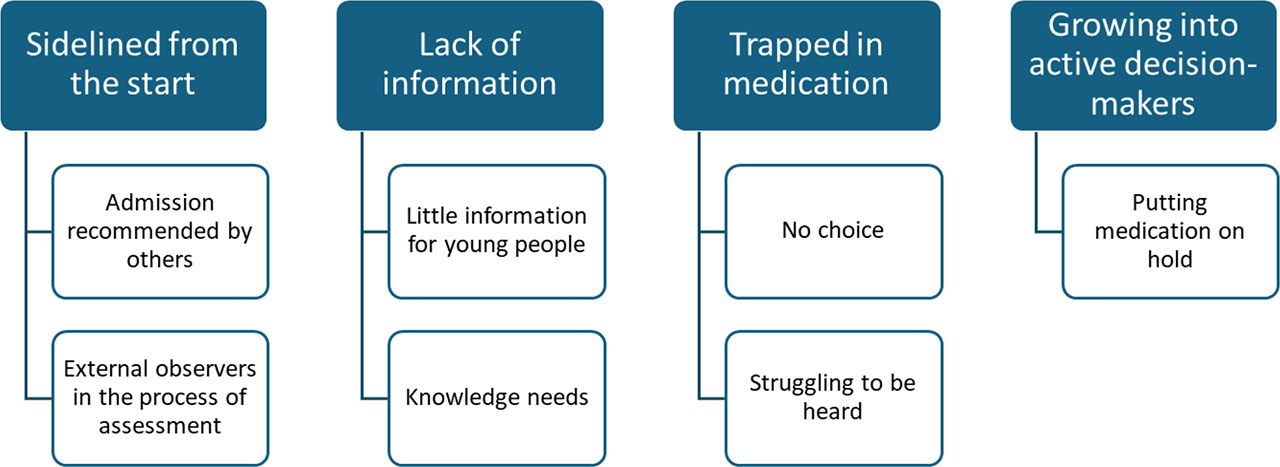
FIGURE 2.

Categories and subcategories

Studies addressing user participation among young people with attention deficit hyperactivity disorder (ADHD)

ReferenceAimParticipant characteristicsStudy settingMethods1
Avisar and Lavie-Ajayi (2014) (62), IsraelTo explore experiences of stimulant medication and treatment trajectories among adolescents with ADHD
  • Age: 12.5–16.5 years

  • 14 adolescents using stimulant medication for ADHD for ≥ 6 months

  • 8 males, 6 females

Private psychology center
  • Qualitative design using individual semistructured interviews

  • Data analysis: Interpretative phenomenological analysis

Brinkman et al. (2012) (63), USTo elucidate how adolescents with ADHD contribute to medication treatment decisions
  • Age: 13–18 years

  • 44 adolescents, diagnosed with ADHD 8.7 years on average prior to participation

  • 24 males, 20 females

Community-based pediatric practices
  • Qualitative design using focus group interviews with open-ended, semistructured questions

  • Recruitment stratified by sex and age

  • Data analysis: Inductive coding

Cheung et al. (2015) (64), ChinaTo explore experiences of adolescents and young adults with ADHD in Hong Kong in accessing treatment and services and coping with ADHD-related impairment, along with their expectations of future treatment
  • Age: ≥ 16 years

  • 20 patients 16–17 years, 20 patients ≥ 18 years

  • 27 males, 13 females

Specialist health care services
  • Mixed-methods design using qualitative semistructured interviews, field notes, Adult ADHD Self-Report Scale (ASRS) to assess severity of ADHD symptoms, and questionnaires on demographics, current medication, symptoms, and severity of impairment

  • Data analysis of semi-structured interviews: Grounded theory

Mikesell et al. (2020), (65), USTo explore children's real-time participation in stimulant medication decisions
  • Age: 5–11 years

  • 16 children with ADHD, who had received a first-time stimulant medication prescription, and their parents

  • The families were English-speaking

Two community mental health clinicsAnalysis of video-recordings of three follow-up visits of medication titration with emphasis on identifying the clinician's Treatment Recommendation inspired by conversation analytic research
Travell and Visser (2006) (66), UKTo explore the experiences, perceptions, and views of young people with ADHD and their parents
  • Age: 11–16 years

  • 17 adolescents and their parents

Local health education authority
  • Qualitative semistructured interviews

  • Data analysis: Grounded theory

Language: English
Page range: 68 - 81
Published on: Jul 19, 2025
In partnership with: Paradigm Publishing Services
Publication frequency: 1 issue per year

© 2025 Elin Håkonsen Martinsen, Nina Helen Mjøsund, Anne Faugli, published by Psychiatric Research Unit
This work is licensed under the Creative Commons Attribution-NonCommercial-NoDerivatives 4.0 License.