
1. Introduction
Pile foundation structures have been employed in the construction industry for many years and are used for a multitude of purposes. These include the transfer of loads from the structure to deeper layers of the subsoil, the foundation of buildings with complex loads [1], the strengthening of slopes and existing foundations [2,3], the protection of deep excavations [4], and many more.
Foundation piles are most commonly used to transfer vertical compressive axial forces. However, the development of numerous structures has led to an increase in the complexity of loading on foundations, with axial loading now being complemented by lateral loading, which can be either constant or cyclic. This type of loading is evident in the foundations of offshore wind turbines [5], high-rise structures [6], and noise barriers [7]. In some cases, the lateral component of load is crucial.
The most reliable method for accurately assessing pile behaviour under load is the static load test, which is the natural way to examine the behaviour of a pile under lateral load in the real scale and in time corresponding to service conditions [8,9]. Nevertheless, the possibilities of performing such tests are limited by their high cost and the frequent occurrence of technical issues, such as a lack of space or access and the inability to apply the load. Consequently, the engineers need to rely on static calculations and various design methods based on ground profile recognition [10,11], piling technology [12], possible degradation [13], and resulting pile stiffness. All these factors are subjects of more and more sophisticated methods of evaluating pile’s reliability [14,15]. Due to technical difficulties and the large cost of real-world scale experiments, most of the published research has been conducted on small pile models in a laboratory scale [16,17,18]. It is not possible for such tests to entirely supplant those conducted on a real scale; however, they can furnish invaluable insight and solutions pertaining to pile behaviour under load [19–21].
The majority of methodologies employed to determine the lateral load capacity of piles were developed in the 1960s and 1970s and are primarily founded upon the assumption that the pile can be treated as a beam on an elastic ground [22,23,24]. It is therefore evident that further research is required in this area, given the increasing construction of structures with lateral loads (e.g., wind turbines), and the necessity to consider temporal variations in lateral loads, local subsoil plasticisation, and interactions with neighbouring piles.
To address these issues, a test stand was constructed for the measurement of lateral load-bearing capacity on pile models at the laboratory scale. This article presents the initial results of measurements conducted on six pipe piles within a box filled with medium-compacted sand. Based on these measurements, the load behaviour of the piles was analysed through the plotting of load-displacement curves, and the load capacities of the tested piles were estimated through the application of the Fellenius [25], Chin [26], and Decourt methods [27]. The estimation of load capacity by approximation methods was further investigated in terms of the effect of the number of measurements taken on the accuracy of the approximation.
2. Test stand
Lateral static load tests were conducted on a test stand comprising a wooden rigid test box with the following dimensions: B × L × H = 1.15 m × 1.25 m × 1.50 m. It was determined that there was no deformation of the object during the installation of the piles and their subsequent loading. The box was filled with a siliceous medium, compacted sand up to a total height of 120 cm. Six steel pipes, each measuring 1.0 m in length, were employed as pile models. These pipes were closed at their bases and had an outside diameter of 4.2 cm, along with a wall thickness of 0.25 cm. Figure 1 illustrates the configuration of the pile models within the test box.
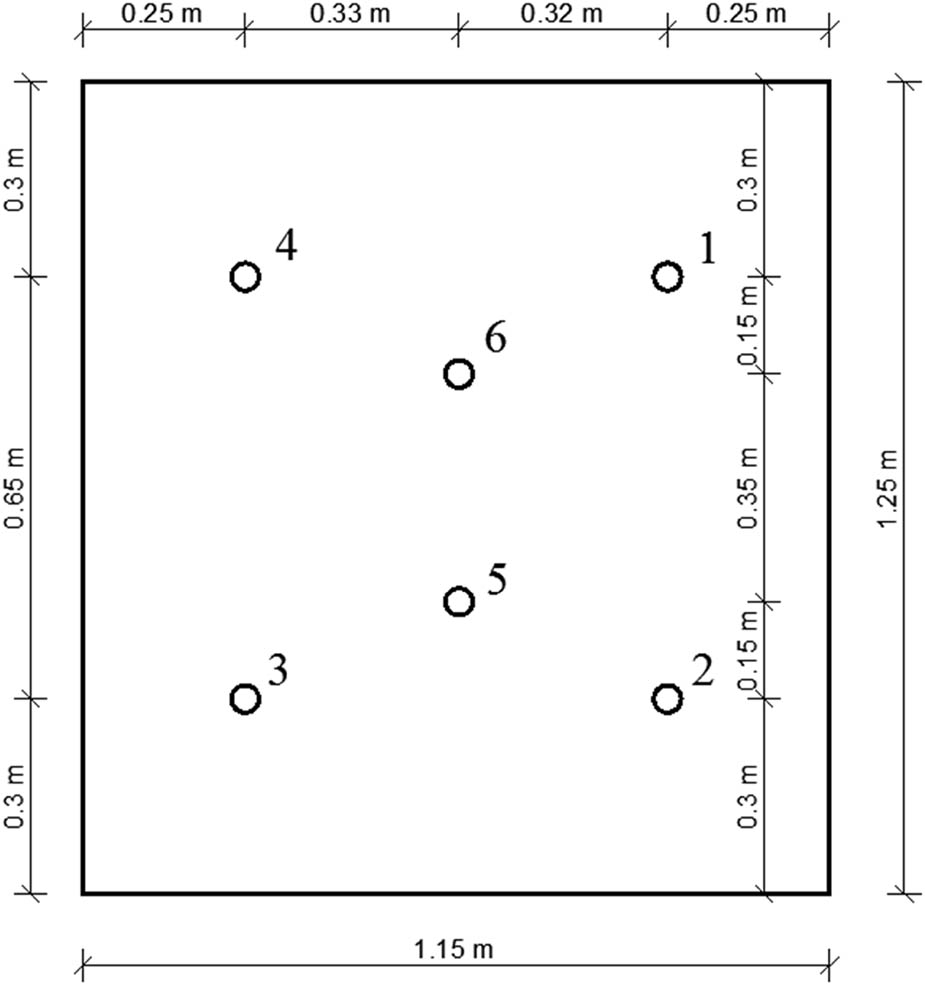
Figure 1
Layout of pile models, 0.8 m embedded in the soil in the box.
Source: Author’s contribution.
Pile models were driven using a light dynamic penetrometer to a depth of 0.8 m (Figure 5). The pipes used in the testing were identified successively as 1, 2, 3, 4, 5, and 6, which corresponded to the order in which they were installed. Furthermore, the lateral surfaces of the pipes exhibit a gradation in smoothness. Pipes 1, 2, and 5 display a smoother texture, while pipes 3, 4, and 6 exhibit a rougher surface, which is characterised by additional matting. Further details regarding the test stand and axial static load test performed in the test stand can be found in the study of Bauer et al. [14].
3. Measurement process
In a single test, the lateral resistance of two piles was measured simultaneously. To achieve this, the two piles were connected by a structure consisting of two metal plates joined by four bolts (Figure 2) and eight nuts. A force sensor was positioned between one of the piles and the plate, with two additional plates between them. Displacement sensors were also attached to each of the piles. This configuration allowed the connection of piles 1–2, 3–4, and 5–6. The sensors were mounted on an independent base, which measured the horizontal displacement of the piles.
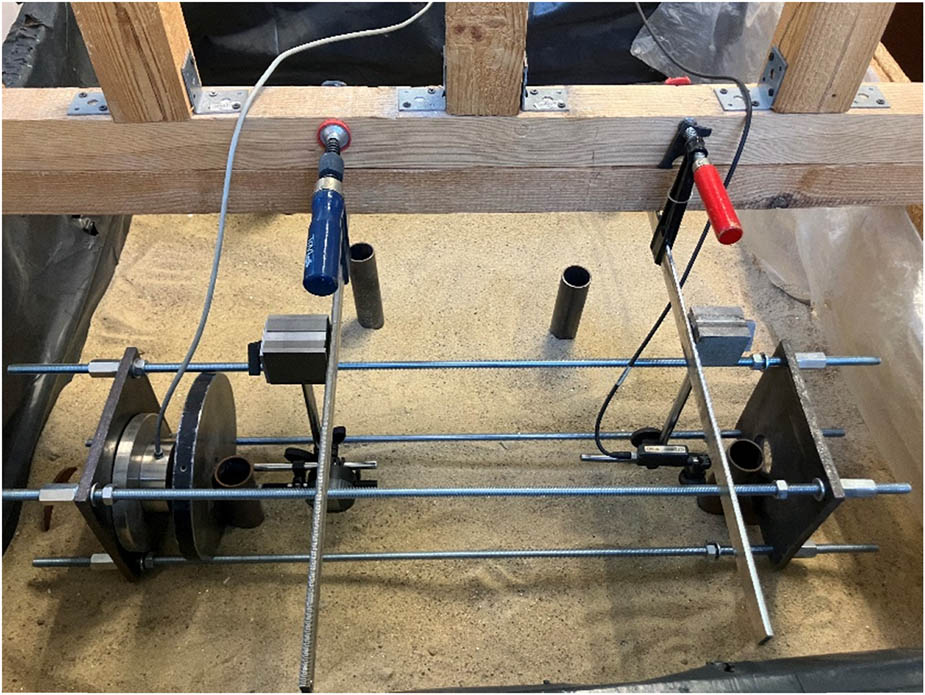
Figure 2
Pile measuring station.
Source: Author’s contribution.
The test involved applying a horizontal force to both piles. A concentrated force was applied to both piles by gradually turning the nuts. The value of the concentrated force was determined using a force sensor. Simultaneously, the displacements of both piles were measured by displacement sensors (Figure 3).
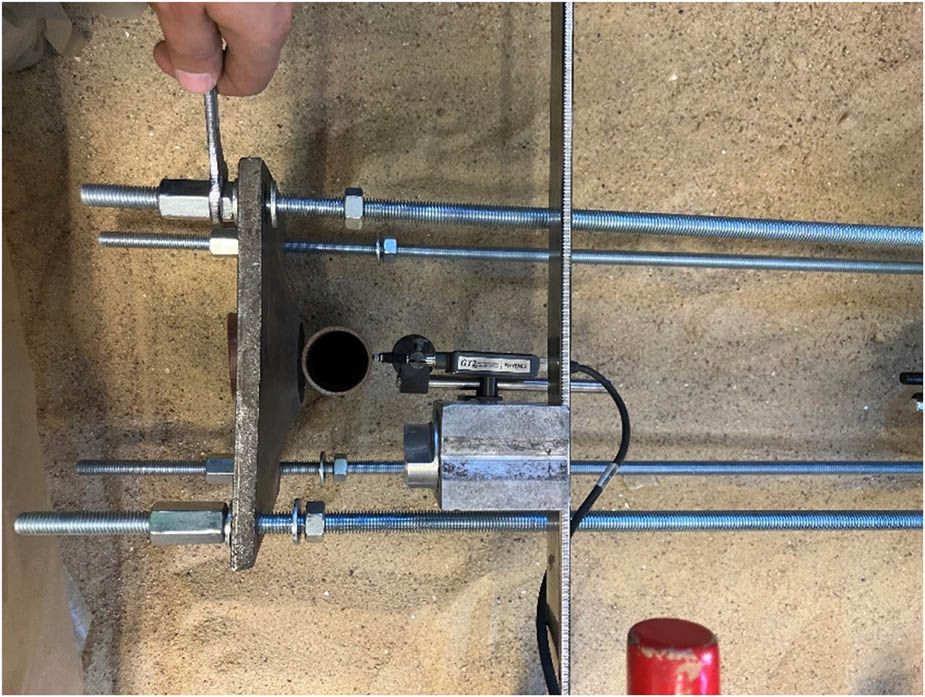
Figure 3
Loading of a pile.
Source: Author’s contribution.
The initial phase of the testing programme comprised three conventional tests, in which a constant load was applied to the two piles during a single test in order to ascertain their bearing capacity. In each phase of the testing programme, the load was incrementally applied to the piles by 0.2–0.3 kN following the stabilisation of displacements in the preceding loading phase. Upon reaching a load near the bearing capacity (significant displacement on a small load step), the piles were unloaded in a similar manner, allowing for the observation of permanent deformations once the piles were fully unloaded.
For the purpose of approximating the results of static load test, the Chin, Brinch-Hansen, and Decourt methods were proposed. In each of the aforementioned methods, the test results in the form of points of displacement obtained (s) as a function of the applied force (Q) are approximated by an appropriate curve, the asymptote of which determines the load capacity of the pile Q ul. To determine the appropriate curve, the points are transformed into an appropriate coordinate system, where they can then be approximated by a line with the equation . In each method, two constants are determined: and represent the directional coefficient and the free expression in the equation of the straight line, respectively. The determination of these constants is conducted independently for each group of points derived from the conducted tests. Furthermore, it should be noted that the approximation should be limited to test points where the pile has already worked in the elastic-plastic and plastic states.
3.1. The Chin method
In the Chin method, the hyperbolic shape of the Q–s chart has been proposed, described by equation (1) [26]:
where C 1 and C 2 are two constants. Bearing capacity Q ul is the asymptote of the hyperbole, determined from equation (2):The Chin approximation in transformed axis and in Q–s charts is presented in Figure 4.
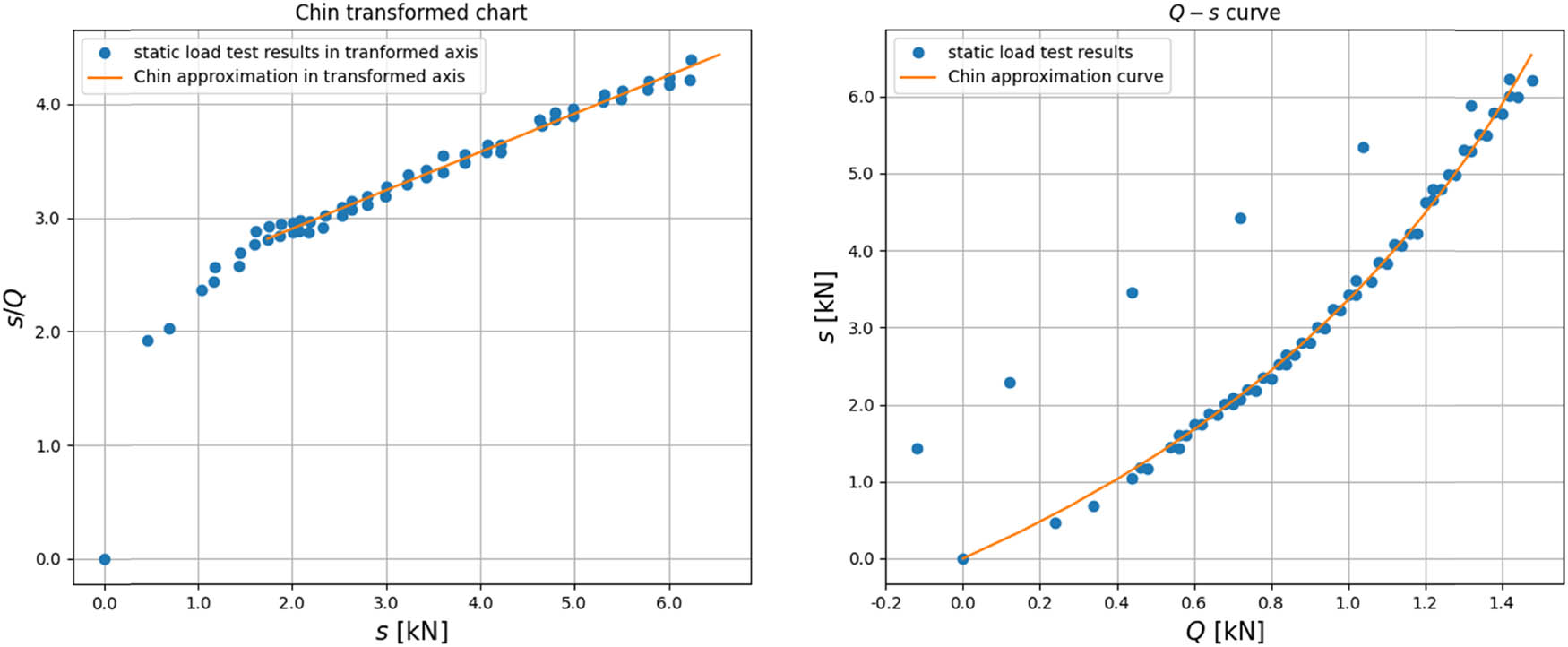
Figure 4
Chin transformed the chart and approximation curve in Q–s charts.
Source: Author’s contribution.
3.2. The Brinch-Hansen method
In this method, the parabolic shape of the Q–s curve is proposed, described by formula (3). The boundary displacement and the bearing capacity can be determined from equations (4) and (5) [25]:
where C 3 and C 4 are constants for the Brinch-Hansen method. The Brinch-Hansen approximation in transformed axis and in Q–s charts is presented in Figure 5.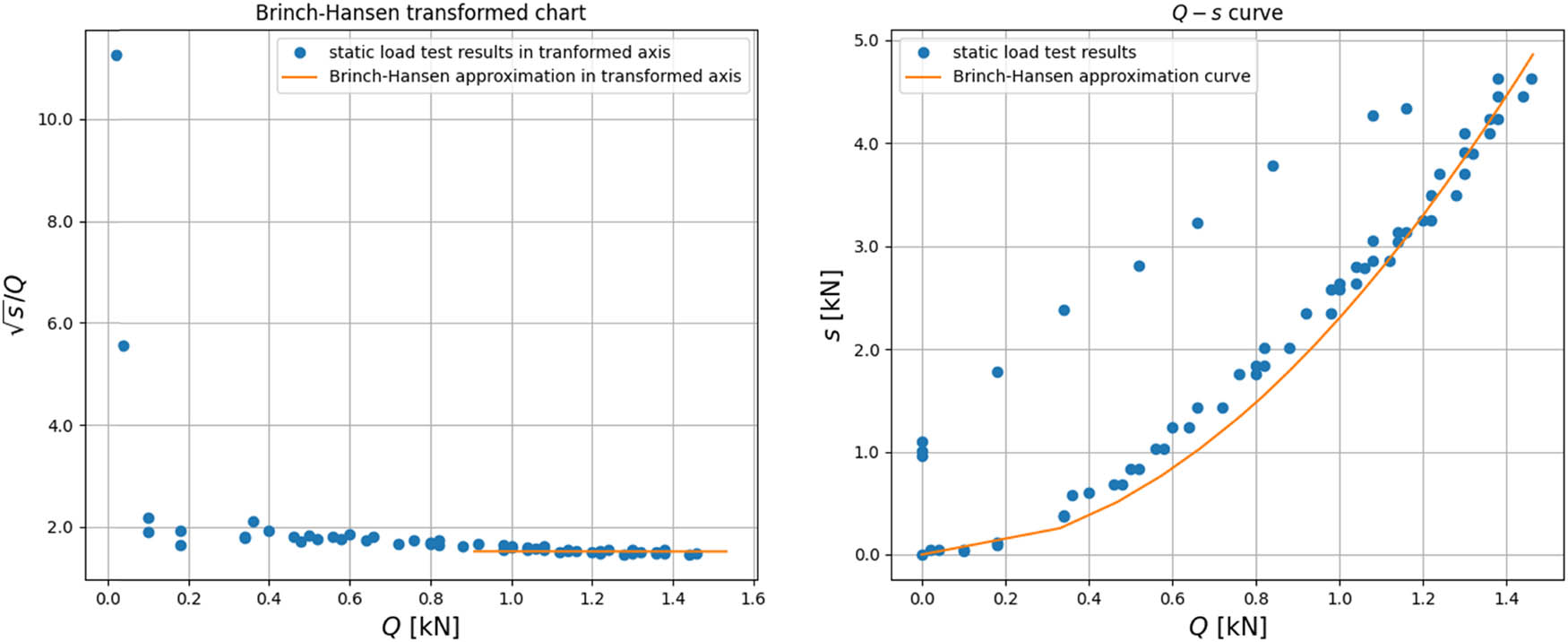
Figure 5
Brinch-Hansen transformed the chart and approximation curve in Q–s charts.
Source: Author’s contribution.
3.3. The Decourt method
In the Decourt method, the relationship between load and settlement and bearing capacity is determined from equations (6) and (7) [27]:
where C 5 and C 6 are constants for the Decourt method. This method provides comparable results to the Chin method. The Decourt approximation in transformed axis and in Q–s charts is presented in Figure 6.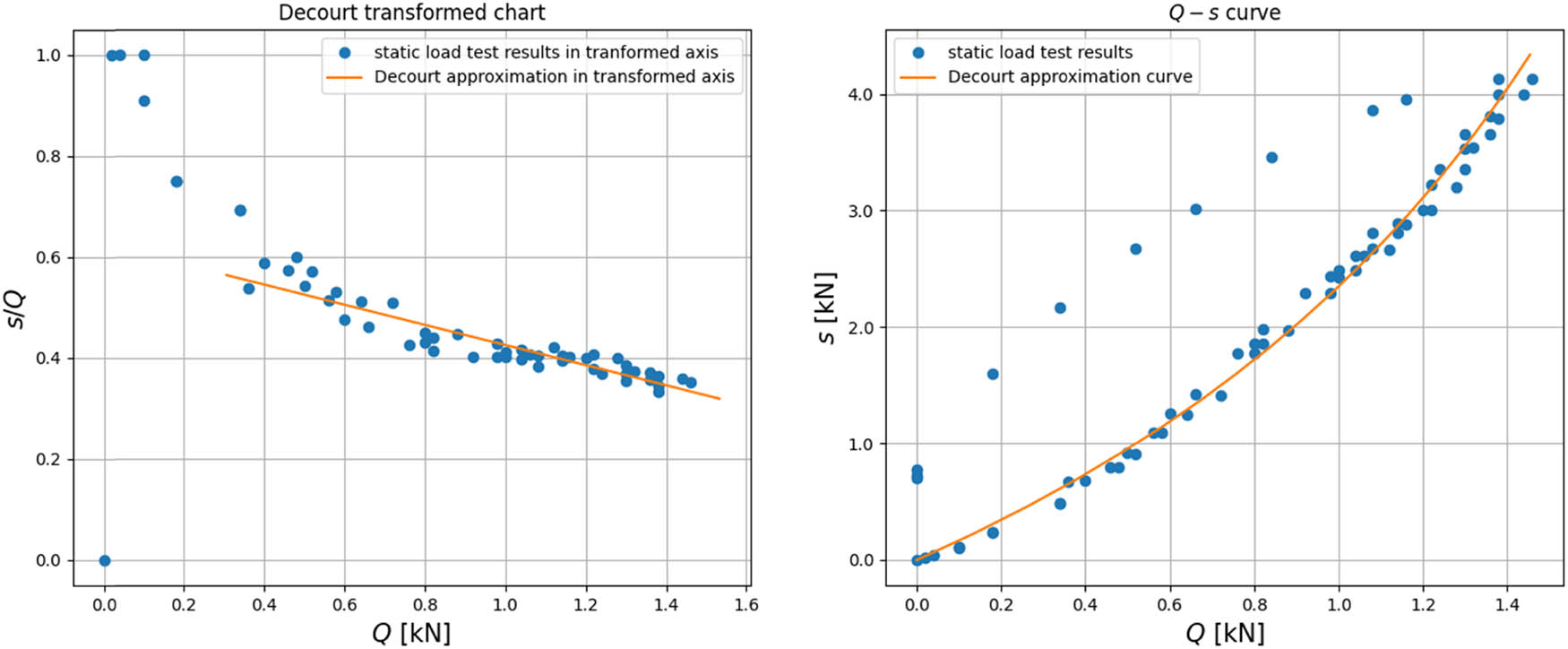
Figure 6
Decourt transformed the chart and approximation curve in Q–s charts.
Source: Author’s contribution.
4. Results and discussion
The results of the study are expressed as measurements of the horizontal displacement of the pile head, plotted as a function of the applied load. The test results for piles 1–6 are presented in Figure 7, which shows the lateral displacement versus the lateral load charts.
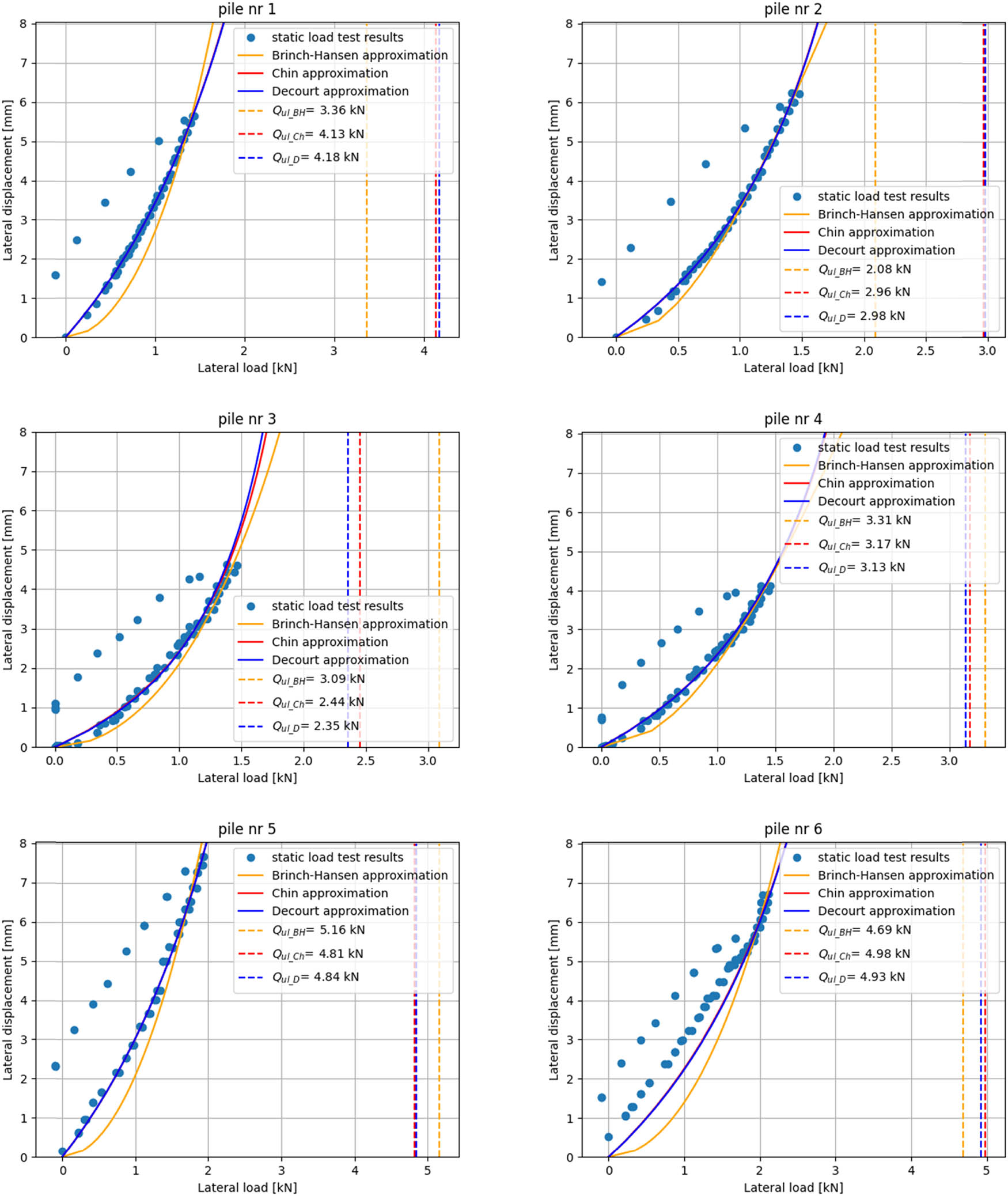
Figure 7
Results of static load tests for each pile.
Source: Author’s contribution.
In each test, the load was increased incrementally until a pre-boundary condition was reached. This was characterised by a significant increase in the displacement of the pile model head, accompanied by a slight increase in load. Then, the load was decreased until the pile was completely unloaded. Analysis of the graphs shows that the maximum displacements obtained in each test ranged from approximately 4.6–7.7 mm, while the permanent displacements stabilised in the range of 0.7–2.3 mm, i.e., a maximum of 0.23% of the total pile length. The bearing capacities obtained from the approximation methods exceed the calculated results from the tests because the load on the pile was not applied until the load capacity was achieved. Rather, it was applied until the elastic-plastic behaviour of the pile could be observed, which allowed the load capacity to be estimated. The subject was also addressed in the article in the description of results. The observed variations in the shapes of the approximation functions can be primarily attributed to the differential compaction of sand at distinct locations within the box. Soil samples collected from the central region of the box exhibited higher levels of compaction, indicative of higher load capacities for piles 5 and 6. In contrast, the less compacted soil observed at the various corners resulted in lower load capacities for these same piles.
The approximation of the results obtained with the three different methods indicated that the application of the Chin and Decourt methods gives similar results both in the shape of the curves obtained (hyperbolic) and in the ultimate load obtained. The Brinch-Hansen method gives a slightly different shape of curve (parabolic) and slightly different values of ultimate load, with a maximum difference of 30% for pile 2. Furthermore, from the analysis of the pile bearing capacities, it can be observed that the piles located in the centre of the box (5 and 6) have higher bearing capacities than those located closer to the corners, which may be due to better soil compaction in this area and the bending stiffness of the box walls. It has also been demonstrated that corner piles 3 and 4, which possess rougher lateral surfaces, exhibited higher load capacities in comparison to the smoother piles 1 and 2. Additionally, the bearing capacity of pile 2 is slightly lower than that of the others, which may be attributed to local soil weakening at this location.
5. Analysis of lateral bearing capacity approximation error
The approximation of the results of static test loads by the methods of Chin, Brinch-Hansen, Decourt, and others can provide information on static test loads. However, the accuracy of the application of these methods requires that the test results reach the plastic phase, in which a small increase in load results in significant deformation of the pile [28]. If the load applied to the pile is in a range far from its load-bearing capacity, the approximation performed may be characterised by high inaccuracy.
To undertake an error analysis of the determination of the lateral load capacity of the tested piles, an analysis was conducted on the impact of reducing the number of individual load steps on the analysis of the load capacities obtained. Such analyses are frequently conducted for axial piles [28]. This is of particular importance in cases where the objective is to test the load capacity of a pile without compromising its structural integrity, as this may be essential for its utilisation in other analyses or structural work.
The results obtained from the measurements of the load capacity of pile No. 2 were selected for analysis. The analysis entailed the approximation of the results of the static test loads with the Brinch-Hansen, Chin, and Decourt methods, under the assumption of a reduced number of measurement points. This approach involved the assessment of the outcomes that would have been attained if the 1, 2, 3, etc., up to the final 16 loading stages of the test, had not been executed. The final 16 load steps were selected for the purpose of analysis, at which point the soil surrounding the pile had begun to plasticise. In the earlier stages of the test, it was still in the elastic state, which prevents any conclusions being drawn about its load capacity.
As illustrated in Figure 8, the approximation curves of the pile bearing capacity, as determined using the Brinch-Hansen method, are presented for some of the analyses that incorporate a reduction in the number of load steps, as obtained from the static load tests.
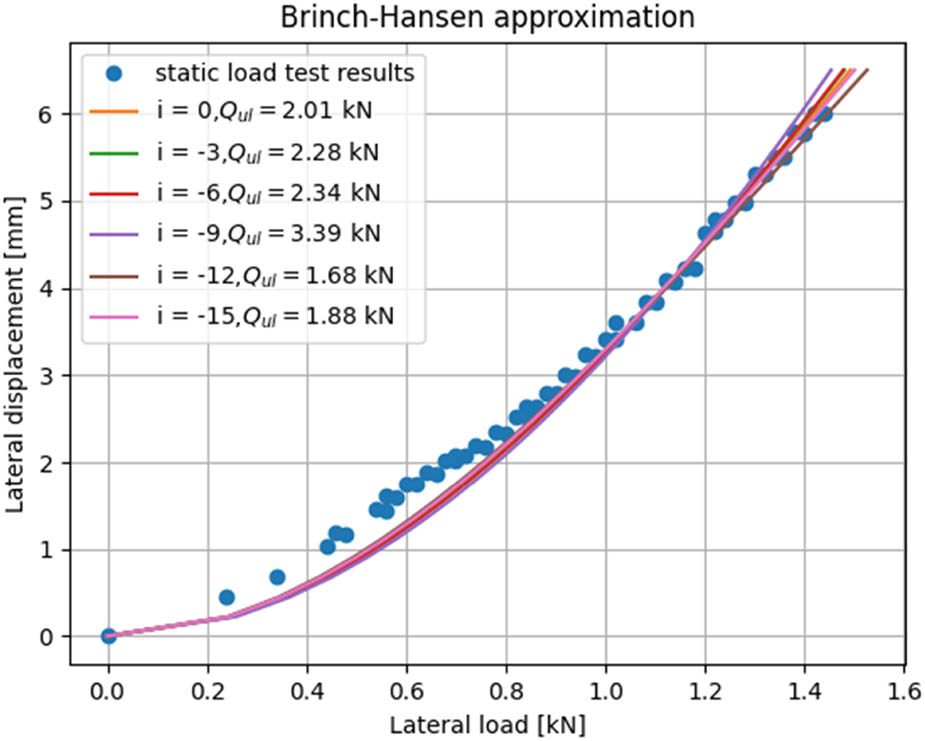
Figure 8
Brinch-Hansen approximation for reduced pile information.
Source: Author’s contribution.
The symbol i = 0 indicates the results of measurements in which no points have been removed, i = −3 indicates the results of measurements without the last three results, i = −6 without the last six, i = −9 without the last nine, and so on. The figure also shows the results of the pile-bearing capacity estimation for each analysis. A complete summary of all analyses is presented in Table 1.
Table 1
Summary of approximation error analysis.
| i | Q max,i | Chin | Decourt | Brinch-Hansen | ||||||
|---|---|---|---|---|---|---|---|---|---|---|
| Q ul,i | Error | Q max,i /Q ul,0 | Q ul,i | Error | Q max,i /Q ul,0 | Q ul,i | Error | Q max,i /Q ul,0 | ||
| − | kN | kN | % | % | kN | % | % | kN | % | % |
| 0 | 1.44 | 2.95 | 0.0 | 48.9 | 2.97 | 0.0 | 48.5 | 2.01 | 0.0 | 71.7 |
| −1 | 1.38 | 2.92 | 1.0 | 46.8 | 2.94 | 0.7 | 46.5 | 2.16 | −7.3 | 68.7 |
| −2 | 1.40 | 2.92 | 0.9 | 47.5 | 2.95 | 0.6 | 47.2 | 2.11 | −4.9 | 69.7 |
| −3 | 1.34 | 2.90 | 1.7 | 45.5 | 2.93 | 1.2 | 45.2 | 2.28 | −13.4 | 66.7 |
| −4 | 1.36 | 2.90 | 1.6 | 46.2 | 2.94 | 1.0 | 45.8 | 2.24 | −11.4 | 67.7 |
| −5 | 1.30 | 2.88 | 2.3 | 44.1 | 2.92 | 1.5 | 43.8 | 2.59 | −28.9 | 64.7 |
| −6 | 1.32 | 2.90 | 1.7 | 44.8 | 2.94 | 0.9 | 44.5 | 2.34 | −16.3 | 65.7 |
| −7 | 1.26 | 2.89 | 2.0 | 42.8 | 2.94 | 1.0 | 42.5 | 2.59 | −28.9 | 62.7 |
| −8 | 1.28 | 2.90 | 1.5 | 43.4 | 2.95 | 0.5 | 43.1 | 2.45 | −21.9 | 63.7 |
| −9 | 1.22 | 2.89 | 2.0 | 41.4 | 2.95 | 0.7 | 41.1 | 3.39 | −68.9 | 60.7 |
| −10 | 1.24 | 2.92 | 0.8 | 42.1 | 2.98 | −0.4 | 41.8 | 2.44 | −21.7 | 61.7 |
| −11 | 1.20 | 2.93 | 0.5 | 40.7 | 2.99 | −0.9 | 40.5 | 2.52 | −25.2 | 59.7 |
| −12 | 1.22 | 2.98 | −1.0 | 41.4 | 3.03 | −2.3 | 41.1 | 1.68 | 16.5 | 60.7 |
| −13 | 1.16 | 2.99 | −1.6 | 39.4 | 3.06 | −3.1 | 39.1 | 1.09 | 45.9 | 57.7 |
| −14 | 1.18 | 2.99 | −1.6 | 40.1 | 3.06 | −3.3 | 39.8 | 1.00 | 50.5 | 58.7 |
| −15 | 1.12 | 2.94 | 0.2 | 38.0 | 3.02 | −1.9 | 37.8 | 1.88 | 6.3 | 55.7 |
| −16 | 1.14 | 2.98 | −1.0 | 38.7 | 3.06 | −3.2 | 38.4 | 1.01 | 49.7 | 56.7 |
Source: Author’s contribution.
In Table 1, i (−) denotes the number of measurements reduced in the load capacity measurement, Q max,i [19] signifies the maximum value of the force applied to the pile when reducing by i measurements, and the results obtained when approximating the results with the Chin, Decourt, and Brinch-Hansen methods: Q ul,i [19] – the pile-bearing capacity obtained when reducing the number of measurements by i, error = (Q ul,i – Q ul,0)/Q ul,0 (%) – the measurement error, where Q ul,0 is the pile bearing capacity obtained when all measurements are taken into account, Q max,i /Q ul,0 (%) – the ratio of Q max,i to Q ul,0.
Figure 9 provides a visual demonstration of the variation of error as a function of the Q max,i /Q ul,0 ratio, employing the individual approximation methods.
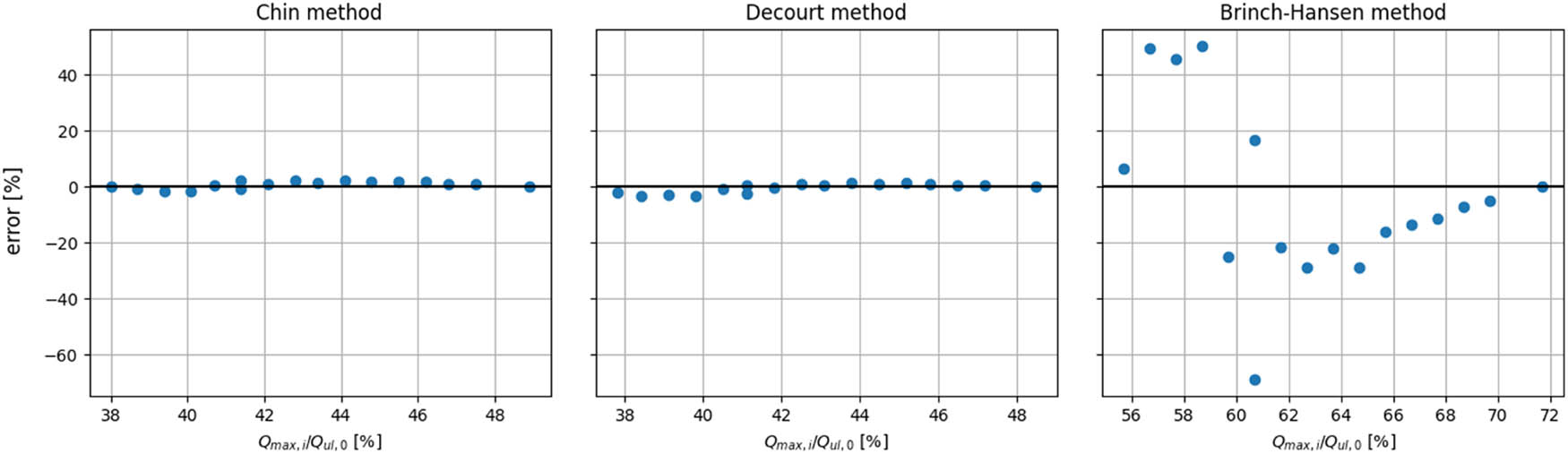
Figure 9
Error changes depending on the ratio of Q max,i /Q ul,0 in individual methods.
Source: Author’s contribution.
The error values indicate the extent to which the resistance measured with a reduced number of samples deviates from the resistance measured with the full number of samples. If the error value is less than zero, the load capacities for the smaller number of samples are overestimated. Conversely, if the error value is greater than zero, the load capacities for the smaller number of samples are underestimated.
The analyses conducted demonstrated that the lateral bearing capacity of the pile is susceptible to variation, as evidenced by the discrepancy in measurement outcomes. As illustrated in Figure 9, the approximation error associated with the Chin and Decourt methods is minimal, ranging from approximately 2–3%. This indicates that, for a specific case, the measurement results closely align with the graph’s shape and the load capacity estimation proposed by these methods. Conversely, the Brinch-Hansen method applied to lateral loading results exhibited larger error values, with absolute error values reaching almost 70% and both underestimation and overestimation. This suggests that, for a given case, the Brinch-Hansen method necessitates testing up to a load close to the pile’s load capacity to ensure the accuracy of results. This discrepancy may be attributed to the fact that the Brinch-Hansen method was developed for the behaviour of the pile in cohesive soils, while the operation of the pile in non-cohesive soils is characterised by a different curve shape.
Analysis of the accuracy of approximation methods has shown that an important aspect of bearing capacity determination is the influence of the number of measurements used on the error of the bearing capacity obtained. Accurate determination of bearing capacity requires tests to be carried out from a load close to the desired pile bearing capacity. Popular approximation methods allow the bearing capacity to be estimated without loading the pile to failure. However, as shown, to get as close as possible to the bearing capacity of the pile, it is necessary to reach a plastic state and only then to make an optimal calculation of the pile capacity.
6. Conclusions
In this article, the results of the lateral static load tests conducted at the laboratory scale were outlined. The preliminary test results obtained for six piles subjected to constant loading will serve as reference parameters, providing a basis for further research. The subsequent phase of the project will entail testing the piles under cyclic loads, coupled with an investigation into the impact of time on pile capacity. Furthermore, additional aspects will be investigated, including the impact of supplementary loading on neighbouring piles and soil weakening at the pile head. In addition, it is planned to test piles in pairs under of in the same direction, not opposite, and to analyse changes in the shape of the pile under load along its length.
The planned tests are intended to facilitate the development of a theoretical basis and description of the influence of constant and cyclic lateral loads on the behaviour of the pile in soil. The research issue concerns the theoretical connection between two aspects: the change in the lateral load capacity of a pile depending on soil weakening at its head and the additional loading of neighbouring piles.
The subject matter of the research activity constitutes a significant challenge in the field of pile design, particularly in the context of lateral forces. Furthermore, the proposed approaches to measuring the load capacity of piles, both continuous and cyclical, will facilitate the extension of analyses through the integration of diverse numerical simulations [9] and real-scale pile tests [7].
The comprehension and characterisation of these phenomena will enhance the calibration of pile numerical models and contribute to a more comprehensive understanding of the validation of the test methods employed.
Funding information
This research was funded by the Polish National Science Centre grant MINIATURA 7 (no 2023/07/X/ST8/00851).
Author contributions
Both authors contributed equally to the manuscript.
Conflict of interest statement
Authors state no conflict of interest.
Data availability statement
All data are available on request from the authors.