Have a personal or library account? Click to login
Geometrization of a 3D numerical model of an underground facility based on the results of terrestrial laser scanning Cover

Geometrization of a 3D numerical model of an underground facility based on the results of terrestrial laser scanning

By: Maciej Bodlak  
Open Access
|Jul 2024

Figures & Tables

Figure 1:

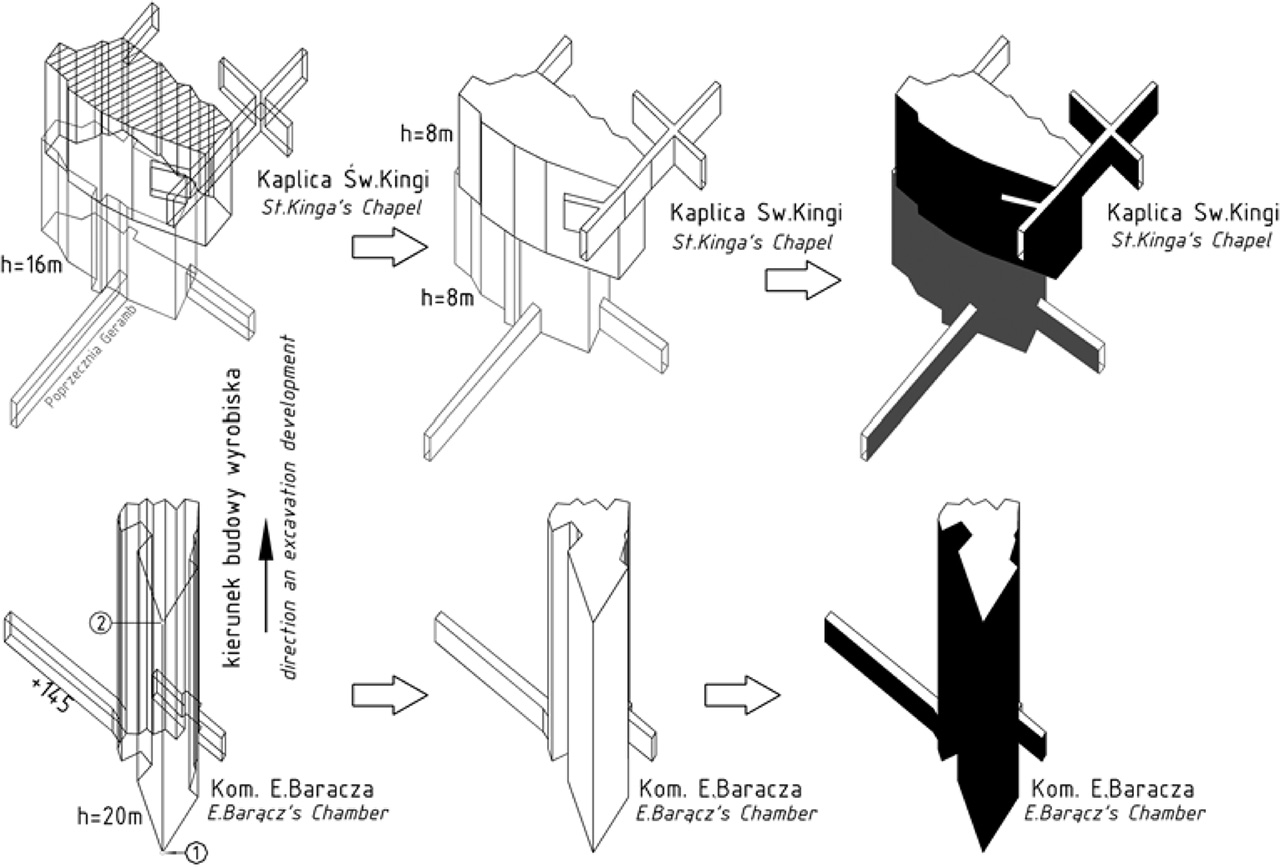
Stages of creating simplified spatial drawings on the example of selected excavations of the Chapel of St. Kinga and Erazm Barącz’s chambers (Maciaszek et al., 2010).
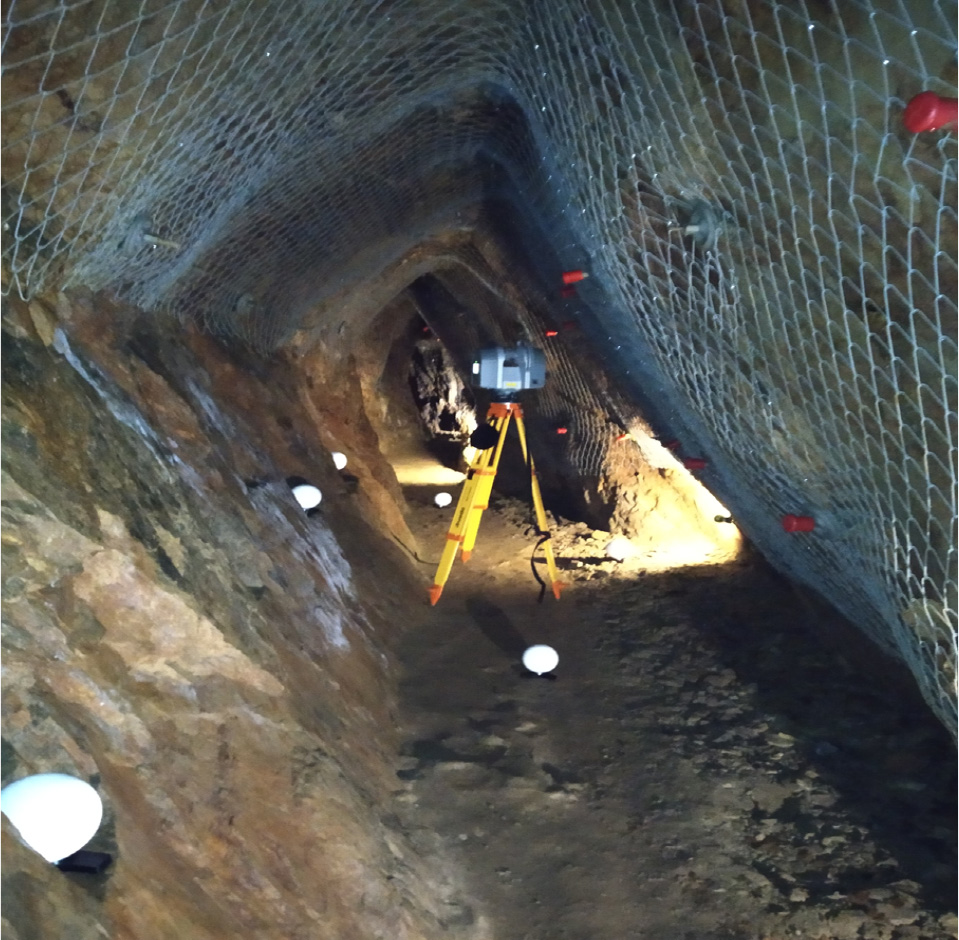

Figure 2:

Trimble TX8 laser scanner during measurements in the St. John Adit.
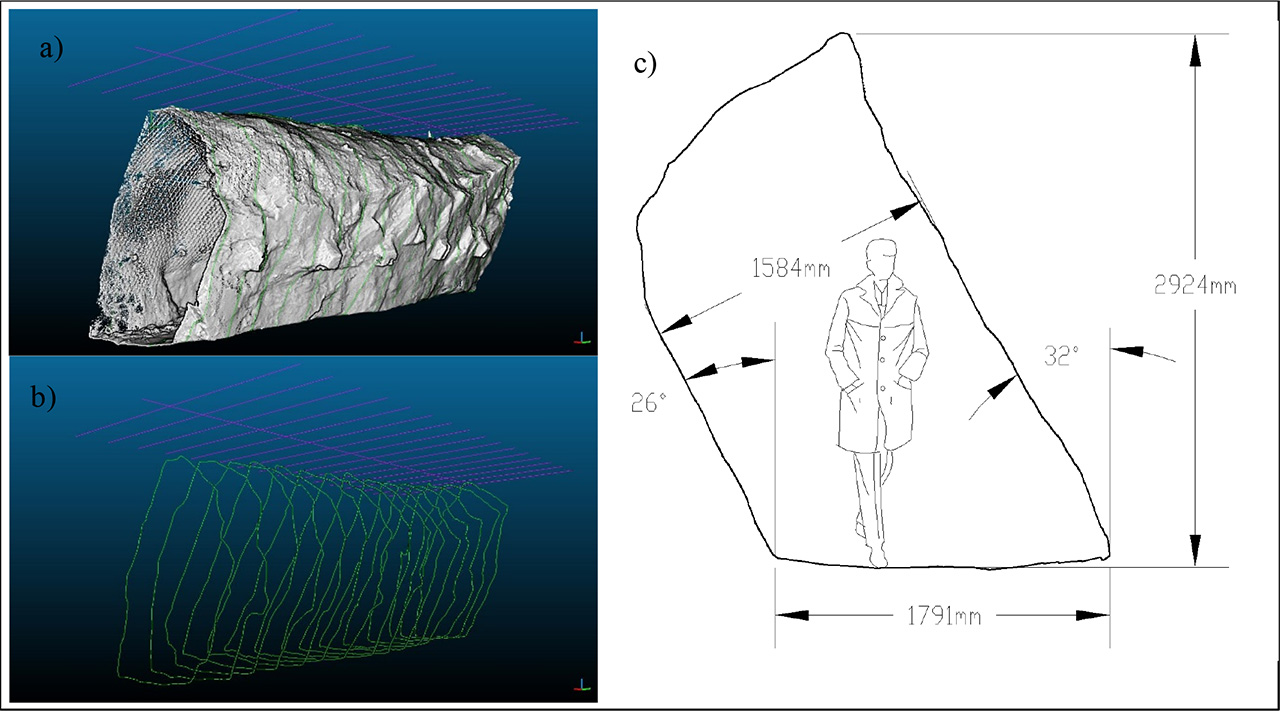

Figure 3:

a), b) Generating 2D cross sections from a “point cloud” in the CloudCompare program and c) dimensioning the selected cross section.
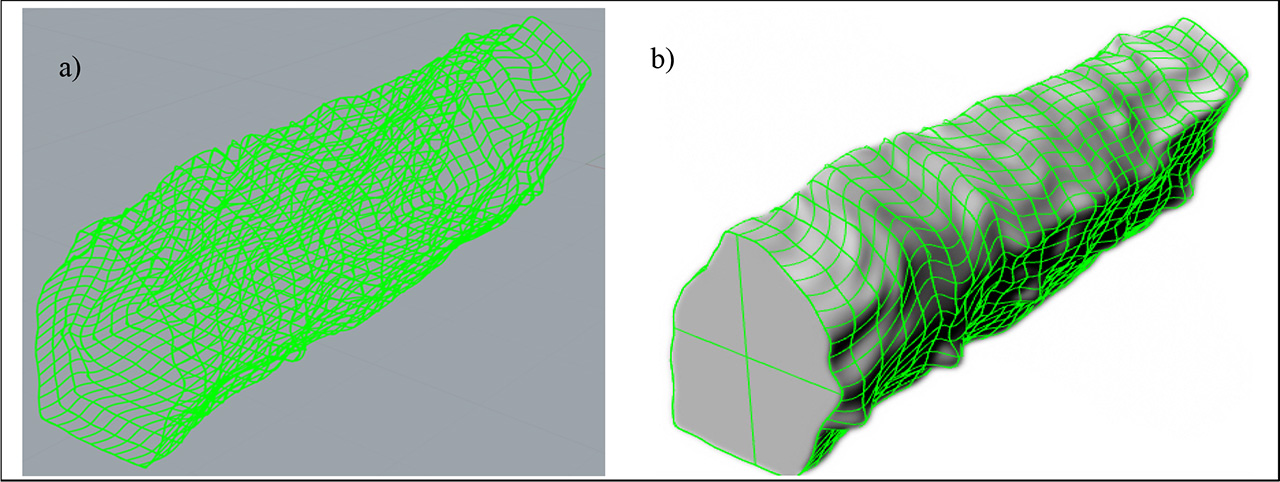

Figure 4:

a) Open polyplane of the adit, generated in the RHINO program. b) Rendering of the solid generated in the RHINO program.

Figure 5:

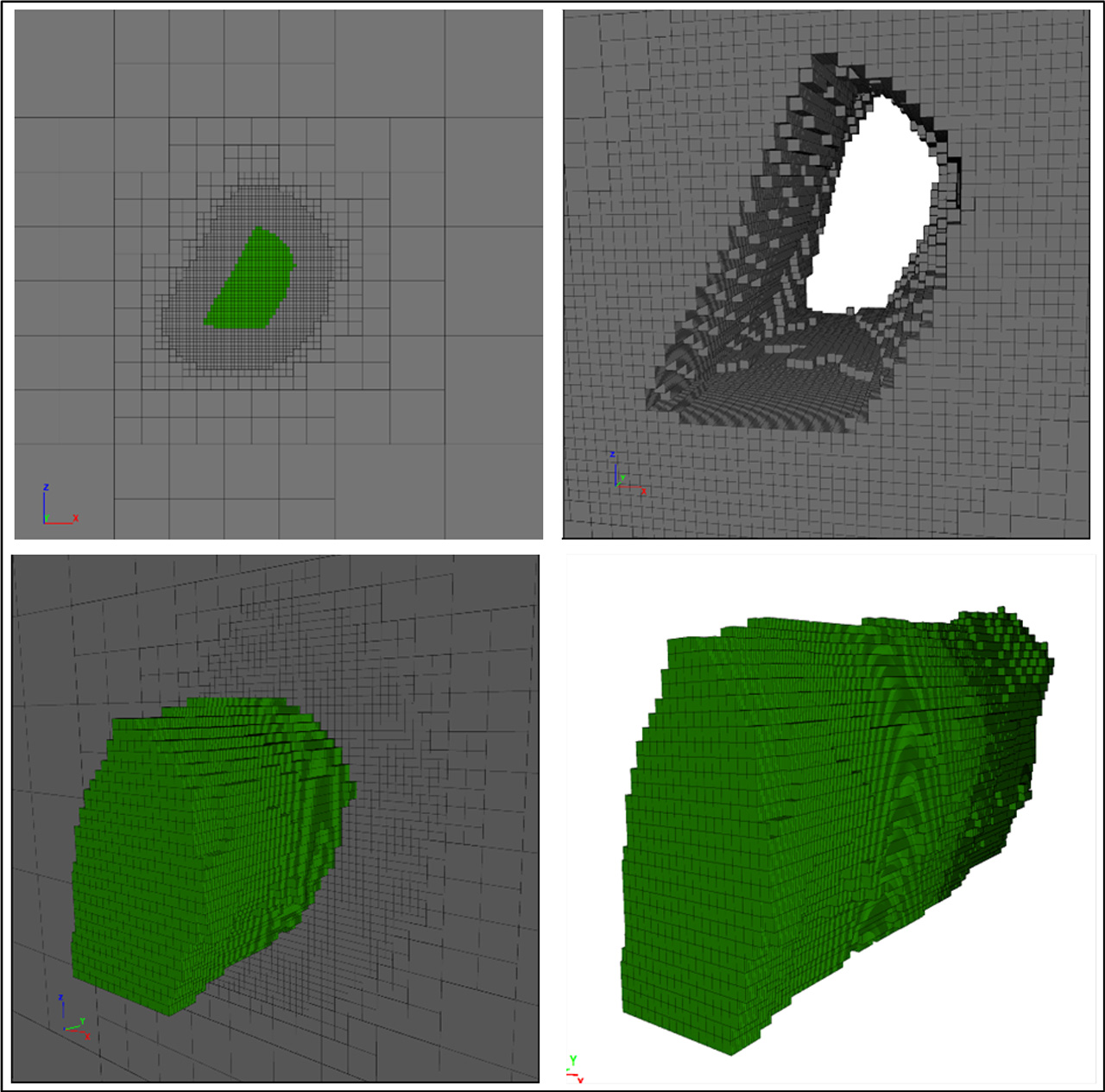
“Brick” zone mesh with “octree” density, generated in FLAC3D.
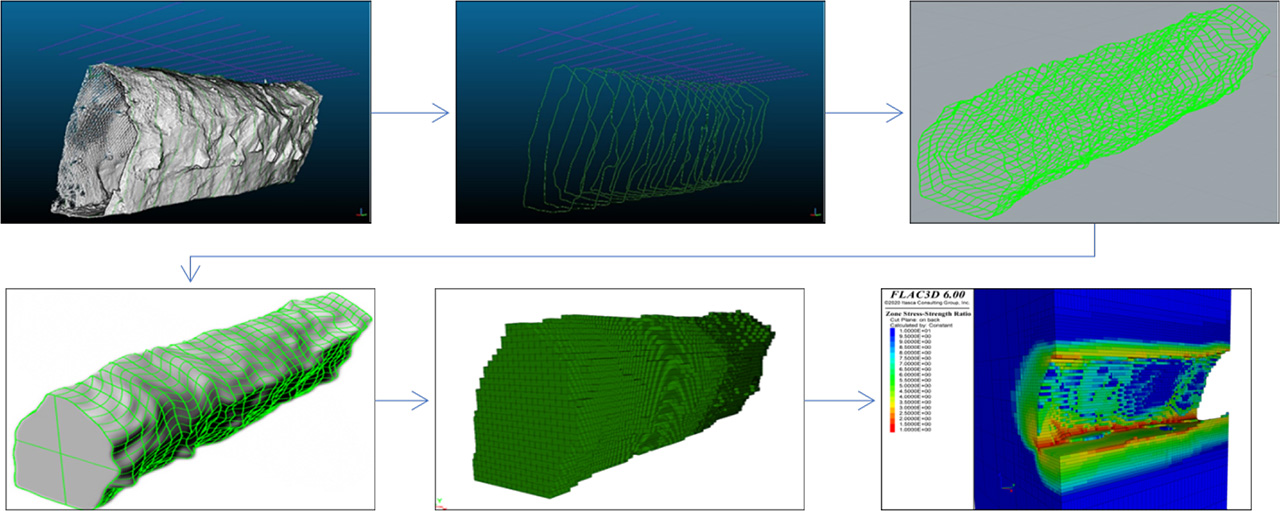

Figure 6:

Graphical representation of all stages of geometrization of the numerical model, based on the results of laser screening measurements.
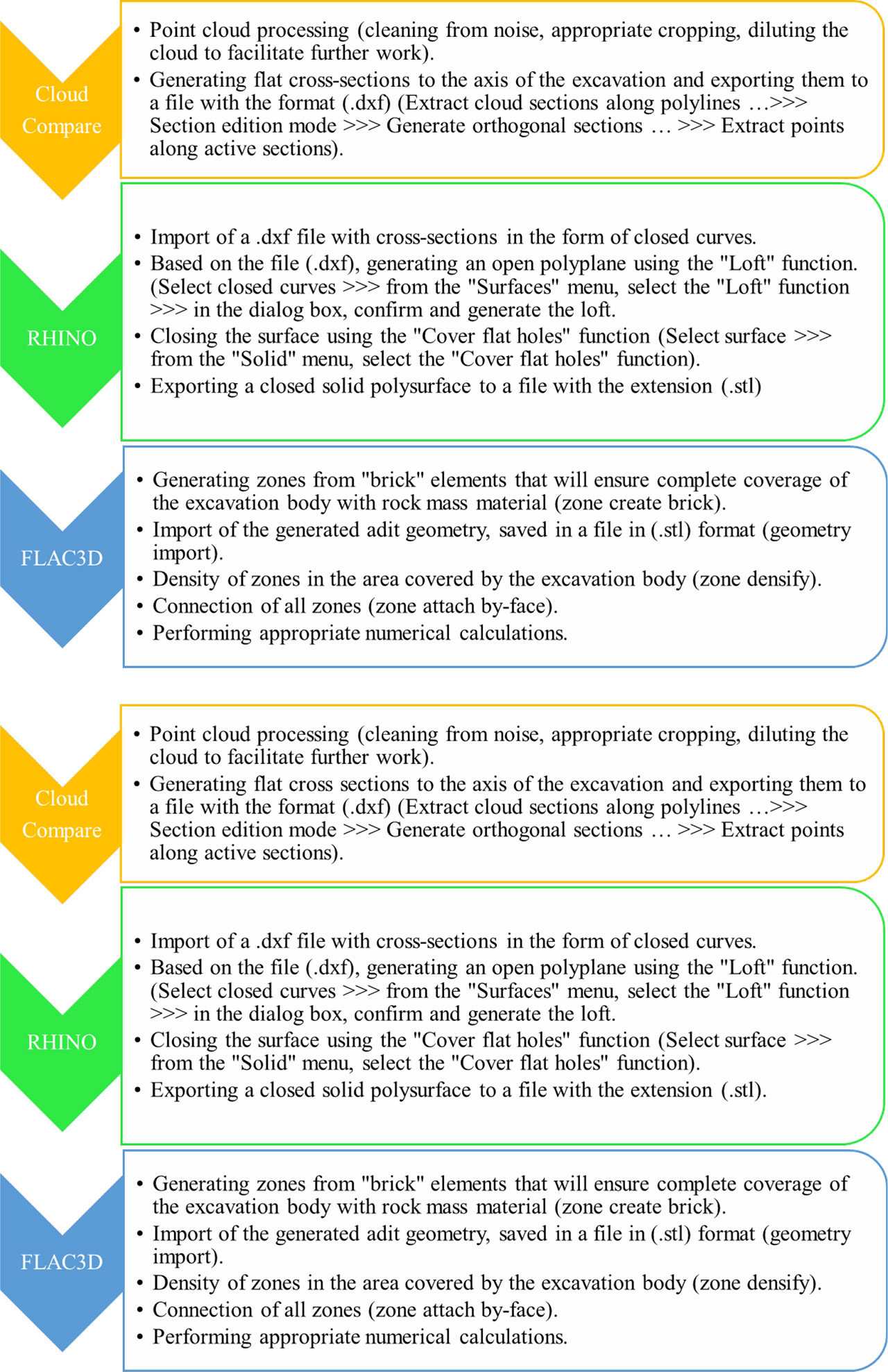

Figure 7:

Schematic representation of the numerical model geometrization process based on “point cloud” and FLAC3D using “brick” zones.

Code in FISH to generate a grid of “brick” zones with “octree” density_

  • model new

  • ;generate zones of rock mass around underground excavation

  • zone create brick size (5,10,5) point 0 (-9, -5.6, -8) point 1 (7,-5.6, -8) point 2 (-9, 1, -8)...

  • point 3 (-9, -5.6, 7)

  • ;import .stl file with solid of underground excavation

  • geometry import ‘Excavation.stl’

  • ;density of zones at the contact of the solid surface with rock mass zones

  • zone densify segment 2 gradient-limit maximum-length 0.1 repeat range geometry-distance ‘Excavation’ gap 1.0 extent

  • zone group ‘Excavation’ range geometry-space ‘Excavation’ count odd

  • zone attach by-face

DOI: https://doi.org/10.2478/sgem-2024-0012 | Journal eISSN: 2083-831X | Journal ISSN: 0137-6365
Language: English
Page range: 184 - 192
Submitted on: Apr 12, 2024
Accepted on: Jun 3, 2024
Published on: Jul 18, 2024
Published by: Wroclaw University of Science and Technology
In partnership with: Paradigm Publishing Services
Publication frequency: 4 issues per year

© 2024 Maciej Bodlak, published by Wroclaw University of Science and Technology
This work is licensed under the Creative Commons Attribution 4.0 License.