Have a personal or library account? Click to login
Quality requirements for static liquefaction test of soil in triaxial apparatus Cover

Quality requirements for static liquefaction test of soil in triaxial apparatus

Open Access
|Oct 2023

Figures & Tables

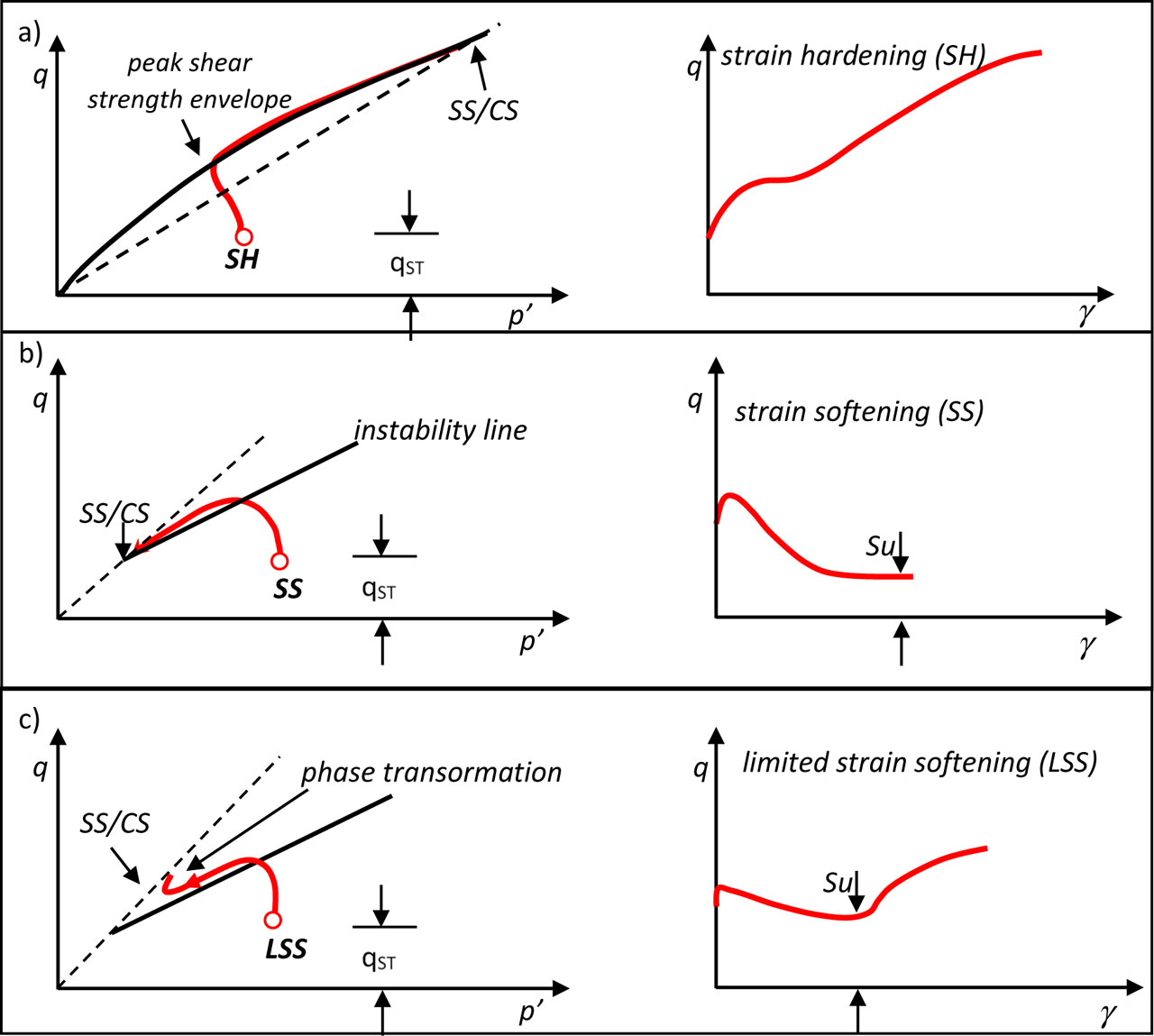
Figure 1:

Types of undrained response of soil to monotonic loading: a) strain hardening (SH), b) strain softening (SS), c) limited strain softening (LSS).
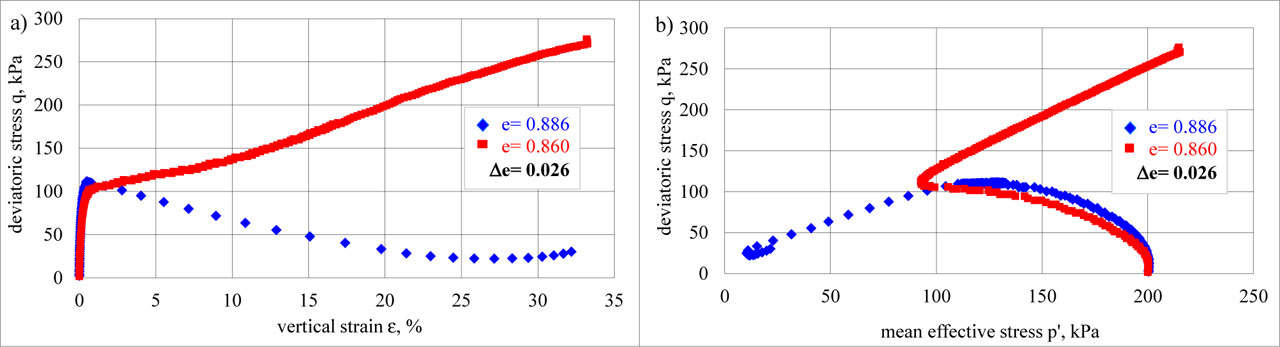

Figure 2:

Sensitivity of undrained response of coarse sand to change of void ratio value: a) stress–strain characteristics, b) effective stress paths.
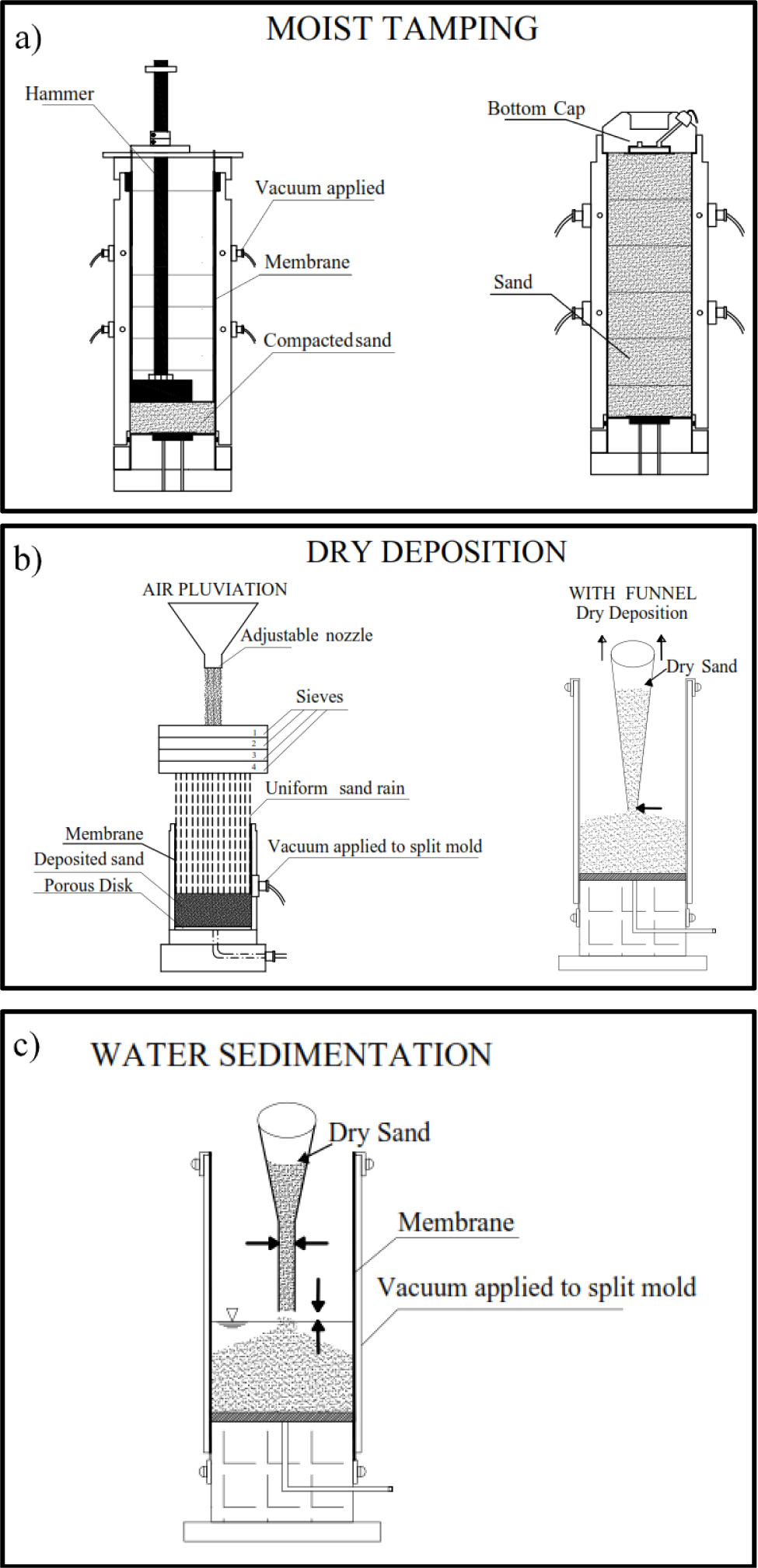

Figure 3:

Specimen preparation procedure for reconstitution of soil specimen for liquefaction test in a triaxial apparatus: a) moist tamping, b) dry deposition, c) water sedimentation.
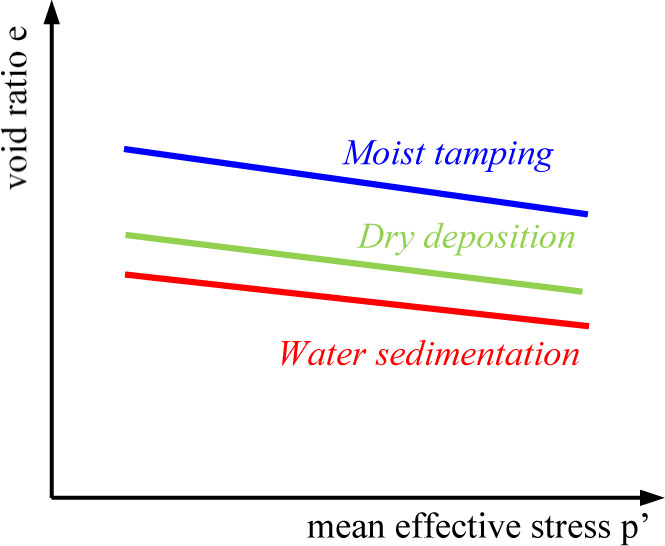

Figure 4:

Position of compressibility curves of materials prepared by various specimen preparation methods.
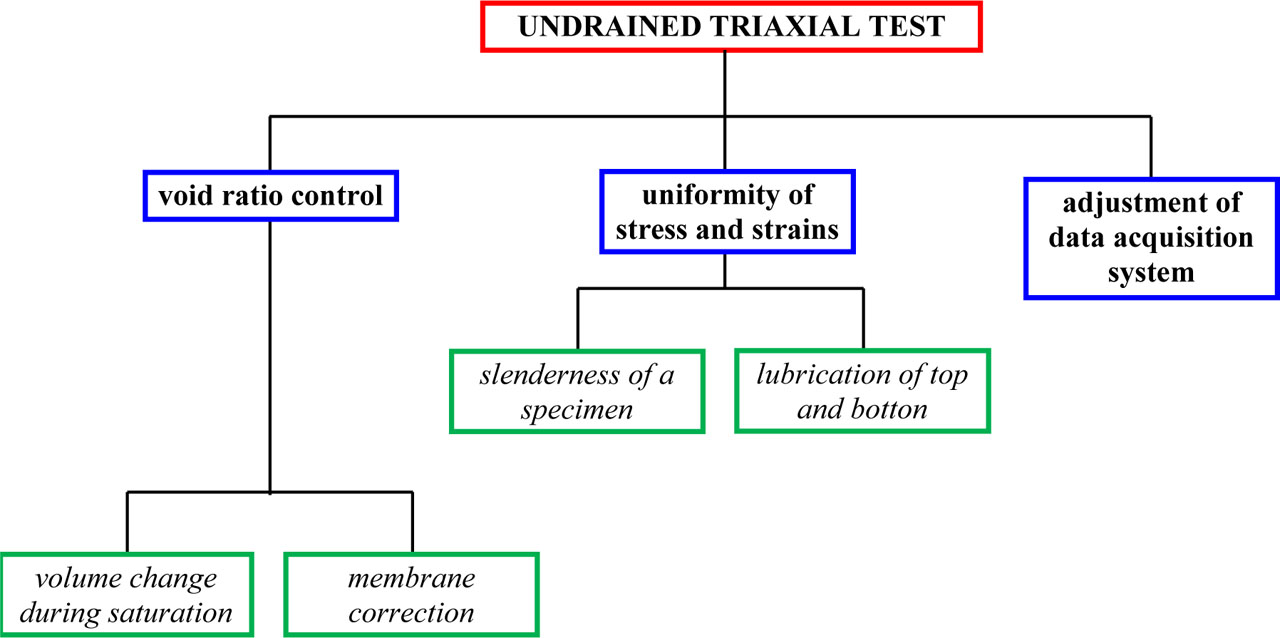

Figure 5:

Necessary quality enhancement of test procedure for static liquefaction test.
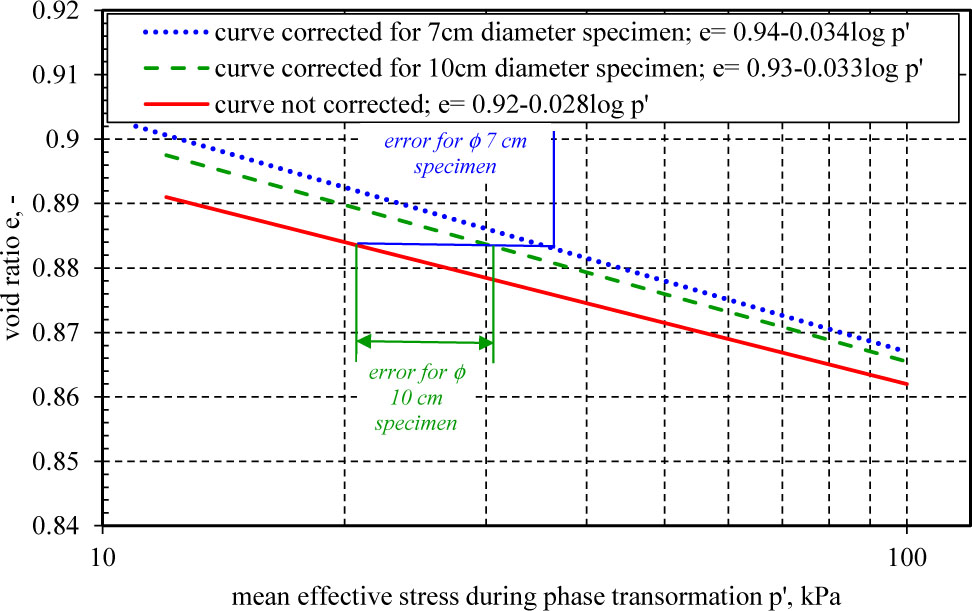

Figure 6:

Influence of membrane penetration on a position of steady state of coarse sand (Lipiński, 2000).
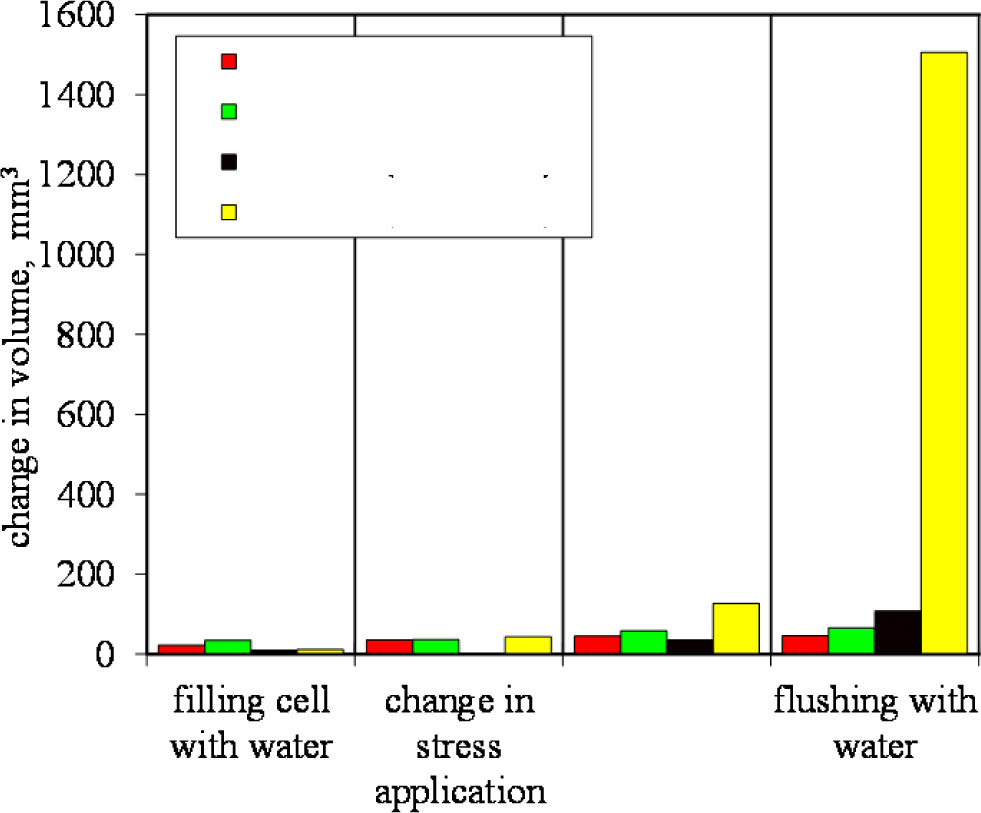

Figure 7:

Specimen volume change during preparatory stages in triaxial apparatus for materials with various amount of fines (Lipiński, 2000).
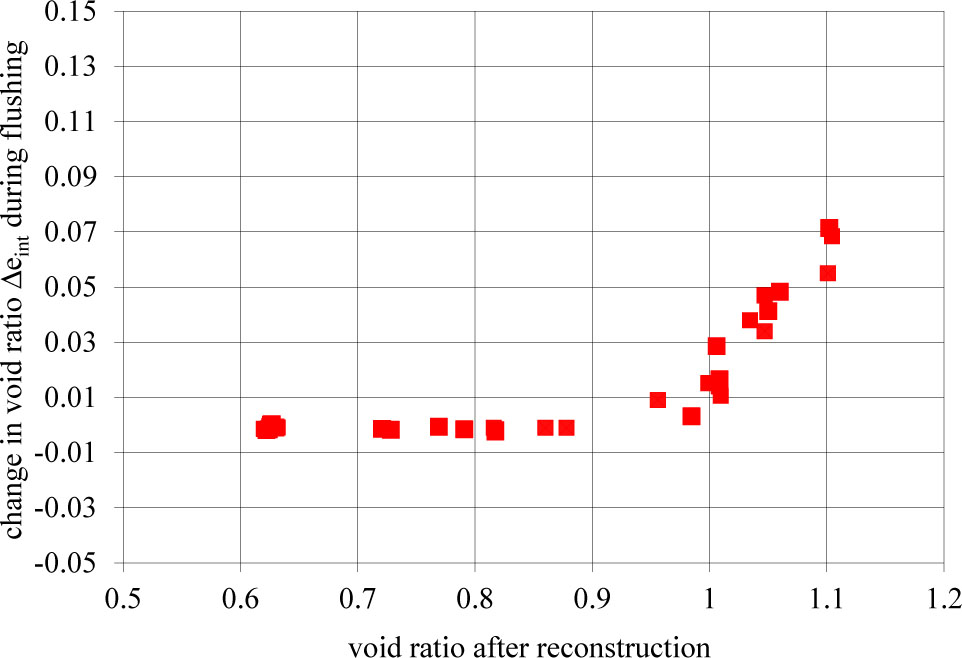

Figure 8:

Change of void ratio during the first flushing with water against the initial value of the parameter (Lipinski, 2000).
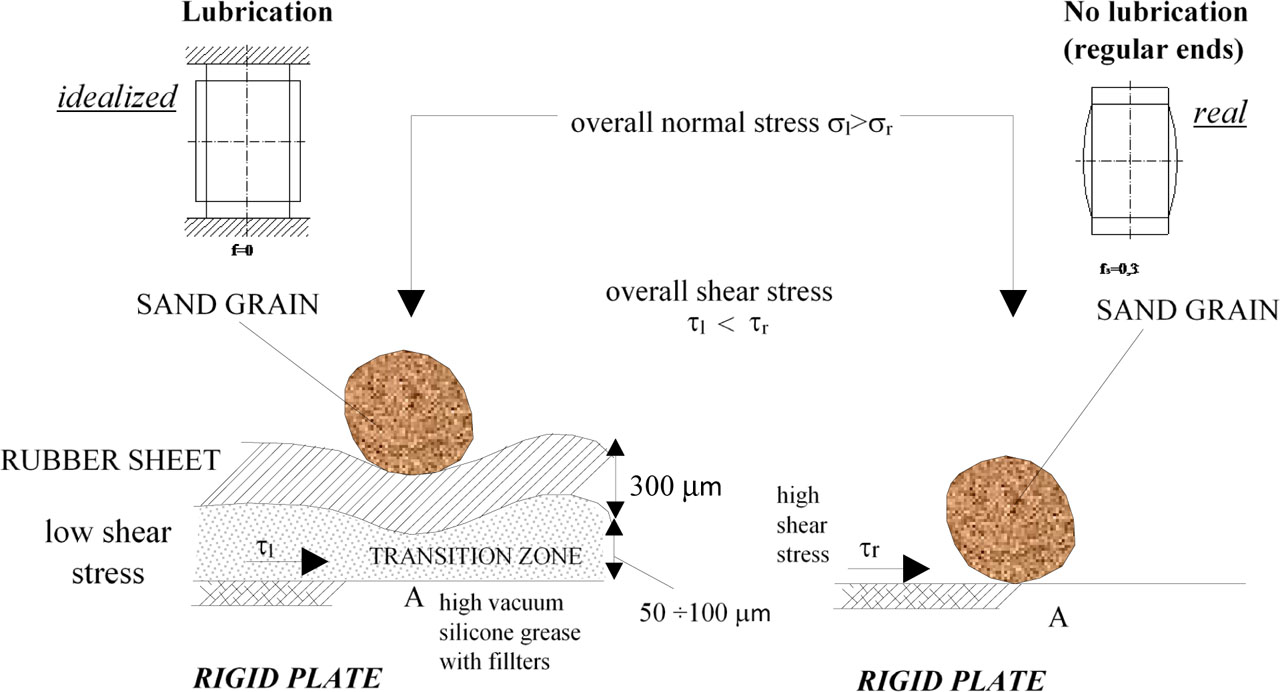

Figure 9:

Reduction of friction on the top and bottom platens of triaxial apparatus (Lipinski & Wdowska, 2004).
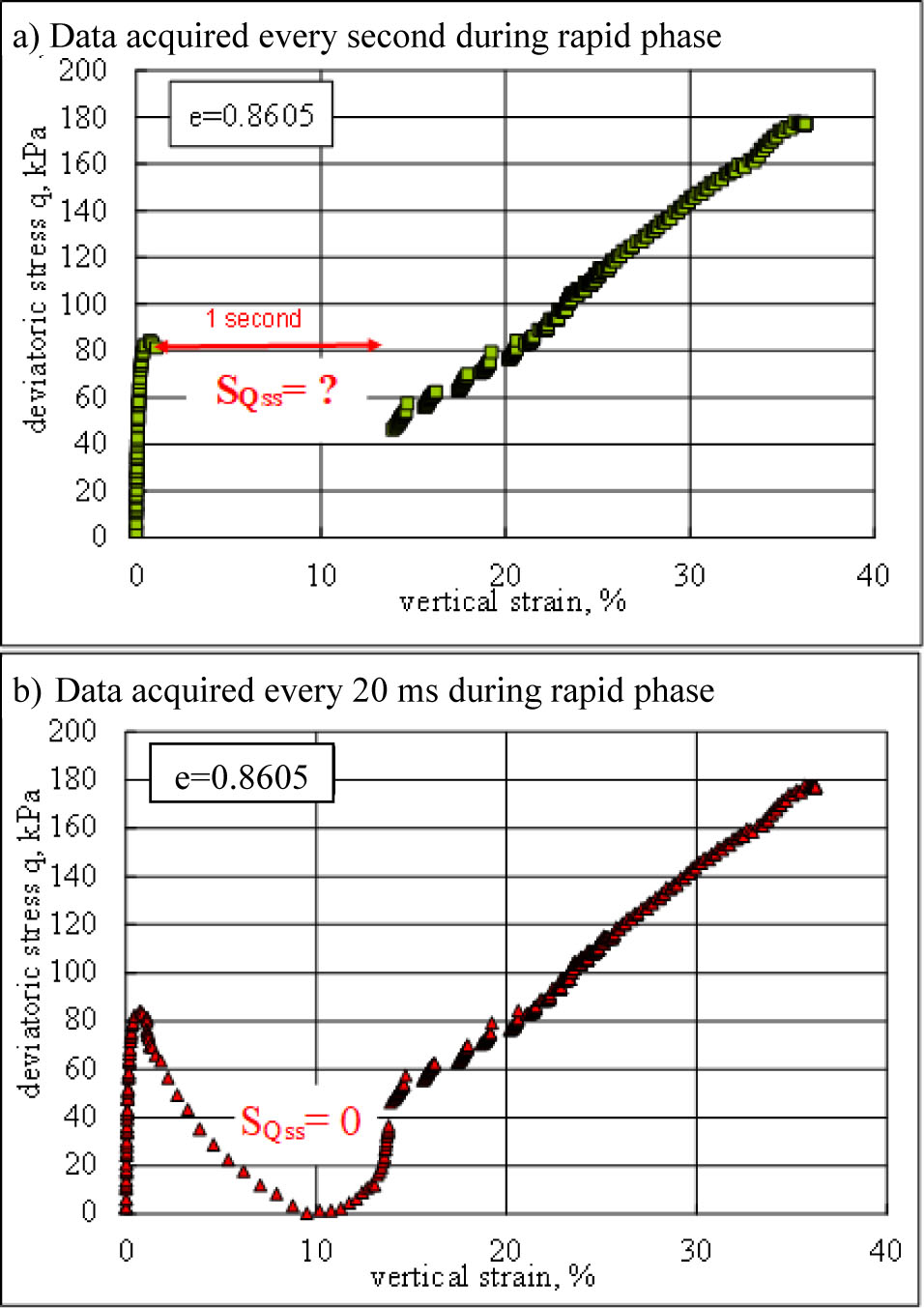

Figure 10:

Significance of data acquisition system velocity in reconstruction of stress–strain curve in load controlled test: a) data acquired every second, b) data acquired every 20 ms.
DOI: https://doi.org/10.2478/sgem-2023-0019 | Journal eISSN: 2083-831X | Journal ISSN: 0137-6365
Language: English
Page range: 395 - 404
Submitted on: Mar 13, 2023
Accepted on: Sep 15, 2023
Published on: Oct 18, 2023
Published by: Wroclaw University of Science and Technology
In partnership with: Paradigm Publishing Services
Publication frequency: 4 issues per year

© 2023 Mirosław J. Lipiński, Małgorzata Wdowska, Intan Puspitaningrum, published by Wroclaw University of Science and Technology
This work is licensed under the Creative Commons Attribution 4.0 License.