
Table 1
Classification of gypseous soil (after Barazanji, 1973).
| Gypsum content (%) | Classification |
|---|---|
| 0.0–0.3 | Non-gypsiferous |
| 0.3–3.0 | Very slightly gypsiferous |
| 3.0–10 | Slightly gypsiferous |
| 10–25 | Moderately gypsiferous |
| 25–50 | Highly gypsiferous |
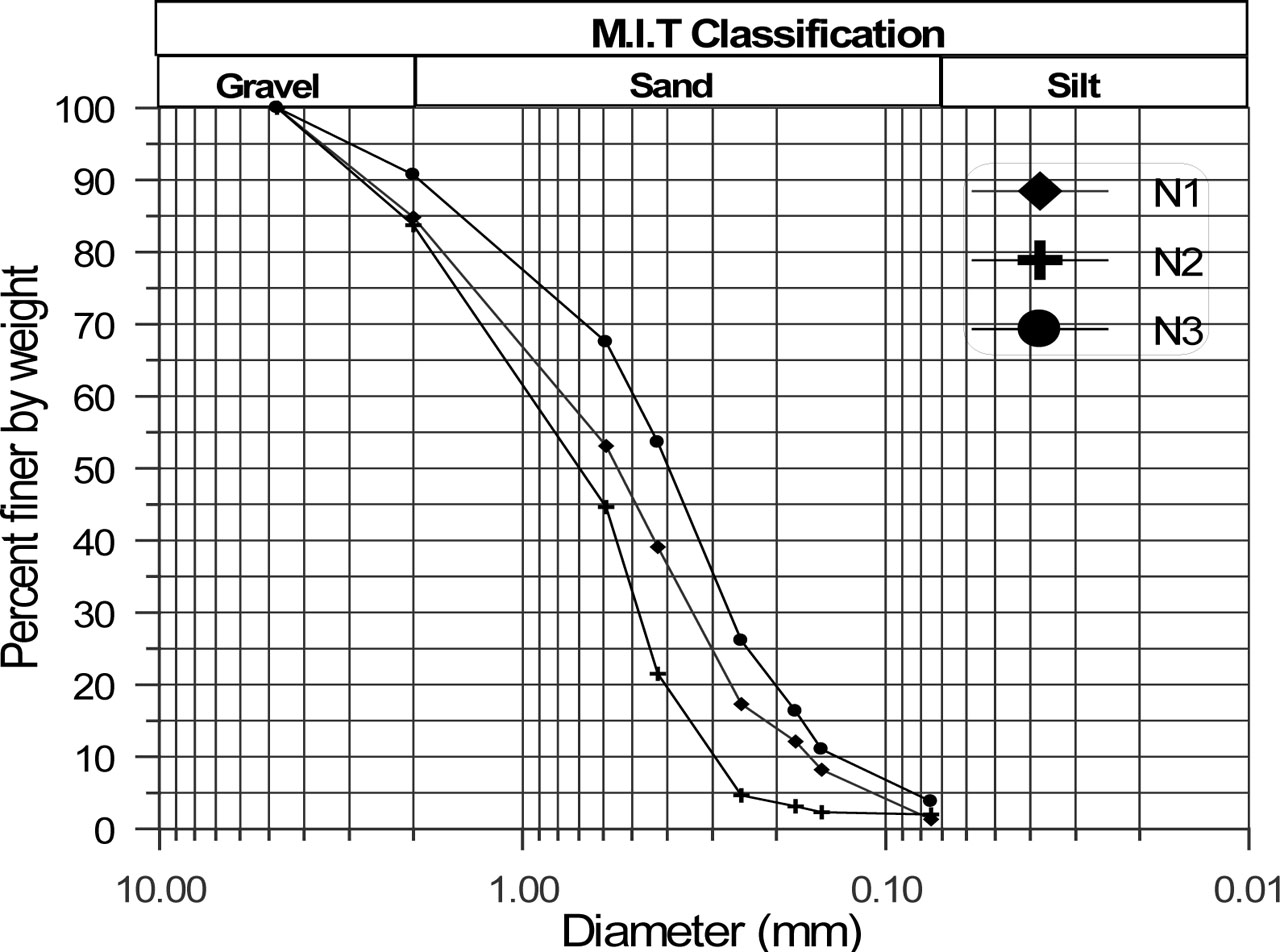
Figure 1
Grain size distribution.
Table 2
Summary of physical test results.
| Soil property | Type of soil | ||
|---|---|---|---|
| N1 | N2 | N3 | |
| Specific gravity, Gs | 2.44 | 2.56 | 2.69 |
| Initial void ratio, eo | 1.017 | 0.619 | 0.480 |
| Field dry unit weight, γd field (kN/m3) | 12.1 | 15.5 | 17.3 |
| Maximum dry unit weight, γdmax (kN/m3) | 13.13 | 16.40 | 19.00 |
| Minimum dry unit weigh, γ dmin (kN/m3) | 9.98 | 12.00 | 10.87 |
| Relative density, Dr % | 73 | 84 | 86 |
| Gravel % | 15.0 | 16.0 | 9.0 |
| Sand % | 83.8 | 82.0 | 87.0 |
| Fines % | 1.2 | 2.0 | 4.0 |
| D10 (mm) | 0.170 | 0.300 | 0.042 |
| D30 (mm) | 0.35 | 0.48 | 0.27 |
| D60 (mm) | 0.75 | 0.95 | 0.60 |
| Coefficient of curvature, Cc | 0.96 | 0.79 | 2.89 |
| Coefficient of uniformity, Cu | 4.41 | 3.17 | 14.28 |
| Soil classification according to USCS | SP | SP | SW |
[i] SP: poorly graded sand; SW: well-graded sand; USCS: Unified Soil Classification System.
Table 3
Chemical test results.
| Type of soil | TSS, % | SO3, % | Gypsum content, c % |
|---|---|---|---|
| N1 | 9 | 30.6 | 66 |
| N2 | 7.3 | 20.5 | 44 |
| N3 | 6 | 6.9 | 14.8 |
[i] TSS: total soluble salts
Table 4
The CP values.
| Soil property | Soil type | ||||
|---|---|---|---|---|---|
| N1 c = 66% | N2 c = 44% | N3 c = 14.8% | |||
| eo | 1.017 | 0.619 | 0.480 | ||
| γd (kN/m3) | 12.1 | 15.5 | 17.3 | ||
| Initial water content, wo % | 8.3 | 4.8 | 3.6 | ||
| Dr % | 73 | 84 | 86 | ||
| CP % | 200 kPa | CT | 11.57 | 3.42 | 1.04 |
| DOT | 8.93 | 4.72 | 5.21 | ||
| 800 kPa | CT | --- | --- | --- | |
| DOT | 18.33 | 14.63 | 7.16 | ||
[i] CP: collapse potential; CT: collapse test; DOT: double oedometer test
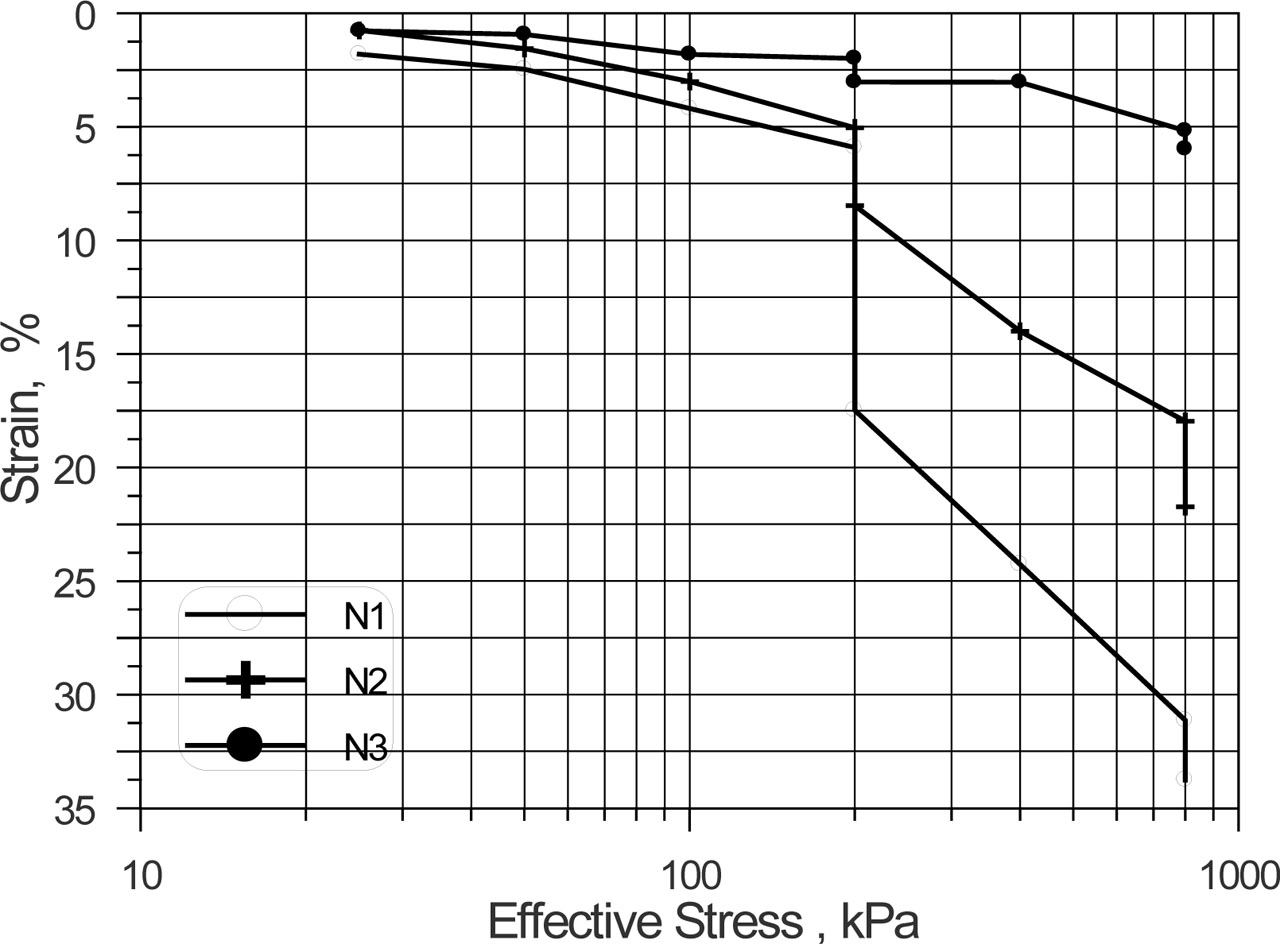
Figure 2
Results of collapse test for the three samples.
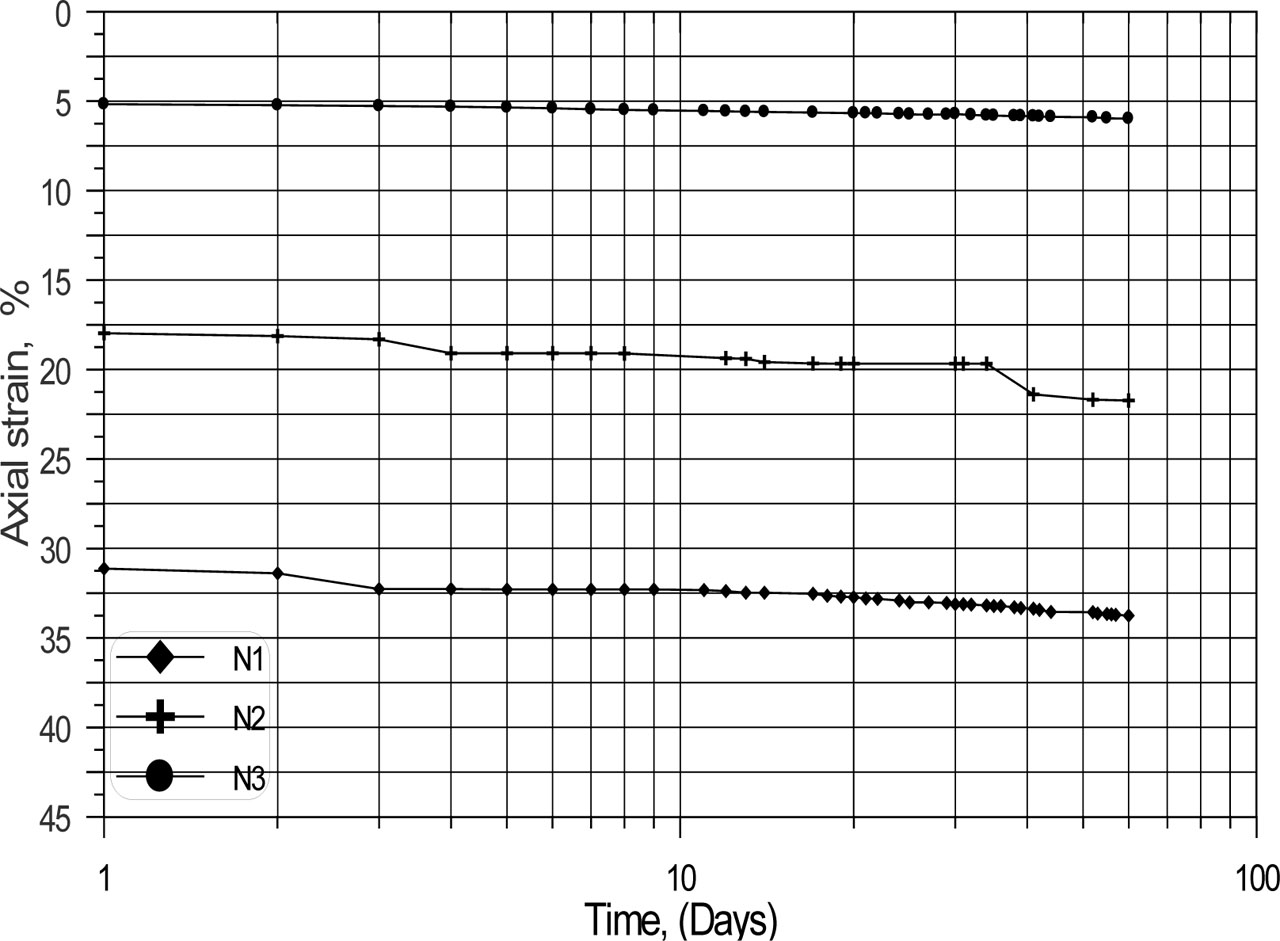
Figure 3
Variation of strain with the logarithm of time (creep).
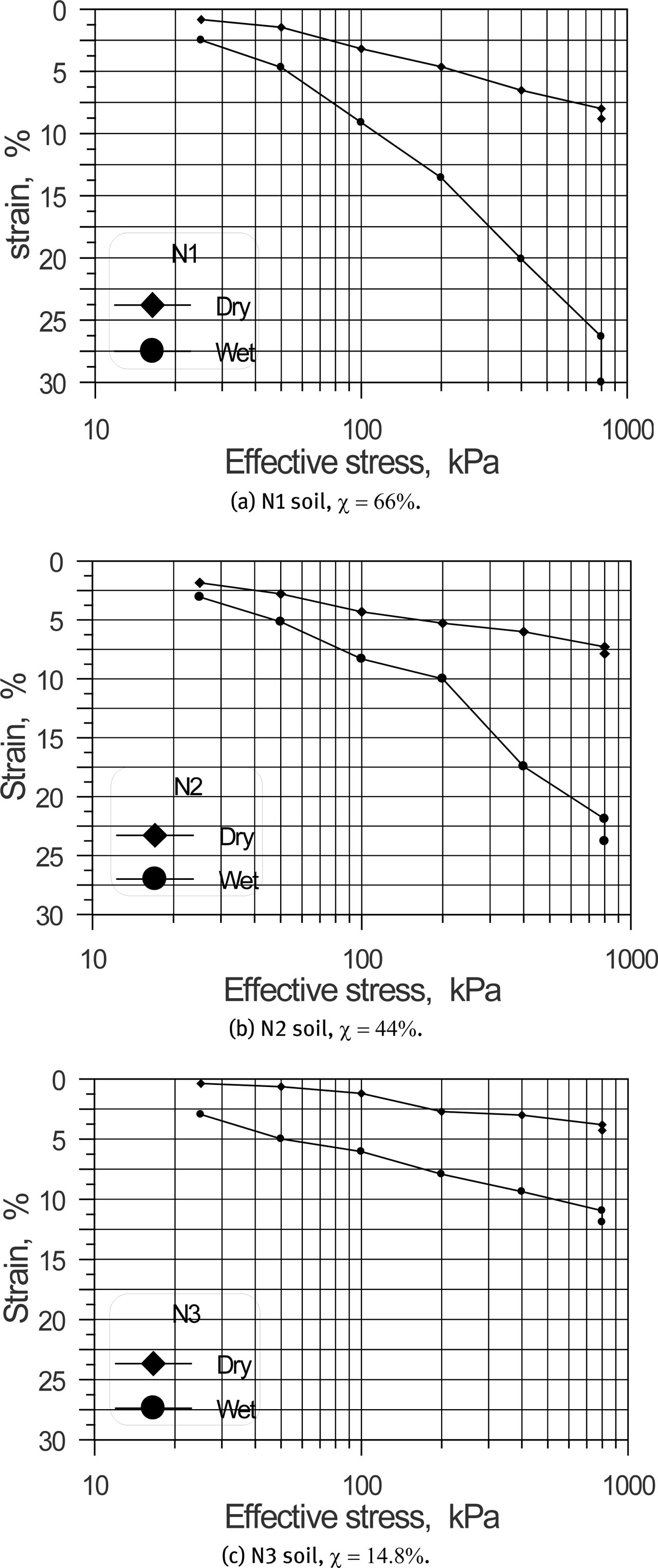
Figure 4
Results of double oedometer test on semi-log scale.
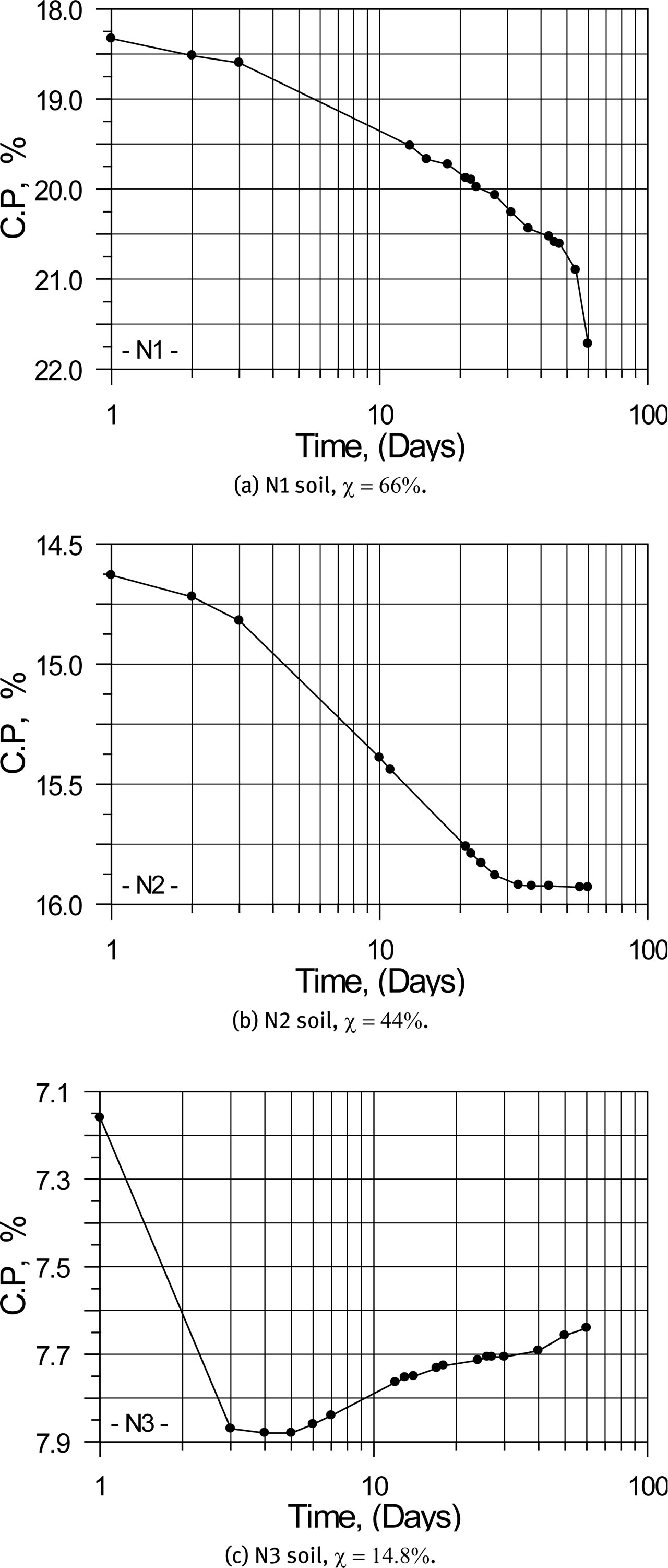
Figure 5
Variation of collapse potential with time in double oedometer test.
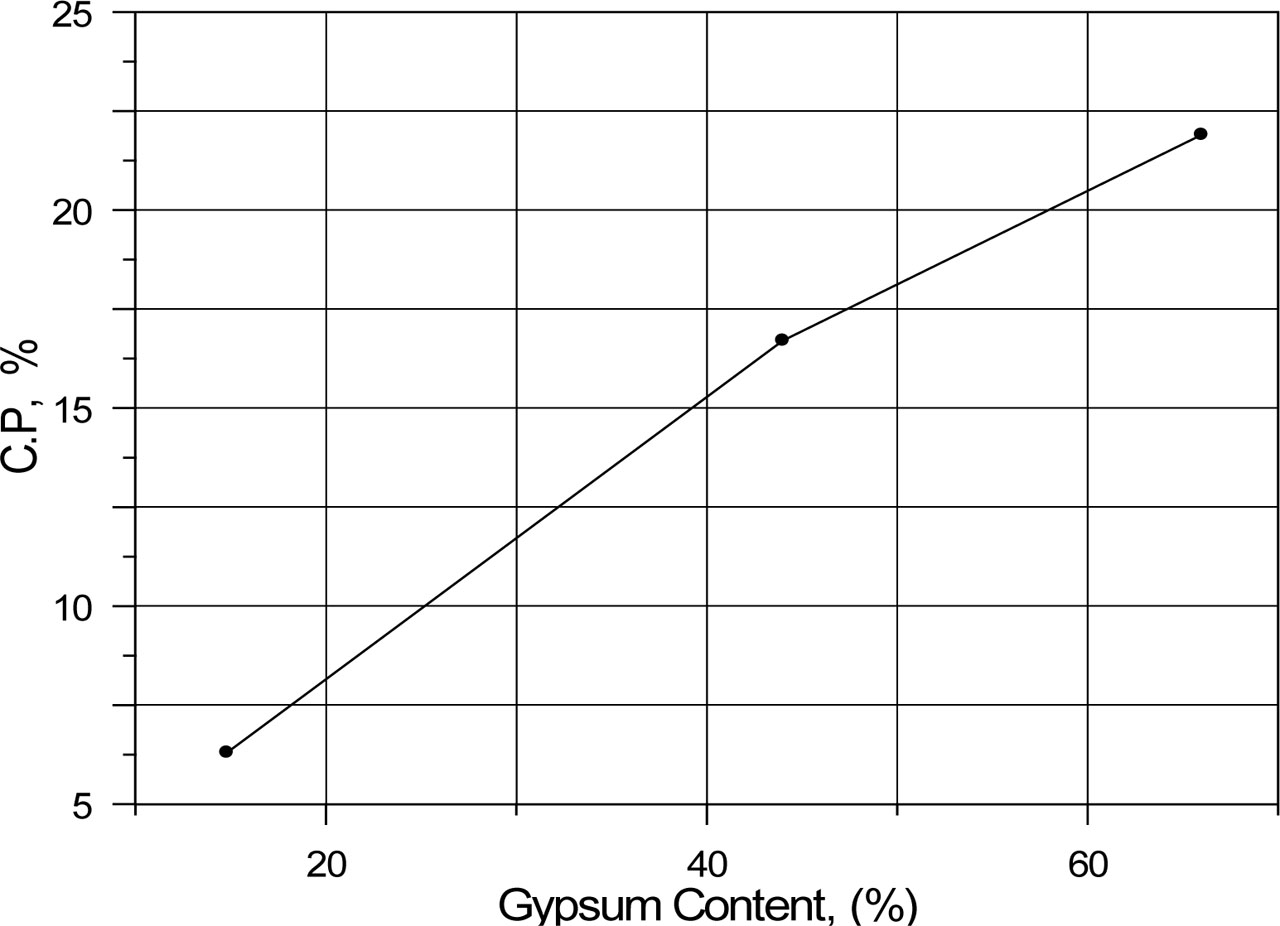
Figure 6
Effect of gypsum content on the long-term collapse potential (under 800 kPa for 60 days).
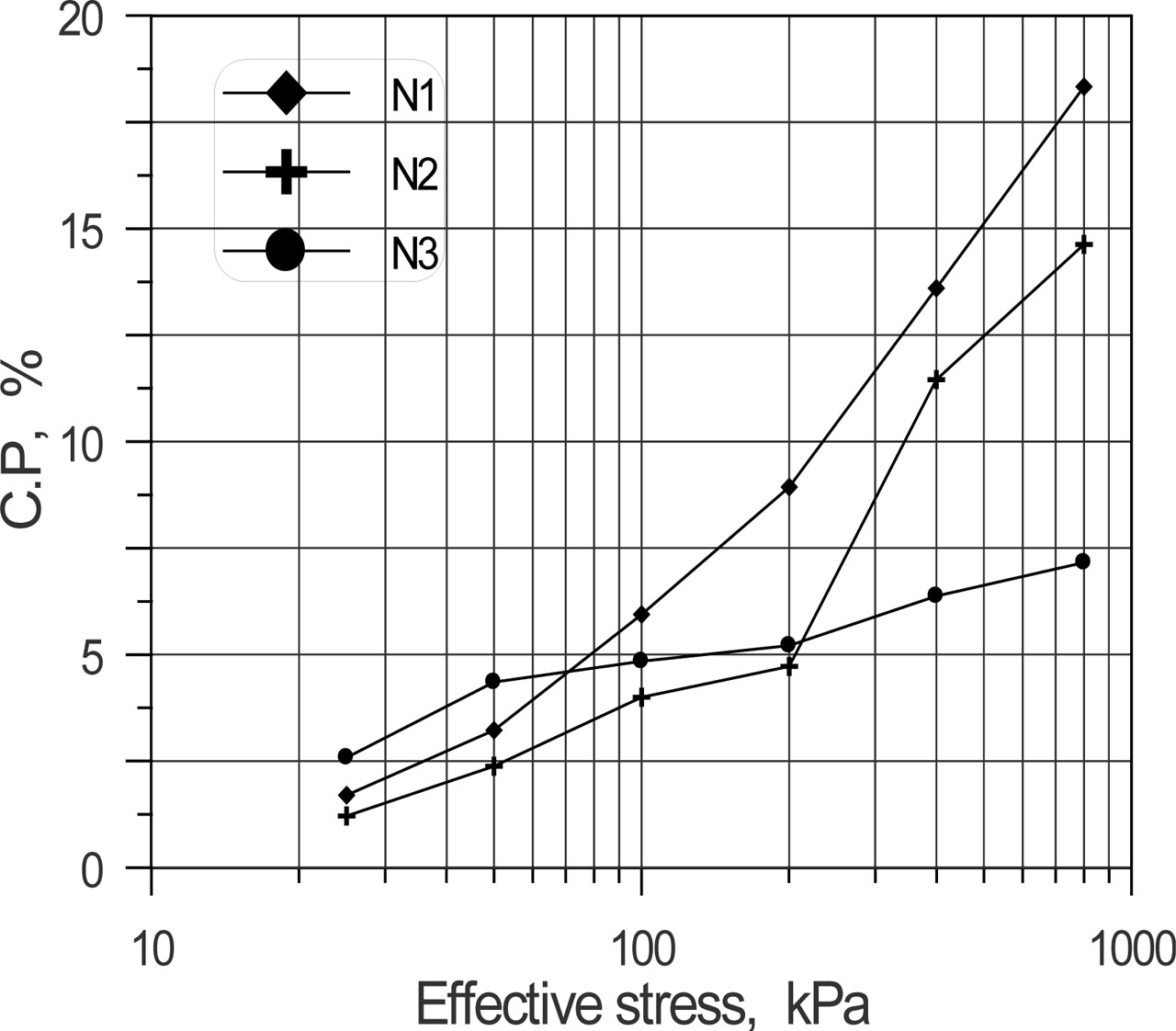
Figure 7
Effect of gypsum content on the collapse potential under different stresses.
Table 5
Effect of relative density on the collapse potential of N1 soil.
| σv, kPa | Dr = 40% | Dr = 50% | Dr = 60% | |||
|---|---|---|---|---|---|---|
| CP 1 day | CP 60 days | CP 1 day | CP 60 days | CP 1 day | CP 60 days | |
| 200 | 1.87 | --- | 7.47 | --- | 6.42 | --- |
| 800 | 7 | 9 | 10.5 | 13.39 | 15.4 | 18.47 |
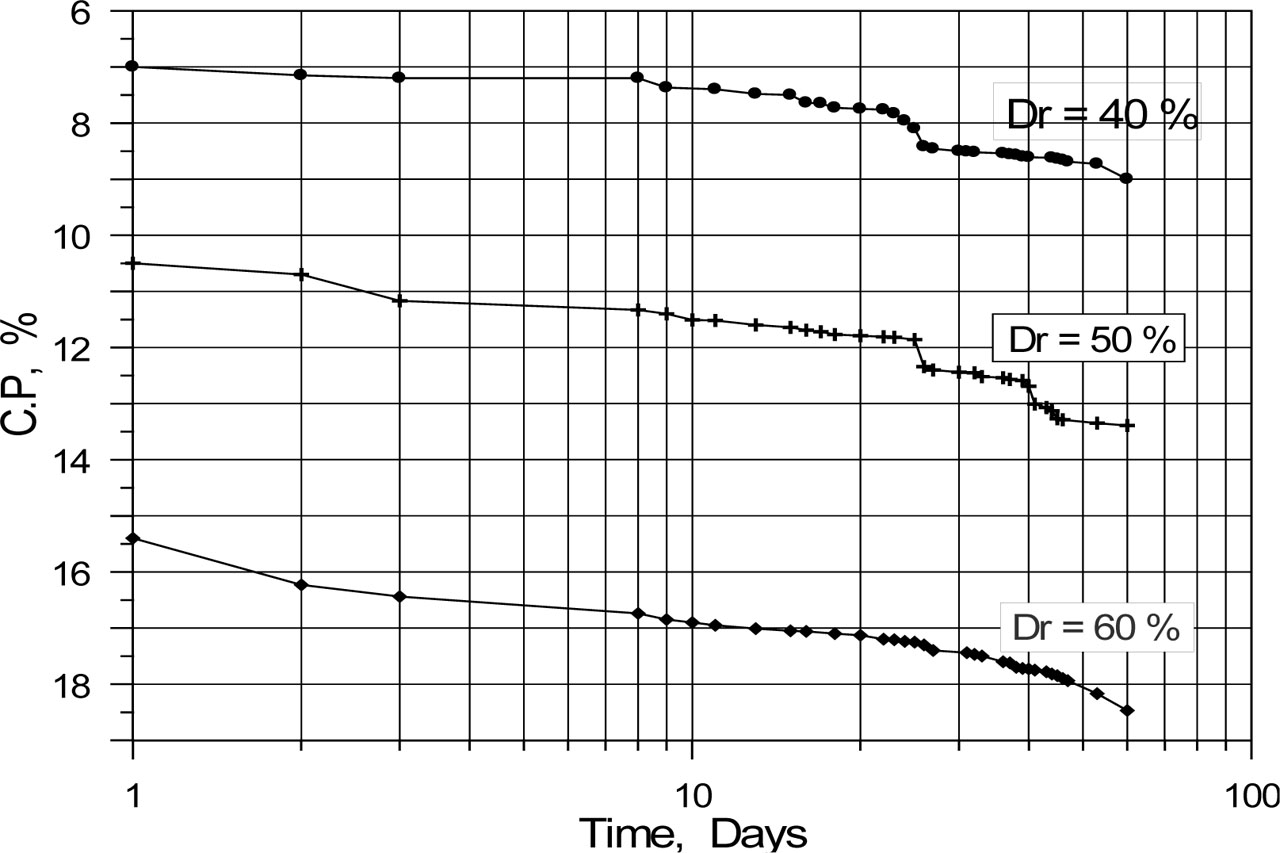
Figure 8
Collapse potential -log time relationships at different relative densities, (N1 soaked soil).
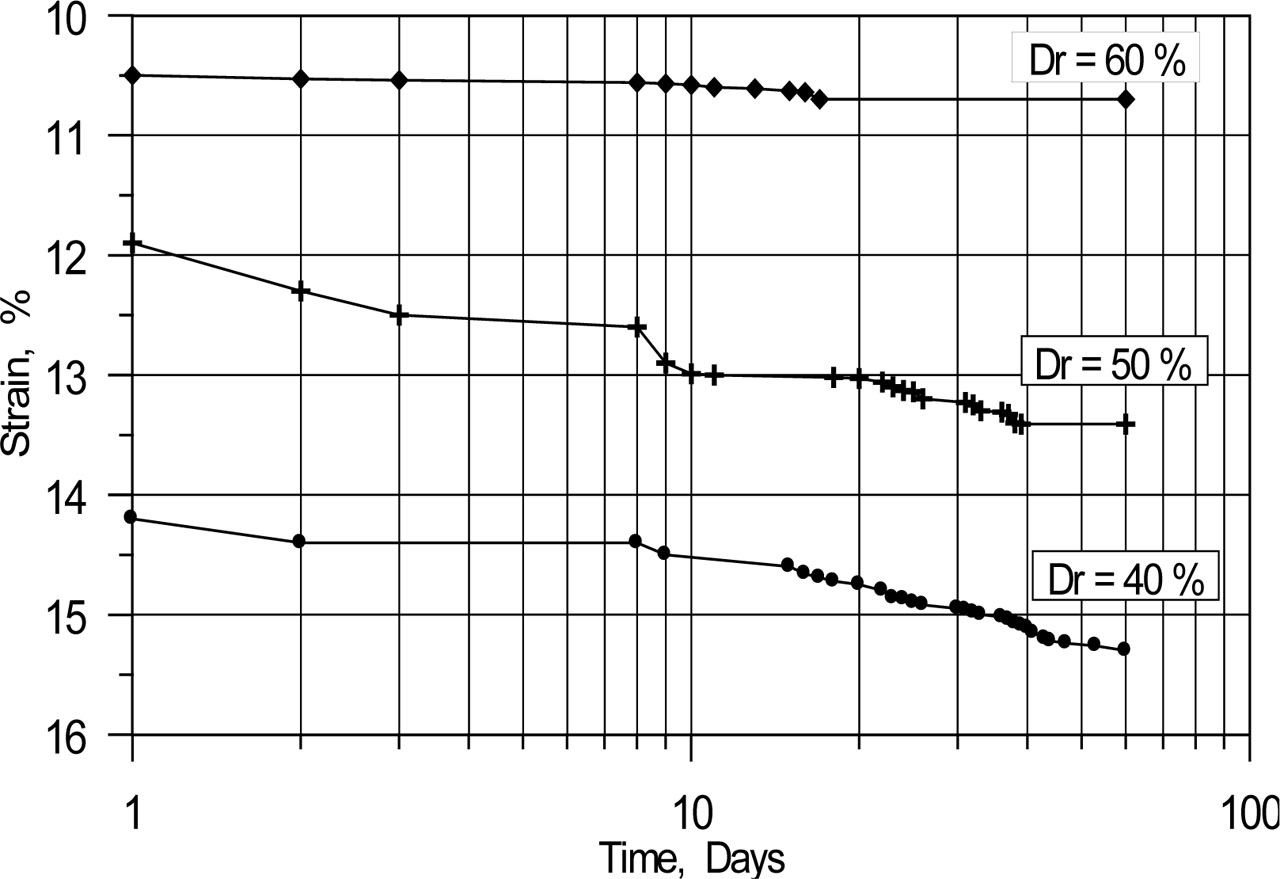
Figure 9
Effect of relative density on creep for dry samples (N1 soil).
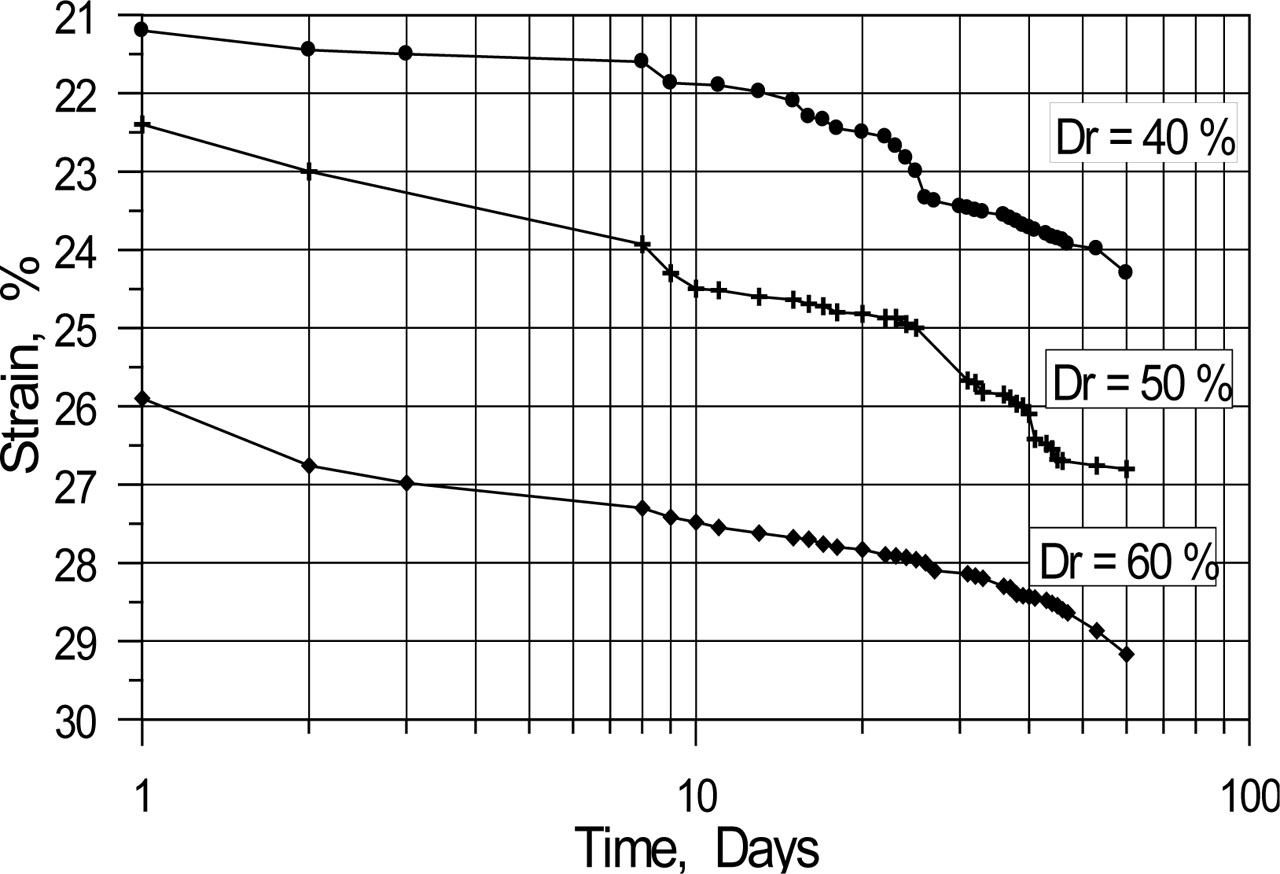
Figure 10
Effect of relative density on creep for soaked samples (N1 soil).
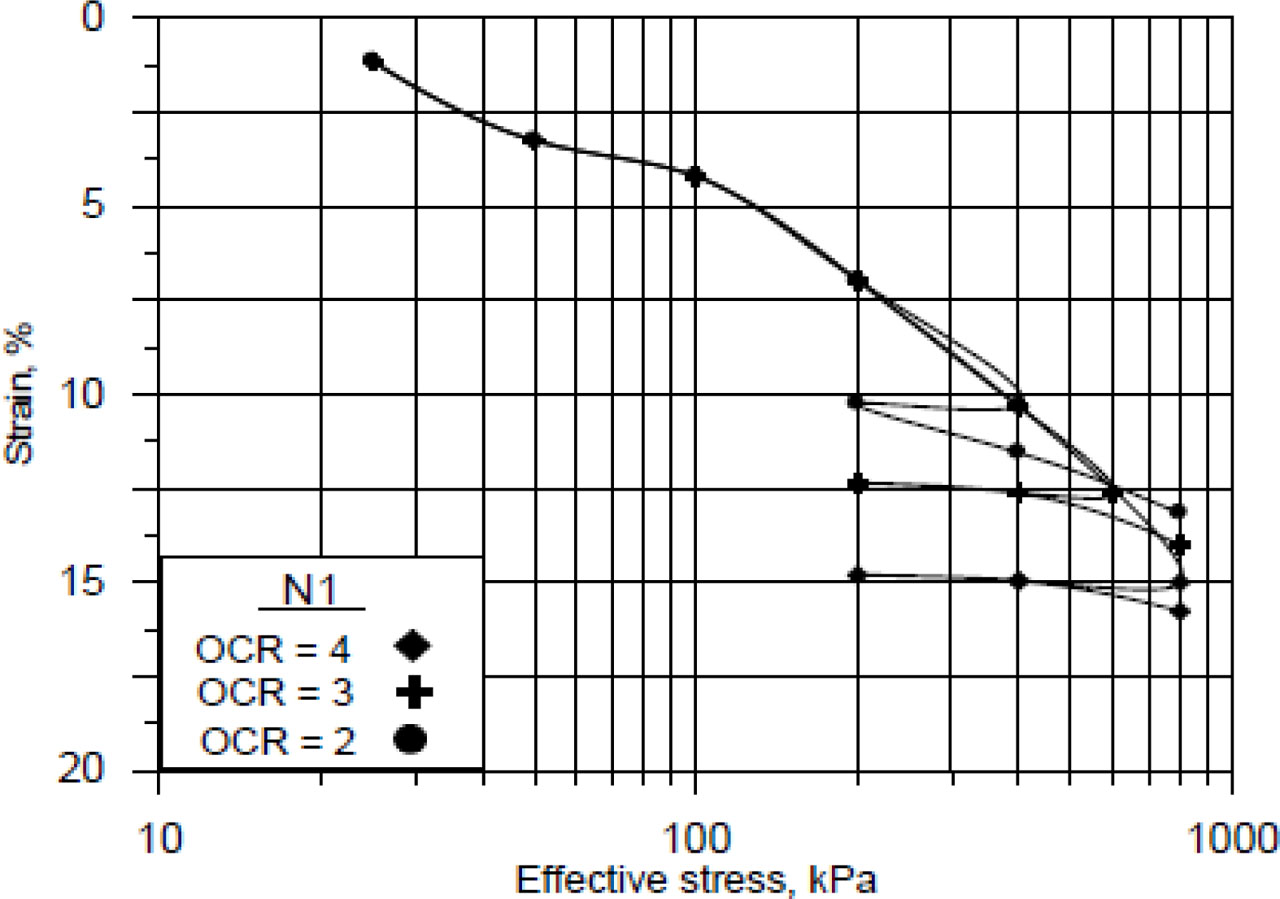
Figure 11
Strain versus effective stress for the N1 sample.
OCR: overconsolidation ratio.
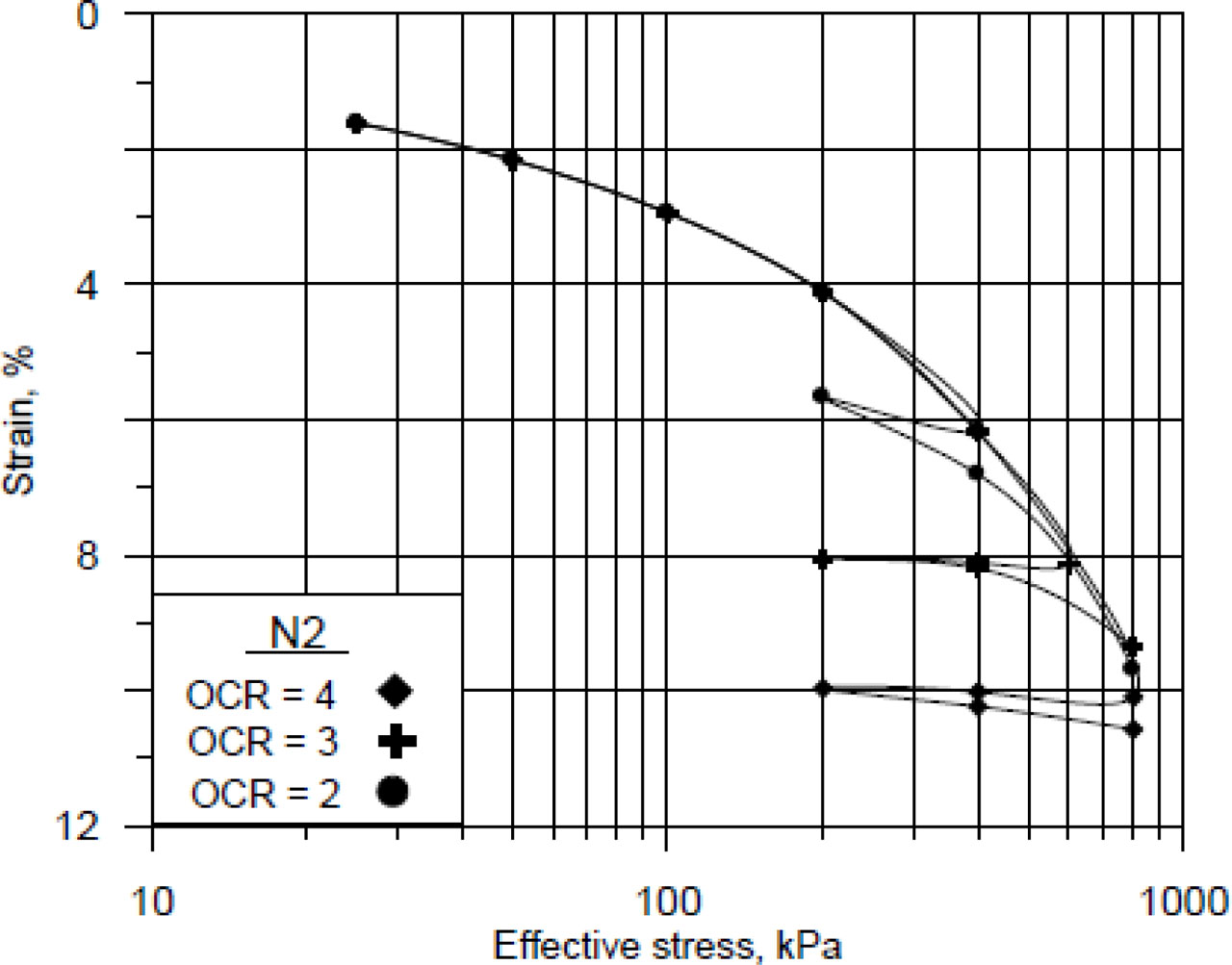
Figure 12
Strain versus effective stress for the N2 sample.
OCR: overconsolidation ratio.
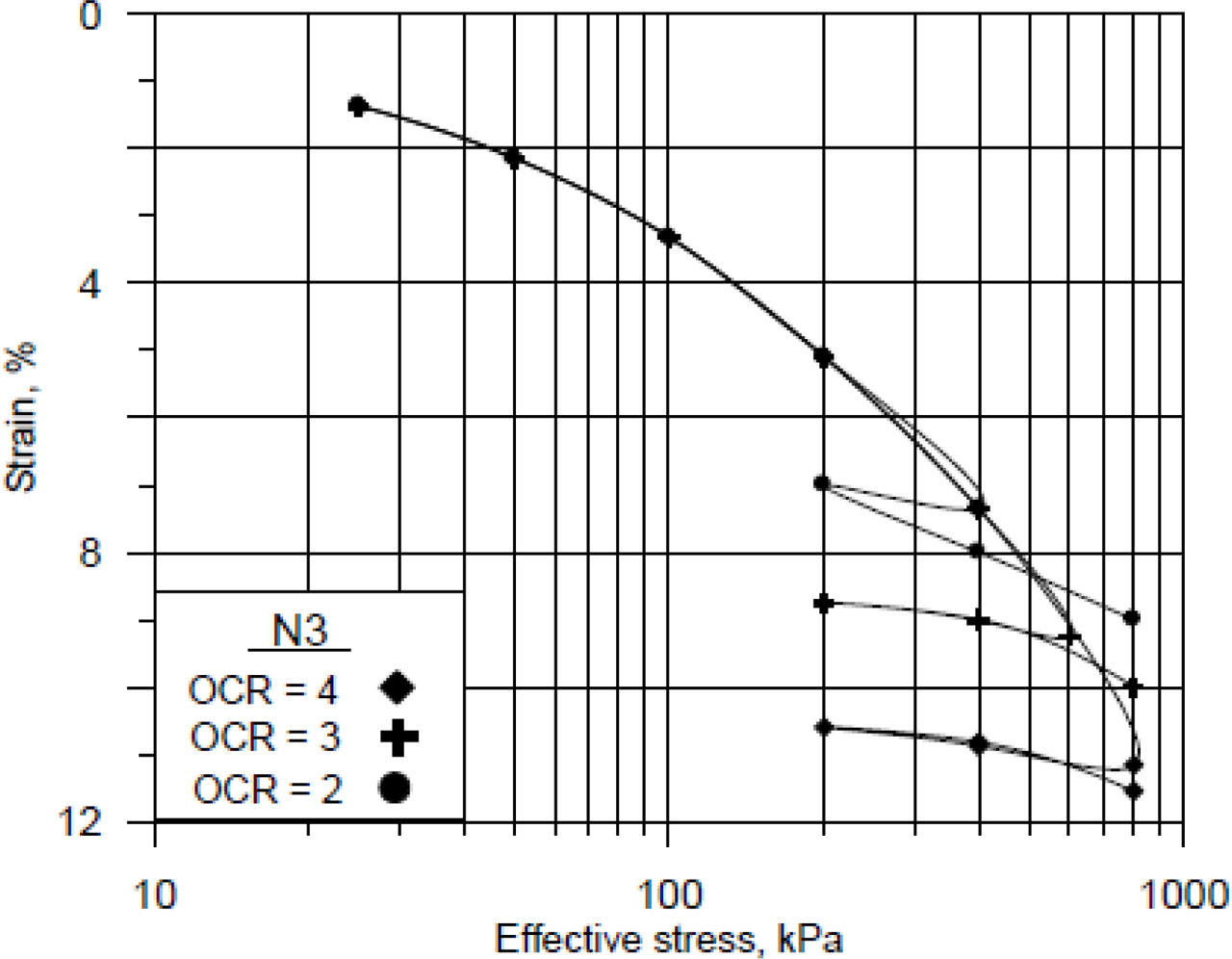
Figure 13
Strain versus effective stress for the N3 sample.
OCR: overconsolidation ratio.
Table 6
The compression and swelling indices.
| OCR | Type of soil | |||||
|---|---|---|---|---|---|---|
| N1 c = 66% | N2 c = 44% | N3 c = 14.8% | ||||
| Cc | Cr | Cc | Cr | Cc | Cr | |
| 4 | 0.124 | 0.004 | 0.109 | 0.01 | 0.162 | 0.009 |
| 3 | 0.0014 | 0.002 | 0.016 | |||
| 2 | 0.0019 | 0.017 | 0.012 | |||
[i] Cc: compression index; Cr: swelling (rebound) index; OCR: overconsolidation ratio
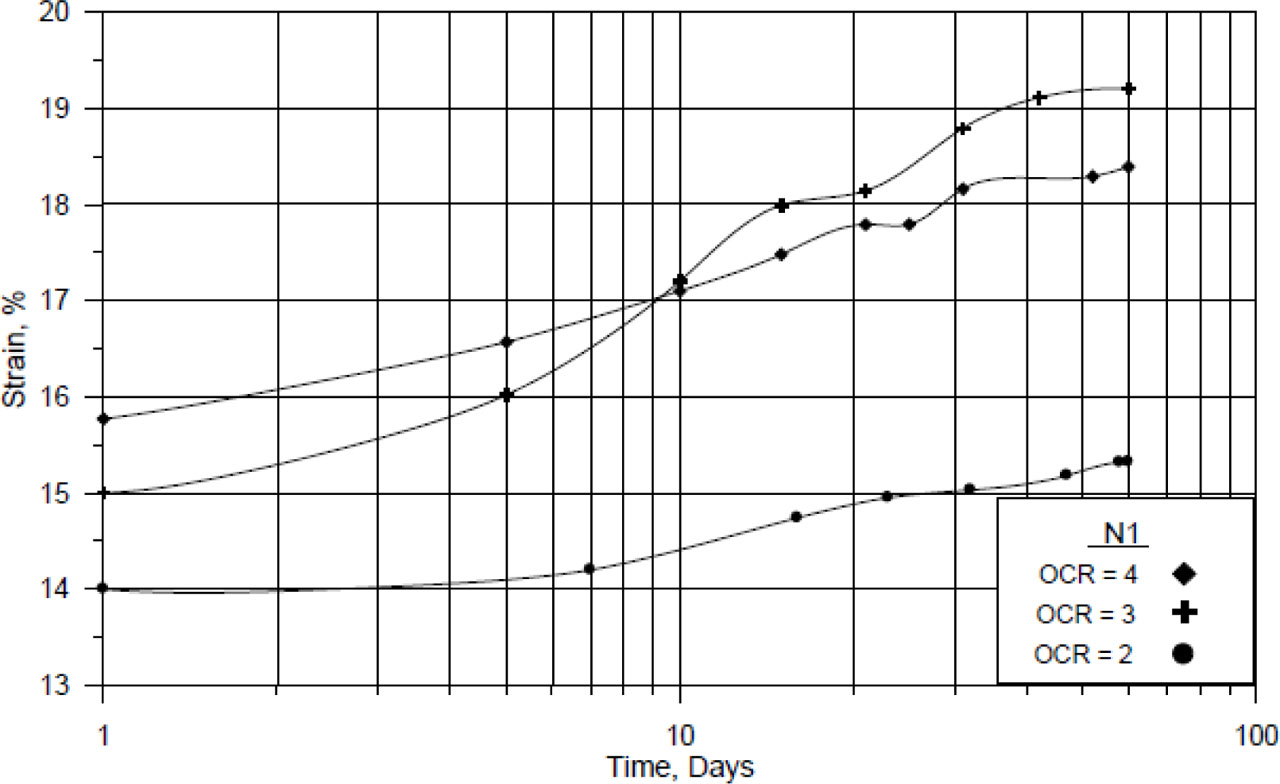
Figure 14
Variation of strain with time for the N1 soil.
OCR: overconsolidation ratio.
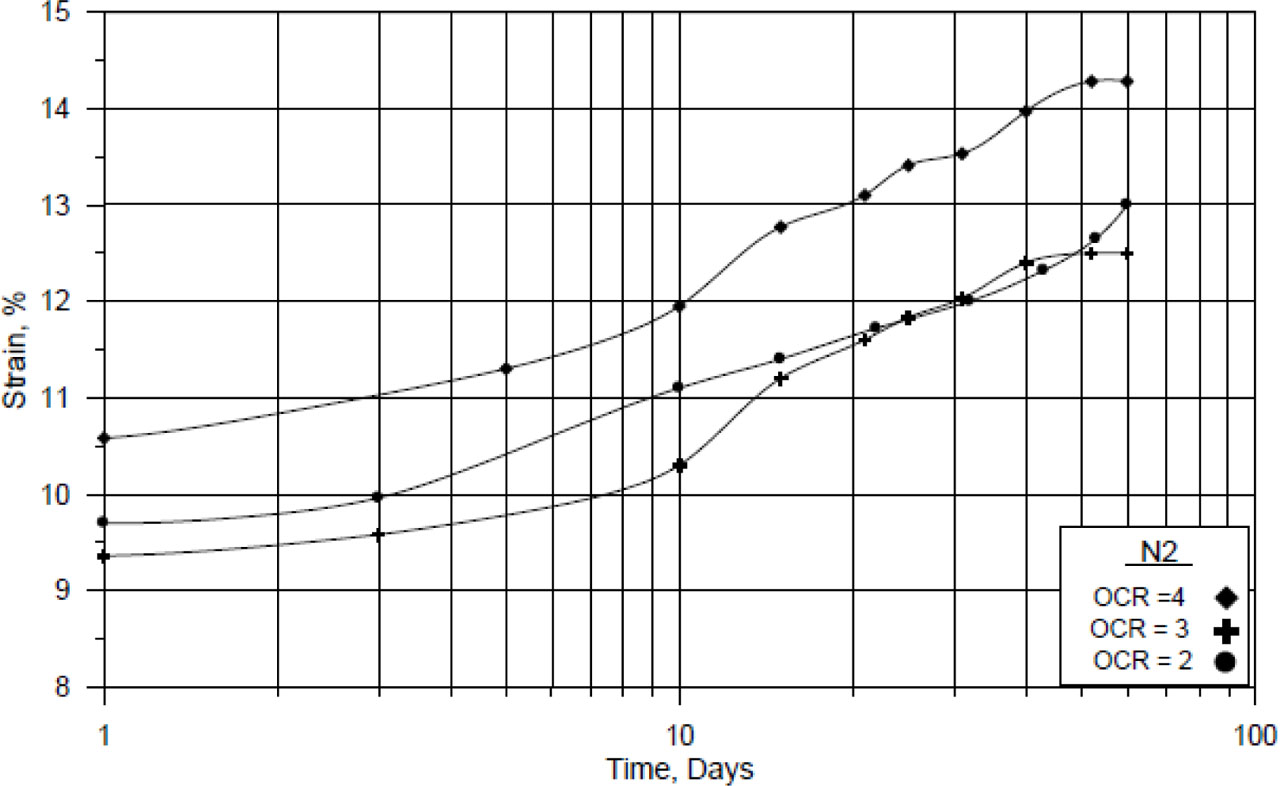
Figure 15
Variation of strain with time for the N2 soil.
OCR: overconsolidation ratio.
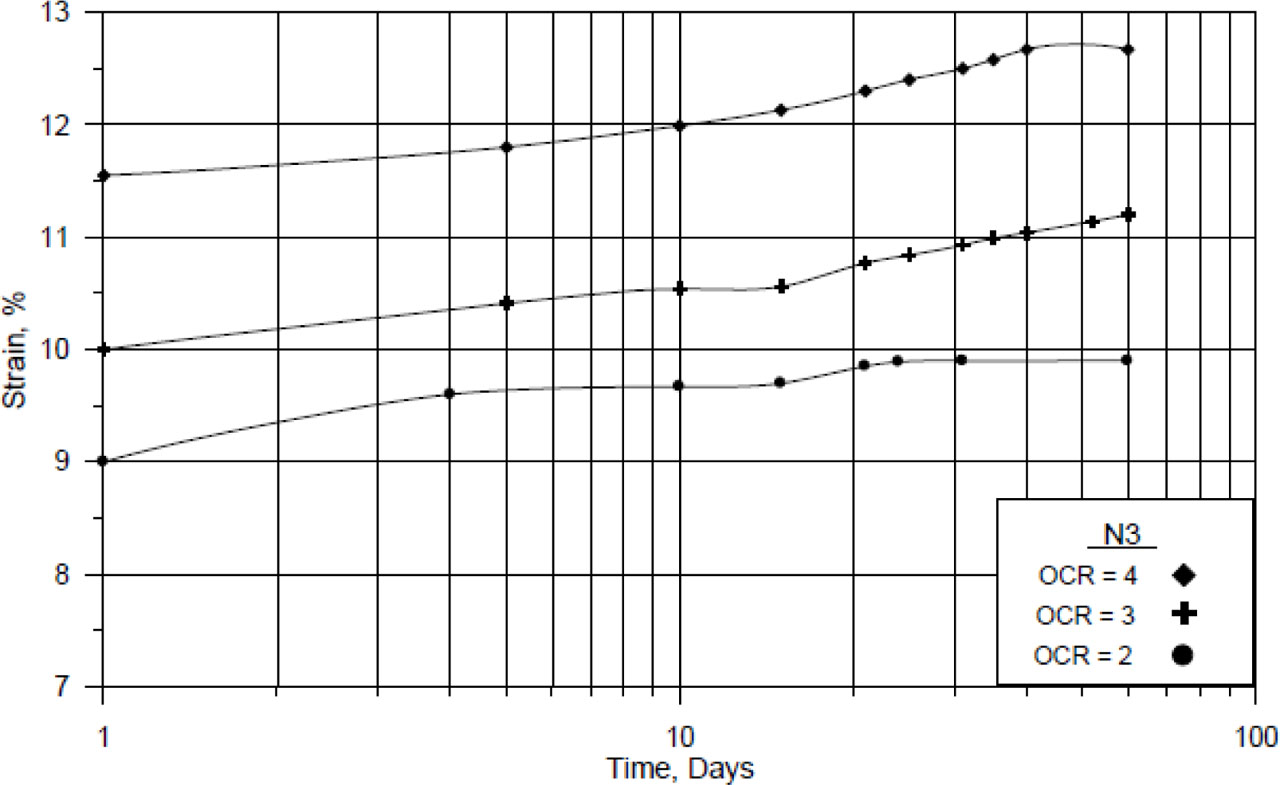
Figure 16
Variation of strain with time for the N3 soil.
OCR: overconsolidation ratio.
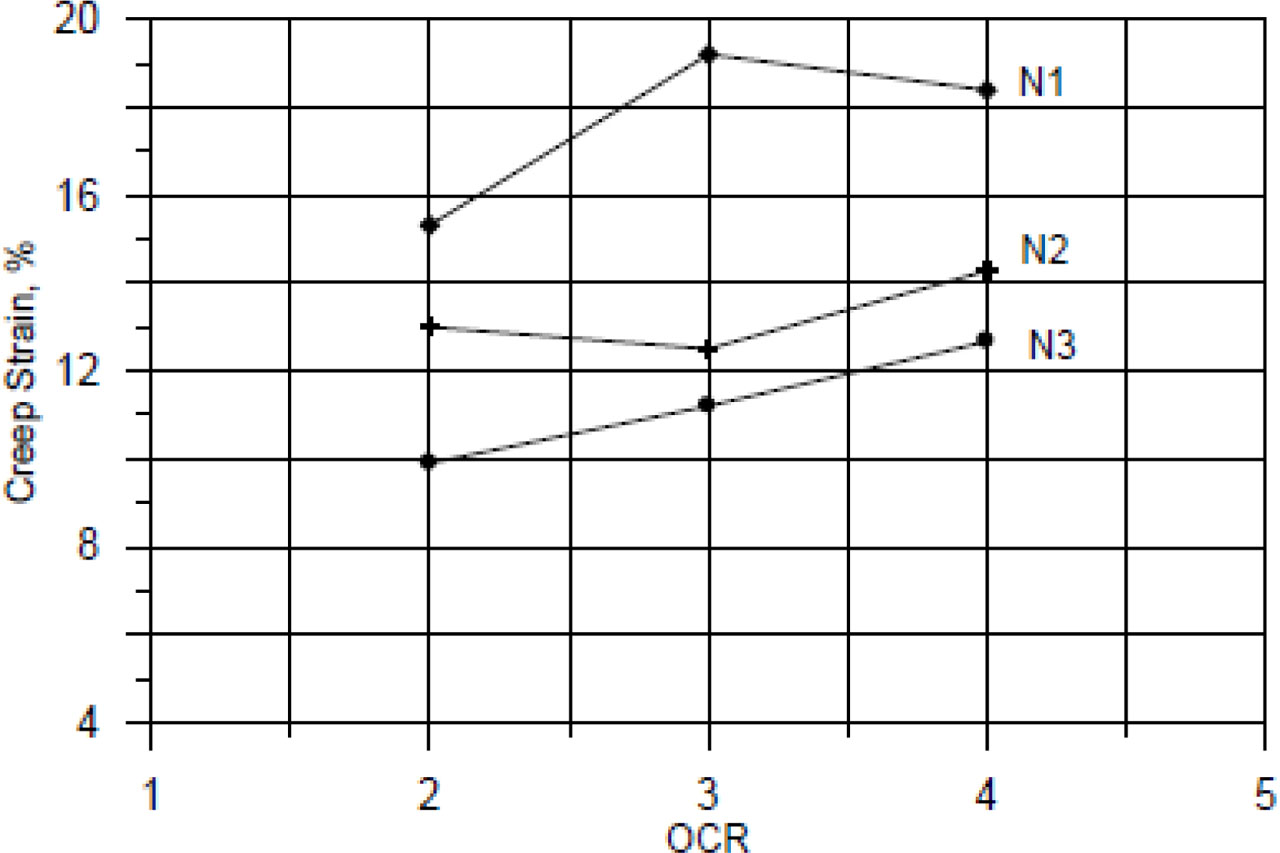
Figure 17
Effect of OCR on the creep strain for the three soils.
OCR: overconsolidation ratio
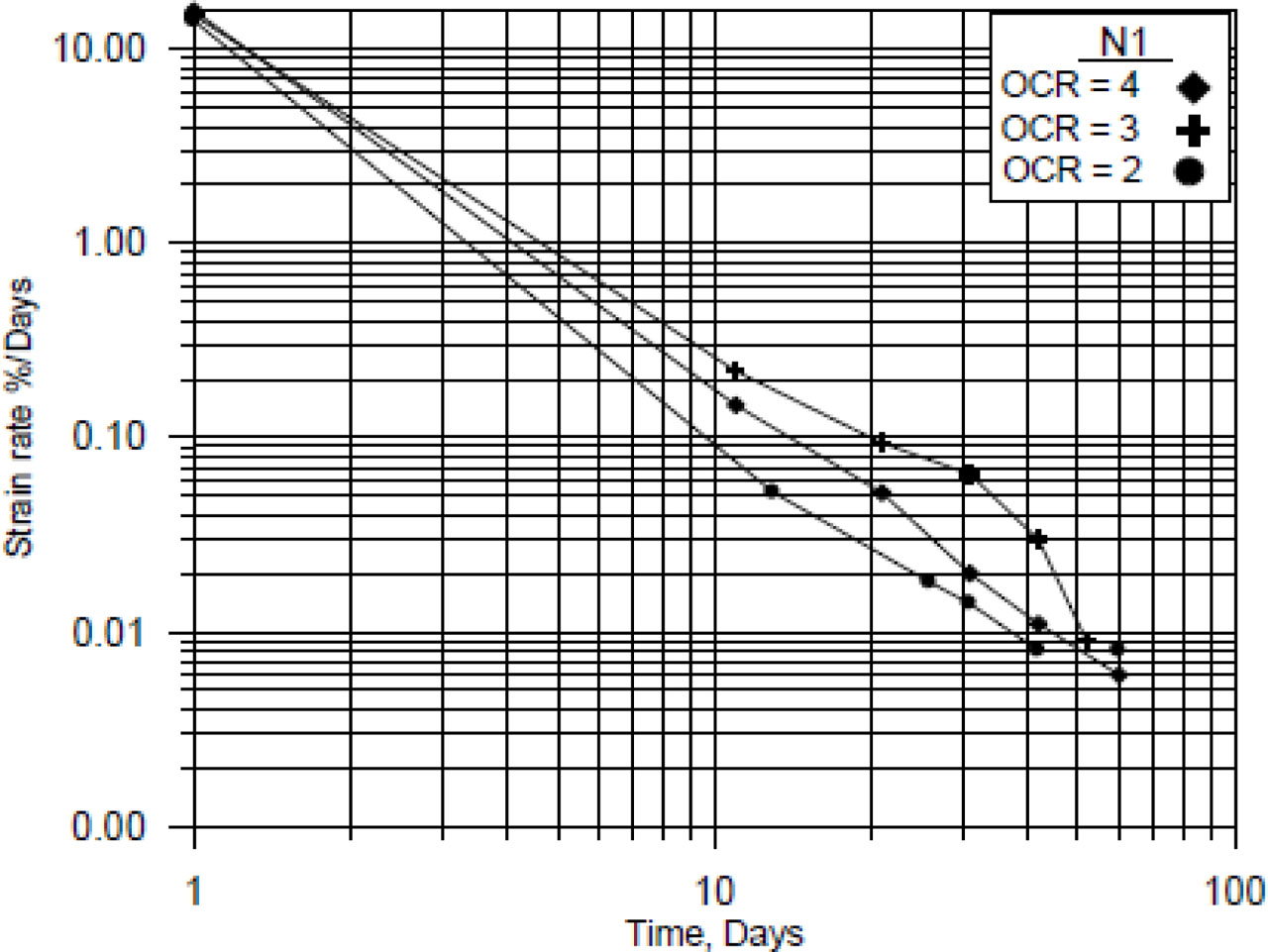
Figure 18
Variation of strain rate with time for the N1 soil at different overconsolidation ratios.
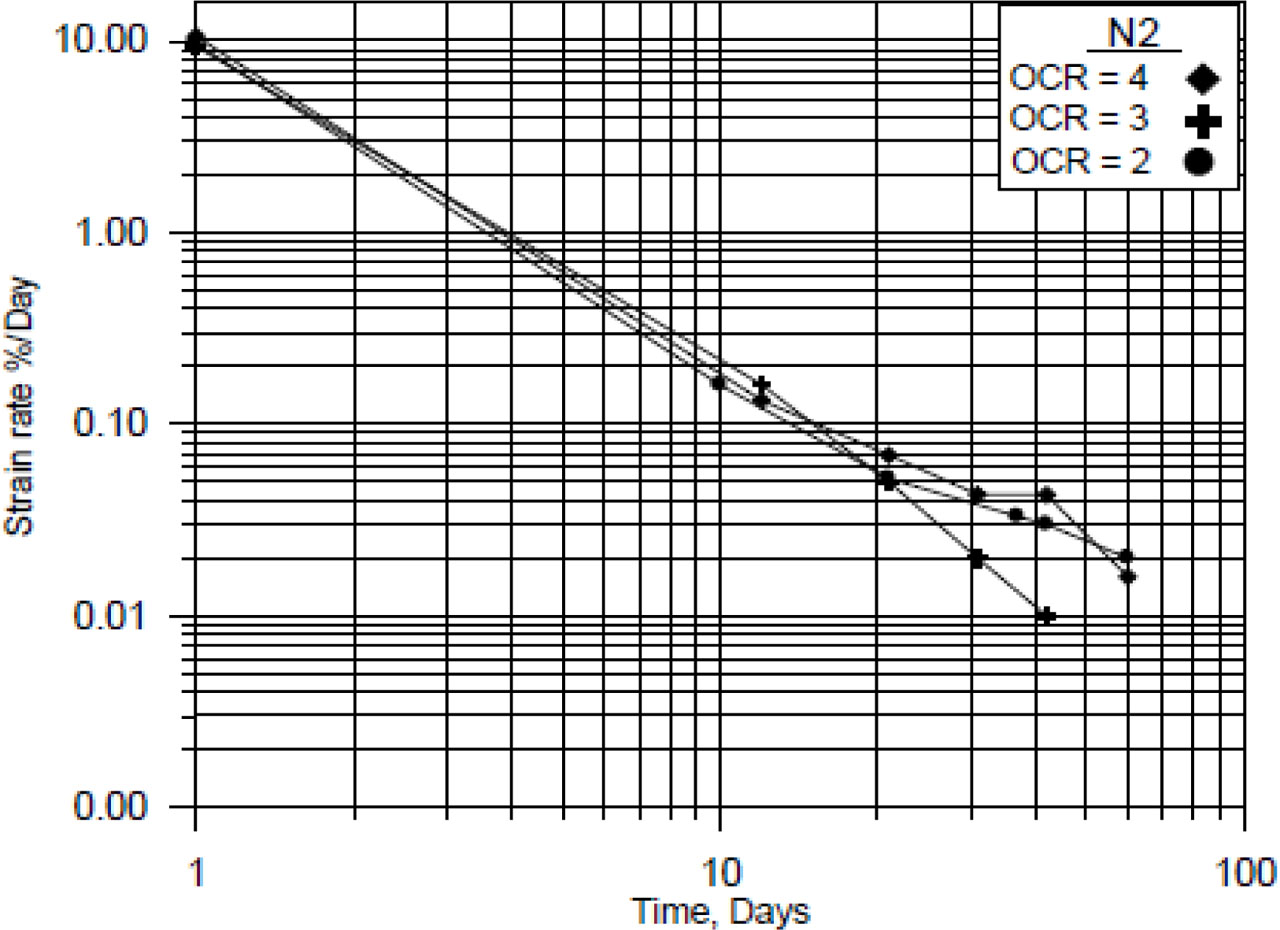
Figure 19
Variation of strain rate with time for the N2 soil at different overconsolidation ratios.
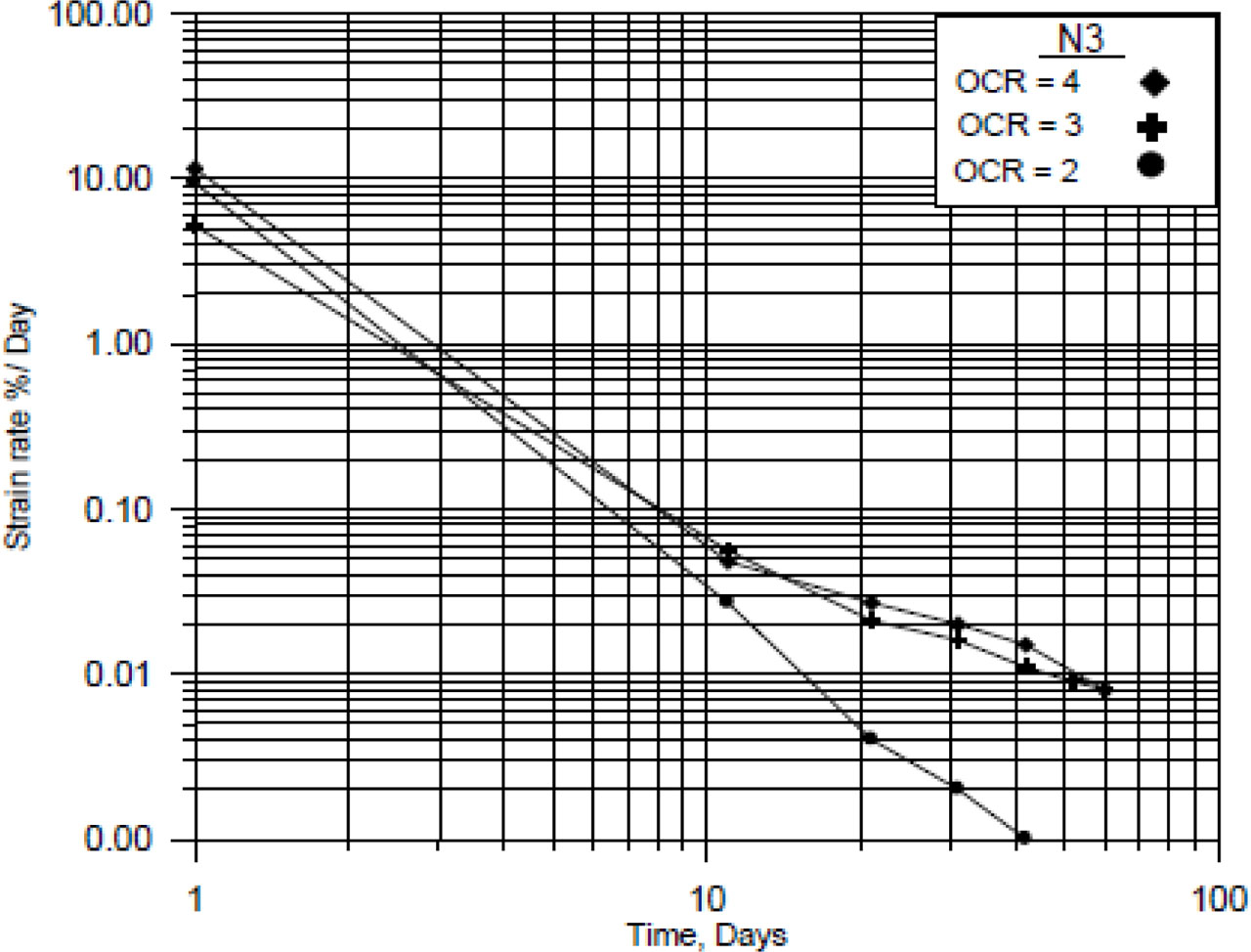
Figure 20
Variation of strain rate with time for the N3 soil at different overconsolidation ratio s.
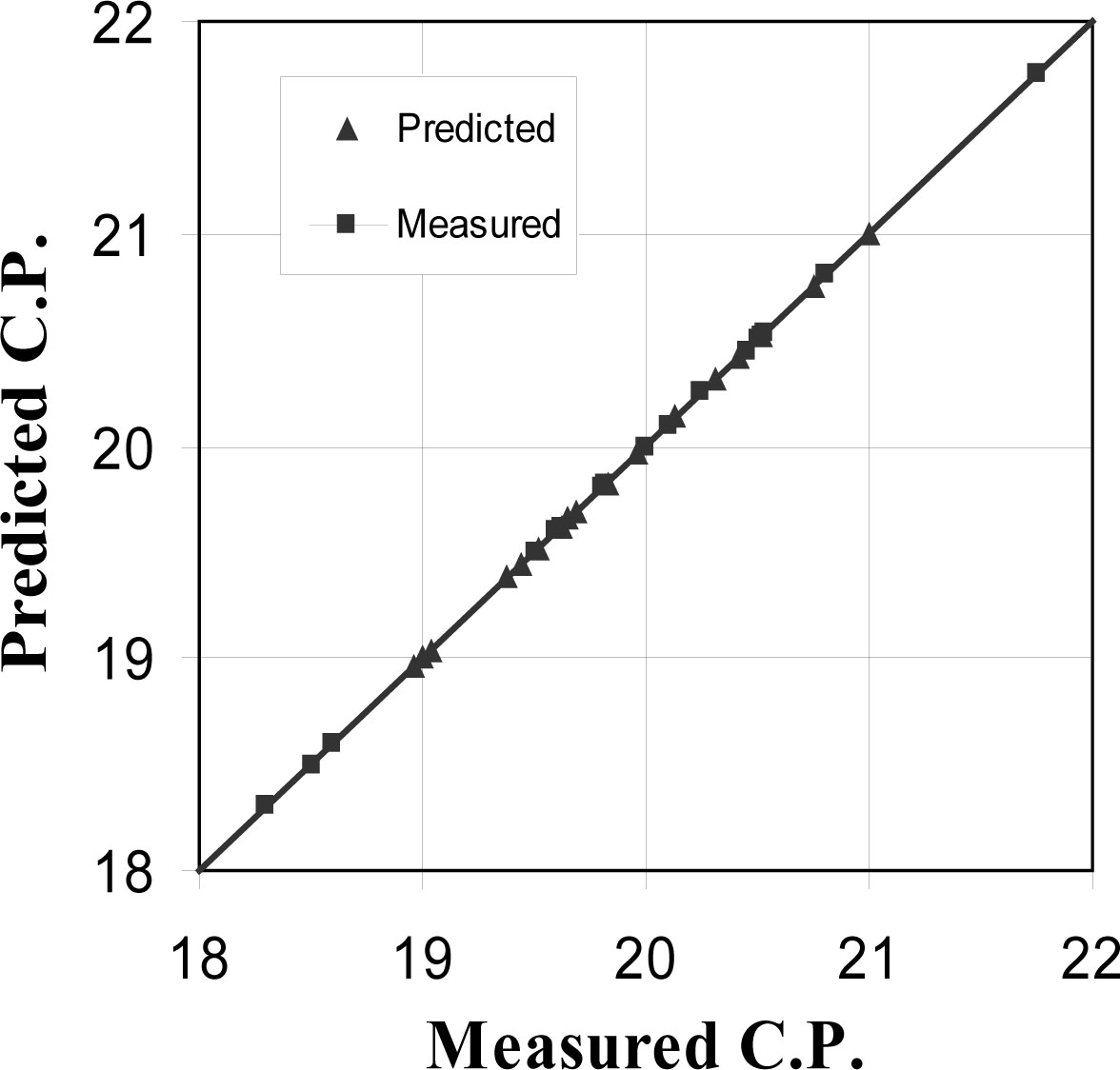
Figure 21
Comparison between the measured and predicted collapse potential in the three soils using equation (2).
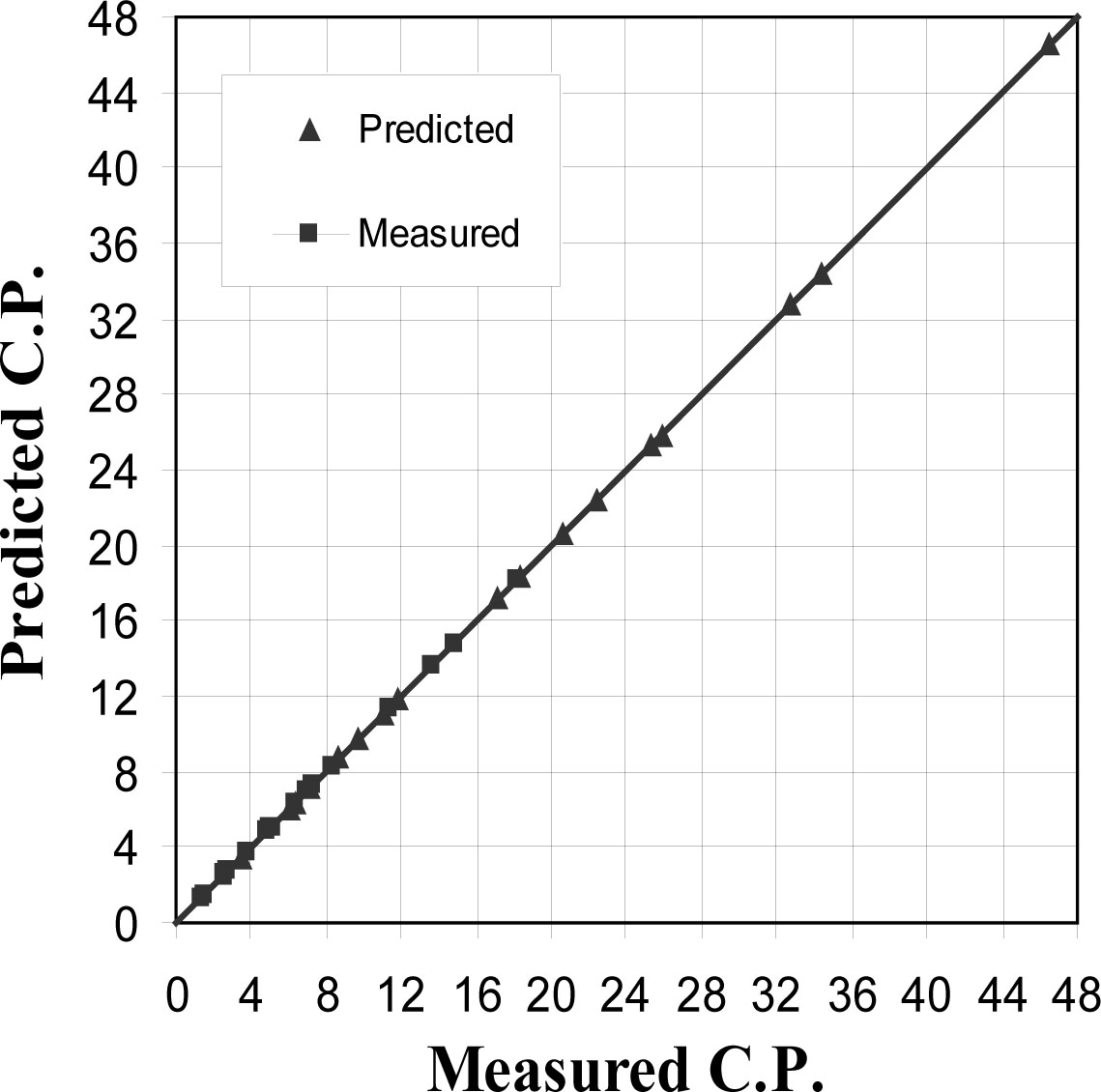
Figure 22
Comparison between the measured and predicted collapse potential in soil N1 using equation (3).