
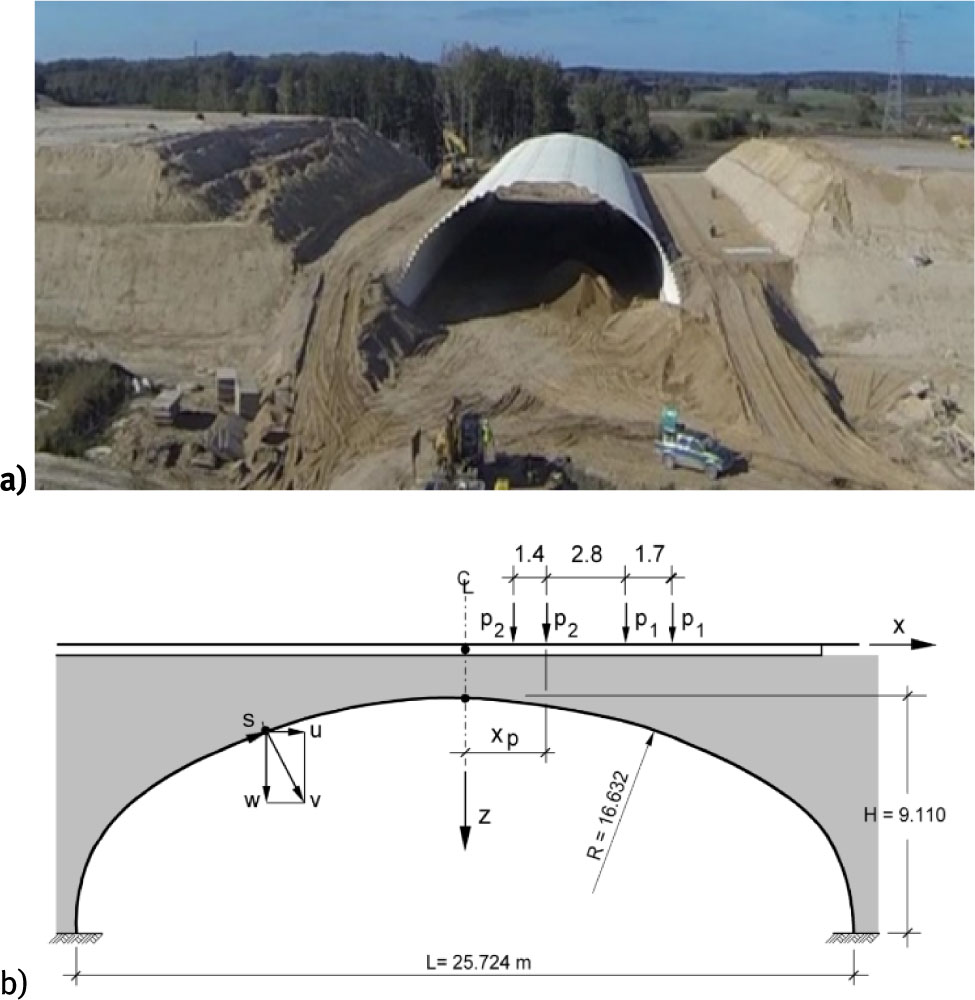
Figure 1
Photograph of the shell during backfilling (a) and geometry of its longitudinal cross section (b).
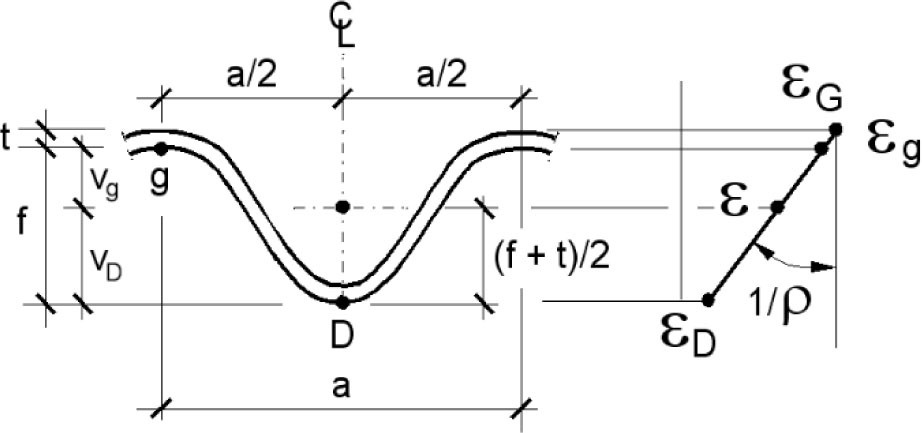
Figure 2
Cross section of the circumferential band of the shell.
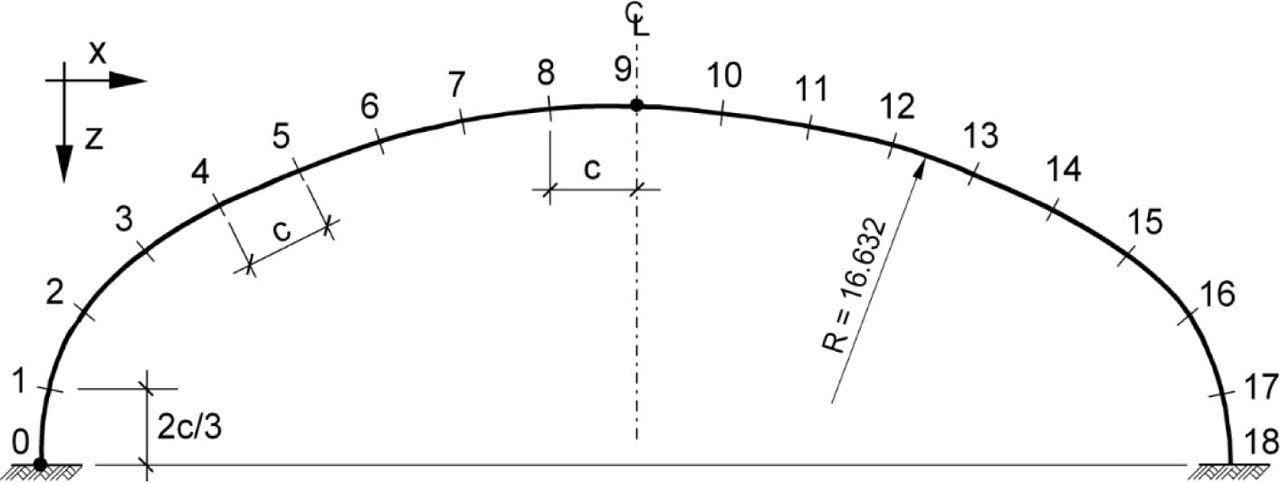
Figure 3
Location of measurement points along the circumferential section of the shell.
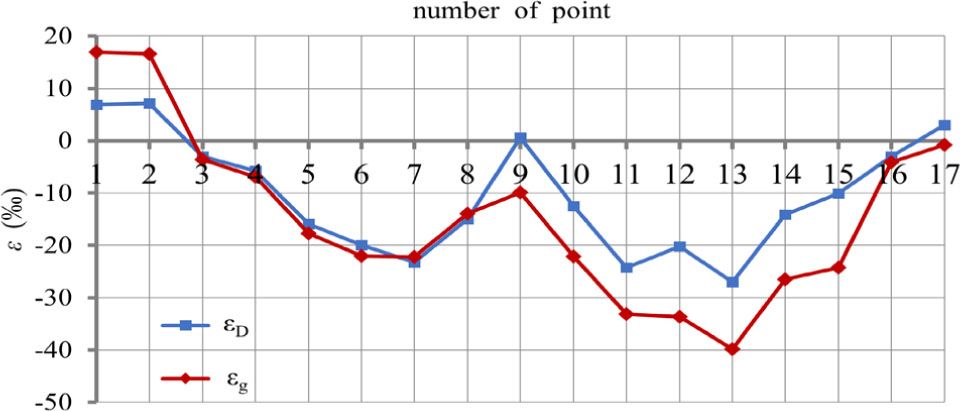
Figure 4
Plot of measured unit strains εg and εD for xp = 0 m in the initial passage.
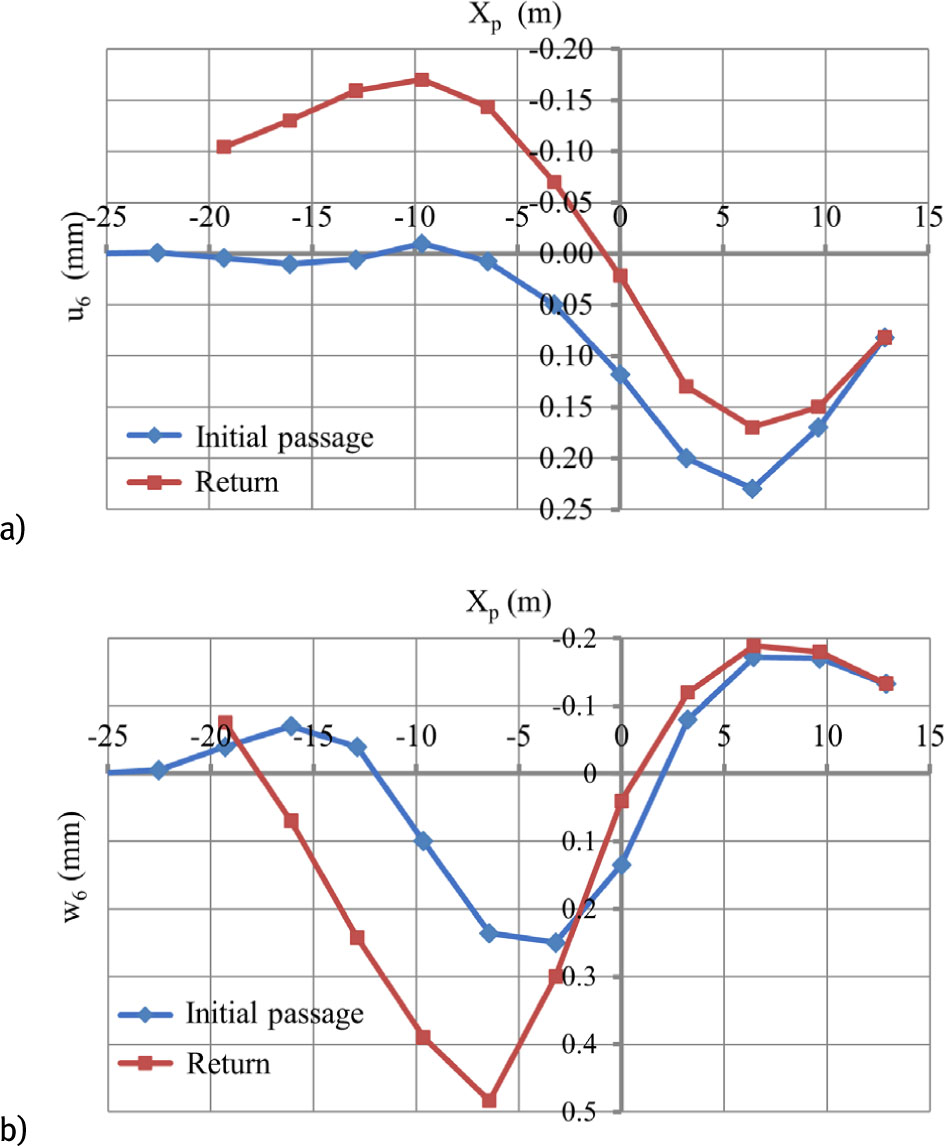
Figure 5
Horizontal (a) and vertical (b) displacement of point 6 during the loading test.
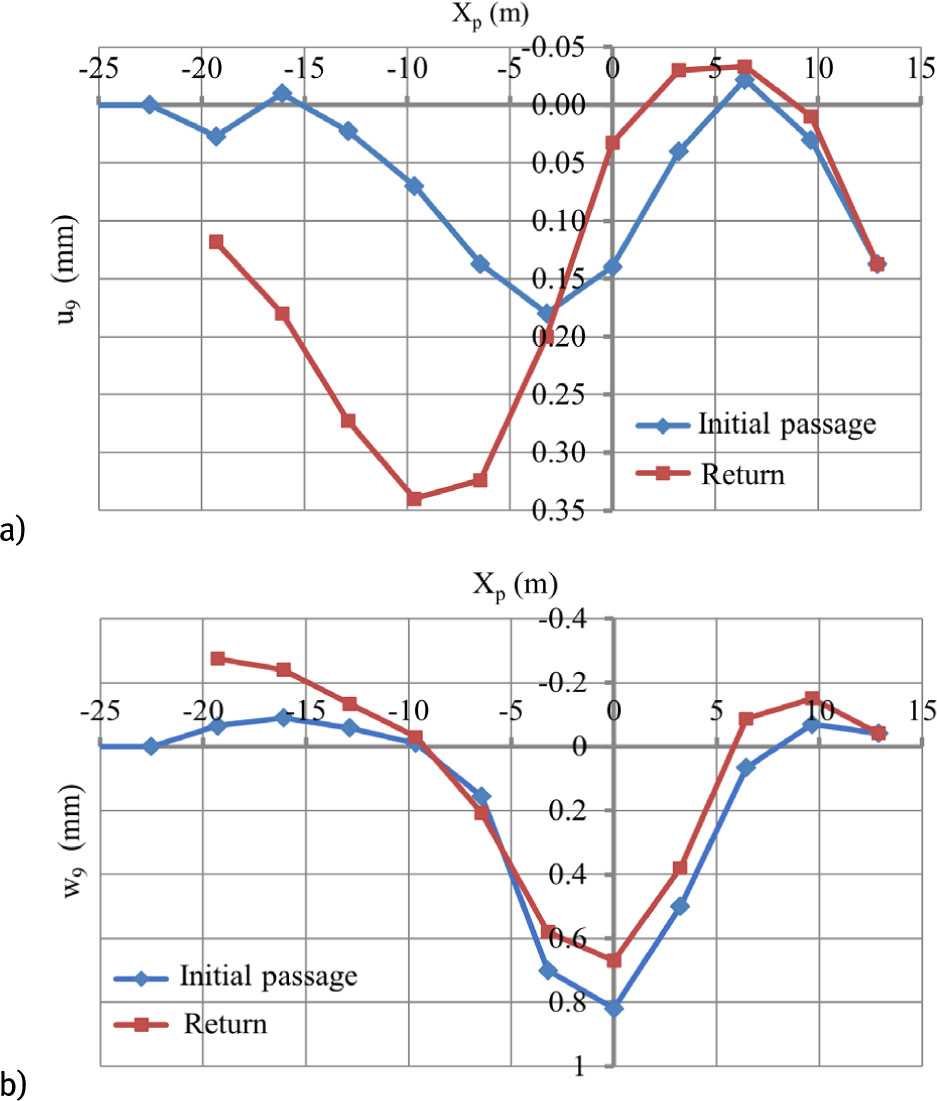
Figure 6
Horizontal (a) and vertical (b) displacement of point 9 during the loading test.
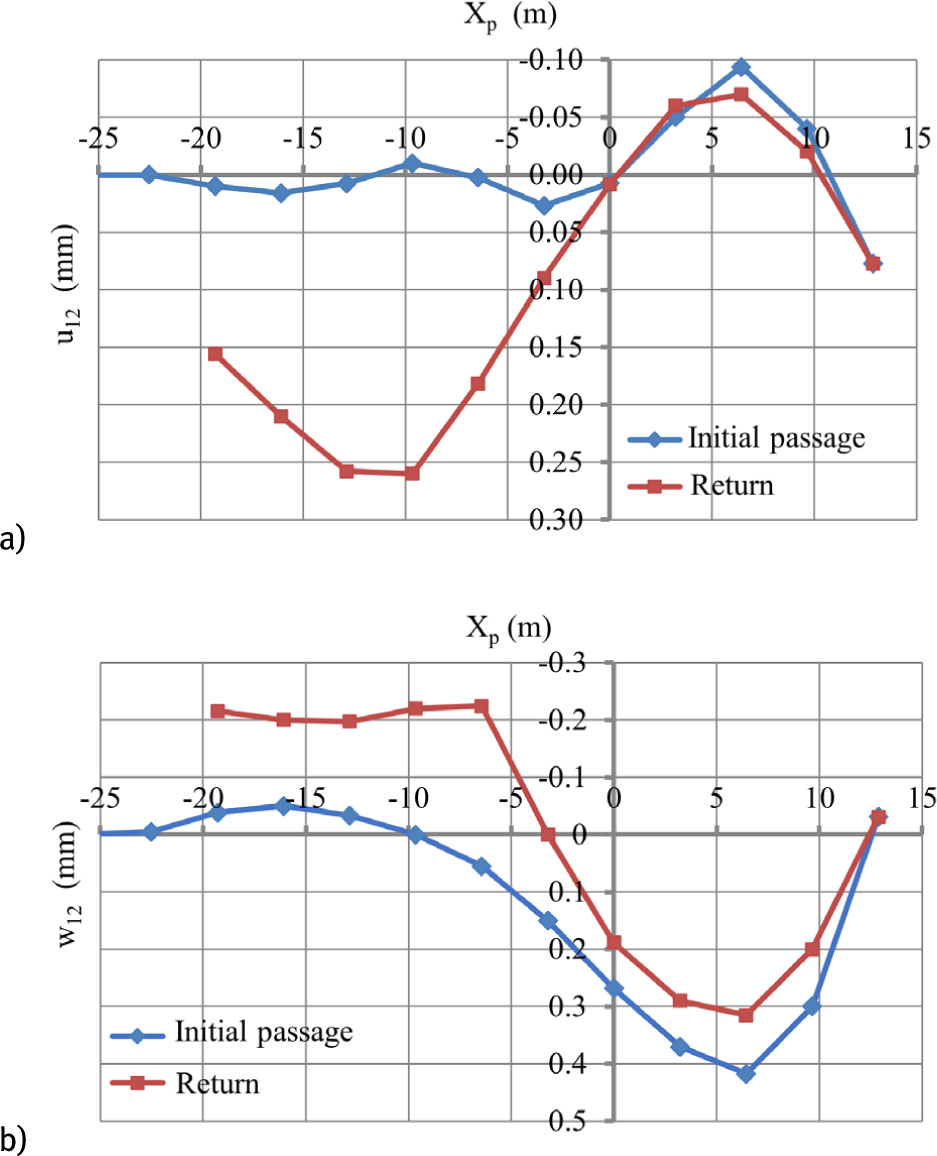
Figure 7
Horizontal (a) and vertical (b) displacement of point 12 during the loading test.
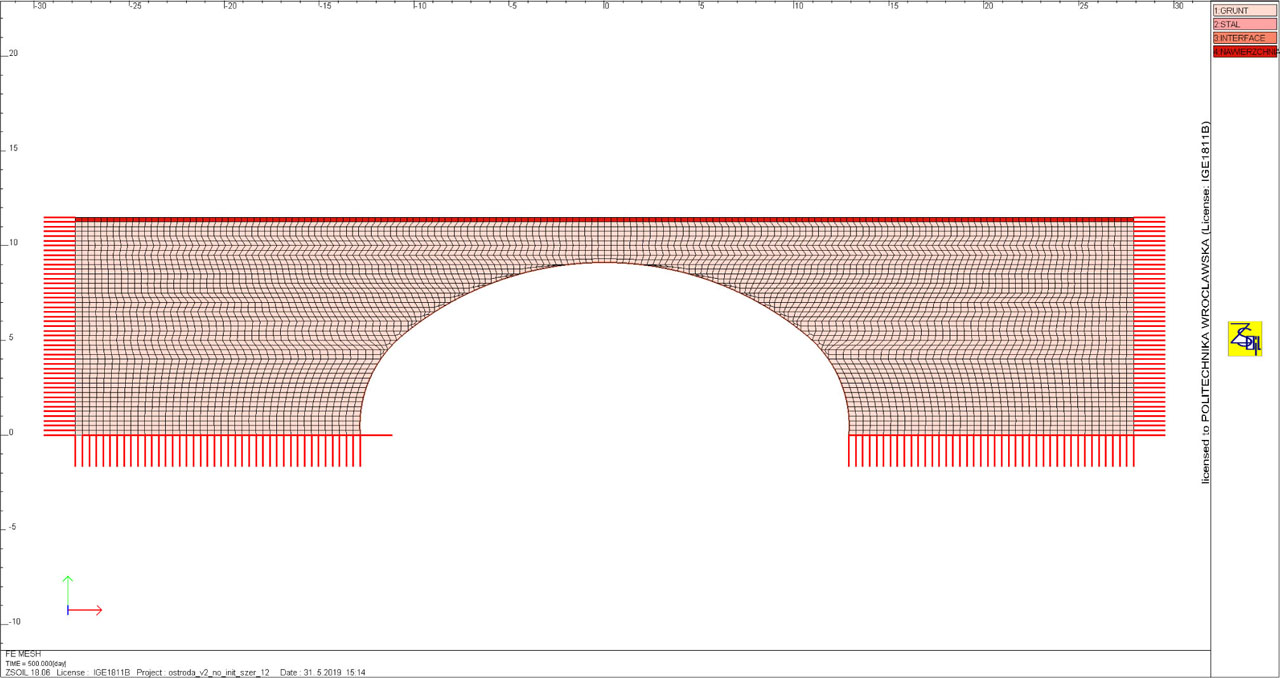
Figure 8
Geometry and finite element mesh adopted in the numerical model.
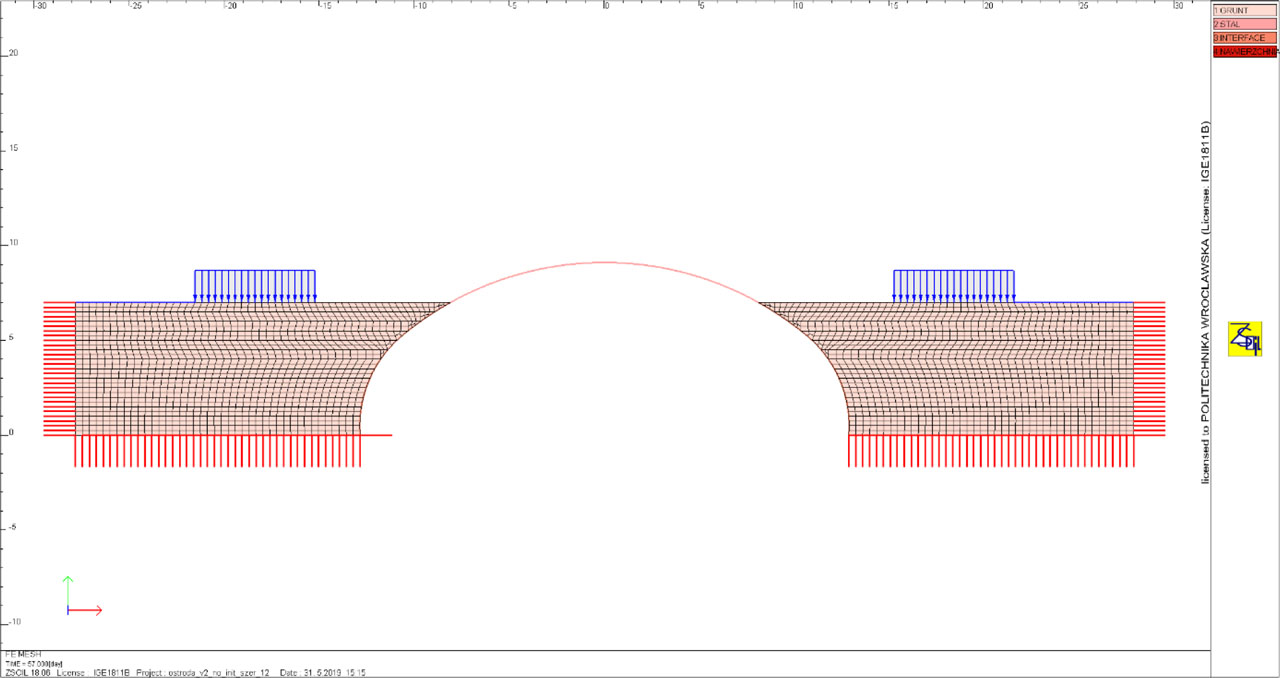
Figure 9
Selected phase of backfilling.
Table 1
Mechanical parameters used in the computations.
| Corrugated steel sheet | |
| Young’s modulus | 210,000 MPa |
| Poisson ratio | 0.3 |
| Moment of inertia | 9.05∙10−5 m4/m |
| Sectional area | 1.45∙10−2 m2/m |
| Unit weight (with ballasting) | 77 (3080) kN/m3 |
| Backfill soil | |
| Young’s modulus | 150 MPa |
| Poisson ratio | 0.25 |
| Cohesion | 5 kPa |
| Friction angle | 34° |
| Dilatancy angle | 9° |
| Unit weight | 19 kN/m3 |
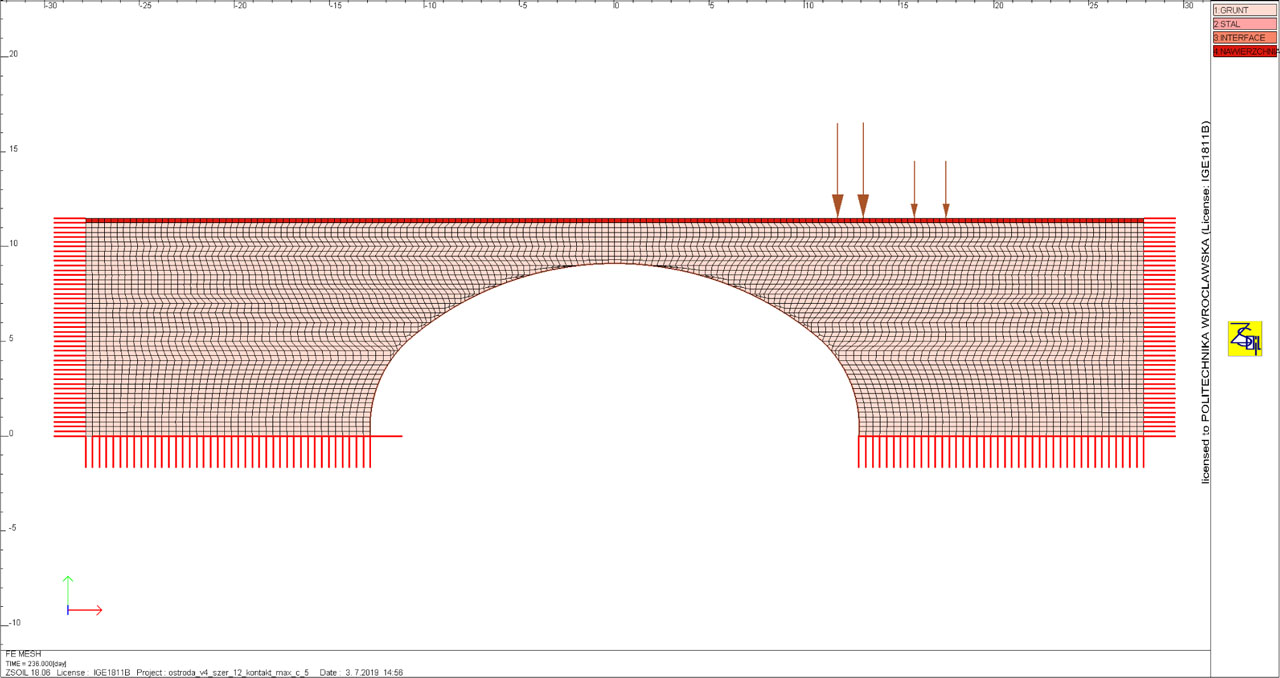
Figure 10
Vehicular loading as a system of nodal forces.
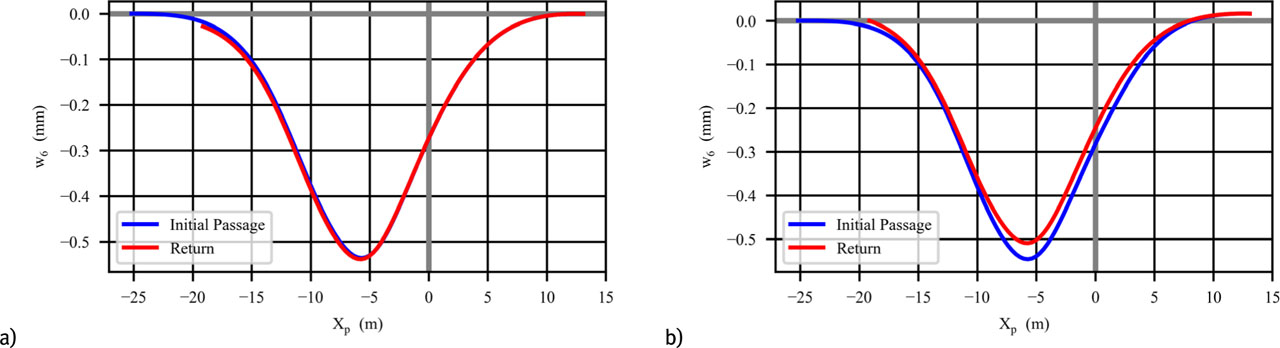
Figure 11
Vertical displacement of point No. 6 during consecutive vehicle crossings: without shell ballasting (a) and with ballasting (b).
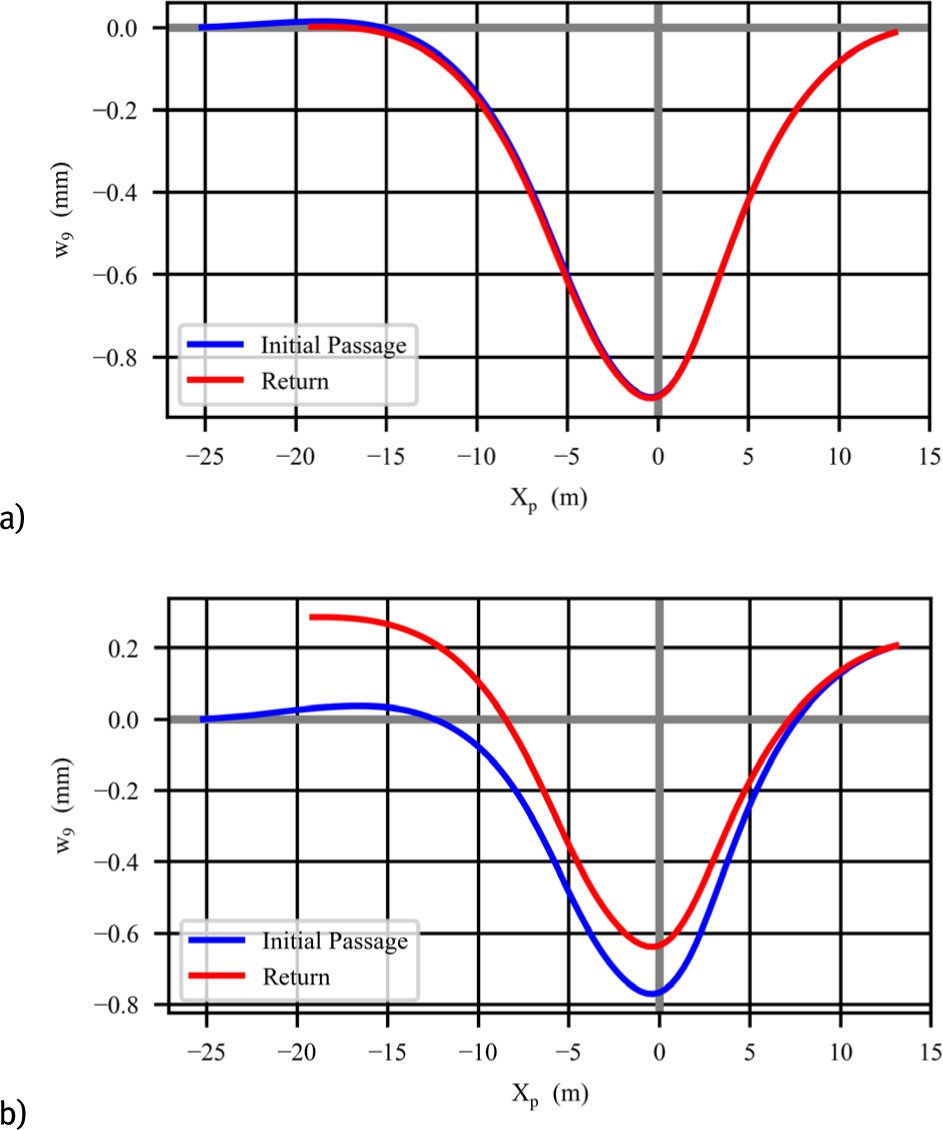
Figure 12
Vertical displacement of point No. 9 during consecutive vehicle crossings: without shell ballasting (a) and with ballasting (b).
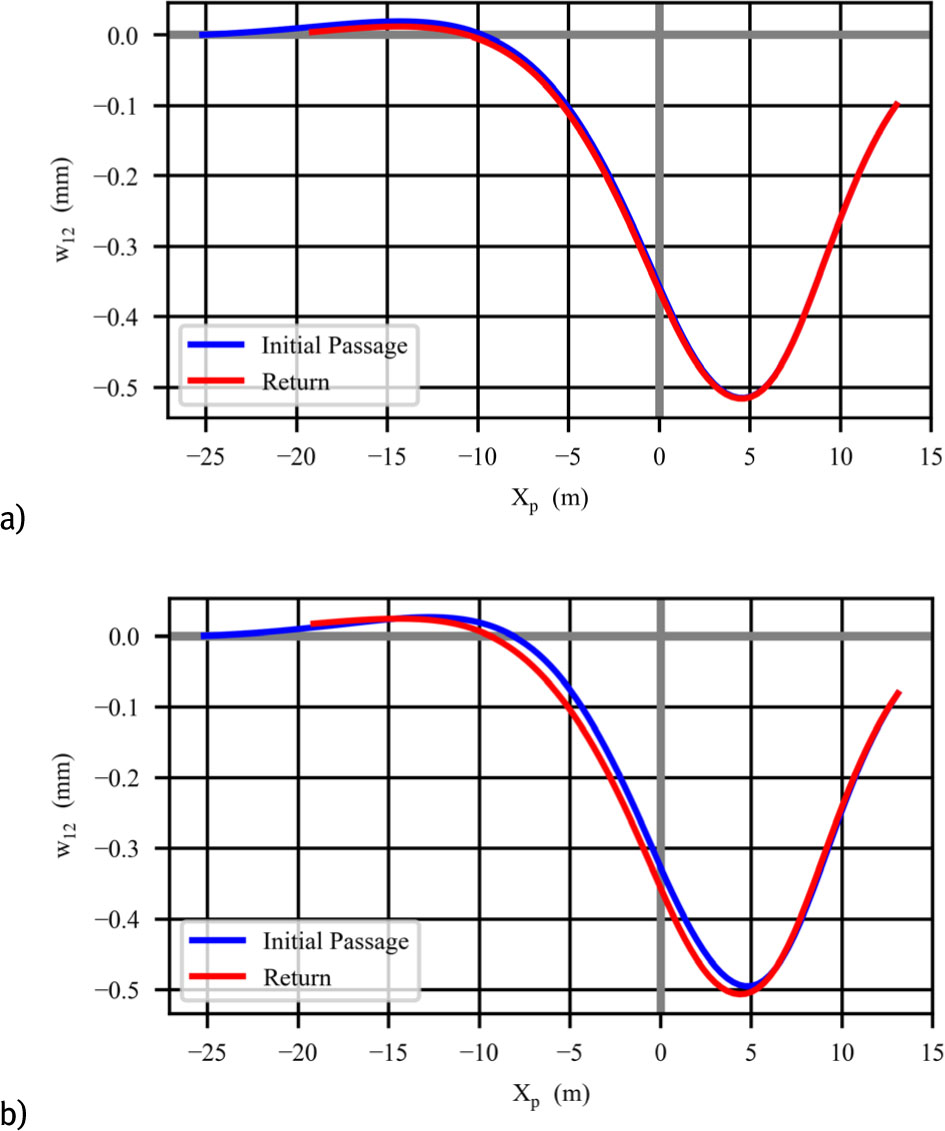
Figure 13
Vertical displacement of point No. 12 during consecutive vehicle crossings: without shell ballasting (a) and with ballasting (b).