Have a personal or library account? Click to login
A comprehensive approach to the optimization of design solutions for dry anti-flood reservoir dams Cover

A comprehensive approach to the optimization of design solutions for dry anti-flood reservoir dams

Open Access
|Sep 2021

Figures & Tables

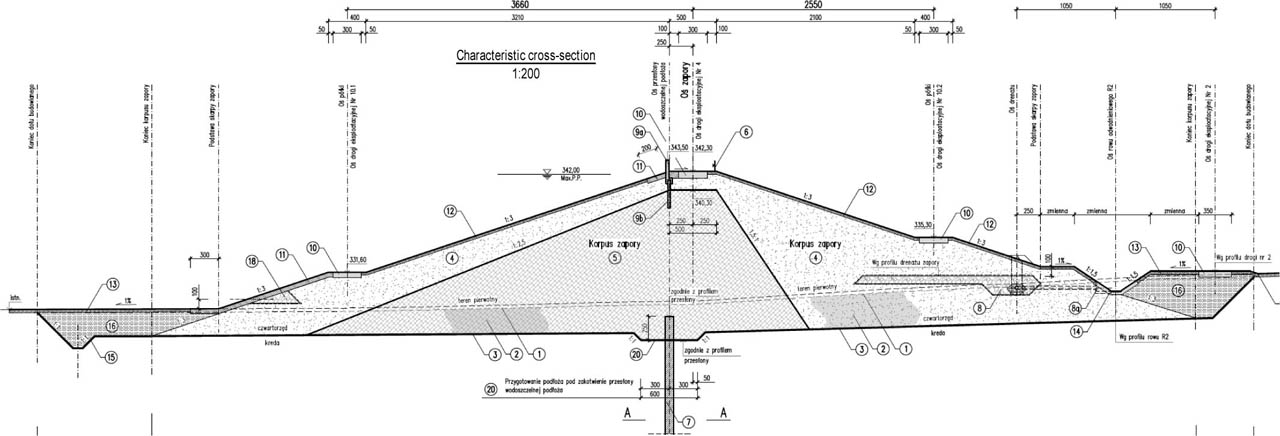
Figure 1

Characteristic cross-section of the dam (Sweco Consulting Sp. z o.o. 2019).
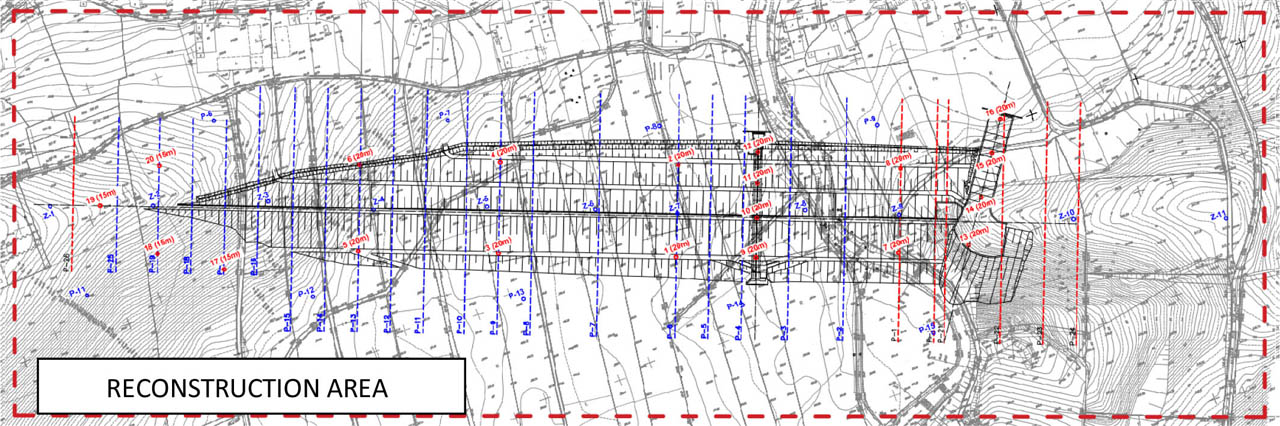

Figure 2

Section of the map indicating the topography of terrain, dam body and area under consideration
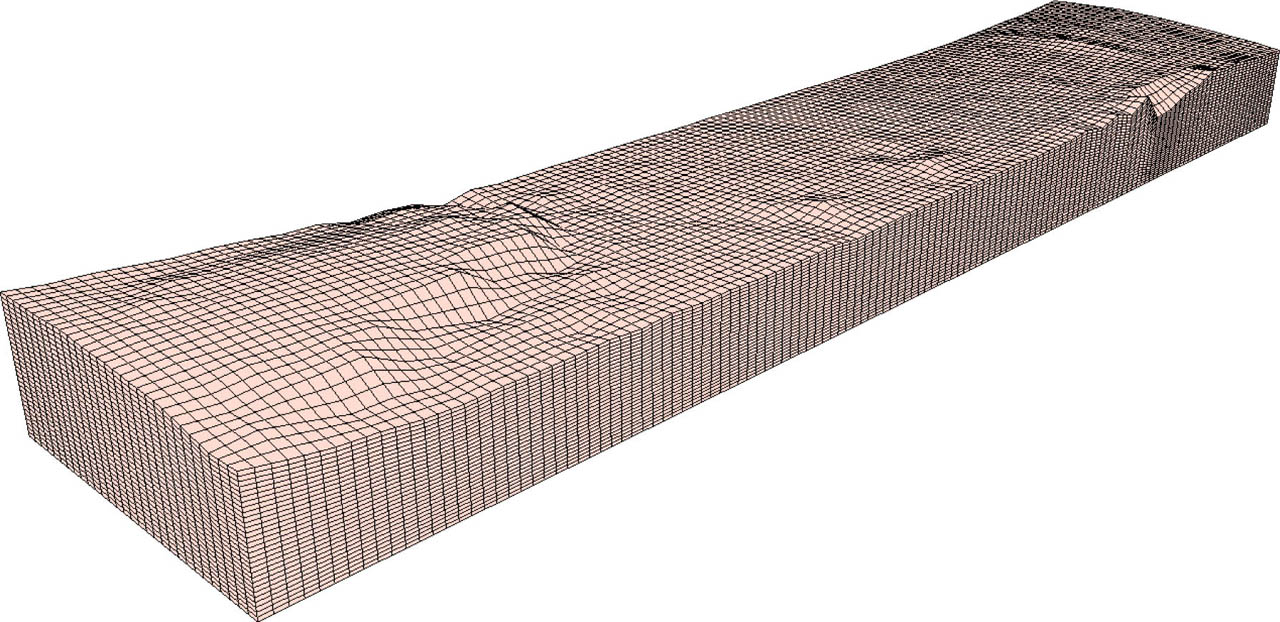

Figure 3

Three-dimensional model of the dam substrate.
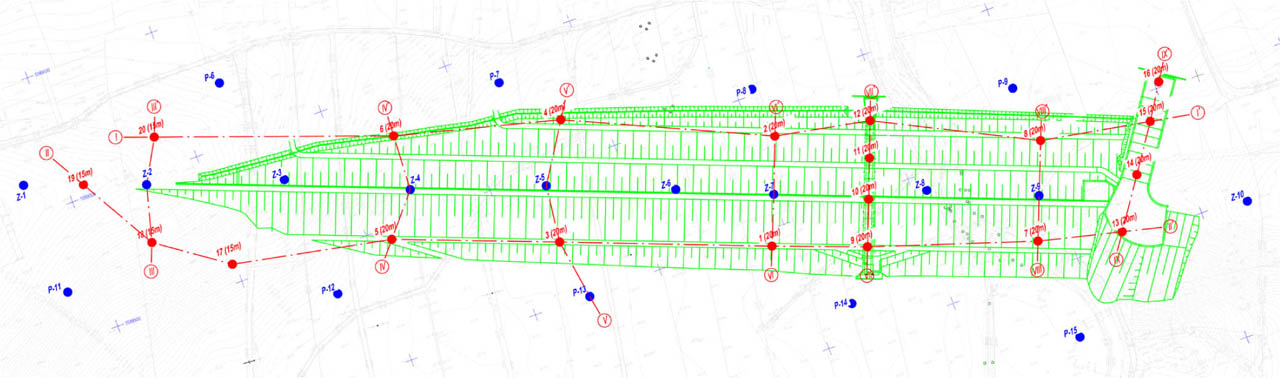

Figure 4

Location of the boreholes and the dam body–top view.
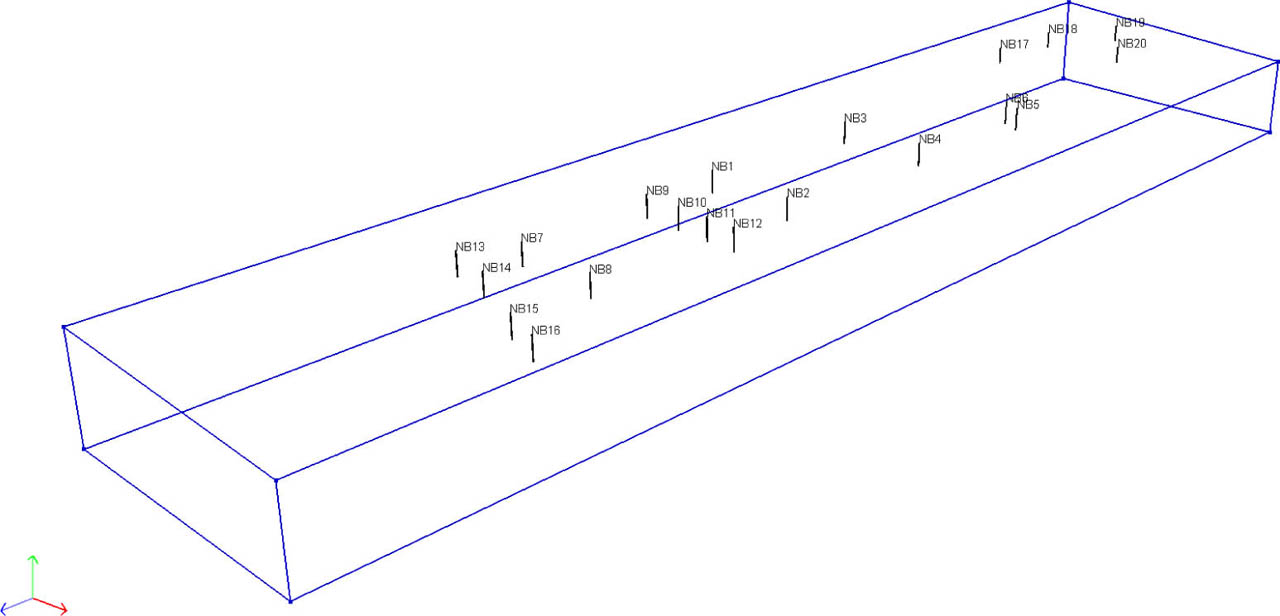

Figure 5

Location of the boreholes data input to the FE model.
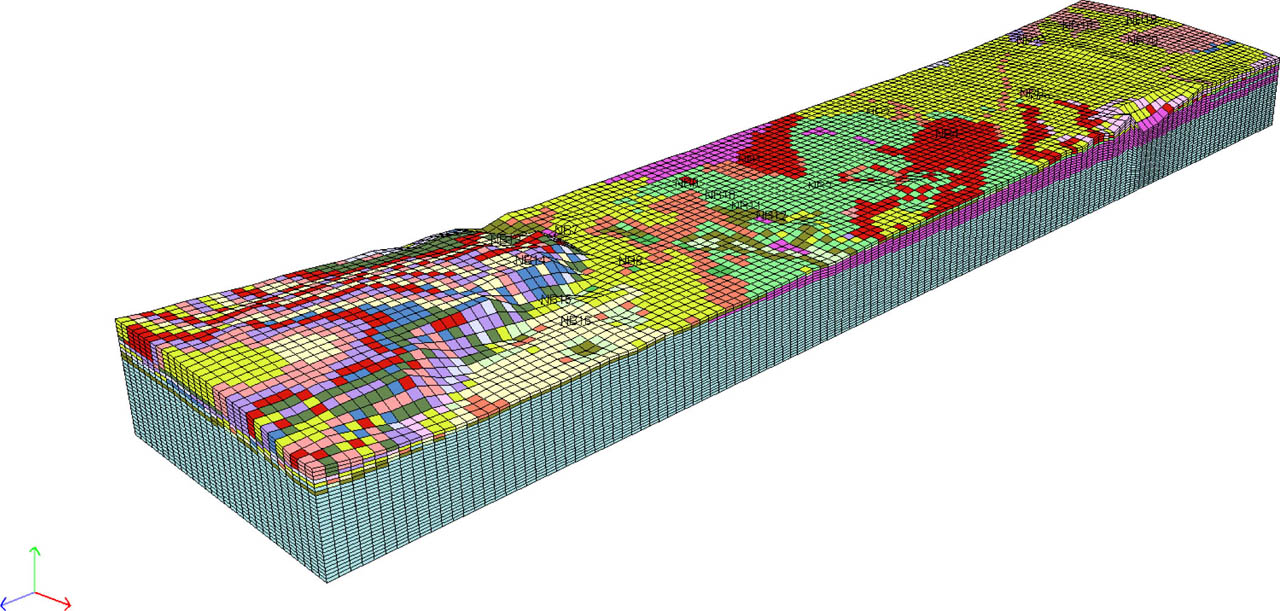

Figure 6

3D substrate reconstruction with finite element mesh.
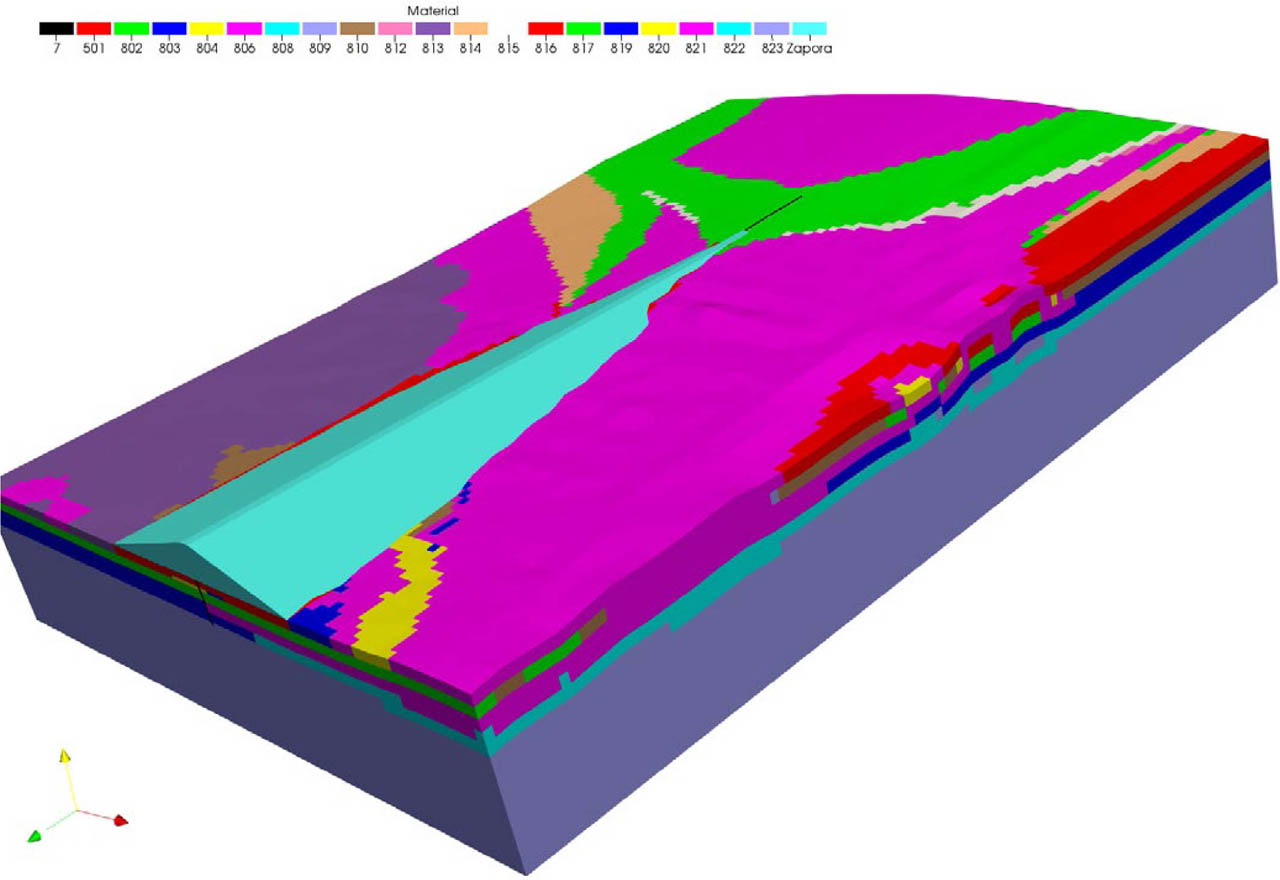

Figure 7

Model of the subsoil with the distribution of geotechnical layers within the western abutment area.
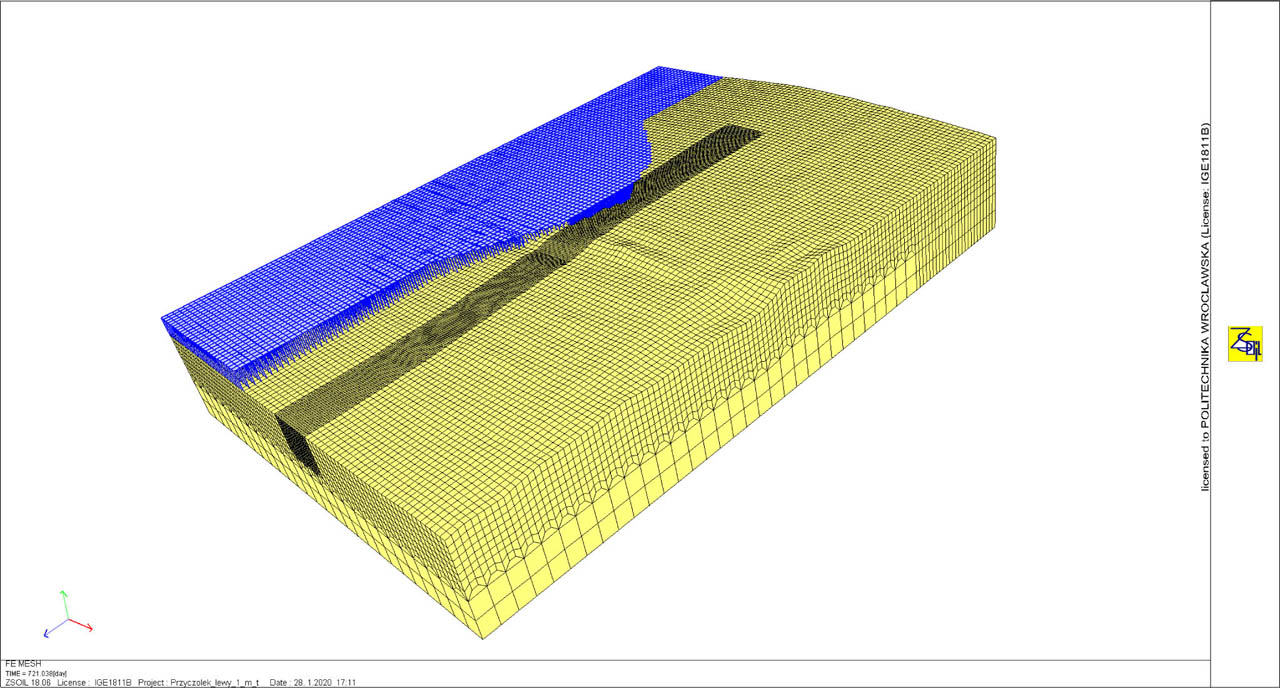

Figure 8

First-type boundary condition applied to the boundary of the domain.
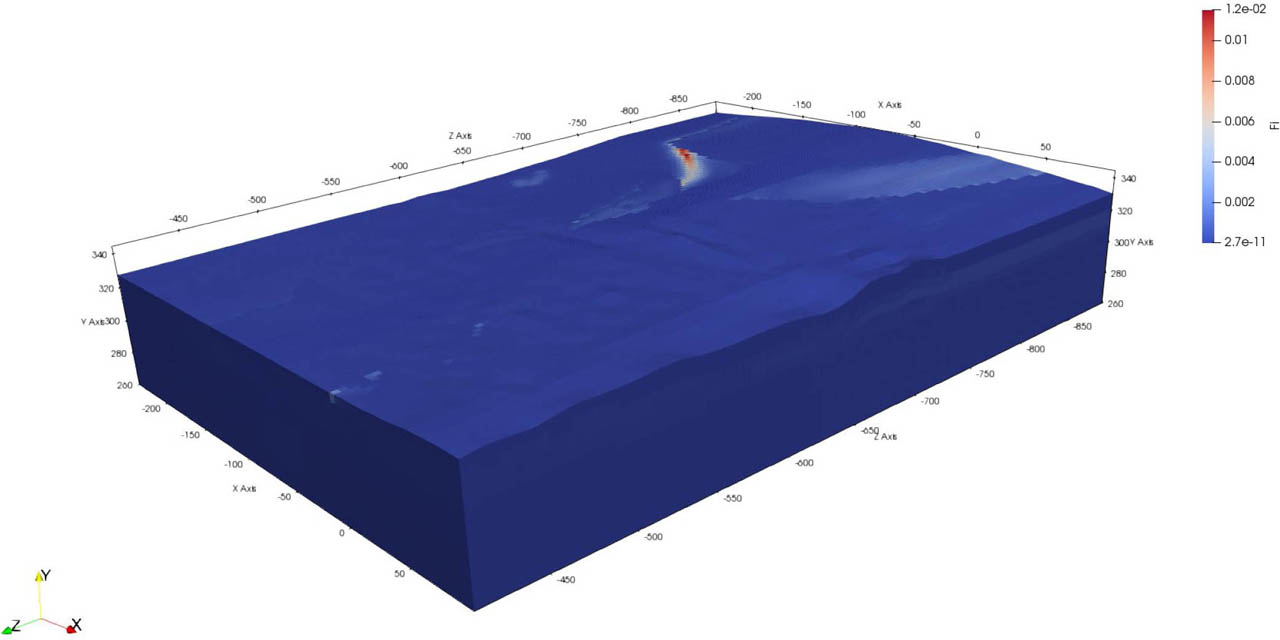

Figure 9

Distribution of the Fi parameter.
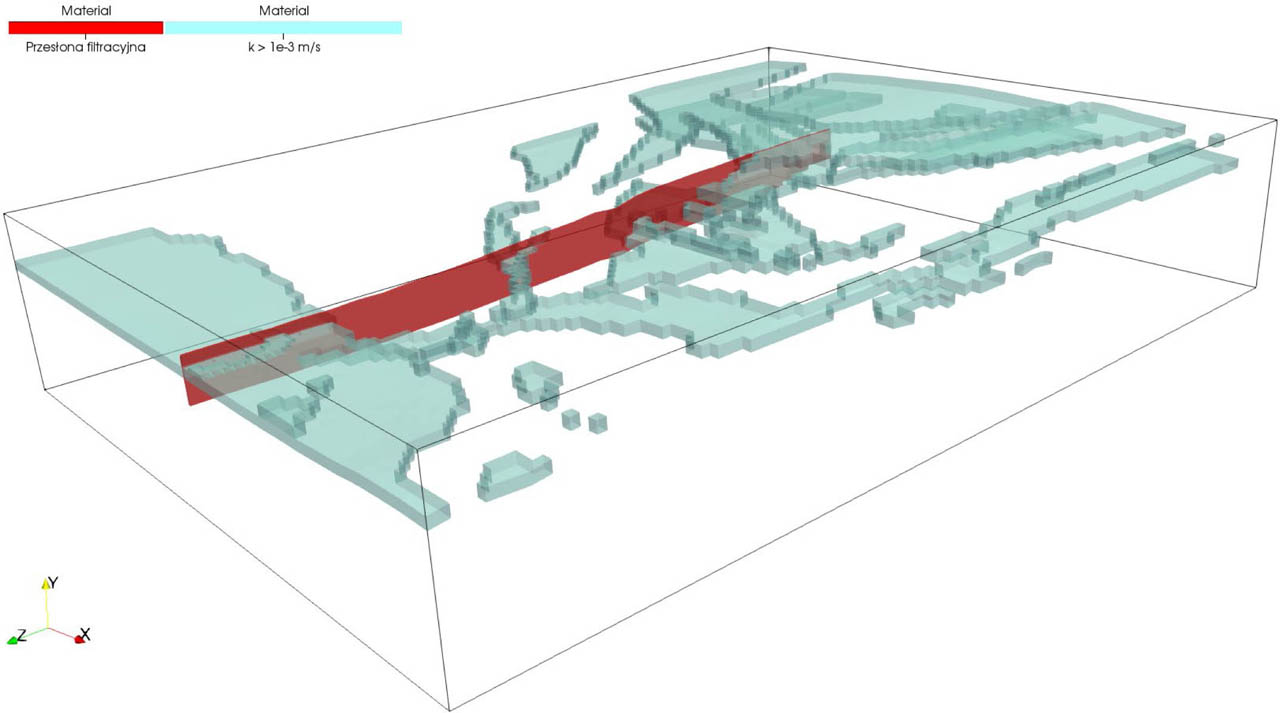

Figure 10

Anti-filtration barrier visualization (red) and highly permeable layers (blue).
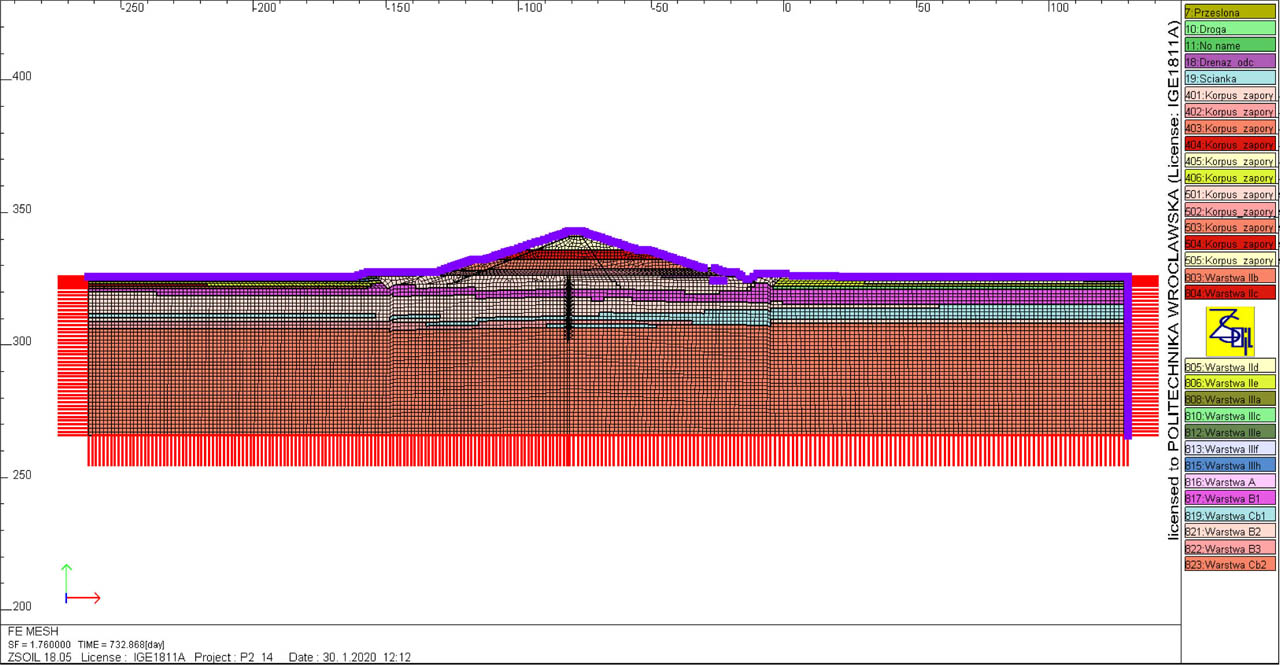

Figure 11

Numerical model created for the purpose of deformation and stability analyses.
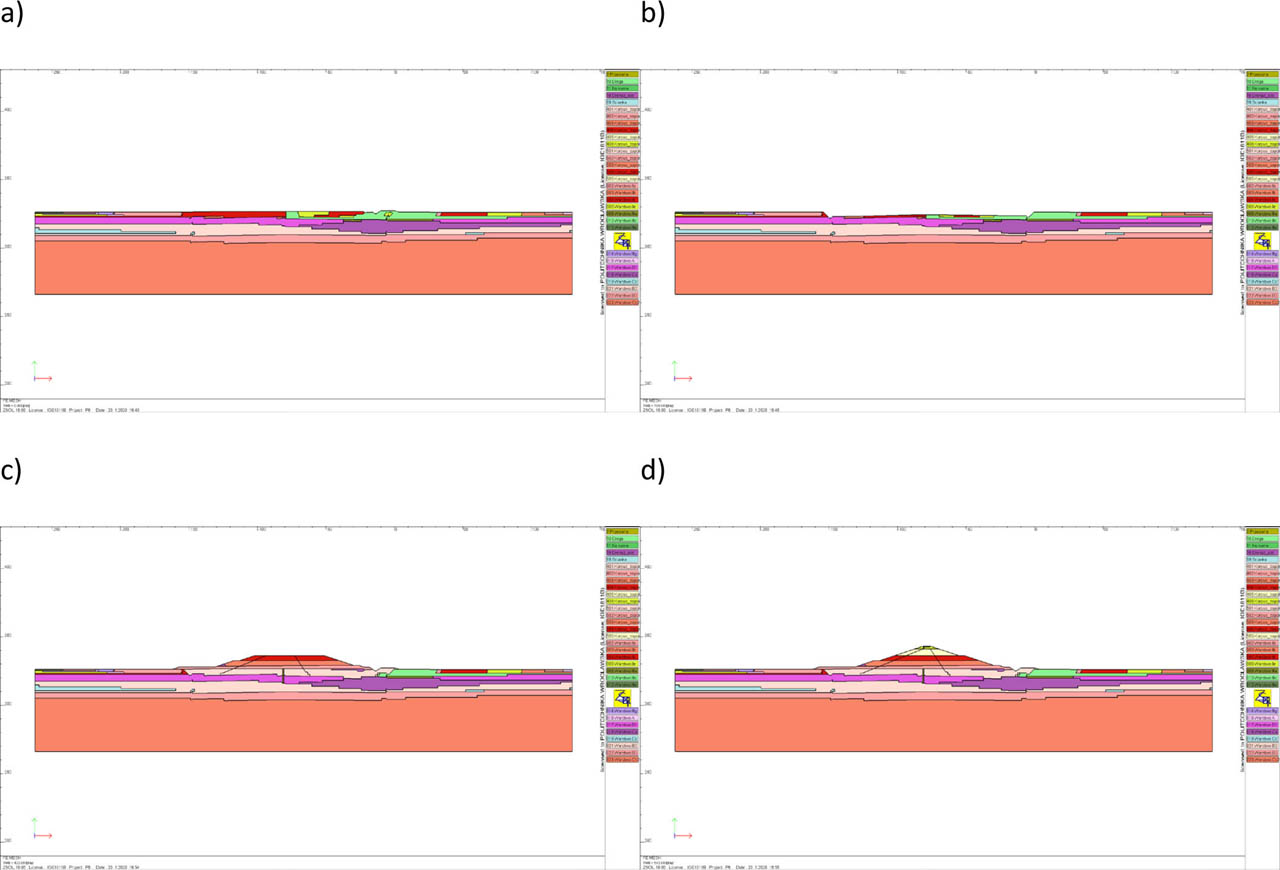

Figure 12

Selected stages of dam construction: a) stage 0 – reference stage, b) stage I – excavation, c) stage VI – intermediate dam construction, d) stage VIII – construction completed.
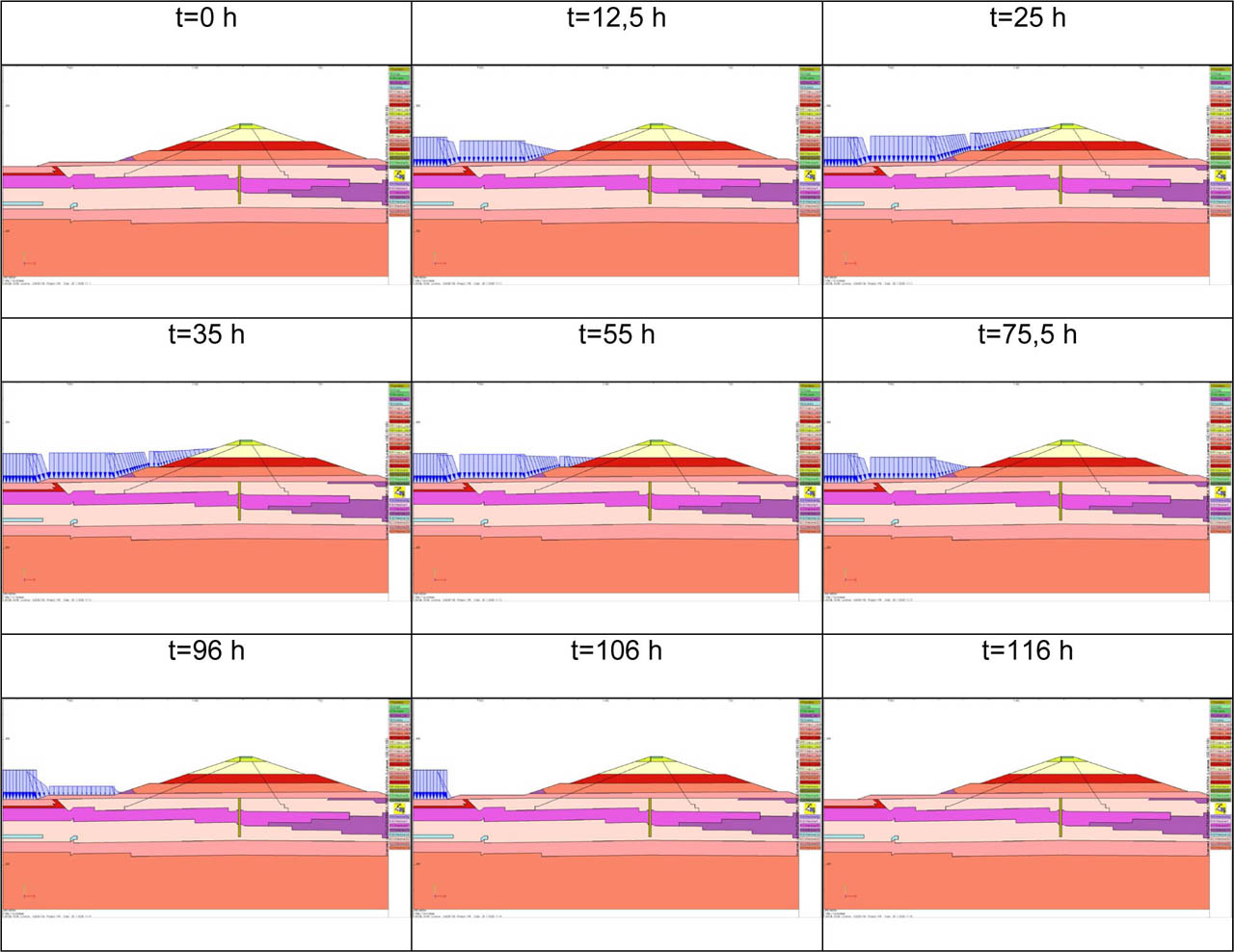

Figure 13

Time-variable boundary condition of water pressure during the passage of the flood wave.
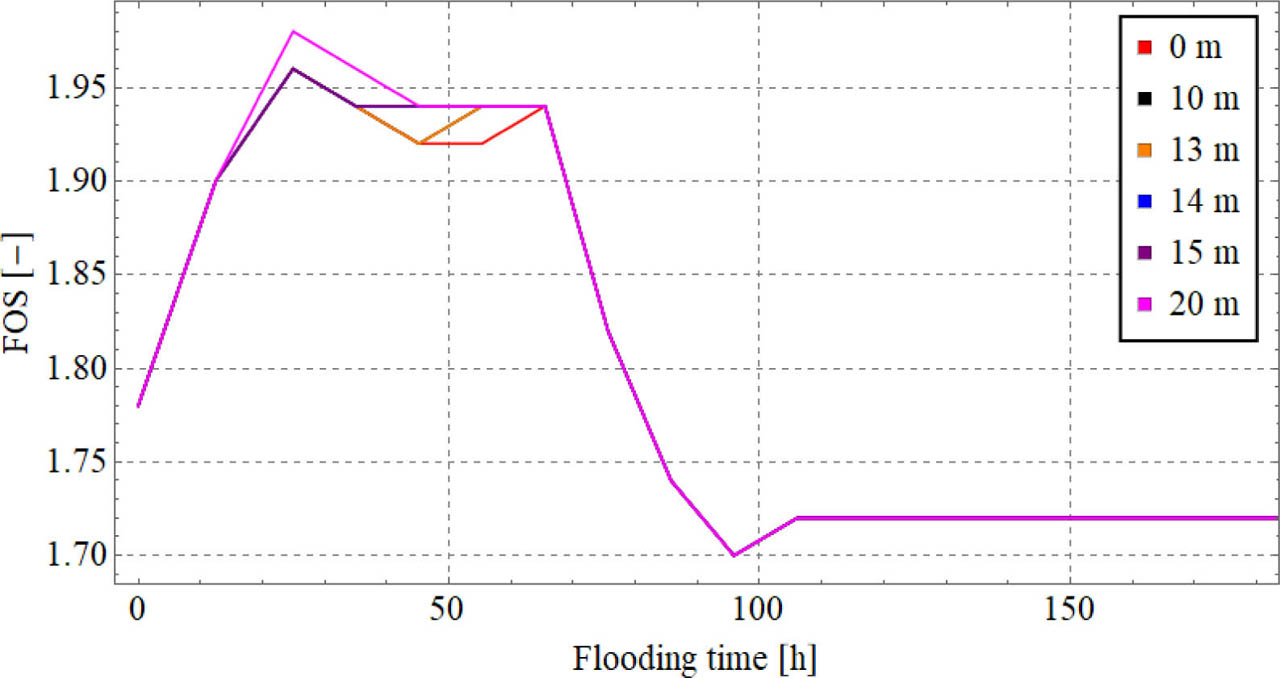

Figure 14

Evolution of the factor of safety in time during flood wave passage for different depths of the anti-filtration barrier.
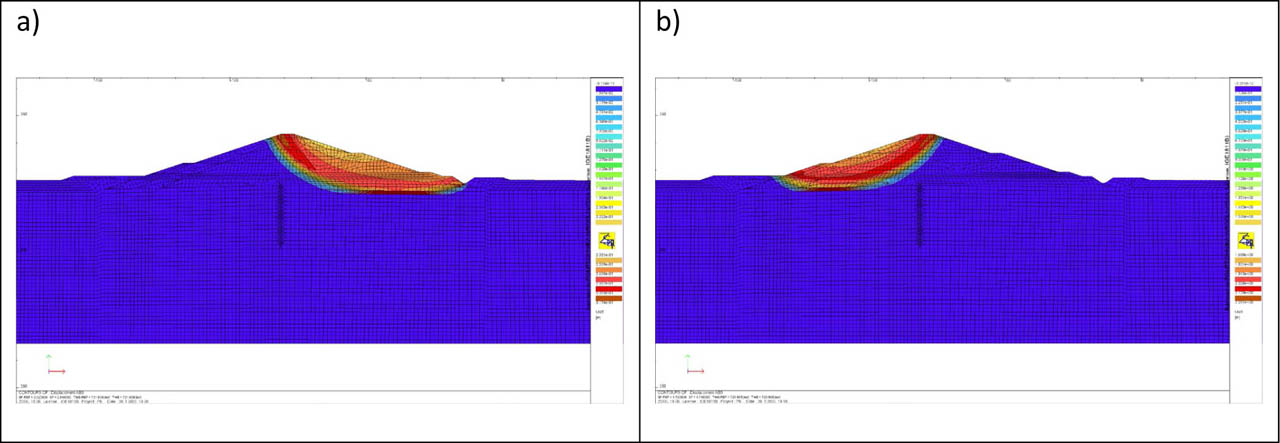

Figure 15

Potential failure mechanisms at selected time steps of the analysis: a) for the maximum damming level, b) for the minimum FOS value.
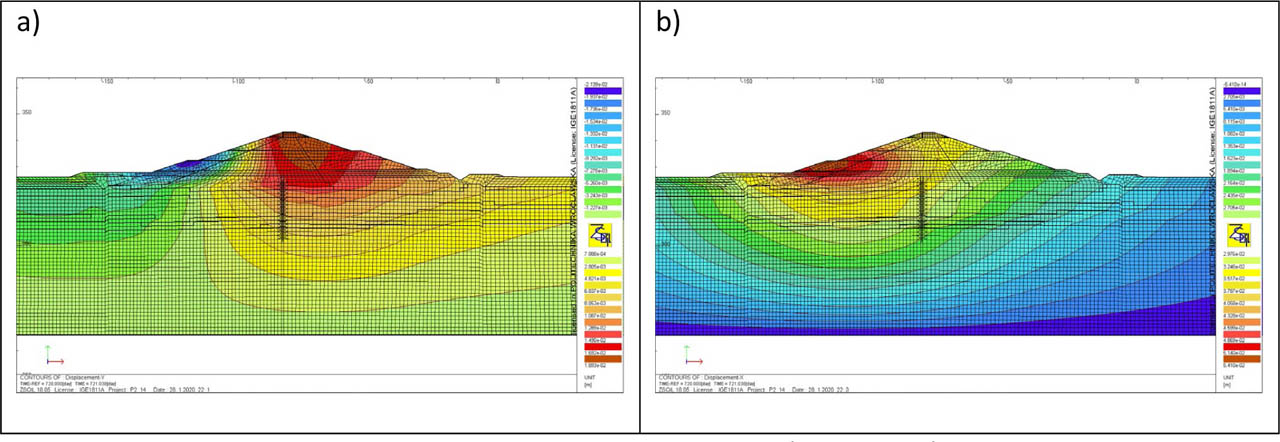

Figure 16

An exemplary map of displacements: a) vertical; b) horizontal.
DOI: https://doi.org/10.2478/sgem-2021-0016 | Journal eISSN: 2083-831X | Journal ISSN: 0137-6365
Language: English
Page range: 270 - 284
Submitted on: May 10, 2021
|
Accepted on: May 21, 2021
|
Published on: Sep 30, 2021
In partnership with: Paradigm Publishing Services
Publication frequency: 4 issues per year

© 2021 Dariusz Łydżba, Adrian Różański, Maciej Sobótka, Michał Pachnicz, Szczepan Grosel, Jakub Rainer, published by Wroclaw University of Science and Technology
This work is licensed under the Creative Commons Attribution 4.0 License.