
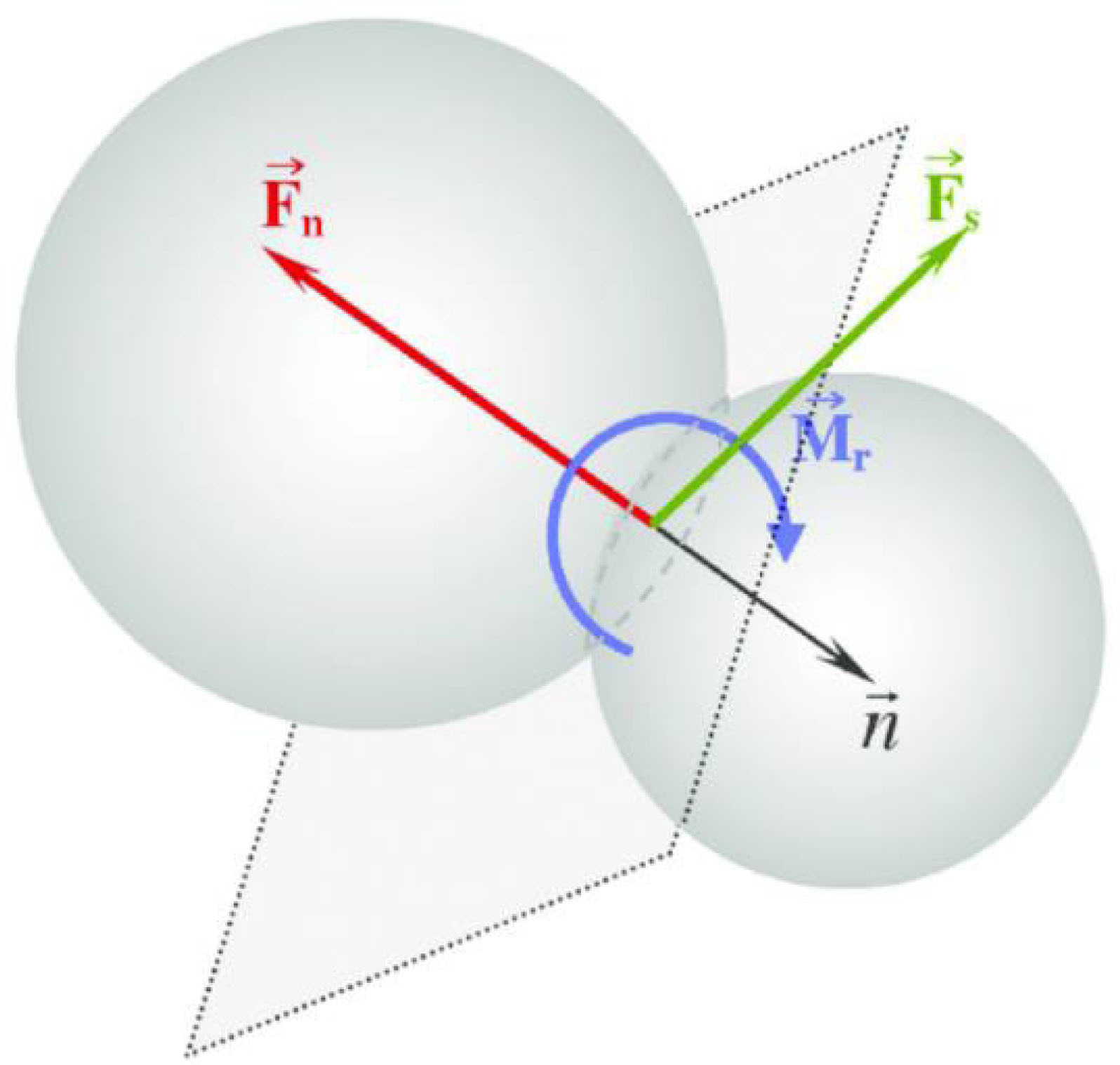
Figure 1
Two spheres in contact with forces and momentum acting on them ( - normal contact force, – tangential contact force, - contact moment force and - contact normal vector) [48].
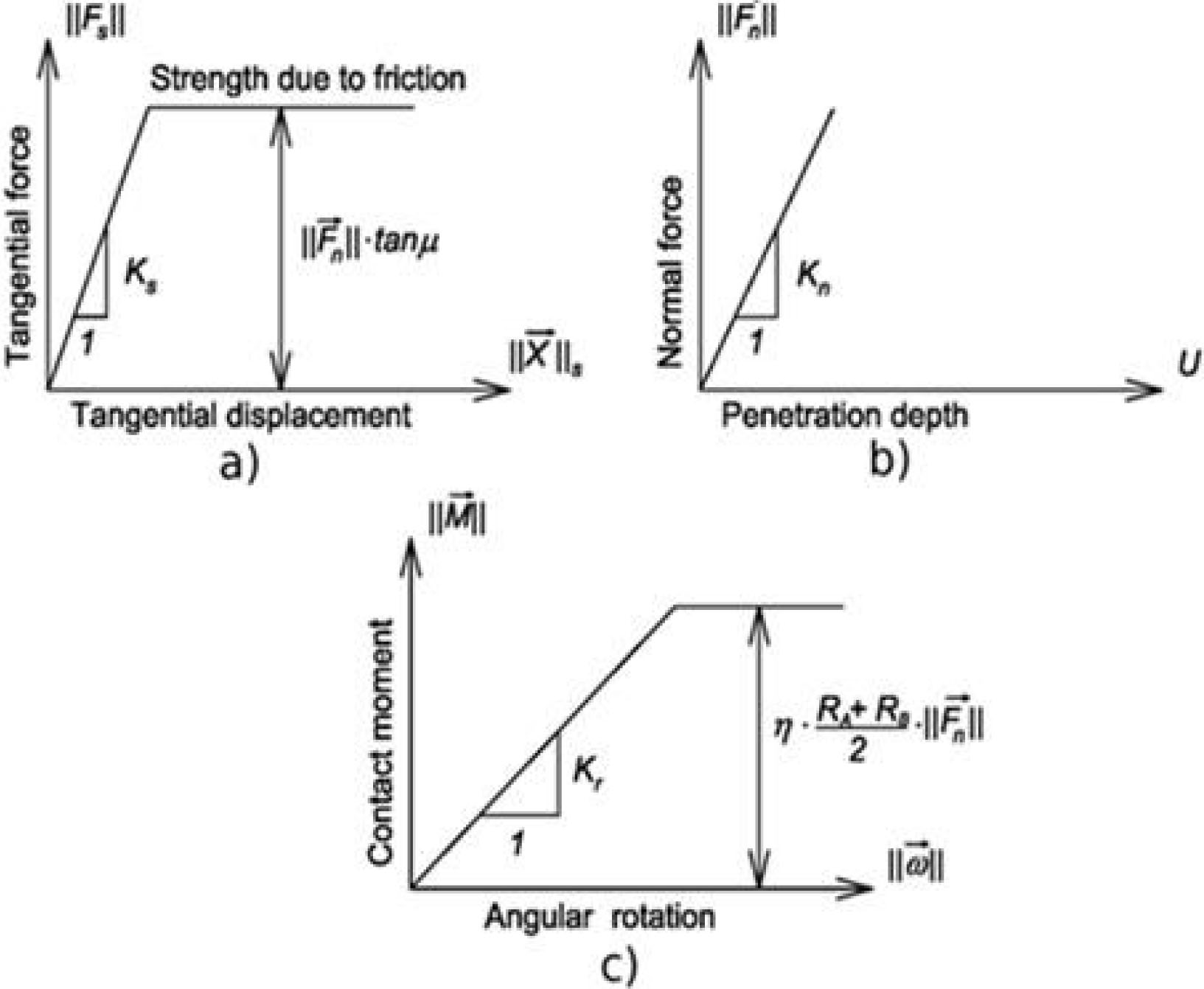
Figure 2
Mechanical response of (a) tangential (b) normal and (c) rolling contact model laws [45].
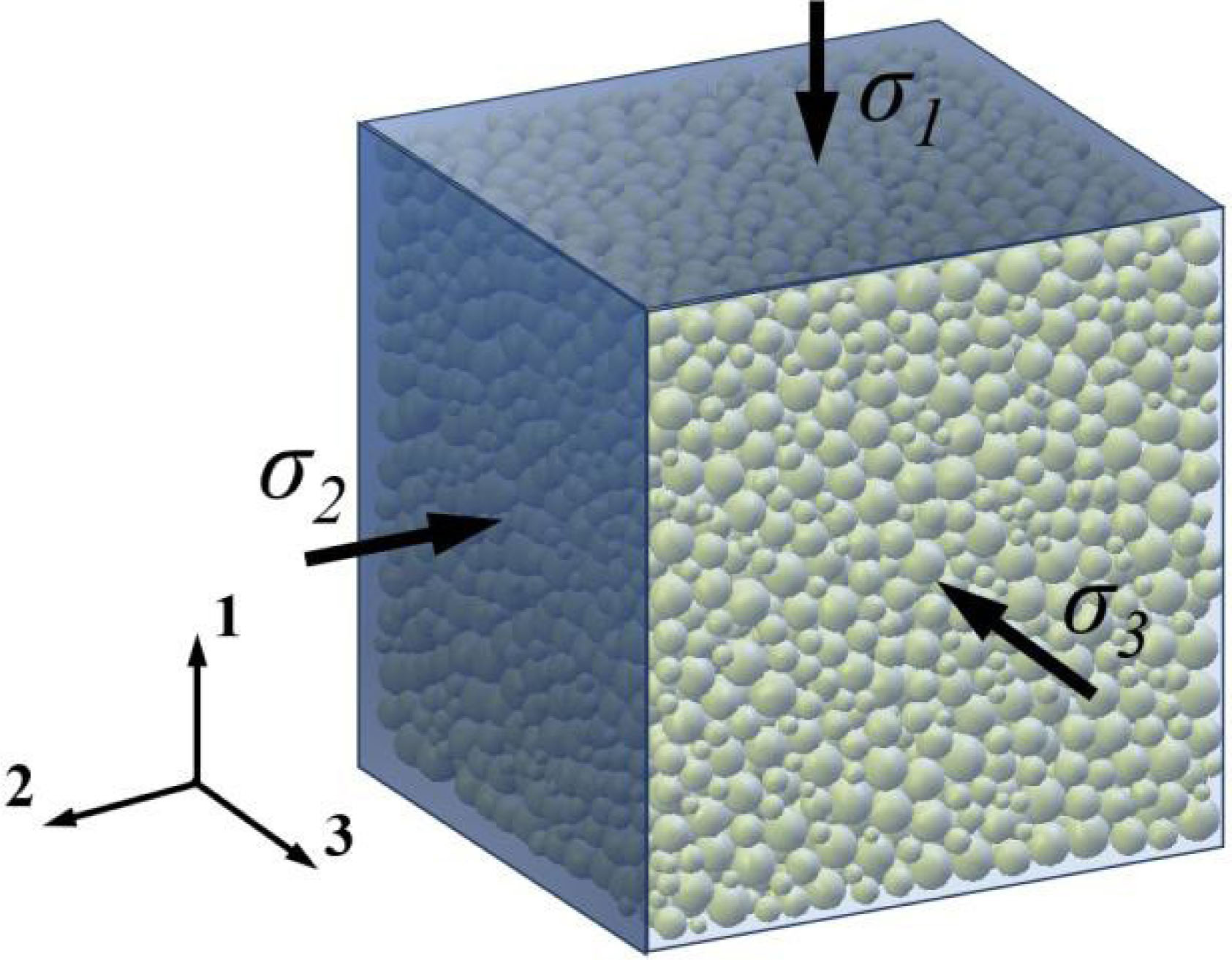
Figure 3
Model set-up for numerical simulations of triaxial test.
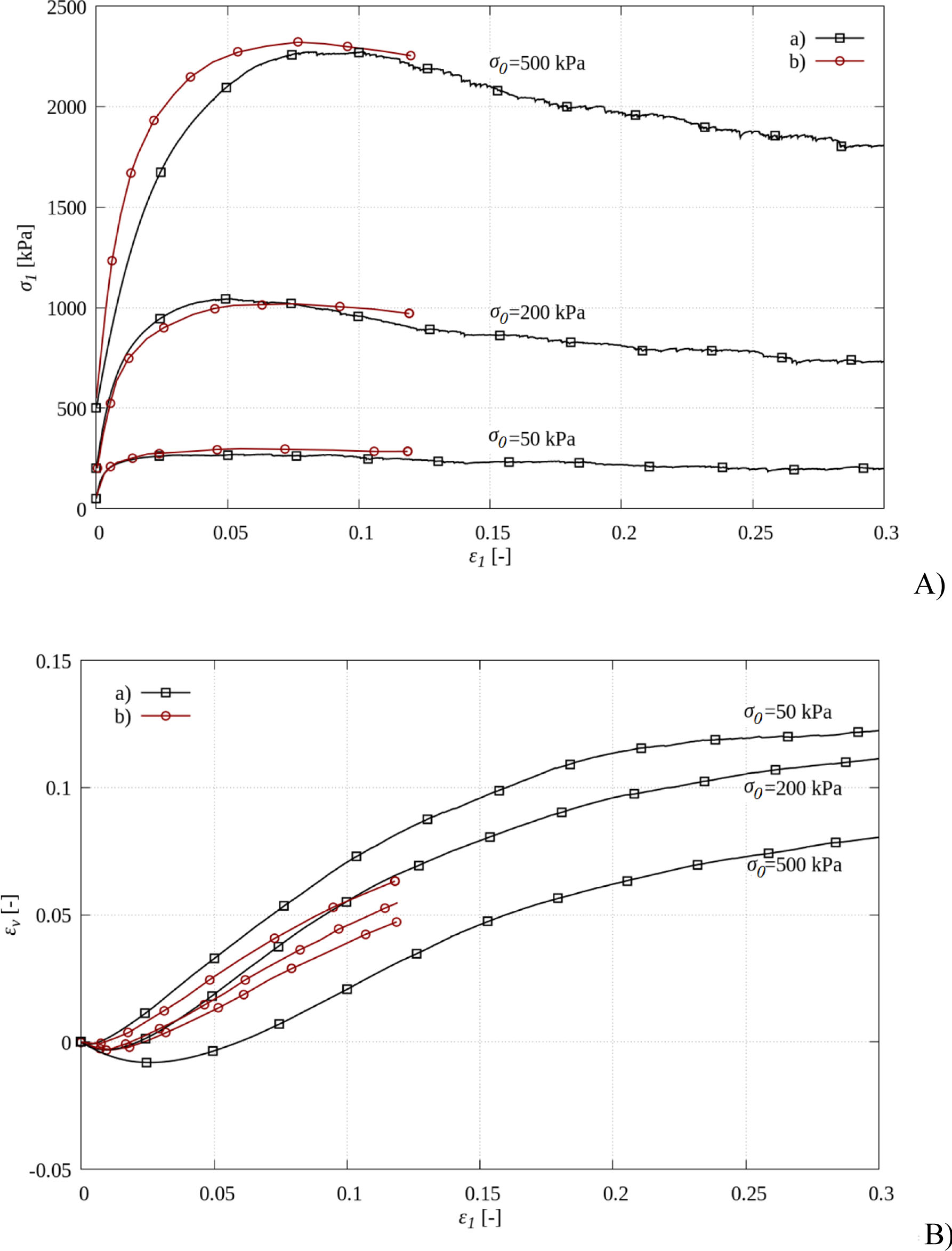
Figure 4
Discrete simulations of homogeneous triaxial compression test compared to experiments by Wu [1]: A) vertical normal stress σ1 and B) volumetric strain ɛv versus vertical normal strain ɛ1 from a) numerical results and b) experimental results (e0 = 0.53, d50 = 5.0 mm, σ0 = 50, 200 and 500 kPa).
Table 1
Material micro-parameters for discrete simulations.
| Material micro-parameters | Value |
|---|---|
| Modulus of elasticity of grain contact Ec (MPa) | 300 |
| Normal/tangential stiffness ratio of grain contact vc (−) | 0.3 |
| Inter-particle friction angle μ (°) | 18 |
| Rolling stiffness coefficient β (−) | 0.7 |
| Moment limit coefficient η (−) | 0.4 |
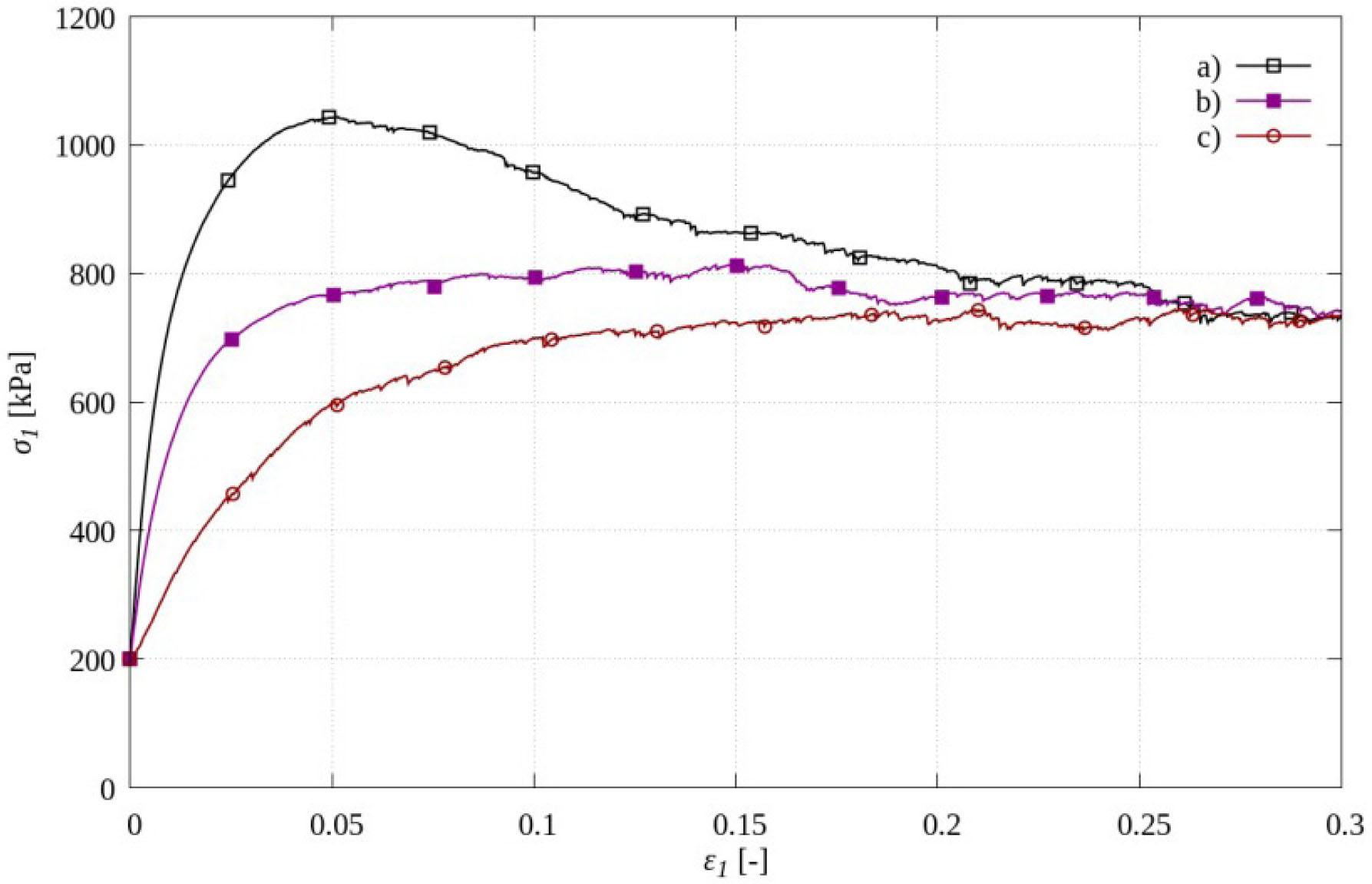
Figure 5
Vertical normal stress σ1 versus vertical normal strain ɛ1 from discrete simulations of homogeneous triaxial compression test for different initial void ratios e0: a) e0 = 0.53, b) e0 = 0.60 and c) e0 = 0.75 (σ0 = 200 kPa, d50 = 5.0 mm).
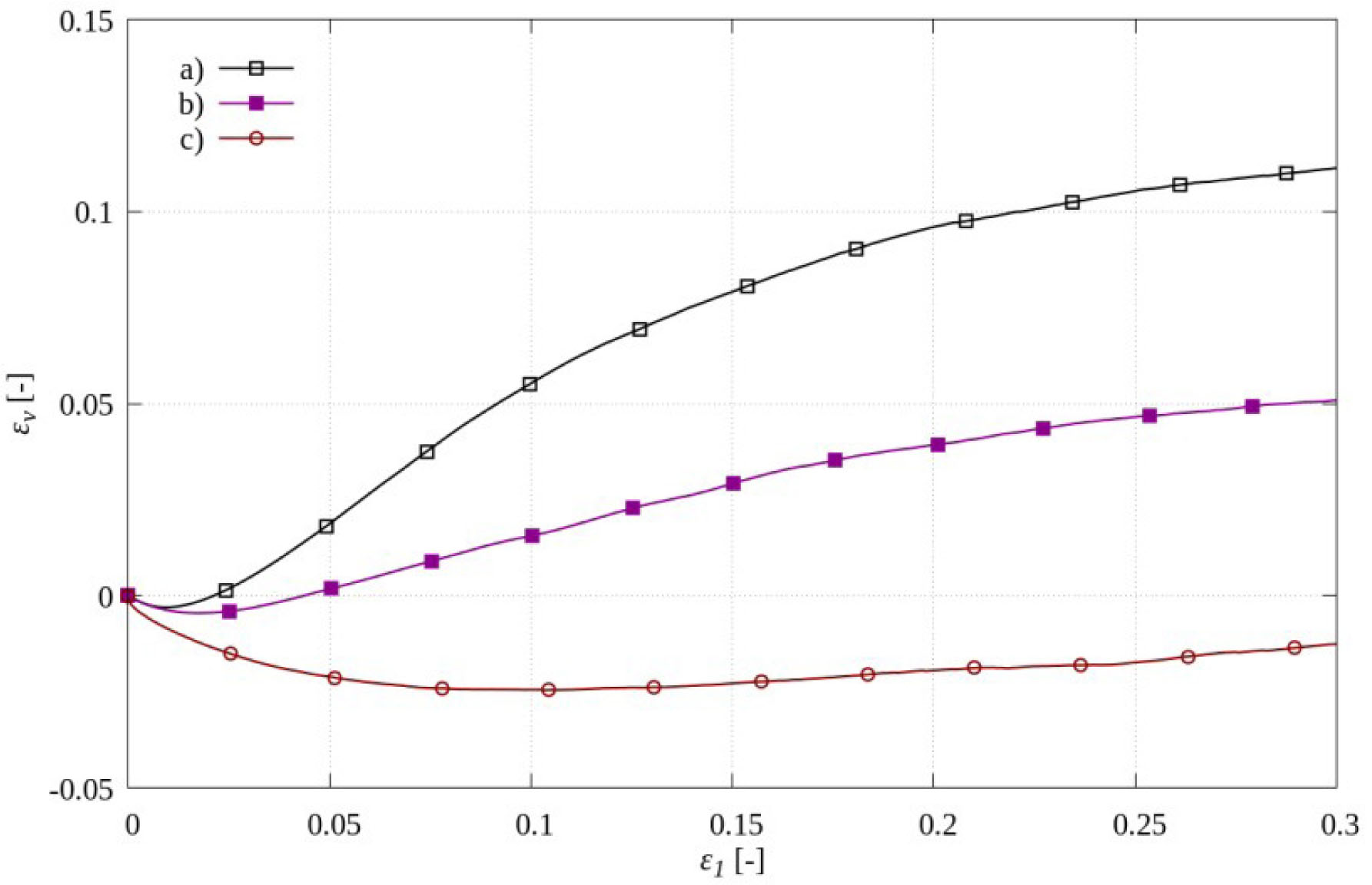
Figure 6
Volumetric strain ɛv versus vertical normal strain ɛ1 from discrete simulations of homogeneous triaxial compression test for different initial void ratios e0: a) e0 = 0.53, b) e0 = 0.60 and c) e0 = 0.75 (σ0 = 200 kPa, d50 = 5.0 mm).
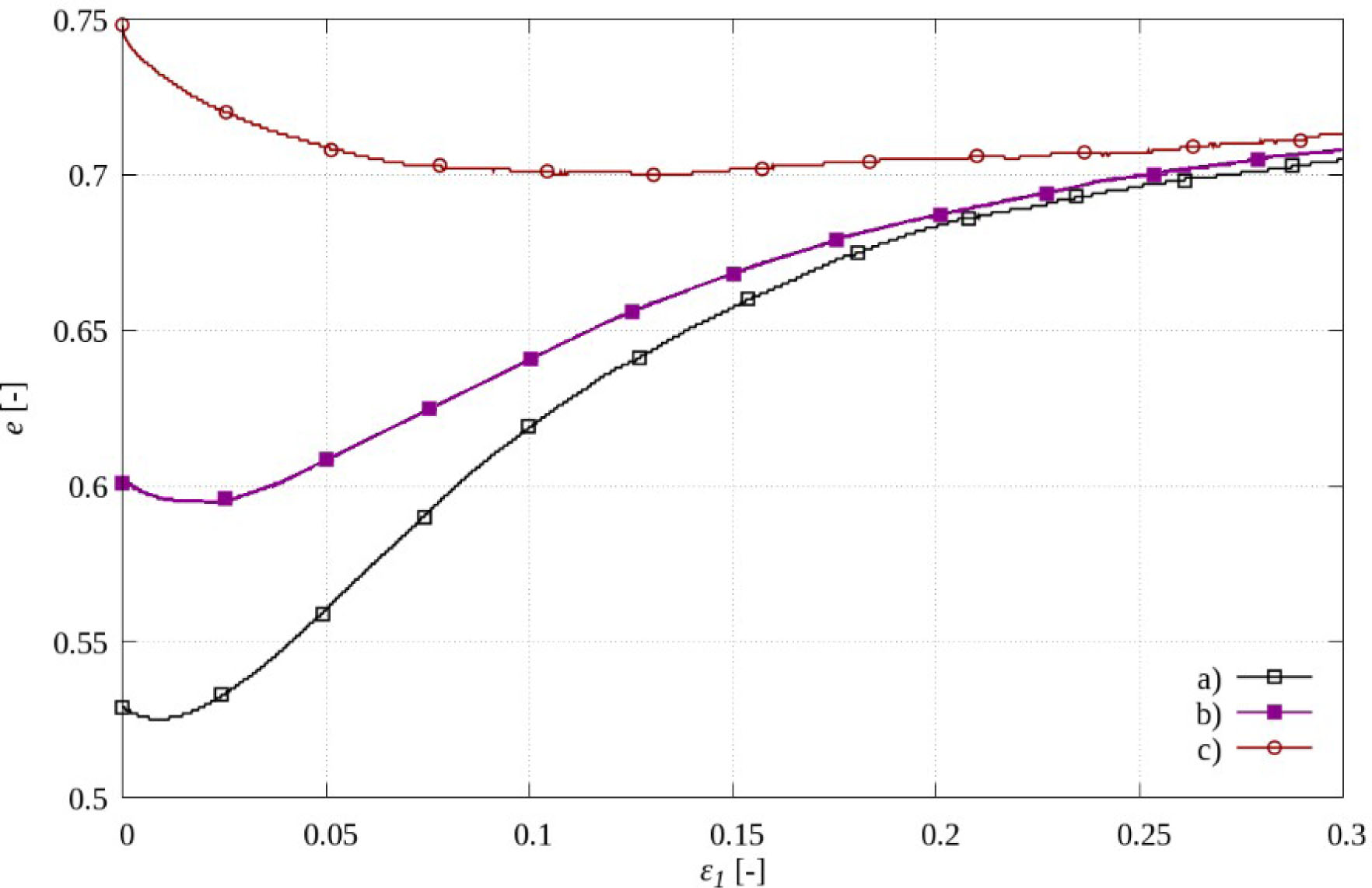
Figure 7
Void ratio e versus vertical normal strain ɛ1 from discrete simulations of homogeneous triaxial compression test for different initial void ratios e0: a) e0 = 0.53, b) e0 = 0.60 and c) e0 = 0.75 (σ0 = 200 kPa, d50 = 5.0 mm).
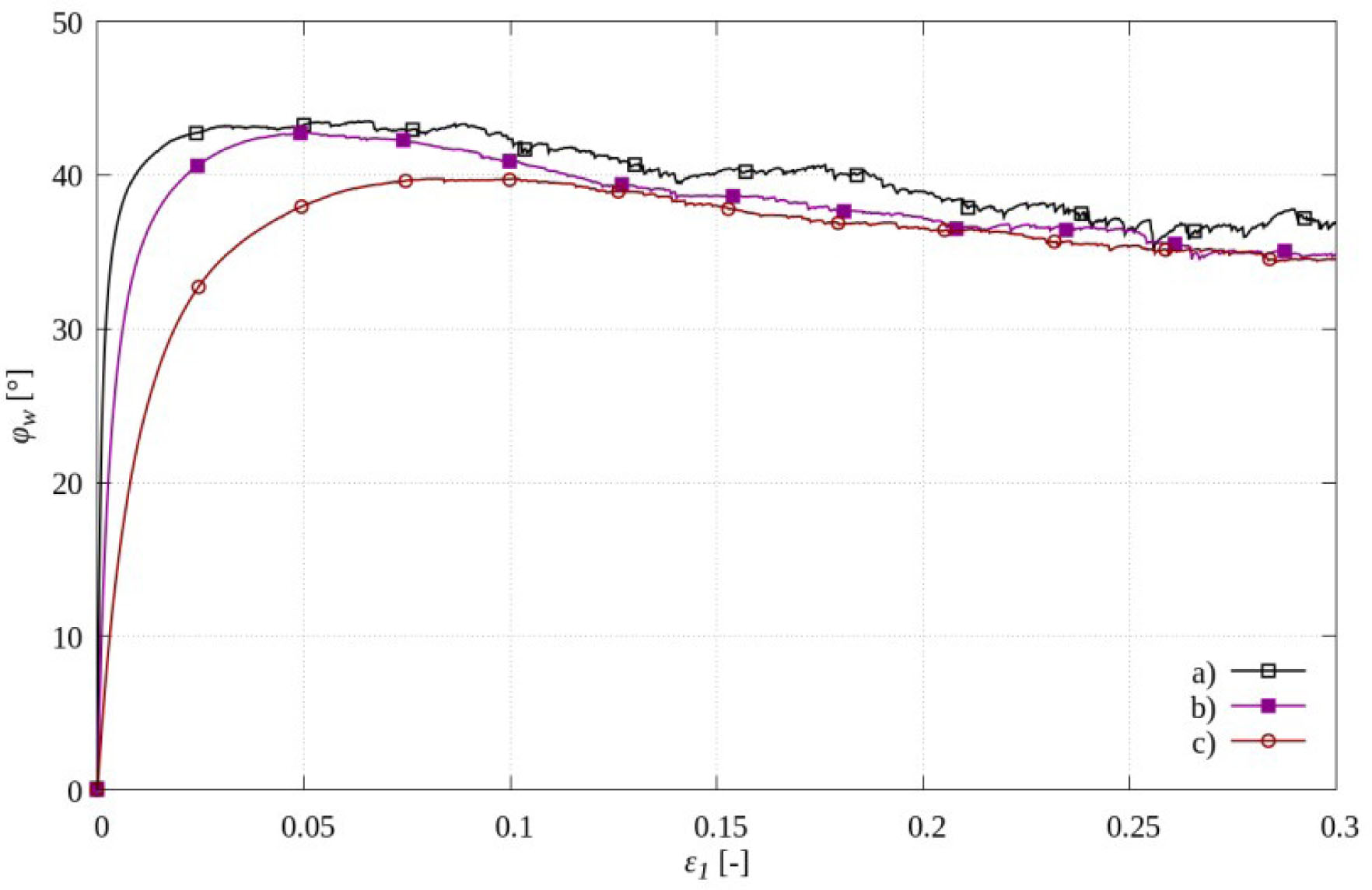
Figure 8
Internal friction angle ϕw versus vertical normal strain ɛ1 from discrete simulations of homogeneous triaxial compression test for different initial confining stress: a) σ0 = 50 kPa, b) σ0 = 200 kPa and c) σ0 = 500 kPa (e0 = 0.60, d50 = 5.0 mm).
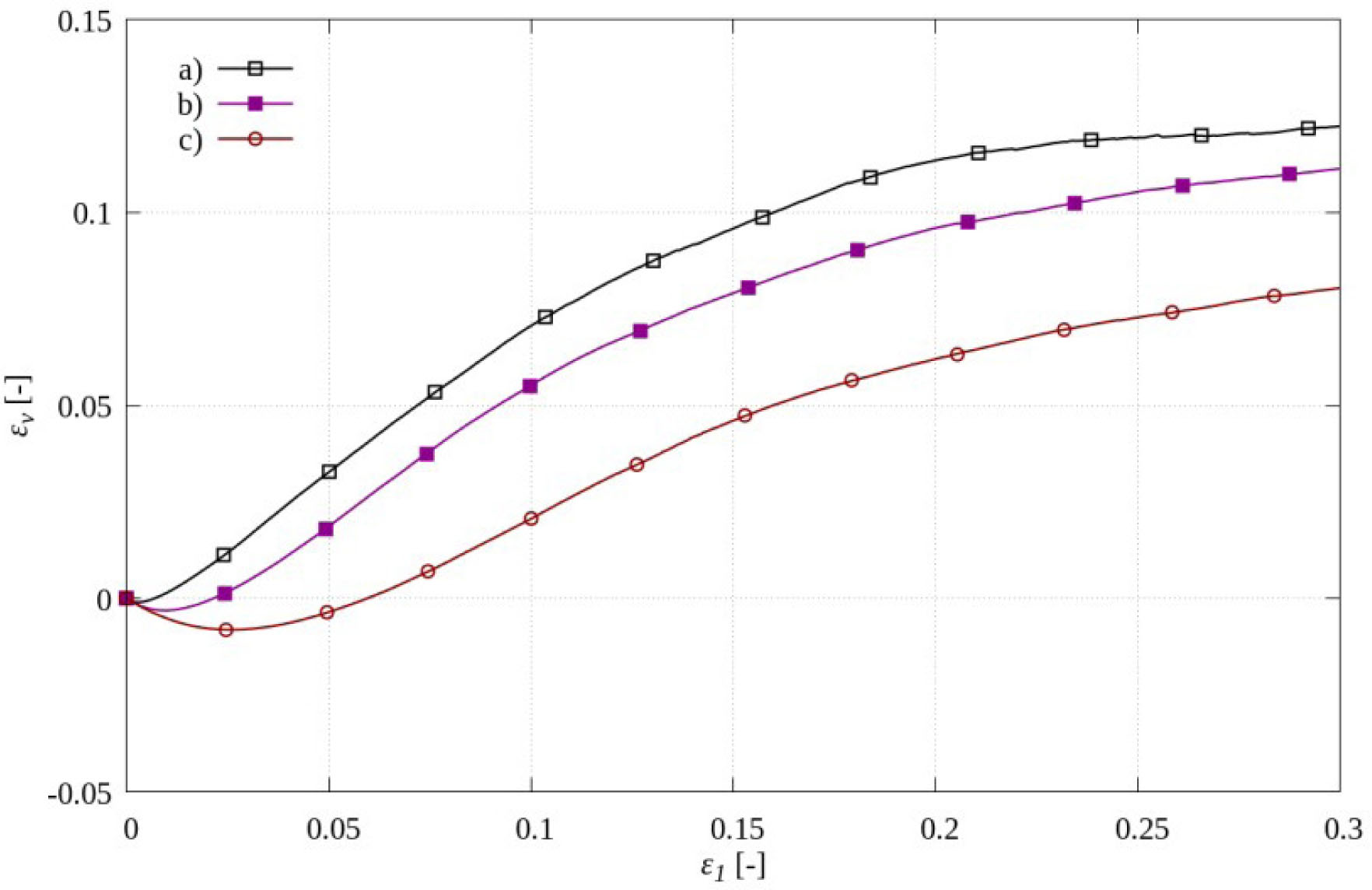
Figure 9
Volumetric strain ɛv versus vertical normal strain ɛ1 from discrete simulations of homogeneous triaxial compression test for different initial confining stress: a) σ0 = 50 kPa, b) σ0 = 200 kPa and c) σ0 = 500 kPa (e0 = 0.60, d50 = 5.0 mm).
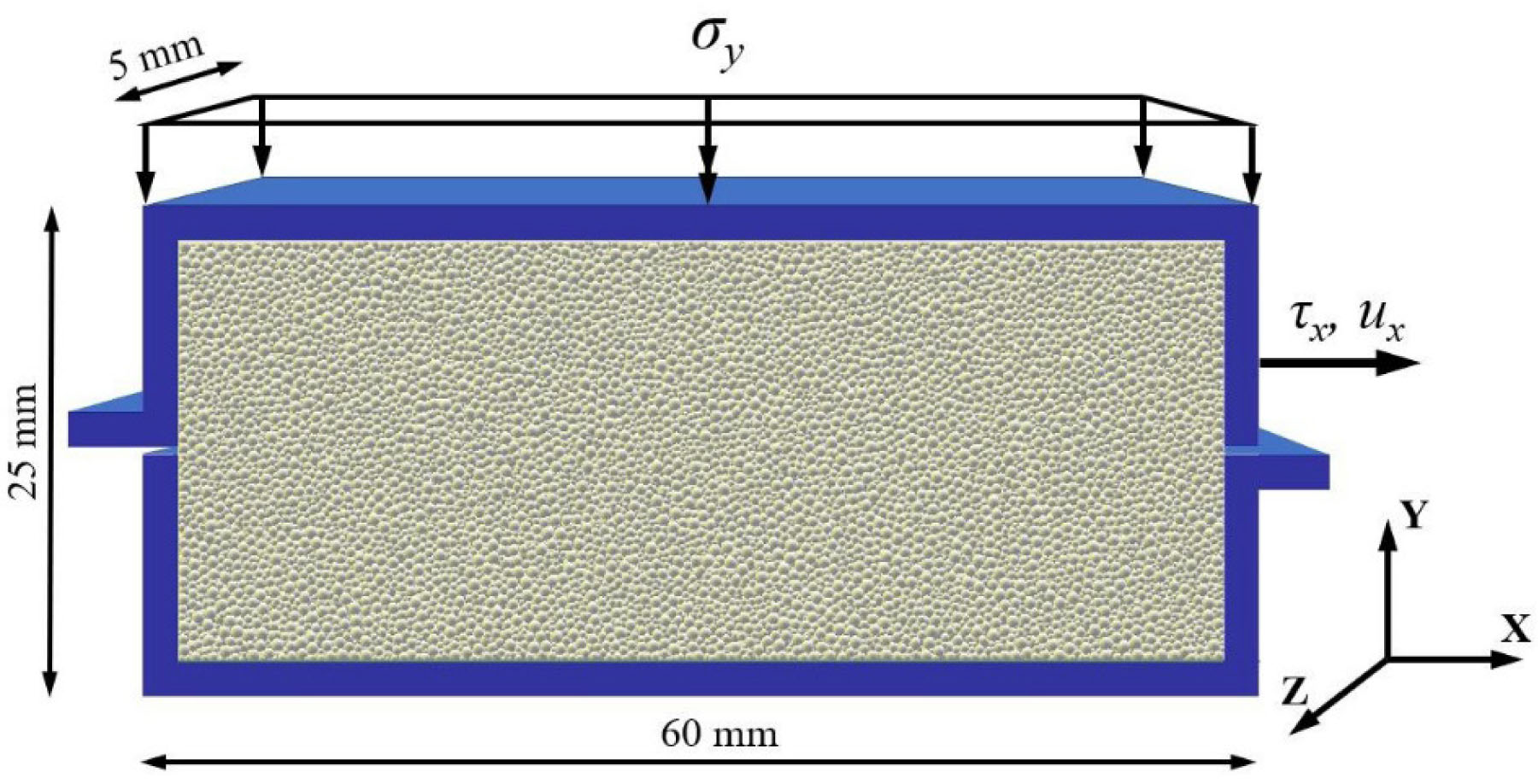
Figure 10
Model set-up for numerical simulations of direct shear test.
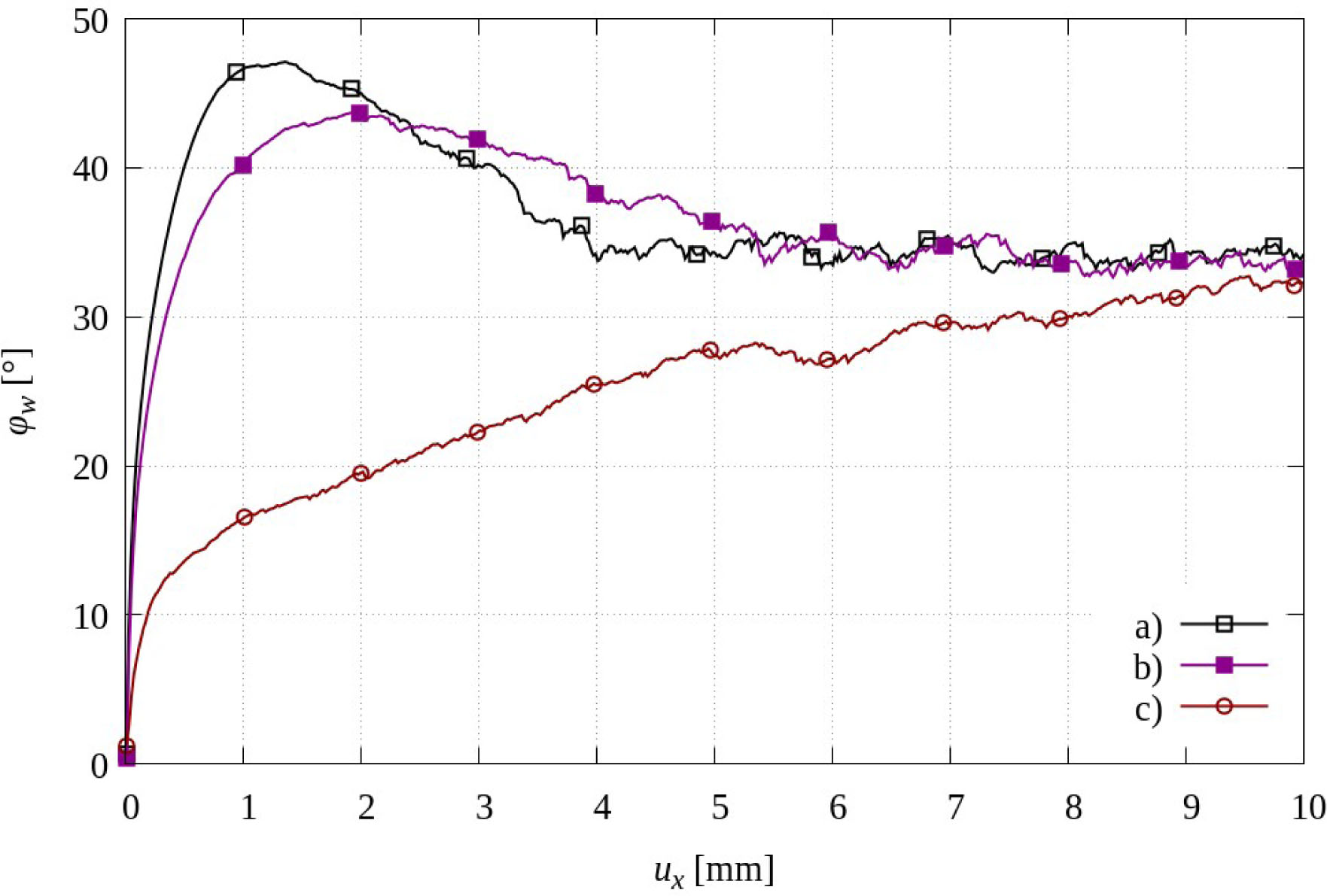
Figure 11
Internal friction angle ϕw versus horizontal displacement ux from discrete simulations of direct shear test for different initial void ratios: a) e0 = 0.53, b) e0 = 0.60 and c) e0 = 0.75 (σ0 = 200 kPa, d50 = 0.5 mm).
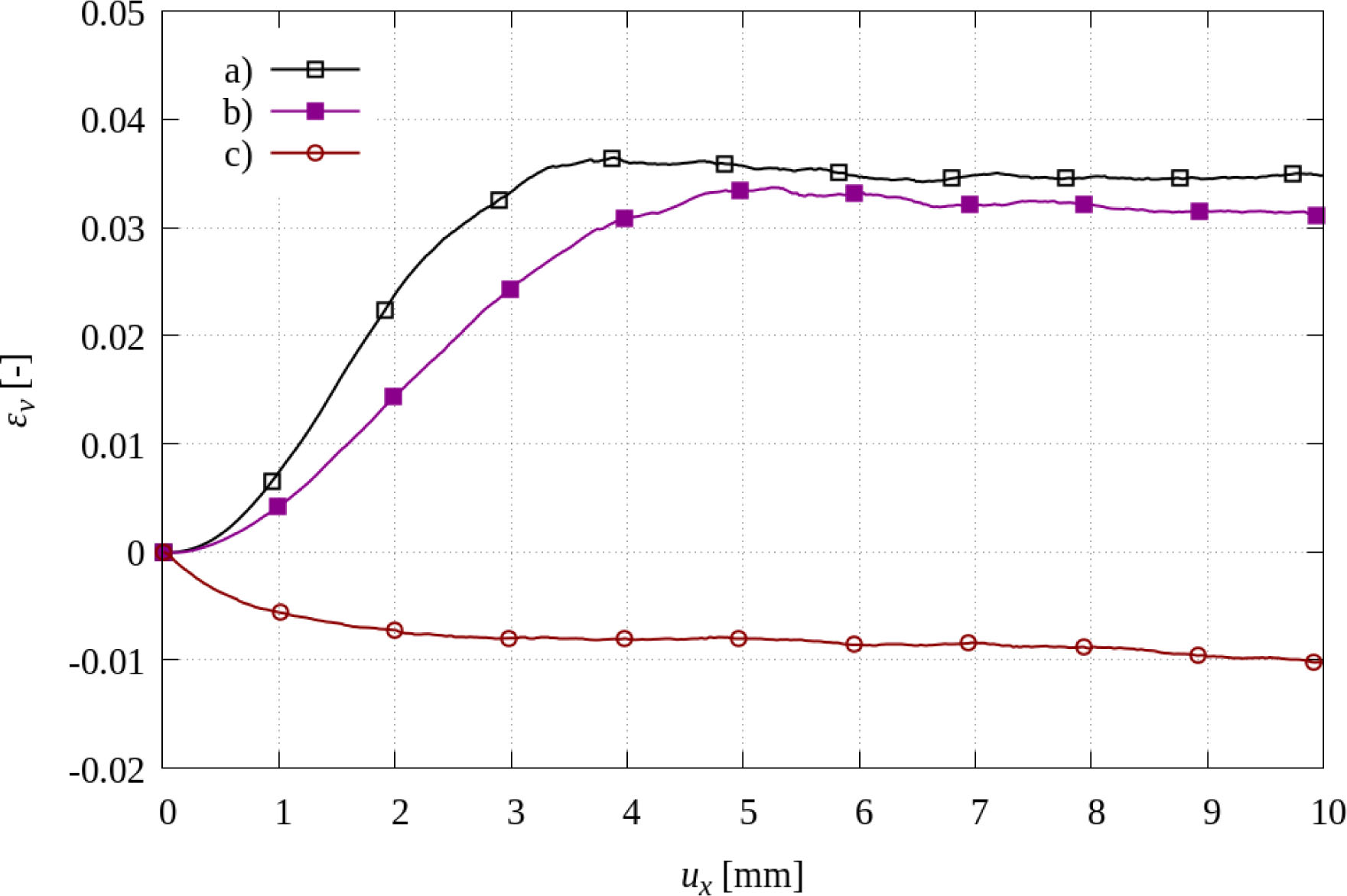
Figure 12
Volumetric strain ɛv versus horizontal displacement ux from discrete simulations of direct shear test for different initial void ratios: a) e0 = 0.53, b) e0 = 0.60 and c) e0 = 0.75 (σ0 = 200 kPa, d50 = 0.5 mm).
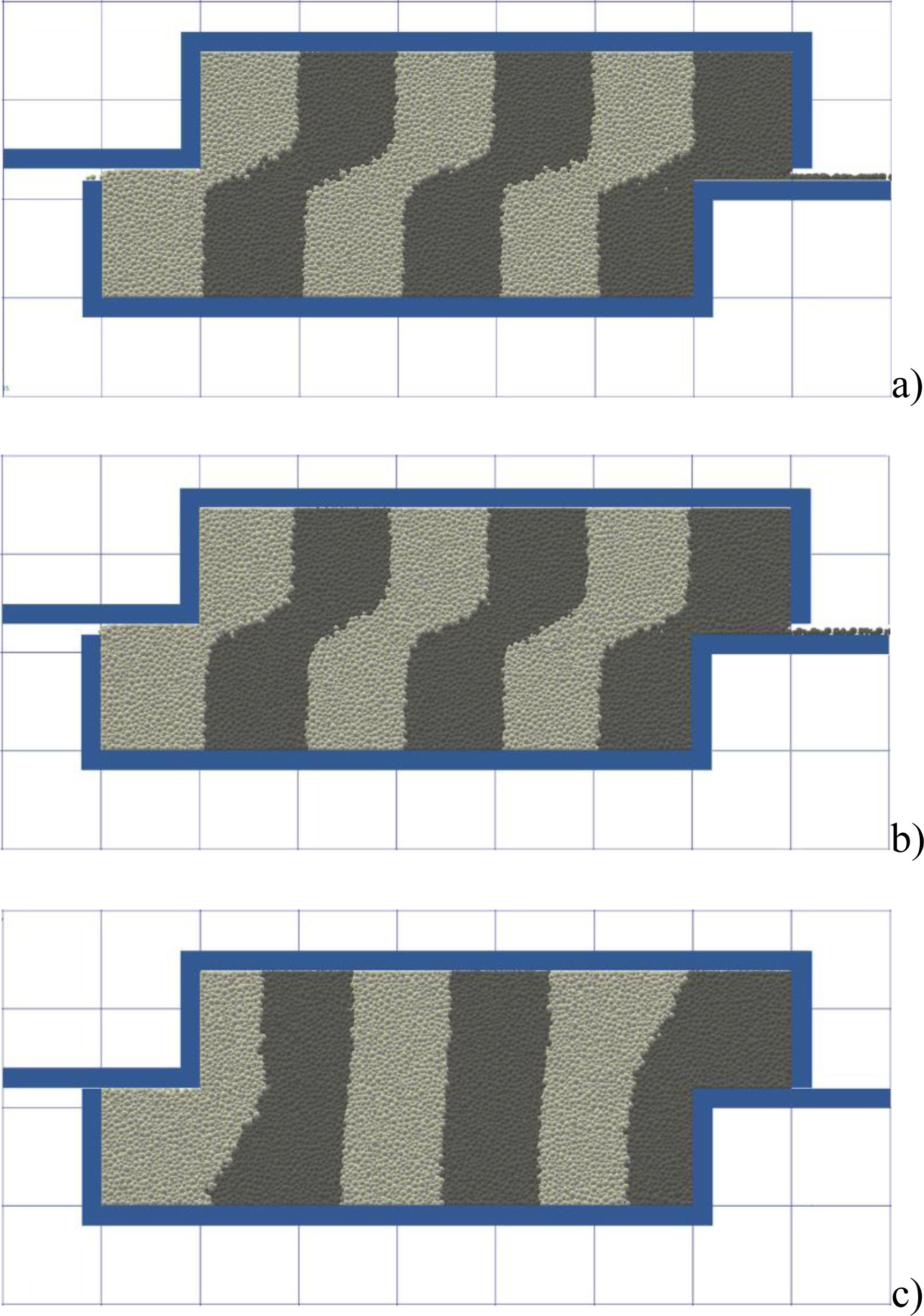
Figure 13
Front view of the specimen at the final state for different initial void ratios: a) e0 = 0.53, b) e0 = 0.60 and c) e0 = 0.75 (σ0 = 200 kPa, d50 = 0.5 mm) (the dark/light grey stripes were perfectly vertical at the beginning of the tests).
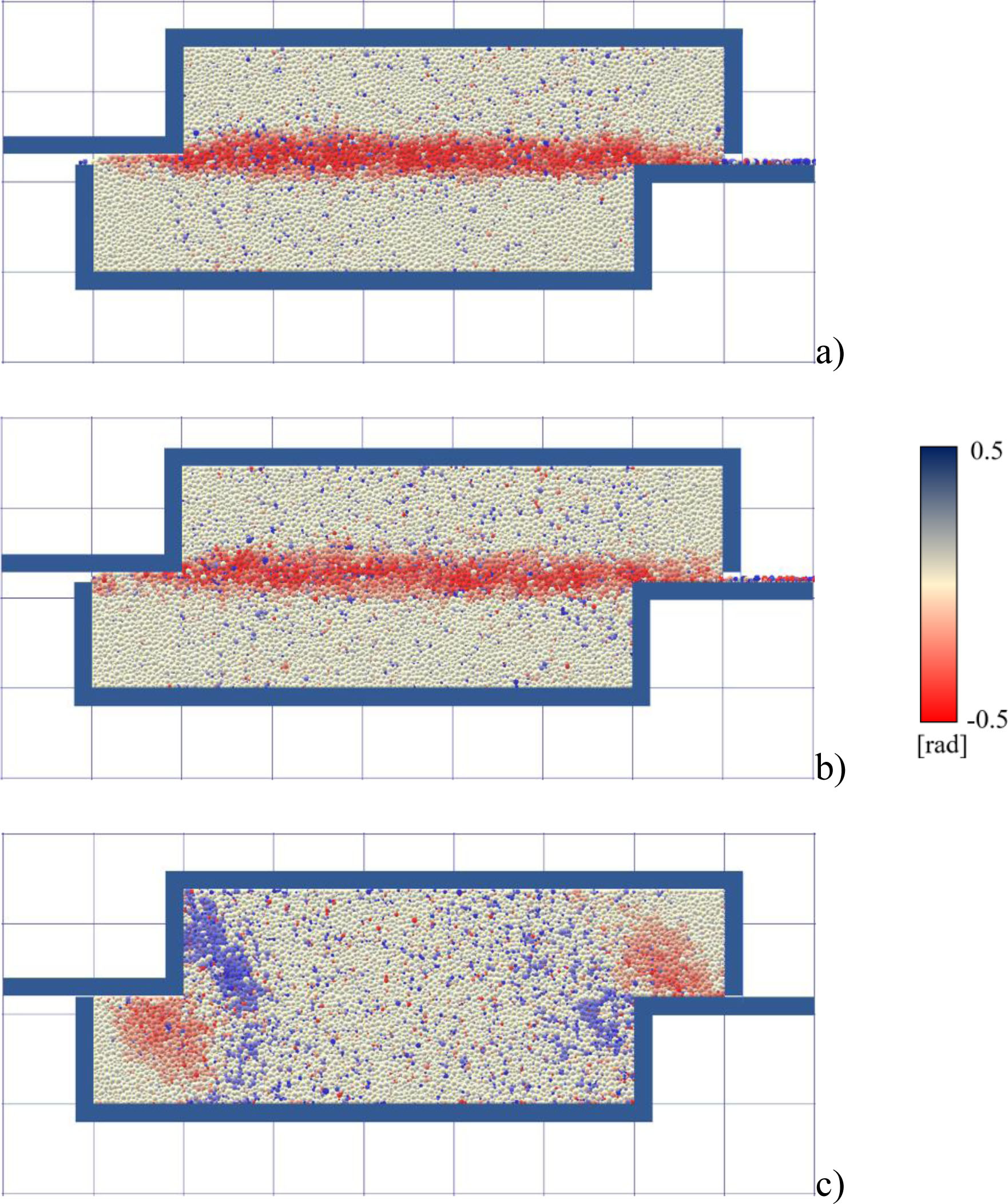
Figure 14
Distribution of sphere rotations at the final state of the test for different initial void ratios: a) e0 = 0.53, b) e0 = 0.60 and c) e0 = 0.75 (σ0 = 200 kPa, d50 = 0.5 mm) (red colour – clockwise rotations, blue colour – anti-clockwise rotations) (colour online)
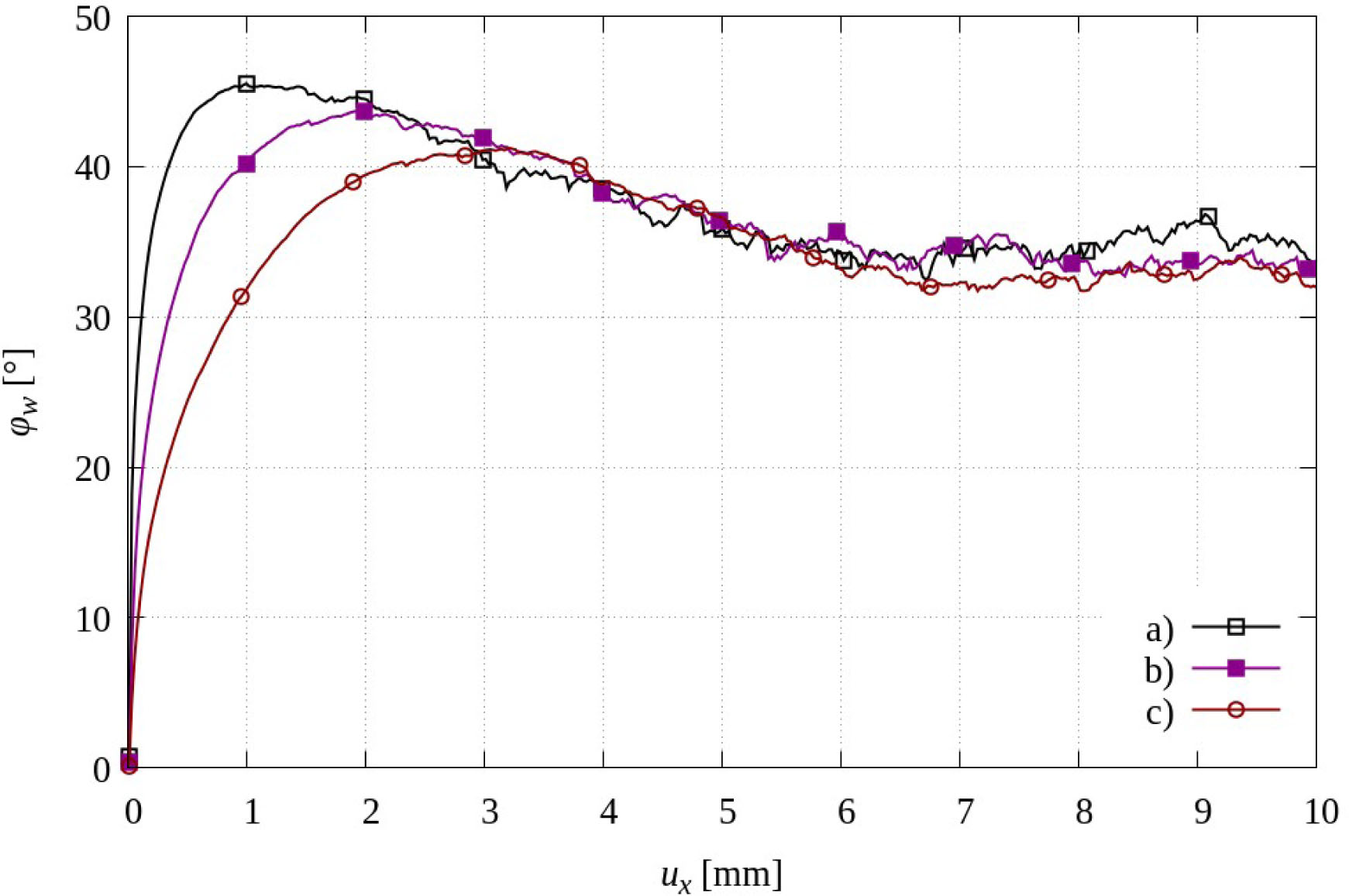
Figure 15
Internal friction angle ϕw versus horizontal displacement ux from discrete simulations of direct shear test for different vertical load: a) σ0 = 50 kPa, b) σ0 = 200 kPa and c) σ0 = 500 kPa (e0 = 0.60, d50 = 0.5 mm).
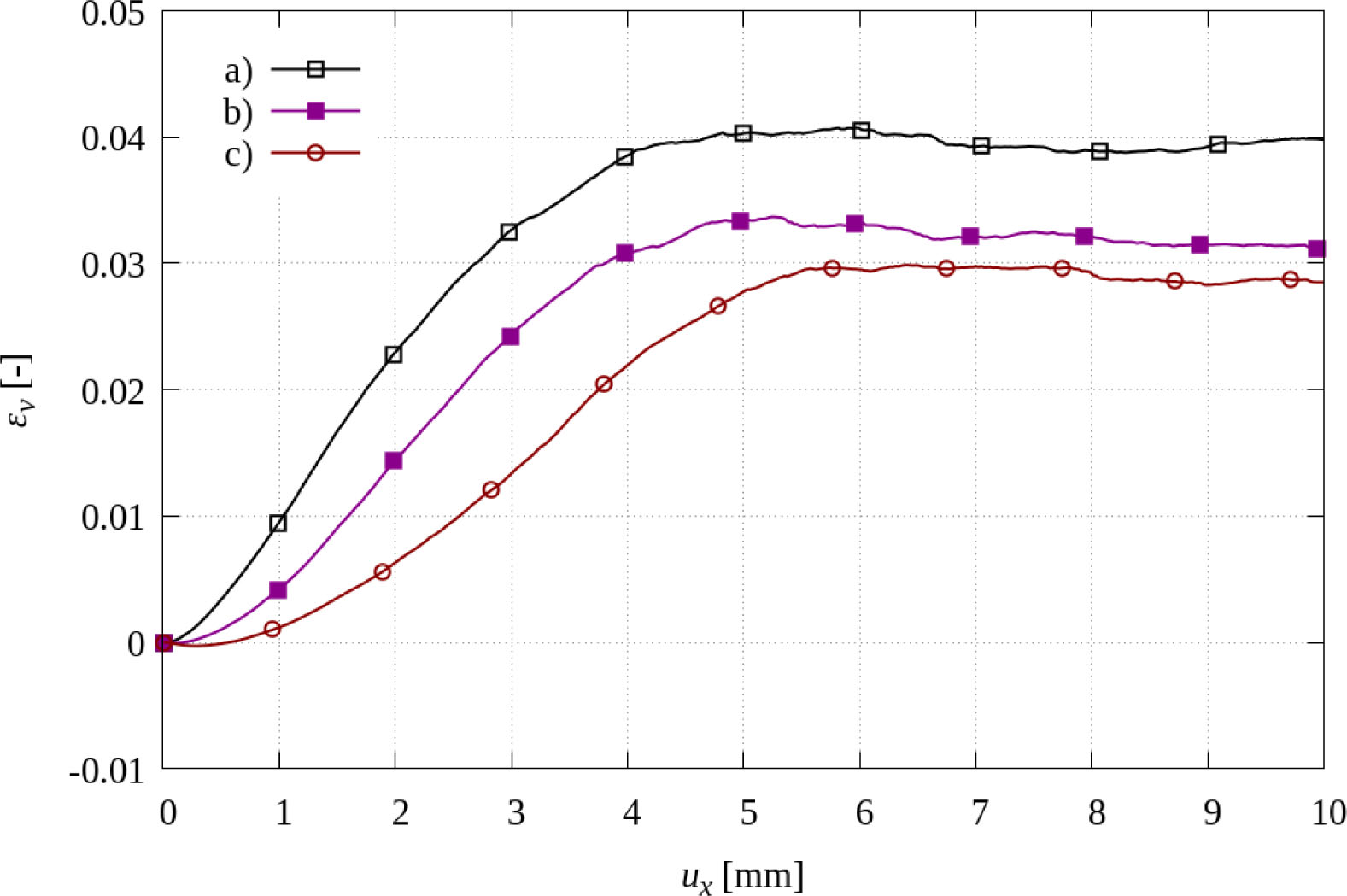
Figure 16
Volumetric strain ɛv versus horizontal displacement ux from discrete simulations of direct shear test for different vertical load: a) σ0 = 50 kPa, b) σ0 = 200 kPa and c) σ0 = 500 kPa (e0 = 0.60, d50 = 0.5 mm).
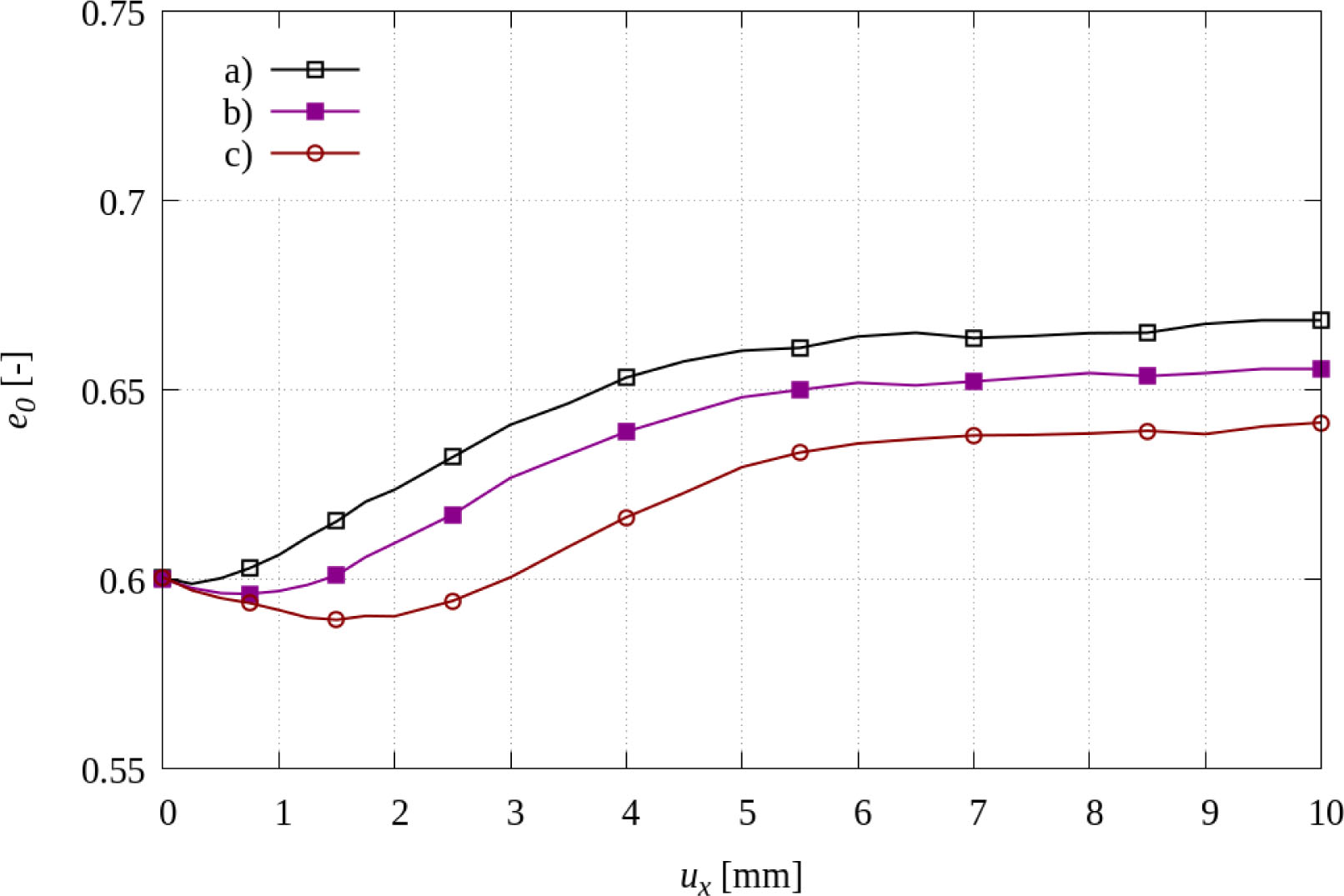
Figure 17
Void ratio e0 versus horizontal displacement ux from discrete simulations of direct shear test for different vertical load: a) σ0 = 50 kPa, b) σ0 = 200 kPa and c) σ0 = 500 kPa (e0 = 0.60, d50 = 0.5 mm).
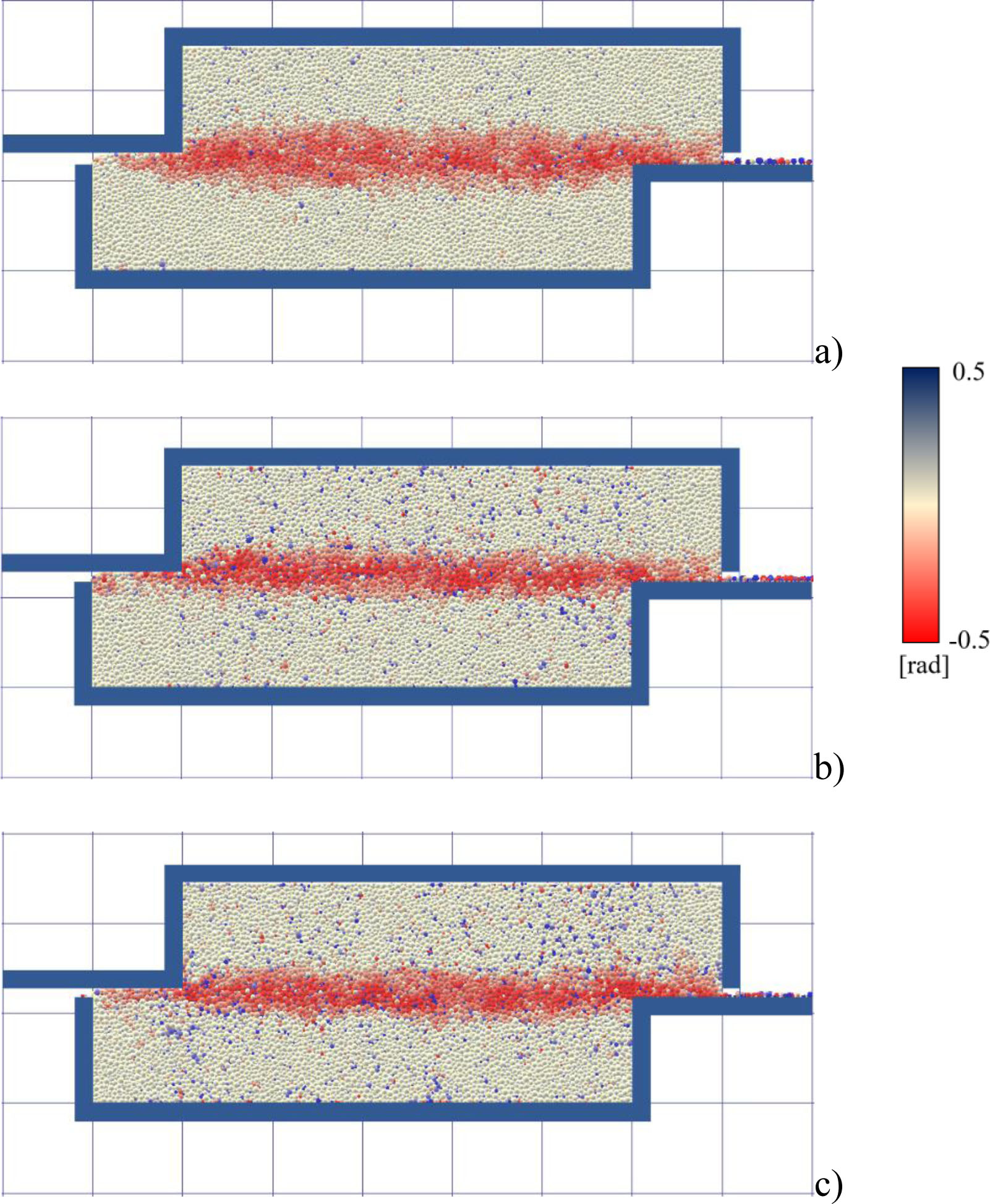
Figure 18
Distribution of sphere rotations at the final state of the test for different vertical load: a) σ0 = 50 kPa, b) σ0 = 200 kPa and c) σ0 = 500 kPa (e0 = 0.60, d50 = 0.5 mm) (red colour – clockwise rotations, blue colour – anti-clockwise rotations) (colour online).
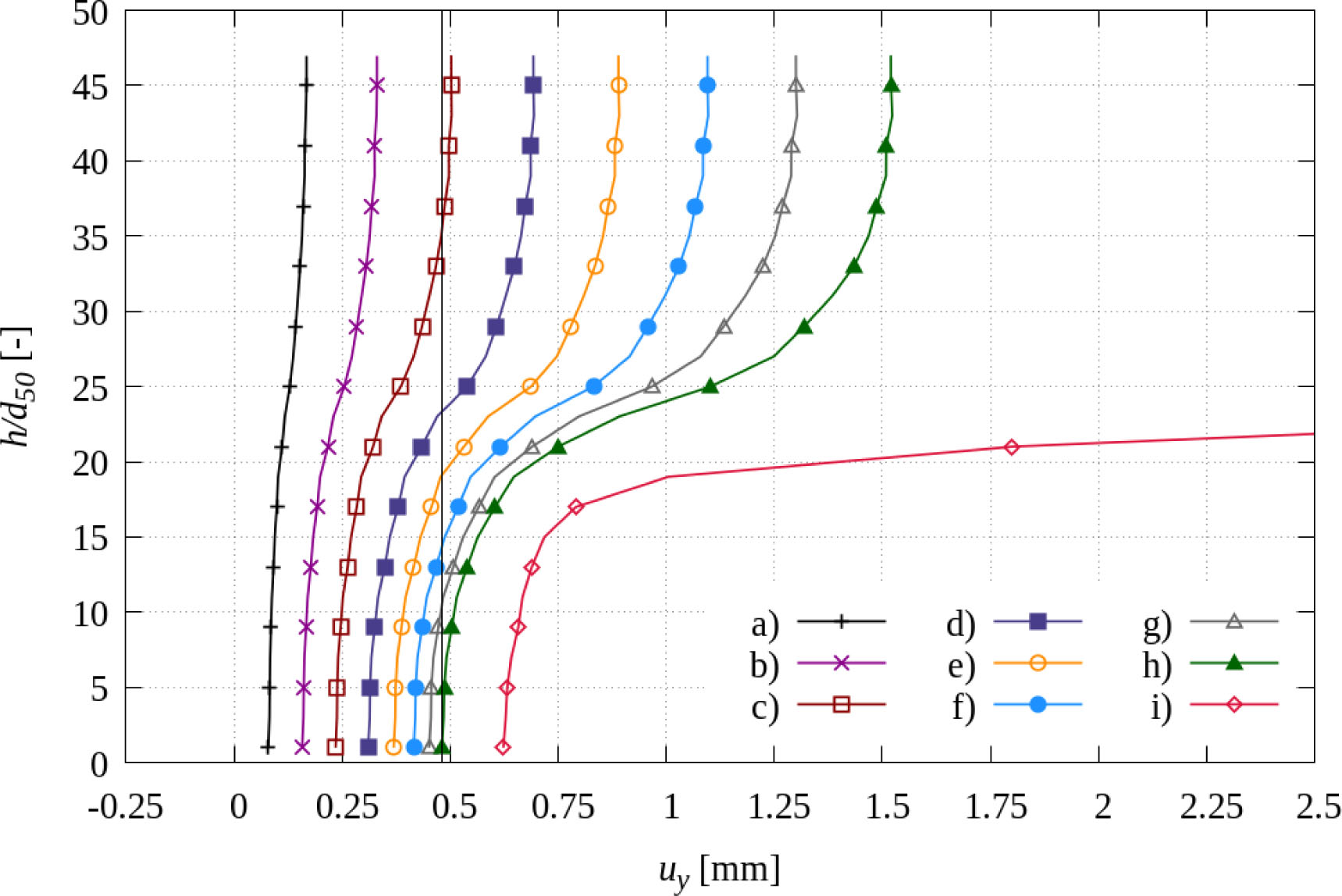
Figure 19
Distribution of horizontal sphere displacement u’x across the normalized specimen height h/d50 at the specimen centre for: a) ux = 0.25 mm, b) ux = 0.50 mm, c) ux = 0.75 mm, d) ux = 1.00 mm, e) ux = 1.25 mm, f) ux = 1.50 mm, g) ux = 1.75 mm, h) ux = 2.00 mm and i) ux = 10.00 mm (e0 = 0.60, σ0 = 200 kPa, d50 = 0.5 mm) (dark vertical line demonstrates 5% limit).
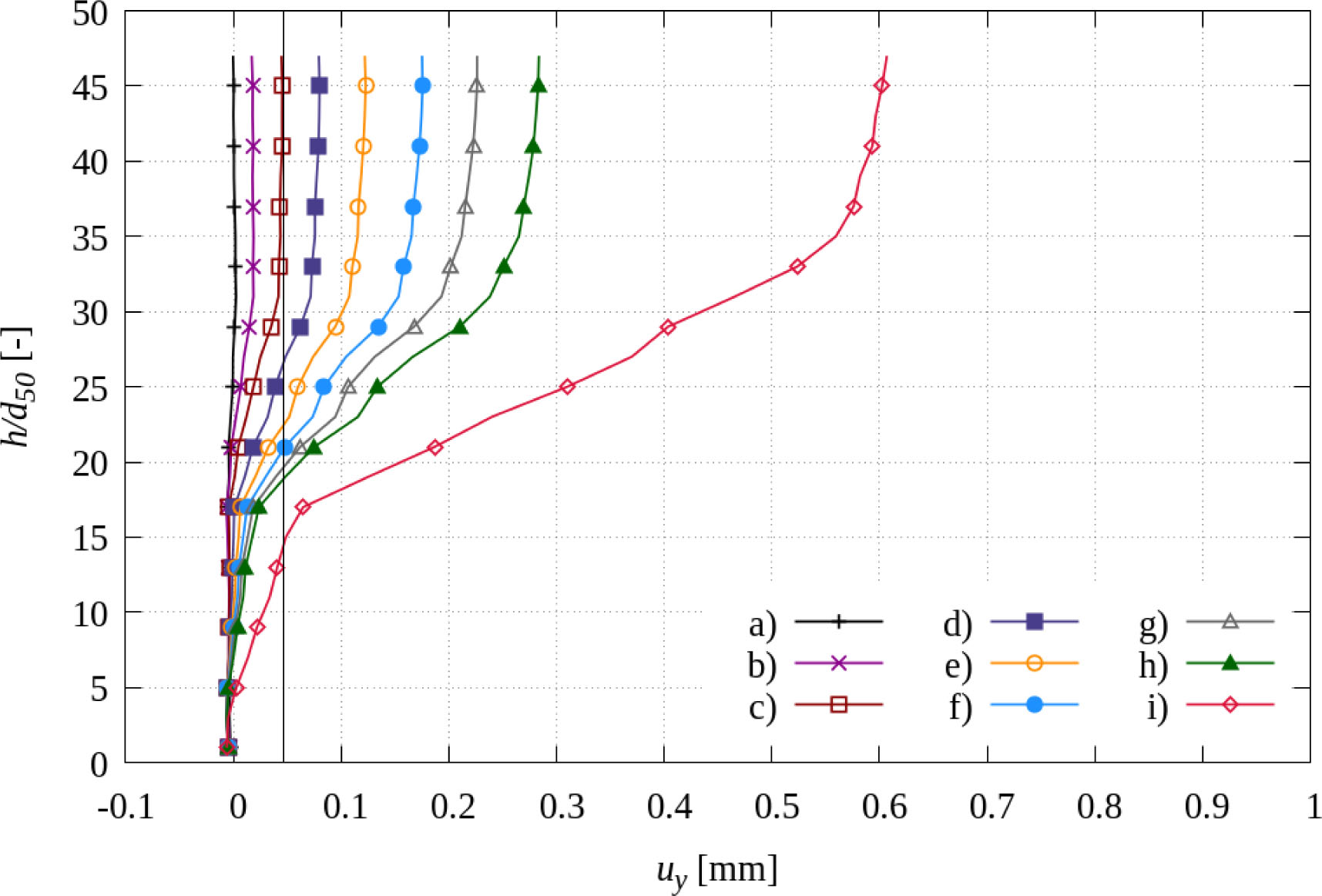
Figure 20
Distribution of vertical sphere displacement u’y across the normalized specimen height h/d50 at the specimen centre for: a) ux = 0.25 mm, b) ux = 0.50 mm, c) ux = 0.75 mm, d) ux = 1.00 mm, e) ux = 1.25 mm, f) ux = 1.50 mm, g) ux = 1.75 mm, h) ux = 2.00 mm and i) ux = 10.00 mm (e0 = 0.60, σ0 = 200 kPa, d50 = 0.5 mm) (dark vertical line demonstrates 5% limit).
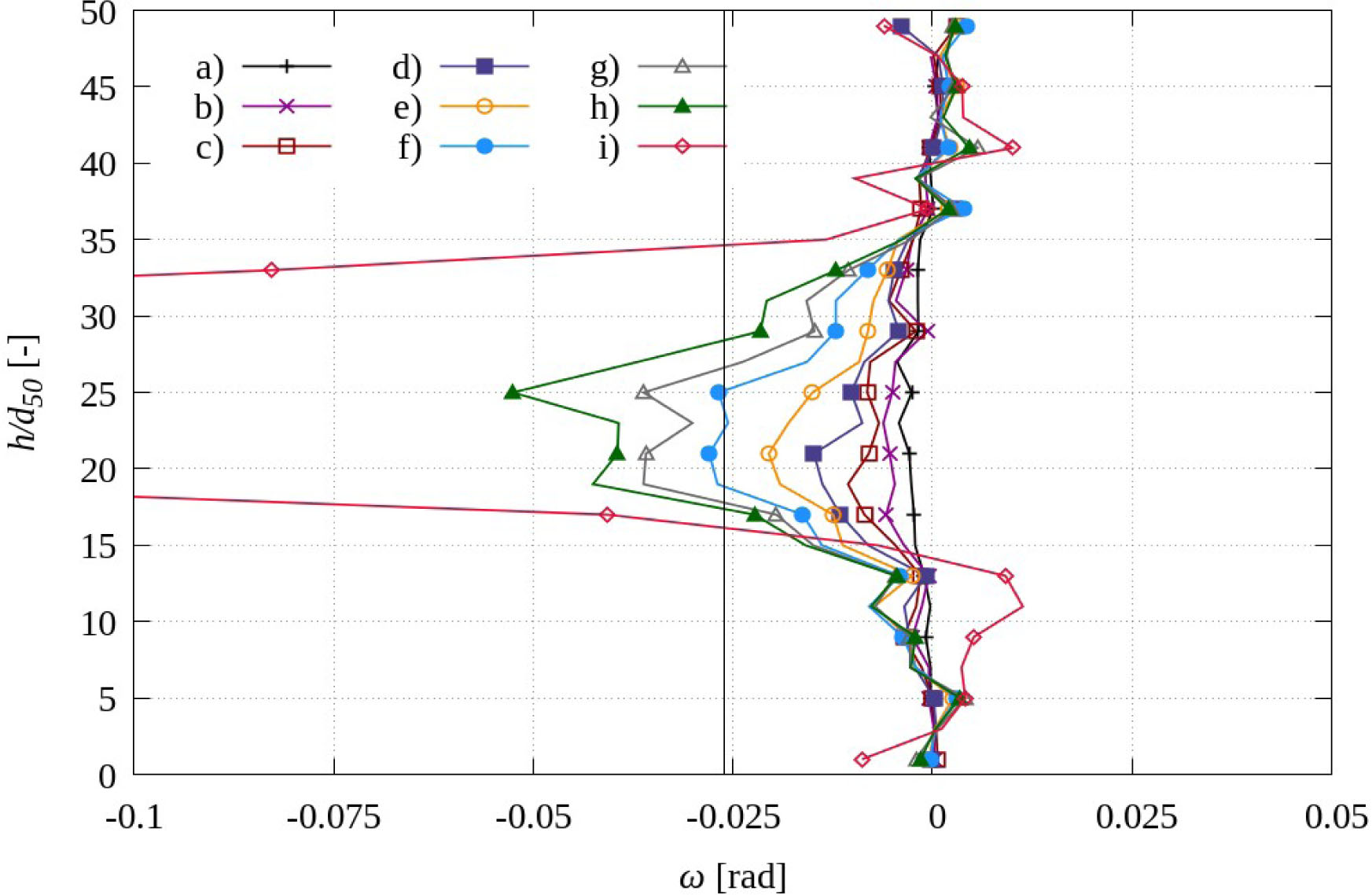
Figure 21
Distribution of sphere rotations ω across the normalized specimen height h/d50 at the specimen centre for: a) ux = 0.25 mm, b) ux = 0.50 mm, c) ux = 0.75 mm, d) ux = 1.00 mm, e) ux = 1.25 mm, f) ux = 1.50 mm, g) ux = 1.75 mm, h) ux = 2.00 mm and i) ux = 10.00 mm (e0 = 0.60, σ0 = 200 kPa, d50 = 0.5 mm) (negative value corresponds to the clockwise rotation; dark vertical line demonstrates 5% limit).
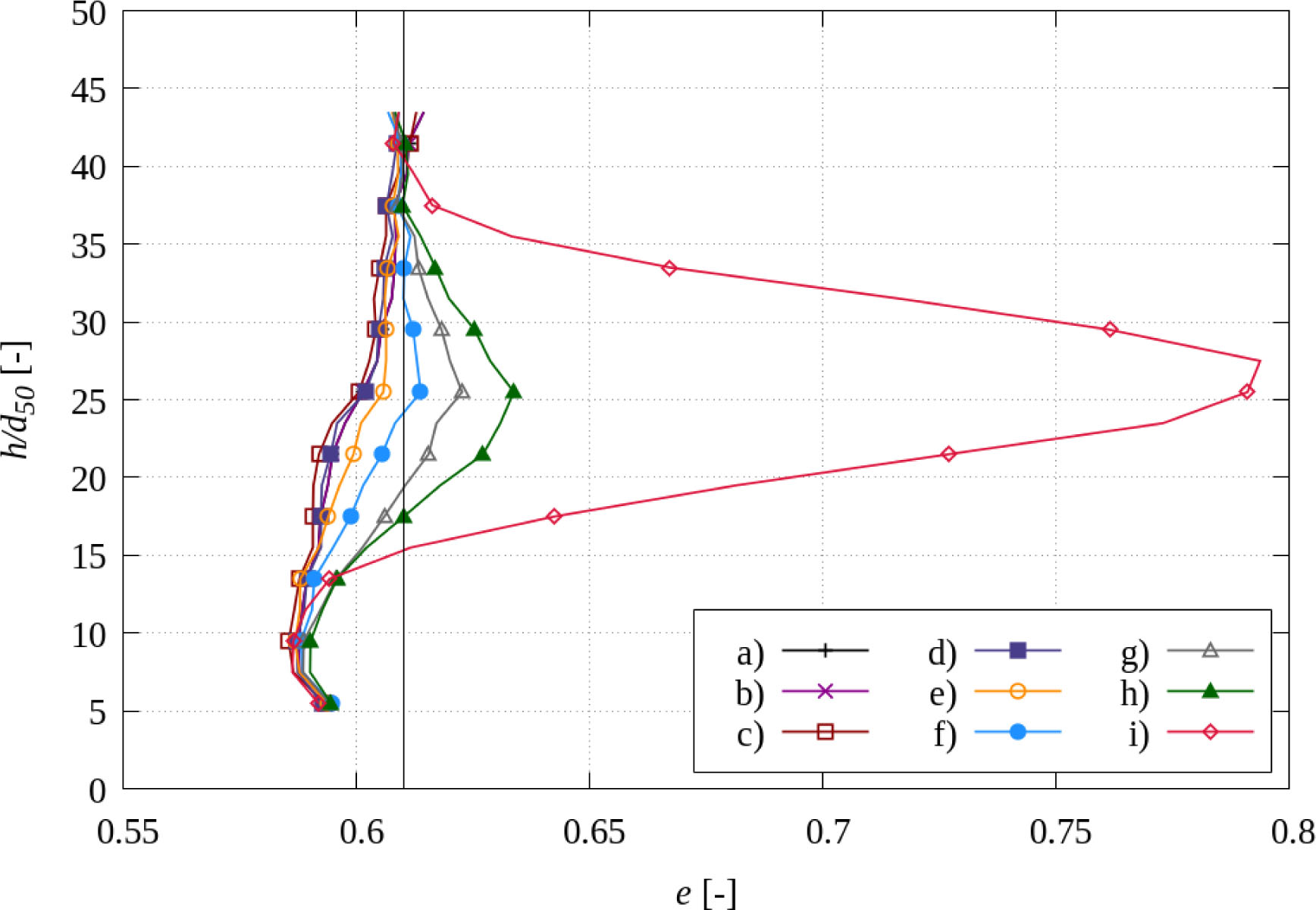
Figure 22
Distribution of void ratio e across the normalized specimen height h/d50 at the specimen centre for: a) ux = 0.25mm, b) ux = 0.50 mm, c) ux = 0.75 mm, d) ux = 1.00 mm, e) ux = 1.25 mm, f) ux = 1.50 mm, g) ux = 1.75 mm, h) ux = 2.00 mm and i) ux = 10.00 mm (e0 = 0.60, σ0 = 200 kPa, d50 = 0.5 mm) (dark vertical line demonstrates 5% limit).
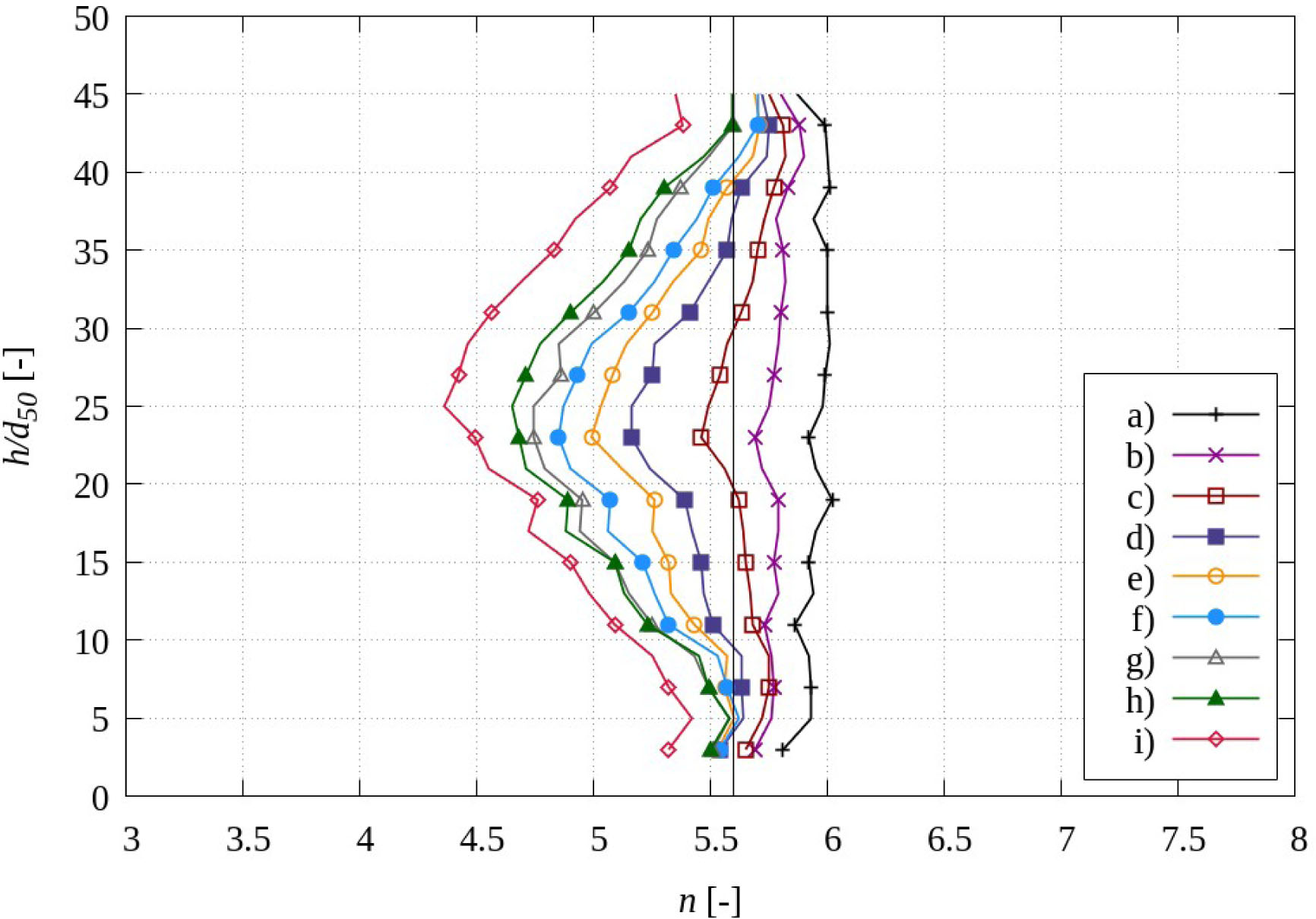
Figure 23
Distribution of coordination number n across the normalized specimen height h/d50 at the specimen centre for: a) ux = 0.25 mm, b) ux = 0.50 mm, c) ux = 0.75 mm, d) ux = 1.00 mm, e) ux = 1.25 mm, f) ux = 1.50 mm, g) ux = 1.75 mm, h) ux = 2.00 mm and i) ux = 10.00 mm (e0 = 0.60, σ0 = 200 kPa, d50 = 0.5 mm) (dark vertical line demonstrates 5% limit).
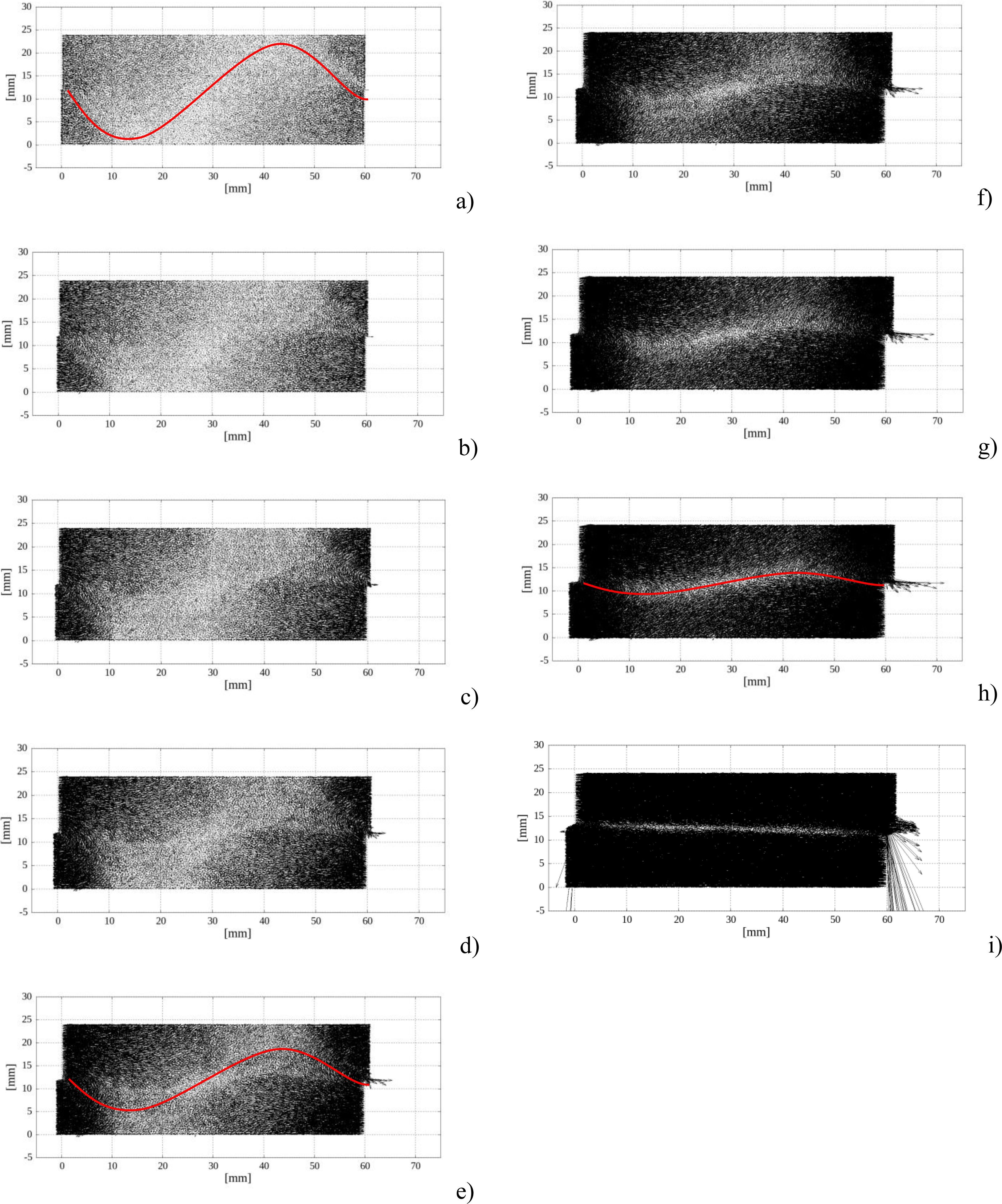
Figure 24
Evolution of displacements fluctuations ( ) in the entire specimen for: a) ux = 0.25 mm, b) ux = 0.50 mm, c) ux = 0.75 mm, d) ux = 1.00 mm, e) ux = 1.25 mm, f) ux = 1.50 mm, g) ux = 1.75 mm, h) ux = 2.00 mm and i) ux = 10.00 mm (e0 = 0.60, σ0 = 200 kPa, d50 = 0.5 mm) (the arrows are multiple by 10 due to readability; red lines show the estimated localization shape).
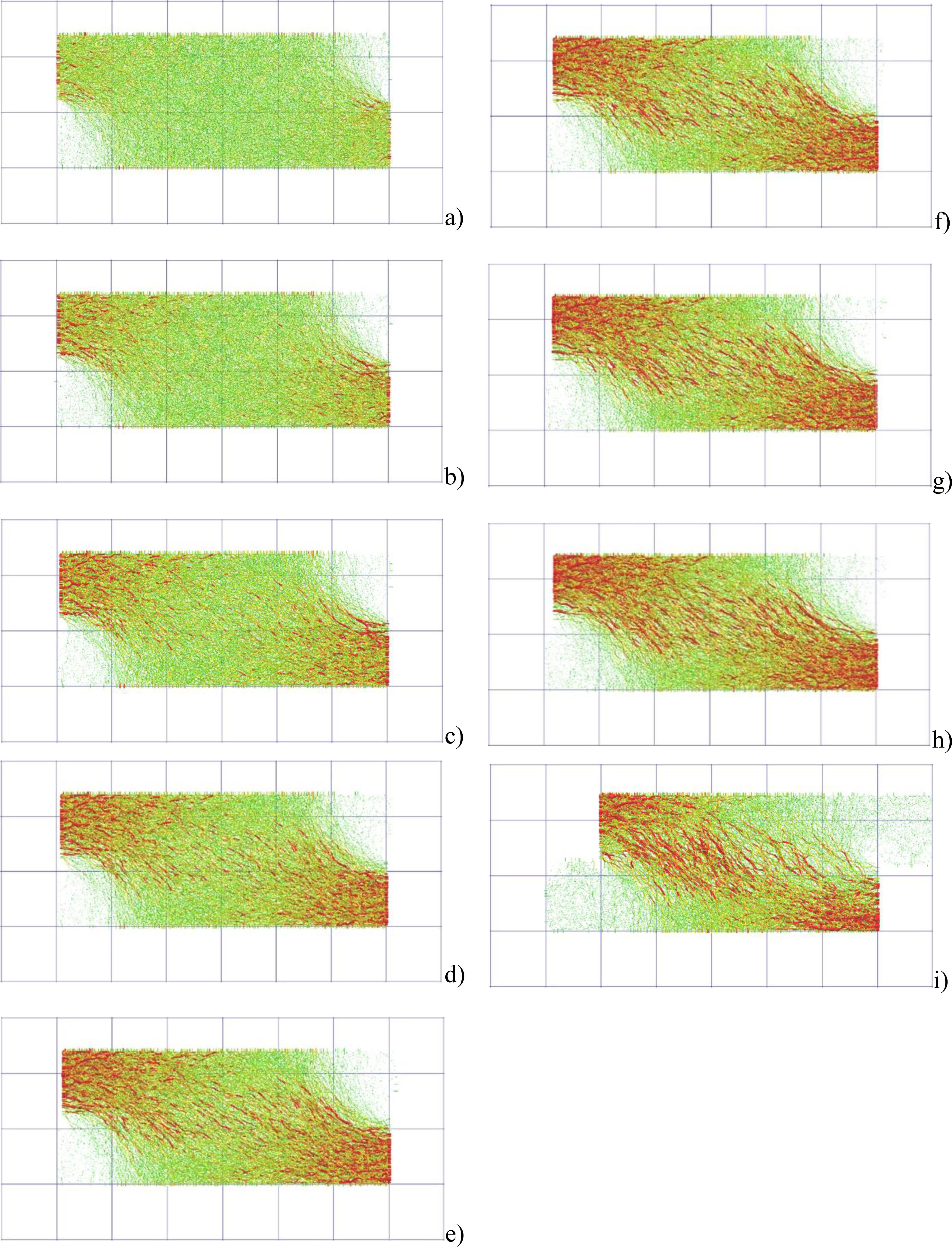
Figure 25
Force chain distribution in the entire specimen for: a) ux = 0.25 mm, b) ux = 0.50 mm, c) ux = 0.75 mm, d) ux = 1.00 mm, e) ux = 1.25 mm, f) ux = 1.50 mm, g) ux = 1.75 mm, h) ux = 2.00 mm and i) ux = 10.00 mm (e0 = 0.60, σ0 = 200 kPa, d50 = 0.5 mm) (red colour corresponds to the force chain above the mean value) (colour online)
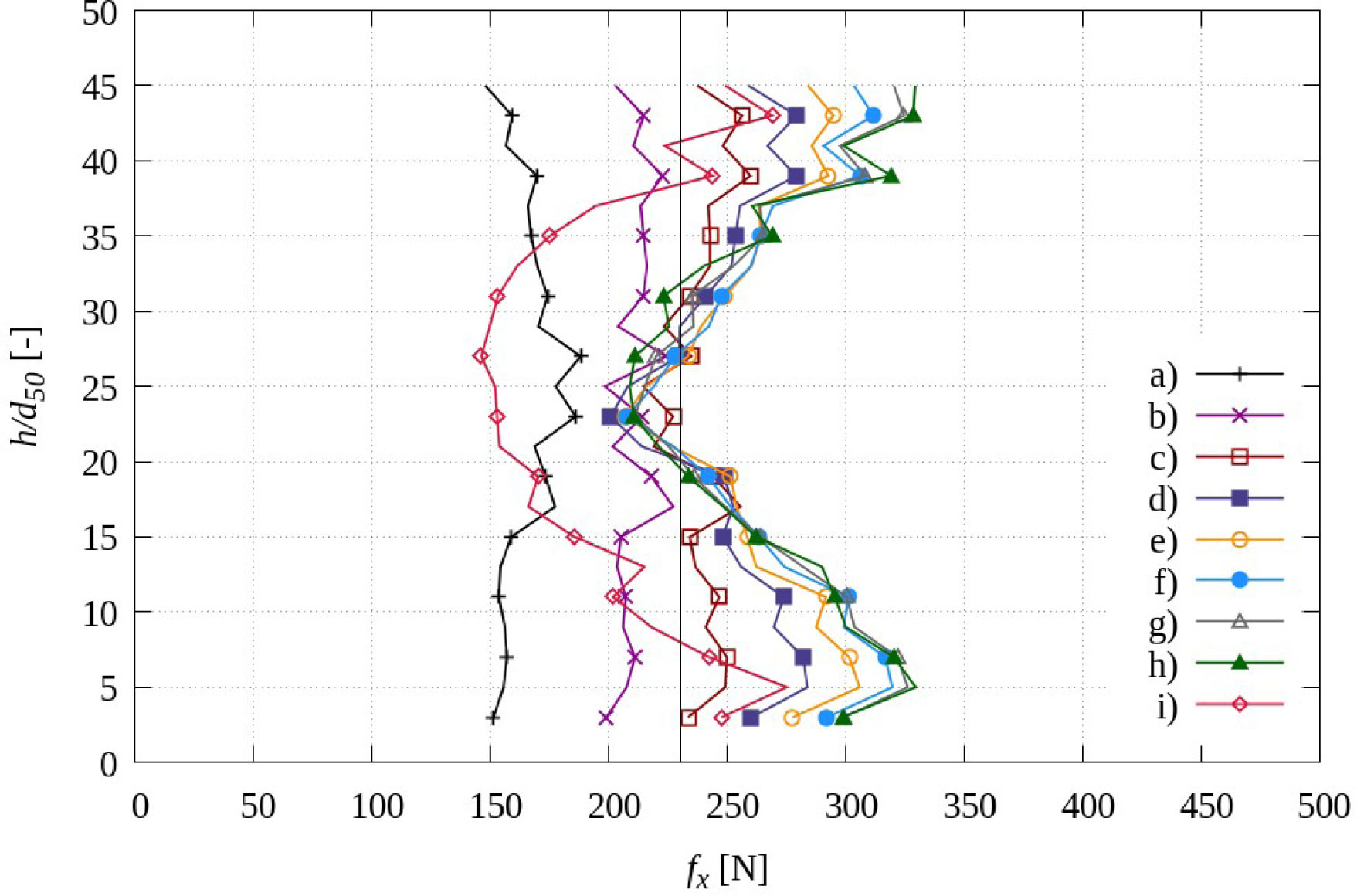
Figure 26
Distribution of the normal forces fx acting on spheres across the normalized specimen height h/d50 at the specimen centre for: a) ux = 0.25 mm, b) ux = 0.50 mm, c) ux = 0.75 mm, d) ux = 1.00 mm, e) ux = 1.25 mm, f) ux = 1.50 mm, g) ux = 1.75 mm, h) ux = 2.00 mm and i) ux = 10.00 mm (e0 = 0.60, σ0 = 200 kPa, d50 = 0.5 mm) (dark vertical line demonstrates 5% limit).
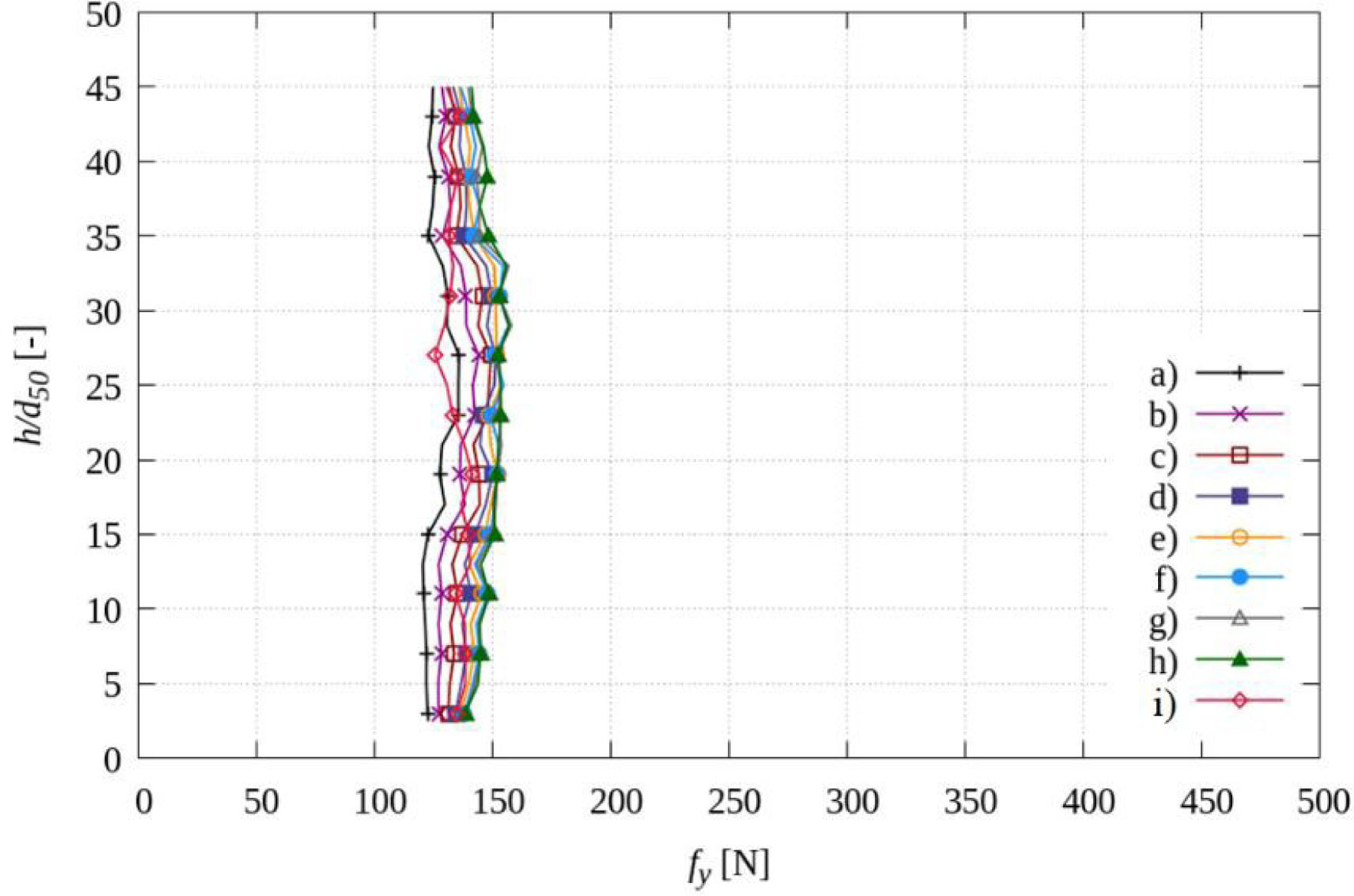
Figure 27
Distribution of the normal forces fy acting on spheres across the normalized specimen height h/d50 at the specimen centre for: a) ux = 0.25 mm, b) ux = 0.50 mm, c) ux = 0.75 mm, d) ux = 1.00 mm, e) ux = 1.25 mm, f) ux = 1.50 mm, g) ux = 1.75 mm, h) ux = 2.00 mm and i) ux = 10.00 mm (e0 = 0.60, σ0 = 200 kPa, d50 = 0.5 mm).
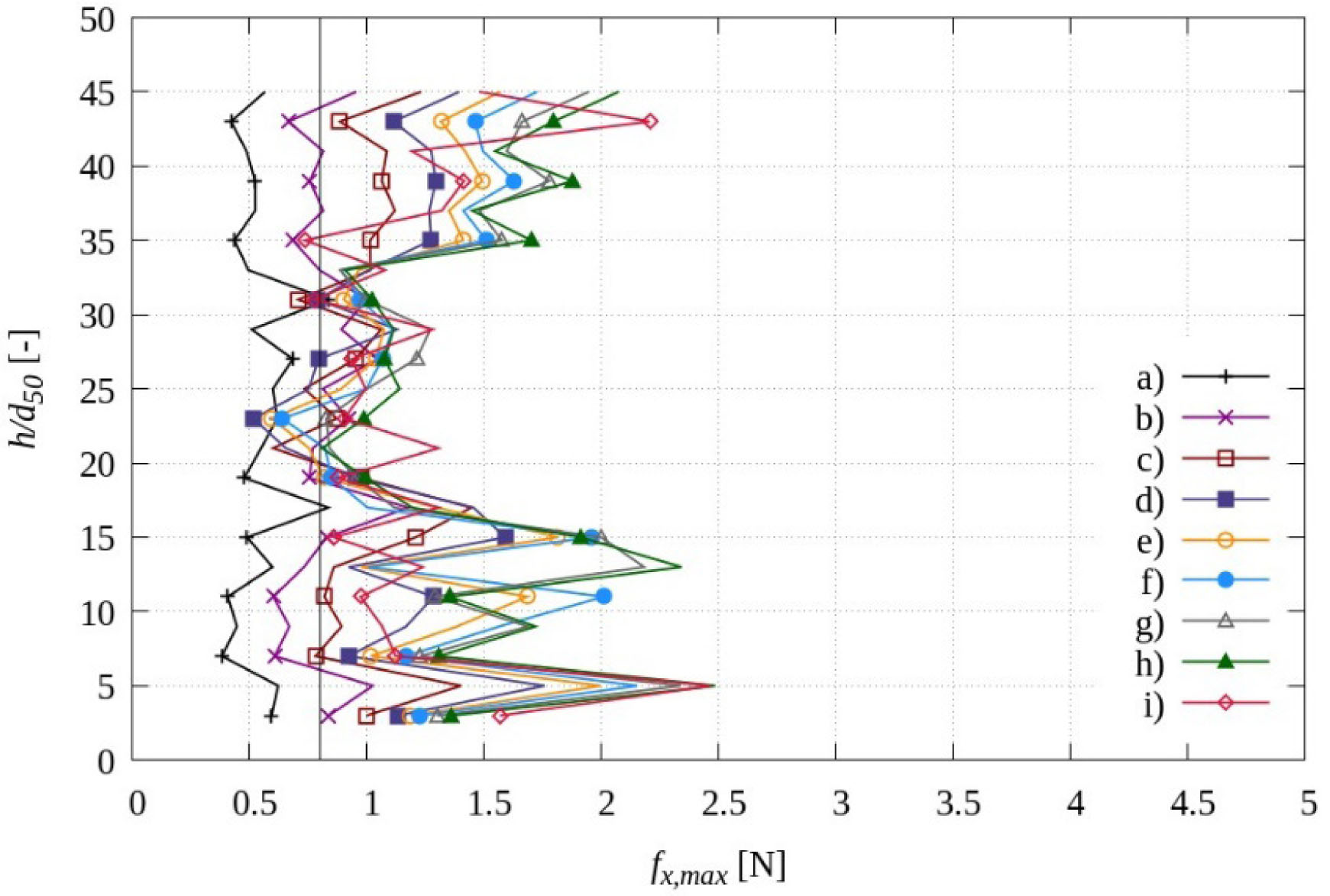
Figure 28
Distribution of the maximal normal forces fx,max acting on spheres, in the averaging cell, across the normalized specimen height h/d50 at the specimen centre for: a) ux = 0.25 mm, b) ux = 0.50 mm, c) ux = 0.75 mm, d) ux = 1.00 mm, e) ux = 1.25 mm, f) ux = 1.50 mm, g) ux = 1.75 mm, h) ux = 2.00 mm and i) ux = 10.00 mm (e0 = 0.60, σ0 = 200 kPa, d50 = 0.5 mm) (dark vertical line demonstrates 5% limit).
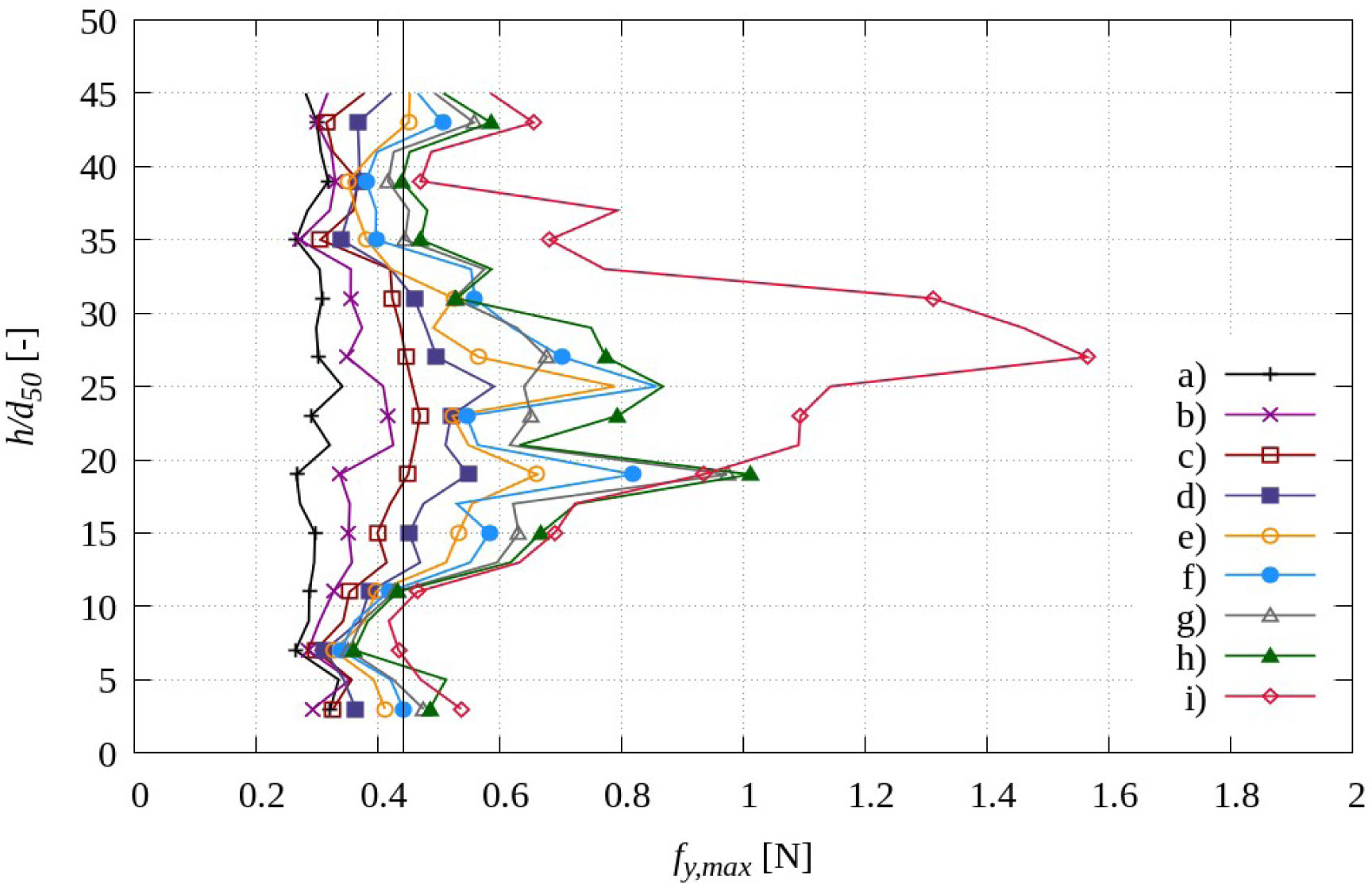
Figure 29
Distribution of the maximal normal forces fy,max acting on spheres, in the averaging cell, across the normalized specimen height h/d50 at the specimen centre for: a) ux = 0.25 mm, b) ux = 0.50 mm, c) ux = 0.75 mm, d) ux = 1.00 mm, e) ux = 1.25 mm, f) ux = 1.50 mm, g) ux = 1.75 mm, h) ux = 2.00 mm and i) ux = 10.00 mm (e0 = 0.60, σ0 = 200 kPa, d50 = 0.5 mm) (dark vertical line demonstrates 5% limit).
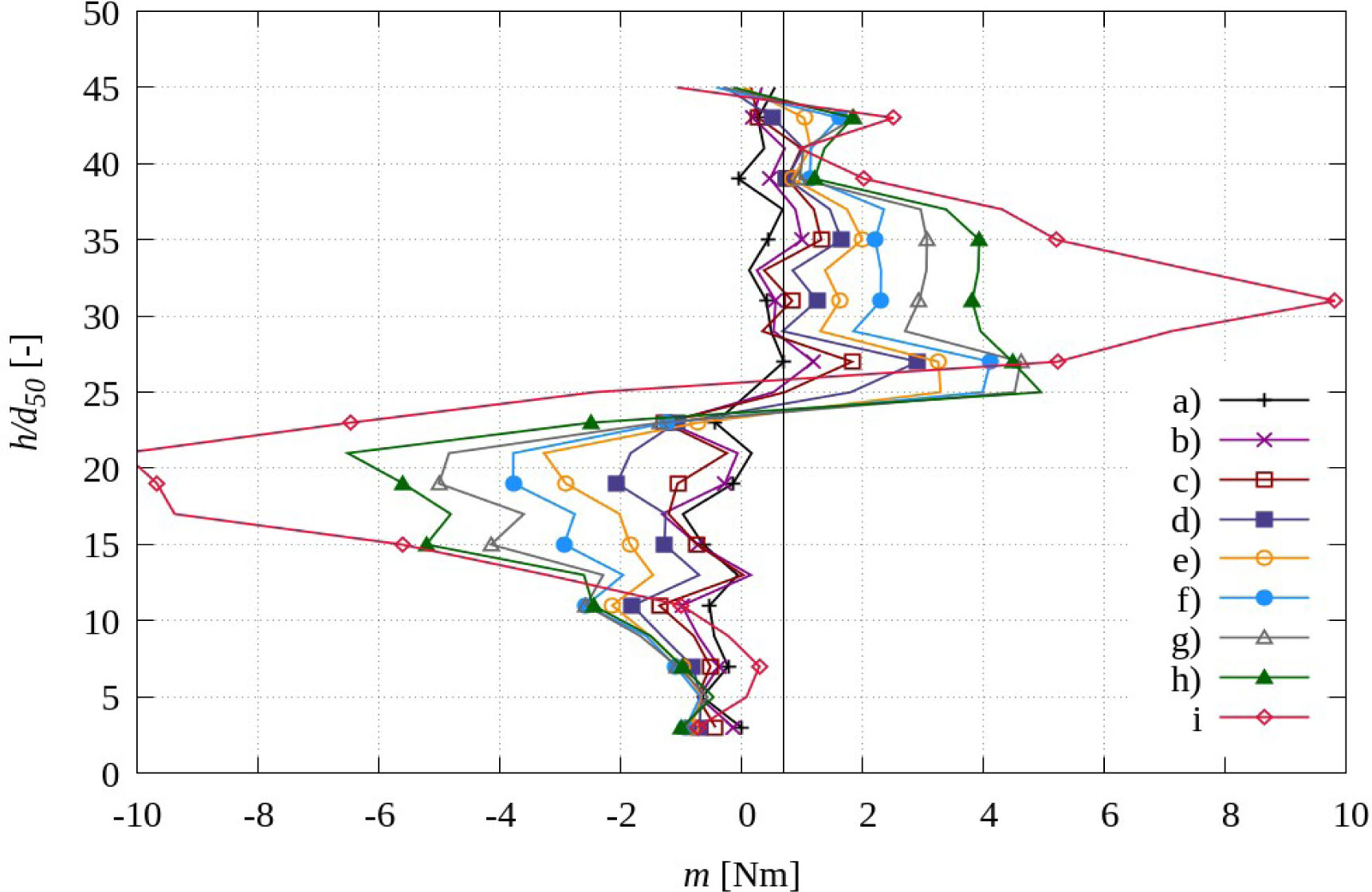
Figure 30
Distribution of the resultant moment m acting on spheres across the normalized specimen height h/d50 at the specimen centre for: a) ux = 0.25 mm, b) ux = 0.50 mm, c) ux = 0.75 mm, d) ux = 1.00 mm, e) ux = 1.25 mm, f) ux = 1.50 mm, g) ux = 1.75 mm, h) ux = 2.00 mm and i) ux = 10.00 mm (e0 = 0.60, σ0 = 200 kPa, d50 = 0.5 mm) (dark vertical line demonstrates 5% limit).
Table 2
Early predictor summation.
| Predictor | ux (mm) | ts (mm) |
|---|---|---|
| Horizontal displacement ux | 0.75 | 20 × d50 |
| Vertical displacement uy | 0.75 | 20 × d50 |
| Rotations ω | 1.50 | 19 × d50 |
| Void ratio e | 2.00 | 25 × d50 |
| Coordination number n | 0.75 | - |
| Displacement fluctuations | 1.75 | 6 × d50 |
| Normal force fx | 0.75 | - |
| Normal force fy | - | - |
| Maximal force fx,max | 1.00 | - |
| Maximal force fy,max | 0.75 | 25 × d50 |
| Moments m | 0.50 | 30 × d50 |