Have a personal or library account? Click to login
Use of functional cluster analysis of CPTU data for assessment of a subsoil rigidity Cover

Use of functional cluster analysis of CPTU data for assessment of a subsoil rigidity

Open Access
|Oct 2018

Figures & Tables

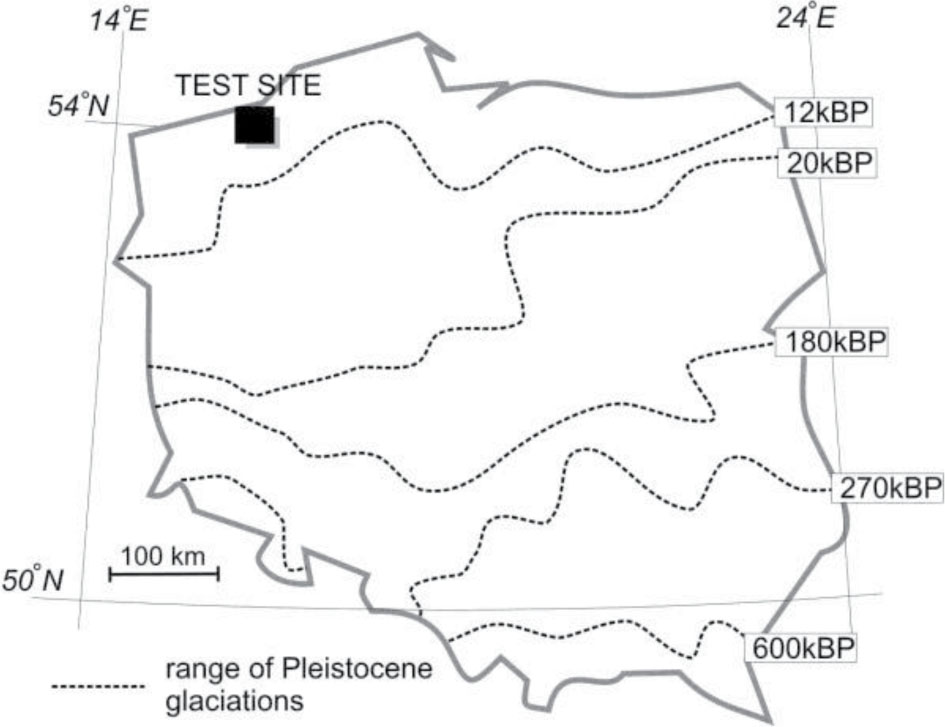
Figure 1

Location of the test site in Poland.
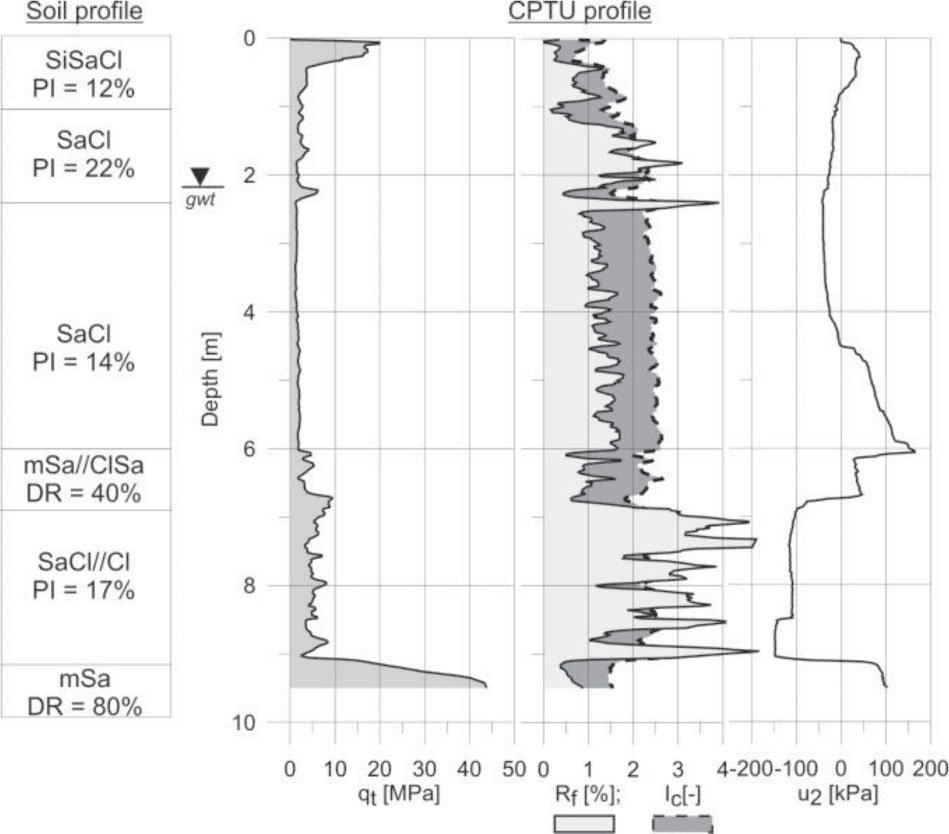

Figure 2

Typical soil and CPTU profiles of the test site.
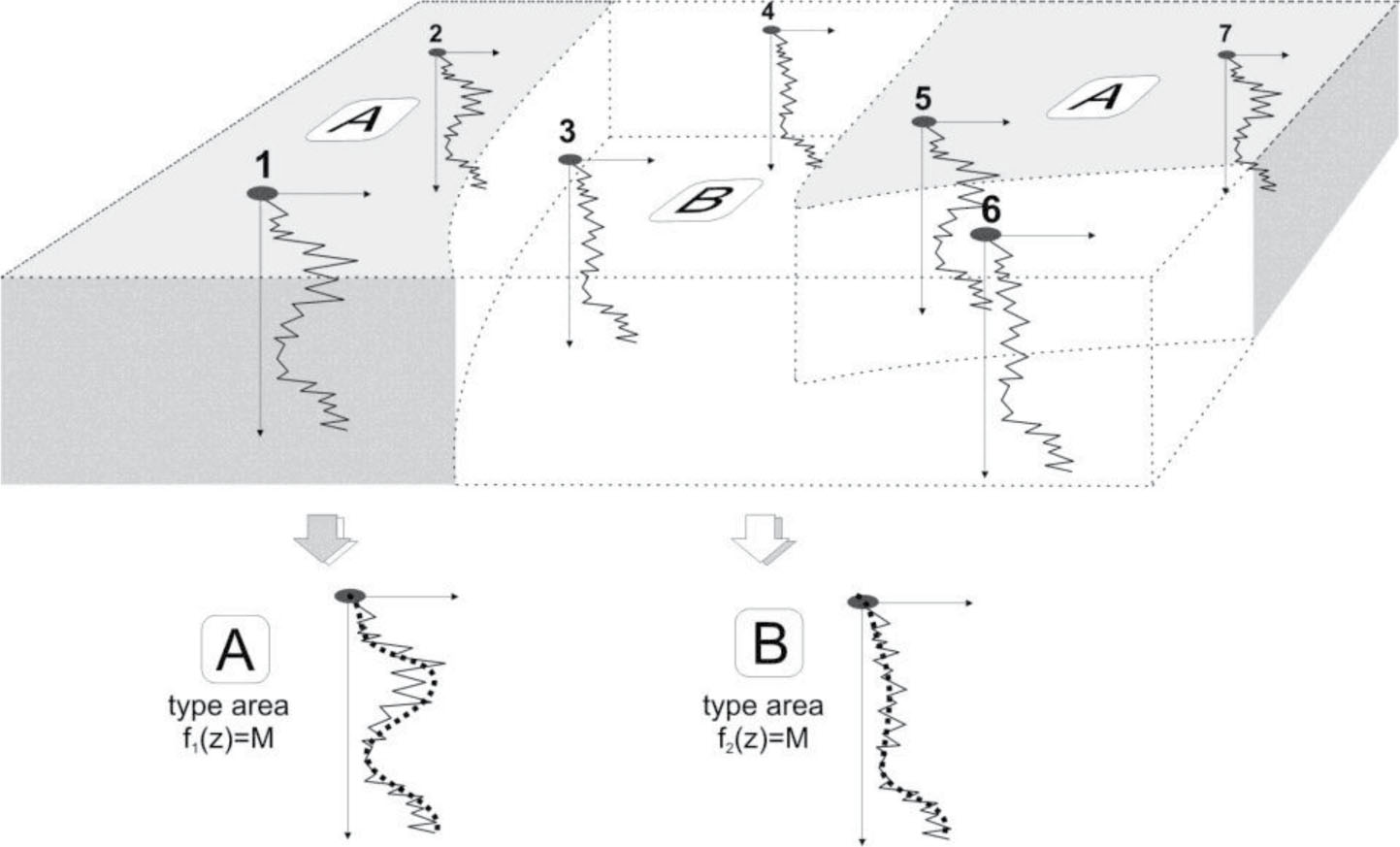

Figure 3

The division of a subsoil sample according to the concept of functional data analysis.
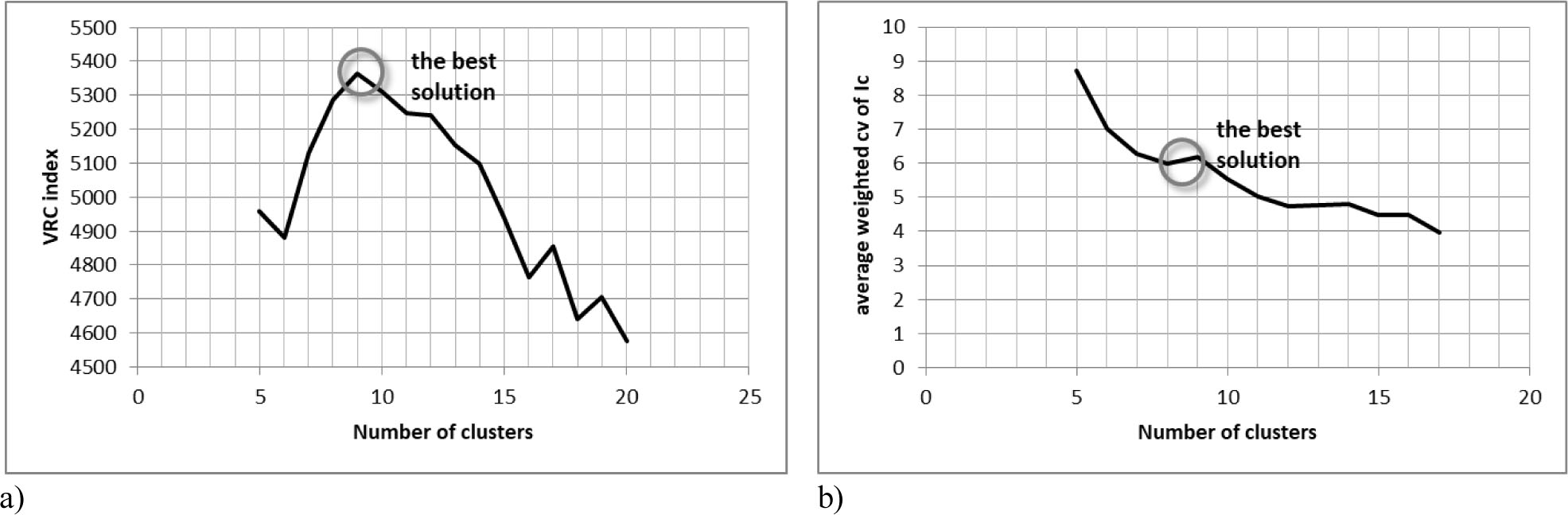

Figure 4

Indication of optimal cluster number based on the Caliński-Harabasz criterion (a) and the mean weighted coefficient of variation for index Ic (b).
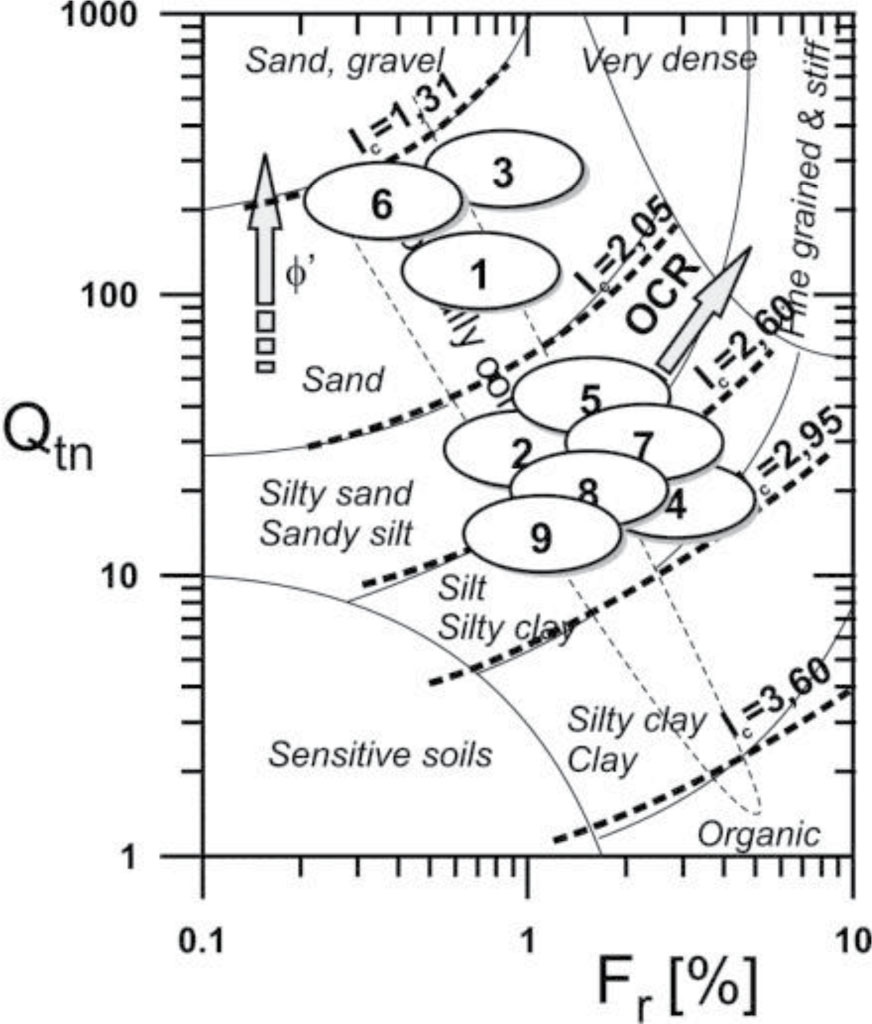

Figure 5

Location of the tested soils and the soil behaviour chart, according to Robertson [5].
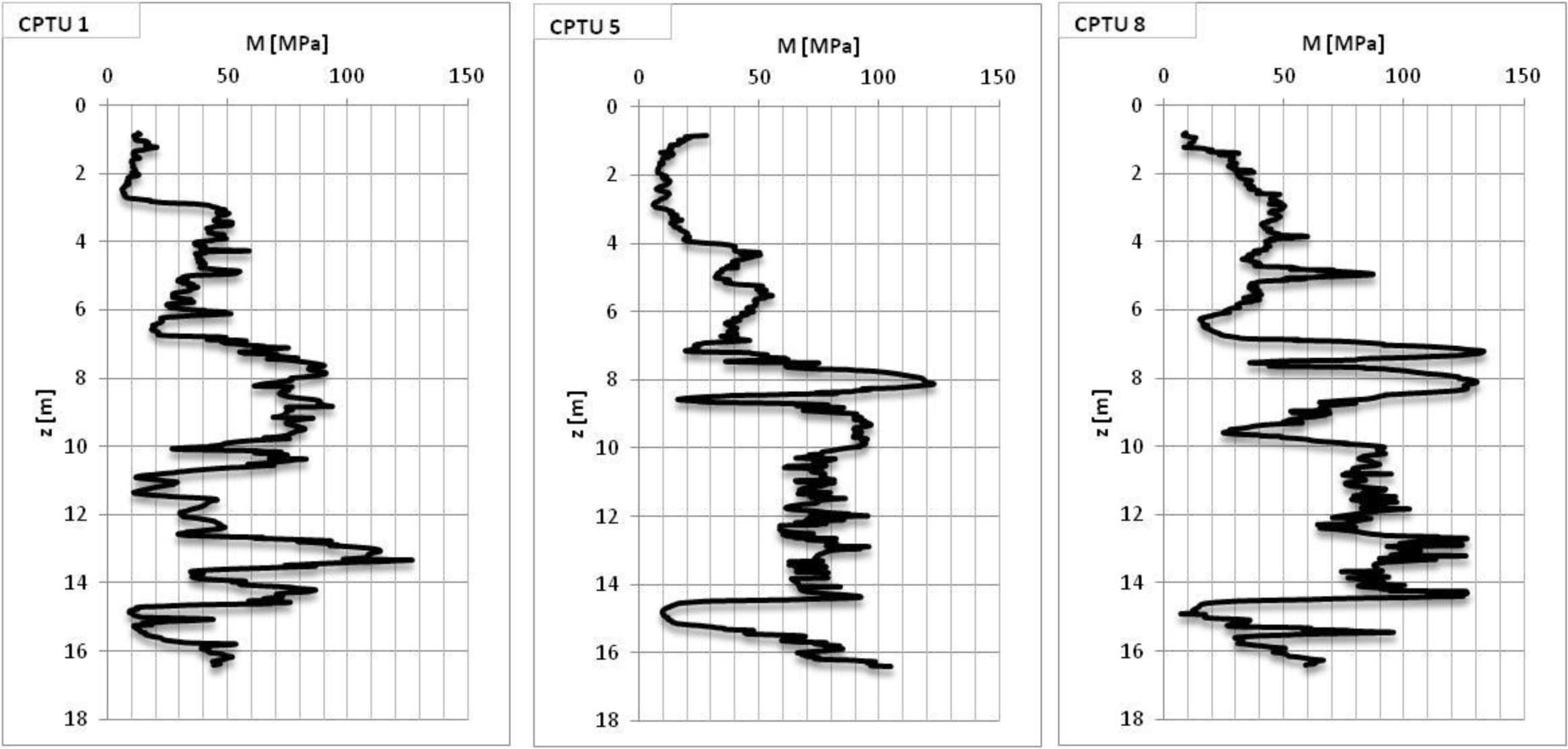

Figure 6

Changes in the constrained modulus M with depth alongthree arbitrarily selected CPTU profiles.
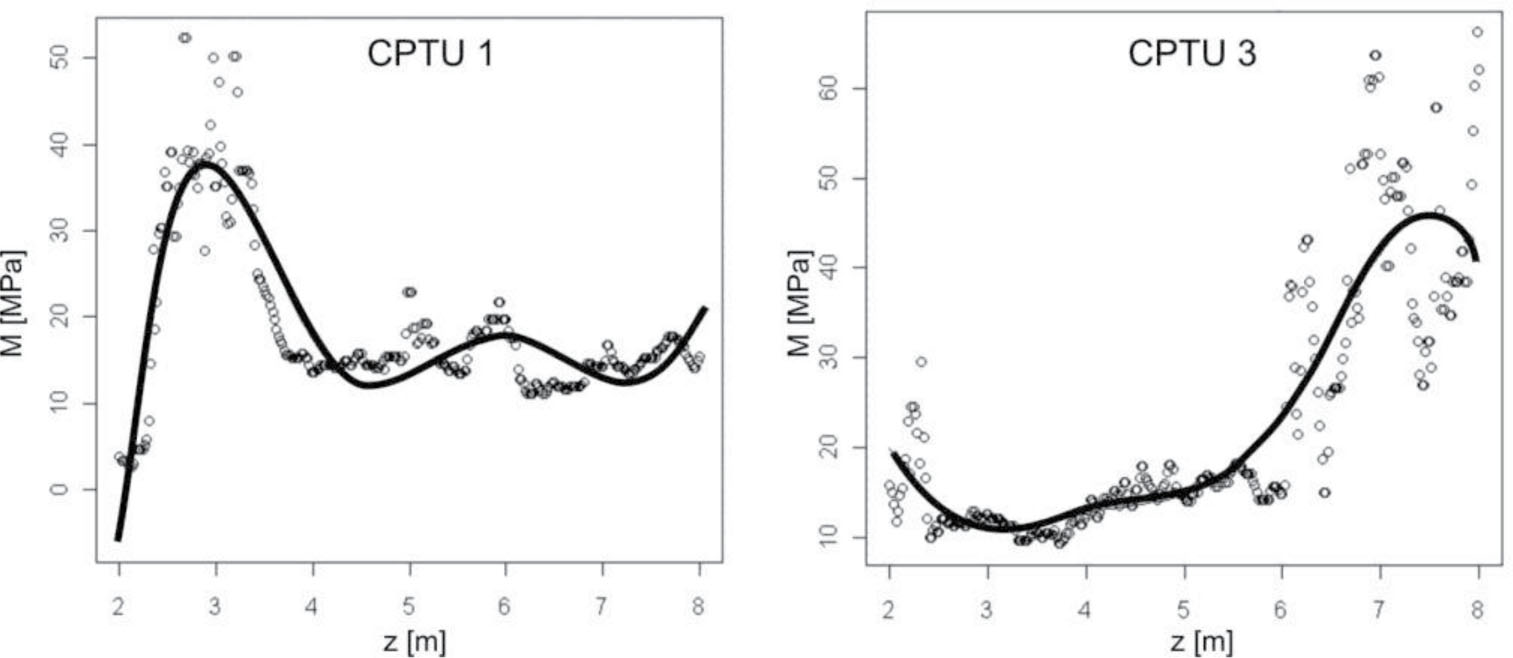

Figure 7

Graphs of the spline funcion in CPTU profiles 1 and 3, smoothing the course of dependencies of modulus M on depth, assumed for coefficient K=6.
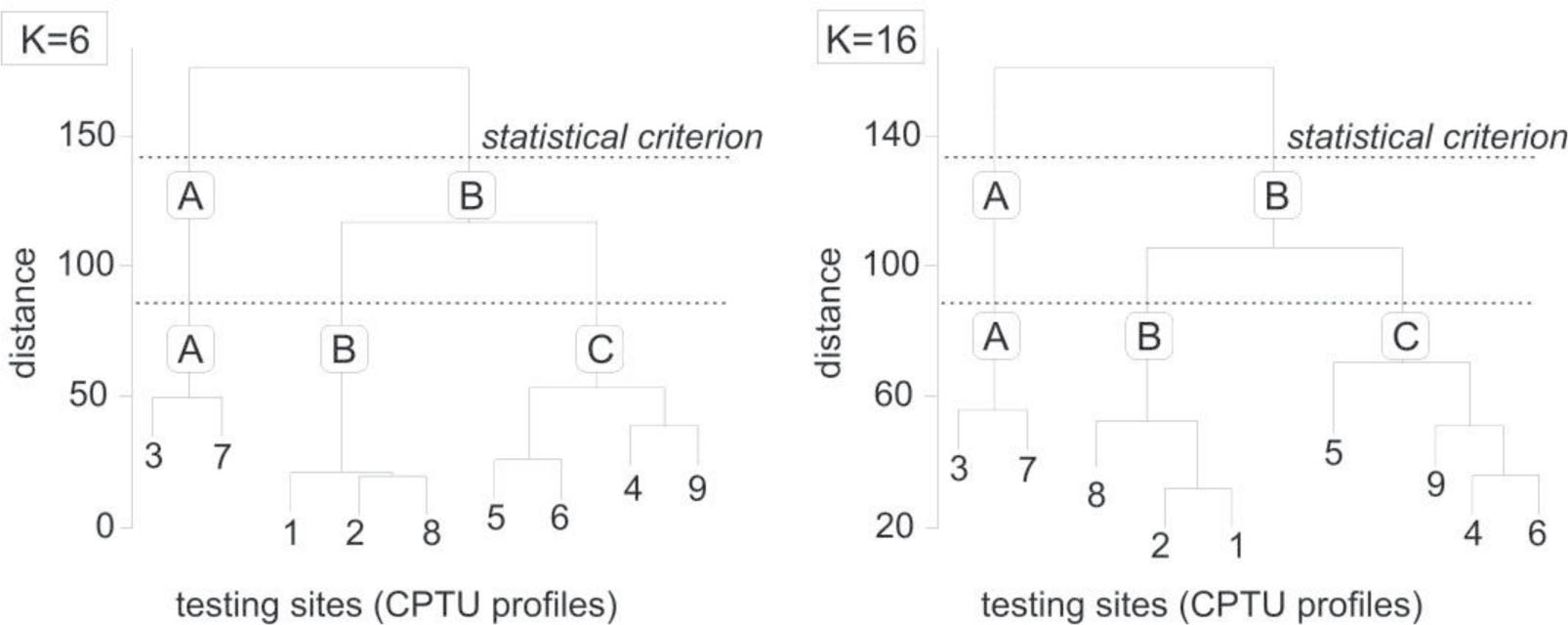

Figure 8

Dendrograms of the clustering hierarchy of curves M = f(z) from the CPTU testing of sites within the range of depth of 2–8 m for the strongly smoothed function (K=6) and weakly smoothed function (K=16).


Figure 9

Division of testing area in view of the subsoil rigidity model for the depth range of 2–8 m, 2–5 m and 5–8 m.
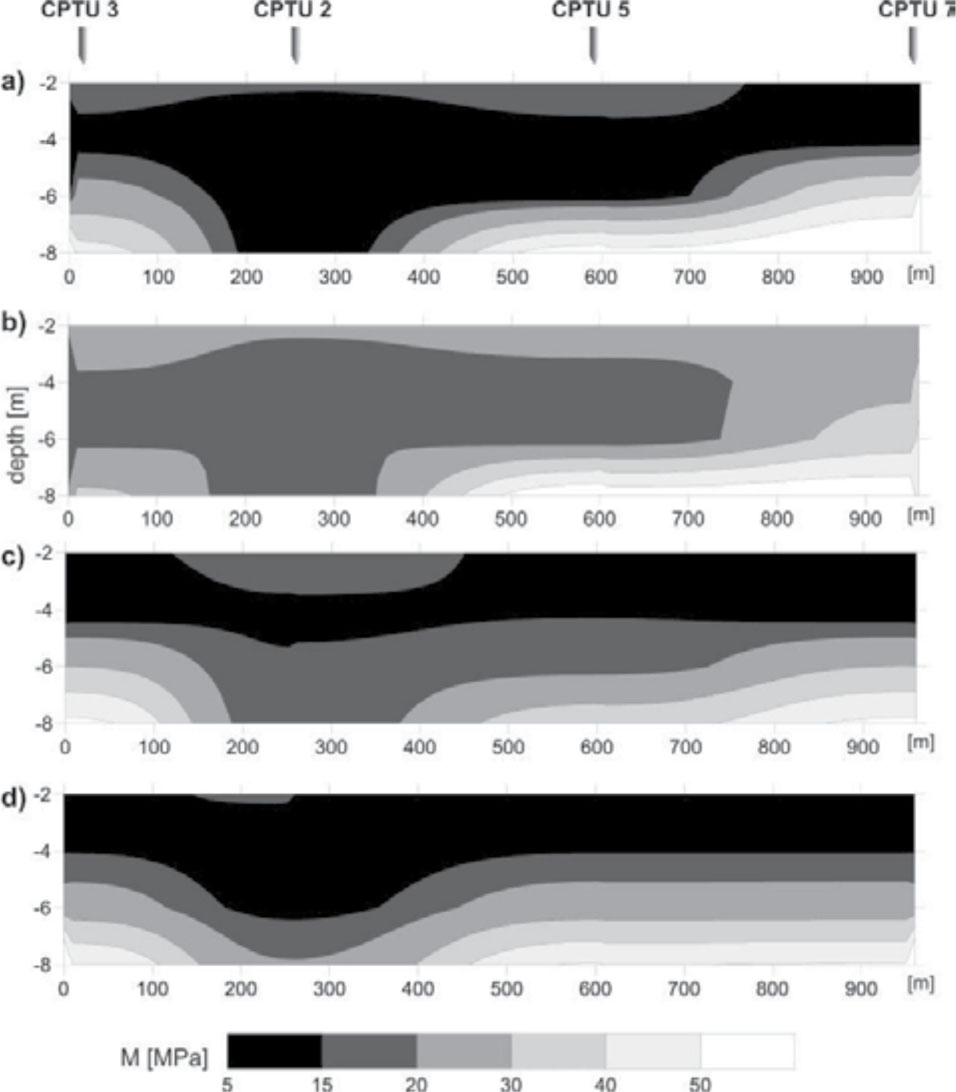

Figure 10

Models of subsoil rigidity composed on the basis of constrained modulus M along a section selected in the investigated area, determined by IDW based on (a) values of moduli determined from Eqs. (4) and (5), (b) mean values of moduli for isolated soil layers, (c) the mean of the function f(z)=M for isolations in the depth range of 2–8 m and (d) the mean of the function f(z)=M for isolations in depth ranges of 2–5 m and 5–8 m.
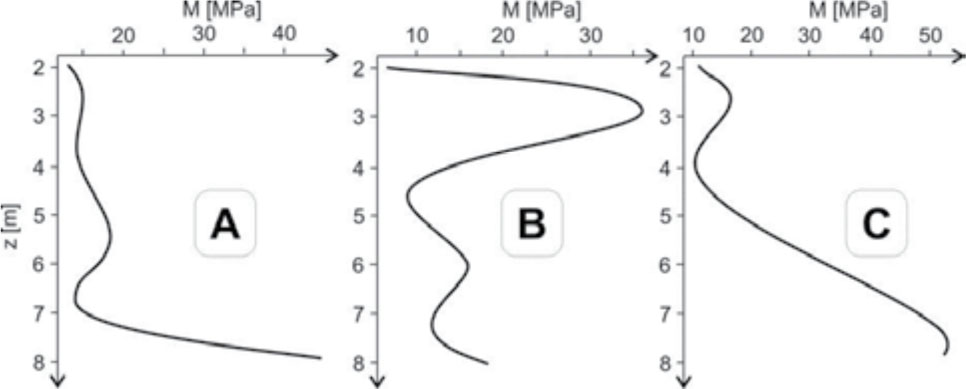

Figure 11

Graphs of mean of the function f(z)=M for isolations A, B and C assumed in the depth range of 2–8 m.
DOI: https://doi.org/10.2478/sgem-2018-0017 | Journal eISSN: 2083-831X | Journal ISSN: 0137-6365
Language: English
Page range: 117 - 124
Submitted on: Jan 14, 2018
Accepted on: Aug 17, 2018
Published on: Oct 3, 2018
Published by: Wroclaw University of Science and Technology
In partnership with: Paradigm Publishing Services
Publication frequency: 4 issues per year

© 2018 Zb. Młynarek, J. Wierzbicki, W. Wołyński, published by Wroclaw University of Science and Technology
This work is licensed under the Creative Commons Attribution-NonCommercial-NoDerivatives 4.0 License.