

INTRODUCTION
To develop latent fingerprint impressions on adhesive surfaces—such as packaging tapes, masking tapes, sticky tapes, adhesive bandages and shipping labels—various chemical reagents are applied to the surfaces. Examples of such reagents include Gentian Violet, Sticky-Side Powder and Wet Powder.
Gentian Violet is a dense reddish-purple liquid used for the development of latent fingerprints from adhesive surfaces (e.g., adhesive tapes, self-adhesive decorative surfaces, films, etc.). The liquid also develops fingerprints on non-porous surfaces contaminated with oils or greases. While the reagent is effective, it is highly toxic upon skin absorption or ingestion (BVDA, n.d.).
Sticky-Side Powder is used to treat the adhesive side of tapes and other latent prints (Ogle, 2007: p. 89).
In the article, the authors further discuss the WET POWDER reagent (Fig. 1), which is a ready-to-use solution designed for the development of latent (invisible) dermal papillary ridge patterns from adhesive surfaces.
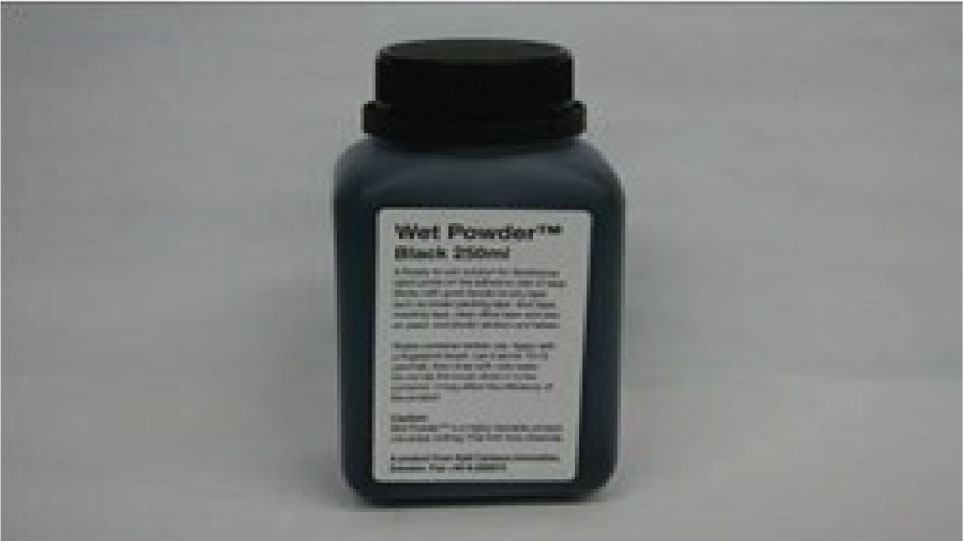
Figure 1.
Black-coloured wet powder reagent.
The experiment was conducted using the Wet Powder reagent, manufactured by the Swedish company Kjell Carlsson Innovation (n.d.). The same reagent is marketed by distributors under alternative names, such as WetWop and Wettit, which are common in the US market.
Visible and semi-visible fingerprint impressions are rendered visible using a range of physical and chemical methods. The applicability of these methods depends on the characteristics of the impressions, the material of the object and the nature of the surface.
Depending on the tone of the surface—light or dark—from which impressions are being developed, either a black or a white solution is used. Application of the reagent yields good results and performs effectively on various types of tape, including brown packaging tape, masking tape, office and paper tape, plastic adhesive labels and paper adhesive labels.
Before use, the solution must be shaken thoroughly. For application to the surface being examined, it is recommended to use a soft-bristled brush in order to avoid the formation of streaks. After the solution has been applied to the surface, it should be allowed to absorb for 10–15 s. The applied solution is then rinsed off under a stream of cold running water. It is advisable to pour the required amount of the solution into a separate, smaller container prior to use, in order to avoid repeatedly inserting the brush into the original bottle, as this may compromise the effectiveness of the process.
The properties of a dermal papillary ridge print that influence its visualisation include the age of the print, the composition of perspiration and the presence and quantity of sebaceous matter within the print residue. These properties determine the adhesive capacity of the print residue, that is, its ability to bind other substances to the surface. The adhesive capacity of the print residue also depends on the conditions under which the object was stored after the print was deposited. External factors that accelerate print aging and reduce the adhesive capacity of the residue include, for example, elevated temperatures and the deposition of dust on the print. A print also ages rapidly on objects with hygroscopic (moisture-absorbing) surfaces. In addition, the material of the object and the nature of its surface may limit the range of methods available for print visualisation (Eesti Entsüklopeedia, 1985, Vol.1, p. 58).
A precise assessment of the factors influencing the results of fingerprint impression development is practically impossible. Consequently, it is difficult to predetermine which method will yield the best results. It must therefore always be assumed that the sequential application of multiple methods may be necessary, with the initial method selected so as not to hinder or preclude the subsequent use of others.
The quasi-experiment was prompted by a colleague’s assertion, made during an informal discussion among peers at a conference held in Vilnius in 2024, that dermal papillary ridge patterns do not survive on surfaces for more than 2 months. The participants in the discussion remained divided on this issue. The authors of the article maintained the position that it is possible to identify fingerprint impressions even after a period exceeding 2 months. It is essential to consider the various factors that may either promote or inhibit the preservation of fingerprint impressions on surfaces.
Stemming from the preceding discussion, the objective of this article is to address the authors’ hypothesis that, depending on the characteristics of the dermal papillary ridge pattern that influence its visibility and preservation—namely the age of the print, the composition of the perspiration and the presence and quantity of sebaceous matter within the print residue—it is possible to identify dermal papillary ridge patterns preserved for periods exceeding 2 months.
To achieve this objective and to test the hypothesis, the authors conducted a quasi-experiment.
The topicality of the subject lies in the fact that tape may be used by criminals as an inexpensive and effective material for sealing packages or various openings. For example, when tape is used to secure drug packages or to cover security camera screens, fingerprints are deposited on the adhesive side, as the sticky surface of the tape makes the use of gloves essentially impractical. Following the removal of the tape, latent dermal papillary ridge patterns can be developed from the adhesive surface using Wet Powder. In this context, the duration for which dermal papillary ridge patterns survive on surfaces, and the period during which they remain identifiable, is of critical importance.
RESEARCH RESULTS AND DISCUSSION
Methodology
To address the research questions, the authors employed an experimental research methodology under controlled conditions, classifying the study as an applied investigation. The experiment involved examining the adhesive sides of tapes secured with masking tape to the inner surfaces of window frames over a specified period (November 2024–May 2025). Application of the analysis method yielded the results of the investigation.
The objective of the experimental research strategy was to evaluate the impact of specific interventions and influencing factors, such as room temperature during the study period and the length of the tapes, and to draw conclusions regarding cause-and-effect relationships. As it was not possible to satisfy all the conditions required for a true experiment, the study is more accurately described as a quasi-experiment.
Distortion specific characteristics of papillary ridges
The characteristics of the hand and skin surface relief, including the papillary ridges, are reflected in fingerprint impressions. In general, an excessive or insufficient amount of print residue does not cause significant distortion. However, skin deformation at the moment of print formation can produce distorted representations of both the general and specific characteristics (minutiae) of the papillary ridges.
When tape is used, distortions may occur on its adhesive surface in both the general and specific characteristics of the dermal papillary ridges. These distortions can result from the tape’s elasticity and adhesiveness, as well as the force applied when tearing pieces from the roll. Holding the ends of the tape while tearing pieces of varying lengths causes the width of the dermal papillary lines deposited on the adhesive side to increase under strong pressure and decrease under weak pressure. Conversely, the inter-ridge distance decreases under strong pressure and increases under weak pressure.
Under strong pressure, distortions may cause papillary line endings to merge with adjacent lines, whereas weak pressure can lead to the divergence of papillary ridge branches and the formation of bridges and hooks. With regard to specific characteristics observed on papillary ridges, strong pressure has been shown, for example, to decrease the diameter of a papillary island (ridge dot), while weak pressure results in an increase in its diameter. Distortions may also be observed in papillary line branches, segments (interruptions), hooks and small bridges, all of which result from weak pressure applied to the tape.
In such cases, not only the examination itself but also the final assessment by the investigator or the court may be complicated. There are instances in which the expert is unable to determine which similarities or differences constitute papillary ridge characteristics and which are the result of distortion. Nevertheless, in the majority of cases, such distortions do not preclude the identification process.
Even features of clearly distorted ridges may remain suitable for expert analysis. For example, if a ridge fragment in a fingerprint impression has assumed the shape of a hook, this does not necessarily render the detail unusable. Rather, it provides information regarding the extent of change in that particular part of the ridge pattern, the presence of details with dimensions not exceeding 3 mm and a degree of individualisation. The critical task is to establish the presence of distortion and to competently distinguish adequately formed papillary ridge characteristics from those resulting from distortion.
Persistence of fingerprint impressions over time
The duration of print retention refers to the time period during which invisible prints can be developed using reagents, whereas visible prints can be coloured or detected using illumination.
Once a print has formed, the characteristics reflected within it do not undergo further change. Only occasional mechanical damage to the print, such as contact with packaging that causes folding, may result in scratches resembling scarring, nicks, or white lines. However, owing to the combined effects of dust, temperature and other meteorological factors, prints gradually lose their sharpness and ultimately disappear over time.
Particular emphasis is placed on the long-term effects of heat. Short-term exposure, even to high temperatures (up to +500°C), does not cause prints to disappear. Noteworthy findings have also been reported regarding the influence of moisture on prints containing sweat and sebaceous matter. In some instances, dampness (e.g., rain) and even direct submersion of objects in water did not result in the disappearance of prints. Prints deposited on plastic, metal and glass surfaces, as well as on paper thoroughly saturated with adhesive, were retained for up to 1 week, even when fully submerged in water. Prints retained on submerged objects survive for longer periods than prints exposed to rain, which can be explained by the mechanical damage caused by raindrops and water streams. Nevertheless, in all cases, prolonged exposure to moisture leads to a marked decline in print retention (Banjuk and Owczarkowski, 1970).
Prints formed by sweat and sebaceous matter are particularly sensitive to atmospheric conditions. Time-related data on the retention of prints formed by sweat and sebaceous matter are therefore crucial for determining the range of objects from which prints should be sought, for selecting appropriate reagents for their development, and for ensuring timely fixation.
Experimental attempts to determine the time period during which sweat and sebaceous prints react to developing agents have been conducted previously. However, these experiments were carried out using a limited number of prints and did not adequately account for storage and retention conditions.
The primary factor influencing the duration of pressure adhesion, tackiness and the selective adsorption of sweat and sebaceous matter from prints is moisture loss. This loss occurs through surface evaporation, absorption by hygroscopic particles or moisture diffusion (the slow interpenetration of moisture and liquids without external influence) (Kleis et al., 1978), depending on the thickness of the object receiving the prints.
Experimental findings demonstrate a significant relationship between print retention time and temperature, air humidity (Eesti Entsüklopeedia, 1994, Vol. 10, pp. 590–591), the presence of dust and the properties of the print-receiving surface. Higher temperatures combined with lower air humidity result in shorter print retention times, whereas lower temperatures and higher air humidity prolong print retention. In addition, the greater the accumulation of dust on prints and the longer the duration of dust coverage, the shorter the retention time. Finally, the lower the wettability of the receiving object and its capacity to absorb moisture into its substance, the longer the adhesive properties of the print’s sweat and sebaceous matter are preserved. Consequently, under otherwise equal conditions, the retention time of a pressure-adhesion print varies across glass, metal, plastic and paper surfaces.
Significant temporal fluctuations in print tackiness retention are also observed, depending on the presence and quality of the adhesive content in the paper. The higher the quality of the adhesive content (Eesti Entsüklopeedia, 1994, Vol. 7, p. 133), the longer the adhesive effect of the print’s sweat and sebaceous matter is maintained at a level sufficient for powder particles to adhere. With respect to the retention of indented and coloured prints, their persistence depends on the durability of the colouring agent or the substance (e.g., writing lacquer, grease) with which they were formed (Banjuk and Owczarkowski, 1970).
As an example from an earlier period, the last century saw the application of various methods for developing prints from diverse surfaces, such as invisible prints on writing paper, painted wood and prints on plastic, nickel steel (nickel-plated metals) and glass.
A case from the United States is documented in which, in April 1954, John O’Neill murdered his partner, dismembered the body and concealed it in a metal trunk. The trunk was discovered and opened in October 1962. Fingerprint impressions identified on the trunk were suitable for the identification of the perpetrator 8 years after the crime. (‘Eight-Year-Old Latents Identify Killer’, 1963).
Latent prints on writing paper may be retained outdoors during the spring–autumn period. When developed using powders, results can be obtained up to approximately 7 days after print formation, whereas the use of iodine vapour and solutions can yield results from prints up to 1 month old. In unheated premises, powders remain effective for up to 14 days, while iodine vapour and solutions are effective for up to 40 days.
During winter conditions, outdoor development using powders yields results for prints up to 3 weeks old, and up to approximately 3 months when iodine vapour and solutions are used. In unheated premises—both in locations protected from dust and those unprotected—prints can be developed using powders up to 23 days after deposition and up to 2.5 months using iodine vapour and solutions. In heated premises, regardless of dust protection, it is possible to develop prints using powders up to 7 days after deposition and up to 2.5 months using iodine vapour and solutions.
During the summer period, the retention time of prints is considerably shorter. Prints on surfaces exposed outdoors may be developed up to approximately 16 h after deposition, and up to 7 days later when iodine vapour and solutions are used. Prints located indoors, both protected and unprotected from dust, may be detectable up to 24 h after deposition, and up to 2 weeks later when iodine vapor and solutions are applied.
By contrast, prints retained under conditions that protect paper from moisture—regardless of air temperature or surface dustiness—can be developed using silver nitrate (lunar caustic) for up to 6 months. When treated with ninhydrin, prints older than 7 years may be developed. However, if prints are located in damp premises with high humidity (approximately 95%), they cease to react to alloxans or ninhydrin after only 4–5 days, although they continue to react satisfactorily to iodine and powders.
Previously, the retention of prints on various surfaces under different seasonal conditions (spring, summer, autumn and winter) and temperature regimes, as well as their development in diverse environments, has been examined. Over time, the technologies and methods used at crime scenes and in laboratories for the development of dermal papillary ridge prints have changed and evolved. At present, many criminalists avoid the use of iodine and ninhydrin for developing dermal papillary ridge prints, citing their toxicity, while readily employing more modern reagents and solutions, which are themselves not entirely user-friendly.
For the preservation of fingerprints developed using various dactyloscopic powders, adhesive tapes have proven to be highly effective, convenient to use and suitable for long-term storage. These favourable properties are also exploited by criminals, who use adhesive tapes for sealing drug packages, covering security camera lenses, restraining victims and similar purposes. Consequently, criminalists have sound reason to search for and develop prints that may have been left on adhesive tapes by perpetrators.
Applicability of Wet Powder across different surfaces
The authors’ initial encounter with Wet Powder dates back to the early 2000s, when Swedish colleagues introduced this novel product, developed by Kjell Carlsson Innovation AB, for the development of dermal papillary ridge prints from adhesive surfaces. Although the process was not entirely clean, the results were impressive.
The development of dermal papillary ridge prints from adhesive surfaces using Wet Powder is straightforward and allows for the recovery of high-quality impressions while preserving their integrity.
Over time, Wet Powder has demonstrated utility across an increasing number of application areas. Criminalists continue to experiment and explore innovative approaches for developing prints from various surfaces. For example, colleagues in Poland have applied Wet Powder to visualise impressions on non-porous surfaces. Maciej Fabiszak, at the Provincial Police Forensic Laboratory in Szczecin, conducted a study on the effectiveness of combining Wet Powder and cyanoacrylate (CNA) in developing latent fingerprints on non-porous surfaces. In his article, ‘Cyanoacrylate Fuming and White Powder Suspension Together in One Sequence for Non-porous Surfaces’, he reported that White Wet Powder can yield excellent results either as a standalone method or as the final stage in the conventional cyanoacrylate fuming process (Fabiszak, 2021).
The use of Wet Powder Suspensions (WPS) has been proposed as a supplementary procedure for fingerprint enhancement, in addition to their conventional application for enhancing prints on adhesive surfaces. In the present study, WPS was tested in conjunction with conventional acid dye treatment on blood prints applied to selected substrates. The results demonstrated that white WPS, whether used alone or in combination with acid dyes, generally improves the quality of prints deposited on smooth, non-porous surfaces (p < 0.005).
This method did not interfere with subsequent presumptive blood analyses. However, it was demonstrated that WPS treatments reduced the amount of DNA extractable from the mark, resulting in an average reduction of 91% compared to the untreated control group. The decrease in DNA yield correspondingly reduced the quality of the resulting DNA profiles. The enhancement properties of WPS were further evaluated using electron microscopy, which showed that the titanium dioxide particles within the WPS primarily interact with the non-blood components of the mark, thereby generating a contrast effect between the background and the acid dyes (Au et al., 2011).
Another valuable application of Wet Powder is the visualisation of fingerprints on the interior surfaces of disposable gloves, such as vinyl gloves. Vinyl and rubber gloves are capable of retaining and exhibiting fingerprints in great detail, and practical experience has shown that Wet Powder is effective for visualising such prints.
While colleagues in Poland have employed Wet Powder as the final stage in the cyanoacrylate fuming process, Stina Norlin has investigated the effects of various visualisation techniques on the DNA contained in fingerprints. This research is important because the application of different methods for developing dermal papillary ridge prints does not always guarantee high-quality prints suitable for dactyloscopic analysis. Nevertheless, the developed fragments provide an opportunity to obtain DNA for personal identification. Stina Norlin and her co-authors found no evidence that Wet Powder reduces the ability to recover DNA from a print after the visualisation procedure is complete (Norlin et al., 2013).
The development of dermal papillary ridge prints from the adhesive surface of postage stamps has also been investigated. In this context, the main challenge is removing the stamp from the substrate without damaging its adhesive side, which requires the application of chemicals to reduce the stickiness of the glue and facilitate removal. Following stamp removal and subsequent application of Wet Powder, a fragment of a dermal papillary ridge print was successfully detected.
The use of Wet Powder produces markedly better results compared to conventional processing of adhesive surfaces on postage stamps and is effective across various types of tape, including brown packaging tape, masking tape, office and paper tape, plastic adhesive labels and paper adhesive labels.
Experimental procedure
Visible and latent (less visible) fingerprint impressions are rendered observable using a variety of physical and chemical methods. The applicability of these methods depends on the characteristics of the prints, the material of the object and the nature of the surface.
The solution used in the present experiment was Wet Powder, manufactured by the Swedish company Kjell Carlsson Innovation. The same solution is also marketed by distributors under alternative names, such as WetWop and Wettit, which are commonly available in the US market.
The experimental site was a two-story detached house with windows of varying sizes. The windows were taped in two phases: on 24 November 2024, the ground-floor windows (three windows) were taped, and on 25 November 2024, the second-floor windows (five windows) were taped, two of which were located in an unheated room.
The tape used for the experiment was standard masking tape, with a width of 24 mm and a total length of 50 m per roll (Fig. 2). In this case, the strips of tape were torn directly from the roll rather than cut, producing varied pressure on the adhesive surface depending on the length of each strip.
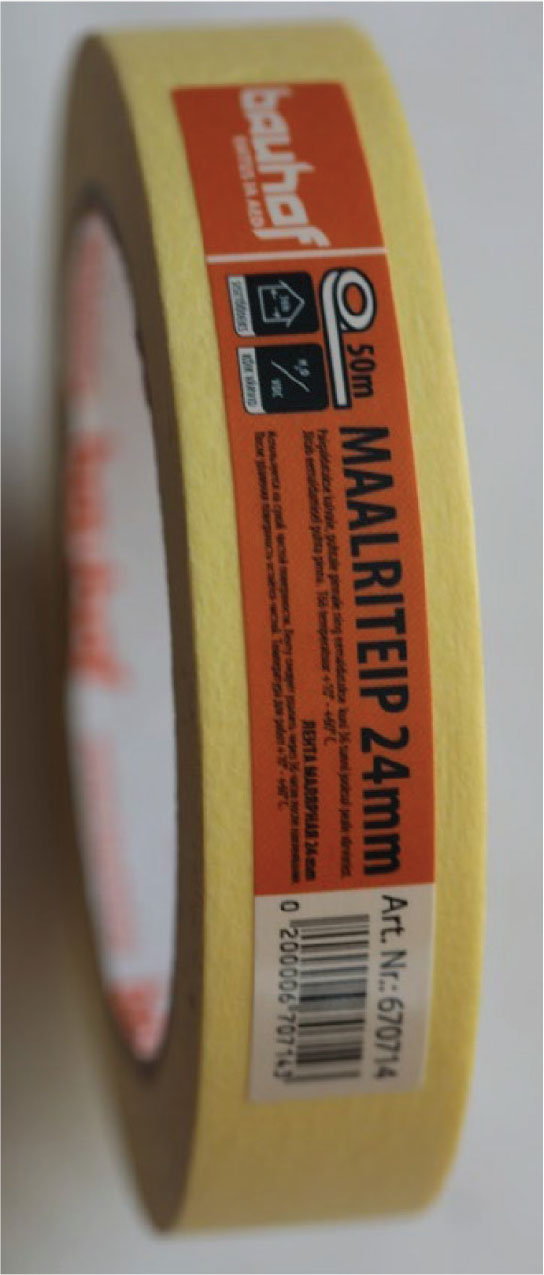
Figure 2.
Tape used in the experiment.
The effectiveness of powder suspensions has been reported to depend on several factors, including the chemical properties of the pressure-sensitive adhesive (PSA) tape surface. Adhesive tape generally consists of two primary components: a pressure-sensitive adhesive coated on a backing material. Acrylic and rubber-based natural isoprene or synthetic styrene-butadiene copolymers form the most common adhesives (Martin-Martinez et al., 2002). Backings include paper for easy-to-tear tape, polyester for high-strength tapes and other plastic polymers such as polypropylene, polyethylene and polyvinyl chloride (PVC) (Everaerts et al., 2002). Modifying additives, such as tackifier resins, plasticisers (e.g. phthalate ester), fillers and pigments (e.g. titanium dioxide, calcium carbonate, barium sulphate, talc, kaolin), may also be incorporated (Goodpaster et al., 2007).
The tapes were removed in several stages: first, from two ground-floor windows, then from two second-floor windows, and subsequently from the remaining three second-floor windows and the final ground-floor window. The treatment of the tapes with the Wet Powder solution was conducted between 4 and 7 May 2025.
The tapes on the ground-floor windows were located on the interior sides of the frames, where room temperatures ranged from +18°C to +22°C. During the study period, the temperatures in the three upper-floor rooms were as follows: first room, +15°C to +20°C; second room, +16°C to +22°C; and third room, +12°C to +14°C.
The tapes were cut to three different lengths: short strips of 17–25 cm, medium strips of 55–57 cm and long strips of 63–82 cm. A total of 30 strips were used for the ground-floor windows, and 50 strips were applied on the upper floor.
In total, all windows required 80 strips of tape.
4 May 2025, Ground-floor window
This corner window, located on the east and south sides of the house, was covered with a total of 20 strips of tape. Eight short strips measured 20–22 cm in length, and 12 long strips included two measuring 80 cm and 10 measuring 63–65 cm.
Of the eight short strips of tape, no prints were detected on three. Fingerprint impressions were identified on the remaining five strips: on one strip, a faint print was discernible in the centre, while on four strips, fragments were present at the ends. On one of these strips, a print developed with a clearly defined boundary ridge and a delta, and fragments of dermal papillary ridges were also observed on the surfaces of the tapes (Fig. 3).
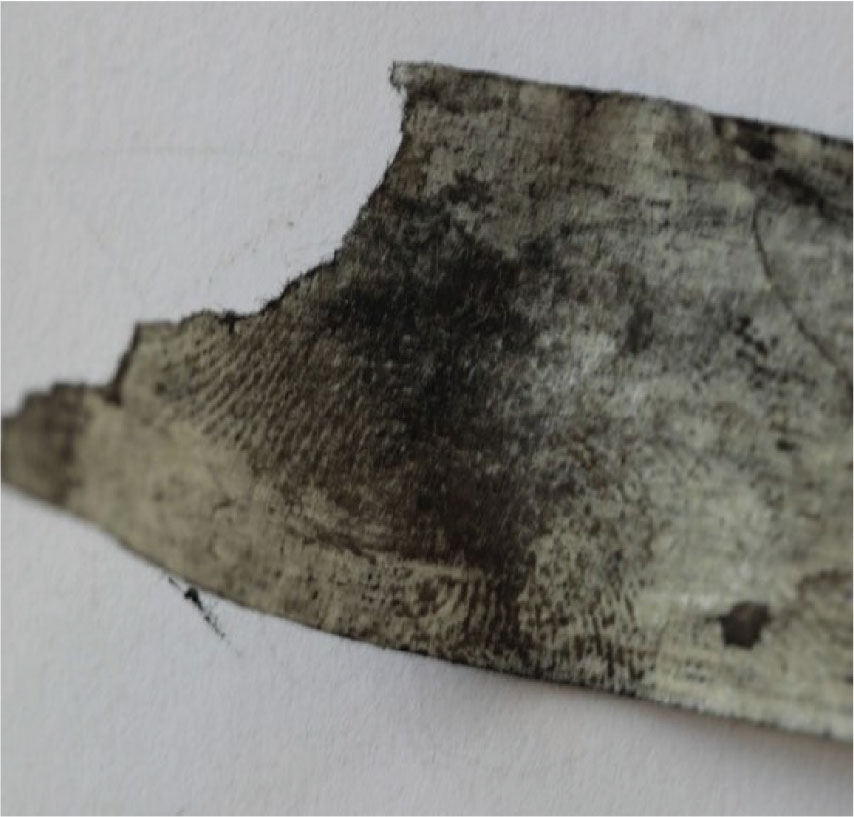
Figure 3.
Fragment of a dermal papillary ridge developed on the torn end of the tape.
Of the 12 long strips of tape on the ground-floor window, one strip had no detectable prints. On the remaining 11 strips, numerous fragments, overlapping prints and dermal papillary ridge prints were detected at the ends, as well as in the centre and along the edges of the tapes. On all 10 strips from the east-facing side of the window, dermal papillary ridge prints and fragments of varying quality were observed (100%). On the south-facing side, dermal papillary ridge prints were detected on 8 of 10 strips (80%): specifically, on 5 of 6 long strips and on 1 of 4 short strips. Overall, dermal papillary ridge prints were present on 18 of 20 strips of tape (90%).
5 May 2025, upper/second-floor window
This corner window, located directly above the ground-floor corner window and facing east and south, was covered with 20 strips of tape: six short strips (20 cm) and 14 long strips (63–80 cm). Of the six short strips, a fragment measuring 1 cm × 1 cm was detected on the edge of two strips, with 12 papillary lines discernible upon visual inspection. No dermal papillary ridge fragments or prints were detected on the remaining four short strips.
Of the 14 long strips of tape on the upper/second-floor window, five strips had no detectable dermal papillary ridge fragments or prints. On the remaining seven long strips, detections were as follows: on four strips, fragments were observed at the ends, with 5–6 discernible papillary lines; one strip also contained a fragment from the boundary ridge and the centre (Fig. 4). On two strips, overlapping and faintly discernible fragments were detected along the edges, and on one strip, fragments of varying sizes were present in the centre, with 12 papillary lines visible on a 1 cm × 1 cm area.
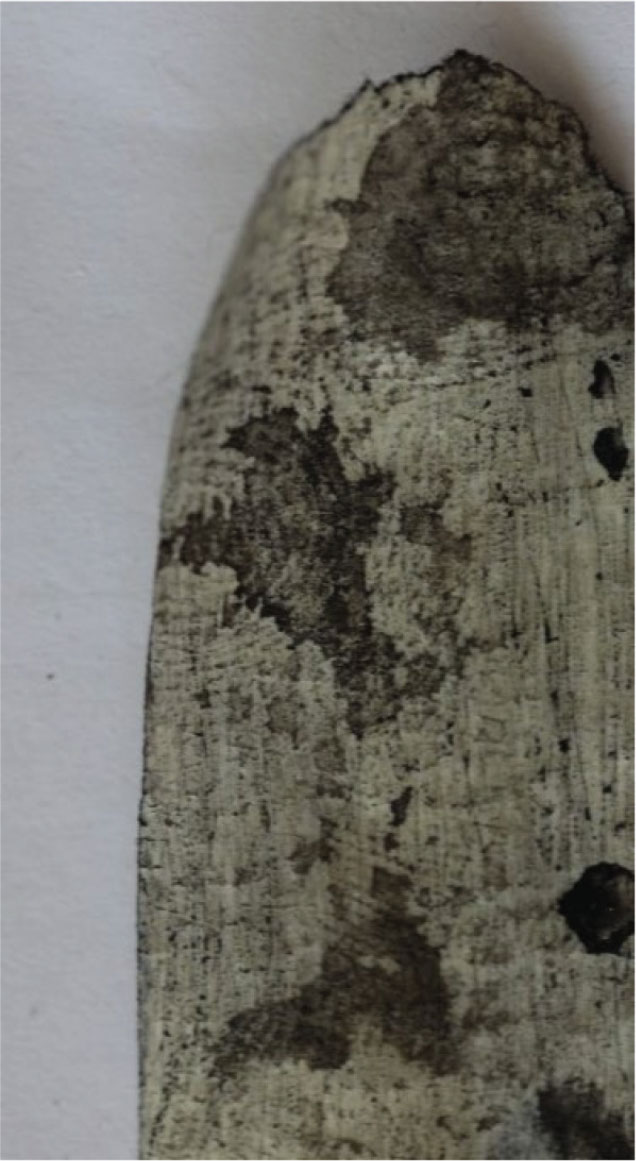
Figure 4.
The centre and boundary ridges of the dermal papillary ridge pattern developed on the tape.
On one short strip of tape (20 cm) from the east-facing side of the window, a fragment of a dermal papillary ridge was detected; no dermal papillary ridge prints or fragments were observed on the remaining two short strips. Of the eight long strips of tape (63–80 cm), dermal papillary ridge prints were detected on five strips, while three strips yielded no detectable prints. Thus, on the east-facing window, dermal papillary ridge prints and fragments were present on 6 of 11 strips of tape (54.5%).
On the south-facing window, dermal papillary ridge prints and fragments were detected on 4 of 9 strips (44%). Of the three short strips (20 cm), fragments were detected at the ends of one strip, while no prints or fragments were observed on the other two. Among the six long strips (63–65 cm), prints and fragments were detected on three strips, and no prints were detected on the remaining three. Overall, dermal papillary ridge prints were present on 10 of 20 strips of tape (50%).
Second floor, east-facing window—processed on 7 May 2025
The temperature in the room from the time the tapes were affixed until their removal ranged from +12°C to +14°C. During the period from April to early May, the temperature remained at +12°C. A total of 40 strips of tape were processed during this interval.
The window was covered with nine strips of tape, of which two were short (17–18 cm) and seven were long (55–82 cm). Dermal papillary ridge fragments were detected on two of the longer strips (55 cm): on one strip, five ridge fragments were observed on the edge, with a ridge pattern present in the centre; on the second strip, a fragment was detected on the edge near the end. No prints were detected on the remaining seven strips. Overall, dermal papillary ridge fragments were present on 2 of 9 strips (22%).
The west-facing window was taped with 12 strips, including eight long strips (55–82 cm) and four short strips (17–18 cm). On one short strip, a print fragment was detected at the edge, and fragments were detected at the ends of two additional strips. No prints were observed on one strip because the tape had come loose from the window frame over time, and the adhesive surface had dried, yielding no result.
Among the long strips, a dermal papillary ridge print was detected at the end of one 82 cm strip, while no prints were present on the other 82 cm strip. On a 66 cm strip, minimal fragments were detected at the edge; two additional 66 cm strips yielded no detectable prints due to loosening from the frame and drying of the adhesive. No dermal papillary ridge prints were detected on the three strips measuring 55 cm. Thus, out of 12 tapes, traces of the skin’s papillary ridge pattern were identified on 4 (i.e., 33.3%).
Second floor, south-facing room
Room temperature during the study period: +16°C to +22°C. The window in this room was taped with nine strips: six long strips (63–65 cm) and three short strips (20 cm). A minimal fragment was detected on one short strip, while no prints or fragments were observed on the remaining two short strips. No dermal papillary ridge prints were detected on any of the six long strips. Overall, fragments were present on 1 of 9 strips of tape (11%).
Ground-floor, south-facing room
The window was taped with 10 strips: six long strips (50–72 cm) and four short strips (20–30 cm). On one of the four short strips, a faint fragment was observed at the end of the tape, formed as an overlap.
Fragments were detected on three long strips of tape: on the 50–55 cm strip, two partially overlapping fragments were observed; on the two 65–72 cm strips, one strip contained a fragment on the edge and in the centre, while the other strip had three fragments in the centre. No prints or fragments were detected on the three remaining short strips or on the three remaining long strips. Overall, dermal papillary ridge fragments were detected on 4 of 10 strips of tape (40%).
The experiment was concluded on 7 May 2025
The fragments and prints detected via visual inspection and magnifying glass were photographed using a Canon EOS 5D Mark IV camera equipped with a Canon Macro 100 mm lens. Selected photographs have been included in the article for visualisation and illustrative purposes.
SUMMARY
In preparing this article, the authors reviewed professional literature concerning the development of dermal papillary ridge prints from various surfaces and during different seasons, using diverse dactyloscopic powders, reagents and methods. The objective of the study was to verify whether dermal papillary ridge prints can persist on surfaces for more than 2 months. The authors hypothesised that, depending on the surface, environmental conditions and the substance leaving the print, it is possible to detect dermal papillary ridge prints that have survived for longer than 2 months.
To test this hypothesis, a quasi-experiment was conducted. For the experiment, the interior frames of four south-facing windows in a two-story house were taped, comprising two windows on the ground floor and two windows in upper-floor rooms. The ground-floor room temperatures ranged between +18°C and +23°C, and the upper-floor rooms ranged between +16°C and +22°C, with a maximum of +23°C recorded in 1 month.
A total of 38 strips of varying lengths were used, including 14 short strips (20–30 cm), nine medium-length strips (63–65 cm) and 15 long strips (66–80 cm). On the short strips, prints were not detected on eight strips (57.1%), while six strips (42.8%) contained dermal papillary ridge prints or fragments. Among the medium-length strips, six strips (66.6%) showed no prints and three strips (33.3%) contained fragments. Of the long strips, seven strips (46.6%) yielded no prints, whereas eight strips (53.3%) exhibited fragments or individual smudged dermal papillary ridge prints.
Thus, of the 38 strips of tape from the south-facing windows, dermal papillary ridge prints and fragments were detected on 17 strips (44.7%), while no prints or fragments were detected on 21 strips (55.3%).
The experiment also included two east-facing windows: one located on the first floor, where the temperature ranged from +18°C to +23°C, and the other on the upper floor, where the temperature ranged from +12°C to +14°C. The second-floor west-facing window was located in a room with the same temperature as the upper-floor east-facing window (+12°C to +14°C).
For taping the east-facing windows, 30 strips of varying lengths were used, including five short strips (20–22 cm) on the ground floor, 12 medium-length strips (63–65 cm), and four long strips (80 cm). Of these, 21 strips were applied to the ground-floor window and nine strips to the upper-floor window.
On the ground-floor window, one of the five short strips (20%) had no detectable prints, whereas four strips (80%) contained dermal papillary ridge prints and fragments. Among the 12 medium-length strips, two strips (16.6%) had no detectable prints and 10 strips (83.3%) exhibited dermal papillary ridge fragments and prints on the ends and surfaces. Of the four long strips, one (25%) yielded no detectable prints, while three strips (75%) contained dermal papillary ridge fragments and prints on the surface.
In the upper-floor room (+12°C to +14°C), two short strips (17–18 cm), five medium-length strips (55–66 cm) and two long strips (82 cm) were used.
No prints were detected on the short and long strips of tape on the upper-floor east-facing window (100%). Among the five medium-length strips, prints were absent on three strips (60%), while two strips (40%) contained dermal papillary ridge fragments. Overall, of the nine strips used on the upper-floor east-facing window, seven strips (77.8%) yielded no detectable prints, and fragments were observed on two strips (22.2%). Considering all 30 strips applied to the east-facing windows, dermal papillary ridge prints of varying quality were detected on 19 strips (63.3%), and no prints were observed on 11 strips (36.7%).
For the second-floor west-facing window, 12 strips of tape were applied in a room with a temperature of +12°C to +14°C, similar to the previously described upper-floor east-facing window. This single room had windows at opposite ends, one facing east and the other west. The strips included five short strips (17–18 cm), three medium-length strips (55 cm), three longer strips (66 cm) and two very long strips (82 cm).
On the short strips, prints were absent on one strip (25%), and fragments were present at the ends of three strips (75%). No prints were detected on any of the three medium-length strips (100%). Of the three longer strips, two strips (66.7%) yielded no prints, while one strip (33.3%) contained fragments. Among the two 82 cm strips, one strip (50%) had dermal papillary ridge prints and fragments, and the other strip (50%) had none. Overall, dermal papillary ridge prints and fragments were detected on five of the 12 strips (41.7%), and no prints were observed on seven strips (58.3%).
For the ground-floor south-facing windows, where the room temperature ranged from +18°C to +23°C, dermal papillary ridge prints and fragments were detected on 12 of 20 strips (60%), while no prints were observed on eight strips (40%). On the upper floor, where the temperature ranged from +16°C to +20°C, dermal papillary ridge prints and fragments were detected on 5 of 18 strips (27.8%), and no prints were observed on 13 strips (72.2%).
On the 38 strips of tape from the south-facing windows, dermal papillary ridge prints and fragments were detected on 17 strips (44.7%), while no prints were detected on 21 strips (55.3%).
On the east-facing window located in a room with a temperature of +18°C to +23°C, dermal papillary ridge prints and fragments were detected on 17 of 21 strips (80.9%), and no prints were detected on 4 strips (19.1%). On the second east-facing window, in a room with a temperature of +12°C to +14°C, prints and fragments were detected on 2 of 9 strips (22.2%), with no prints detected on 7 strips (77.8%).
On the west-facing window in the same room (+12°C to +14°C), dermal papillary ridge prints and fragments were detected on 5 of 12 strips (41.7%), and no prints were detected on 7 strips (58.3%).
CONCLUSION
Overall, the experiment established that in rooms with higher temperatures (+16°C to +23°C) and normal relative humidity (40%–60%), dermal papillary ridge prints and fragments were present on 59.9% of the 59 strips examined. In contrast, in rooms with lower temperatures (+12°C to +14°C) and normal relative humidity, prints and fragments were detected on only 28.6% of the 21 strips examined.
The results of the experiment confirmed the authors’ hypothesis: dermal papillary ridge prints can be detected on the adhesive surfaces of tape even 7 months after deposition. It is essential to consider the various factors that may promote or inhibit the preservation of prints on surfaces.
Accordingly, the study confirmed that dermal papillary ridge prints persist on surfaces for longer than 2 months.