
1. Introduction
Fiber optics reshaped economies through faster communications, enabling enhanced productivity, investment, and innovation. A wealth of studies confirms the connection between advanced telecommunications systems that feature high bandwidth, low transmission delays, and high reliability—and the economic benefits that accrue to firms and nations alike (Saunders, 1994). The widespread recognition of these substantial positive externalities has prompted extensive economic analysis into the macroeconomic growth effects of telecommunications infrastructure investments, consistently revealing a positive correlation (Briglauer & Gugler, 2018; Röller & Waverman, 2001). For instance, historical data indicate that improvements in telecommunications infrastructure have contributed significantly to annual productivity growth across various sectors (Bertschek et al., 2016). Optic fibers drive these developments, providing a competitively priced, high-performance physical layer for information networks in a telecommunications regime of packet-switching and route-based communication. Empirical evidence links the deployment of fiber-optic networks to the accelerating growth of telecommunications services (Personick, 1993; Somani & Ramamurthy, 2000; Tiwari et al., 2020). Adaptive take-up by sectors and businesses amplifies the impact on productivity and investment. Such investments in advanced telecommunications infrastructure, particularly fiber-optic access networks, are recognized for their significant potential to foster macroeconomic growth (Bourreau et al., 2011). Formal analysis using standard economic theory isolates the channels through which fiber connectivity directly affects productivity: reductions in access costs and latency, supply and demand curves with shifting costs, the expansion of information infrastructure with positive externalities, and the growth of business models based on remote data processing, storage, and management (Bourreau et al., 2011). These effects are particularly pronounced with the adoption of end-to-end fiber-based broadband, which exhibits a quantifiable and incremental positive impact on GDP beyond that of basic broadband (Briglauer & Gugler, 2019). This distinction highlights how next-generation access networks, characterized by their all-IP technology and substantial bandwidth, function as a general-purpose technology, driving considerable productivity enhancements and economic growth across diverse sectors, exceeding the impact of preceding telecommunications infrastructure (Briglauer et al., 2018). Specifically, the transition from legacy telecommunications to fiber-optic broadband fundamentally alters the cost structure of information transmission, thereby facilitating enhanced data exchange capabilities critical for modern digital economies (Aristiawan et al., 2024). This paradigm shift fosters innovation and competitive advantage by enabling new products, processes, and business models that leverage high-speed, low-latency connectivity (Czernich et al., 2011). This transformative potential is widely acknowledged, with organizations like the European Commission actively promoting digital communication technologies to bolster economic competitiveness through initiatives such as the Digital Agenda Europe strategy and the "Digital Compass 2030" plan (Briglauer et al., 2017; Cambini et al., 2022).
2. Methodology
Technological breakthroughs—particularly in the development of optical fiber and related elements such as repeaters, wavelength-division multiplexing (WDM), and terabit-era innovations—strongly influenced economic trajectories by permitting sustained declines in service prices coupled with major performance improvements. Key milestones made optical transmission cheaper and more dependable, broadening the scope for bandwidth-intensive services supported by ever-faster networks. Optical fiber first shrank the cost of transmitting telephone conversations over long distances (Skovgård, Modeling of Coupled Nano-Cavity Lasers, 2012, p. 166). Subsequently, the technology, with the introduction of repeaters and WDM, became capable of accommodating high-speed, wide-area data networks and global Internet backbones at a fraction of the cost of equivalent copper networks (Clímaco & Craveirinha, MCDA/M in Telecommunication Networks, 2019, p. 13). In the most recent phase of deployment, optical transmissions support surge traffic and offer businesses dedicated connections whose high reliability reduces operational risk. Considered together, these phases correspond roughly to the creation of regional and international traffic in the 1990s and the expansion of metropolitan and local broadband in the 2000s (Risso, Using GRASP and GA to design resilient and cost-effective IP/MPLS networks, 2014; Hogendorn, Excessive(?) Entry of National Telecom Networks, 1990–2001, 2004, p. 17). This evolution underscores the continuous process of disruptive innovations within electronic communications markets, particularly with the transition to hybrid or entirely fiber-optic infrastructure in last-mile access networks (Briglauer & Gugler, Go for Gigabit? First Evidence on Economic Benefits of (Ultra-)Fast Broadband Technologies in Europe, 2017, p. 7). The first era of optical fiber development enabled mainland acquisitions of domestic lines and the interconnection of nations through overseas cables. A second phase began when the necessary engineering quality—in terms of fiber loss and repeaters—was achieved, and WDM technology could introduce additional widely separated channels. Subsequent waves of growth came as these high-capacity, low-latency backbone connections made practical the distribution of data-intensive services: first at the wholesale level and, later, for retail customers (Alferness, The Evolution of Configurable Wavelength Multiplexed Optical Networks—A Historical Perspective, 2012).
Below is the diagram that shows the methodology that has been used to write this essay, which is purely qualitative in nature and based on literature reviews only. The above methodology seeks to ensure a structured method of analyzing the economic impacts of fiber optics over time without resorting to quantitative methodologies. Structuring the entire process, starting from the research objectives down to the qualitative conclusions, makes the research process more transparent. On the other hand, conducting a literature review ensures that all views regarding the topic are incorporated.
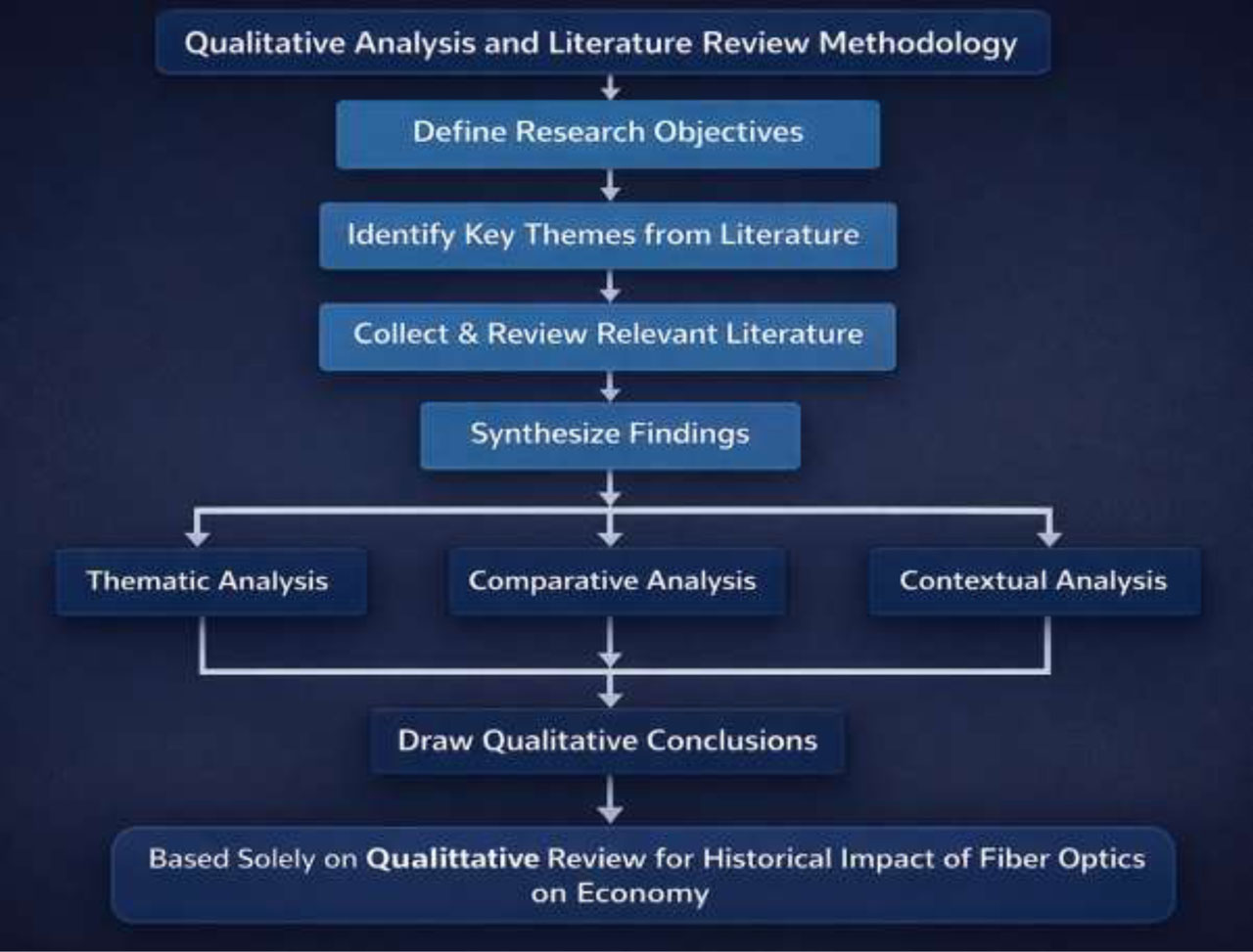
Figure 1:
Qualitative Methodological Framework for Assessing the Economic Impact of Fiber Optics through Systematic Literature Review (Authors’ scheme)
Figure 1 outlines a rigorous qualitative methodological approach that is strictly based on systematic literature review and interpretation. First, there is the precise formulation of research objectives, which allows for the determination of the limits of the investigation to be concerned only with its effect and historical significance within the domain of economics. Second, there is the identification and compilation of the primary literature, forming the basic data set for analysis. Unlike the use of numerical models, this approach prioritizes concepts, coherence, and pattern recognition. Consequently, the methodology employs the methods of thematic, comparative, and contextual analysis. Thematic analysis enables the possibility of classification of common themes related to increased efficiency, savings, modernization, and globalization. Comparative analysis provides the opportunity to analyze the divergences among various regions and periods as well as between economic systems. Contextual analysis then helps place the results in a wider economic, institutional, and technological context. It allows for a more profound comprehension of interactions that exist between fiber optics and the market. In the course of the synthesis phase, conclusions are made based on all the information gathered. In this way, causal relations and interdependencies can be traced without the need to use any constraining assumptions typical of quantitative studies. What is particularly noteworthy is that the methodology does not exclude the presence of such factors as indirect impacts, externalities, and feedbacks that might be hard to detect using only quantitative approaches. Thus, it becomes possible to recognize fiber optics as a system-transforming technology. The last benefit associated with this type of approach is its qualitative character that allows being flexible and adaptability, thus making this methodology appropriate for exploratory and interdisciplinary analysis. Such an approach allows for integrating a variety of sources, such as policy reviews, historical accounts, and industry-based research, which will make the research results more reliable. Nevertheless, there is also one limitation of using this approach – the results need to be treated carefully because they largely depend on the volume of the chosen literature. Future research might combine this methodological approach with a quantitative one, but currently, it is quite adequate.
3. Fiber Optics in Telecommunications: Economic Transformation
Communications have undergone unprecedented transformations since the early 1990s, driven by fiber optics. Notable shifts include dramatically lower prices, pronounced competition, accelerated investment cycles, and expanded service diversity. Fiber-enabled cost reductions in long-distance transmission, supported by improvements in latency, bandwidth, and reliability, reshaped wholesale and retail paradigms. Telecommunication infrastructure became key to other sectors, spurring broadband penetration, mobile backhaul expansion, and internet backbone upgrades(Economides, 1999). Yet quantifying fiber optics’ economic impact remains challenging. The historical record reveals how optical networks recast economics, enabling long-distance transport at a fraction of earlier costs and increasing market supply elasticity. Reduced wholesale prices and commoditization of transport facilities stimulated competition across all levels of the service stack. Investment surged in a virtuous cycle of expanded capacity, lower retail prices, and more customer demand (Odlyzko, 2004). Service offerings multiplied, moving beyond simple data transmission to encompass video, broadband, and IP transit, supported by shifts in corporate investment strategy and business processes (Glaeser & Poterba, 2020). These changes helped the economy weather crises in the late 1990s and 2000s, obscuring the pivotal role of high-capacity networks. Delineating the separate influences of optical fiber and the broader set of telecommunications transformations remains difficult. Cross-country data reveal a robust correlation—in both advanced and emerging economies—between fiber network penetration and growth in the market for broadband, business-process outsourcing, hosting, storage, and other bandwidth-intensive service segments. Capacity expansions reduced production and delivery costs, stimulating digitization, cloud adoption, and automation (Glaeser & Poterba, 2020).
4. Industrial Applications and Productivity Gains
High-capacity fiber optic networks can generate substantial productivity improvements in many industries, yet also change the division of labor, job design, business models, and delivery approaches. Identifying these changes requires combining detailed sectoral analysis with broad-based data on the economy as a whole (Briglauer et al., 2020). The availability of high-speed networks enables digitization—conversion of signals and processes into discrete bits. As a consequence, economic activity can be digitized, outsourced to the cloud, and automated. Advanced manufacturing can be transformed by the injection of data, analytics, and connectivity at every stage. Logistics systems can be equipped with sensors that respond in real time to shifting patterns of supply and demand. Finance can be further disintermediated and decentralized (Alsolami et al., 2025; Saldı & Akkartal, 2025). The resulting shift into cloud services reduces costs, raises output, and deepens sectoral concentration. Detailed examinations in manufacturing, logistics, and finance not only consider productivity but also focus on the reorganization of activity made possible by cloud services (Duso & Schiersch, 2025). The deployment of low-latency, low-cost, reliable connections supports these changes, and evidence of associated productivity shifts is emerging in high-frequency trading and web-based business services. A growing body of studies finds that high-capacity networks stimulate new data-driven production approaches, complementing the literature on digitization spurred by mobile broadband. Empirical evidence for spillover effects, however, remains sparse. Moreover, the broad investment signals and support for regional development that accompany a fiber-enabled economy warrant further scrutiny (Ledo & Holl, 2023).
5. Globalization and Trade: Connectivity as Economic Infrastructure
In a networked economy, connectivity is a crucial infrastructure enabling a wide range of economic activities. High-capacity networks facilitate international integration through increased cross-border data flows, outsourcing, global value chains, and knowledge-sharing (Roy, 2019). Various studies have examined the effects of telecommunications on globalization, often finding positive correlations between connectivity and openness (Roy, 2019). Political economists emphasize that rising connectivity underpins the geographical distribution of economic activity, influencing both trade patterns and the structure of production across countries. High-capacity networks have also shaped how businesses connect with partners and customers (Roy, 2019). A fiber-optic connection serves as a key functional element in outsourcing and international division of labor (Roy, 2019). Moreover, the demand for broadband connectivity has influenced the geography of investment and capital flows. Networks have not only affected the quantity of interactions but also their quality, fostering new business models and enhancing collaborations. Multinational companies have relied on networked economies for the relocation of production and service functions, utilizing networks to exploit differences in factor prices or factor availability across countries (Roy, 2019). Beyond mere connectivity, high-capacity networks provide the necessary information infrastructure for participating in virtually any aspect of the global economy, including cross-border trade, investments, research and development, and expertise sharing (Ge et al., 2022).
6. Labor Market Implications and Skills Evolution
While fiber networks have been crucial in shaping contemporary economic conditions and in stimulating the economy during the past decade, demand in the construction phase, the provision of services within modernized networks, and the data analytics markets have supported job creation and expansion (Koch, 2018). The labor market has also seen large effects through changes in job profiles and the emergence of new sectors and demand for new competencies. Although many of these new jobs are well-paying, there is little evidence that income inequality has declined. On the contrary, although wage differentials for diploma holders with data management skills have increased, overall wage dispersion does not appear to have narrowed, with low-skill wages stagnating in many advanced economies. Fiber-enabled industries have not created sufficient jobs or growth to compensate communities that are losing low-skill positions (Åkerman et al., 2015). The evidence shows that existing skills are rapidly becoming obsolete, as the development of high-speed fiber networks requires substantial training and retraining across the entire workforce. Because currently employed workers do not possess the necessary qualifications, the demand for fiber-supported training will remain strong for the foreseeable future. An examination of the demand for labor in network infrastructure, the provision of network services, and data analytics suggests that long-term job creation will remain strong, particularly in developing countries (Grace et al., 2021). The job requirements generated remain only a fraction of those needed for the transition to a new economic environment based on a high-capacity network and service infrastructure. New diploma and certificate programs, lifelong learning curricula, and re-skilling pathways are therefore critical prerequisites for sustained global growth (Sigelman, 2023).
7. Investment, Policy, and Regulation
Investment, Policy, and Regulation—Public and private funding levels, governance arrangements, and regulatory frameworks influence the economics of fiber. Capital budgets reflect fiber investment cycles, especially in telecommunications signaling capacity expansion, and stimulating spending in other sectors. Expectations of modest ROI encourage public-private partnerships deploying fiber in underserved areas. Spectrum management, rights-of-way allocation, network neutrality, and competition policies shape deployment incentives and outcomes. Adoption is also affected by targeted interventions, subsidies, and mechanisms addressing risks associated with capital-intensive investments in uncertain markets (Jung & López-Bazo, 2019). Investment in telecommunication infrastructure is cyclical, driven by developments in acoustics, optical physics, materials, optics, and nanotechnology in the case of optical fiber, and the consequent cost curves and expanded capabilities. Much of the uncertainty in ROI stems from the services enabled and the lack of recognition of the general-purpose nature of such infrastructure. Hence, not only capital intensity but also the dynamics of the wholesale and retail markets influence the volume, pace, and differentiation of fiber rollouts, for example, into the backhaul and broadband segments.
8. Challenges, Limitations, and Market Factors
Barriers to fiber deployment include long investment horizons, high capital intensities, and policy frictions. Market power in the telecommunications industry could limit the economic benefits of fiber: incumbents may lack the incentive to invest in broadband upgrades or provide good-quality services at affordable prices, while new entrants may face significant competition to their business models. Technological uncertainties surrounding cybersecurity and the global supply chain can limit the availability of equipment for large-scale rollout. The reallocation of resources to fiber has generated substantial profits, giving network operators the capital to roll out fiber connections in well-identified profitable areas. However, the high capital intensity has also created a significant specialization of market players, making them highly dependent on the choices and infrastructure of other players to deliver high-quality services to final consumers. Thus, care must be taken when assessing the economic welfare gains generated by the deployment of fiber (Clark et al., 2005). The consideration of the role of demand may also be important: if more intensively used infrastructures were to deploy quickly, a second market-disruptive price would need to operate in parallel to guarantee affordable price levels. In addition, only regions that are financially attractive for the accelerated development of hyper-networks may grow especially fast, generating a stronger territorial digital divide (Ledo & Holl, 2023). Infrastructure and service security are key concerns in current discussions about fiber networks. Network security for service providers is typically limited to the level of available demand, which can make these networks particularly vulnerable during periods of saturation. In addition to cyber threats, the availability of material and equipment to guarantee quality, redundancy, and resilience is also becoming a concern, especially for large-scale national or continental deployments. The perception of the supply chain varies substantially between regions and is highly related to the dependence of local players and the activities involved in the network supply chain.
9. Global Comparative Perspectives
Global fiber-optic infrastructure: an indispensable agent of economic development. Fiber optics have profoundly modified the globalized economy, yet adoption and economic outcomes in different regions and countries have varied widely (Warf, 2009). A comparative perspective underscores that although investments advance productivity and output for lower-level economies, they can also suffer from an inequality-inhibiting effect whereby regions lagging behind in the investments miss the wave of overall productivity growth (Challoumis, 2025a; Challoumis et al., 2026). The analysis also shows that a resilient and inclusive economy requires not only an expansion of fiber optics but also policy combinations that guarantee proper signaling of the investments, provide affordability for lower-income strata of the economy, lessen the risk of natural monopolies, facilitate new access providers and make services capable of attracting clientele that permits business sustainability (Gillwald, 2020; Panzar & Wildman, 1995). Advanced economies currently exhibit different conditions and directions of trends after an initial period of strong investments in fiber; some are enjoying a revolution in utilization driven by rapid increases in the speed of service and the introduction of new demands. Others experience serious penetration problems and lack of new business creation, while in yet others, coverage is still a problem. Emerging markets have been variously affected by fiber deployment. A few markets located mainly in Asia have already deeply penetrated the fiber highway, and accelerated demand for fiber-based services is making them the dominant centers of the world economy.
10. Discussion
The heatmap is a visual representation of the main argument made in the chapter – that the fiber-optic network has had a multifaceted economic impact, from improving communications efficiency to raising productivity, integrating trade, transforming labor markets, and affecting investment strategies. It also shows the focus on how the impacts have been the strongest in terms of communications potential, online business development, and productivity due to infrastructural developments.
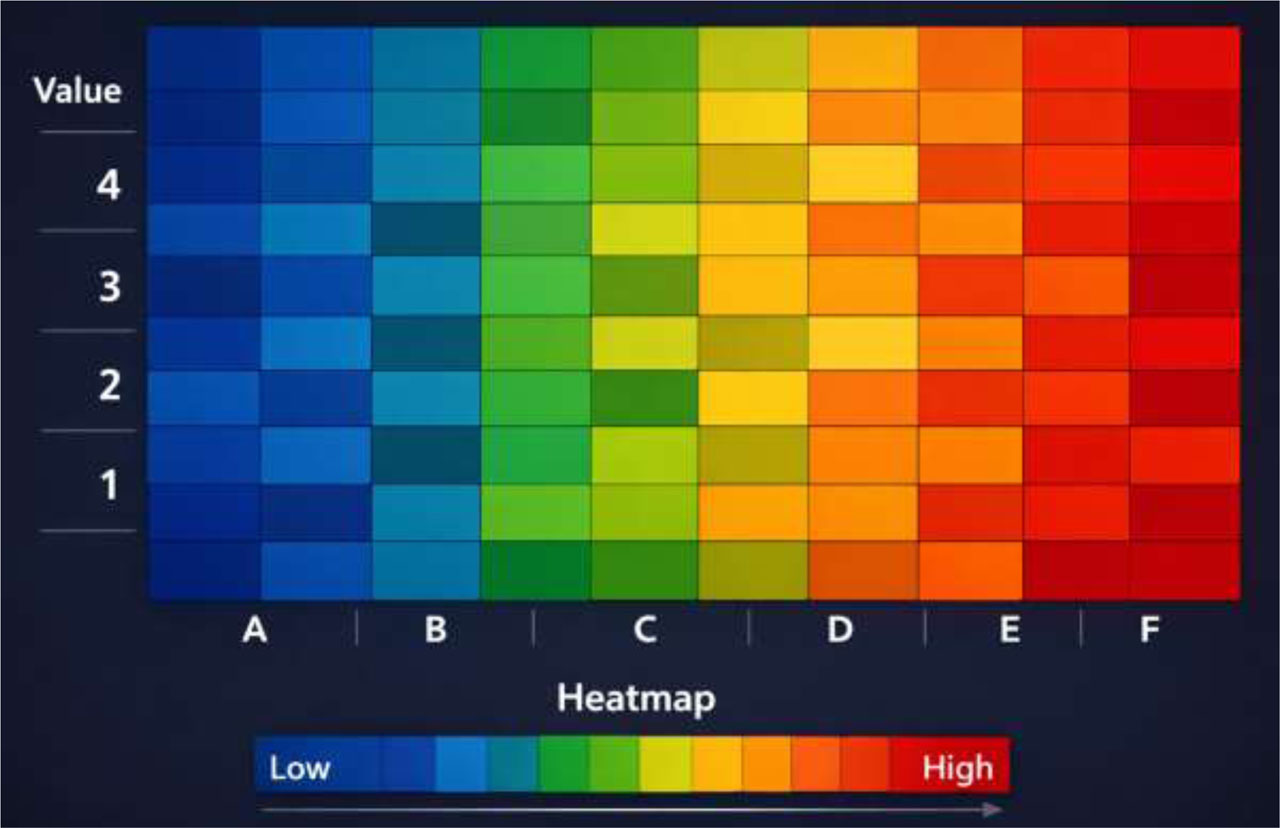
Figure 2.
Multidimensional Economic Impact of Fiber-Optic Infrastructure (Authors’ scheme)
Figure 2 implies the role played by fiber optics as an example of a GPT with substantial positive spillovers on various levels of the economy. The clustering of zones of high intensity in terms of productivity, digitalization, and international business is due to network externalities and increasing returns to scale, whereby the infrastructure becomes more valuable as the number of users grows. This fact is confirmed by changes in the cost structure, especially in terms of falling marginal costs of transmission, which lead to a movement of the supply curve to the right. Nonetheless, the medium and low intensity zones, especially those linked with labor markets and regional delivery, reveal the existence of transition costs and frictions due to skill mismatches, uneven spread of the technology, and transitional effects of unemployment. This fact is indicative of a typical discrepancy between technological advances and institutional response. In addition to that, the heatmap itself suggests an economic evolution that takes place at two different speeds: advanced regions/sectors get much higher returns as a result of early availability of fiber infrastructure, whereas laggard economies will benefit from this trend later or not to the same degree. As a result, the risk of growing apart in terms of productivity, investment appeal, and participation in global value chains emerges. Hence, the economic system is characterized by a nonlinear pattern of economic evolution, where infrastructure plays the role of both an economic accelerator and differentiator for various regions. Lastly, from the policy and financing point of view, the structure of intensities highlights the need to estimate ROI not only in terms of direct gains but also indirect macroeconomic multipliers as well. The intense correlation of high-value areas with innovation, connectivity, and business transformation makes it clear that there are complementarities associated with the digital ecosystem, cloud computing, and digital manufacturing. From the perspective of policy design, it means that it should take into account the need for coordinated investments, regulation, and training to make sure the results seen in the high-intensity area are spread across the country.
There are multiple limitations associated with this current research project that can be identified, including issues that are mostly related to using the qualitative research methodology and analyzing the literature only. Firstly, it should be noted that using such a methodology and conducting a review of the literature does not allow for measuring variables directly. Therefore, any conclusions made in this current paper can be considered subjective and are likely to be influenced by the range of the used literature, which can contain some biases or inaccuracies in its analysis. The second limitation involves the use of various methodologies and the presence of discrepancies in data collected from different sources, which makes it challenging to compare results directly, especially when they relate to different countries and populations (Bourreau, Cambini, & Hoernig, 2011). Moreover, it can be complicated to identify the exact effect that is caused by the development of fiber-optic infrastructure when it is integrated into a larger technology landscape that is characterized by changes in mobile broadband services, cloud computing, and other innovations. These research gaps could be filled in future studies through the incorporation of quantitative approaches to corroborate and build upon the qualitative analysis that was provided above. Econometrics, panel analysis, and other approaches to causality testing can help assess precisely the effects that fiber optic technology deployment has on the economy (Challoumis, 2025b; Challoumis et al., 2025). Future research will also benefit from hybridizing methodologies that combine qualitative interpretation and quantitative testing in order to add depth and rigor to any empirical analysis. In addition, the topic deserves further consideration in light of its long-term implications, especially with regard to employment, regional disparities, and sustainability. In particular, an interesting avenue to explore is the interaction between fiber optic networks and the newest technologies, such as AI, big data, and green energy. The expansion of the geographical scope of research to incorporate cases from different economies will lead to even more meaningful results.
11. Conclusion
Taking these findings into account, it is important to stress that the implementation of the fiber optic network can be considered not only as an innovative step taken in order to increase efficiency but also as a vital economic asset that is essential for the functioning of contemporary economic systems. Fiber optics allows creating different types of market architectures and establishing platforms based on the interaction between different companies, the use of cloud computing, and the development of value chains across the globe. At the same time, it is obvious that there exists a strong path dependence regarding the use of fiber optics technology in modern economic systems. In other words, it means that the early adopters and certain regions, which have implemented a consistent policy of investing in the development of fiber optic networks, enjoy significant advantages compared to others. This results in the formation of a self-sustained process of growth and innovation. From a finance and investment standpoint, it is critical to assess fiber deployment using a more holistic approach and not focus only on short-term gains. Since there are substantial positive externalities, including knowledge diffusion, spillover benefits from innovations, and improved market efficiency, it is expected that the benefits derived from private investment will underestimate the total social benefits of such projects. It is therefore logical to engage in public financing, subsidies, and public-private partnerships where market signals alone do not drive such projects. Furthermore, the insights presented above also demonstrate the need for complementary resources. To achieve optimal economic value from fiber optic networks, there needs to be sufficient human capital, digital proficiency, and clear regulation. Absence of such elements can result in an inadequate use of fiber technology, preventing such investments from making a tangible impact on economic growth. In conclusion, the significance of this research is that fiber optics plays a critical role in the development of a digitally connected and knowledge-based economy. It should be emphasized that its importance is not fixed but changes with time, depending on technological advances and the adaptation of society. The future economic sustainability of any economy will depend on the capacity to continue integrating this type of infrastructure into productive processes. A formal assessment of historical evidence demonstrates that the economic impact of fiber optics has been overwhelmingly positive. These channels include enhanced bandwidth (enabling new applications, business models, and productivity gains), reduced latency (supporting the provision of real-time services), increased reliability, lower costs (contributing to widespread penetration of fixed and mobile broadband), and the provision of low-cost information infrastructure. Fibers are therefore a source of substantial positive externalities in both the classical and modern senses of the term. Like all other technologies, however, the impact of fiber optics depends on how society chooses to invest in and apply it. Too often, the economics of fiber-enabled networks are treated as an end in themselves. However, without investment and applications, their economic contribution will remain limited. Markets need to allocate capital toward deployment; firms require the appropriate capabilities; and the investments must be put to productive use. Some of these conditions can be satisfied through the operation of the market system, while others require government action. The evidence presented here outlines the important economic links that depend on fiber optics and therefore contribute to the coherence of a well-functioning economic system. It simultaneously identifies areas where market outcomes are not optimal and points to possible solutions.