
1. Introduction
Transition economies, particularly those in Eastern Europe, Central Asia, and the Western Balkans, have undergone profound transformations since the collapse of socialist regimes and their subsequent integration into global markets. Migration, both internal and international, has been one of the defining features of this transition. The Western Balkans, encompassing Albania, Bosnia and Herzegovina, Kosovo, Montenegro, North Macedonia, and Serbia, have experienced complex and uneven political and economic developments since the early 1990s, with large-scale migration emerging as one of their most significant social phenomena. While much scholarly attention has focused on realised migration flows, a growing body of research has turned toward potential or intended migration: individuals’ aspirations and preparations to migrate abroad. These intentions provide valuable insights into the socio-economic and political realities shaping mobility, particularly among young and skilled populations in transitional contexts. Albania represents a particularly salient case: it consistently ranks among the leading countries globally in terms of the proportion of emigrants relative to its resident population. According to Census 2023 data, the country’s resident population decreased by approximately 420,000 compared to 2011, underscoring the demographic significance of migration and its long-term developmental implications. A combination of structural and institutional factors continues to fuel migration pressures in Albania.
First, the rate of emigration remains high, while return migration is limited, creating a persistent negative migration balance (IOM 2021). Second, potential migration rates remain among the highest in the region (Gallup, 2010; Esipova & Srinivasan, 2011; Gëdeshi & King, 2018), with a considerable share of residents actively preparing to leave. In a context marked by limited economic opportunities and low levels of institutional trust, migration intentions remain particularly prevalent among youth and skilled professionals, raising concerns about the sustainability of future development trajectories. Between 2013 and 2016, the Gallup World Poll ranked Albania sixth globally in terms of adults expressing plans to migrate abroad. Regional and global assessments by Gallup, IOM, and UNDP have further confirmed a rising trend in both actual and potential migration during the third decade of Albania’s modern migration. Existing studies warn that Albania is at increasing risk of human capital depletion, especially due to the emigration intentions of highly educated individuals and professionals (Carletto et al. 2004; Vullnetari 2012; Titili 2023; Titili and Nikaj, 2024). Although actual migration has been widely analysed, potential migration, defined as the expressed intention or aspiration to migrate, remains underexplored despite its predictive value for understanding future demographic and labour market shifts.
This article, therefore, examines the extent of Albanian potential migration, the driver factors, its demographic characteristics, and its implications for policy and society. By focusing on potential migration, this study aims to address a notable gap in Albanian migration research, where existing literature has predominantly examined realised migration flows. The analysis draws on primary data collected in south-eastern Albania, a region with a longstanding migration history and stable pre-1990 mobility patterns, making it a relevant context for examining current migration intentions.
Finally, the study contributes to the growing discourse on anticipatory migration governance by demonstrating how insights from potential migration analysis can support proactive policy design. Building on experiences from neighbouring countries such as North Macedonia (Vanja and Alili Zulfiu 2025), the findings aim to support shaping evidence-based strategies that enable policymakers to anticipate the migration impacts on the labour market, education, and public services, while reducing negative effects and maximising potential benefits.
2. Literature review-Conceptualising Potential Migration
Potential migration is defined as “the absolute number of adults who plan or prepare to migrate, in relation to the size of the population in the respective country." (Laczko et al. 2017). Potential migration refers to an individual’s intention or willingness to migrate, even if they have not yet taken concrete steps to initiate this movement. It includes attitudes, aspirations, and plans for future migration based on personal, social, or economic motivations, regardless of whether they have already taken specific actions to realise this movement. Potential migration offers a valuable perspective for evaluating population sentiment, particularly in contexts where economic or legal barriers may hinder actual migration. Intentions serve as strong predictors of future mobility, reflecting underlying dissatisfaction with living conditions, governance, and perceived life opportunities.
All Western Balkan countries display high potential for migration. According to the European Training Foundation (ETF 2021), between 25% and 50% of young people in the region are willing to emigrate. Albania consistently reports the highest rates, followed by Kosovo and North Macedonia. While patterns differ, common features include a majority of young and educated individuals among potential migrants, as well as the growing role of emigration as a cultural norm and a strategy for social mobility. In a sociological context, studying potential migration helps to understand possible migratory flows and the factors that influence migration decisions. Identifying the scale of potential migration, along with the characteristics and motives behind planning migratory projects, permits the timely implementation of measures aimed at controlling migration flows (through social control systems) or at reducing the negative economic and social impacts associated with this phenomenon.
Studies highlight elevated levels of migration intentions and high emigrant stocks relative to resident populations in the Western Balkans, which have significant implications for labour markets, human capital, and long-term national development (World Bank 2021; UNDP 2016). Several countries across the Western Balkans show notably high proportions of adults expressing intentions to migrate and greater emigrant stocks compared to their population sizes. Analysis of Gallup data from 2013–2016 reveals that Albania, Kosovo, and North Macedonia are among the countries with the highest reported migration intentions. According to the UN, 21 countries are forecasted to experience population declines of between 10 and 20 per cent from 2019 to 2050, many of which lie in Eastern Europe. Based on these indicators, by 2050, Albania's population will be 16% smaller than in 2019, followed by North Macedonia (12%) and Montenegro (7%). Albania is ranked the fifteenth country out of 55 worldwide where the population is expected to decline between 2019 and 2050 (Figure 1). Migration constitutes the primary factor influencing population decline.
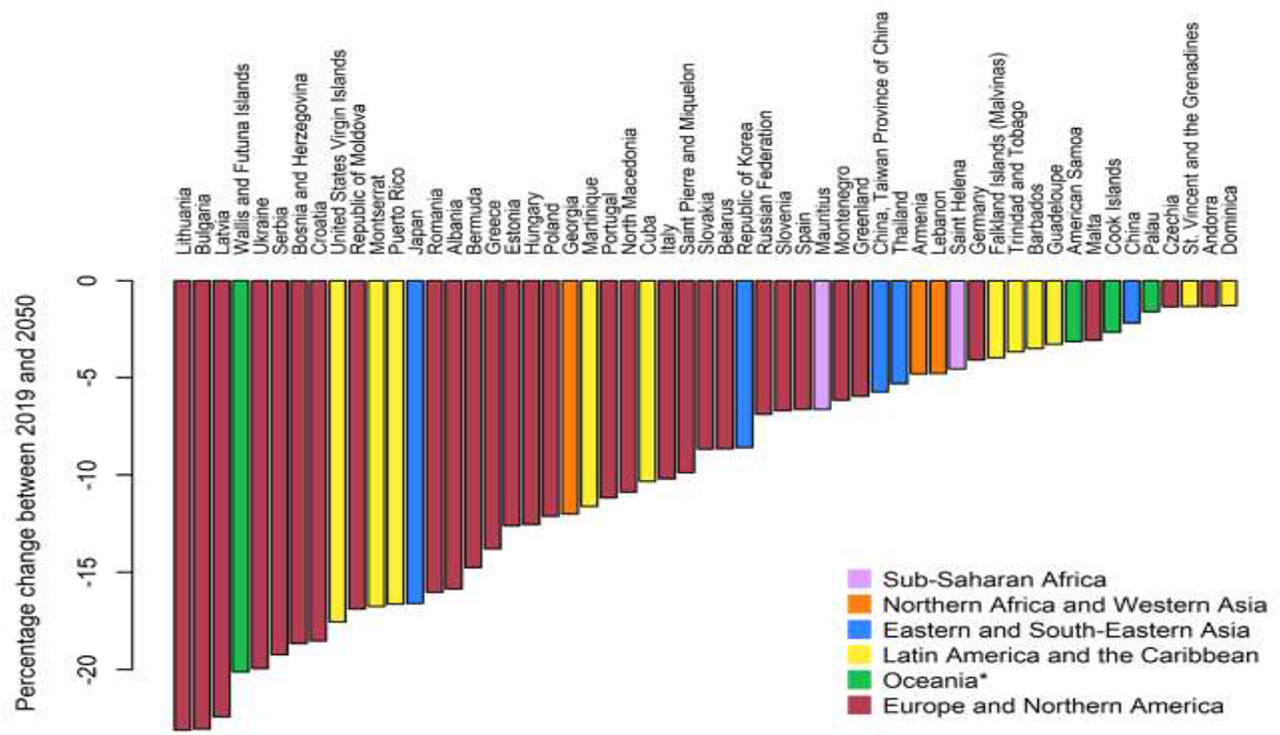
Figure 1:
Countries and areas where population is projected to decrease by at least one per cent between 2019 and 2050 according to the medium-variant projection
Source: United Nations, Department of Economic and Social Affairs, Population Division (2019). World Population Prospects 2019
In Western Balkan countries, net migration is generally negative, with more people leaving than returning. Return migration rates are often low in countries characterised by ongoing economic stagnation or low trust in institutions, increasing concerns over human capital loss (IOM 2019; World Bank 2021).
Research further emphasises some main drivers of potential migration in the region: economic factors; demographic pressures, particularly population ageing combined with youth out-migration; institutional trust and governance issues, including low confidence in state institutions and perceptions of limited meritocratic opportunities, and migration networks shaping both intentions and actual migration (King and Skeldon 2010; Castles 2000; Eurostat 2020; UN-DESA 2019). Given the central role of economic, demographic, institutional, and network-related factors in shaping migration intentions in the Western Balkans, this paper aims to explore the extent of potential migration from Albania, identify its key drivers, and assess the prospective impacts on the country’s demographic structure, labour market, and long-term socio-economic development.
3. Methodology
Potential migration constitutes a highly significant field of study within the Albanian research environment, representing both a conceptual and methodological challenge. The study is grounded in the analysis of primary data collected through a questionnaire, focusing on individuals’ intentions and preparations for migration. In addition to the primary data, secondary national and international sources on potential migration from Albania were reviewed. These sources allowed for the comparison of migration trends over time and offered further insights into the factors shaping migration intentions.
3.1. Research design
This study is based on primary data collected through a quantitative survey in south-eastern Albania. For the survey design, the standardisation criteria of the measured indicators were considered. With minor variations, the survey replicated the same research instrument used in a similar study conducted by the Centre for Economic and Social Studies (CESS) in 2018. The survey was conducted from April to May 2025. The main variable of interest was “planning/preparing to migrate,” which is considered a close predictor of future migration. A secondary variable was “time,” referring to the temporal framework within which migration plans were formulated. The study adopted a ten-year reference horizon, enabling the collection of stable data suitable for reliable analysis and interpretation of the implications of potential migration for regional development. A total of 486 individuals aged 18 years and above were surveyed. Sampling followed a multi-stage cluster design. In the first stage, the sample was stratified across the municipalities of the south-eastern region, using proportional distribution based on the 2023 Census data for the population aged 18 and above. Within each municipality, primary sampling units were identified, and households/individuals were then selected randomly. The data were processed and analysed using SPSS (Version 20). Descriptive statistics, cross-tabulations, comparative descriptive analyses, and appropriate statistical tests were applied.
3.2. Limitations of the study
This study has several methodological limitations. First, the distribution of surveys was proportional to the regional population but did not encompass all rural areas, especially some of the more remote villages. This was a reasonable decision by the researchers, as these areas are largely depopulated and lack an active population, particularly young people, who are the most relevant group for analysing potential migration. Second, the data were gathered through respondents’ self-reported statements, which reflect intentions and aspirations that may change over time and under the influence of unforeseen economic, social, or personal factors. Third, the study depends on quantitative data and does not incorporate qualitative methods (such as in-depth interviews), which could have enriched the understanding of the subjective motives and cultural dimensions of migration. Despite these limitations, the study offers clear indicators of Albanian potential migration that could shape the social and economic structure of the region in the future. Nonetheless, the study’s internal validity and overall credibility remain unaffected by these limitations.
3.3. Participants in the study
There were 486 participants in the questionnaire; 288 (59.2%) were female and 198 (40.8%) were male. The distribution of respondents by place of residence showed that 54.3% live in urban areas and 44.4% live in rural areas (1.3% of respondents did not declare their place of residence). Regarding the distribution of respondents by age group, the results showed that 42.8% respondents are distributed across various age groups: 18.1% are aged 18–24; 18.1% are in the 25–34 group; 19.3% belong to the 35–44 age range; 13.2% belong to the 45–54 age group; and 6.6% are aged 55+.
4. Results and discussions
4.1. How big is the potential migration?
Recent studies consistently show high levels of emigration intentions in the Western Balkans, with Albania often cited as having some of the highest rates in Europe (ETF 2021; Gallup Balkan Monitor 2010). Understanding the extent of potential migration is essential for assessing future population movements and their broader socio-economic impacts. This section examines the strength of migration intentions, providing an analytical framework for understanding how migration may influence future trends in the country’s social and economic landscape.
The study revealed that 61.5% of respondents intend to leave Albania: 33.5% plan to migrate, while 28% are preparing to leave. Most potential migrants are young, urban, and relatively well-educated. Comparing data from studies in 2007 and 2018, a clear upward trend in migration propensity emerges. In 2018, the potential migration from south-eastern Albania was 40.7% (Gëdeshi and King 2018), representing a 20.8% increase over the previous seven years. The comparison also highlights a shift in migration flows based on educational levels. In 2007, those with lower education levels were most inclined to migrate, but by 2025, respondents with secondary education and university degrees form the largest groups: 54.8% have a high school diploma, and 35.6% hold a university degree. These indicators support findings from other studies, which consistently link higher education levels with stronger emigration intentions, especially among students and young professionals (Czaika and Vothknecht 2014). Increasingly, migration is viewed as a rational strategy for socioeconomic advancement.
Regarding potential migration by gender, the study showed that potential migration is higher among women (57.8% of potential migrants are women, and 42.2% are men). Recent studies indicate narrowing gender gaps in migration intentions, mainly after 2010, with more women considering migration for education and independence (IOM 2018; Stecklov et al. 2010).
For potential migration to become actual migration, individuals must meet a set of conditions that enable them to realise their migratory plans. These conditions include obtaining necessary documentation (such as a visa), securing an employment contract, possessing sufficient financial resources to cover travel and living expenses in the host country, acquiring language proficiency, and having an existing support network—such as family members or friends—who can provide accommodation and assistance in finding employment. Based on these factors, respondents were asked to indicate the extent to which their migratory project had been realised or translated into practical steps towards migration. The study findings are presented in Table 1.
Table 1:
Preparations for moving
| Concrete steps for the migration project | % |
|---|---|
| Have family members, relatives, or friends abroad to support the realisation of the migration plan | 20.5 |
| Have received a job offer | 15.5 |
| Have applied for studies abroad | 13.8 |
| Have applied for a visa or passport | 10.1 |
| Getting informed about opportunities and procedures for migration | 18.5 |
| Learning the language of the target country | 5.1 |
| Saving money for the journey and living | 1.3 |
| Total | 100 |
Approximately 84.8% of potential migrants have taken at least one concrete step towards their migration project, indicating that for a substantial proportion of the population, migration is not merely an aspiration but is accompanied by intentional and planned actions. Social networks, employment and study opportunities, as well as efforts to secure the necessary documentation, represent the most significant channels for realising the migration plan. Social networks significantly influence the decision to migrate and the process of integrating into the host country, also giving rise to new forms of migration (King, Skeldon, and Vullnetari 2008; Titili 2023). The Albanian diaspora plays a significant role in sustaining migration chains. Existing social and family networks reduce the costs and uncertainties associated with emigration.
The planned time for migrating represents an important variable in the concretisation of the migration plan, as it indicates the stage of preparation and the immediacy of migration intentions. The study findings showed that for the majority of potential migrants, emigration does not represent a simple aspiration, but rather an urgent and tangible strategy expected to be implemented in the near future (Table 2).
Table 2:
Potential migrants by the period they intend to migrate
| The planned time for migration | % | |
|---|---|---|
| Within the first year | 37.5 | |
| In the next 3 years | 31.6 | |
| In the next 5 years | 23.4 | |
| In the next 10 years | 7.6 | |
| Total | 100.0 | |
The cross-tabulation analysis of the variables ‘migration plan concretisation’ and ‘planned time to leave’ revealed that individuals with short-term migration plans tend to have greater access to the international labour market. Immediate departure is frequently associated with secured employment opportunities, whereas migration for educational purposes is also more prevalent among those intending to leave within the next three years. The above analysis indicates that the shorter the migration plan horizon, the more fully concretised the migration plan tends to be. By applying the Chi-Square test of independence: (χ2 df=21, N=294), p =.000 < .05. we notice a significant statistical association between these variables. Regarding migration plans, whether family-based or individual, the study found that 43.4% of respondents planning to migrate intend to leave alone. In comparison, 37.6% reported they would migrate with their family, and 19.0% with a partner. The findings indicate that individual migration is the most common form, particularly among respondents aged 18–24 and 25–34 years. In contrast, family migration makes up a larger proportion among those aged 35–44 and 45–54 years. Family-based migration from Albania has increased significantly over the past decade, driven by socio-economic developments, long-term unemployment, and the lack of prospects for sustainable well-being. During the first decade of Albanian modern migration, individual migration predominated (Ҁaro 2011; King 2004), whereas after the 2000s, migration has become more family-oriented, reflecting improvements in living conditions and the development of stable migratory networks abroad (Gëdeshi and King 2018; IOM 2021; INSTAT 2020)
4.2. Socioeconomic drivers of potential migration from Albania
Low wages and high unemployment, particularly among young people and skilled workers, are strong push factors (Zaiceva & Zimmermann 2008; Carletto & Kilic 2011). Additionally, persistent informal labour markets and unequal access to opportunities contribute to emigration intentions (Kahanec and Zimmermann 2009). Studies also show that low trust in government institutions correlates with higher migration intentions (Ivlevs and King 2012; Gëdeshi and King 2018).
The high percentage of educated youth and employed individuals expressing a desire to migrate can be explained through the “push and pull factors” theory (Lee 1966; Massey et al. 1993; Castles and Miller 2003). According to this perspective, economic insecurity and the lack of prospects in the home country act as push factors, while better opportunities for stable employment, improved living conditions, and increased social security in destination countries serve as pull factors for potential migrants. Conversely, the theory of human capital (Becker 1962; Schultz 1961; Coleman 1990; Bourdieu 1986) suggests that individuals invest in migration to maximise returns on their human capital—the knowledge, skills, and qualifications acquired through education and experience. From this viewpoint, migration is conceptualised as an investment in human capital, wherein individuals or families choose to migrate to potentially increase their future income or improve their overall standard of living.
Regarding the study results, it is indicated that 37.4% of potential migrants cite better employment opportunities abroad as the main reason for potential migration (a pull factor). 25.3% of respondents identified economic conditions and wage levels as the primary drivers behind their migration intentions, showing that the lack of financial security in the country acts as a strong push factor—particularly among young people. Furthermore, 16.2% of potential migrants associate their plans with pursuing education and professional qualifications abroad.
These findings suggest that migration is not seen solely as an economic strategy but also as a pathway for academic and professional growth. For some in the population, migration therefore represents a long-term investment in personal development. Survey results also revealed that 9.1% of respondents plan to migrate for family reunification, highlighting the importance of social and familial ties as influential factors in migration decisions. Meanwhile, 5.1% expressed a general unwillingness to continue living in Albania, and 4.4% linked their migration intentions to a perceived lack of opportunities in the country. Although these reasons are less frequently mentioned, they still reflect a deep-seated dissatisfaction with the country's socio-economic conditions. Regarding these issues, respondents were asked about their level of satisfaction with public services and institutions (Figure 2).
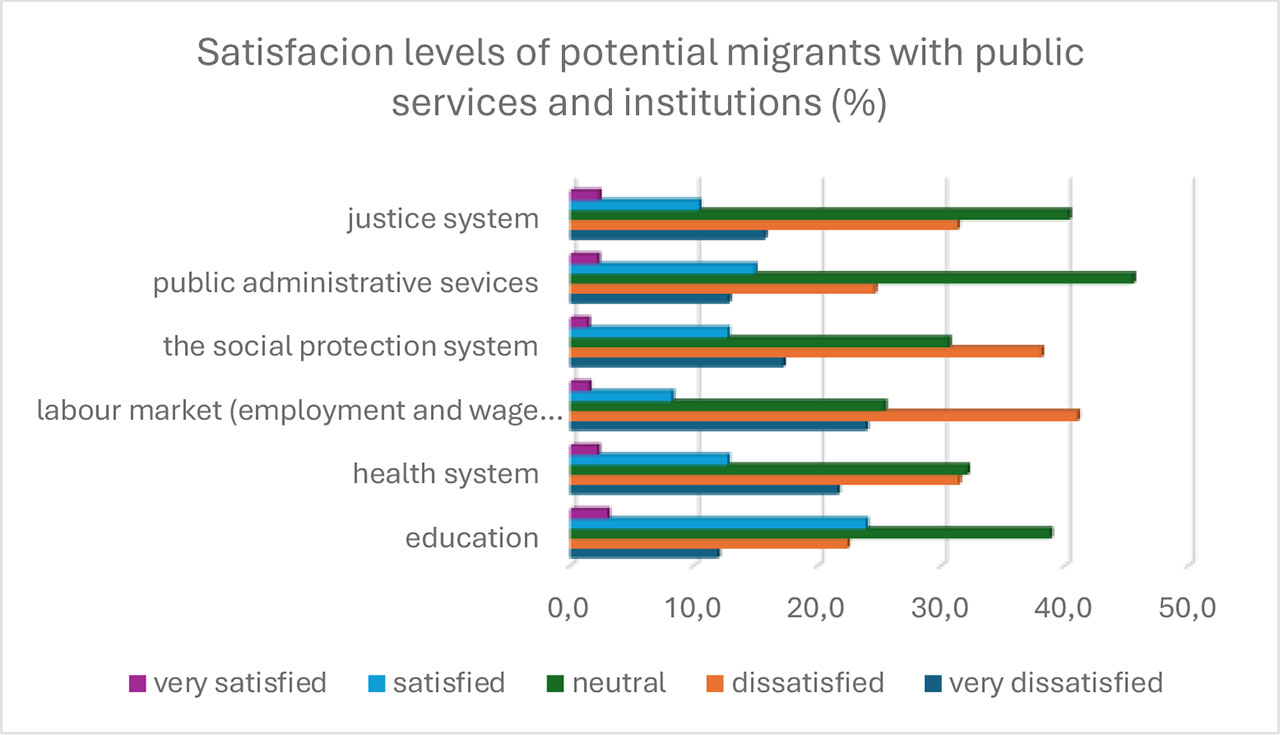
Figure 2:
Satisfaction levels of potential migrants with public services and institutions
Source: The World Bank
At the core of dissatisfaction lies the labour market, particularly in relation to employment opportunities and wage levels. This clearly reflects the perceived lack of prospects for stable and fairly compensated employment. Likewise, the healthcare system is viewed as dysfunctional by more than half of respondents (52%), indicating a lack of trust in public health institutions, an important indicator of both quality of life and social security. The social protection system also received predominantly negative evaluations, reflecting widespread feelings of insecurity regarding the future. Discontent is similarly evident in relation to the justice system, with 47% of potential migrants expressing dissatisfaction. In the field of education, 34.3% of respondents reported dissatisfaction, while 26.9% declared satisfaction; the remaining 38.8% maintained a neutral stance. This neutrality may be interpreted as a sign of uncertainty or low expectations for improvement within the system. The study reveals that a considerable proportion of respondents adopt “neutral” positions, which can be understood as indicators of collective uncertainty, low expectations, and temporary passive attitudes. Such neutrality also embodies the potential for change in social behaviour and migration decision-making, contingent upon future political, economic, and institutional developments. The study findings suggest that the lack of prospects for a secure and stable life within the country stands as one of the principal factors driving the desire to migrate among young and well-educated people.
4.3. Potential migration impacts on the sending society
Potential migration from Albania represents an increasing trend significantly influencing the country’s sustainable development. Youth migration accelerates demographic ageing, especially in rural areas. Albania and Kosovo are experiencing ageing populations and youth depopulation, with significant implications for national development strategies (INSTAT 2021).
Potential migration is contributing to population decline, ageing, and rural depopulation. The study revealed that potential migration primarily affects youth, with 81.5% of potential migrants belonging to the 18–44 age group, thereby pushing the country toward an increasingly aged demographic structure. This heightens the social burden on the public welfare and social protection system. Data indicate a steady increase in the old-age dependency ratio in Albania over the years (Figure 3). Albania's age dependency ratio in 2024 reached 50.97%, marking the highest level recorded in the past decades.
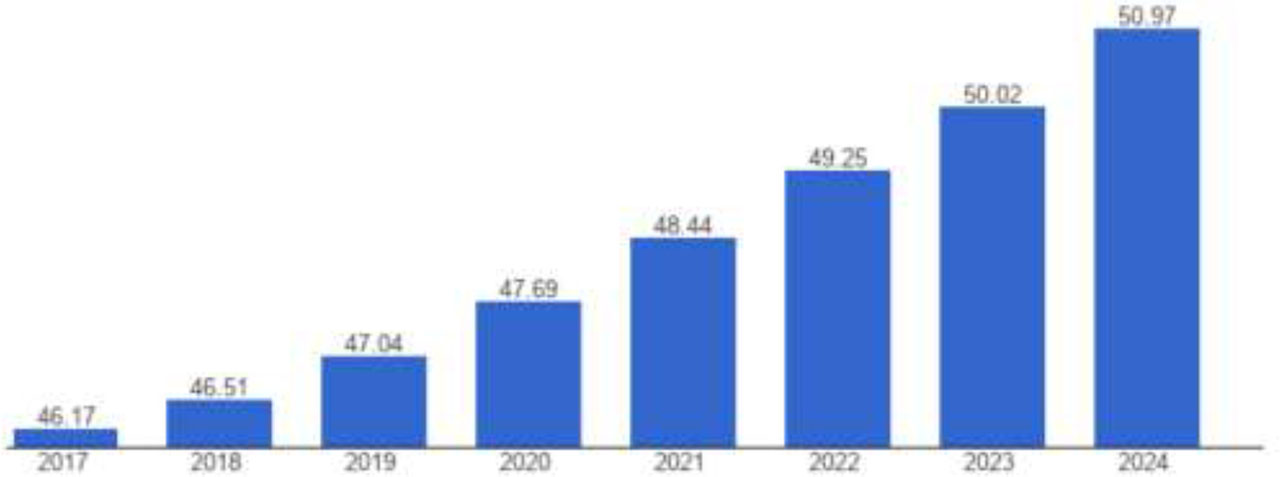
Figure 3:
Albania-Age dependency ratio (Dependent people as % of the working age population).
Source: The World Bank
The rising trend of migration among young, well-educated individuals is expected to accelerate the population's ageing process, leading directly to lower birth rates and an increased age-dependency ratio. The study found that 36.1% of potential migrants reported having elderly family members. Crosstabulation of data for the variables “having elderly in the family” and “individual or family migration” showed that 18.1% of potential migrants planning to leave with their partner, and 31.4% of those planning family migration, have elderly relatives. This is a key indicator highlighting the growing need for supportive programmes aimed at assisting the elderly who remain behind. The emigration of young people weakens the country’s innovative capacity, thereby restricting overall economic growth. Although remittances from migrants significantly improve their families' well-being, they cannot replace long-term productive investments and often create economic dependence. Skilled emigration can lead to a “brain drain”. The literature debates whether this is a negative phenomenon or if there are more positive perspectives, such as “brain circulation" through return migration and diaspora engagement. While some studies (King and Vullnetari 2010) emphasise the development potential of migration, others highlight the immediate loss of human capital and capacity for state-building (Docquier and Rapoport 2012; Beine, Docquier, and Rapoport 2008). Remittances can reduce poverty and improve education, but may also decrease labour force participation in the home country. The high proportion of potential migrants with secondary and tertiary education likely creates a labour market gap, resulting in a loss of human capital and higher production costs. As a result, the country risks entering a negative cycle where the outflow of human capital hampers economic growth. At the same time, the lack of new development opportunities encourages further waves of migration.
The rising trend of migration may lead to changes in family structures and a decline in social cohesion. According to the study's findings, a high rate of youth migration could lead to the breakdown of traditional family units and a weakening of internal support networks. While young people plan to migrate, the elderly are likely to be left without the direct support of younger generations. This situation may cause several issues, including increased loneliness and social isolation among older adults, a reduction in traditional family-based care, higher demand for social services and institutional care, and a diminished active role within the community. Over time, these changes could weaken social bonds and create a new form of social inequality between those with family support and those left behind in isolation. From a socio-cultural perspective, potential migration risks the intergenerational transfer of local customs and traditions. The loss of young people as custodians of local culture and key contributors to cultural tourism endangers the authenticity and vibrancy of community life. In this context, public policies and development initiatives must address the driver factors of migration by creating opportunities for employment, quality education, and social inclusion. Only in this way can the loss of human capital be mitigated, contributing to the country’s sustainable development.
5. Conclusions
Potential migration from Albania and the wider Western Balkans reflects persistent structural and governance-related challenges that continue to shape the region’s development and mobility patterns. Understanding the motivations, characteristics, and intentions of potential migrants is essential for drafting responsive, evidence-based migration and labour policies. While migration can generate opportunities for individual advancement and transnational engagement, uncontrolled or large-scale outflows (especially among young and highly educated individuals) pose critical risks to national development and social cohesion.
The study showed that potential migration in Albania has evolved into a dynamic and expanding trend with significant demographic, economic, and socio-cultural implications. The high share of respondents expressing migration intentions and those already taking concrete preparatory steps underscores that migration is no longer a distant aspiration but an active process embedded in everyday life. The involvement of skilled and educated youth highlights not only the acceleration of population ageing but also the erosion of human capital, one of the most essential resources for sustainable local and national development.
Consistent with previous research on post-socialist transitions and regional mobility trends, the drivers of potential migration appear to be multifaceted and interconnected, spanning economic uncertainty, educational aspirations, and family-related considerations. This complexity suggests that migration intentions are part of a broader adaptive strategy through which individuals and families respond to structural insecurities and perceived constraints within domestic opportunity structures.
From a policy perspective, potential migration should therefore be interpreted not merely as an individual choice but as an indicator of systemic dysfunction and a perceived lack of prospects within the country. Addressing these underlying factors requires comprehensive and coordinated strategies that enhance employability, social trust, and institutional effectiveness, thereby reducing the structural pressures that push young and skilled citizens to seek opportunities abroad.
In conclusion, the evidence suggests that potential migration from Albania is both widespread and likely to materialise at substantial levels, with far-reaching implications for demographic composition and socio-economic resilience. The phenomenon disproportionately affects youth and women, creating gaps in the labour market and weakening social cohesion. If current trends persist, Albania risks a continued depletion of its educated human capital, growing dependence on the diaspora, and the redefinition of success increasingly outside its borders. As such, these findings contribute to the broader understanding of how migration intentions in transitional contexts reflect and reproduce structural inequalities across the Western Balkans.