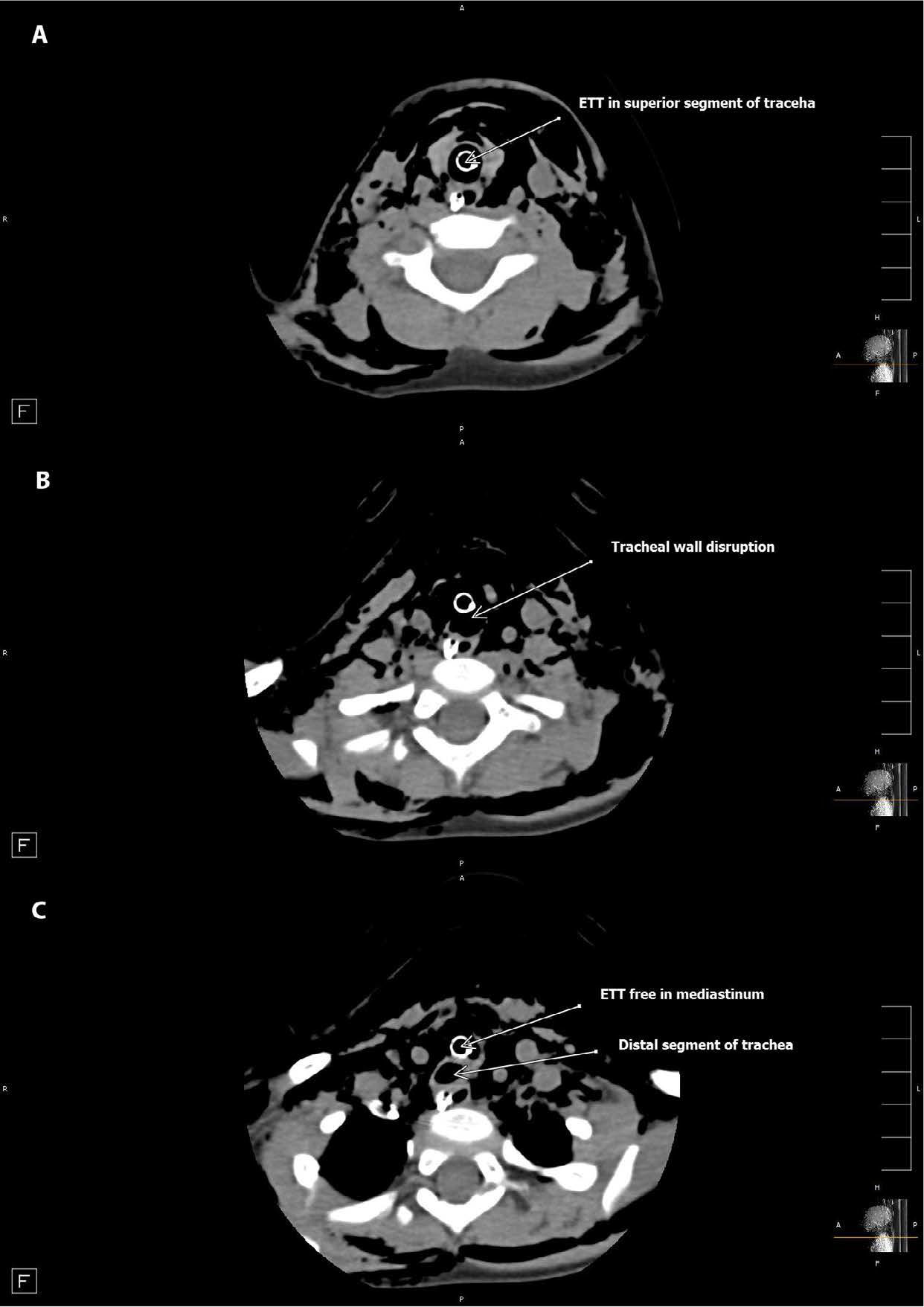
Fig. 1
Computed tomography images demonstrating the position of the endotracheal tube in the superior segment of the trachea (A), the injury to the tracheal wall (B), and the distal end of the endotracheal tube free in the mediastinum and the distal segment of the trachea (C). The patient's trachea was completely transected at the C7T1 level.
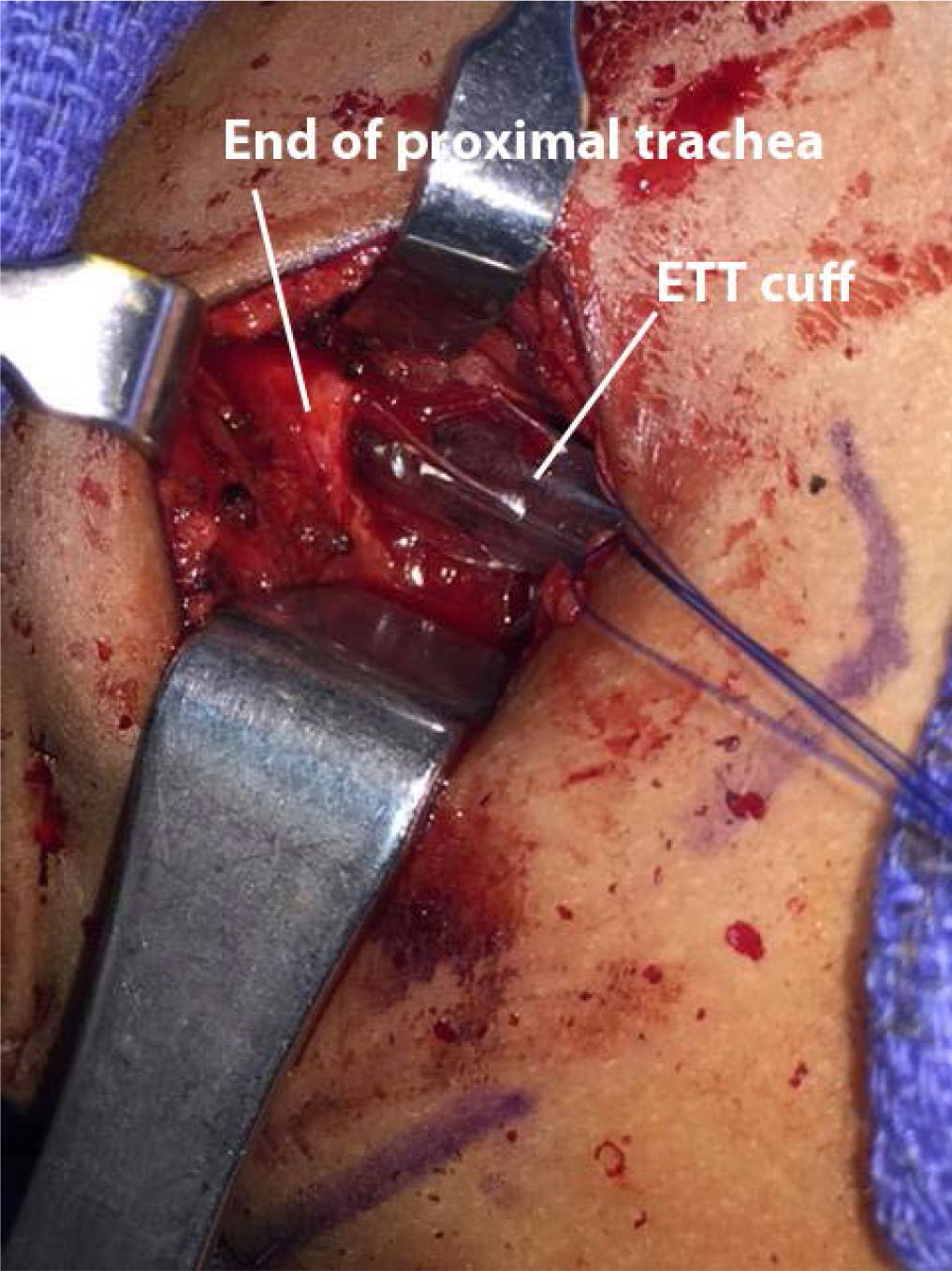
Fig. 2
Photograph of the distal end of the endotracheal tube free in the mediastinum after incision. The patient's injury did not cause destruction of the tracheal rings and all other nearby structures were intact.
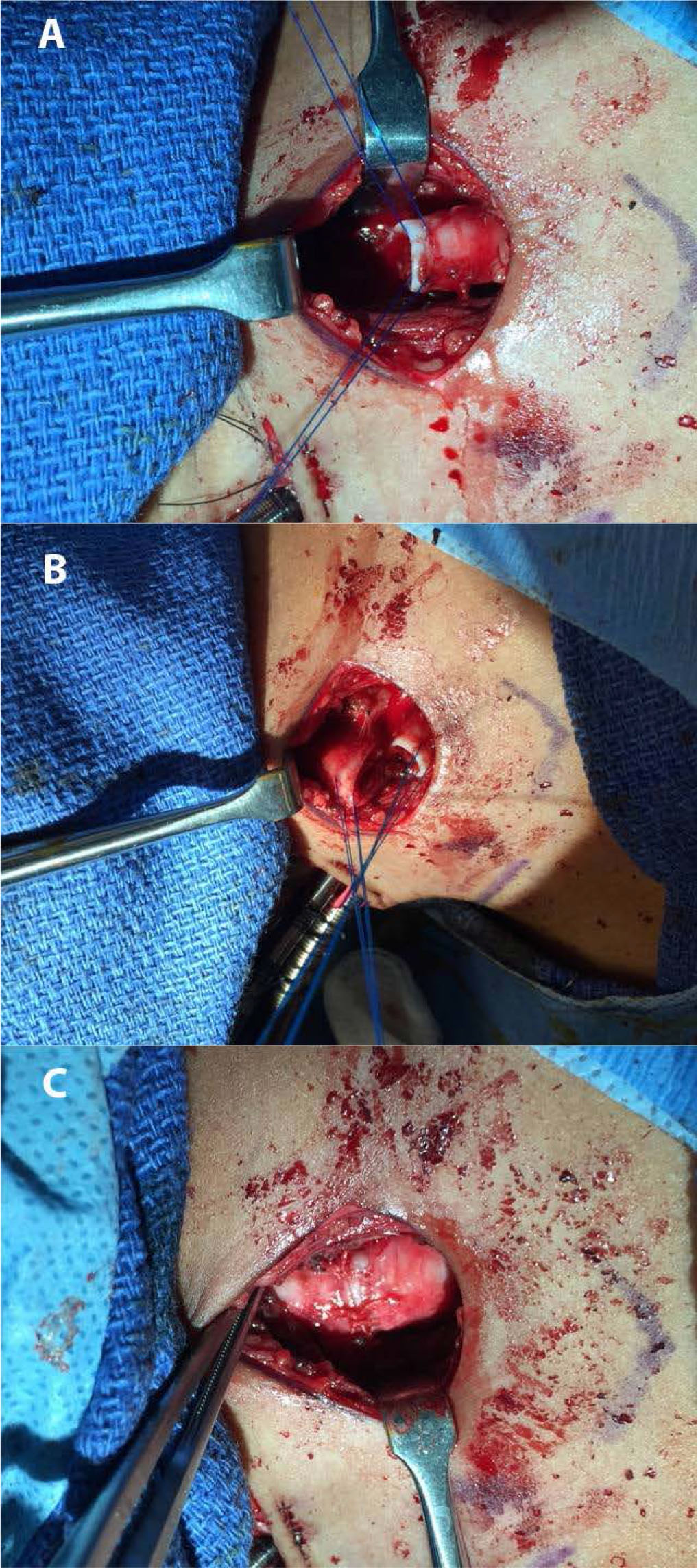
Fig. 3
Intraoperative findings. The distal segment of the trachea after retrieval from behind the sternum with stay sutures in place (A). The tracheal ends as the anastomosis is beginning (B). Note the clean end of the trachea without any tissue destruction. The completed anastomosis (C).
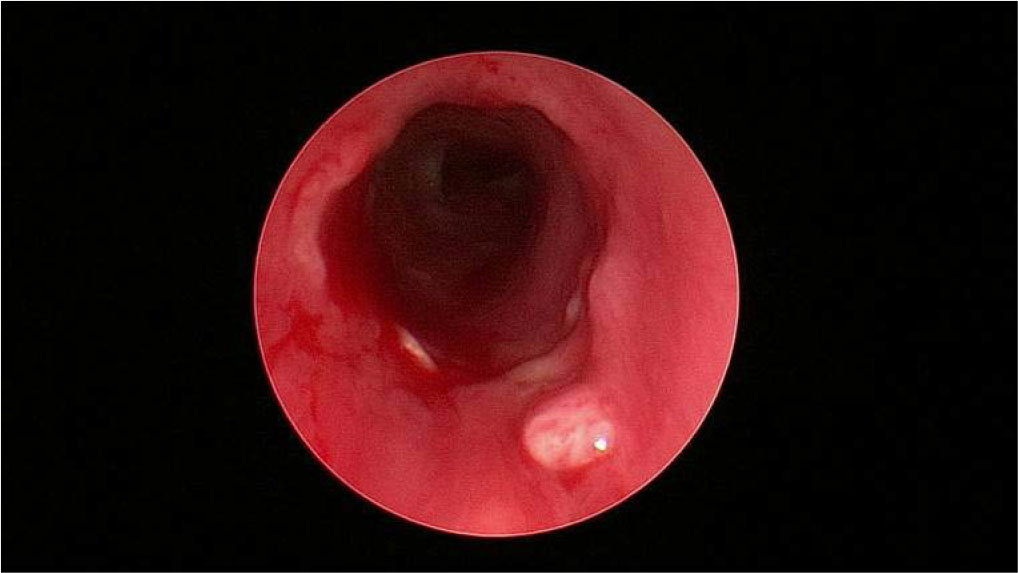
Fig. 4
Endoscopic view of the tracheal anastomosis 1 week postoperatively, which showed bilateral true vocal cord mobility, glottic edema, and a well-healing tracheal anastomosis.
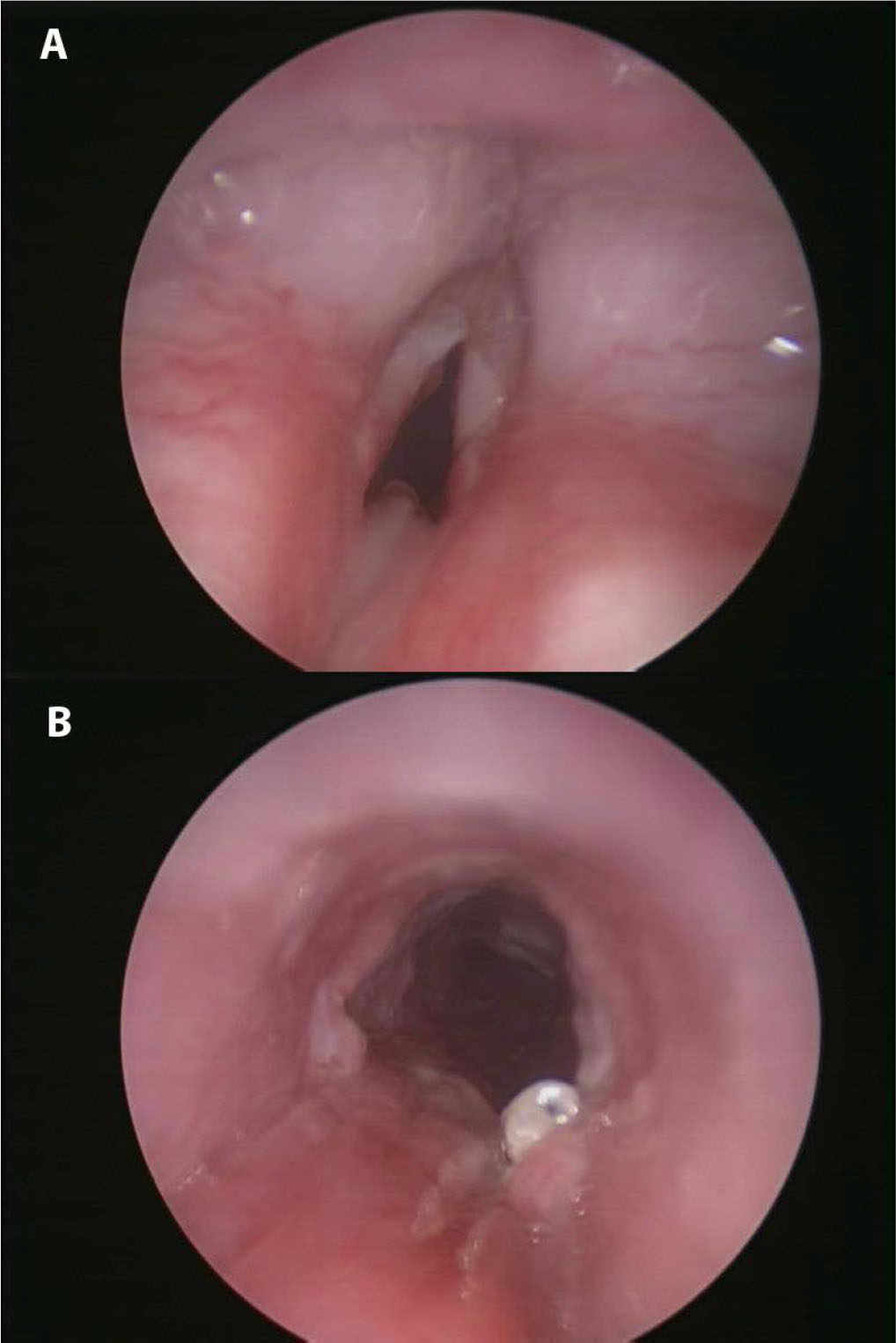
Fig. 5
Endoscopic view of the glottis (A) and tracheal anastomosis (B) 2 weeks postoperatively. The patient was discharged home 19 days after admission.
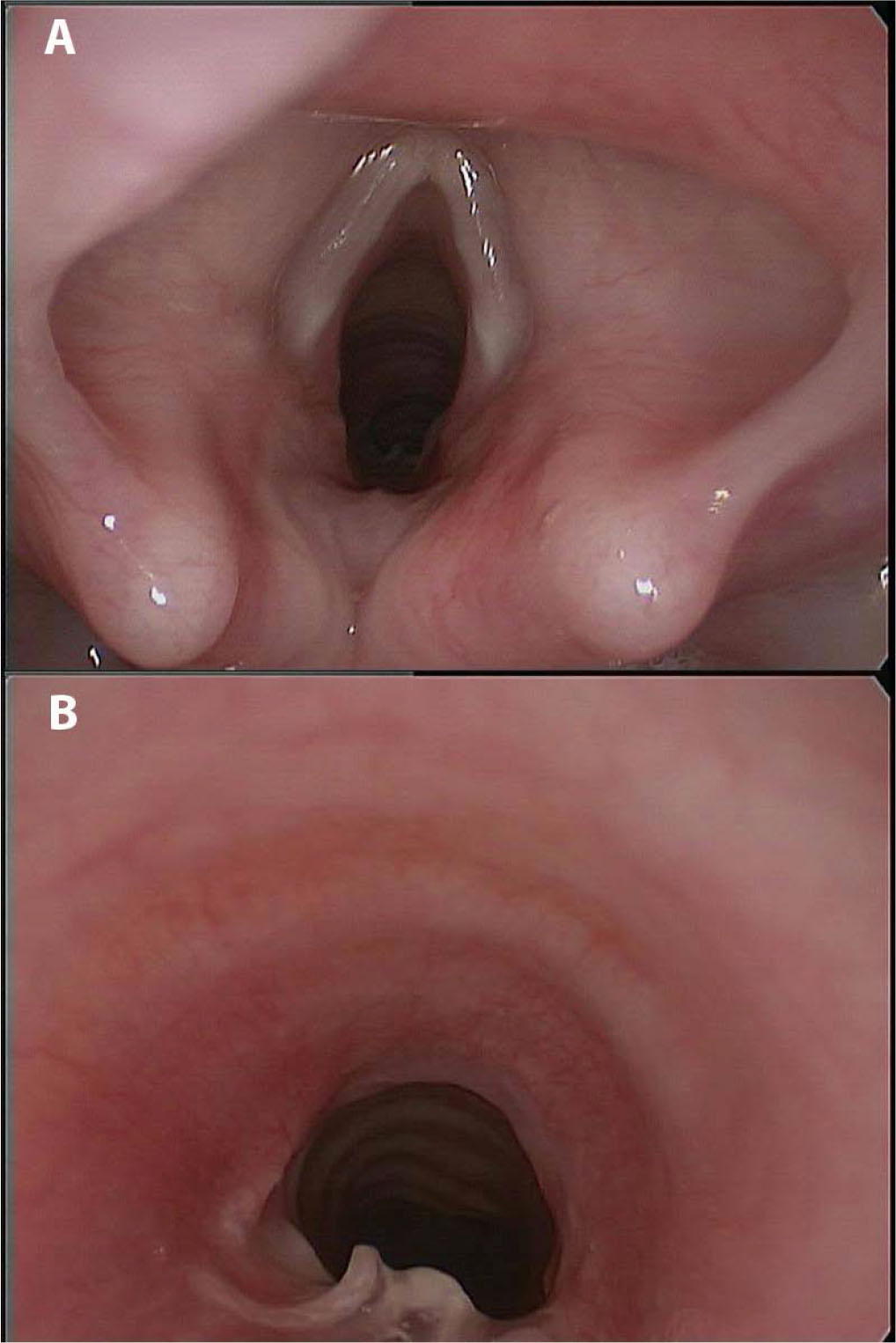
Fig. 6
Endoscopic view of the glottis (A) and tracheal anastomosis (B) 3 weeks postoperatively, at which time her glottic edema had mostly resolved and her tracheal anastomosis was healing well.
Table 1
Schaefer-Fuhrman laryngeal injury classification
| Grade | Description | Recommendations |
|---|---|---|
| 1 | Minor endolaryngeal hematoma or laceration, no detectable fracture | Conservative (humidified oxygen, observation) |
| 2 | Edema, hematoma, minor mucosal injury without exposed cartilage, non-displaced fracture on CT | Conservative treatment vs. tracheostomy, panendoscopy |
| 3 | Massive edema or hematoma, mucosal tears with exposed cartilage, vocal cord immobility, displaced fractures | Tracheostomy, panendoscopy, exploration, and repair |
| 4 | As with Grade 3, but with severe mucosal disruption, multiple fractures, disruption of anterior commissure, unstable laryngeal framework | Tracheostomy, panendoscopy, exploration, and repair with possible stent placement |
| 5 | Complete laryngotracheal separation | Emergent tracheostomy, exploration, and repair |