Have a personal or library account? Click to login
Topographic surface modelling using raster grid datasets by GMT: example of the Kuril–Kamchatka Trench, Pacific Ocean Cover

Topographic surface modelling using raster grid datasets by GMT: example of the Kuril–Kamchatka Trench, Pacific Ocean

Open Access
|Nov 2019

Figures & Tables

Figure 1

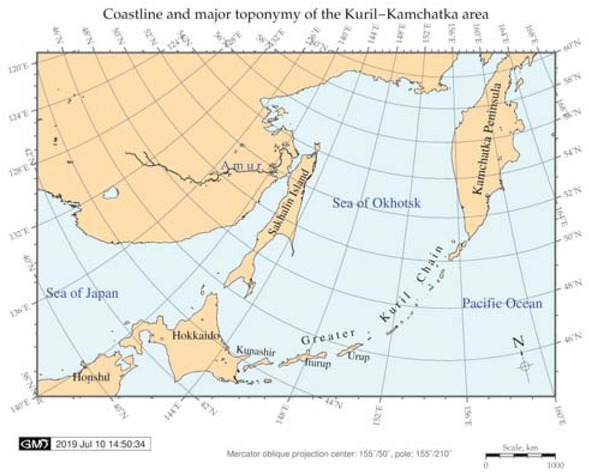
Study region: Sea of Okhotsk and Kamchatka area (Mercator oblique projection)
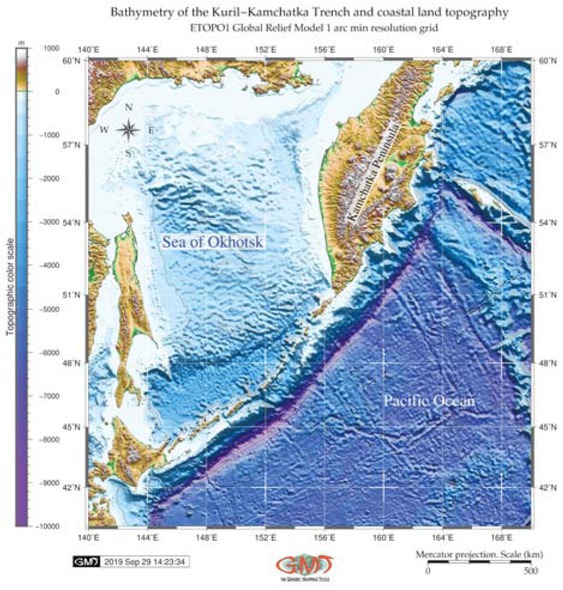

Figure 2

Topographic map of the study area: Sea of Okhotsk, Kamchatka Peninsula, Greater Kuril Chain and Kuril– Kamchatka Trench. Numerical data source: ETOPO 1 Global Relief Model 1 minute raster grid.
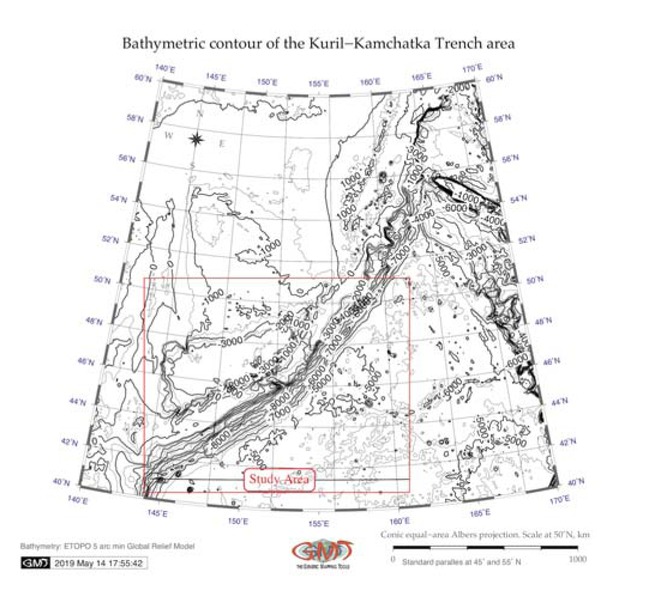

Figure 3

Contour bathymetric area of the Kuril–Kamchatka Trench. Conic projection.
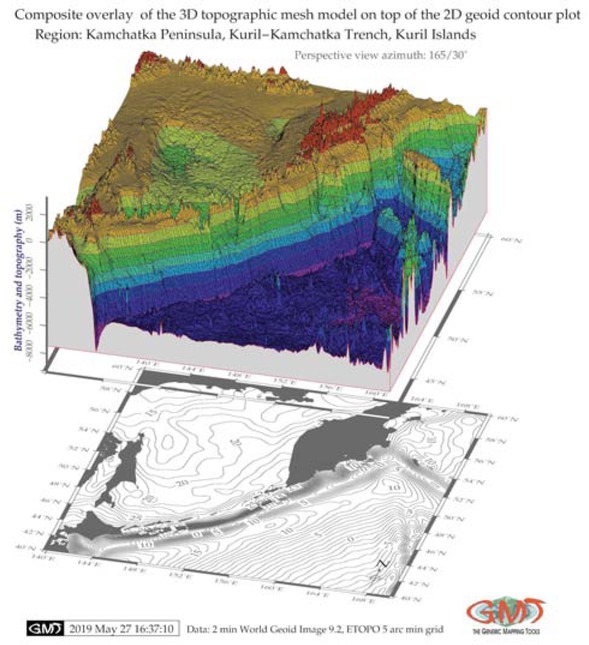

Figure 4

Composite overlay of the 3D-topographical mesh model on top of the 2D grid contour plot. Contour bathymetric map source: ETOPO 5 min grid resolution. Azimuth rotation: 165/30.
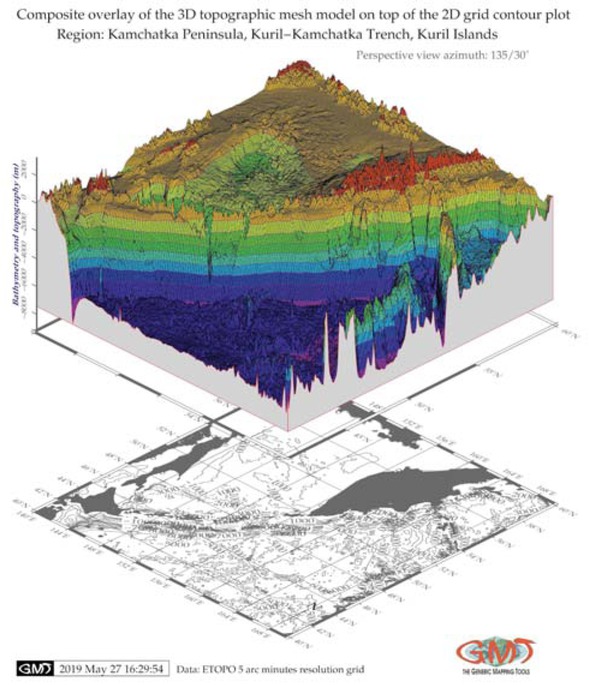

Figure 5

Composite overlay of the 3D-topographical mesh model on top of the 2D grid contour plot. Contour bathymetric map source: ETOPO 5 min grid resolution. Azimuth rotation: 135/30.
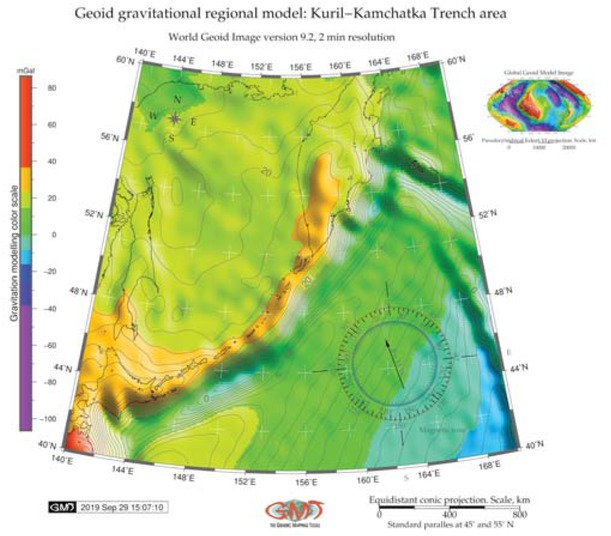

Figure 6

Colour geoid image of the Kuril–Kamchatka Trench. Conic projection.
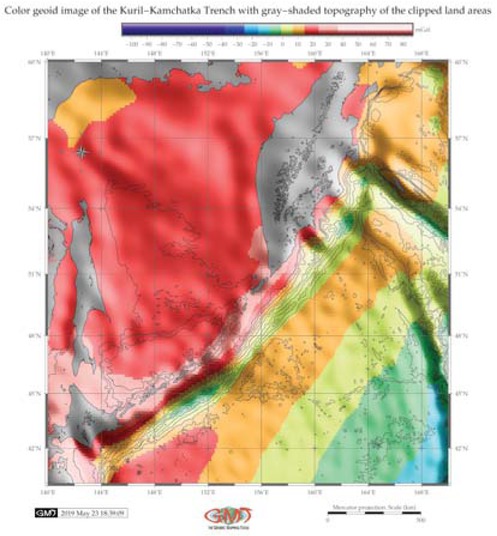

Figure 7

Modelling gravity regional setting in the Okhotsk Sea area. Mercator projection.
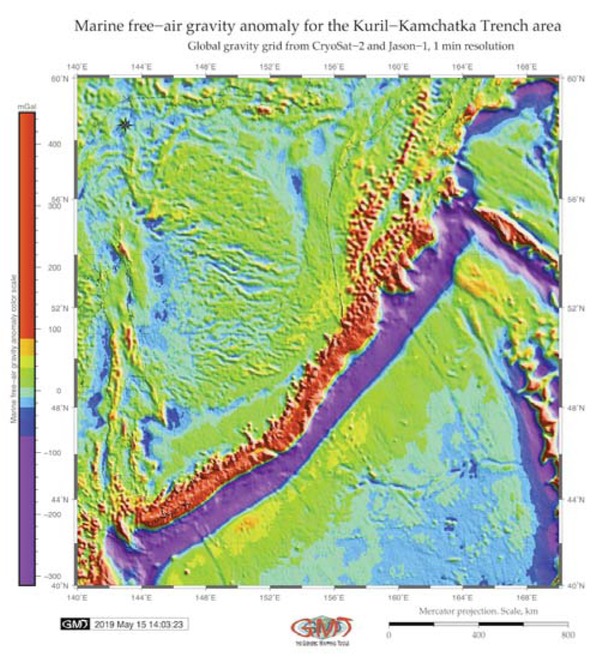

Figure 8

Modelling marine free-air gravity anomaly. Mercator projection.
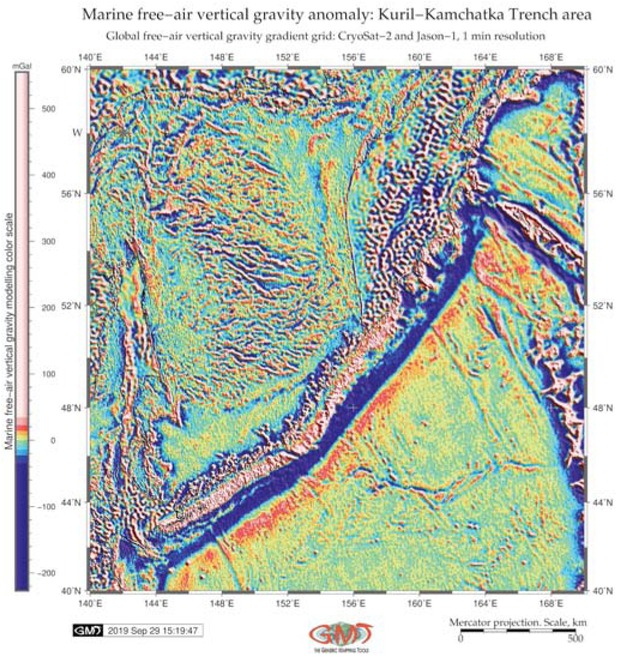

Figure 9

Modelling vertical marine free-air gravity anomaly. Mercator projection.
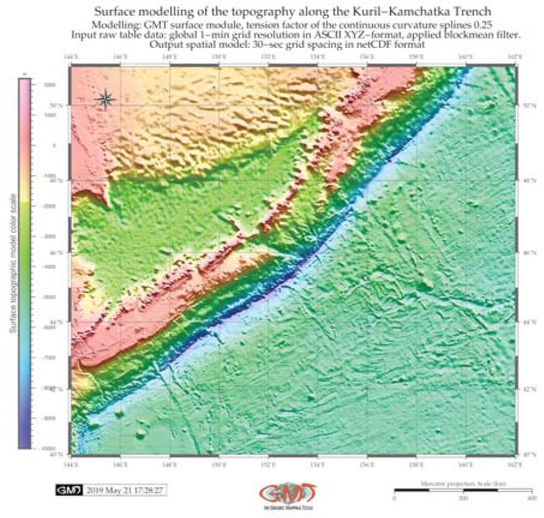

Figure 10

Topographic surface modelling along the Kuril– Kamchatka Trench.
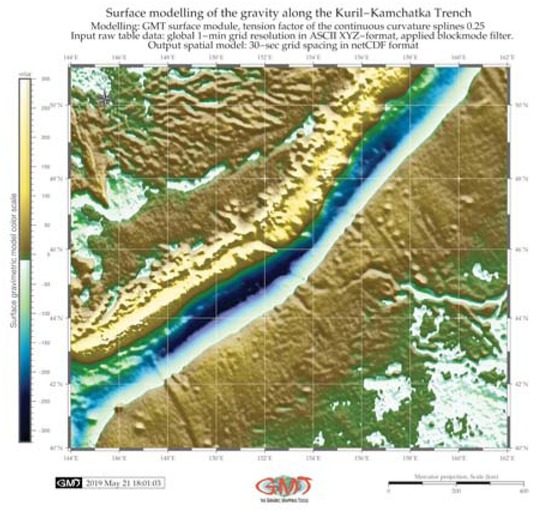

Figure 11

Surface gravity modelling along the Kuril–Kamchatka Trench
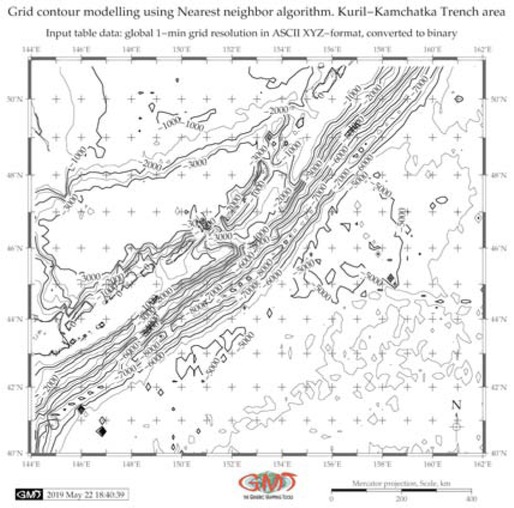

Figure 12

Grid contour modelling using the Nearest Neighbour algorithm
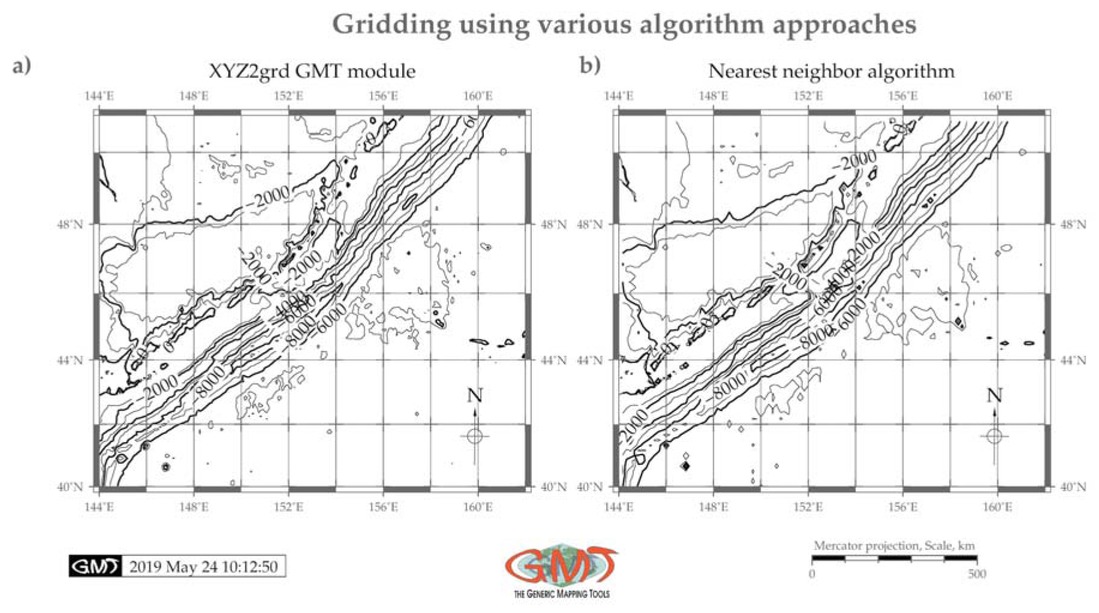

Figure 13

Grid contour modelling using two approaches: XYZ2grid GMT module (a) and Nearest Neighbour GMT module (b)
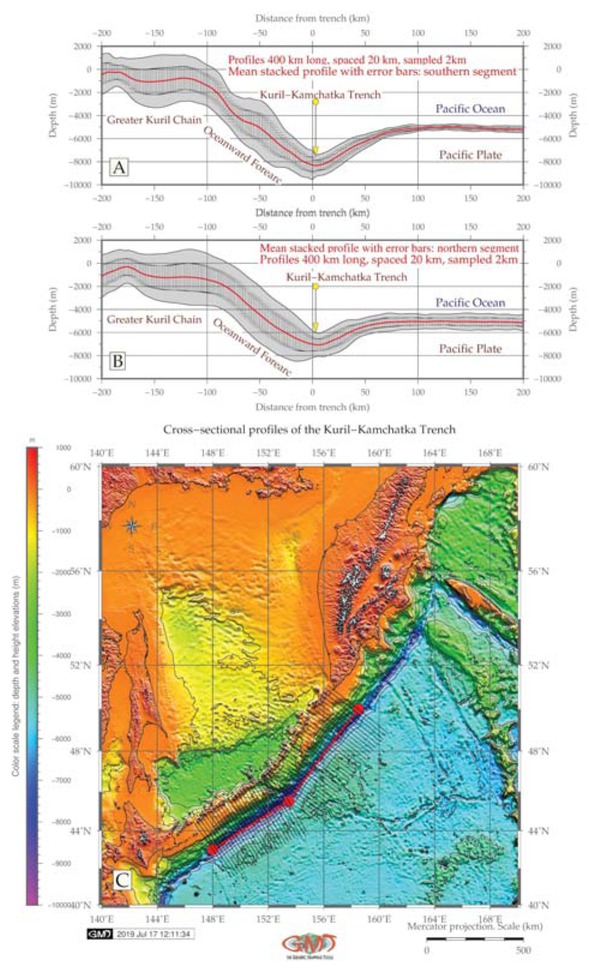

Figure 14

Automatically digitized cross-section profiles along the Kuril–Kamchatka Trench
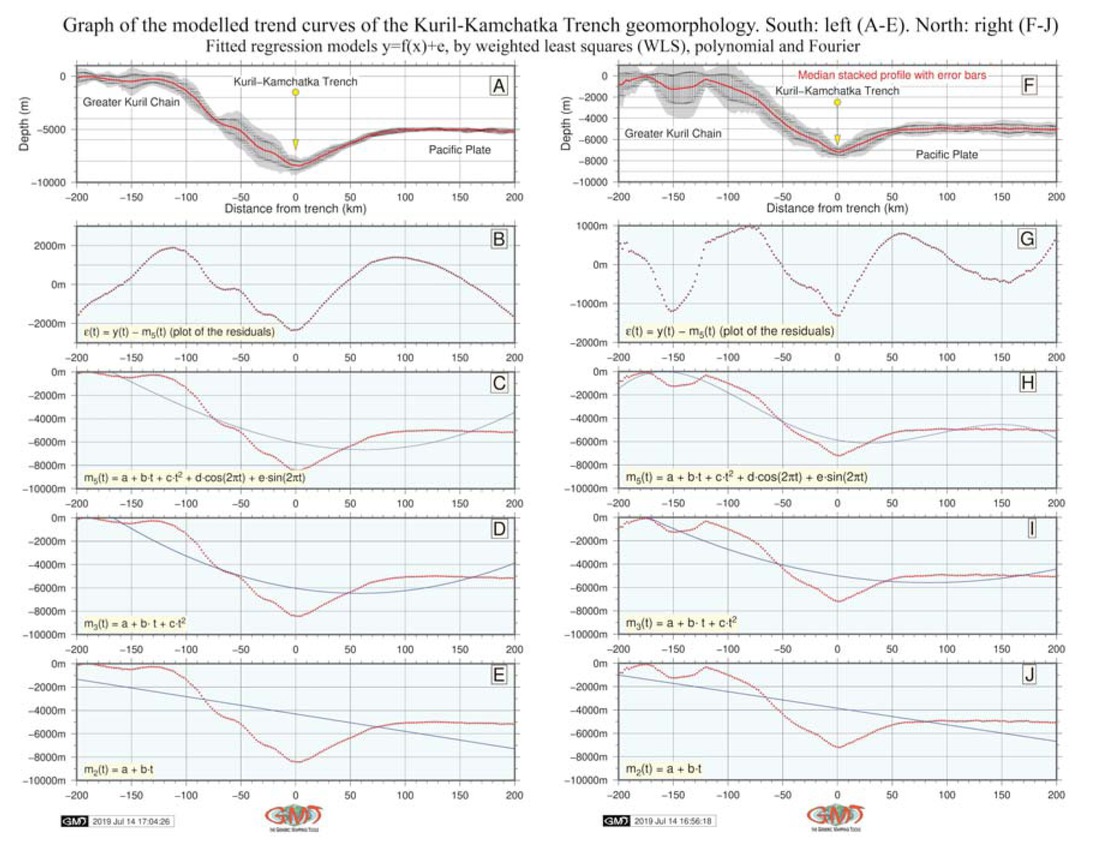

Figure 15

Modelled gradient curves of the Kuril–Kamchatka Trench in northern and southern segments
DOI: https://doi.org/10.2478/rgg-2019-0008 | Journal eISSN: 2391-8152 | Journal ISSN: 0867-3179
Language: English
Page range: 9 - 22
Submitted on: Jul 20, 2019
Accepted on: Oct 4, 2019
Published on: Nov 6, 2019
Published by: Warsaw University of Technology
In partnership with: Paradigm Publishing Services
Publication frequency: 2 issues per year

© 2019 Polina Lemenkova, published by Warsaw University of Technology
This work is licensed under the Creative Commons Attribution-NonCommercial-NoDerivatives 4.0 License.