
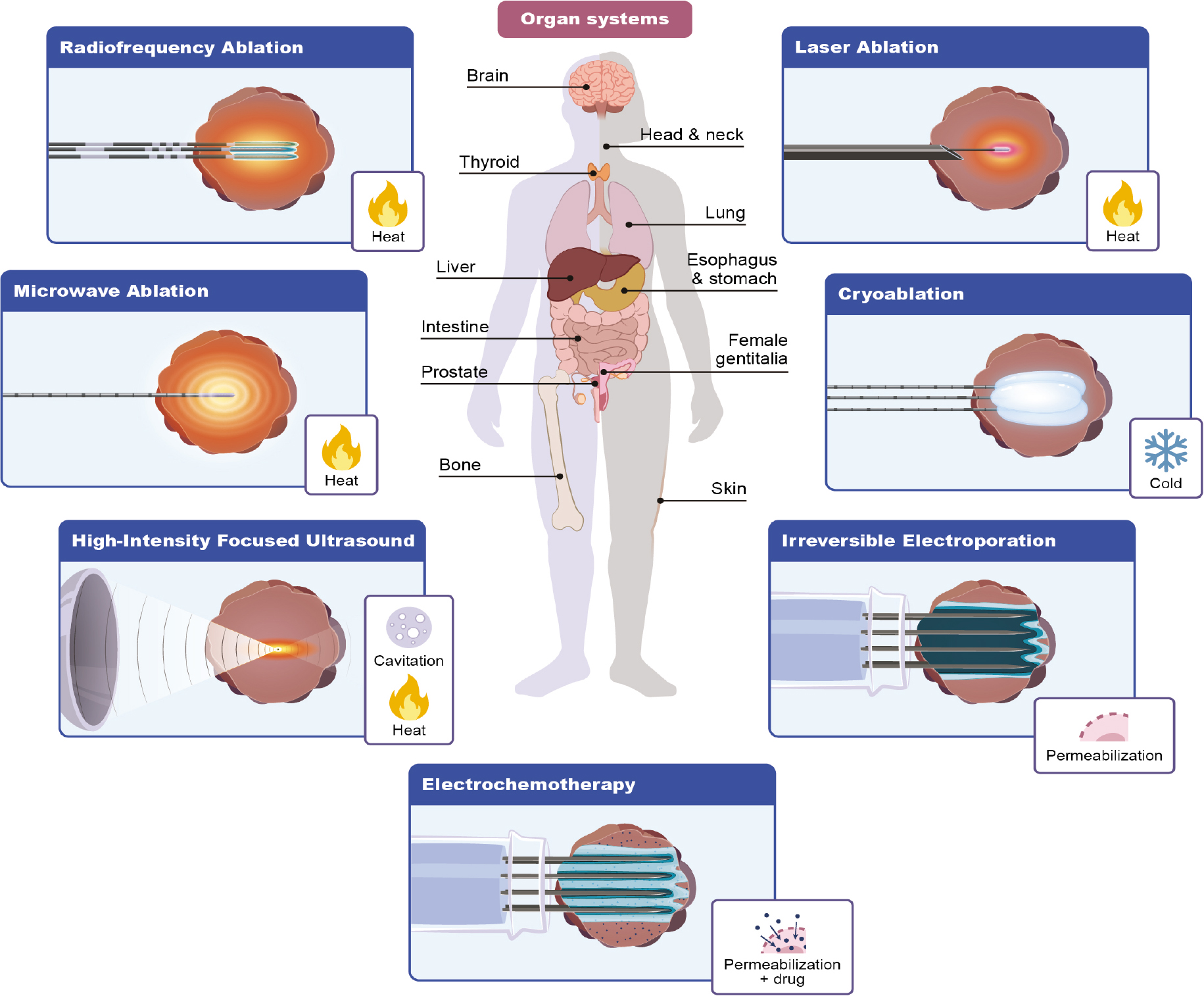
FIGURE 1.
Use of ablative therapies according to the organs treated and technologies used.
TABLE 1.
Common ablative therapies in oncology with a brief description of their mode of action, common applications, advantages and disadvantages. Most of them are considered thermal ablations, except for irreversible electroporation and electrochemotherapy
| Ablative therapy | Mode of action | Common applications | Advantages | Disadvantages |
|---|---|---|---|---|
| Radiofrequency ablation (RFA) | High-frequency alternating current generates heat, causing irreversible coagulative necrosis through protein denaturation | Liver, kidney, lung and bone tumors | Minimally invasive, widely available, effective for small tumors | Limited effectiveness near large blood vessels (heat sink effect), not ideal for cystic tumors. Extent of ablation area not visible in real time |
| Microwave ablation (MWA) | Electromagnetic waves agitate water molecules, generating heat and inducing irreversible coagulative necrosis | Liver, kidney lung and bone tumors | Faster and larger ablation zones than RFA, less affected by heat sink | Risk of overheating nearby critical tissues. Extent of ablation area not visible in real time |
| Cryoablation (Cryo) | Freezing and thawing causes ice crystal formation and cell rupture leading to coagulative necrosis | Prostate, kidney, bone, desmoid and lung tumors | Good real time visualization of ablation area with imaging, less pain post-procedure | Longer procedure time, risk of cryo-shock in liver ablation, costs |
| Laser ablation | Concentrated light energy heats and destroys target tissue by coagulative necrosis | Brain tumors, liver metastases, dermatology | Precise and controllable, | Very limited penetration |
| Irreversible electroporation (IRE) | Electric pulses create permanent nanopores in cell membranes, inducing apoptosis | Tumors near critical structures (e.g., bile ducts in liver, pancreas, prostate) | Non-thermal, spares connective tissue and vessels | Longer procedure time and general anesthesia recommended |
| Electrochemotherapy (ECT) | Electric pulses increase cell membrane permeability, enhancing drug uptake, leading to different types of cell death depending on the concentration of the drug | Cutaneous, subcutaneous, mucosal and deep-seated tumors, potentially pancreatic cancer | Highly effective for superficial tumors, low systemic toxicity, spares connective tissue and vessels | Bimodal treatment, drug and application of pulsed electric field |
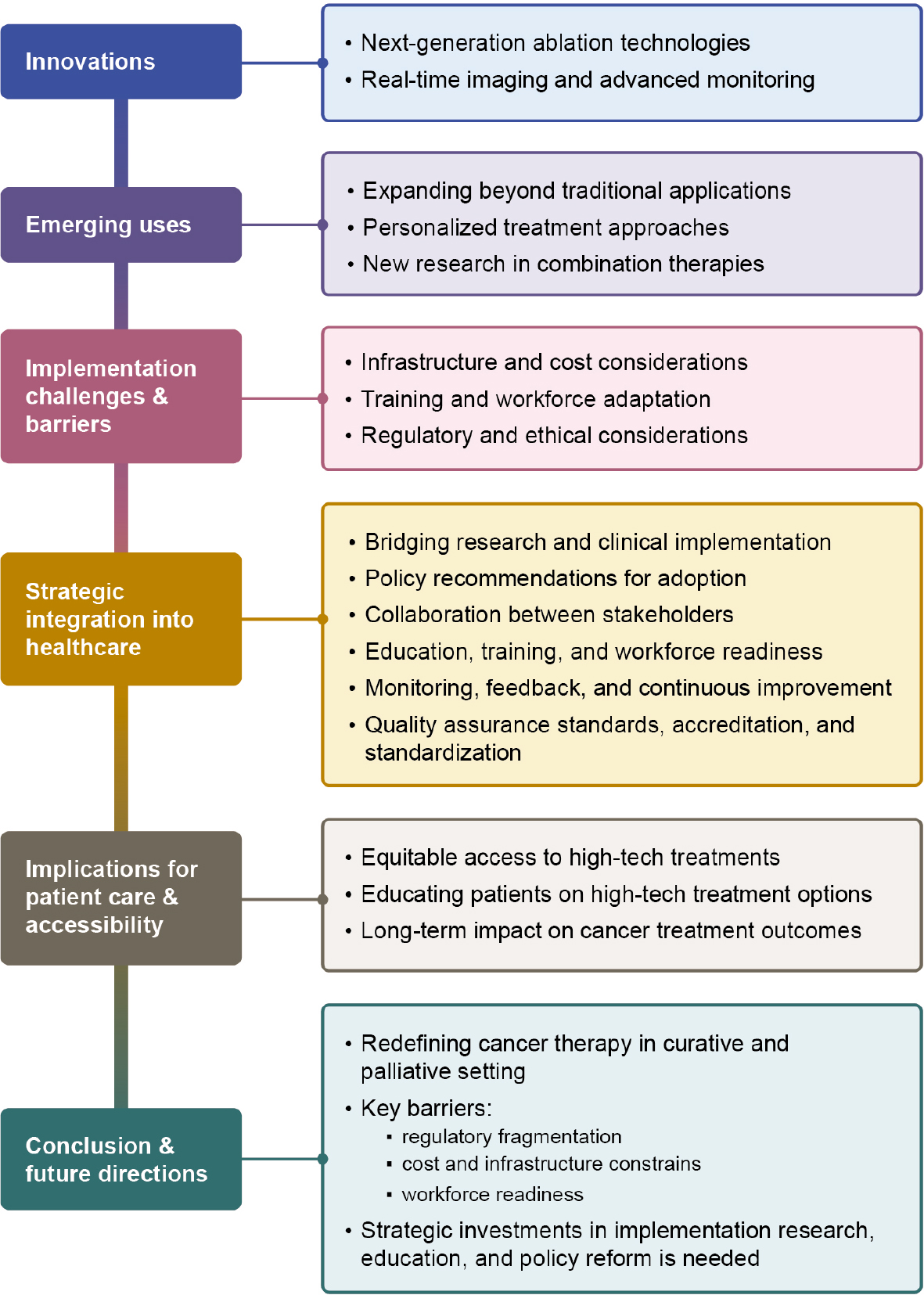
FIGURE 2.
Schematic and graphical presentation of the aims of the Physical Methods of Ablation Domain of the JANE-2 project, which are discussed in this review for broader application of ablative therapies in treatment of cancer throughout Europe.
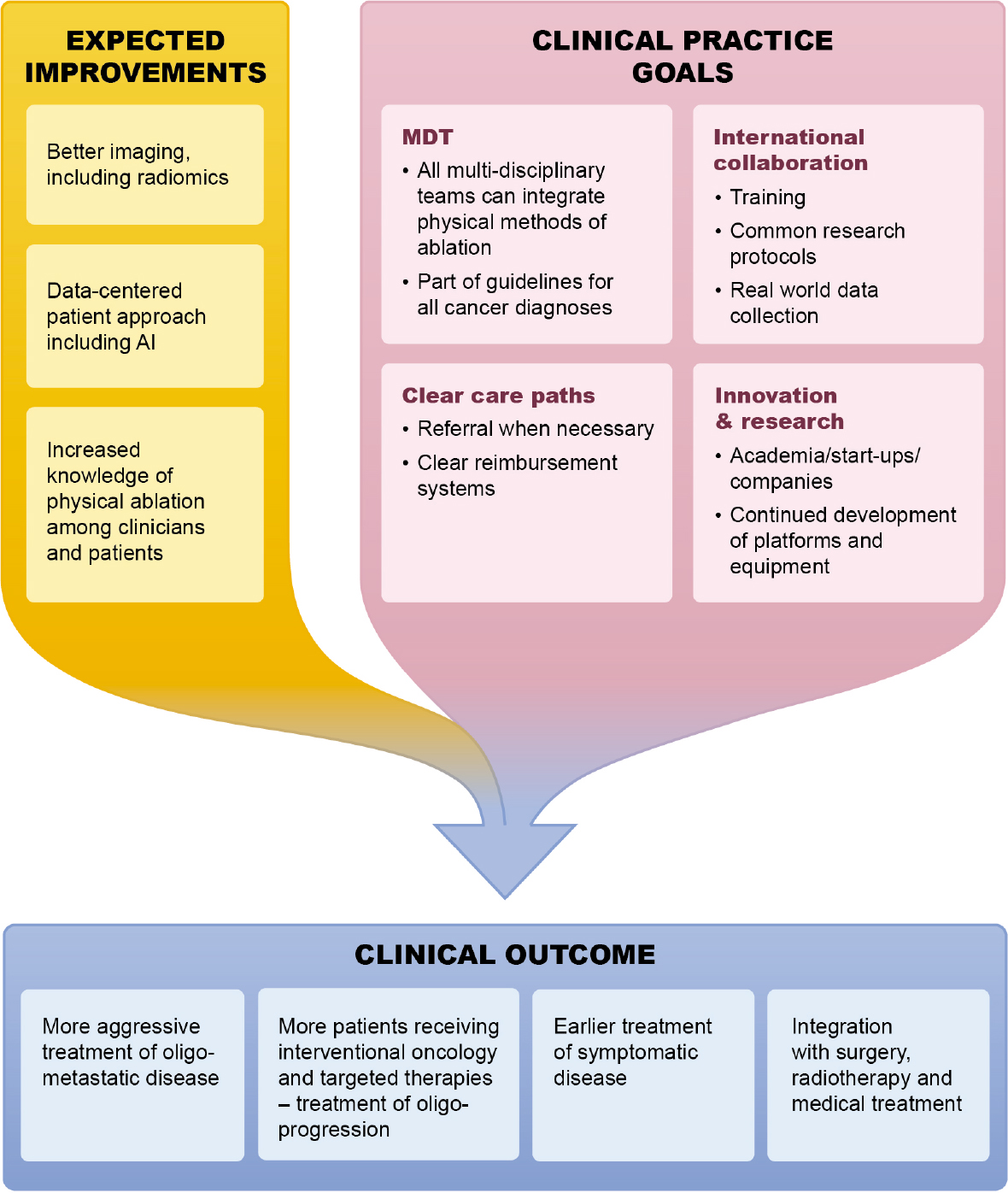
FIGURE 3.
Envisioned development and integration of physical methods of ablation into cancer care paths.