
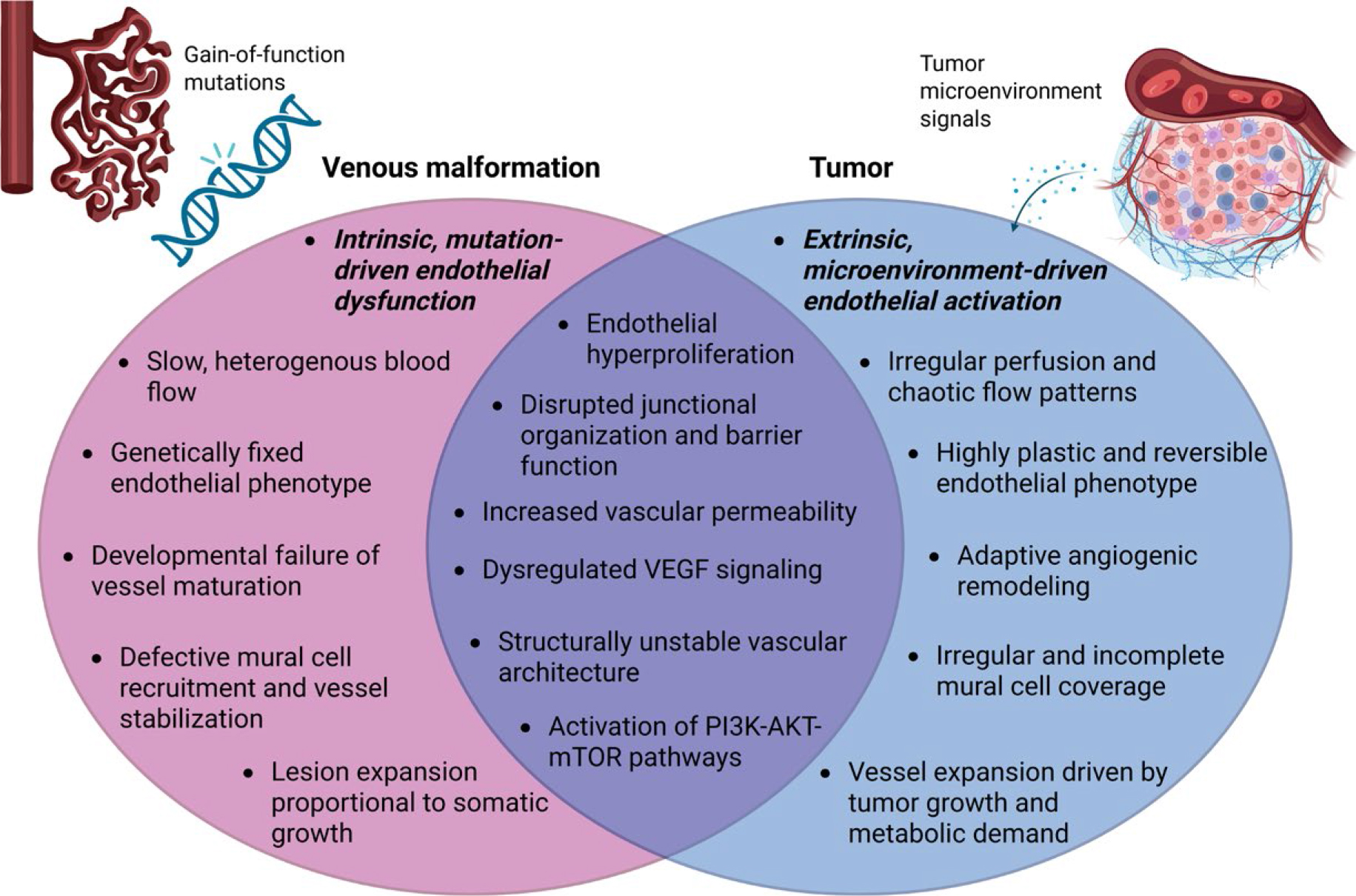
FIGURE 1.
Shared and distinct endothelial phenotypes in (venous) VMs and tumors. Created in BioRender. Cemazar, M. (2026) https://BioRender.com/wo8u8ja
VEGF = vascular endothelial growth factor
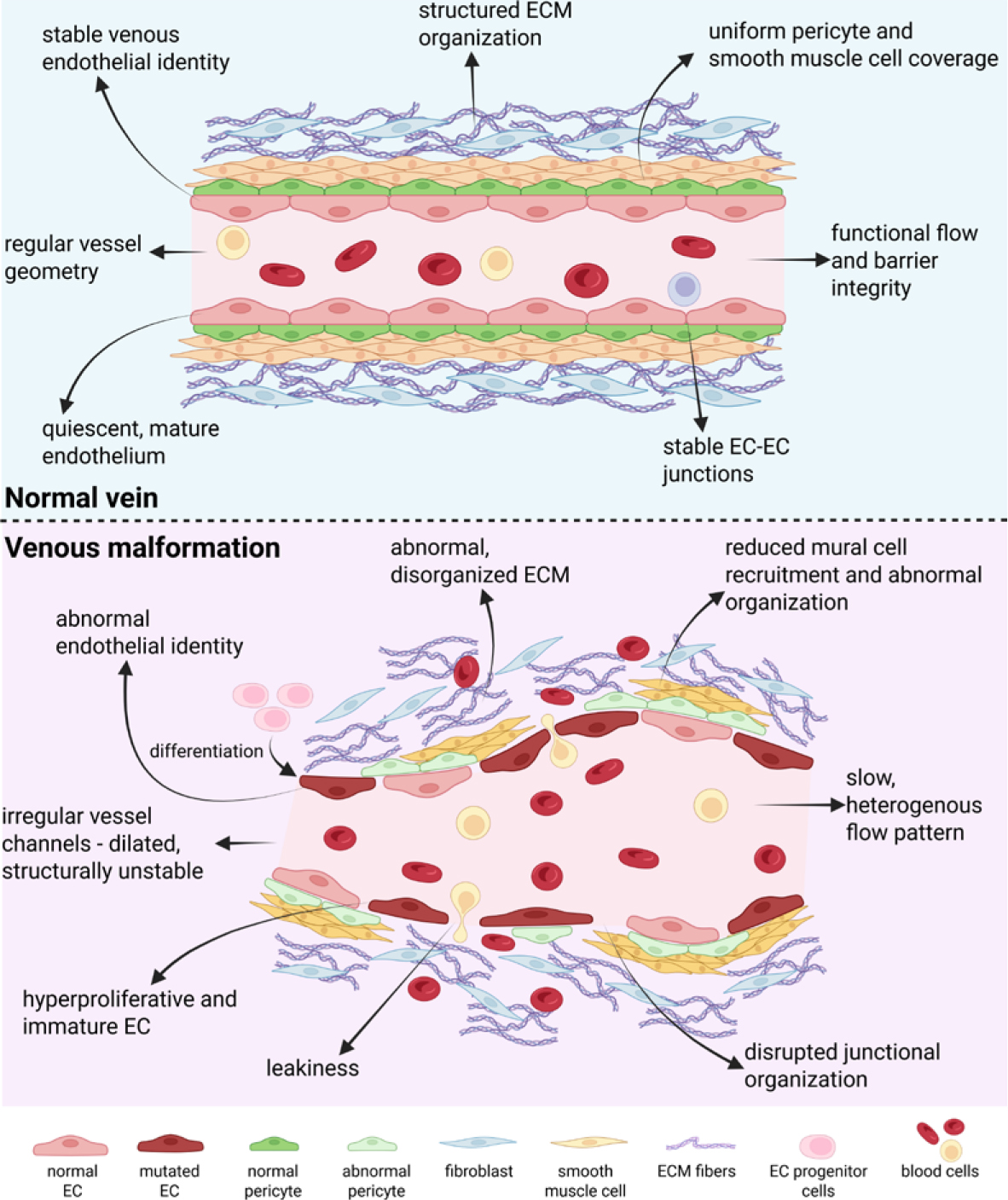
FIGURE 2.
Schematic comparison of the key phenotypic and structural differences between normal venous vessels and venous malformations. Created in BioRender. Cemazar, M. (2026) https://BioRender.com/7nzewhx
EC = endothelial cell; ECM = extracellular matrix
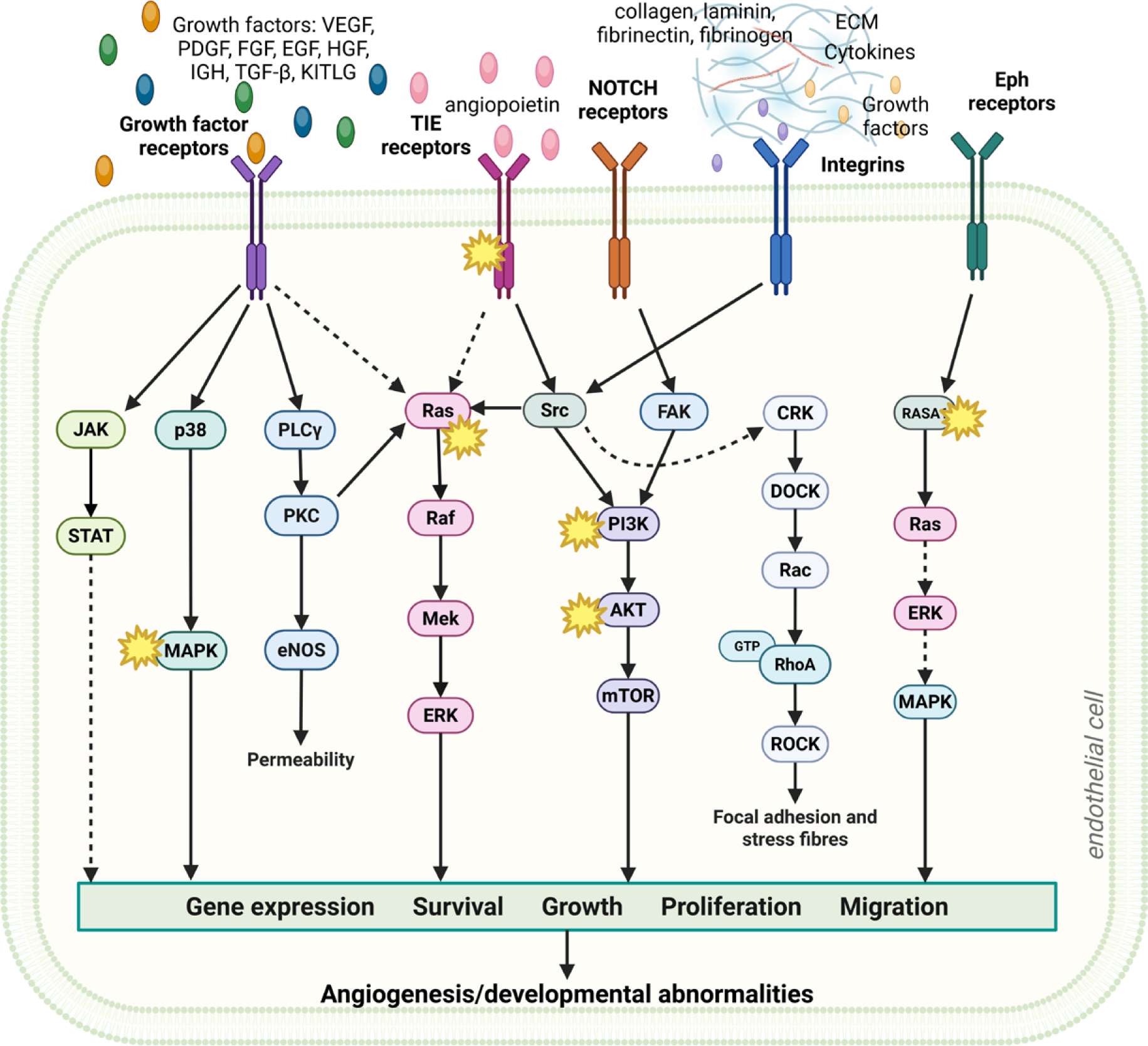
FIGURE 3.
A schematic overview of shared signaling pathways in VMs and tumor angiogenesis associated with aberrant angiogenesis and/or abnormalities in vessels development and maturation. Asterisks (*) highlight mutations associated with (venous) vascular malformations (VM)s. Created in BioRender. Cemazar, M. (2026) https://BioRender.com/kfngg58
ECM = extracellular matrix; EGF = epidermal growth factor; Eph = ephrin; FGF = fibroblast growth factor; HGF = hepatocyte growth factor; IGF = insulin-like growth factor; KITLG = KIT ligant, stem cell factor; NOTCH receptors = highly conserved transmembrane proteins; PDGF = plateletderived growth factor; TGF-β = transforming growth factor-beta; TIE receptors = type of receptor tyrosine kinases that include Tie1 and Tie2; VEGF = vascular endothelial growth factor
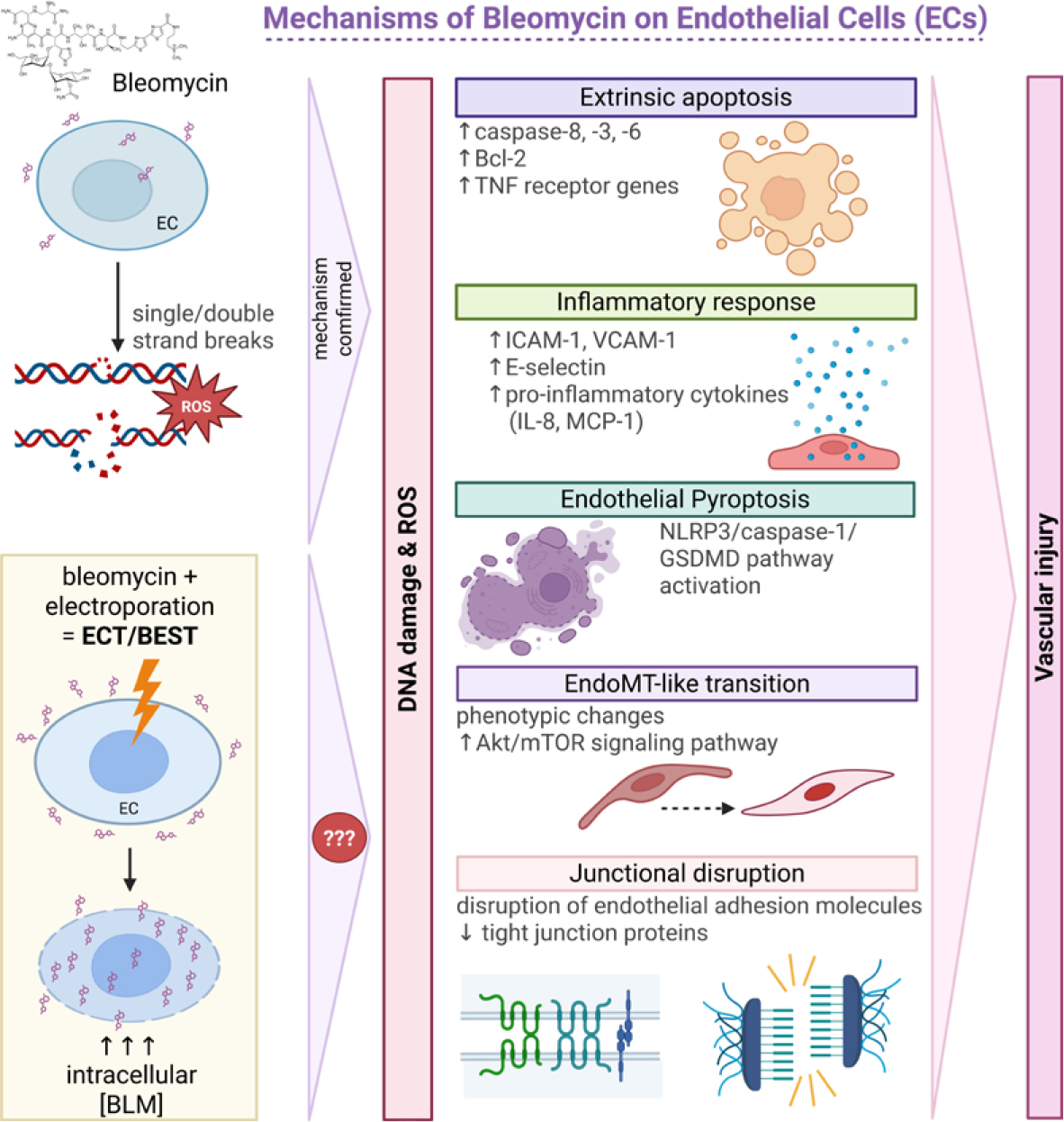
FIGURE 4.
Mechanisms of bleomycin on endothelial cells (ECs). In experimental endothelial systems, bleomycin induces DNA damage, oxidative stress, inflammatory activation, apoptosis, and junctional disruption. After BEST, electroporation markedly increases intracellular bleomycin delivery, and similar injury mechanisms are presumed to happen; however, the extent and hierarchy of these mechanisms in treated vascular malformations (VMs) remain to be defined. Created in BioRender. Cemazar, M. (2026) https://BioRender.com/vyht6ij
Bcl-2 = B-cell lymphoma 2; BLM = bleomycin; EndoMT = endothelial-to-mesenchymal transition; GSDMD = gasdermin D; ICAM-1 = intercellular adhesion molecule-1; IL-8 = interleukin 8; MCP-1 = monocyte chemoattractant protein-1; mTOR = mechanistic target of rapamycin; NLRP3 = NOD-like receptor protein 3; ROS = reactive oxygen species; TNF = tumor necrosis factor; VCAM-1 = vascular cell adhesion molecule-1
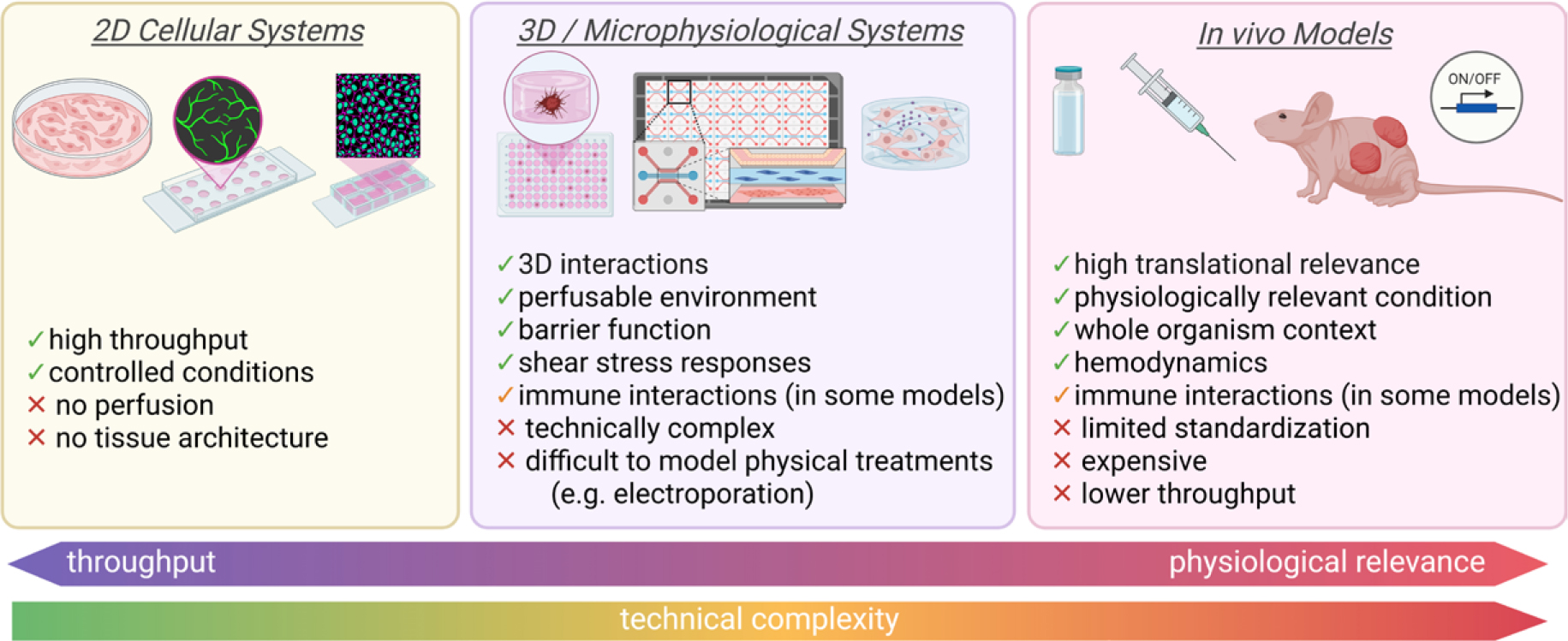
FIGURE 5.
Experimental models for studying vascular malformations (VMs) and mechanisms of BEST. These models differ in complexity, throughput capacity, and physiological relevance, as well as in their ability to recapitulate native vascular structure, hemodynamics, and immune context. Simple systems are well suited for mechanistic analyses, whereas microphysiological and in vivo models are required to investigate flow disruption and tissue remodeling. Strategic integration of complementary model systems is essential to dissect the cellular and vascular disrupting mechanisms underlying BEST. Created in BioRender. Cemazar, M. (2026) https://BioRender.com/spmxuwa