
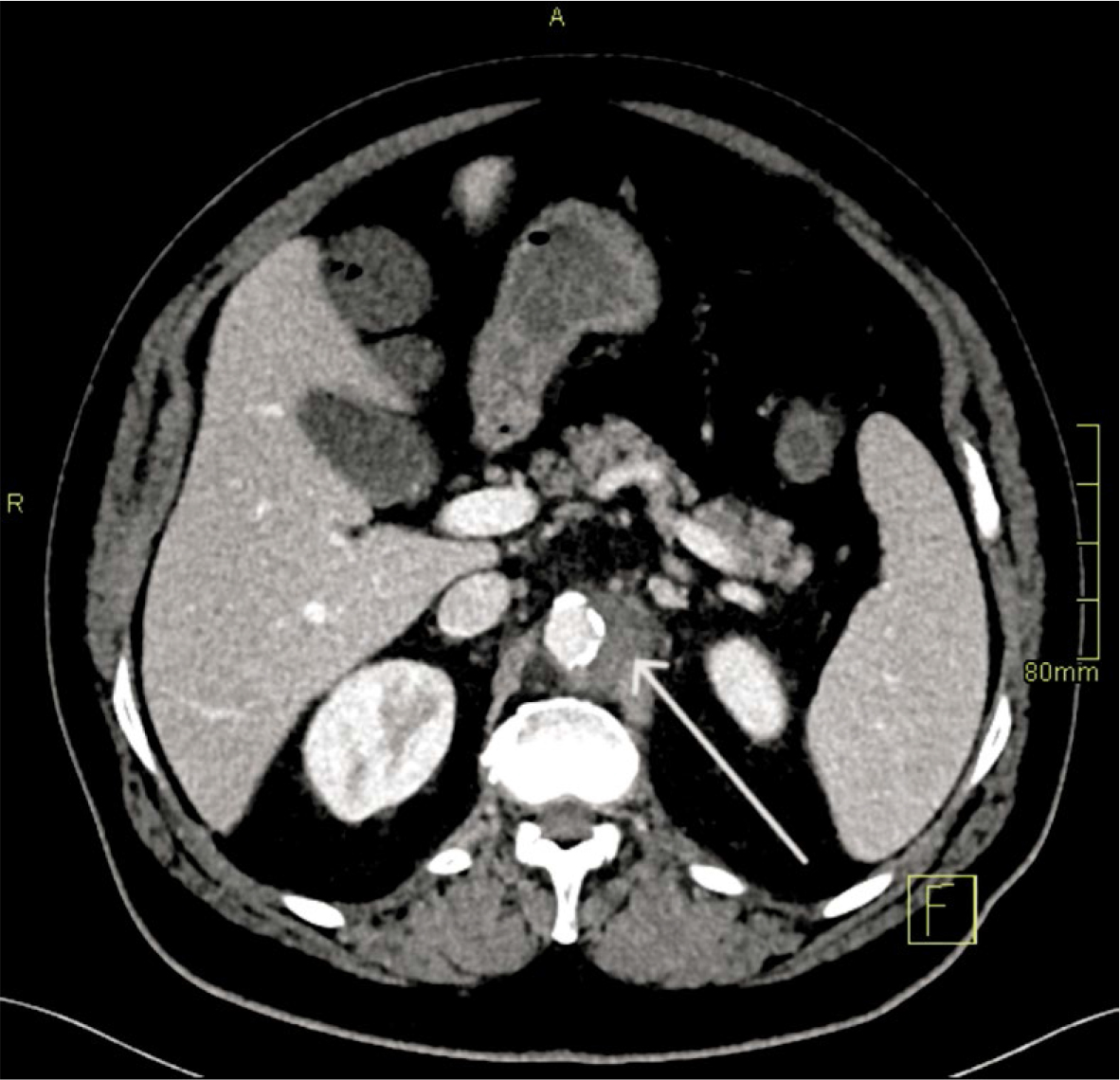
FIGURE 1.
Aortitis (Day 1). Axial CT angiography (CTA) demonstrates circumferential wall thickening and periaortic fat stranding in the paravisceral aorta, without a focal outpouching (arrow).
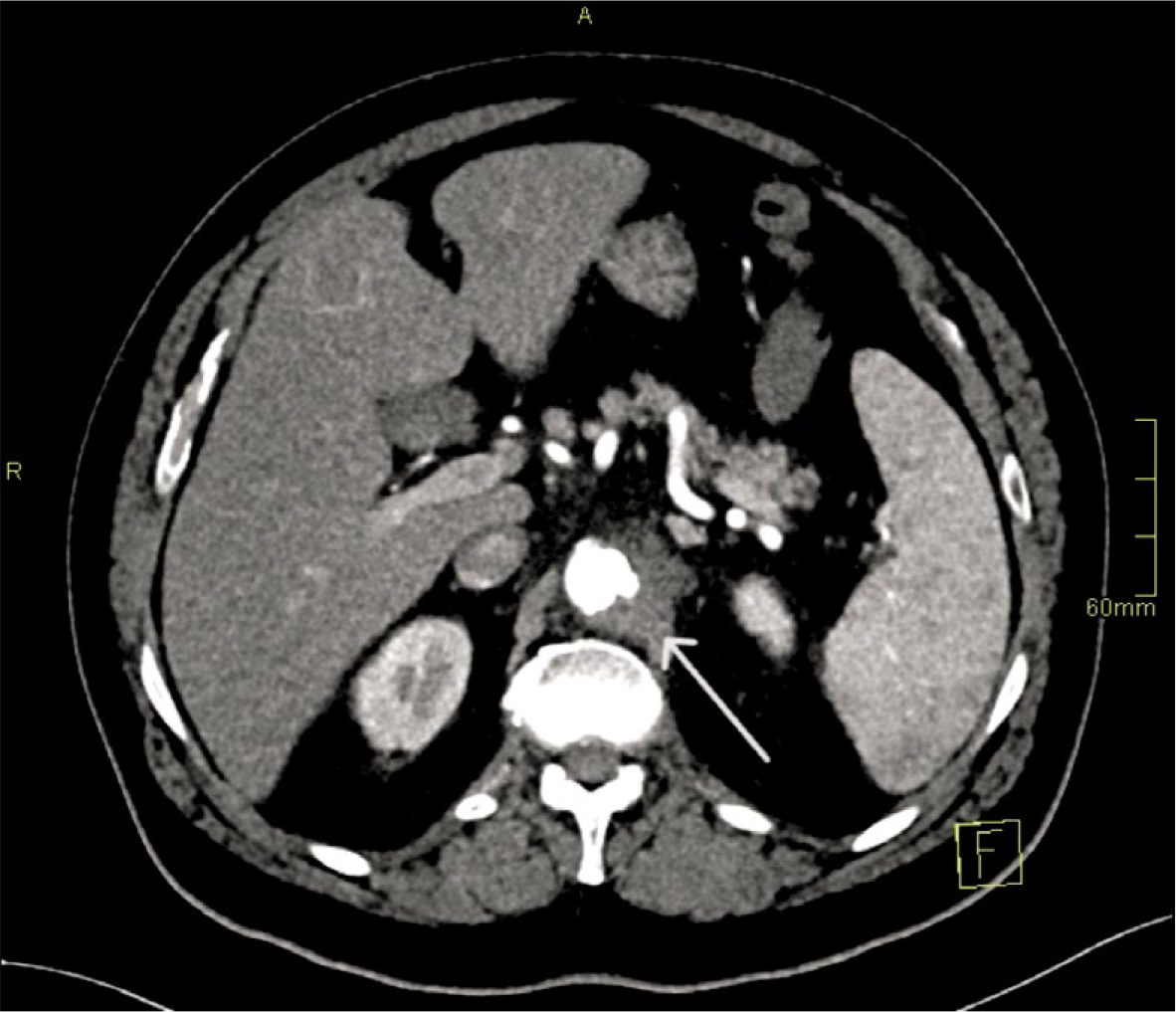
FIGURE 2.
Pseudoaneurysm formation (Day 4). Axial CT angiography (CTA) demonstrates a new focal saccular pseudoaneurysm (8 × 7 mm) arising within the inflamed paravisceral segment (arrow).
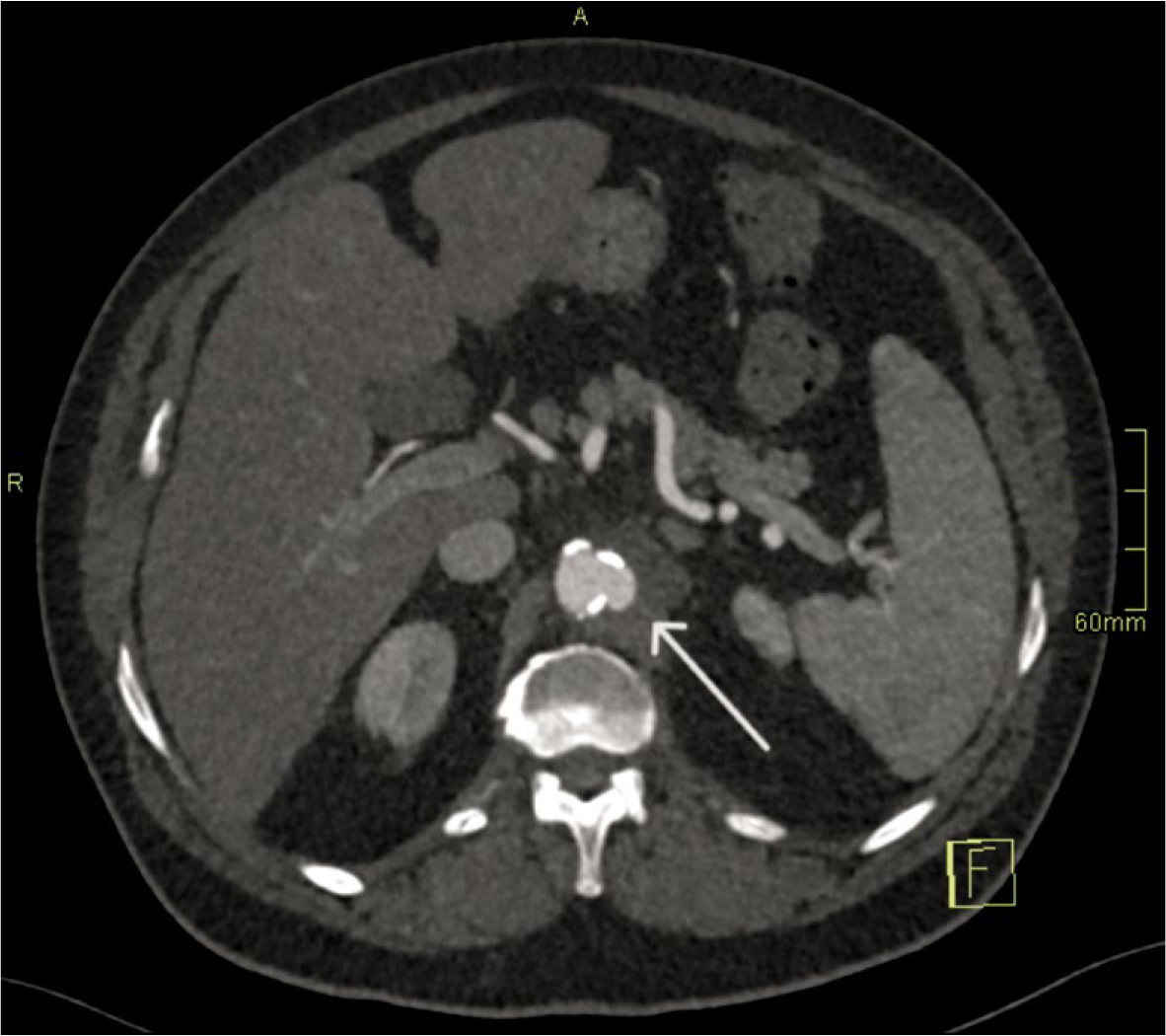
FIGURE 3.
Hyper-rapid progression (Day 6–7). Axial CT angiography (CTA) demonstrates rapid expansion of the pseudoaneurysm to 13 × 7 mm over 72 hours (arrow).
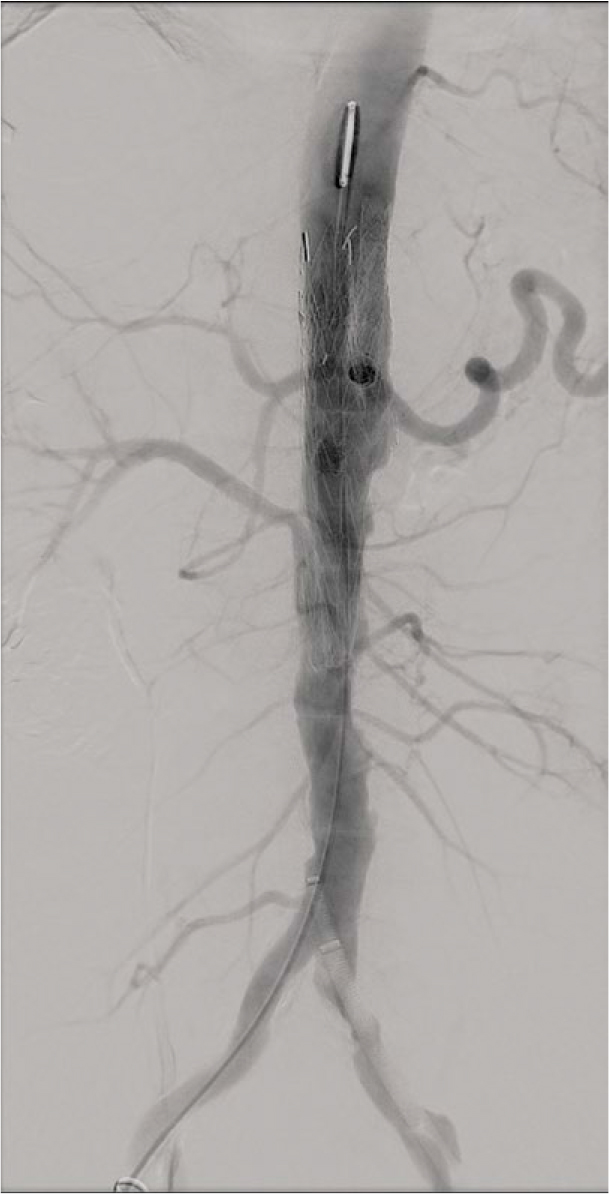
FIGURE 4.
Completion angiography after complex endovascular aortic repair (EVAR). Final angiogram confirms successful exclusion of the pseudoaneurysm with preserved flow through the visceral branch stents.
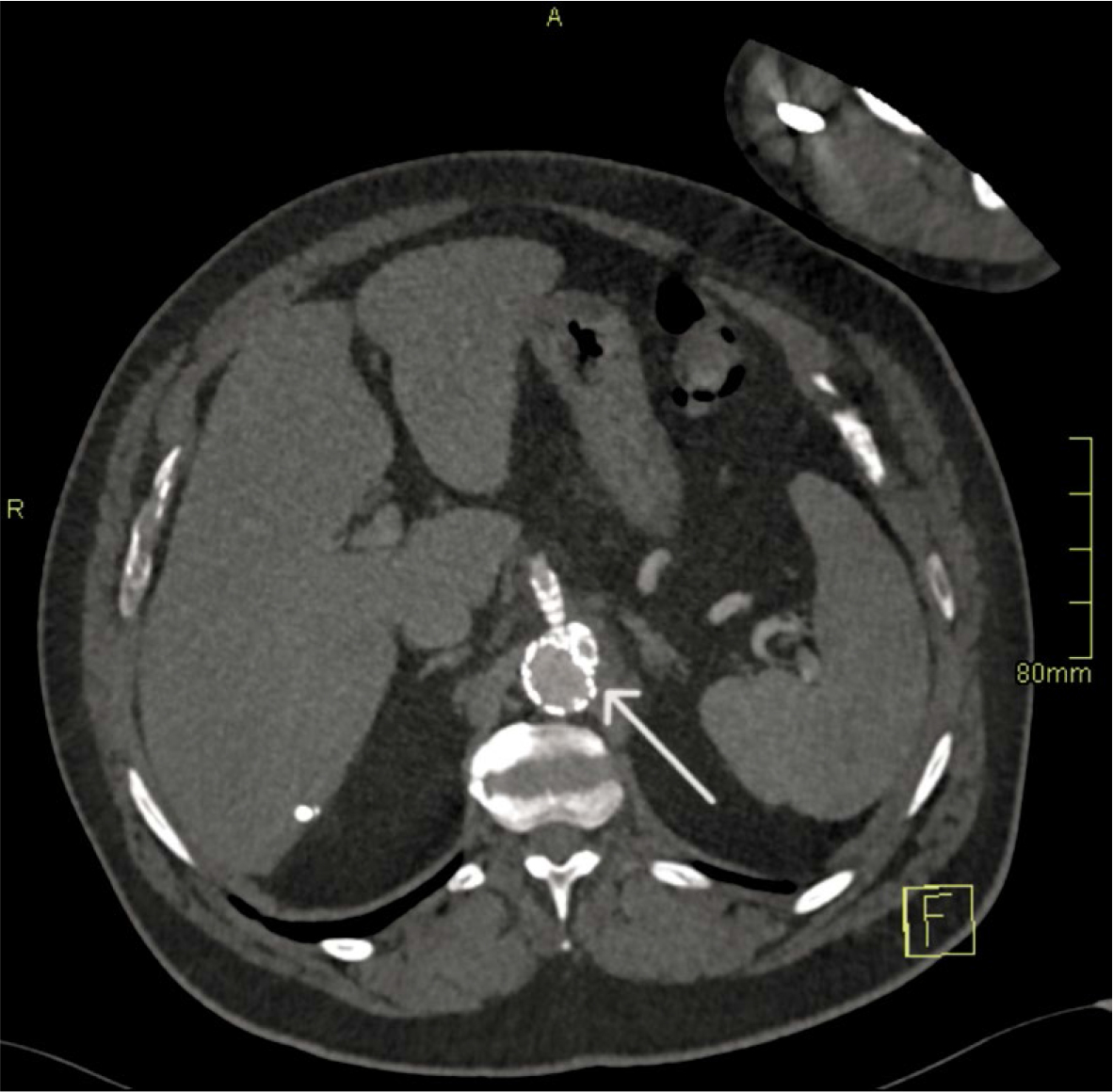
Figure 5.
Follow-up after complex endovascular aortic repair (EVAR). Axial CT angiography (CTA) demonstrates a stable excluded sac without endoleak.
TABLE 1.
Analysis of open surgical repair
| Category | Description |
|---|---|
| Advantages of OSR | Radical debridement & cure: allows for radical debridement and offers the potential for a microbiological cure. Avoidance of foreign material: avoids leaving long-term foreign material in an infected field, especially when biological grafts or homografts are used. Lower reinfection risk: demonstrated lower late reinfection risk in several case series. |
| Limitations of OSR | High perioperative mortality: associated with high mortality rates during and immediately after surgery, particularly in patients who are septic, frail, or physiologically unstable. Technical complexity: technically demanding procedure, especially involving thoracic and paravisceral disease, often resulting in prolonged ischaemia. Feasibility issues: often not feasible for High-Risk Patients (HRP) where immediate treatment is critical; delays or prolonged operations in these cases can be fatal. |
TABLE 2.
Analysis of endovascular aortic repair (EVAR)/Complex EVAR
| Category | Description |
|---|---|
| Advantages of EVAR | Minimally invasive: rapid stabilization without laparotomy or aortic clamping. Lower Early Mortality: consistently shown in multiple series and systematic reviews. High-Risk suitability: particularly attractive for High-Risk Patients (HRP), those with haemodynamic instability, hostile abdomen, or high surgical risk. Visceral perfusion: parallel-graft techniques allow for urgent preservation of visceral perfusion in anatomically complex lesions. |
| Limitations of EVAR | Long-term complications: higher rates of late reinfection, sac enlargement, or endoleak compared with OSR. Technical & device issues: complex parallel-graft constructs carry risks of gutter endoleaks and device fatigue. Maintenance: requires lifelong reliance on imaging follow-up and antibiotic suppression. |