Have a personal or library account? Click to login
IgG Fc binding protein (FCGBP) inhibits the development of laryngeal squamous cell carcinoma and cisplatin resistance through the PIGR/JAK2/STAT3 pathway Cover

IgG Fc binding protein (FCGBP) inhibits the development of laryngeal squamous cell carcinoma and cisplatin resistance through the PIGR/JAK2/STAT3 pathway

Open Access
|Jan 2026

Figures & Tables

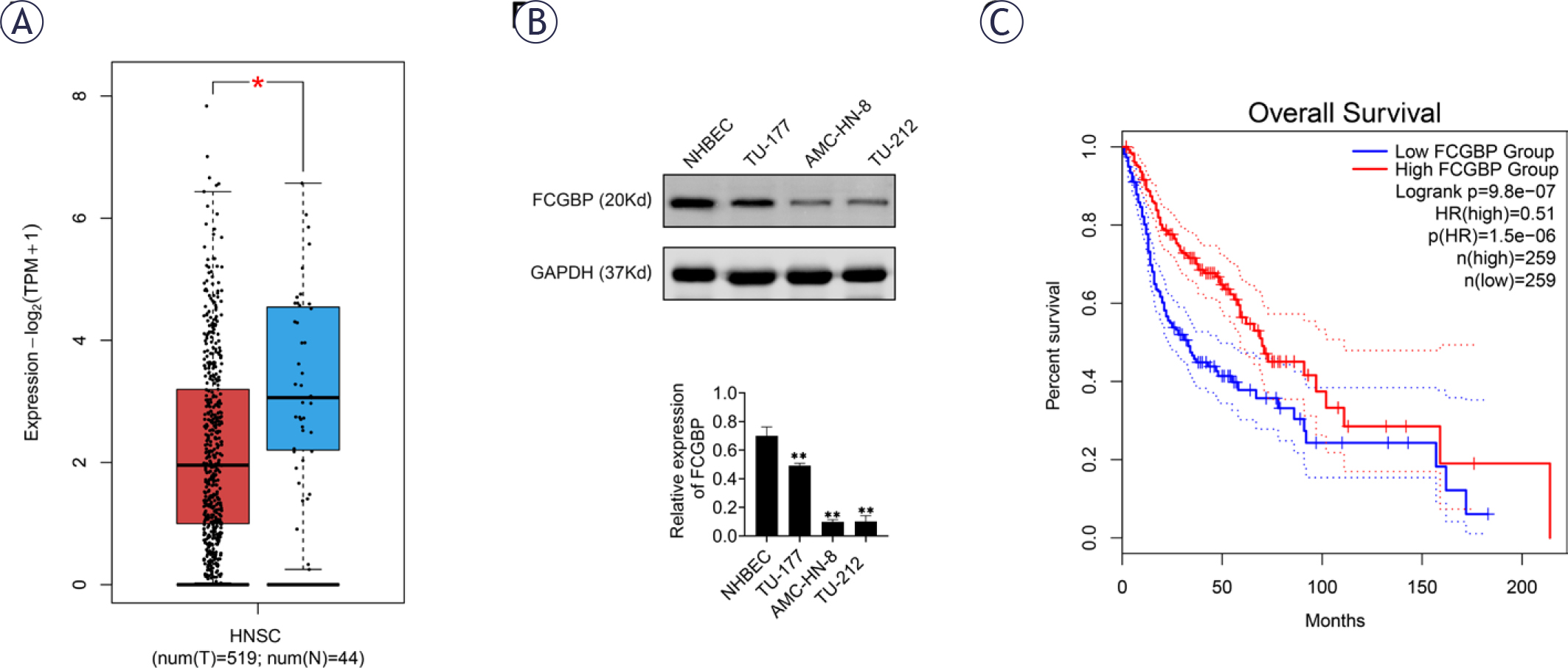
FIGURE 1.

Fc binding protein (FCGBP) is downregulated in laryngeal squamous cell carcinoma (LSCC). (A) The Gene Expression Profiling Interactive Analysis 2 (GEPIA2) database showing differential FCGBP expression between head and neck squamous cell carcinoma tissues and normal tissues. (B) Western blot analysis of FCGBP protein expression in LSCC cell lines (AMC-HN-8, TU-212, TU-177) and normal human bronchial epithelial cells (NHBEC). (C) GEPIA analysis of the association between FCGBP expression and overall survival in LSCC patients. Values are presented as mean ± SD. ** p < 0.01 vs. NHBEC; n = 3.
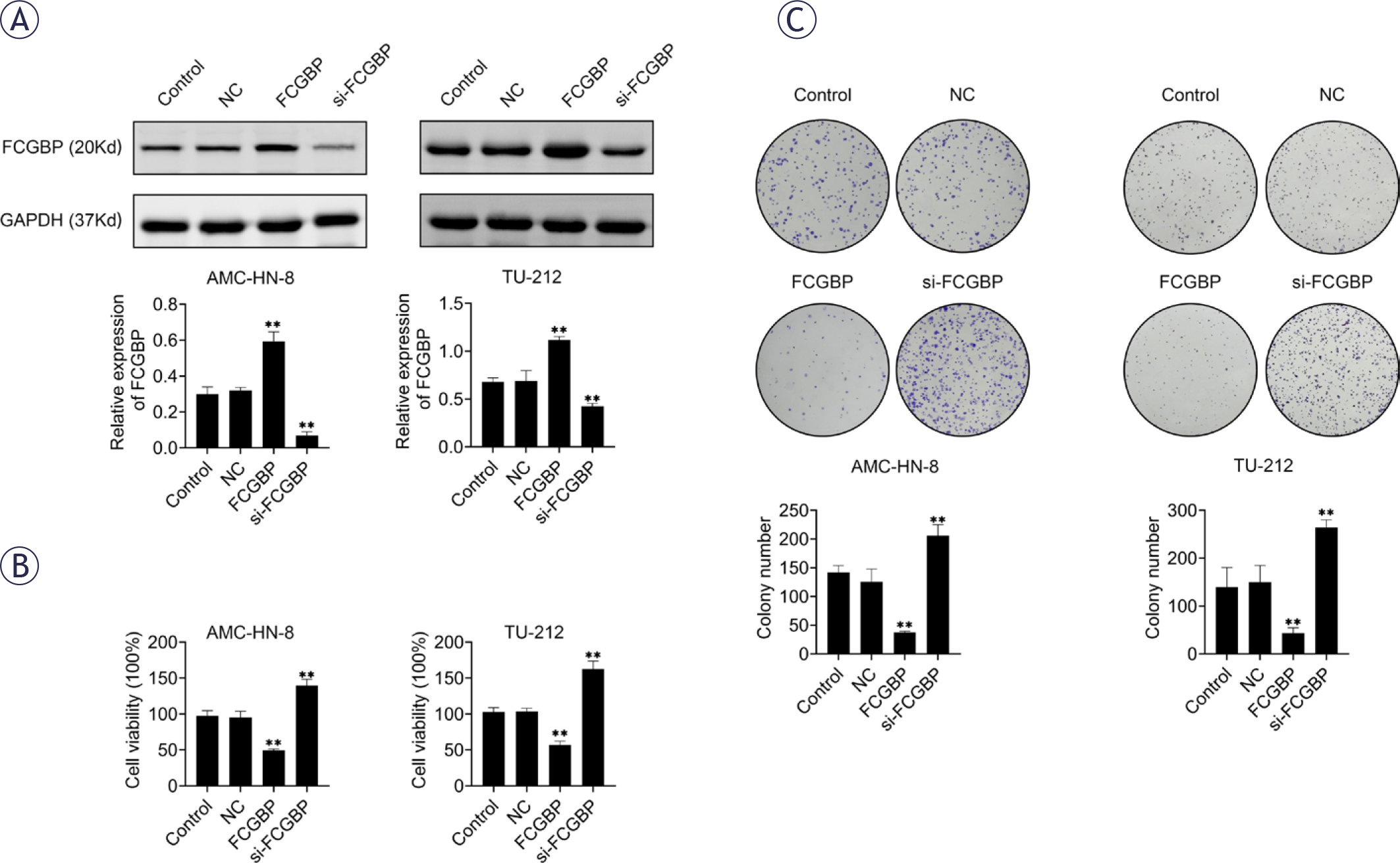

FIGURE 2.

Fc binding protein (FCGBP) inhibits the proliferation of laryngeal squamous cell carcinoma (LSCC) cells. (A) Western blot analysis confirming FCGBP overexpression in AMC-HN-8 and TU-212 cells. (B) Cell viability measured by Cell Counting Kit-8 (CCK-8) assay. (C) Colony formation assessed by crystal violet staining. Values are presented as mean ± SD. ** p < 0.01 vs. NC; n = 3.
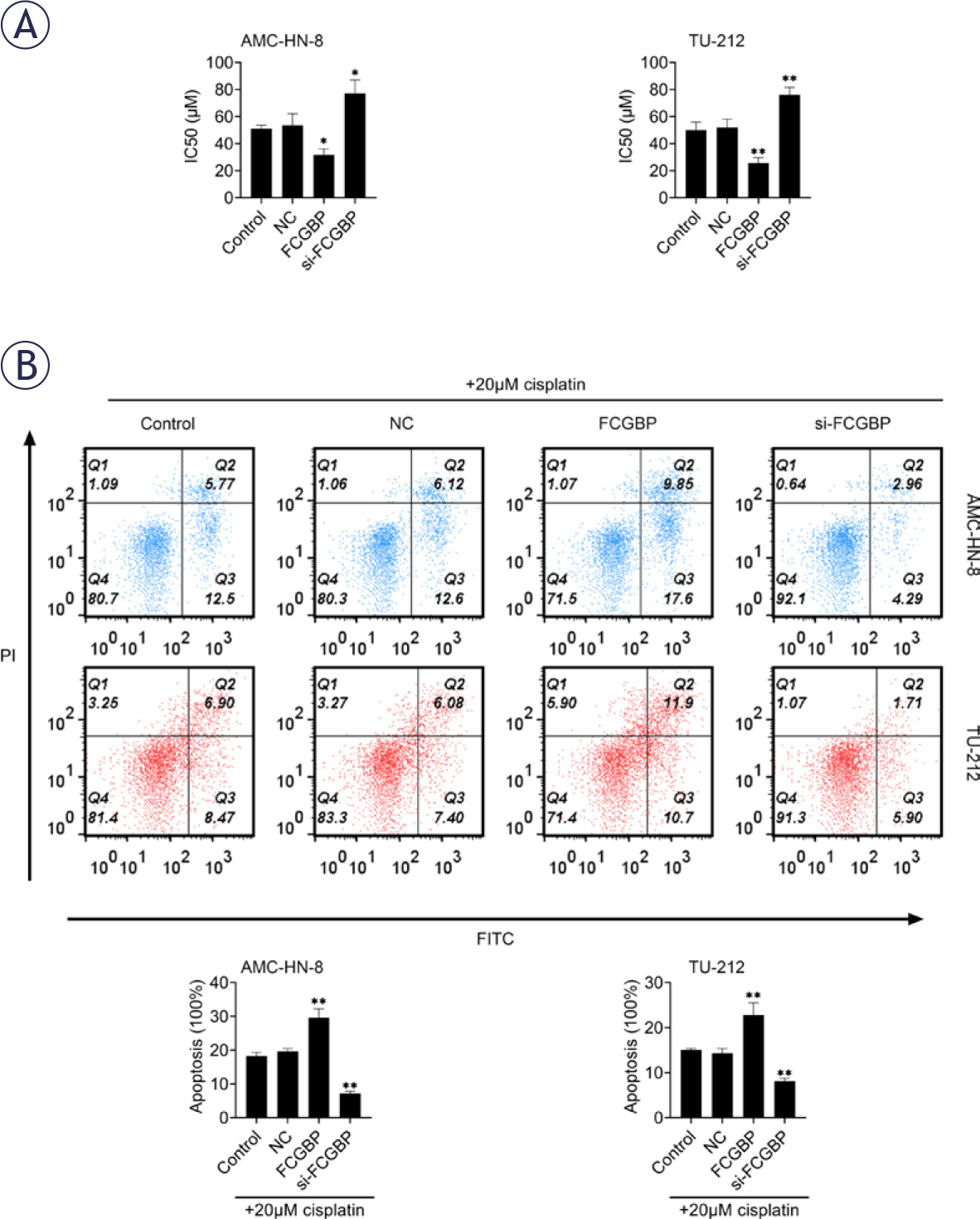

FIGURE 3.

Fc binding protein (FCGBP) reduces cisplatin (CDDP) resistance in laryngeal squamous cell carcinoma (LSCC). (A) Cell Counting Kit-8 (CCK-8) assay used to determine the IC50 of CDDP in AMC-HN-8 and TU-212 cells. (B) Flow cytometry analysis of apoptosis following treatment with 20 μM CDDP. Values are presented as mean ± SD. * p < 0.05, ** p < 0.01 vs. NC; n = 3.
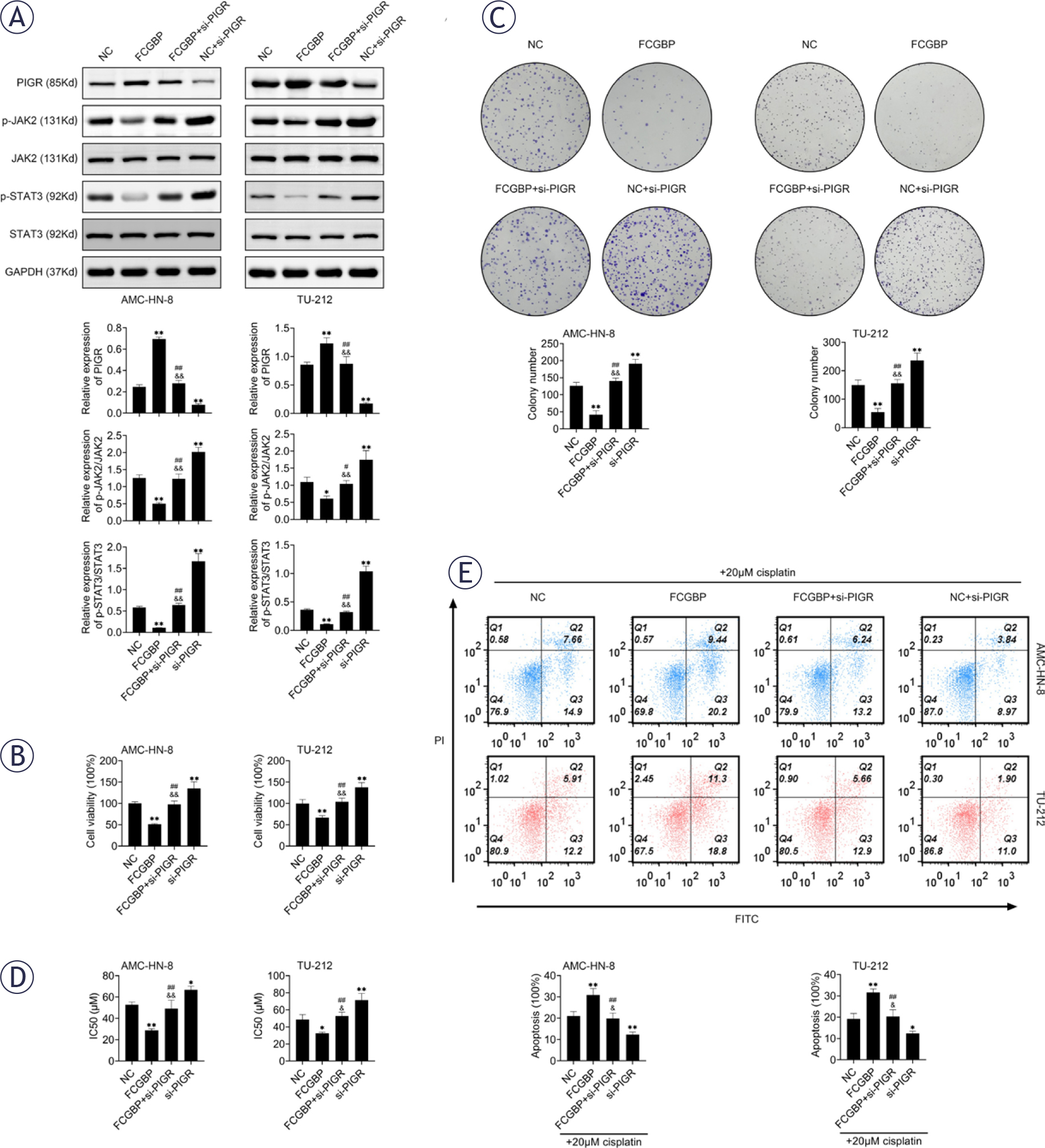

FIGURE 4.

Fc binding protein (FCGBP) inhibits laryngeal squamous cell carcinoma (LSCC) cell growth and cisplatin (CDDP) resistance through the PIGR/JAK2/STAT3 pathway. (A) Western blot analysis of PIGR, JAK2, p-JAK2, STAT3, and p-STAT3 protein levels. (B) Cell Counting Kit-8 (CCK-8) assay for cell viability. (C) Colony formation assessed by crystal violet staining. (D) CCK-8 assay for determination of CDDP IC50 in AMC-HN-8 and TU-212 cells. (E) Apoptosis detection by flow cytometry in the presence of 20 pM CDDP. Values are presented as mean ± SD. * p < 0.05, ** p < 0.01 vs NC; # p < 0.05, ## p < 0.01 vs FCGBP; & p < 0.05, && p < 0.01 vs si-PIGR. n=3.
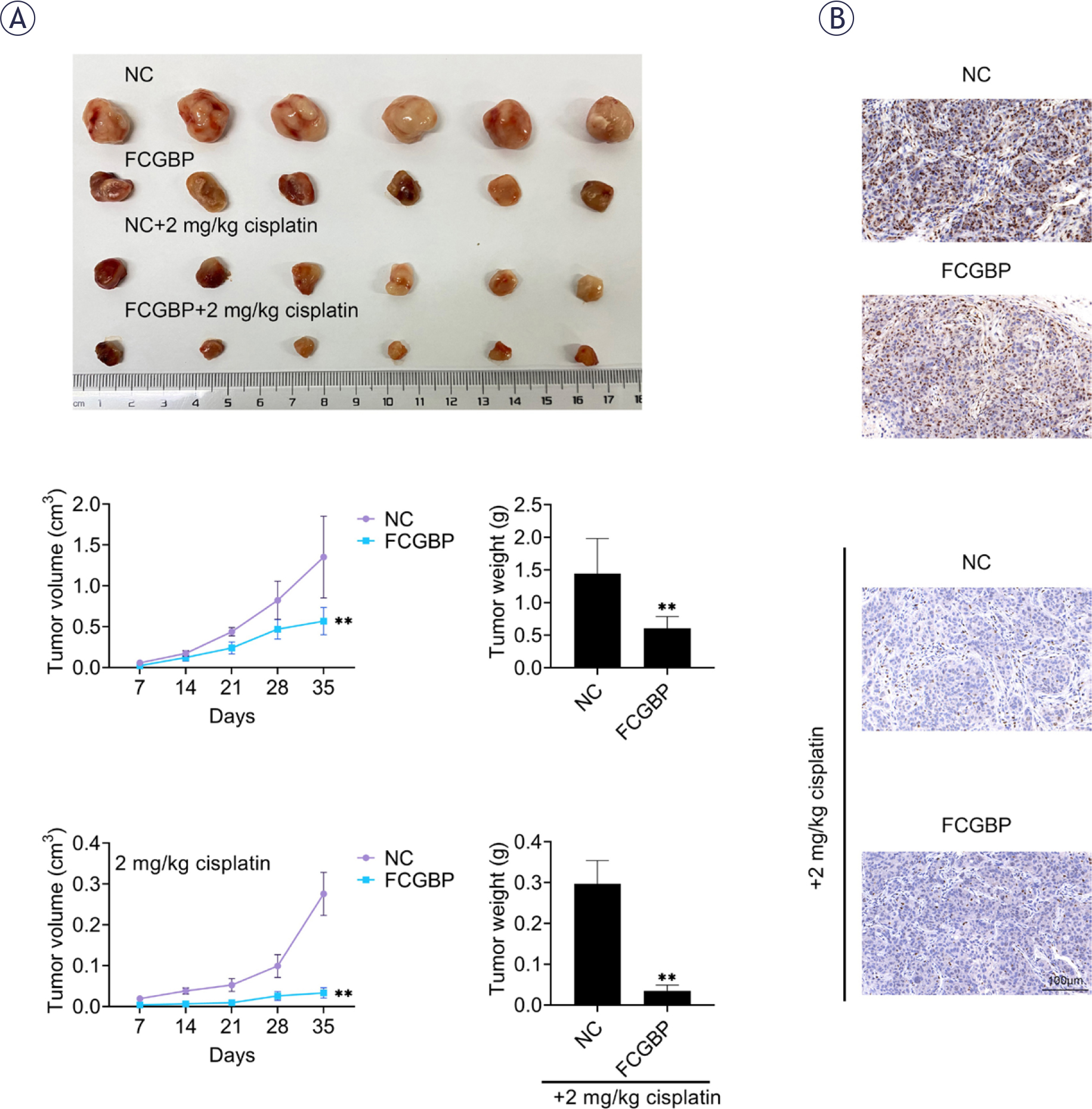

FIGURE 5.

Fc binding protein (FCGBP) suppresses tumor growth and enhances cisplatin (CDDP) sensitivity in vivo. (A) Tumor size and weight in xenograft models. (B) Immunohistochemical staining of Ki-67 in tumor sections. Values are presented as mean ± SD. ** p < 0.01 vs NC. n=6.
DOI: https://doi.org/10.2478/raon-2026-0003 | Journal eISSN: 1581-3207 | Journal ISSN: 1318-2099
Language: English
Submitted on: Jun 20, 2025
|
Accepted on: Jul 25, 2025
|
Published on: Jan 21, 2026
In partnership with: Paradigm Publishing Services
Publication frequency: 4 issues per year

© 2026 Xuemei Wan, Yunlan Zeng, Ming Xiong, Lin Chen, Yundan Bai, published by Association of Radiology and Oncology
This work is licensed under the Creative Commons Attribution 4.0 License.

AHEAD OF PRINT