
TABLE 1.
Patients’ characteristics
| N | % | |
|---|---|---|
| Number of patients: | 131 | |
| Gender | ||
| Male | 59 | 45.0% |
| Female | 72 | 55.0% |
| Age | ||
| Age range | 28–89 | / |
| Median age | 65 | / |
| Stages (Ann Arbor): | ||
| Stage I | 19 | 14.5% |
| Stage II | 25 | 19.0% |
| Stage III | 21 | 16.0% |
| Stage IV | 66 | 50.4% |
| Median stage: | 4 (range 1–4) | |
| Other characteristics | ||
| Bone marrow involvement | 41 | 31.3% |
| Elevated LDH level | 77 | 58.8% |
| B symptoms | 65 | 49.6% |
| IPI group: | ||
| Low risk | 32 | 24.4% |
| Low-intermediate risk | 31 | 23.7% |
| High-intermediate risk | 37 | 28.2% |
| High risk | 31 | 23.7% |
| Median IPI value: | 3 (range 0-5) | |
| Treatment | ||
| R-CHOP/R-CHOP like | 128 | 97.7% |
| R-COEP | 2 | 1.5% |
| Palliative care | 1 | 0.8% |
| Treatment response | 130 | |
| CR | 65 | 50.0% |
| PR | 48 | 36.9% |
| SD | 1 | 0.8% |
| PD | 16 | 12.3% |
1 CR = complete response; IPI = International Prognostic Index; PD =progressive disease; PR = partial response; R-CHOP = rituximab, cyclophosphamide, doxorubicin, vincristine and prednisone; R-CHOP like = R-CHOP +/- middle dose methotrexate; R-COEP = rituximab, cyclophosphamide, etoposide, vincristine and prednisone; SD = stable disease
TABLE 2.
Concordance between the IHC and NGS method in determination of the COO. The reference method was NGS. A pairwise comparison between the results of both methods was performed for each patient. Each patient who was subclassified into the same (ABC or GCB) subtype by both NGS and IHC was considered concordant. Patients who were subclassified differently by IHC and NGS were considered discordant
| COO by NGS | COO by IHC | Concordance (%) | |
|---|---|---|---|
| ABC subtype | 42 | 31 | 73.8 |
| GCB subtype | 62 | 50 | 80.6 |
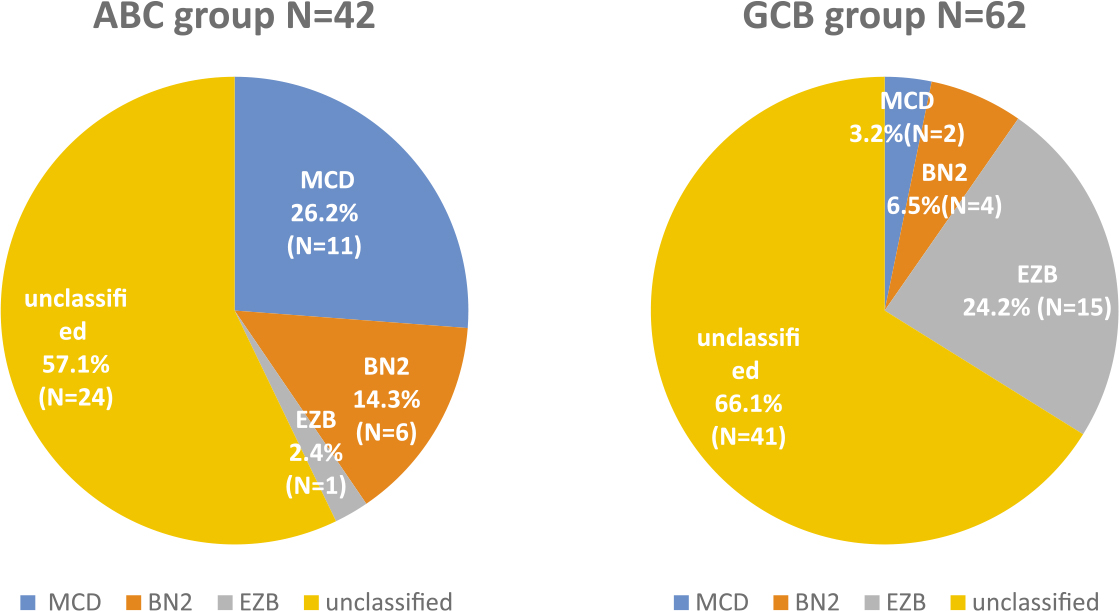
FIGURE 1.
New genetic subtypes in the context of COO groups ABC and GCB, as determined by NGS (N1 group is not included in the Figure since there were no patients with this subtype).
ABC = activated B-cell; COO = cell of origin; GCB = germinal center B-cell; NGS = next generation sequencing
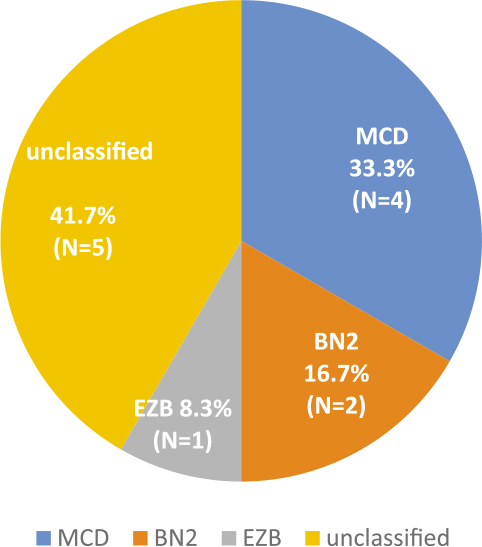
FIGURE 2.
New genetic subtypes in the context of COO unclassified group, as determined by NGS (N1 group is not included in the Figure since there were no patients with this subtype).
COO = cell of origin; NGS = next generation sequencing
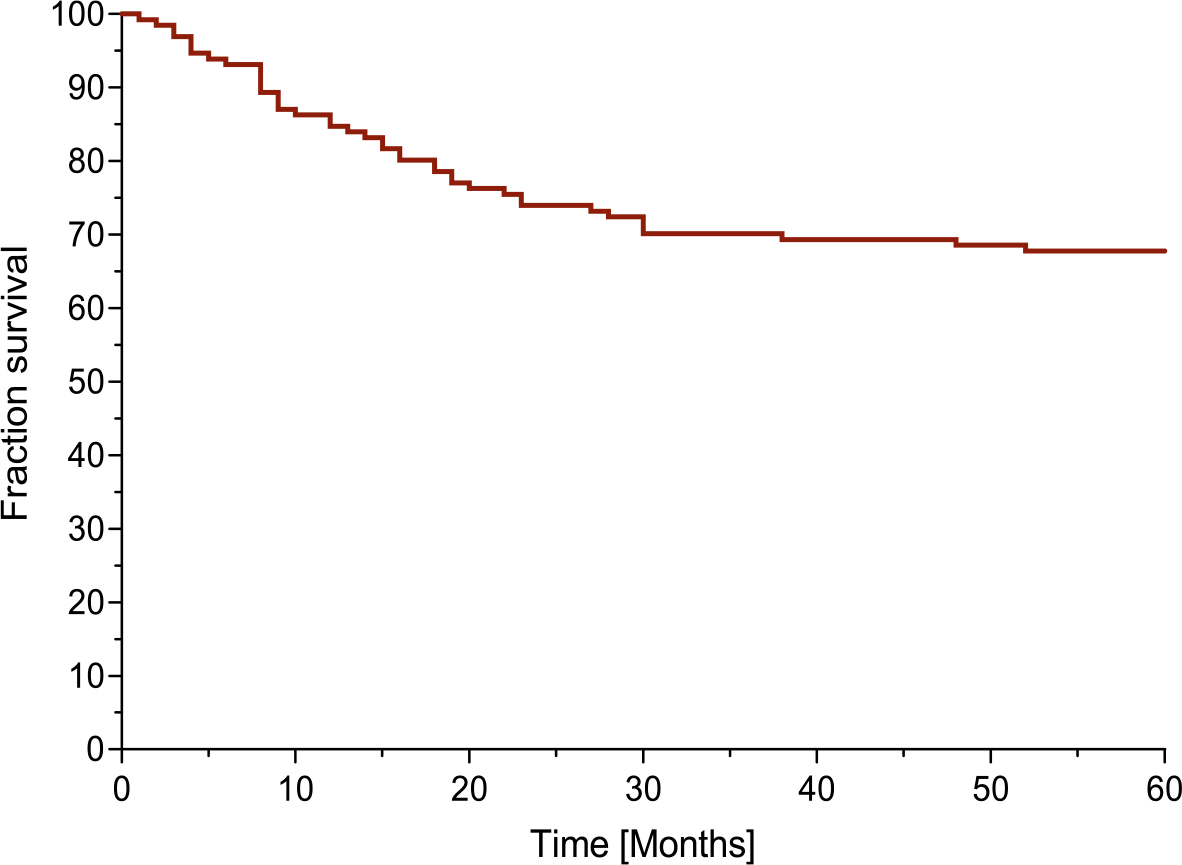
FIGURE 3.
Overall survival (Kaplan-Meier) of all patients (N = 131).
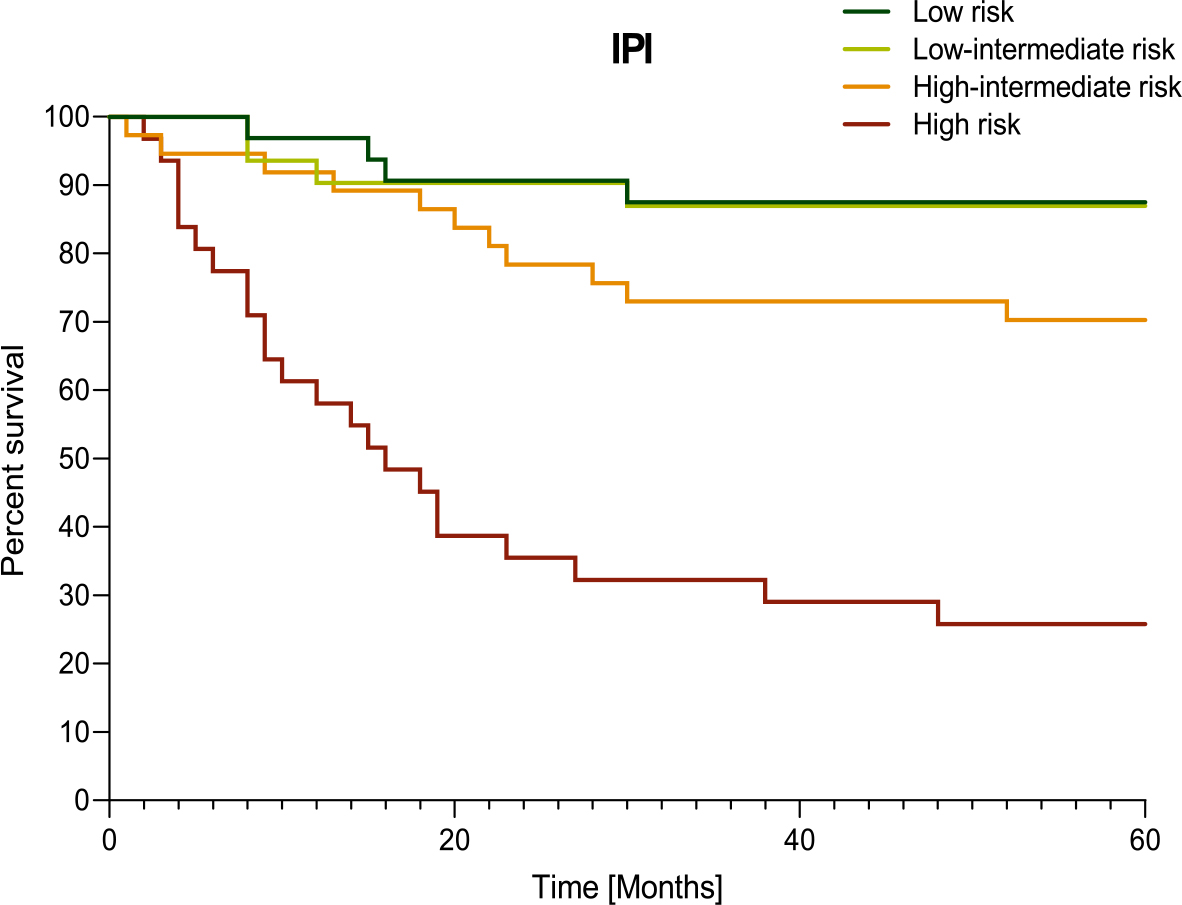
FIGURE 4.
Overall survival (Kaplan-Meier) of patients according to International Prognostic Index (IPI) risk groups; (p < 0.0001).