
TABLE 1.
Patient characteristics
| Characteristics | Count (proportion %) | |
|---|---|---|
| Number of patients | Total | 71 (100) |
| Age; mean (+/−sd) (yr) | 62 (12) | |
| Gender | Male | 43 (61) |
| Female | 28 (39) | |
| ECOG performance status | 0 | 30 (42) |
| 1 | 41 (58) | |
| AJCC | III.D | 1 (1) |
| M1a | 16 (23) | |
| M1b | 10 (14) | |
| M1c | 32 (45) | |
| M1d | 12 (17) | |
| Anatomic site of primary | Cutaneous | 58 (82) |
| Ocular | 4 (6) | |
| Mucosal | 3 (4) | |
| Unknown primary | 6 (8) | |
| Prior radical treatment | Surgical resection | 38 (54) |
| Surgical resection + adjuvant RT | 7 (10) | |
| Surgical resection + adjuvant RT + adjuvant ICI | 4 (6) | |
| Surgical resection + adjuvant RT + adjuvant TKI | 2 (3) | |
| Surgical resection + adjuvant TKI | 2 (3) | |
| Surgical resection + adjuvant interferon alpha | 2 (3) | |
| None | 16 (23) | |
| Line of systemic treatment for metastatic disease | 1st line | 63 (89) |
| 2nd line | 8 (11) | |
| Baseline LDH | Elevated | 22 (31) |
| Normal | 49 (69) | |
| Actionable mutation | BRAF wild type | 21 (30) |
| BRAF V600E | 28 (39) | |
| BRAF V600K | 10 (14) | |
| BRAF V600 - others | 1 (1) | |
| NRAS | 11 (16) | |
| Type of systemic treatment | PD-1 inhibitors | 47 (66) |
| Combination of PD-1 and CTLA-4 inhibitors | 24 (34) |
[i] AJCC = American Joint Classification of Cancer; BRAF = V-Raf Murine Sarcoma viral oncogene homolog B; CTLA-4 = Cytotoxic T-lymphocyte-associated antigen 4; ECOG = Eastern Cooperative Oncology Group; ICI = Immune checkpoint inhibitors; No = number of patients; NRAS = Neuroblastoma RAS viral homolog; PD-1 = Programmed death-1; SD = standard deviation; RT = radiotherapy; TKI = Tyrosine kinase inhibitors
TABLE 2.
Clinical diagnosis of immune-related adverse events
| irAE | Any Grade No (%) | Grade 3–5 No (%) | Time to onset of irAE (mean ± SD) [days] |
|---|---|---|---|
| irPneumonitis | 3 (4) | 0 | 104 ± 58 |
| irColitis | 4 (6) | 2 (3) | 101 ± 34 |
| Hypothyroidism | 10 (14) | 0 | 91 ± 40 |
| Hyperthyroidism | 7 (10) | 0 | 51 ± 50 |
TABLE 3.
Timing of 18F-FDG PET/CT relative to immune-checkpoint inhibitors (ICI) treatment initiation
| Number of patients | Range (min–max) (days) | Mean (days) | Median (days) | SD (days) | |
|---|---|---|---|---|---|
| Pre-Treatment | 71 | [−44, −1] | −16 | −16 | 10 |
| W4 (28 days) | 68 | [21, 62] | 34 | 34 | 7 |
| W16 (112 days) | 55 | [105,150] | 115 | 112 | 8 |
| W32 (224 days) | 48 | [196,280] | 226 | 224 | 12 |
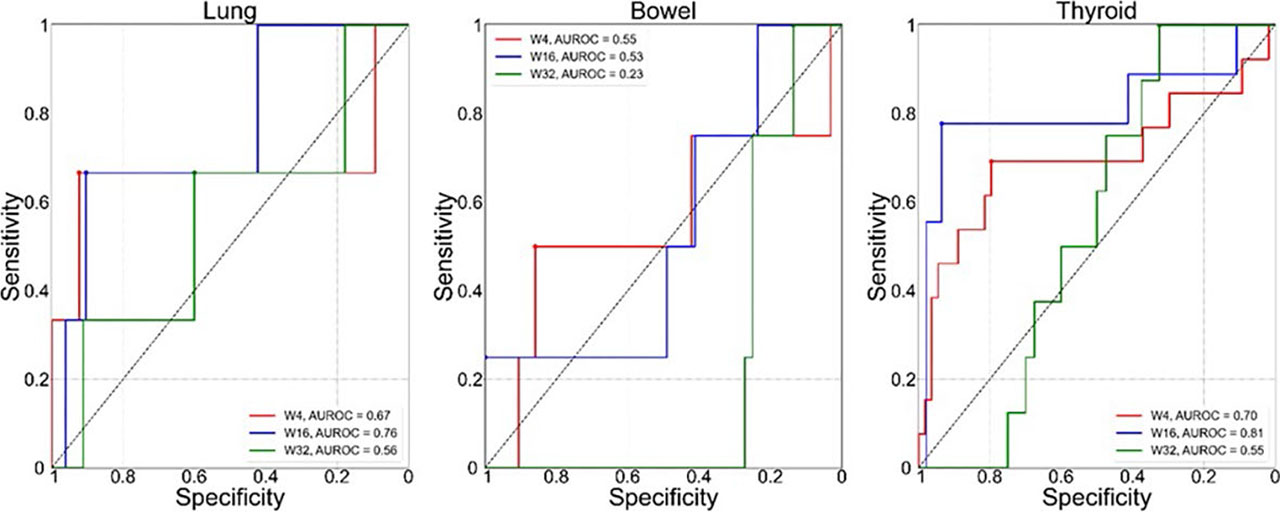
FIGURE 1.
ROC curves for the optimal SUV percentile (SUVX%) for predicting irAE status in the three target organs:lung (left), bowel (middle), thyroid (right). Each plot shows comparison of ROC based on the value of SUVX% extracted from W4 (red), W16 (blue) and W32 (green) 18F-FDG PET/CT. Values of corresponding area under the ROC curve (AUROC) are shown in the legends.
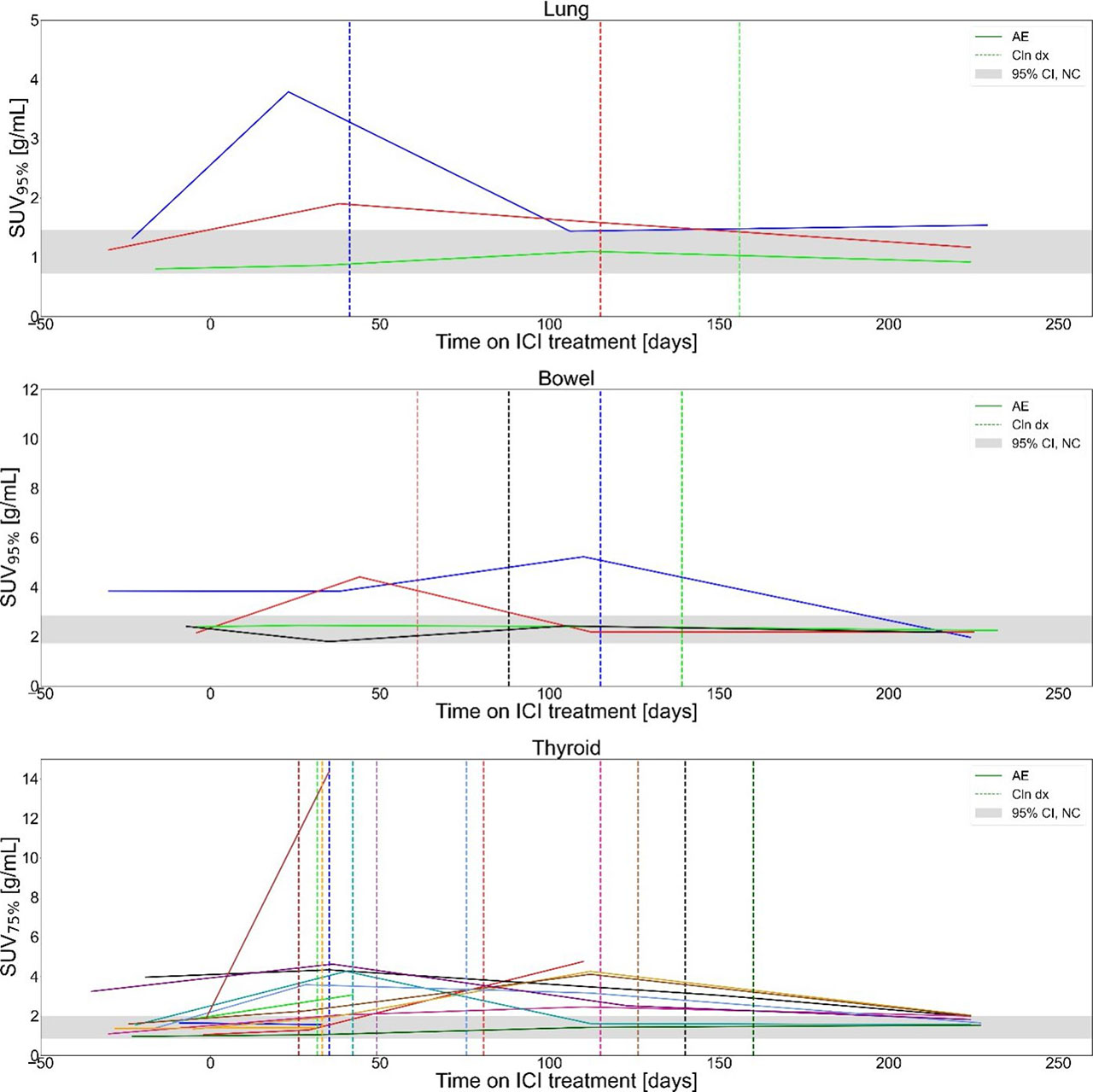
FIGURE 2.
Longitudinal optimal SUV percentile (SUVX%) for patients with clinically detected immune-related adverse events (irAE) in bowel, lung and thyroid, included in study. The grey band indicates the 95% confidence interval for organ SUVX% of patients who did not experience irAE in11. Colours were randomly selected for participants in each plot, vertical dashed lines of matching colour indicate dates of clinical irAE identification.
ICI = Immune checkpoint inhibitors
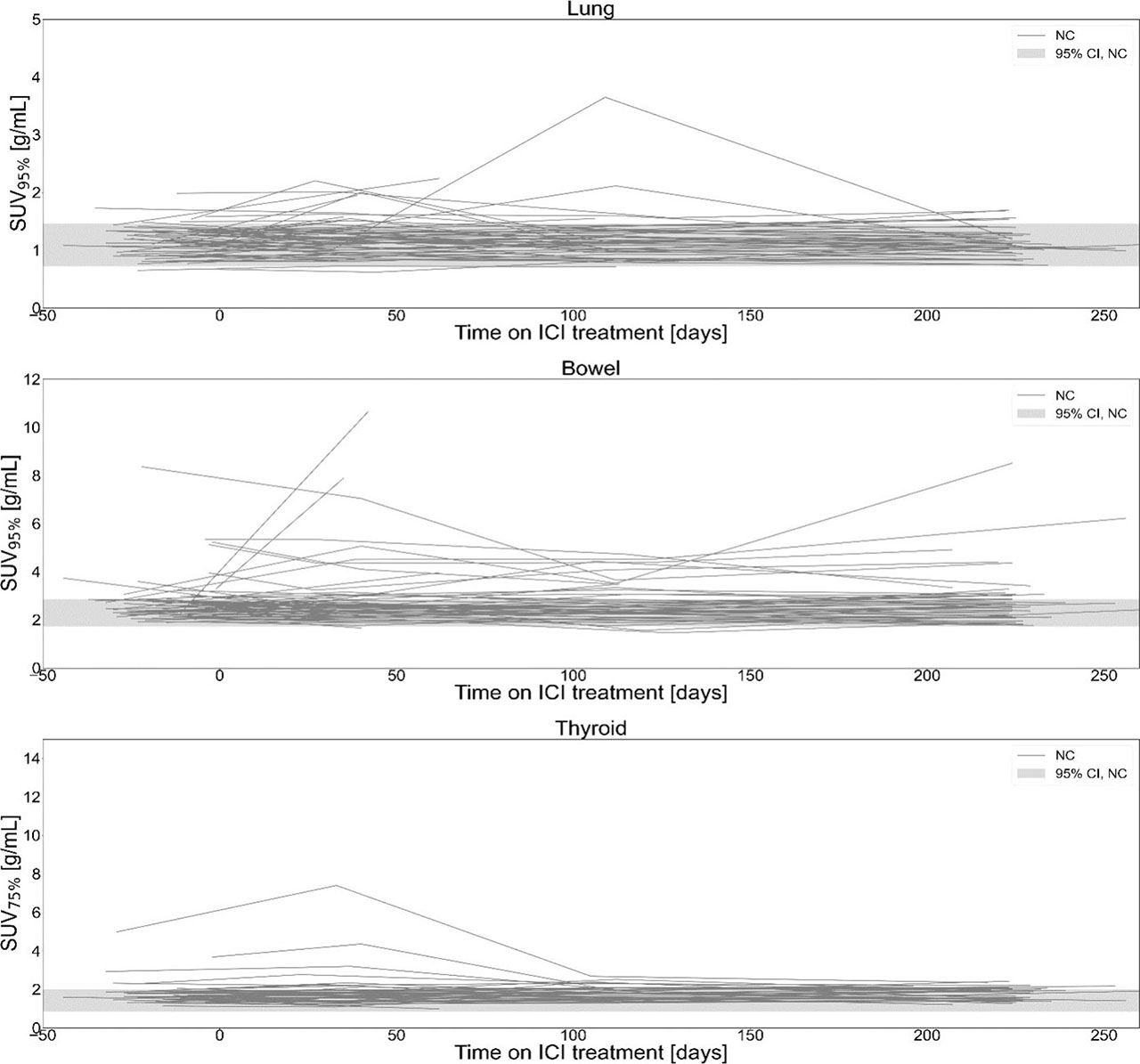
FIGURE 3.
Longitudinal optimal SUV percentile (SUVX%) for patients without clinically detected immune-related adverse events (irAE) in bowel, lung and thyroid, included in study. The grey band indicates the 95% confidence interval for organ SUVX% of patients who did not experience irAE in11.
ICI = Immune checkpoint inhibitor
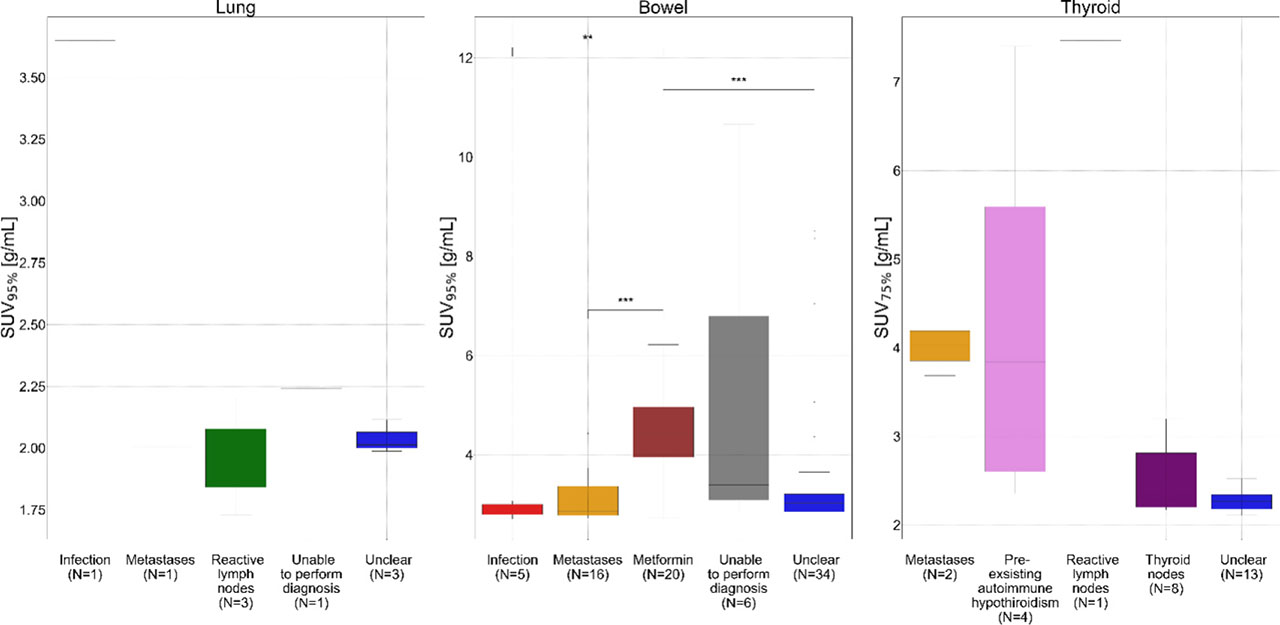
FIGURE 4.
Boxplot shows values of optimal SUV percentile (SUVX%) above thresholds for immune-related adverse events (irAE) diagnosis in patients without clinically diagnosed irAE in lung, bowel, and thyroid. Values of SUVX% are separated based on reason for SUVX% above threshold, identified from patient’s chart. Each image timepoint and SUVX% extracted from that image is considered as separate instance so multiple points can be contributed by a single patient. p-value was calculated using Mann-Whiteney U test. P-value is shown only for pairings with statistically significant differences
* = shows p-value between 0.05 and 0.01; ** = for p-value between 0.01 and 0.001; *** = for p-value between 0.001 and 0.00001
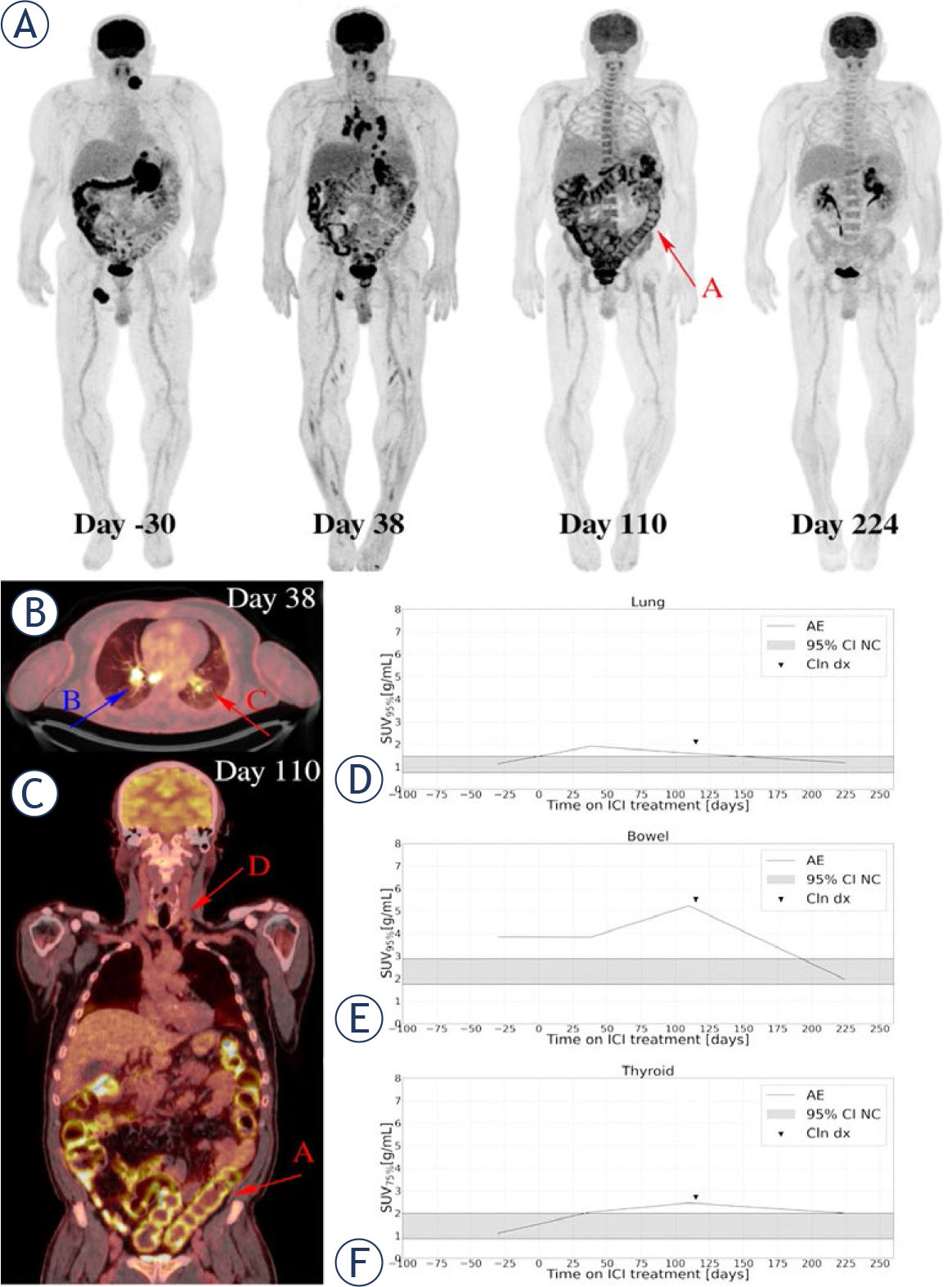
FIGURE 5.
A 58-year-old patient, who was diagnosed in April 2022 with NRAS mutated melanoma of unknown primary was treated with ipilimumab/nivolumab combination. Serial 18F-FDG PET maximum intensity projections were obtained per study protocol (A). The baseline image (day -30) showed sites of metastases in soft tissue, adrenal gland and spleen. Early time point (W4, day 38) image showed higher metabolic activity in mediastinal lymph nodes typical for granulomatous sarcoid like reaction, which is also seen on axial slices of the day 38 imaging study fused 18F-FDG PET/CT (B, BLUE ARROW B), and diffuse lung opacities with mildly elevated 18F-FDG uptake (B RED ARROW C). Patient reported of having no respiratory symptoms. Partial response in lymph nodes and in the spleen was described, and metabolic progression of the adrenal gland metastasis was observed. Day 110 (W16) image showed elevated 18F-FDG uptake in the thyroid gland (C RED ARROW D), lung, and colon (C, RED ARROW A) reflecting multiple irAE. Coronal slices of the day 110 imaging study on fused 18F-FDG PET/CT (C). On day 115 patient reported of having diarrhoea without respiratory or other symptoms, thyroid hormone laboratory test was pathological. Colonoscopy with biopsy was performed and examination by endocrinologist. IrColitis grade 2 and irThyroiditis grade 2 were confirmed. irPneumonitis grade 1 was confirmed based on imaging, no invasive procedure with bronchoscopy was performed for confirmation due to absence of respiratory symptoms and significant irColitis at the same time. After treatment with systemic corticosteroids, diarrhoea resolved. Images on day 224 (W32) were showing resolutions of all irAE and complete metabolic response in all metastatic lesions except progression in adrenal gland. This one metastatic lesion was surgical resected. Due to multiple irAE, the patient then stopped ICI treatment. Quantification of organ 18F-FDG PET uptake demonstrated elevated uptake in lung and preceded clinical symptoms (D), elevated uptake in bowel corresponded with the time of clinical diagnosis of irColitis (E) as well as elevated uptake in thyroid corresponded with clinical diagnosis of irThyroiditis (F).
AE = adverse events(irAE
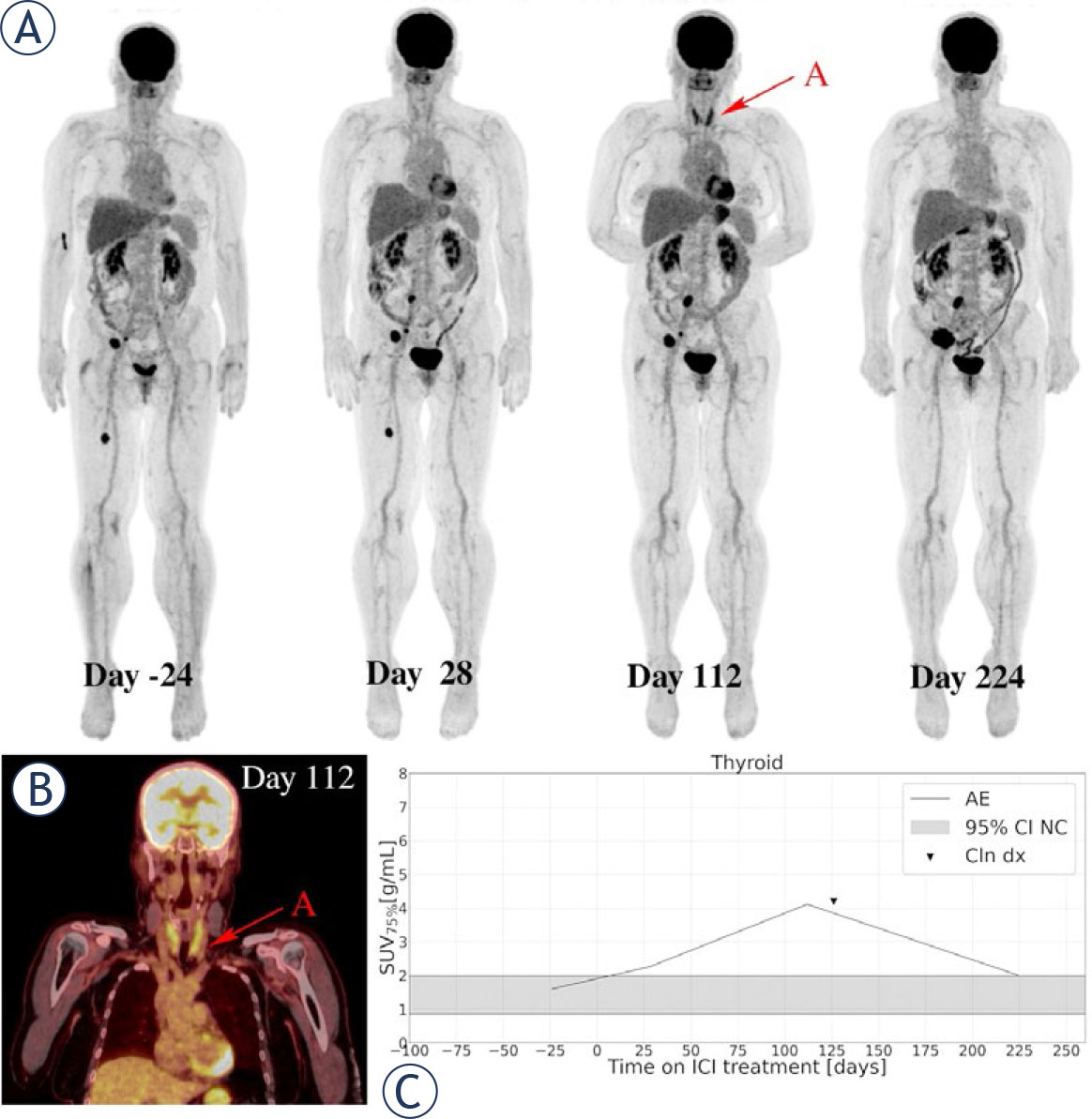
FIGURE 6.
A 60-year-old female patient with metastatic BRAF V600E-mutated cutaneous melanoma, diagnosed in September 2021, was treated with pembrolizumab in the first-line setting. Serial 18F-FDG PET maximum intensity projections were obtained per protocol (A). The baseline 18F-FDG PET/CT image (day -24) showed metastatic disease present in soft tissue. Day 28 (W4) imaging study showed moderately increased colon uptake and heterogeneous response of all metastatic lesions. Patient had no symptoms of irColitis. Image at day 112 (W16) showed again a heterogeneous response of melanoma metastases and marked increase in 18F-FDG uptake in the thyroid gland (RED ARROW A), which can also be observed on coronal slice of the day 112 imaging study on fused 18F-FDG PET/CT (B). Patient was confirmed to have irThyroiditis on day 126, based on thyroid hormone laboratory test and examination of endocrinologist. Day 224 (W32) image showed decrease in 18F-FDG uptake in the thyroid gland and a clear progression of melanoma metastases. Systemic treatment was changed to targeted treatment with BRAF and MEK inhibitor. Moderate increase in 18F-FDG PET uptake in the thyroid gland was seen already on W4 18F-FDG PET, 98 days before clinical detected (C).
AE = adverse events(irAE