
TABLE 1.
Selected criteria to identify sarcopenic obesity. Altered skeletal muscle function parameters considering muscle strength and physical performance and altered body composition parameters should be present to assess sarcopenic obesity
| SCREENING | DIAGNOSIS | STAGES |
|---|---|---|
| High BMI and WC (based on ethnic cut-points) | Altered skeletal muscle strength (HGS, chair stand test) | STAGE 1: Without complications |
| Surrogate markers of sarcopenia: (clinical symptoms or validated questionaries’ e.g. SARC-F) | Altered body composition (increased FM, decrease MM) | STAGE 2: One or more complications attributable to sarcopenic obesity |
[i] BMI = body mass index; FM = fat mass; HGS = hand grip strength; MM = muscle mass; SARC-F = strength, assistance in walking, rise from a chair, climb stairs, and falls; WC = waist circumference;
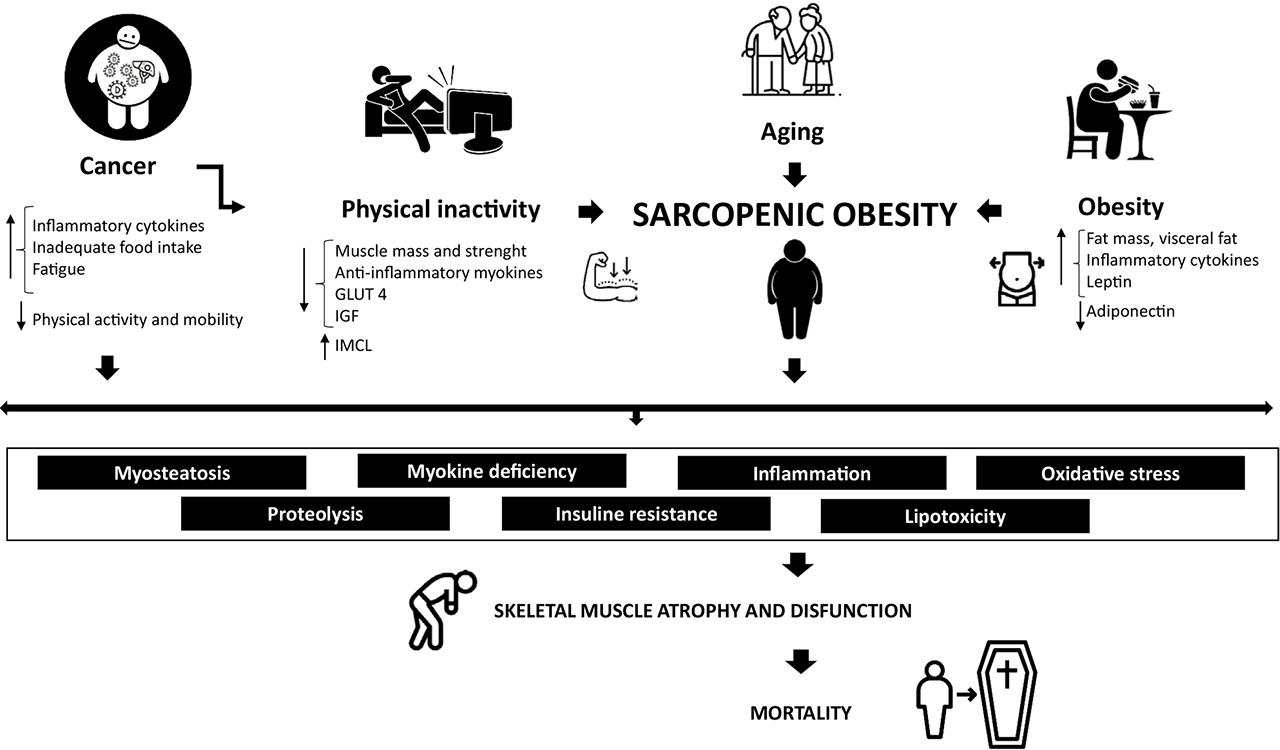
FIGURE 1.
Main pathophysiological mechanisms in cancer patients with sarcopenic obesity. Body composition (low skeletal muscle mass and strength, increase in fat mass), inflammation, insulin resistance, myosteatosis, myokine dysregulation, and oxidative stress in sarcopenic obese cancer patients significantly induce muscle proteolysis, leading to muscle wasting and dysfunction and premature mortality.