Have a personal or library account? Click to login
Pancreatic islets implanted in an irreversible electroporation generated extracellular matrix in the liver Cover

Pancreatic islets implanted in an irreversible electroporation generated extracellular matrix in the liver

Open Access
|Jan 2023

Figures & Tables

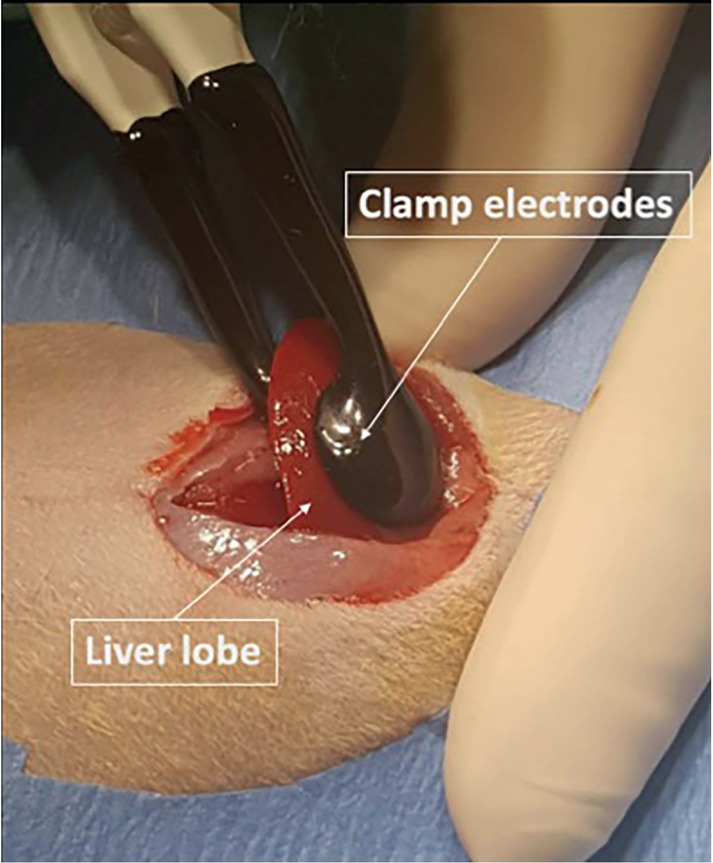
Figure 1

Photograph of a clamp electroporation electrode on a liver lobe.
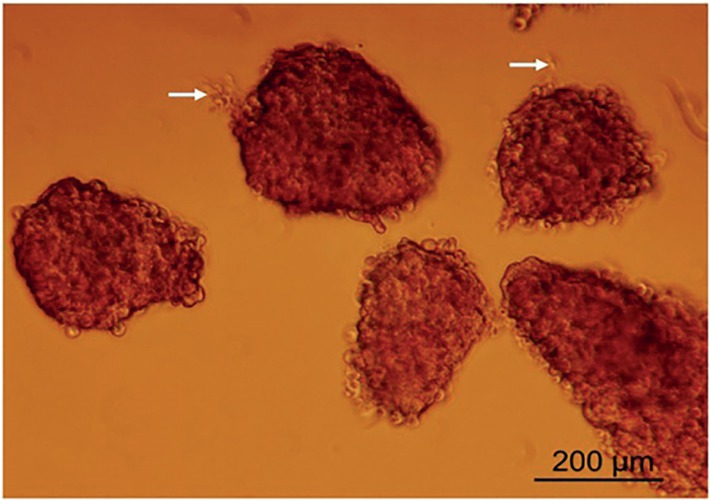

Figure 2

Photograph of the pancreatic islets used in this study stained by dithizone (DTZ). Arrows point to the few unstained exocrine cells left after digestion by collagenase.
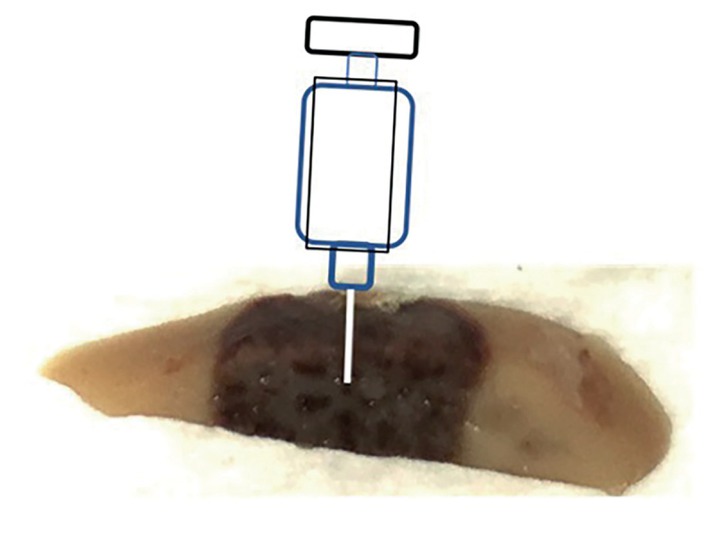

Figure 3

An illustration showing the implantation site in the liver. The dark area is the non-thermal irreversible electroporation (NTIRE) treated area.
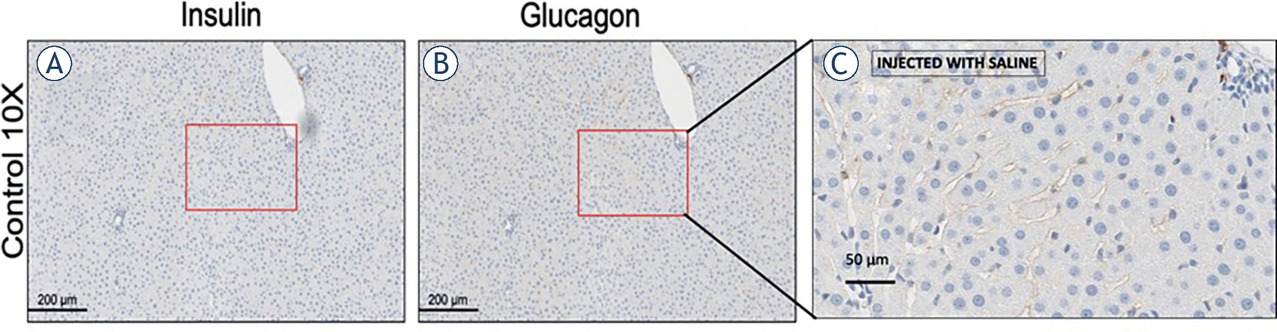

Figure 4

Liver tissue treated with non-thermal irreversible electroporation (NTIRE) and injected with PBS served as the control. Seven days after treatment with NTIRE and injection of PBS, immunohistochemical staining was performed on the controls using insulin and glucagon antibodies (University of Texas at Houston, USA). In the control slides, no cells were stained with insulin or glucagon antibodies, shown in (A) and (B), respectively. The higher magnification panel 4C shows normal hepatocytes with no evidence of scar tissue.
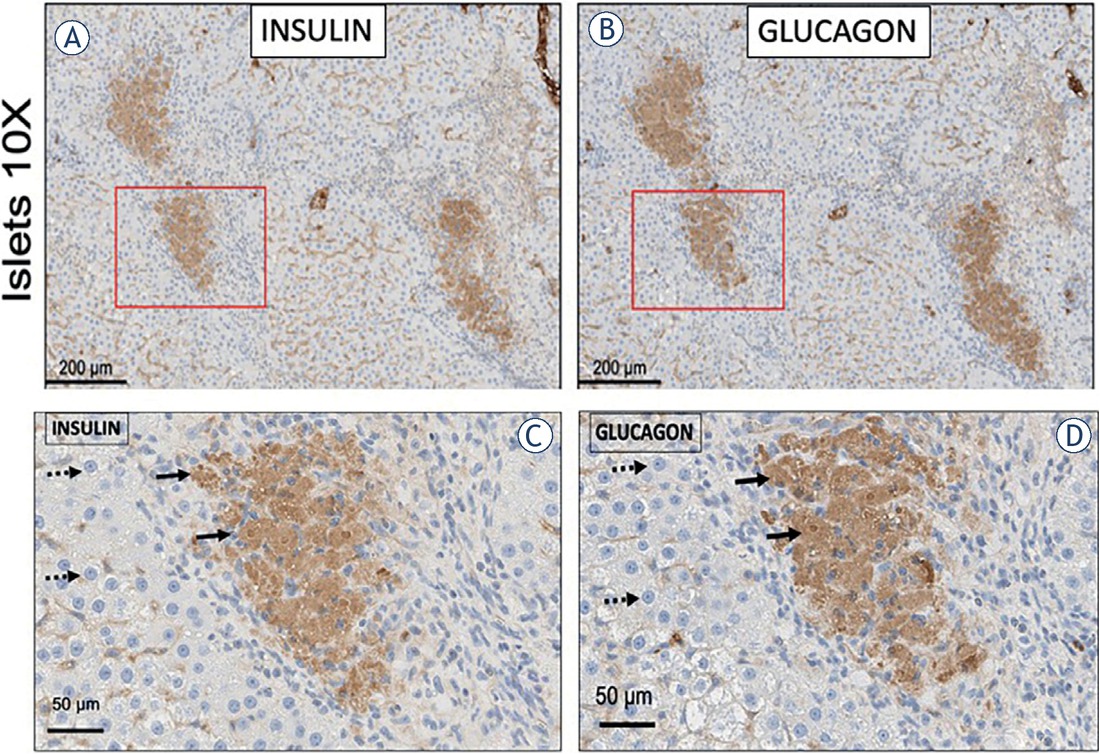

Figure 5

Liver tissue treated with non-thermal irreversible electroporation (NTIRE) and injected with 200 rat donor pancreatic islets. Seven days later, immunohistochemical staining was performed with anti-insulin and anti-glucagon antibodies (University of Texas at Houston, USA). In the pancreatic islets injected tissue, insulin-stained cell clusters are shown in (A) and (C) (full arrows). Normal hepatocytes were observed (dotted arrows) around the insulin-stained cells in the liver lobe. Glucagon-stained cells cluster are shown in (B) and (D) (full arrows). Normal hepatocytes were observed (dotted arrows) around the glucagon-stained cells in the liver lobe.
DOI: https://doi.org/10.2478/raon-2023-0006 | Journal eISSN: 1581-3207 | Journal ISSN: 1318-2099
Language: English
Page range: 51 - 58
Submitted on: Nov 5, 2022
Accepted on: Nov 24, 2022
Published on: Jan 19, 2023
Published by: Association of Radiology and Oncology
In partnership with: Paradigm Publishing Services
Publication frequency: 4 issues per year

© 2023 Yanfang Zhang, Yanpeng Lv, Yunlong Wang, Tammy T Chang, Boris Rubinsky, published by Association of Radiology and Oncology
This work is licensed under the Creative Commons Attribution-NonCommercial-NoDerivatives 4.0 License.