
Figure 1
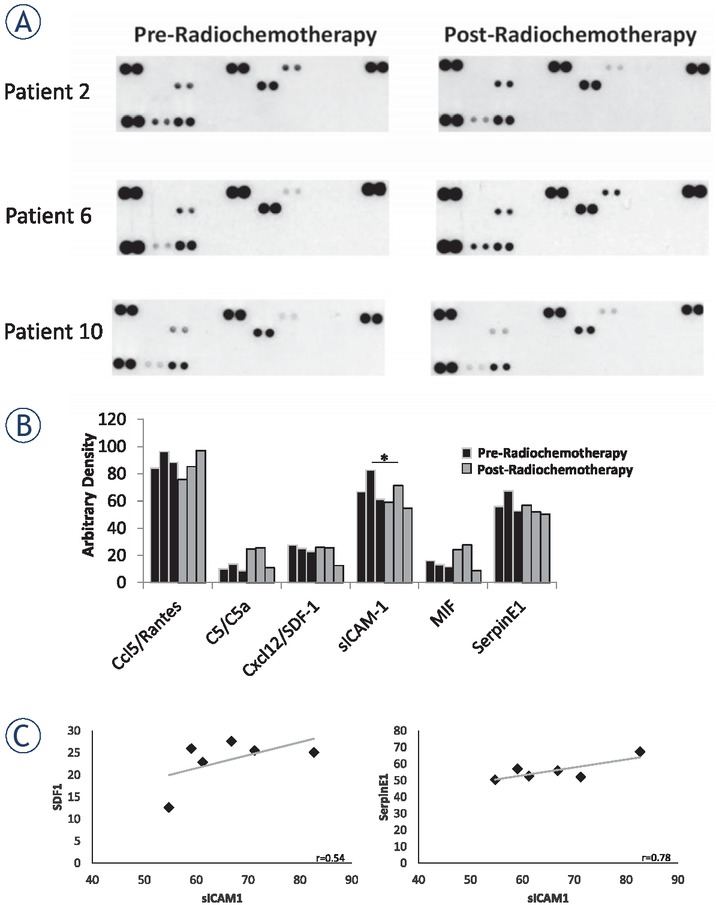
Plasma of three patients before and at end of radiochemotherapy for head and neck squamous cell carcinoma were analyzed with a human cytokine array. Of the tested cytokines, only six were present in detectable concentrations (Ccl5, Complement Component, SDF1, sICAM-1, MIF and SerpinE1). sICAM-1 was the only cytokine with a significant difference between the tested time points decreasing after treatment. sICAM-1 abundance showed moderate and strong correlations with SDF1 and SerpinE1, respectively.
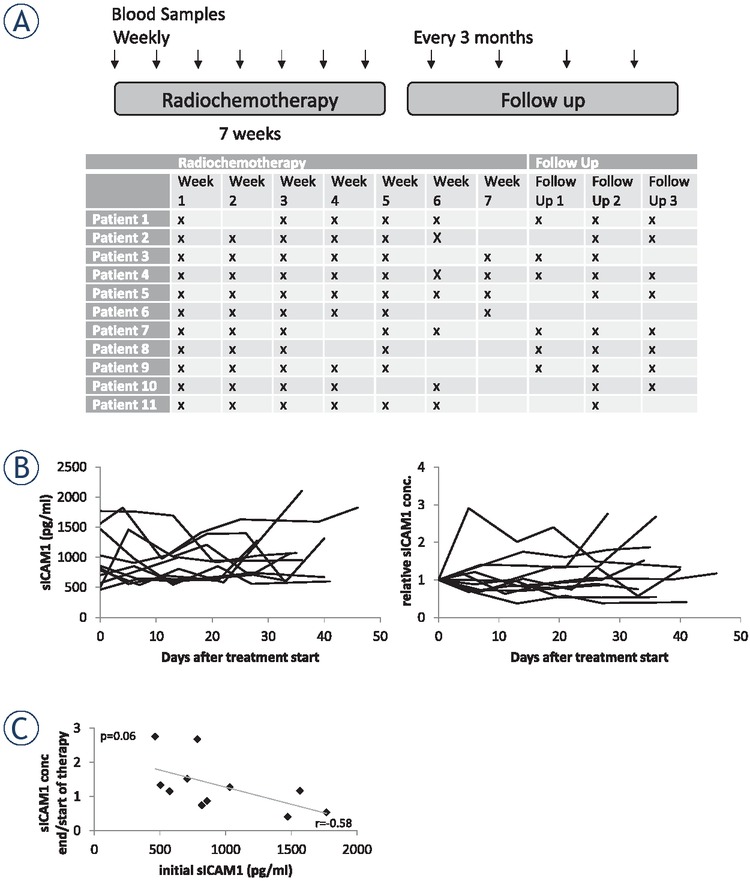
Figure 2
Blood samples were taken weekly during radiochemotherapy and at every follow-up visit of the patients. In total, 86 samples were evaluated at the different time points as shown in the table for every single patient included in the study (A). sICAM-1 concentrations measured by ELISA in plasma samples of 11 patients differed significantly between patients. Over the course of treatment and compared intraindividually before and after treatment sICAM-1 concentrations did not show significant changes (B). Initial sICAM-1 concentrations showed a moderate negative correlation with relative sICAM-1 levels at the end of treatment (C).
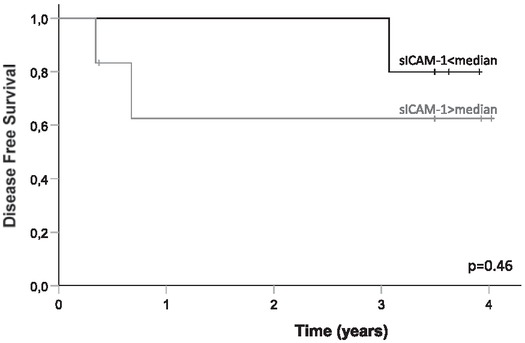
Figure 3
Kaplan Meier analysis of disease-free survival stratified by median initial sICAM-1 concentration showed that the two patients with early recurrence in the first year after treatment were in the group with high sICAM-1 levels. Disease-free survival in the small patient cohort did not differ significantly for high and low sICAM-1 concentrations.
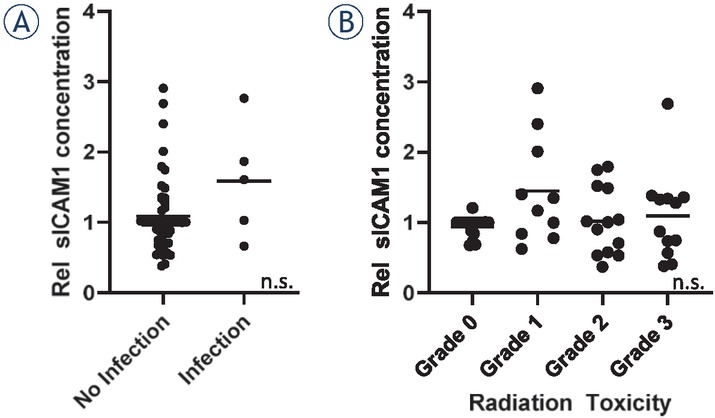
Figure 4
sICAM-1 levels at time points with manifest infections showed a tendency to higher concentrations compared to all other time points, however, without statistical significance (A). No difference in sICAM-1 concentrations was observed comparing time points with different documented Radiation Therapy Oncology Group (RTOG) toxicity grades (B).
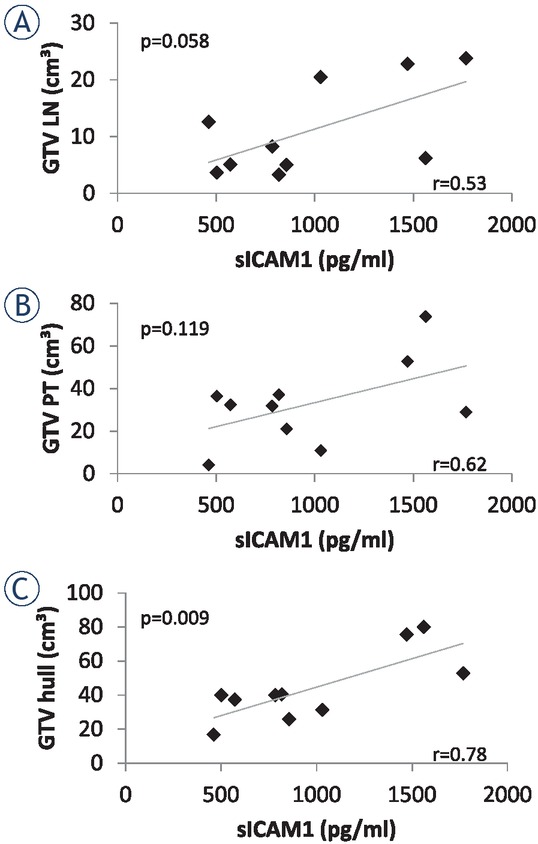
Figure 5
After exclusion of one patient with a large, mostly necrotic lymph node metastasis, initial pretherapeutic sICAM-1 levels showed moderate positive correlations with primary tumor volumes (A) and volumes of lymph node metastases (B) contoured for radiotherapy planning and a strong correlation with the sum of these volumes (gross tumor volume [GTV] hull, (C)) indicating the total tumor burden of the patient at the time point of initiation of radiotherapy.