
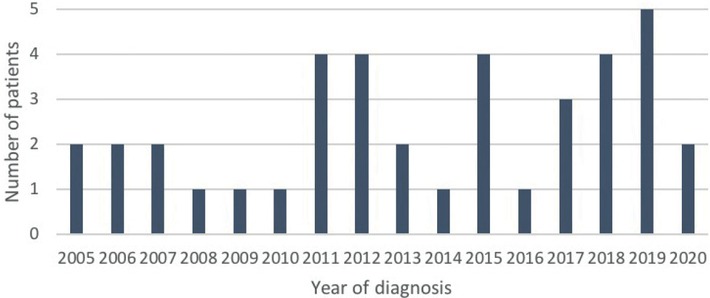
Figure 1
Distribution of patients diagnosed per year.
Table 1
Demographic and clinical characteristics
| Characteristic | n (%) |
|---|---|
| Sex | |
| Female | 25 (64) |
| Rhythm | |
| Sinus rhythm | 37 (95) |
| Clinical presentation* | |
| Dyspnea | 12 (31) |
| Chest pain | 6 (15) |
| Embolism | 7 (18) |
| - Cerebrovascular | 6 |
| - Coronary artery | 1 |
| Palpitations | 1 (3) |
| Constitutional signs | 2 (5) |
| Asymptomatic | 11 (28) |
[i] Values are presented as number (percentage). *Patients may report several symptoms
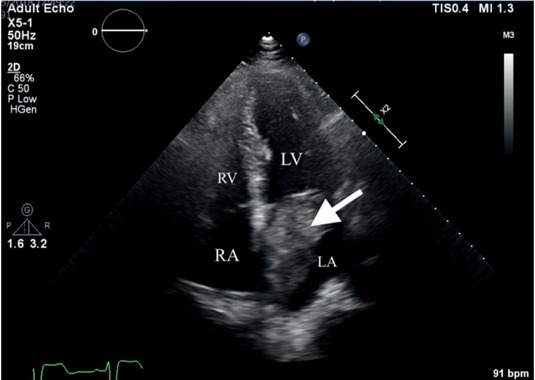
Figure 2
Transthoracic echocardiography, apical 4-chamber view. Cardiac mass in left atrium is attached to the interatrial septum in the region of the fossa ovalis (arrow). Histopathological characterization confirmed cardiac myxoma.
LA = left atrium , LV = left ventricle; RA = right atrium; RV = right ventricle
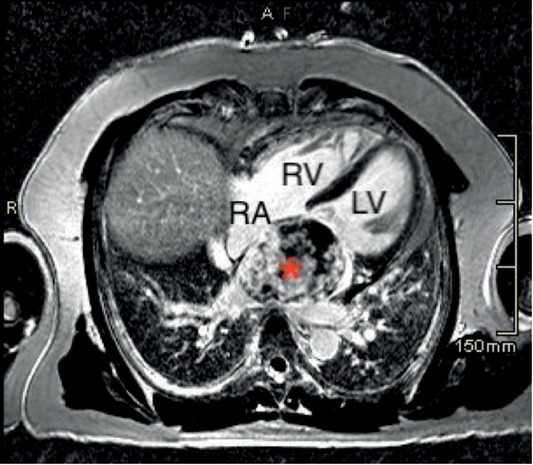
Figure 3
Cardiac magnetic resonance, late gadolinium enhancement, 4-chamber view. Asterix – Large mass occupying the entire left atrium with heterogeneous pattern of enhancement, consistent with cardiac myxoma.
LV = left ventricle; RA = right atrium; RV = right ventricle
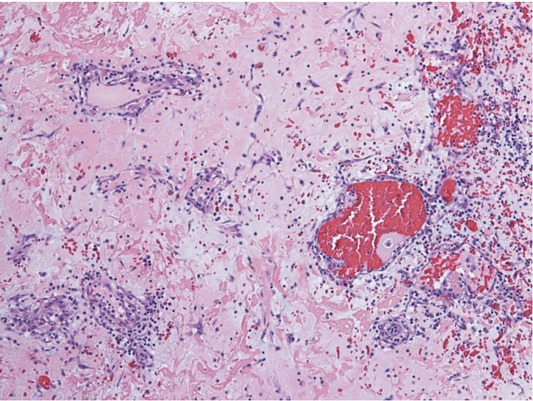
Figure 4
Abundant myxoid stroma with clusters of myxoma cells forming cords and ring structures (HE 100x).
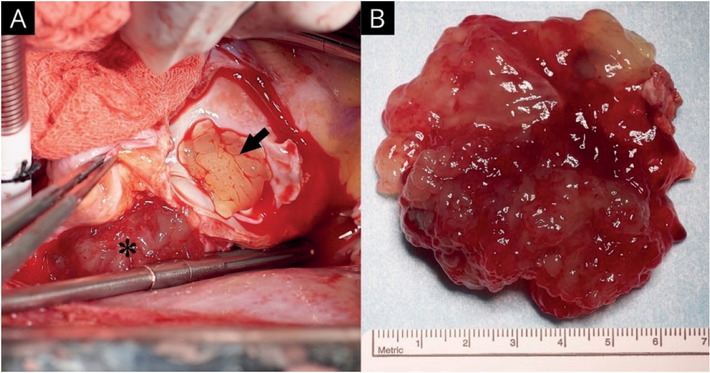
Figure 5
(A) Intraoperative view of myxoma protruding through fossa ovalis with its smaller part in the right atrium (arrow) and larger part in left atrium (asterisk). (B) The left atrial part of the myxoma.
Table 2
Surgical results and follow-up
| Characteristic | n (%) |
|---|---|
| Location | |
| - Left atrium | 33 (85) |
| - Right atrium | 6 (15) |
| Post-operative complications | 7 (18) |
| - Arrhythmia* | 6 (86) |
| - Pleural effusion* | 1 |
| - Surgical site infection | 1 |
[i] * One patient suffered from both arrhythmia and pleural effusion. Values are presented as number (percentage).