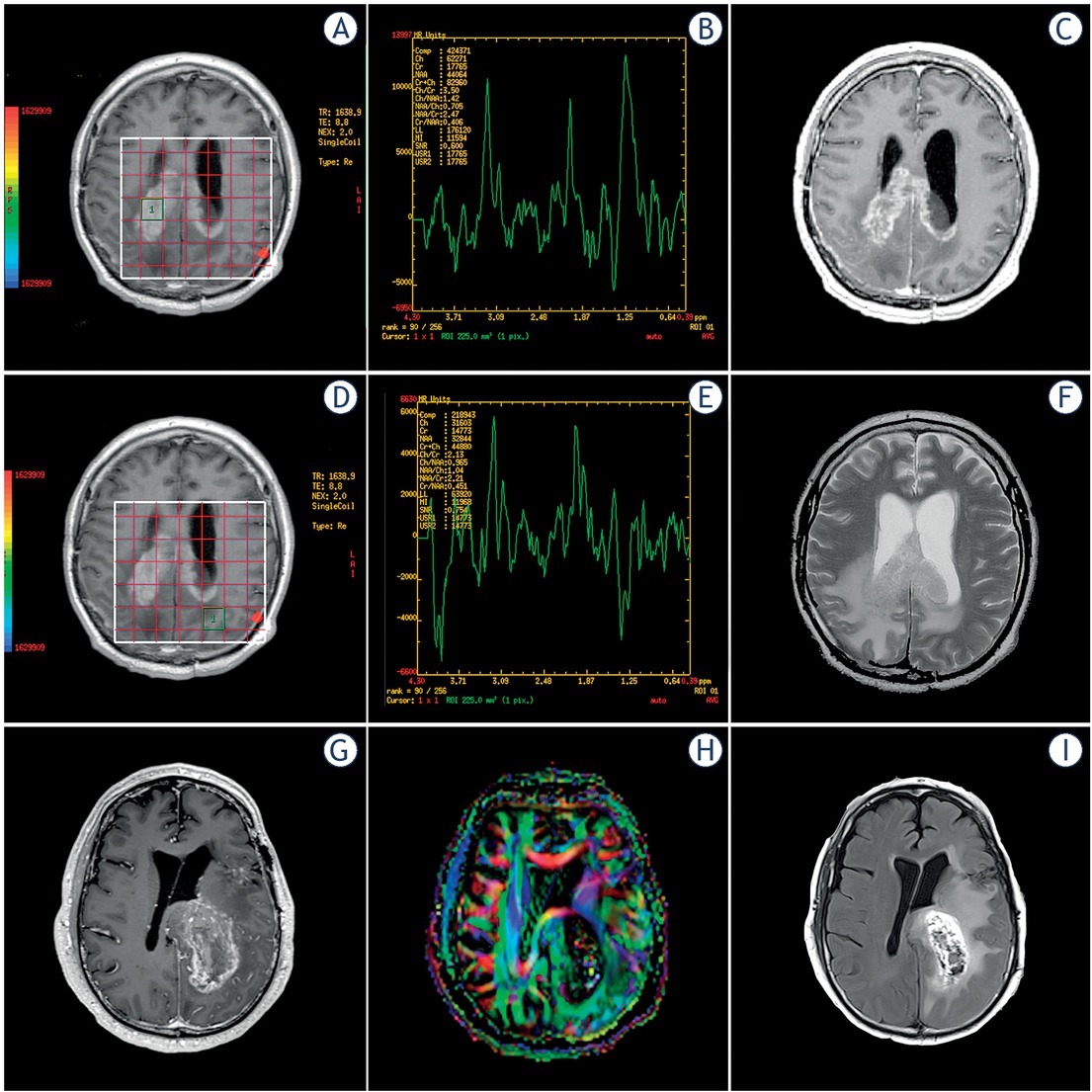
Figure 1
(A-F) magnetic resonance spectroscopy (MRS) measurements at the enhancing rim and peritumoral edema. (G-I) example of a FA map used to locate the ROI at the selected regions: enhancing rim, peritumoral oedema, and normal-appearing white matter (NAWM).
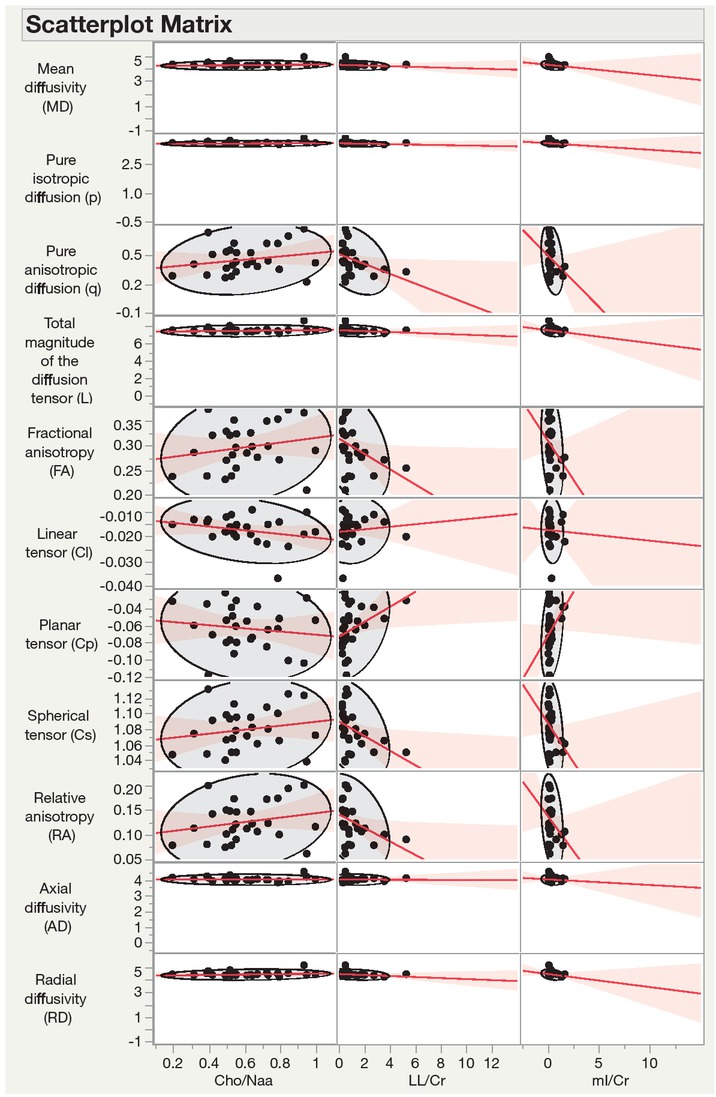
Figure 2
Scatter plots showing the correlation between magnetic resonance spectroscopy (MRS) metabolites and diffusion tensor imaging (DTI) metric at the normal-appearing white matter (NAWM).
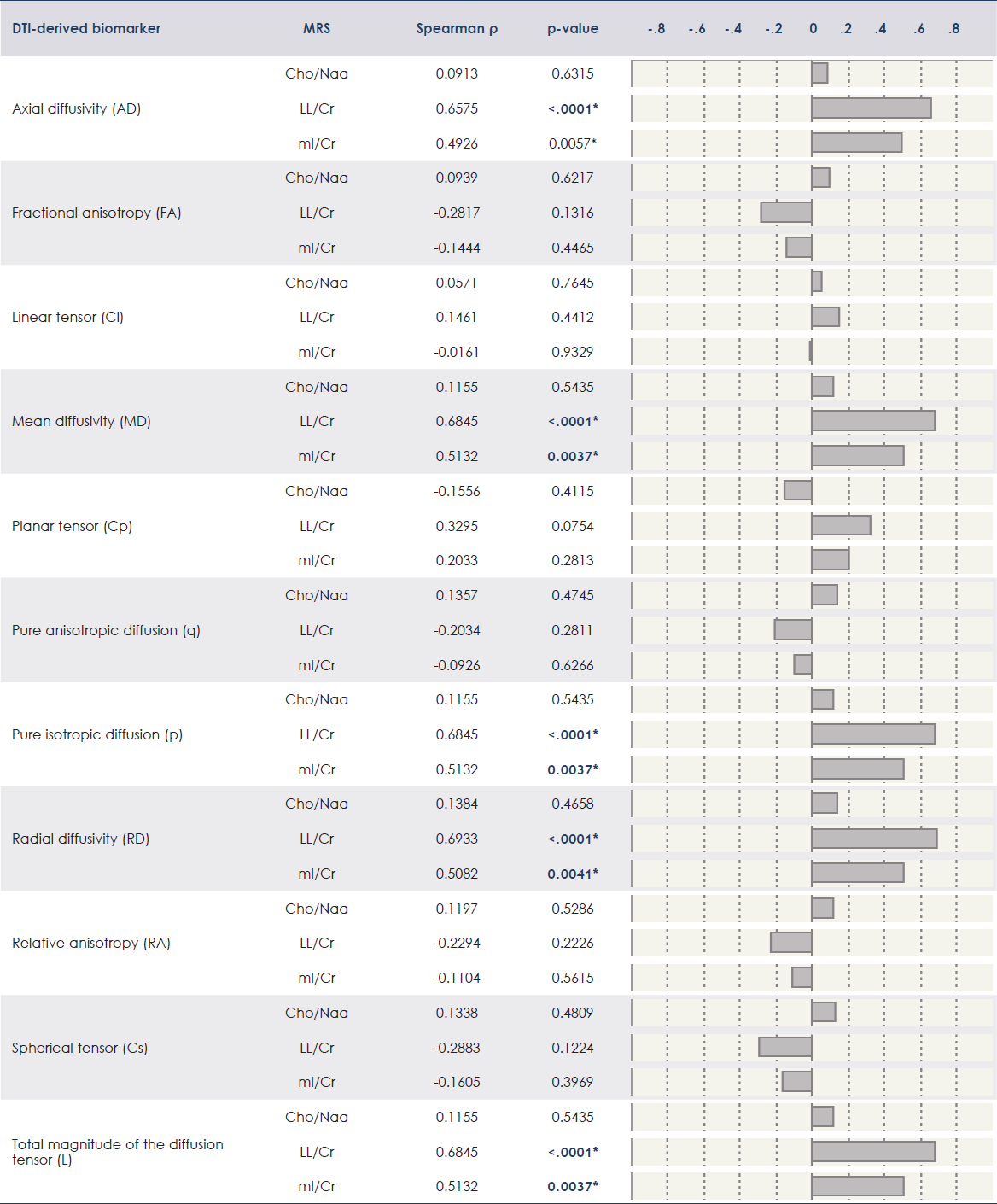
Table 1
Correlations between diffusion tensor imaging (DTI) metrics and magnetic resonance spectroscopy (MRS) metabolites for the normal-appearing white matter (NAWM) region
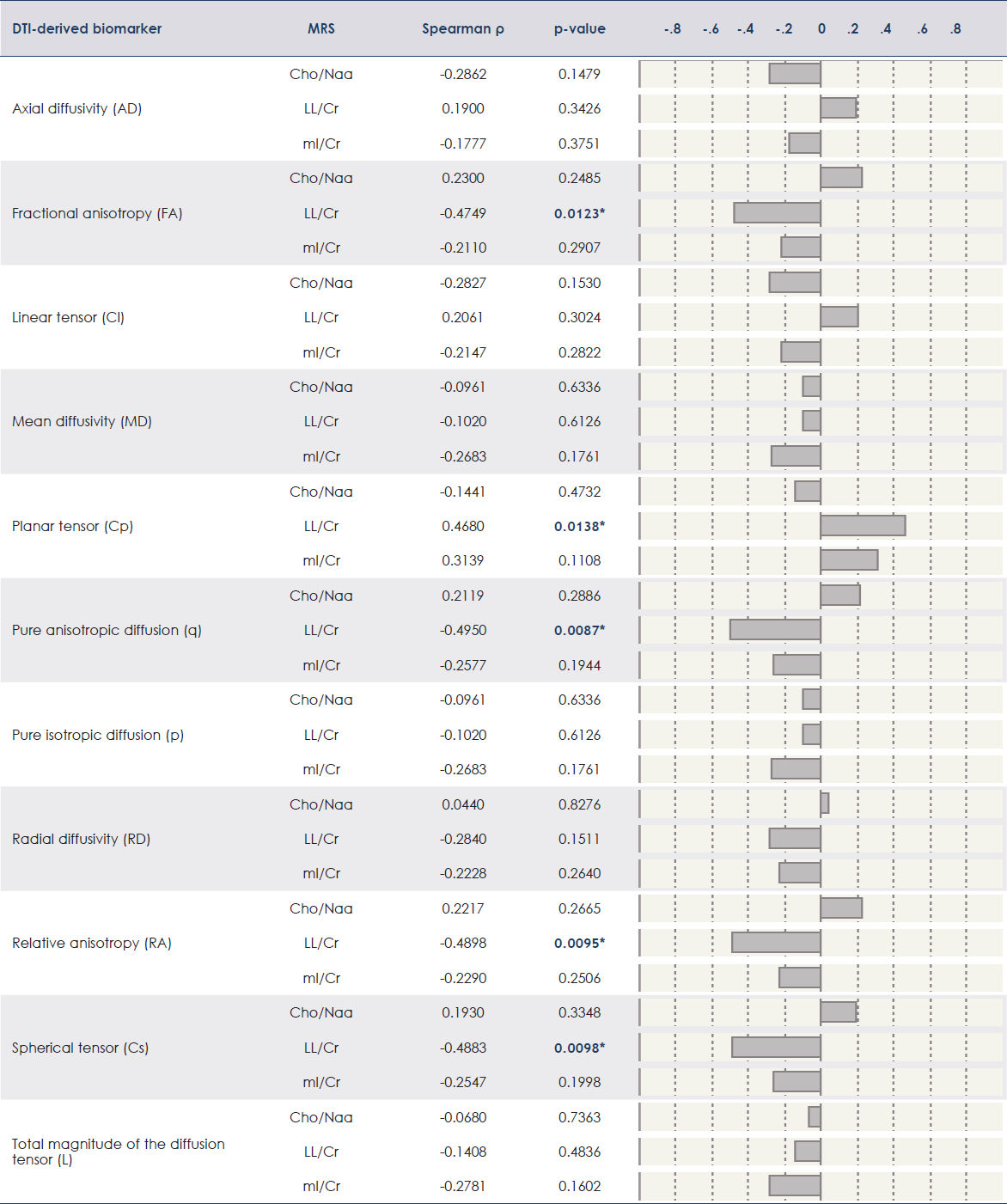 |
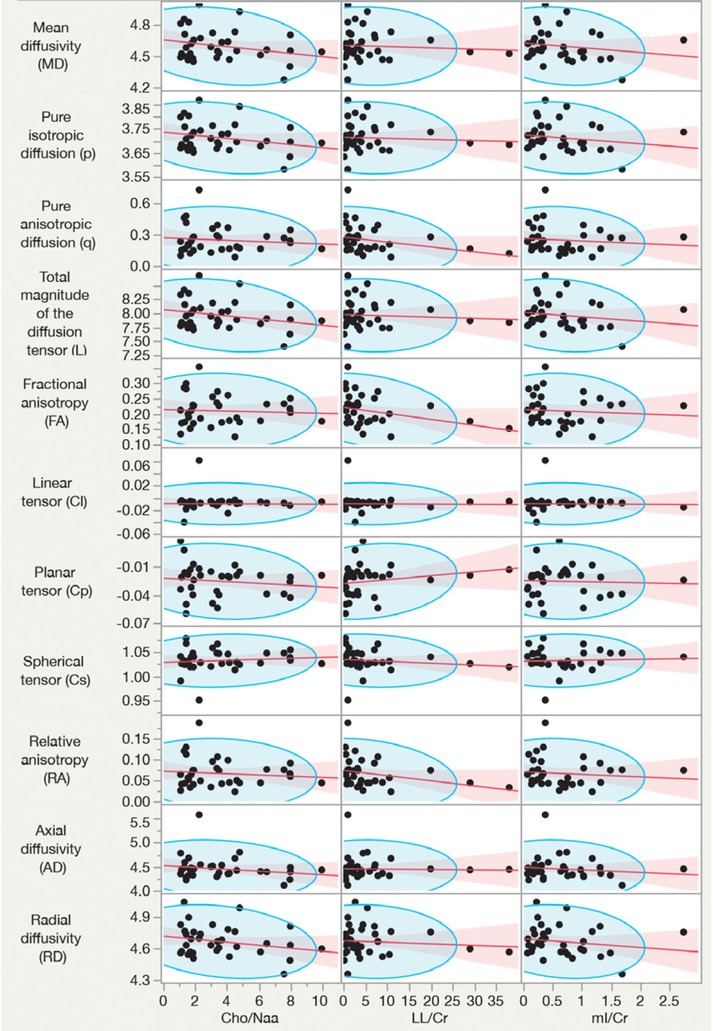
Figure 3
Scatter plots showing the correlation between magnetic resonance spectroscopy (MRS) metabolites and diffusion tensor imaging (DTI) metric at the enhancing rim.
Table 2
Correlations between diffusion tensor imaging (DTI) metrics and magnetic resonance spectroscopy (MRS) metabolites for the tumour region
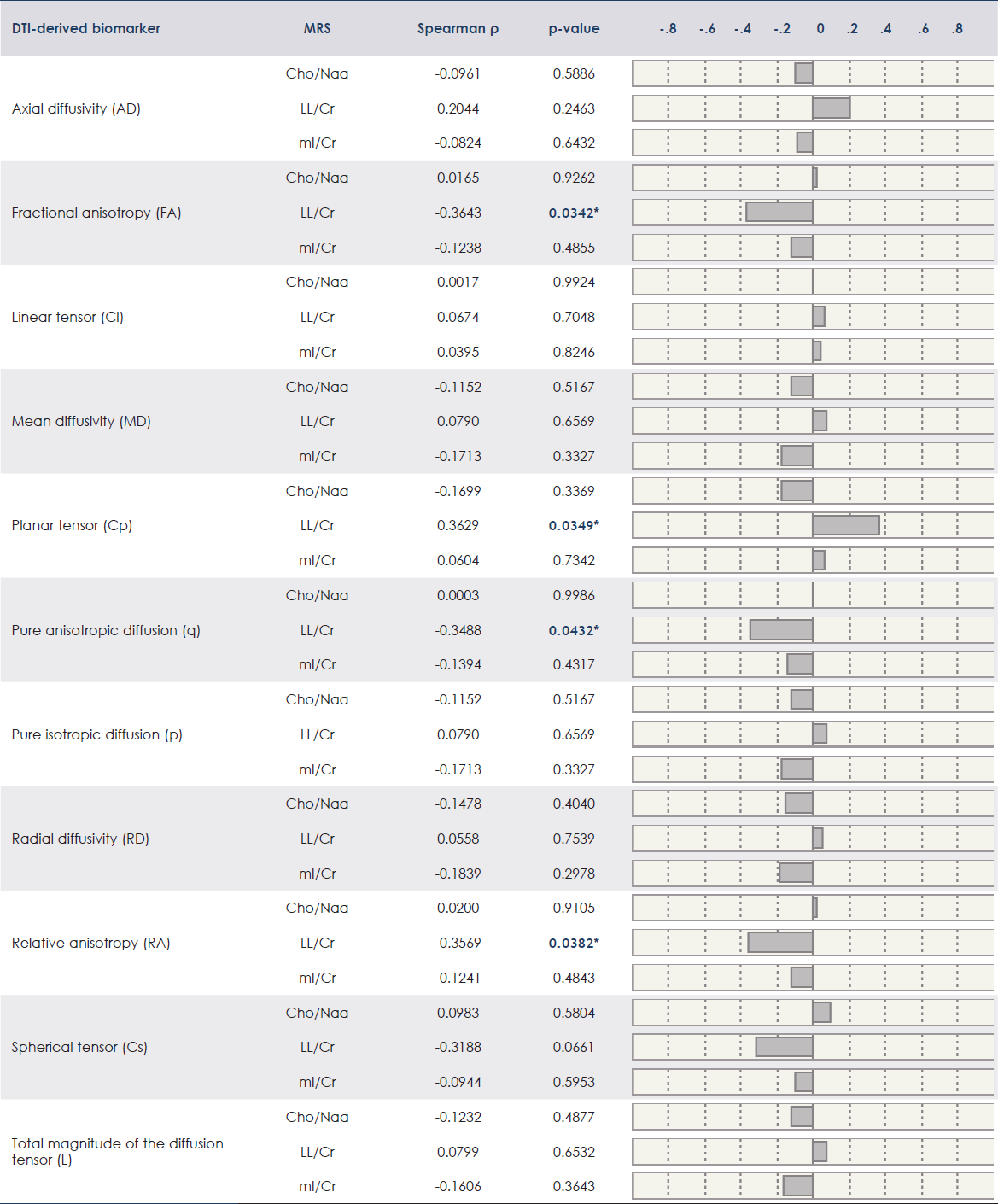 |
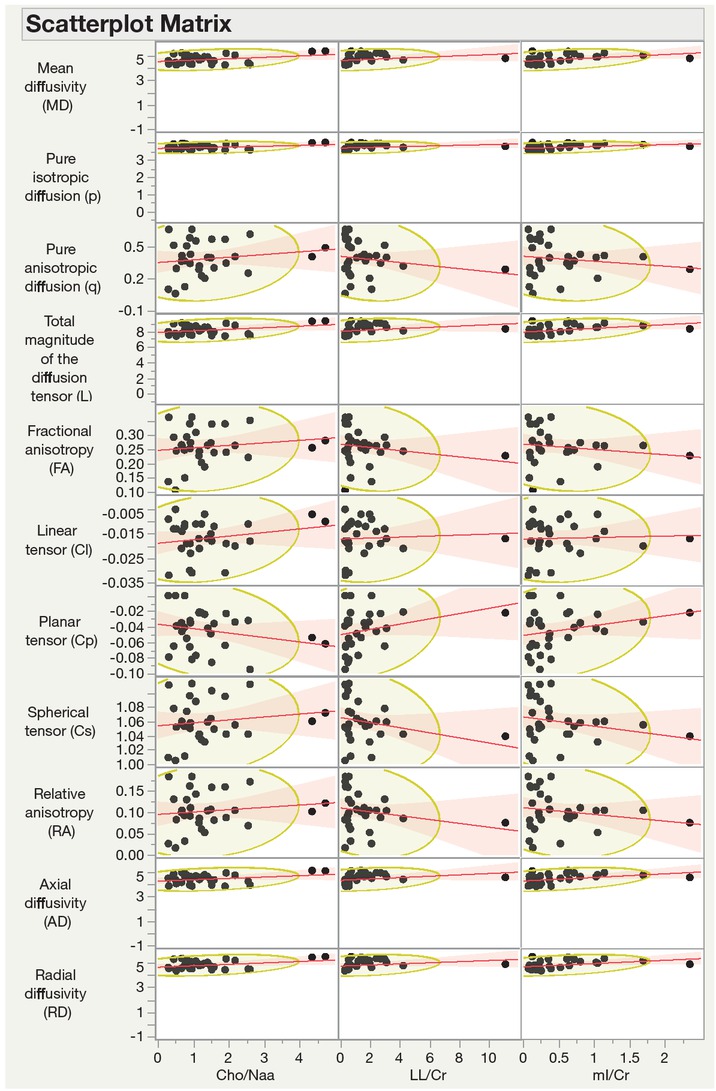
Figure 4
Scatter plots showing the correlation between magnetic resonance spectroscopy (MRS) metabolites and diffusion tensor imaging (DTI) metric at the peritumoral edema.
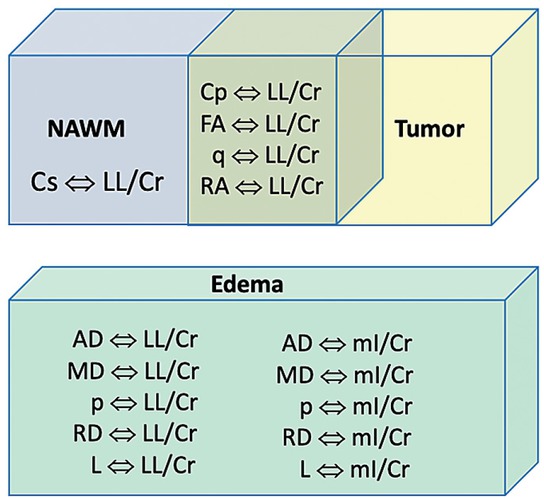
Figure 5
Diagram representation of the significant correlations between diffusion tensor imaging (DTI)- magnetic resonance spectroscopy (MRS) biomarkers at the selected regions: normal-appearing white matter (NAWM), enhancing rim and peritumoral edema. Notice that NAWM and the enhancing rim share four pairs of biomarkers correlations; while in peritumoral oedema ten pairs of correlations were exclusive of that region.