Have a personal or library account? Click to login
Percutaneous image guided electrochemotherapy of hepatocellular carcinoma: technological advancement Cover

Percutaneous image guided electrochemotherapy of hepatocellular carcinoma: technological advancement

Open Access
|Jun 2020

Figures & Tables

Figure 1

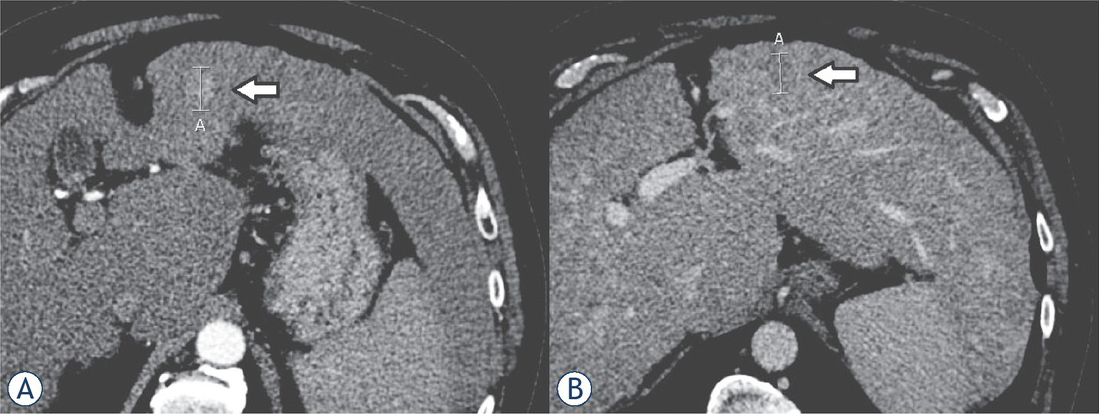
A 66- year-old male with hepatocellular carcinoma (HCC). Control CT after drug-eluting bead doxorubicin transarterial chemoembolization (DEBDOX TACE) and microwave ablation (MWA) shows non-target progression in segment III, 18 mm the largest diameter. (A) Hypervascular lesion in arterial phase. (B) Washout in venous phase.
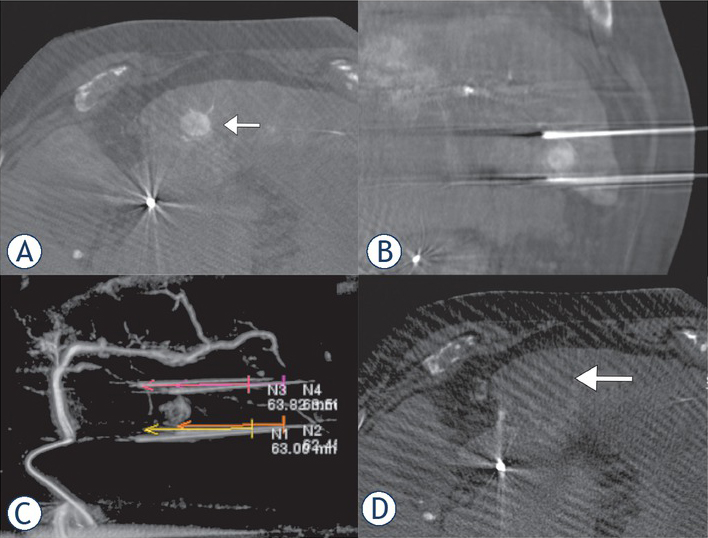

Figure 2

A 66- year-old male with hepatocellular carcinoma (HCC). Cone-beam computed tomography (CBCT) demonstrating HCC before the treatment (A). Position of the electrodes in relation to tumor on CBCT. (B, C) The absence of the contrast enhancement of the ablated tumor was notable 4 minutes after the electrochemotherapy (D).
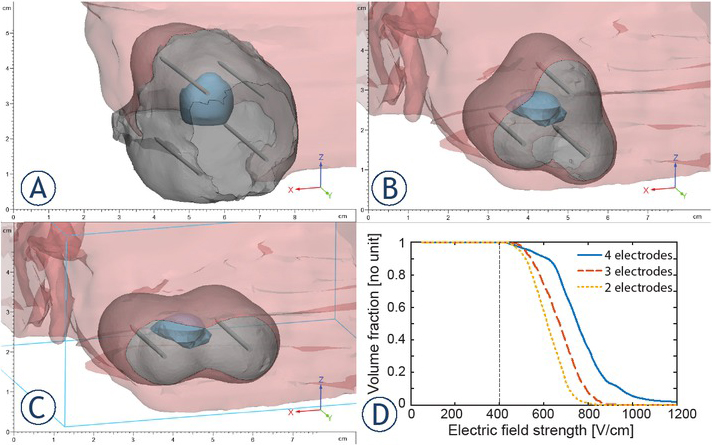

Figure 3

Numerical visualization of electric field for successful electrochemotherapy. (A) Reconstruction of actual treatment based on cone-beam computed tomography (CBCT) images. (B) 3 electrode treatment plan based on pre-treatment CECT. (C) 2 electrode treatment plan based on pre-treatment CBCT. (D) Electric field histogram showing the volume fraction of tumor tissue covered by electric fields of at least the strength indicated on the horizontal axis for all three treatments shown in panels A-C.

Figure 4

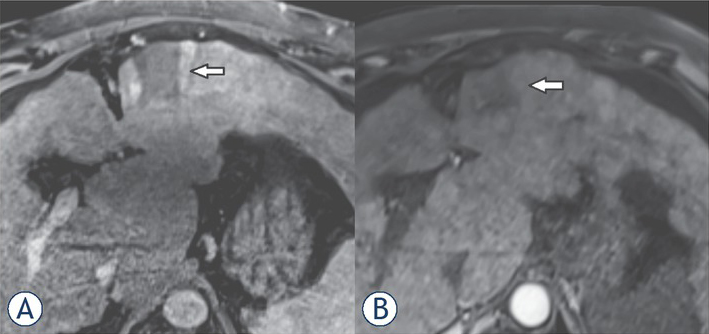
A 66- year-old male with hepatocellular carcinoma (HCC). Control MRI of liver 2 months (A) and 6 months (B) after procedure showing an unenhancing area of ablation – a complete response according to mRECIST criteria.

VOLTAGES and currents delivered in the treatment

Electrode pairVoltage [V]Current [A]
23280038.0
41280036.5
13230034.5
12200029.4
34180027.7
24180026.5
DOI: https://doi.org/10.2478/raon-2020-0038 | Journal eISSN: 1581-3207 | Journal ISSN: 1318-2099
Language: English
Page range: 347 - 352
Submitted on: May 14, 2020
|
Accepted on: Jun 1, 2020
|
Published on: Jun 20, 2020
In partnership with: Paradigm Publishing Services
Publication frequency: 4 issues per year

© 2020 Mihajlo Djokic, Rok Dezman, Maja Cemazar, Miha Stabuc, Miha Petric, Lojze M. Smid, Rado Jansa, Bostjan Plesnik, Masa Bosnjak, Ursa Lampreht Tratar, Blaz Trotovsek, Bor Kos, Damijan Miklavcic, Gregor Sersa, Peter Popovic, published by Association of Radiology and Oncology
This work is licensed under the Creative Commons Attribution-NonCommercial-NoDerivatives 3.0 License.