Have a personal or library account? Click to login
On Quantum Solvers for Linear Algebraic Systems Cover
Open Access
|Mar 2026

Figures & Tables

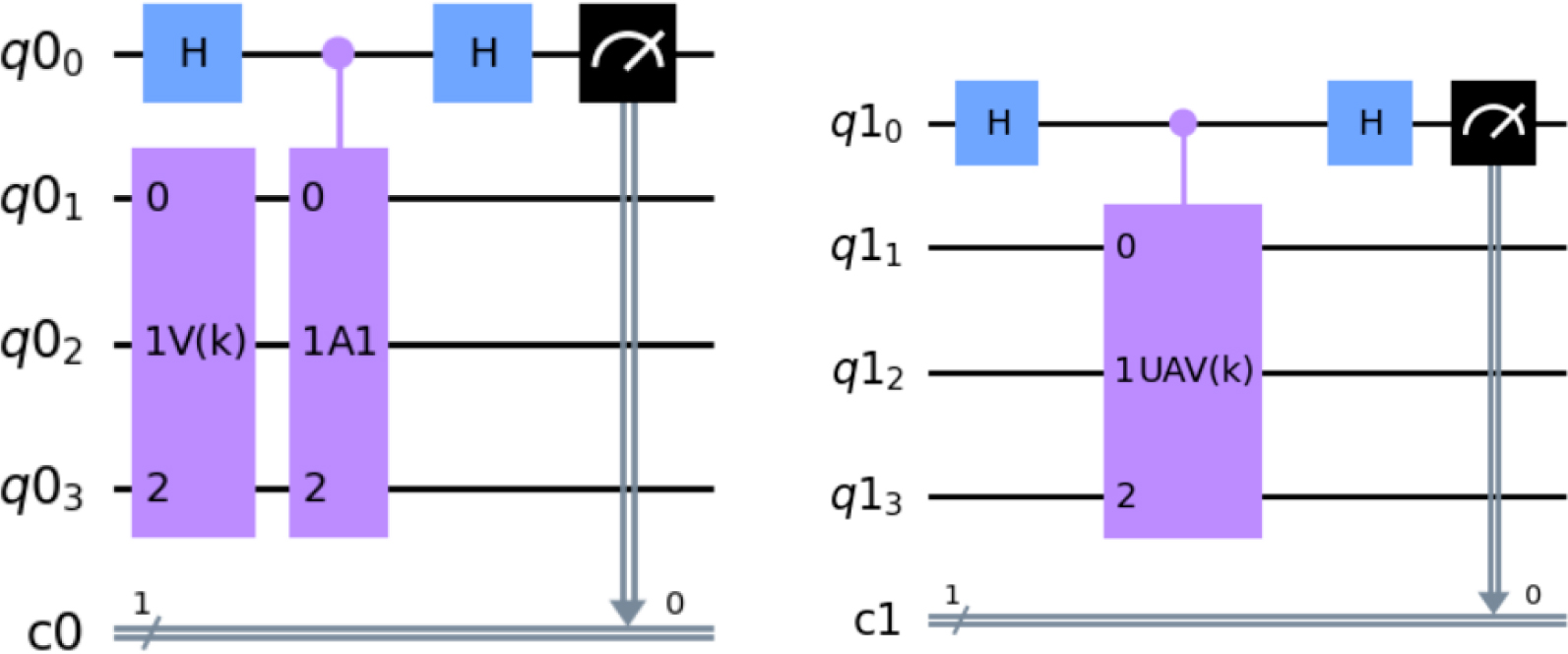
Figure 1.

The Swap (left) and the Hadamard (right) tests.
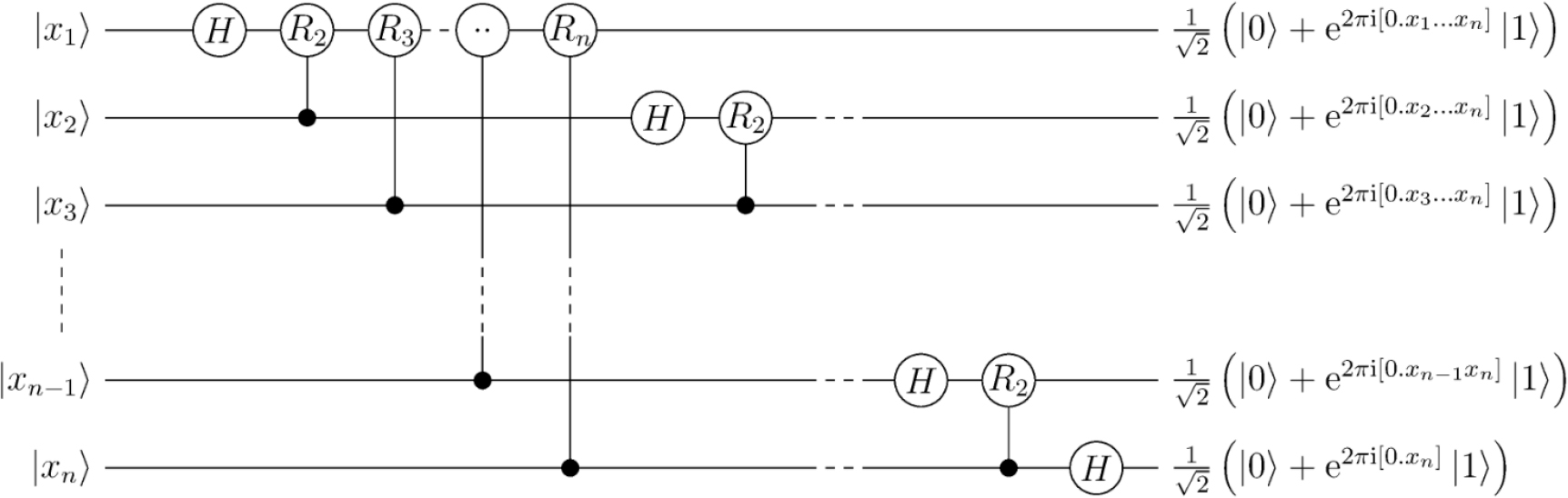

Figure 2.

Implementation of the Quantum Fourier Transform. (Reproduced from https://commons.wikimedia.org/wiki/File:Q_fourier_nqubits.pngviaWikimediaCommons).
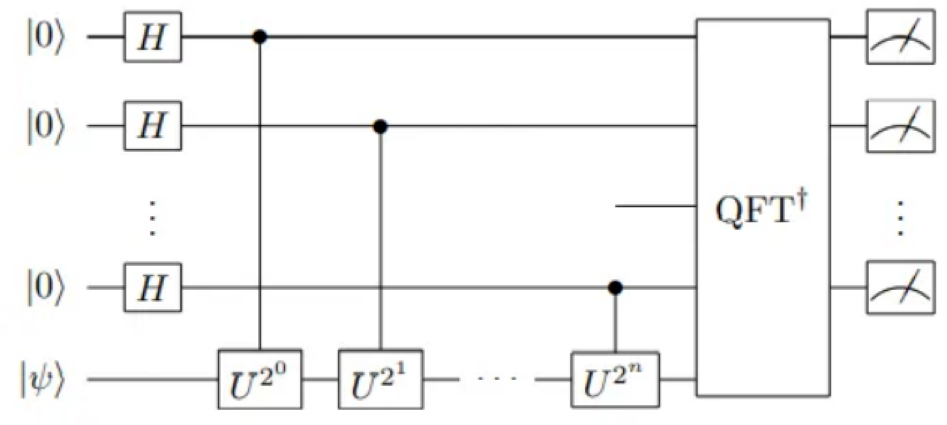

Figure 3.

Phase Estimation Algorithm.
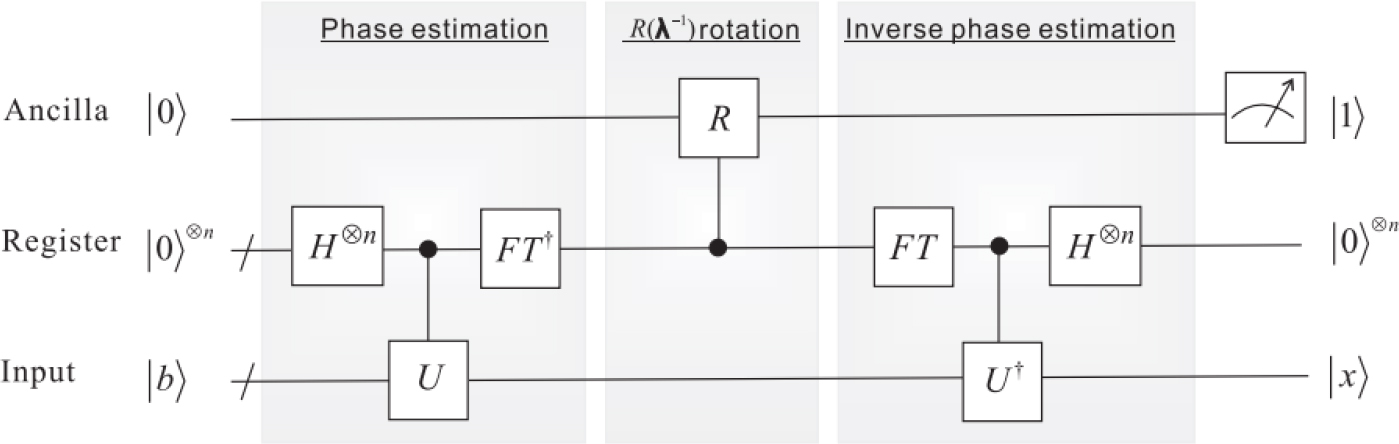

Figure 4.

Schematic representation of the HHL algorithm ([16]).
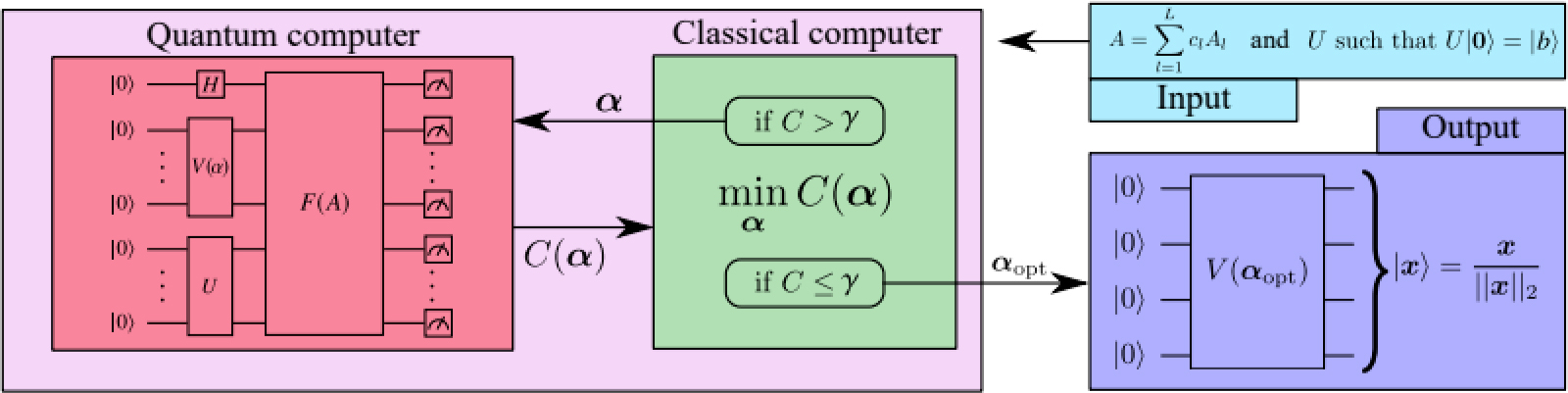

Figure 5.

Diagram of the VQLS algorithm ([24]).

Figure 6.

Inner product circuits for 〈Φ|Φ〉 (left) and |〈b|Φ〉|2 (right).
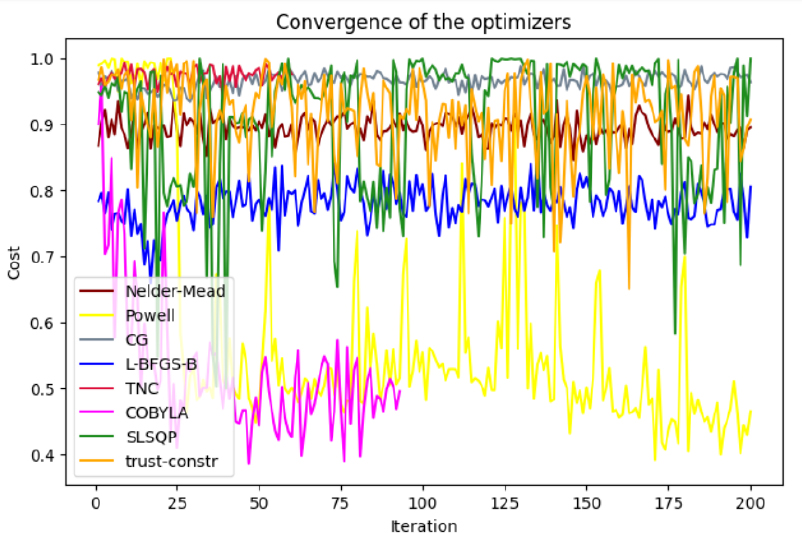

Figure 7.

The convergence of the optimizers.
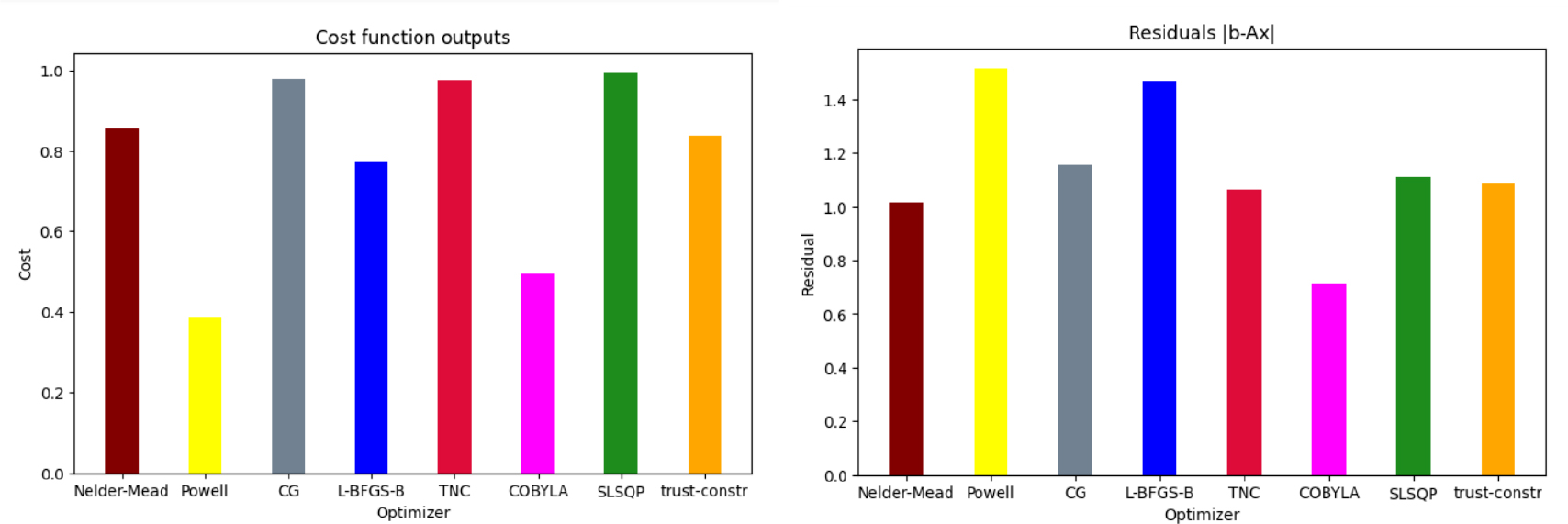

Figure 8.

The cost function of the optimizers (left) and the corresponding residuals |b−Ax| (right).
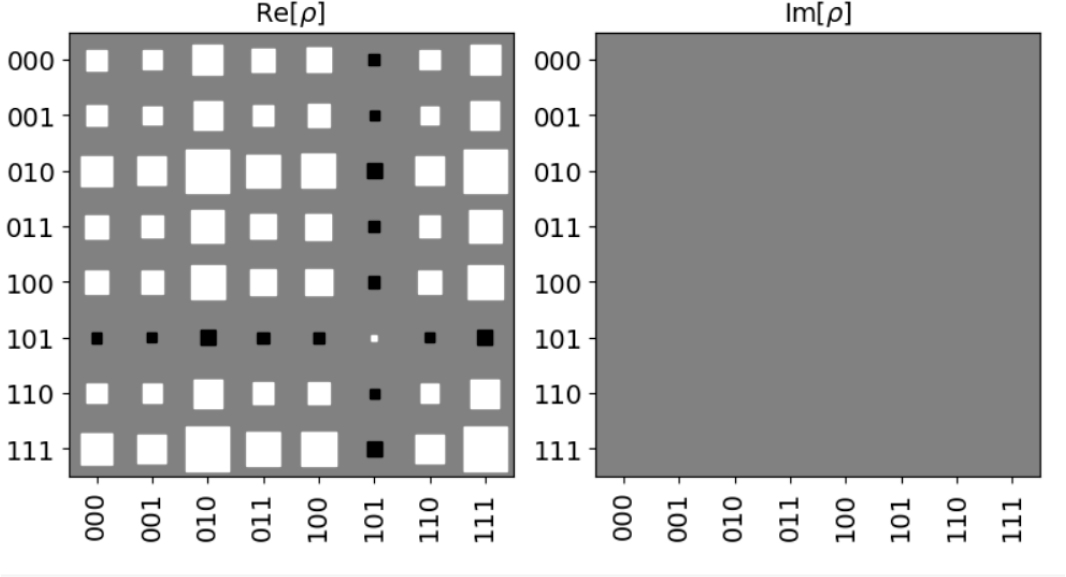

Figure 9.

Density matrix of the COBYLA quantum solution vector.
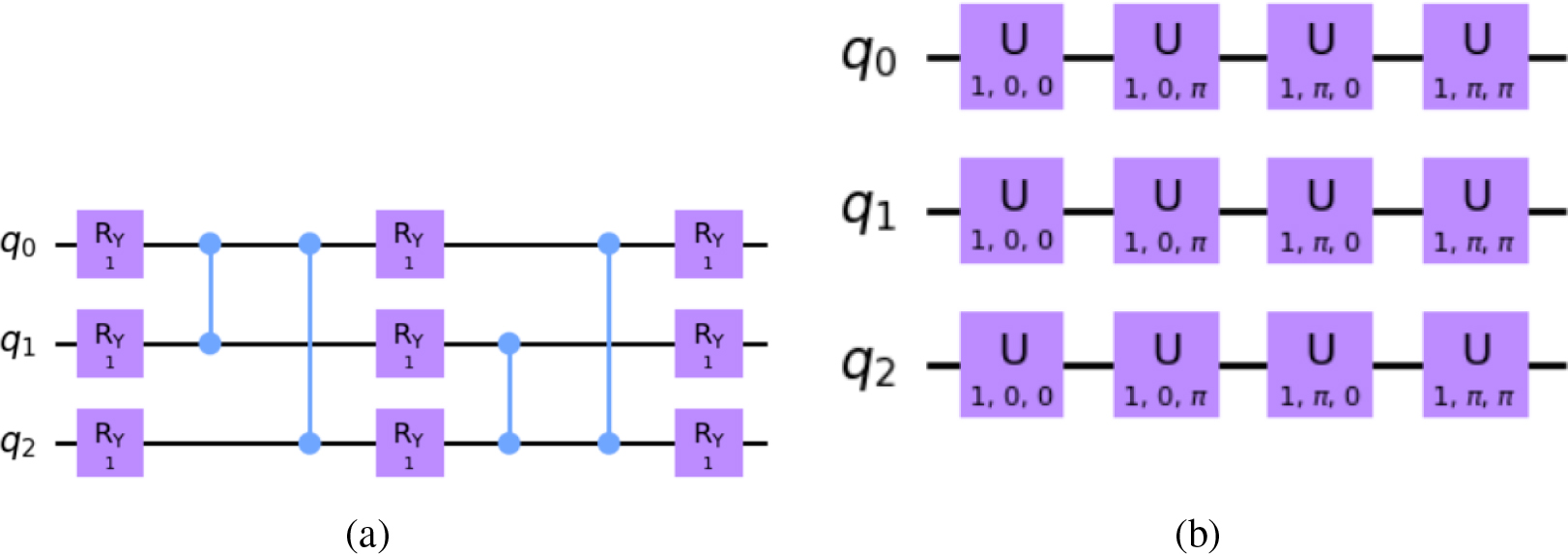

Figure 10.

The initial ansatz structure (Ry, CZ gates) on the left and the proposed ansatz structure (U gates) on the right.
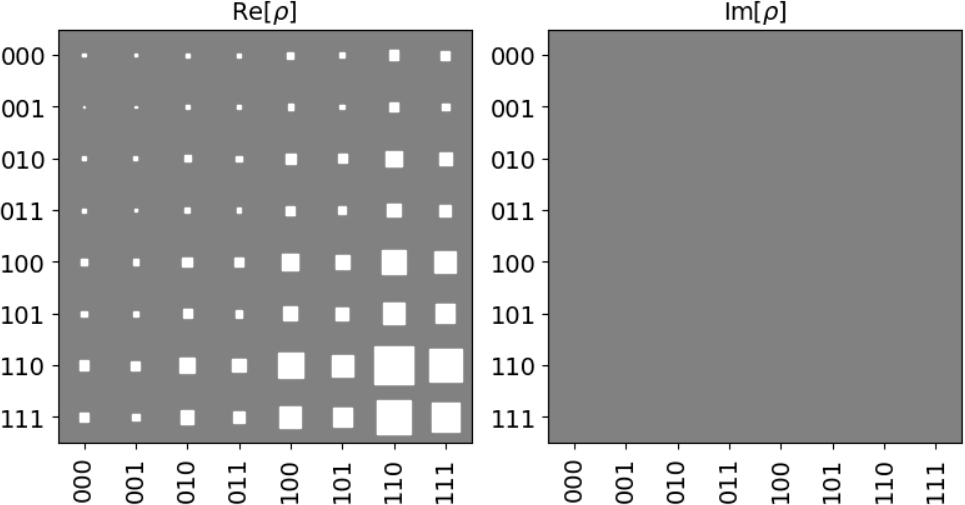

Figure 11.

Density matrix of the quantum solution vector produced by the proposed ansatz.
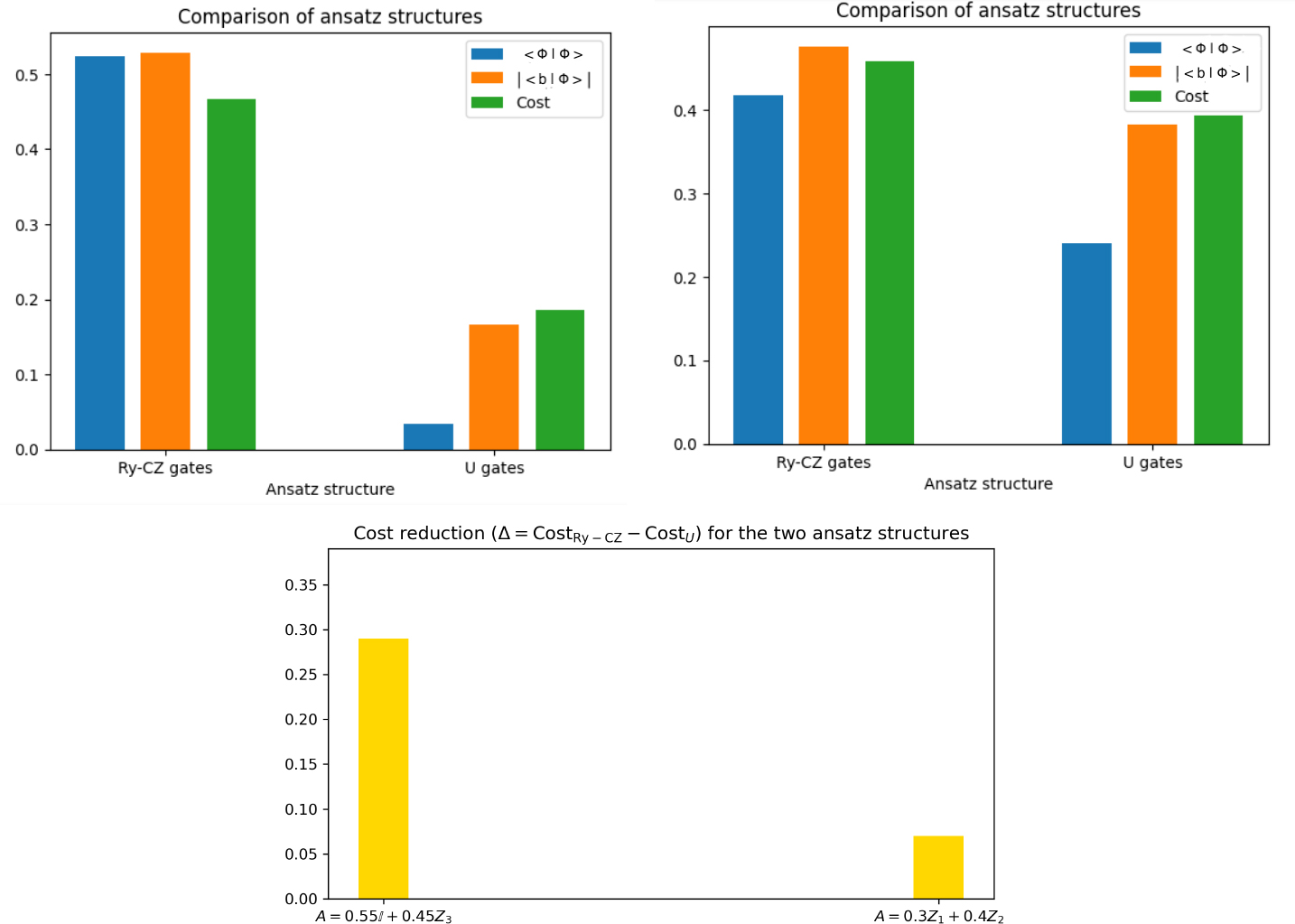

Figure 12.

Comparison of the ansatz structures A = 0.55𝕀 + 0.45Z3 (left) and A = 0.3Z1 + 0.4Z2 (right). The metrics shown are 〈Φ|Φ〉, |〈b|Φ〉|, and the cost C=1−|〈b|Φ〉|2〈Φ|Φ〉C = 1 - {{|\langle b|{\rm{\Phi }}\rangle {|^2}} \over {\langle {\rm{\Phi }}|{\rm{\Phi }}\rangle }}. Here 〈Φ|Φ〉 indicates the norm of A|x(a)〉, while |〈b|Φ〉| measures the raw overlap with |b〉. Since these two quantities are not meaningful in isolation, the cost is the definitive convergence criterion. The additional panel reports the cost reduction Δ = CostRy-CZ − CostU, which is the quantity used to evaluate the improvement achieved by the U-gates ansatz. The trends are averaged over 10 runs. While statistical uncertainties are not quantified due to resource limitations, the consistent reductions suggest improved convergence for the U-gates ansatz.

Comparison of the quantum solvers_

AlgorithmComplexityRef.TypeLimitations
HHLO(s2κ2 log n/ϵ)[13]eigendecompositionphase estimation, matrix density, condition number, Hamiltonians
WZPO(κ2lognAF/ϵ){\rm{O}}({\kappa ^2}\log n{\left\| A \right\|_F}/)[18]eigendecompositionphase estimation, condition number
Row and column iterationO(κs2lognlog1ϵ){\rm{O}}(\kappa _s^2\log n\log {1 \over })[20]iterativeancilla qubits, condition number
VQLSO(κlognlog1ϵ){\rm{O}}(\kappa \log n\log {1 \over })[24]hybridansatz option, condition number
Random walks≥ O(log n) per xi[27]hybrid, Monte Carloscalability
DOI: https://doi.org/10.2478/qic-2025-0035 | Journal eISSN: 3106-0544 | Journal ISSN: 1533-7146
Language: English
Page range: 640 - 667
Submitted on: Jul 7, 2025
|
Accepted on: Sep 10, 2025
|
Published on: Mar 9, 2026
In partnership with: Paradigm Publishing Services
Publication frequency: 1 issue per year

© 2026 Papagiannis Nikos, Vavalis Manolis, published by Cerebration Science Publishing Co., Limited
This work is licensed under the Creative Commons Attribution-NonCommercial-NoDerivatives 4.0 License.