
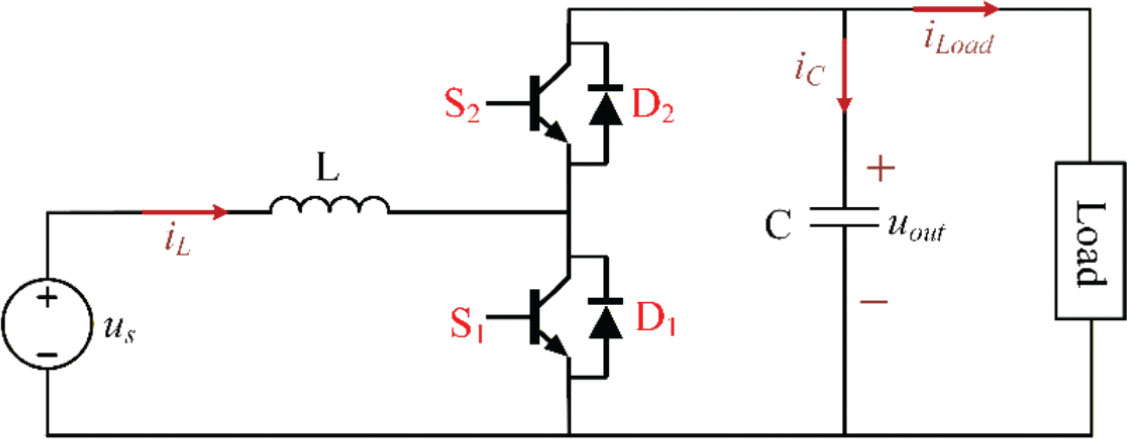
Figure 1.
Bidirectional converter schematic.
Table 1.
System parameters.
| Parameters | Symbols | Values |
|---|---|---|
| Input voltage | us | 100V |
| Output desired voltage | uref | 160–240V |
| Maximum and minimum inductor current values | , | ±20 A |
| Resistive load changes | R | 50 Ω–1 kΩ |
| Input inductance | L | 750 µH |
| Output capacitance | C | 200–1500 µF |
| Sampling time | Ts | 20 µs |
| Weighting factor | ωi | 1.0–0.2 |
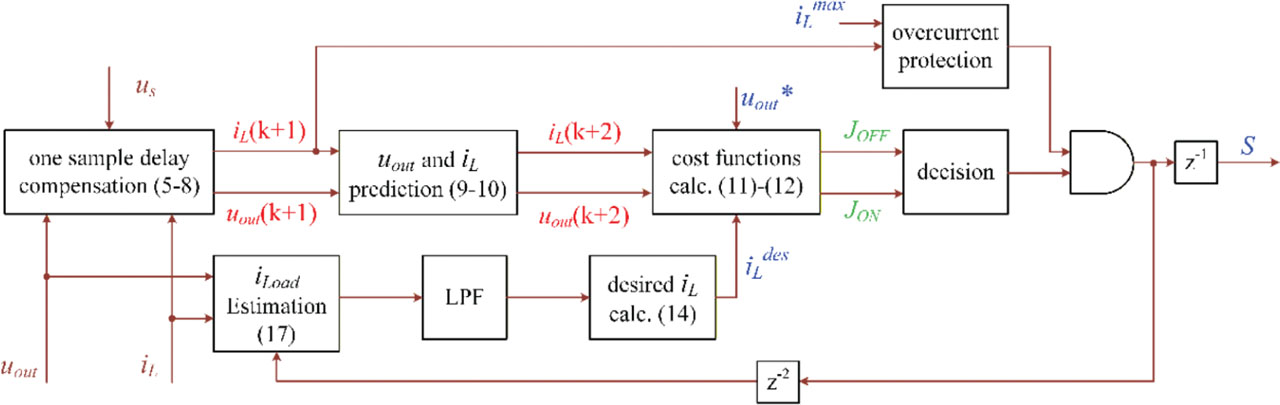
Figure 2.
FS-MPC block diagram with prediction of both inductor current and output voltage (Tatari et al., 2025). FS-MPC, finite-set model predictive control (LPF stands for low pass filter).
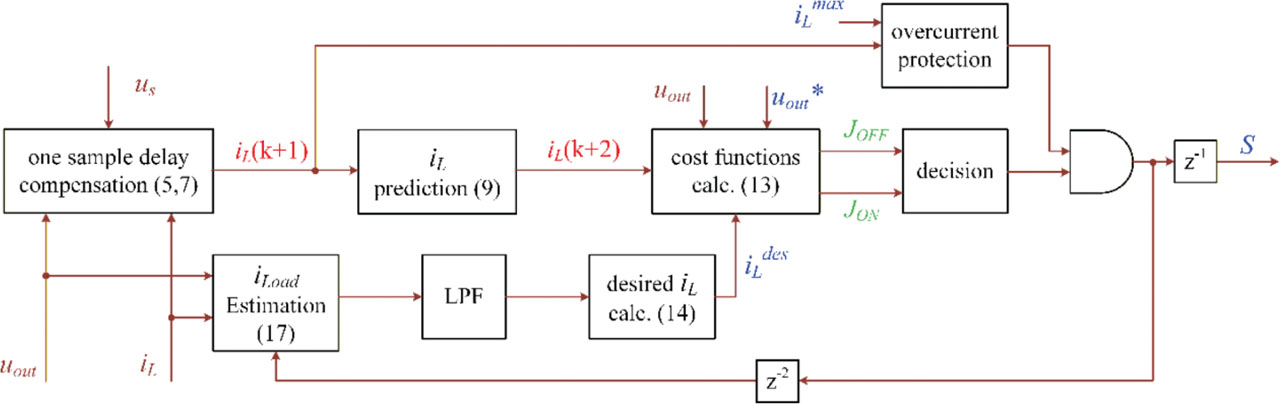
Figure 3.
FS-MPC block diagram with inductor-current prediction and measured output voltage. FS-MPC, finite-set model predictive control.
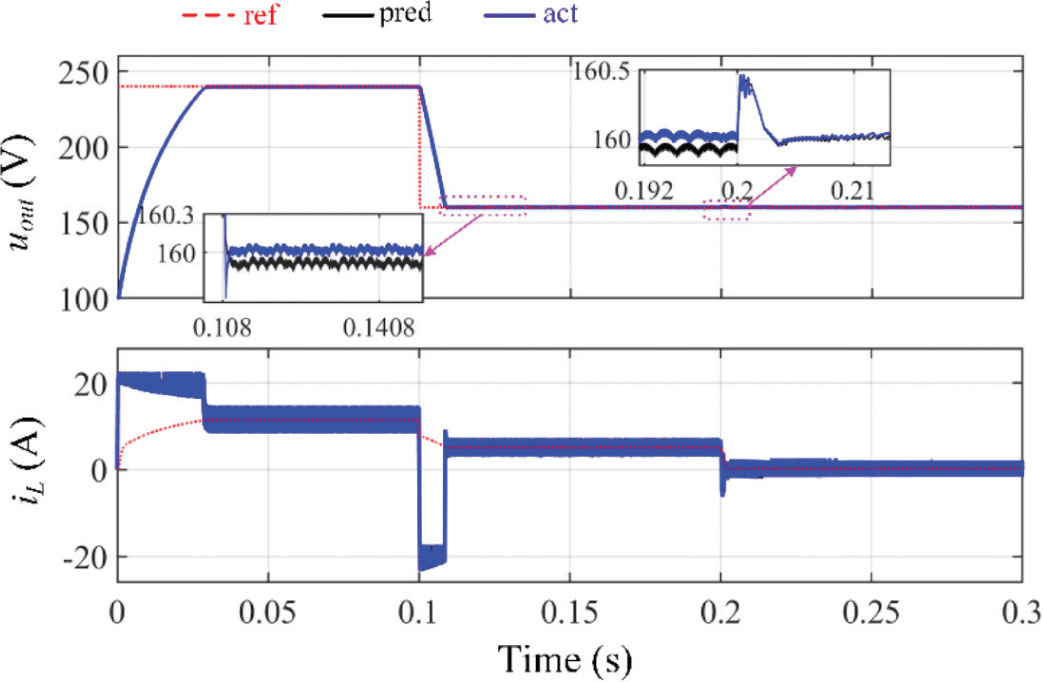
Figure 4.
FS-MPC results with predicted and measured output voltage in the cost function: (a) output voltage, and (b) inductor current. FS-MPC, finite-set model predictive control.
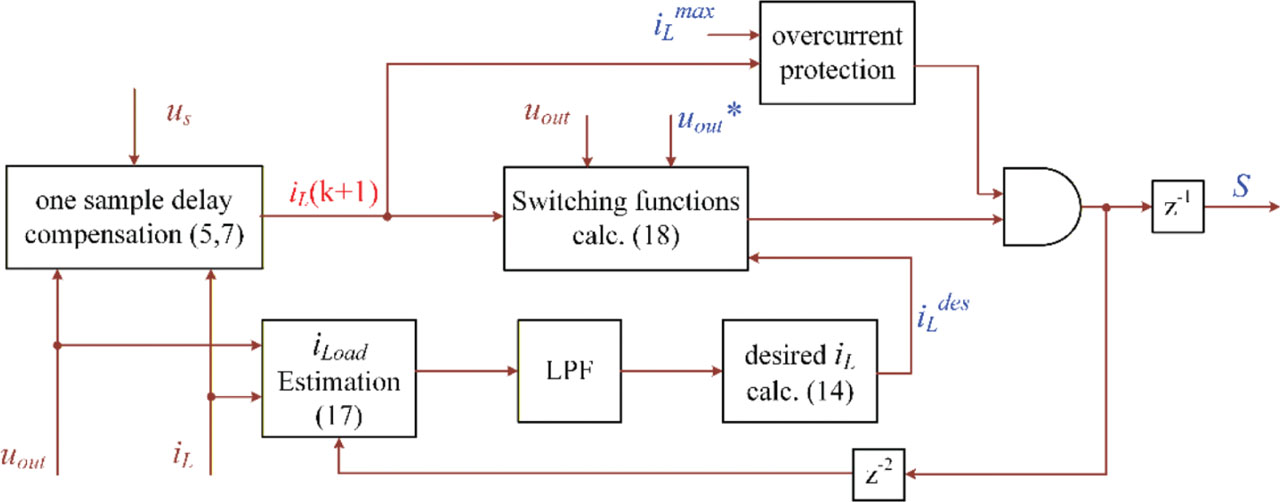
Figure 5.
CMP-BB strategy block diagram with inductor-current compensation and measured output voltage. CMP-BB, compensated-BB.
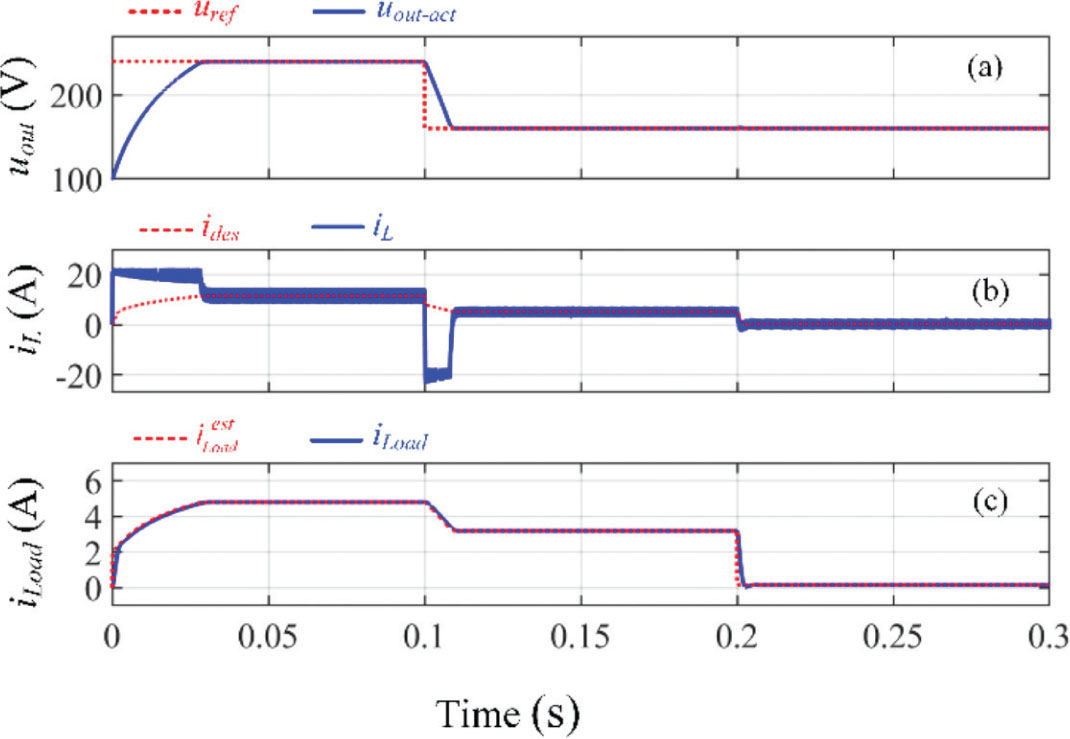
Figure 6.
CMP-BB control results: (a) output voltage, (b) inductor current, and (c) load current. CMP-BB, compensated-BB.
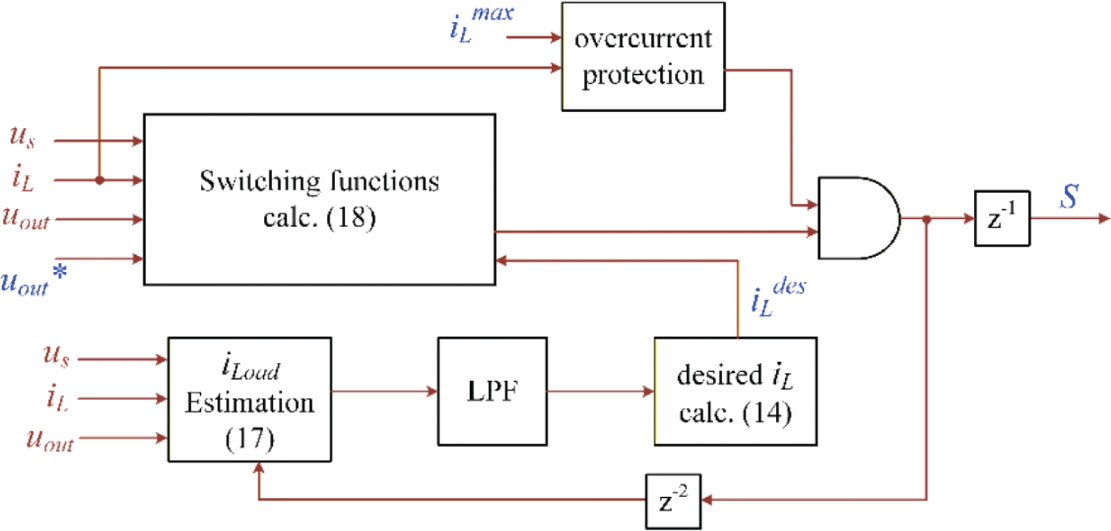
Figure 7.
DSF-BB strategy block diagram with measured inductor-current and output voltage. DSF-BB, doubled sampling frequency.
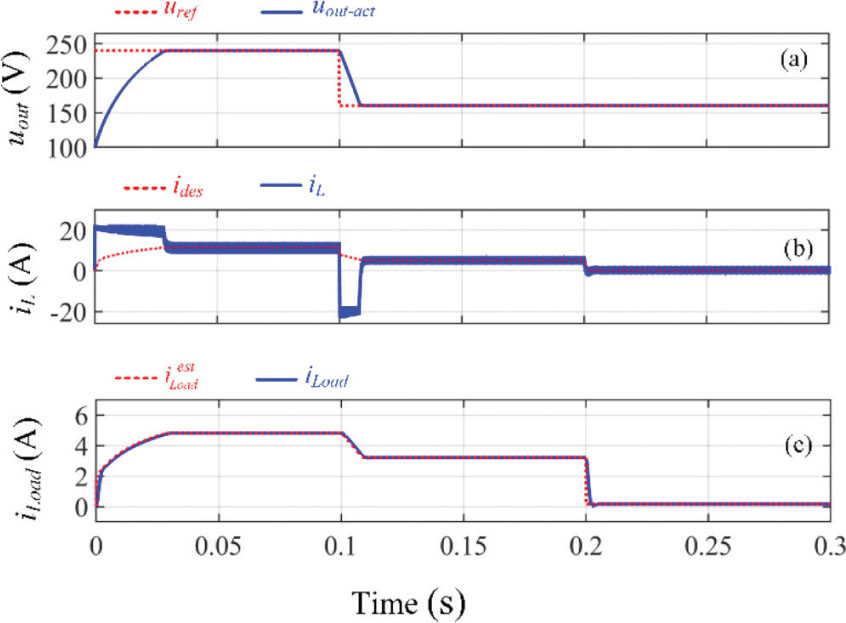
Figure 8.
DSF-BB results: (a) output voltage, (b) inductor current and (c) load current. DSF-BB, doubled sampling frequency.
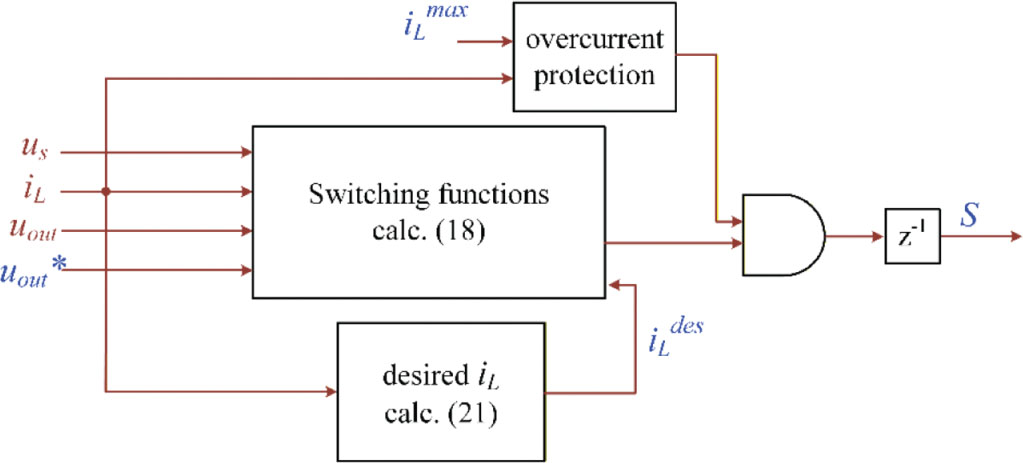
Figure 9.
MF-BB strategy block diagram with measured inductor-current and output voltage. MF-BB, model-free bang-bang.
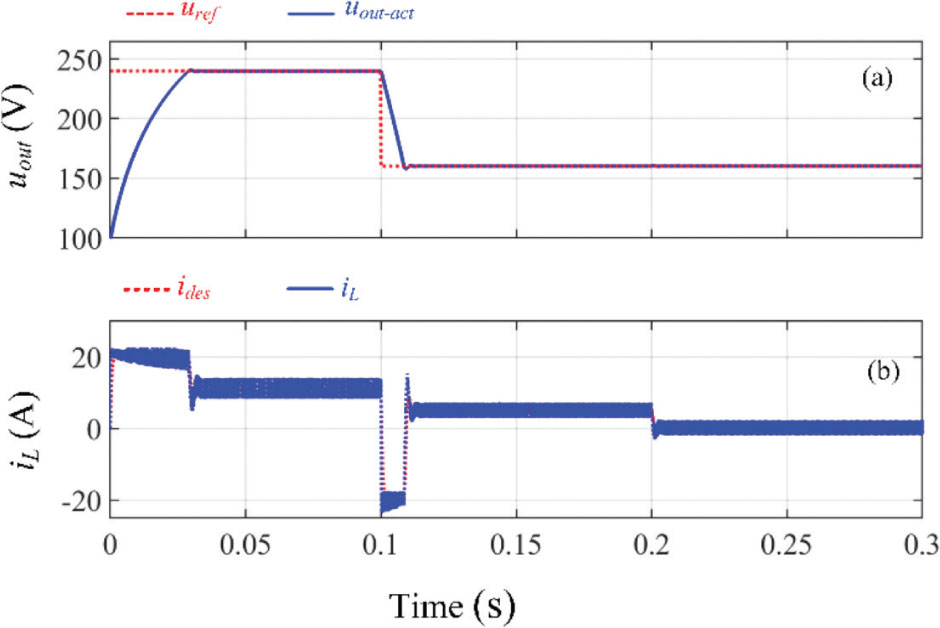
Figure 10.
Model-free BB control results: (a) output voltage, and (b) inductor current. MF-BB, model-free bang-bang.
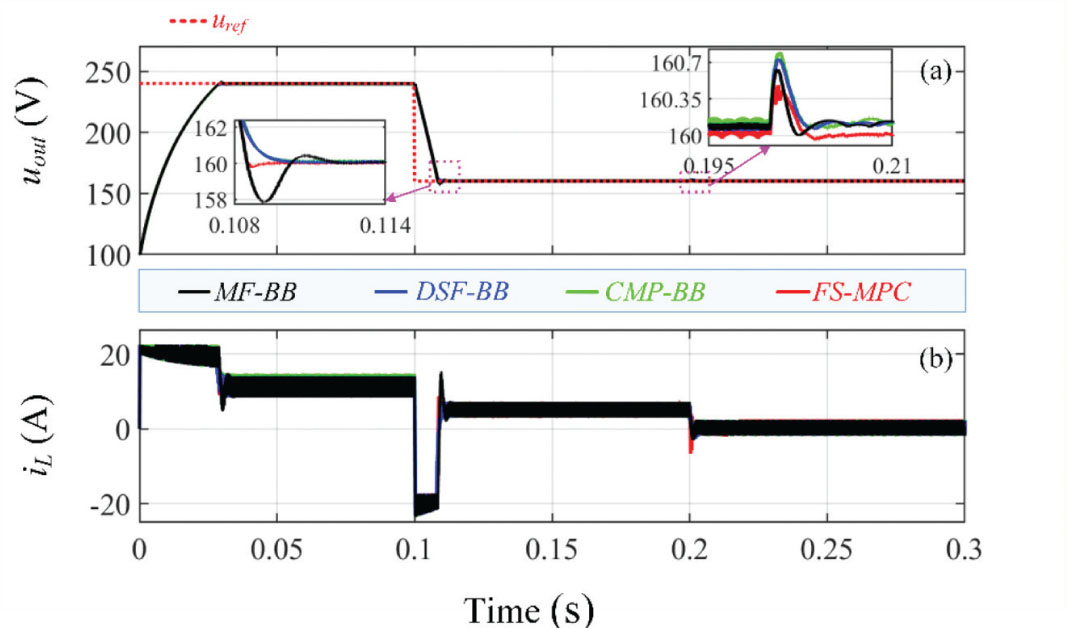
Figure 11.
The comparison results for the three previous control methods and the proposed MF-BB considering: (a) output voltage, and (b) inductor current. MF-BB, model-free bang-bang.
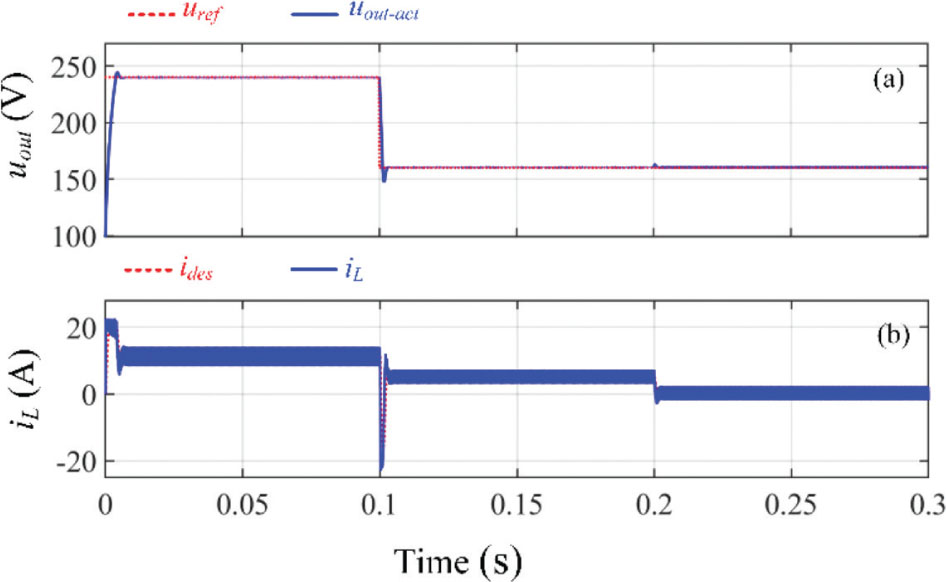
Figure 12.
MF-BB control performance under low-inertia operation (C=200 μF): (a) output voltage, and (b) inductor current. MF-BB, model-free bang-bang.
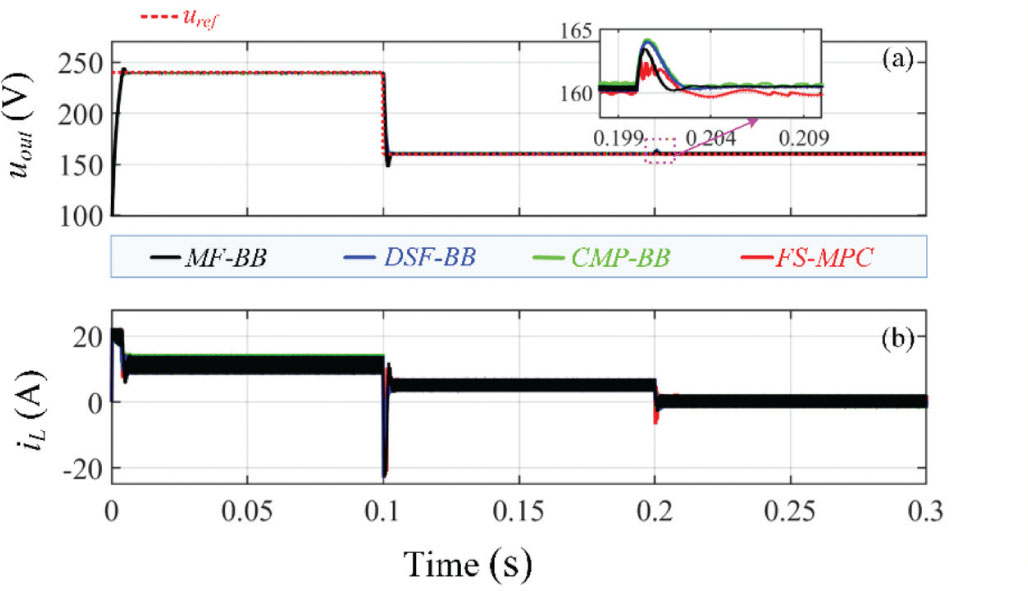
Figure 13.
The comparison results for the three previous control methods and the proposed MF-BB under low-inertia operation (C=200 μF): (a) output voltage, and (b) inductor current. CMP-BB, compensated-BB; DSF-BB, doubled sampling frequency; FS-MPC, finite-set model predictive control; MF-BB, model-free bang-bang.
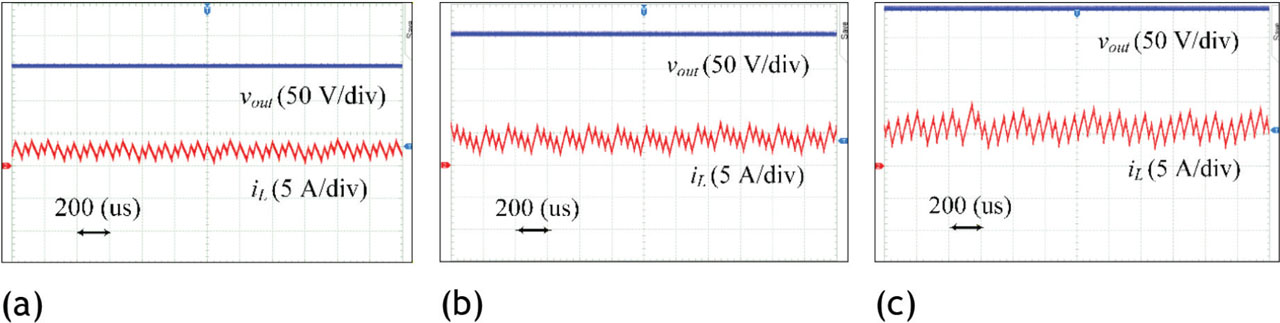
Figure 14.
Steady-state output-voltage waveforms of the bidirectional converter under a 100 Ω resistive load for different reference voltages: (a) 150V, (b) 200V, and (c) 240V.
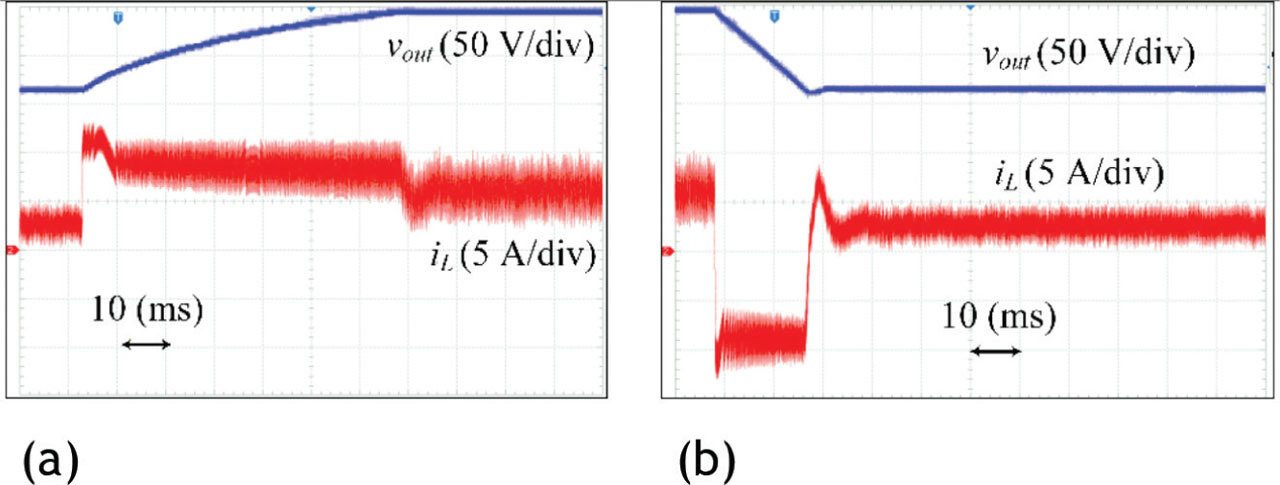
Figure 15.
Dynamic response of the bidirectional converter using the proposed control strategy under reference voltage transitions with a 100 Ω resistive load: (a) step-up from 160V to 240V, and (b) step-down from 240V to 160V.
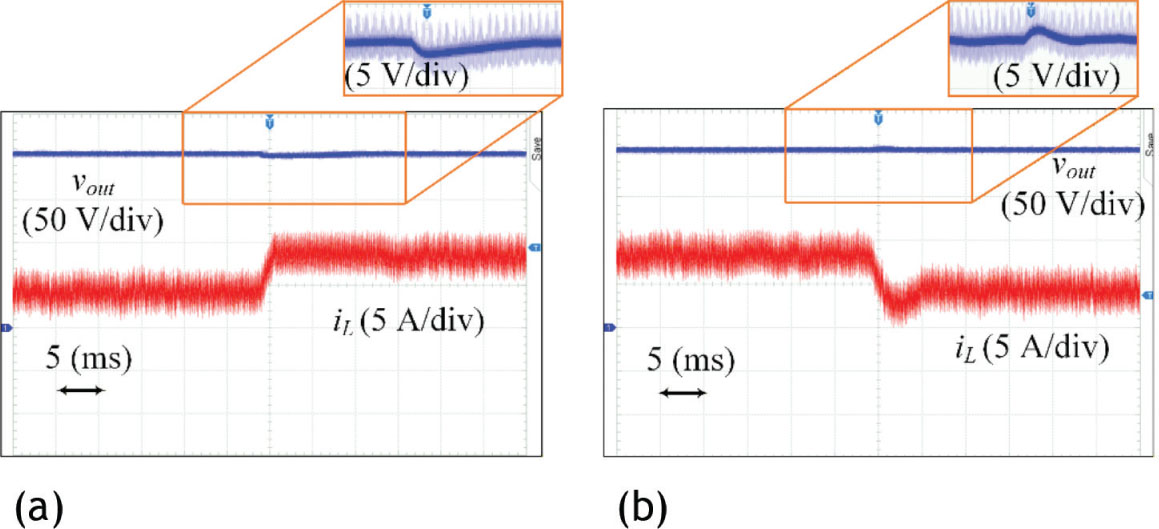
Figure 16.
Dynamic response of the bidirectional converter using the proposed control strategy under load variations at a reference voltage of 200V: (a) load change from 100 Ω to 50 Ω, and (b) load change from 50 Ω to 100 Ω