
1. Introduction
In the context of prevailing environmental challenges, the electrification of systems has become imperative in various industrial sectors, particularly the automotive industry. The European Union has introduced legislation that enforces strict emission limits, thereby encouraging the adoption of electric vehicles. To satisfy these requirements, manufacturers are increasingly turning to permanent magnet motors, which have many advantages (Alfehaid et al., 2021; Lara et al., 2016). These motors are characterised by their high energy efficiency and power density. Their widespread use reflects an industrial approach that prioritises developing more sustainable solutions in line with objectives aimed at reducing carbon footprints.
These machines require precise knowledge of the rotor’s position to function properly, which is usually obtained through the use of a position sensor. However, using such sensors has several disadvantages, including increased cost, reduced reliability and complex implementation. Encoderless control is a promising solution to these limitations. This approach can be divided into two main categories. The first category involves methods based on the machine model, which are effective in the medium and high-speed ranges. These methods rely on estimating the back electromotive force (back-EMF), either directly, where the back-EMF is used to obtain position information directly, as in Zhao et al. (2018), or indirectly, by relying on observers. For example, an enhanced perturbation observer was proposed by Song et al. (2016), and an extended Kalman filter was used by Pasqualotto et al. (2023). The second category comprises methods based on magnetic salience, which are suitable for low speeds and standstill. These methods have been the subject of much research, both in terms of observer type, as in Corley and Lorenz (1998), where a Luenberger-type observer was implemented, and in terms of high-frequency (HF) injection type. The scientific literature contains many injection variants. For instance, in Mizutani et al. (1998), the rotor position and speed are estimated using an intermittent voltage pulse, whereas in Yoon et al. (2011), square-wave voltage injection is employed. In Tang et al. (2018), encoderless control is achieved by injecting bidirectional rotating HF carrier signals, while in Kim et al. (2016), the authors use a HF rotating voltage and propose a proper demodulation method to extract the rotor position from current signals. Carrier HF injection voltage can also be used, as in Liu and Zhu (2014), where the authors achieve injection in a stationary frame, whereas in Luo et al. (2016), the injection is realised in an estimated rotating frame. To improve this method, the Mai et al. (2021) use pulsating carrier injection and propose a position extraction strategy based on an amplitude observer. Furthermore, techniques have been developed that combine the previous two categories with artificial intelligence to enhance their effectiveness (Makni and Zine, 2016). These approaches offer flexibility by adapting to medium and high speeds, as well as low speeds and standstill (Zine et al., 2018b).
This article focuses on low speed, encoderless control methods that use HF voltage injections. Usually, the most convenient way to estimate speed is to measure the back-EMF of the motor since this quantity is proportional to the speed. However, at very low-speed the back-EMF is difficult to measure because it is very small. So other techniques like HF injection have to be used. Among the various injection techniques, the HF pulsating signal injection method has been adopted because of its numerous benefits (Raca et al., 2010), including its good performance and its simple position post-processing chain. This method relies on injecting a HF voltage and acquiring the stator’s HF current in order to estimate the rotor’s electric position. Therefore, estimation accuracy can be affected by the amplitude of the HF voltage signal (Khan and Mohammed, 2009). The study discussed in this article concerns an extra-low voltage machine for applications such as hybrid vehicles, license-free cars and soft mobility applications such as electric bicycles, which limits the maximum amplitude of the injection. High injection amplitudes introduce high harmonic currents and torque ripples. Based on the aforementioned references, the injection voltage amplitude is generally reported to be between 10 V and 20 V for low-voltage machines supplied with a DC bus voltage from 200 V to 400 V, equivalent to an interval of 2.5%–10% of the DC bus voltage. In extra low-voltage applications, the voltage injection must be reduced; however, the difficulty lies in choosing the correct injection amplitude. A very low amplitude may be affected by voltage drops in the inverter, while a high amplitude may disturb the machine torque. In our study, we investigated the impact of voltage injection amplitude by carrying out injections with an amplitude ranging from 1% to 8% of the DC bus voltage, equivalent to 0.5 V and 4 V.
The current study aims to improve position estimation and find the optimal injection amplitude for each operating point. Bibliographic research into enhancing the performance of encoderless control methods primarily focuses on injection or demodulation techniques. In Li et al. (2021), a HF signal injection scheme using an iterative learning algorithm was proposed to reduce HF torque ripples. Another way to improve the estimation performance is to optimise the injection parameters. In Petro et al. (2022), the authors propose a method of optimisation based on the root-mean-square error of the estimated position, speed and torque values achieved for a machine operating at a DC voltage of 325 V; however, it should be noted that these results were obtained via a MATLAB/Simulink (Mathworks) simulation and have not been validated experimentally. Another study, presented by Zine et al. (2018a), uses genetic algorithms to solve a parametric optimisation problem for an encoderless control method based on HF signal injection in an automotive application involving a 400 V machine.
This article proposes a data-driven optimisation method for calculating the amplitude of the injection voltage. The aim is to find the optimal balance between estimated rotor position quality and system disturbance for a given operating point. The proposed method relies on a reduced database supplemented by interpolations. Although it focuses on the pulsating carrier method, its principle can be extended to other types of HF voltage injection methods. The optimisation procedure presented below considers the mean position error, the variance of the estimated position error, the torque disturbance and the additional power losses consumed by the HF voltage injections. The article is organised as follows. First, the system under study is presented in Section 2. Section 3 provides a brief introduction to the pulsating carrier method. Section 4 details the HF voltage injection optimisation procedure. Finally, Section 5 presents the validation of the process and the experimental results of the tuned injection voltage implementation. Section 6 concludes the article and proposes future research.
2. Studied System
The test machine used in this study is a permanent magnet assisted synchronous reluctance (PMSynRel) machine with low salience. It is an extra-low-voltage machine that operates a DC bus voltage equal to 48 V. As shown in Figure 1, the test bench consists of two identical test machines mounted on the same shaft. The input DC supply voltage is 48 V, and the switching frequency of the voltage inverter is 12 kHz. To evaluate the position estimation performance, an inductive position sensor has been installed on each of the two machines. The characteristics of the test machine are given in Table 1.
Table 1.
PMSynRel characteristics
| Parameters | Values |
|---|---|
| Maximum speed | 8,000 rpm |
| Maximum torque | 10 N.m |
| Maximum current | 120 A |
| Stator phase resistance | 0.0021 Ω |
| Permanent magnet flux | 5.3 mWb |
| Pole pairs number | 8 |
| Ld | 18 μH |
| Lq | 25 μH |
| Ldq (neglected since ≪ Ld and Lq) | 0.08 μH |
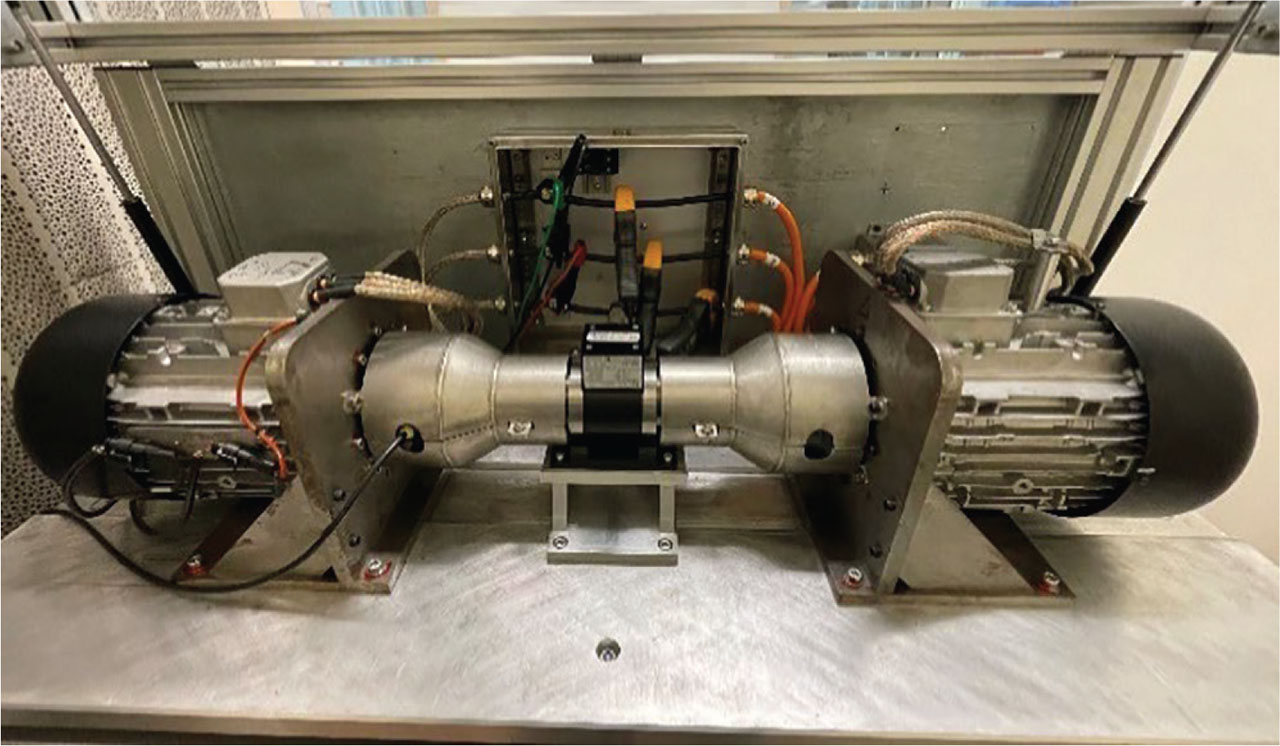
Figure 1.
Experimental test bench.
3. Pulsating Carrier Signal Injection
Encoderless control, which utilises pulsating HF signal injections, is widely used in scientific literature for estimating rotor position (Cupertino et al., 2011). This technique involves superimposing a HF voltage, Vh cos(ωht), onto the d-axis reference voltage, where Vh is the amplitude of the injected voltage and ωh is its frequency. This additional voltage generates a HF current whose variations contain valuable information about the rotor position. To extract this information and guarantee machine controllability, the stator current is measured and analysed using adapted signal processing chains.
The first chain applies a series of filters and transformations to isolate the fundamental current, which is used for torque and current regulation. This approach ensures accurate machine control with minimal interference from the HF signals. Conversely, the second chain is dedicated to extracting the rotor’s electrical position using information related to its error. In practice, the position error is sent to a phase-locked loop (PLL) to cancel it out, thereby estimating the rotor position and speed. Figure 2 summarises the operating principles of this position estimation method and the current regulation loop, while Figure 3 focuses on the PLL position and speed observer.
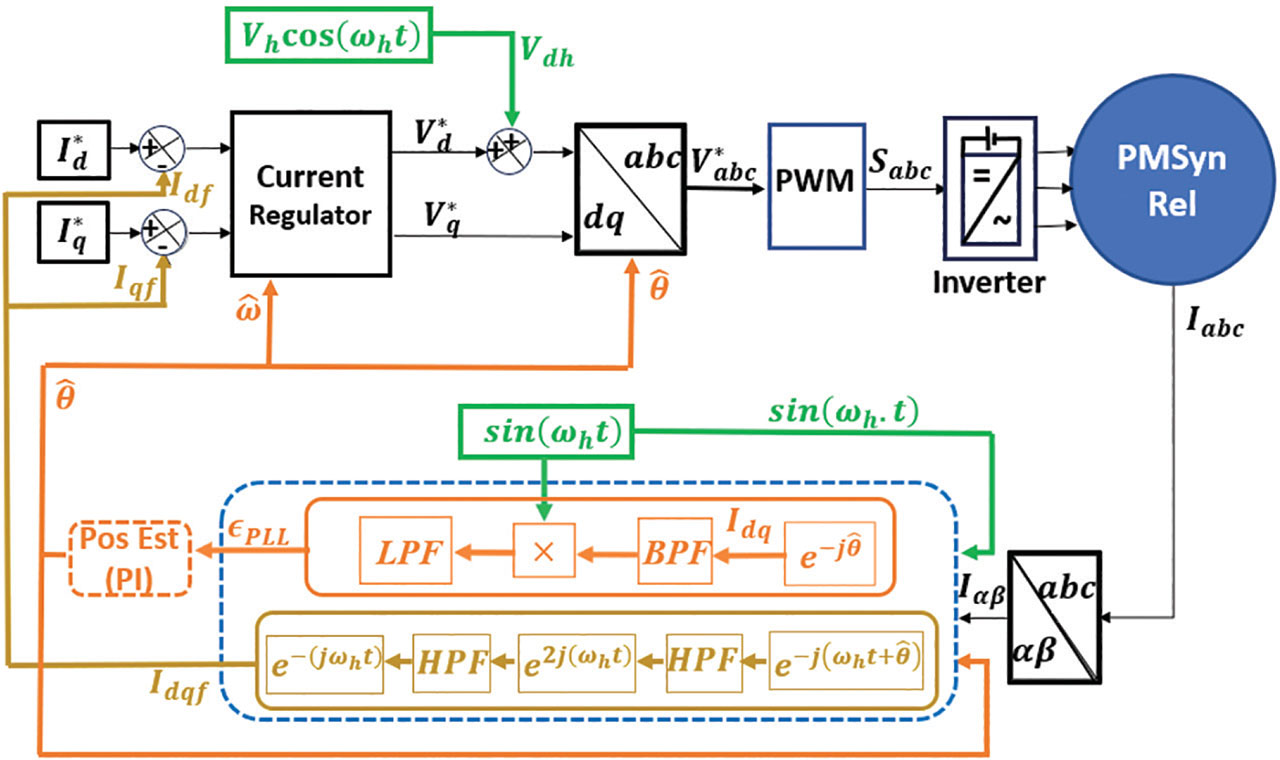
Figure 2.
Global diagram of the position estimation and current control loops. PLL, phase-locked loop.(BPF: band-pass filter, HPF: high-pass filter, LPF: low-pass filter, PI: proportional and integral controller, PWM: pulse width modulation).
4. Voltage Injection Optimisation
4.1. Optimisation method
Belghazali et al. (2024) evaluates the various parameters influencing the performance of the pulsating carrier injection method. This study classifies these parameters into two main categories. The first category comprises parameters associated with HF injection conditions, such as the magnitude of the HF voltage and the frequency of the injected signal. The second category consists of parameters related to machine saliency. For the machine under study, the analysis showed that its saliency varied little with the applied load and thus had a limited impact on the performance of the position estimation method. The analysis also showed that a high injection frequency equal to 10% of the switching frequency of the voltage inverter significantly improves estimation performance compared to lower frequency values Belghazali et al. (2024) and that position error depends on the level of the injected voltage. For this reason, the injected frequency in this study is constant and set to the maximum possible with a switching frequency of 12 kHz. Taking these previous findings into account, this paper focuses solely on the influence of the injection amplitude, seeking to establish an optimal compromise between the level of intrusion due to the HF voltage injection and the quality of the position estimation.
Before presenting the optimisation algorithm, we will outline its specifications. The aim is to find the optimal compromise between ‘Quality’, which refers to the quality of the position estimation, and ‘Cost’, which refers to the cost of intrusion due to the injection process. Optimisation is performed over the operating range of (100 rpm → 500 rpm), which is equivalent to (1% → 6%) of the maximum speed of the machine, and for current amplitudes ranging from 0 A to 100 A (84% of the maximum current) in motor mode, and from 0 A to 50 A (42% of the maximum current) in generator mode. To differentiate between these two modes, the operating range is defined as (−50 A → 100 A). The optimisation process uses an experimental database acquired on the test bench. Data were gathered through multiple repetitive tests to ensure repeatability and enhance reliability. The collected data include estimated and measured positions, as well as measured torque and DC power. These were obtained for several Vh values ranging from 0.5 V to 4 V, equivalent to 1%–8% of the DC bus voltage and an injection frequency of 1,250 Hz. For the position estimation, the band-pass filter of Figure 2 was tuned with an adaptive cutting frequency equal to fh, while the low-pass filter had a fixed cutting frequency equal to 150 Hz. For the current regulation loop, the cutting frequency of the two high-pass filters was set to 5 Hz. Figure 4 shows a summary of the tests used to create the database.
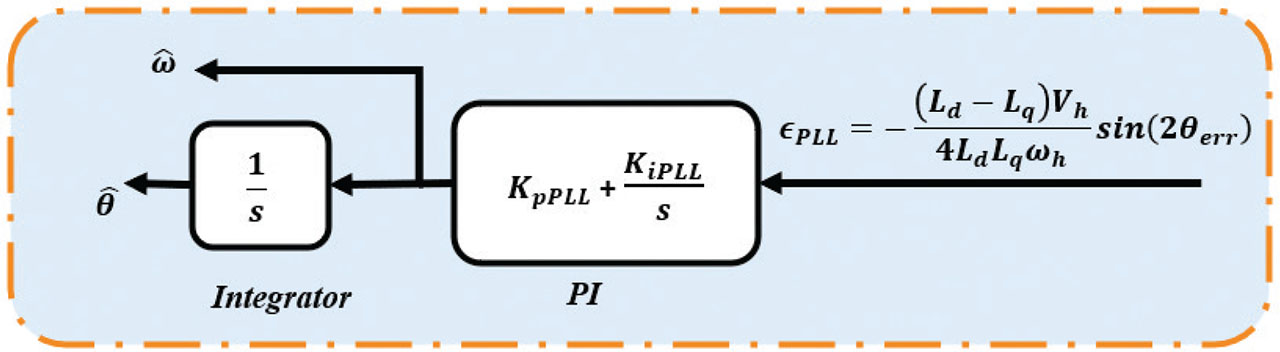
Figure 3.
PLL position and speed observer. PLL, phase-locked loop.
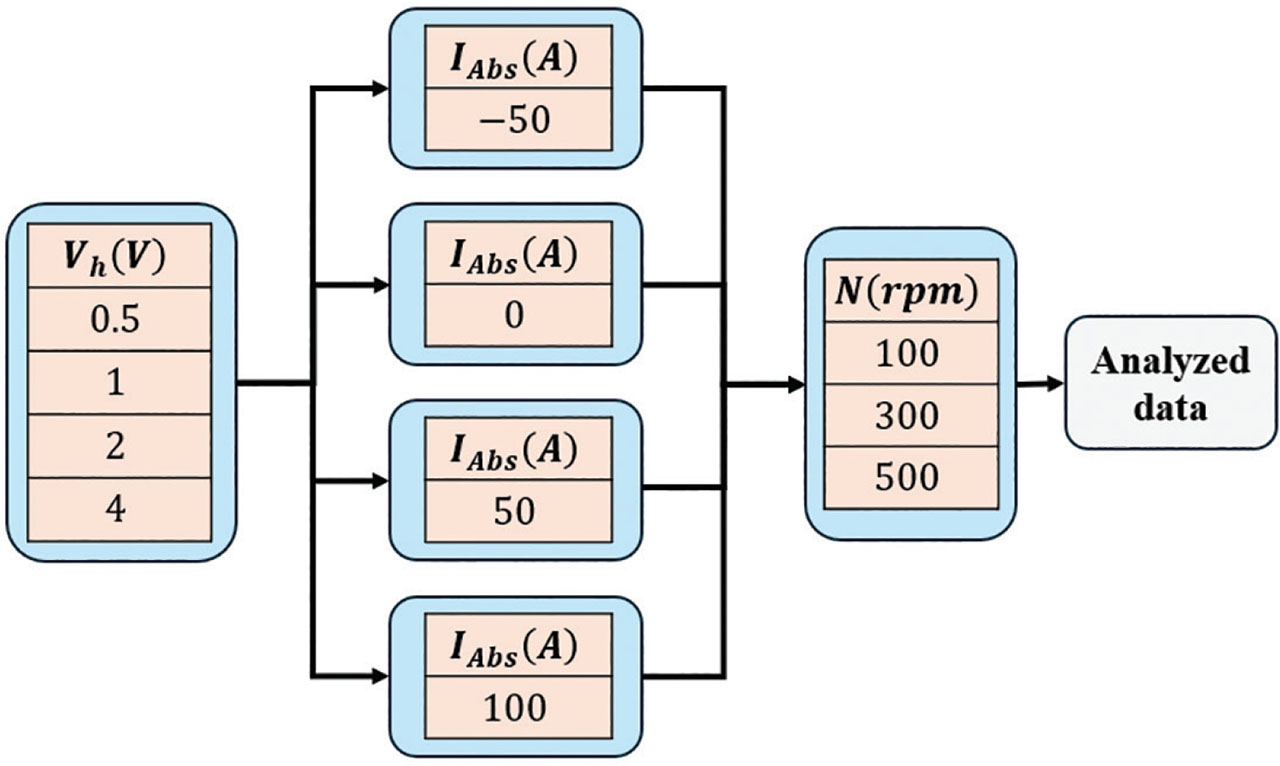
Figure 4.
Experimental protocol for database acquisition.
As mentioned above, the main objective is to strike the optimal balance between ‘quality’ and ‘cost’. ‘Quality’ is defined by quantities that reflect the quality of position estimation. For a given operating point, these include the mean value of the position estimation error and the dispersion of the electrical position instantaneous value in relation to its mean. The expressions for ‘quality’ and ‘cost’ will be presented later in the article.
‘Cost’ represents the undesirable effects of voltage injection. For this category, power losses and torque disturbances generated by HF injections are considered. These factors are essential for assessing the impact of injection on the system’s overall performance.
To calculate the optimal injection voltage magnitude, the proposed optimisation method uses the quality quantities qi and the cost quantities ci as inputs. These quantities are then scaled to ‘per unit’ before being transformed into the final functions QtotPU and CtotPU. Eqs (1) and (2) summarise this procedure, where wqi and wcj are the weights linked to quality and cost constraints, respectively. A study on the weighting of these terms will be presented later in this article, Section 4.2.
Following numerical interpolation, the optimal injection voltage, noted VhOpti, that reflects the best compromise between ‘quality’ and ‘cost’ is the one for which the quality and cost quantities are equivalent (Eq. 3). It was calculated using numerical interpolation to enrich the initial limited experimental database, built with a current step of 1 A and a Vh voltage step of 0.1 V (which is the injection accuracy limit).
As the current dynamics are much higher than the speed dynamics, VhOpti calculation is performed at a constant speed and expressed as a function of the stator current. A summary of the optimisation method is shown in Figure 5.
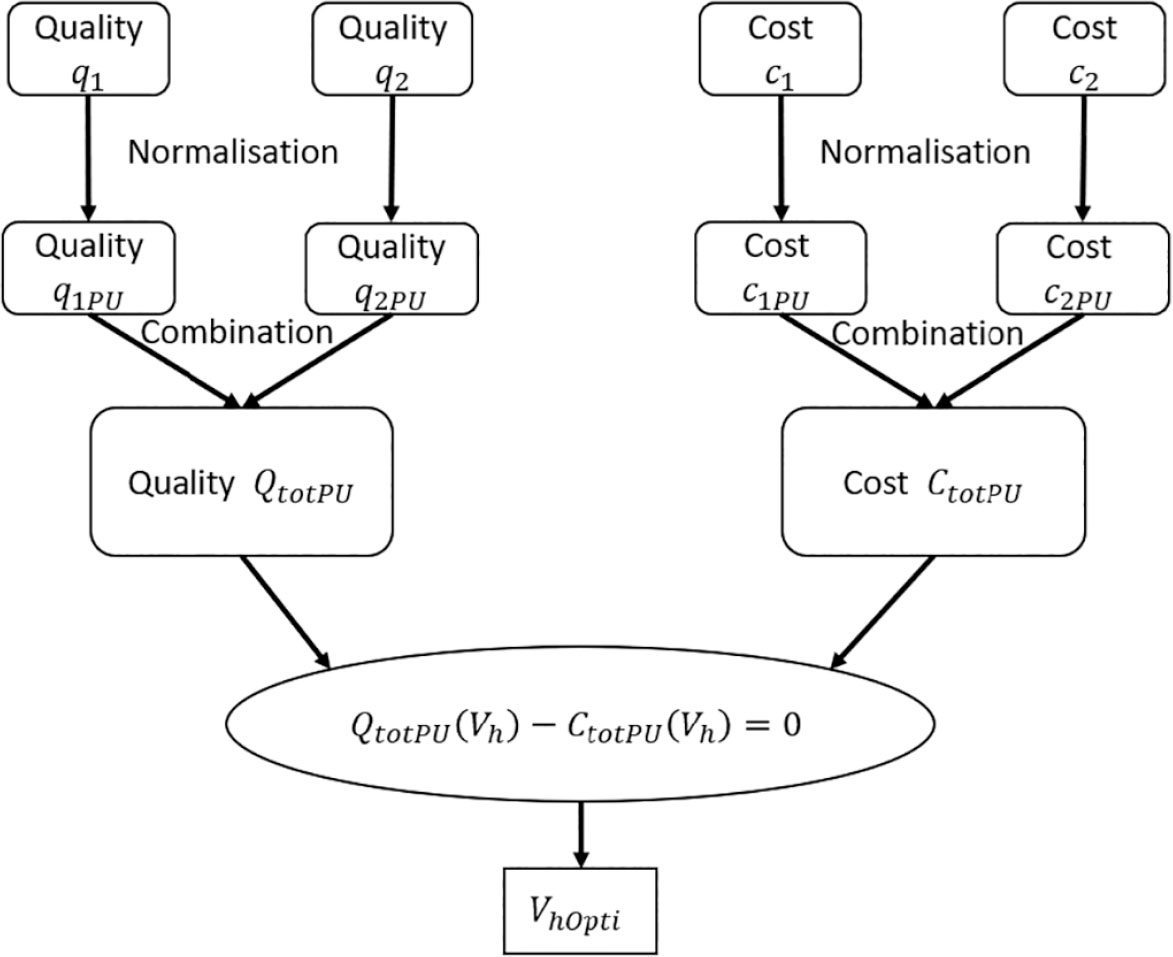
Figure 5.
HF injection voltage optimisation flowchart. HF, high-frequency.
The data-driven optimisation method and the results obtained on the test bench are presented below. Several optimisation scenarios are presented to demonstrate the importance of each studied quantity and explain why certain variables are prioritised. The optimisation data were collected using experimental tests. The qualities and costs are studied as a function of the injection voltage, Vh, and the maximum current per stator phase, IAbs (negative values correspond to generator mode and positive values to motor mode), for three levels of mechanical speed. In the present study, two quality parameters were examined. The first, q1, shown in Figure 6, is the variance of the estimated position error, which is related to positional dispersion. The second quantity, q2, shown in Figure 7, is the average error between the measured and estimated positions. Furthermore, two quantities associated with the cost and intrusion of the injection method are also studied. The first, noted c1 and presented in Figure 8, is the torque HF distortion rate. The second, noted as c2 and shown in Figure 9, are the additional DC losses generated by the injection process.
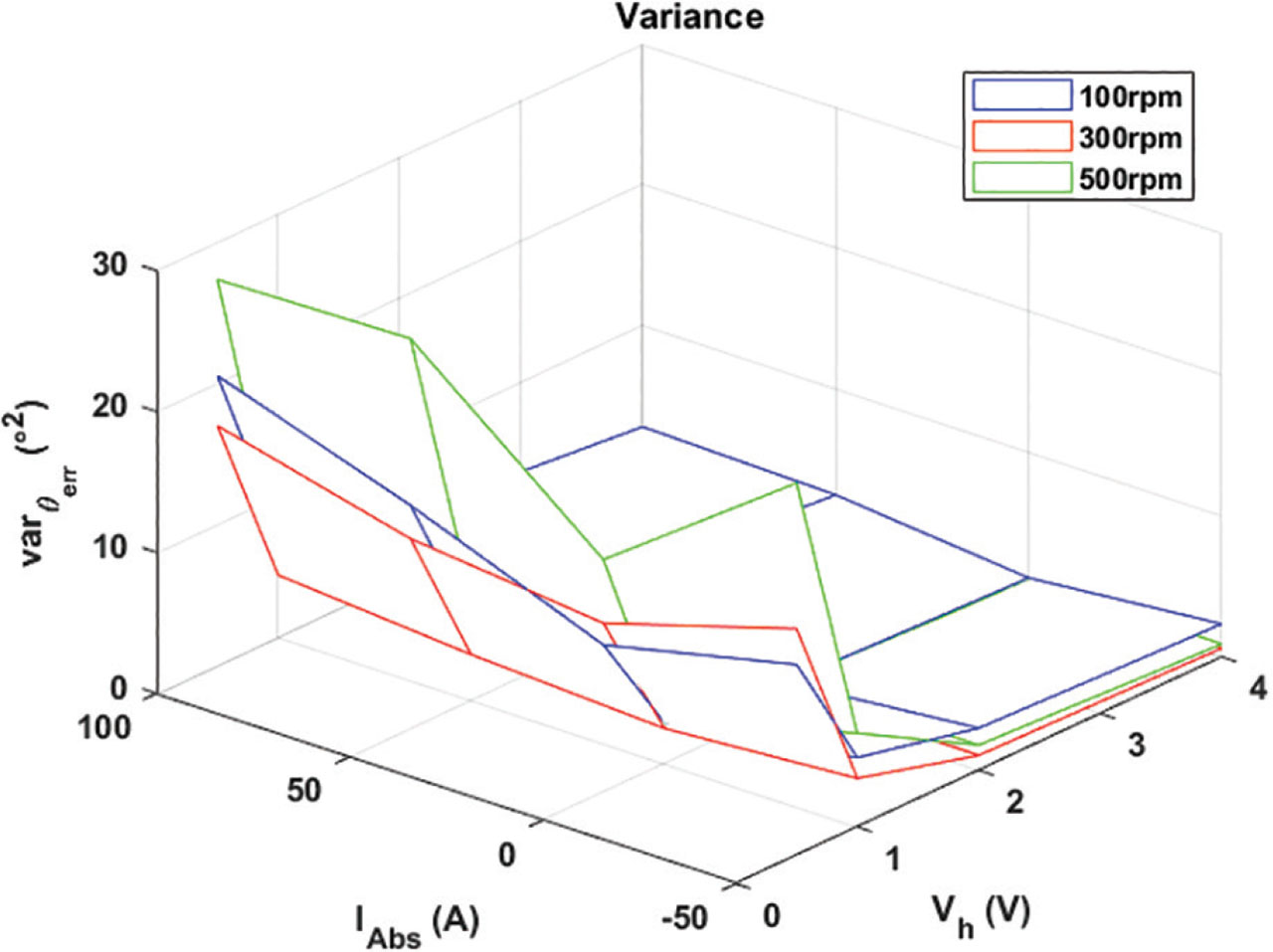
Figure 6.
Variation of the variance of the estimated position error as a function of Vh and IAbs.
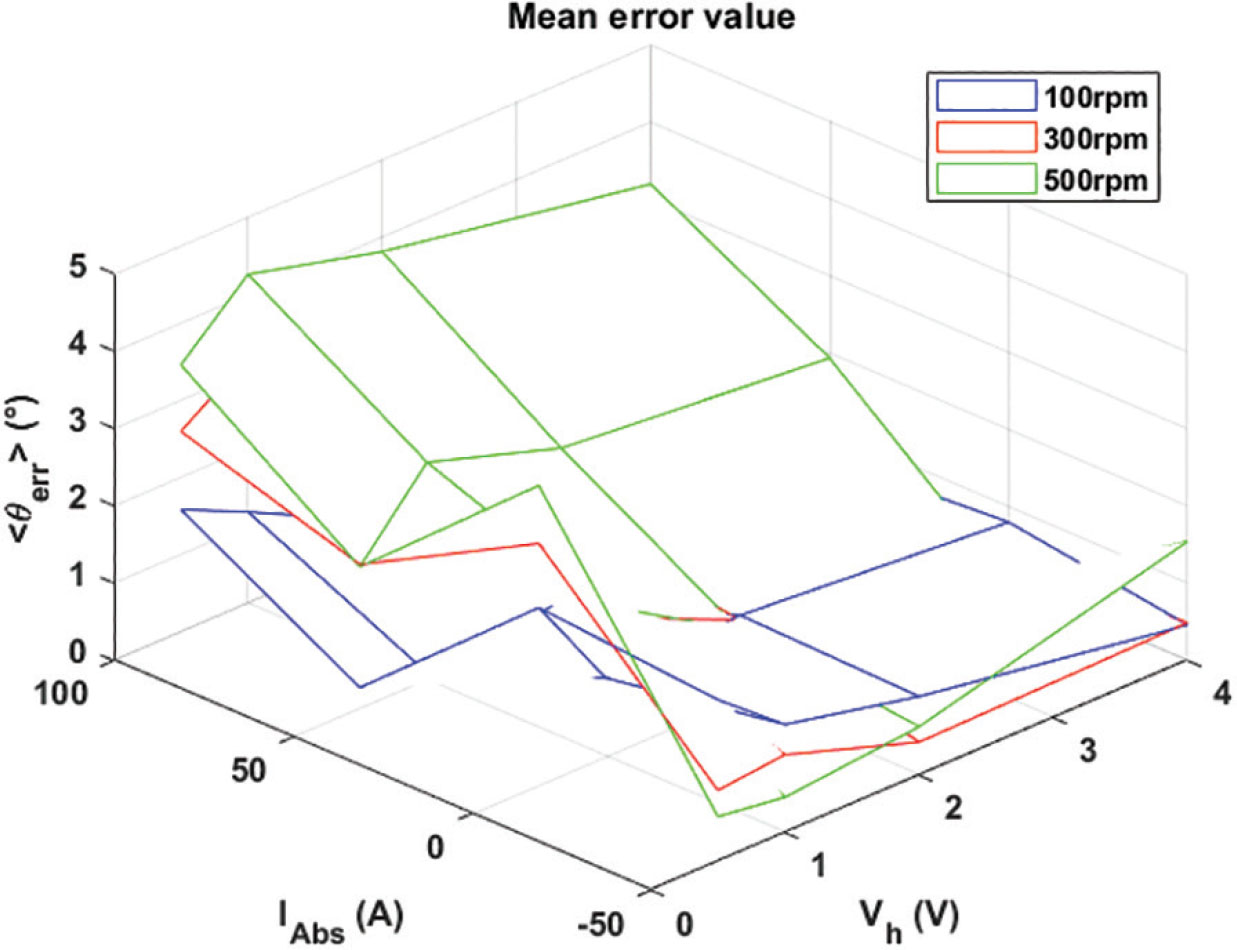
Figure 7.
Variation of the mean error value as a function of Vh and IAbs.
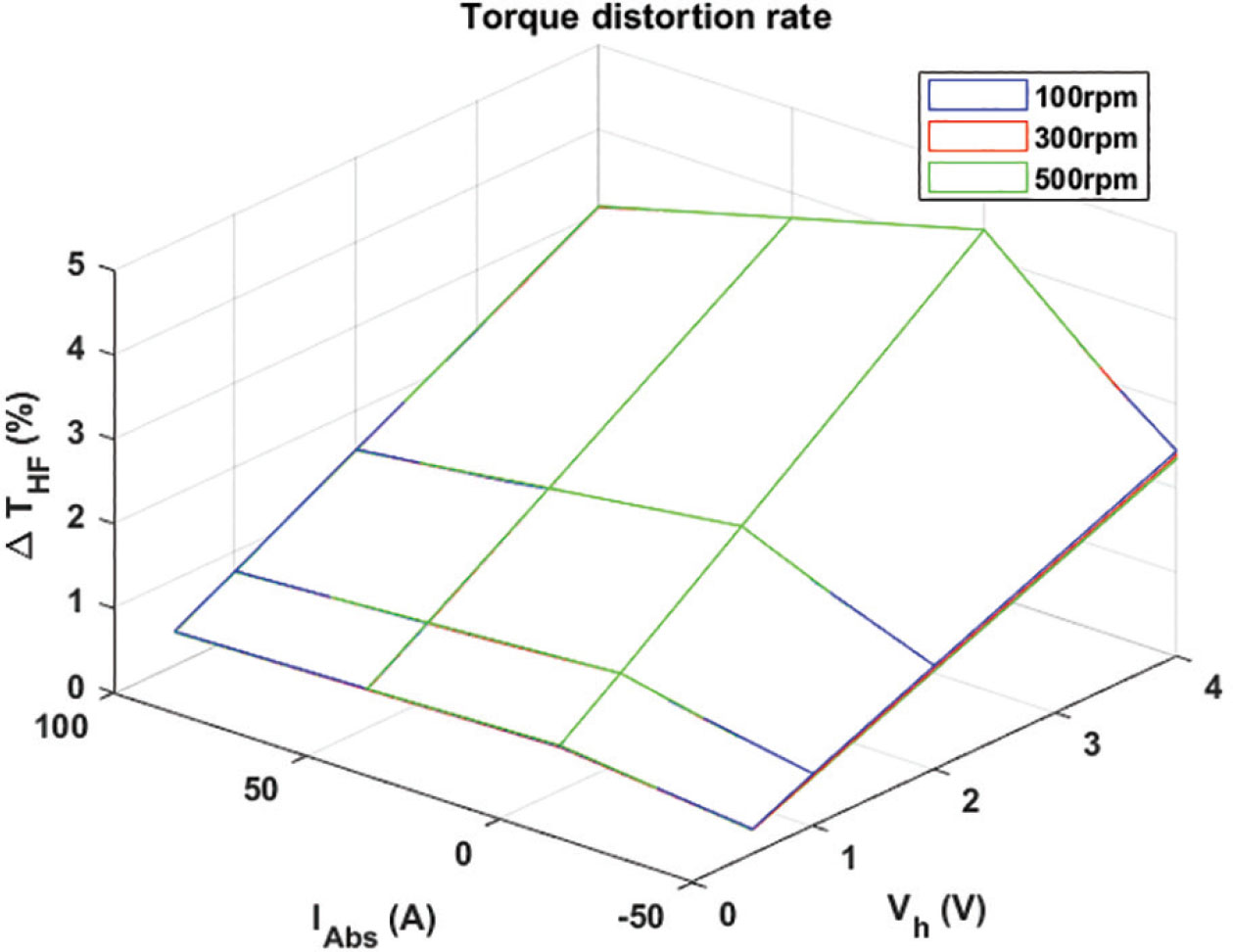
Figure 8.
Variation of the torque distortion rate as a function of Vh and IAbs.
The position error, noted θerr, between the estimated position, , and the position measured by the sensor, noted θ, is given by Eq. (4).
Eqs (5) and (6) represent the mean and variance of the estimated position error, respectively, and are noted as θerr and varθerr. These are key indicators for assessing the accuracy of position estimation. These two variables are calculated based on a time interval of 1.4 s, which is equivalent to an integer number of electrical periods and sampling points.
The torque distortion calculation is based on both experimental data and analytical equations. This approach was chosen because the bandwidth of the torque meter does not permit reliable harmonic calculation. The expression for the electromagnetic torque, noted Tem, is presented in Eq. (7). At very low speeds, mechanical losses are considered negligible and the mechanical load torque is assumed to equal Tem.
The number of pole pairs in the test machine is p, the direct-axis inductance is Ld and the quadrature inductance is Lq, and the magnet equivalent flux is ψm.
In the presence of HF injections, the stator currents (id and iq) can be expressed, in the real dq reference frame, as a function of the continuous components (id0 and iq0) and the injection-related components (idh and iqh). The latter depend on the amplitude of Vh, the injection pulsation ωh, and the error of the estimated position θerr. The adopted model is a simplified version that does not include the cross-coupling inductance because it has been considered negligible compared to Ld and Lq. More detailed models are available that explicitly account for this cross-coupling inductance (Yousefi-Talouki et al., 2018). However, in our study this level of complexity was not required, since experimental measurements confirmed that Ldq remains negligible for the considered machine (see Table 1).
When θerr → 0
Thus, the percentage disturbance due to the injection of Vh can be expressed as shown in Eqs (14) and (15). The results presented in this study were obtained by calculating the perturbation in the torque, ΔTHF, as a function of the measured currents idh, iq0 and the measured mechanical torque. It should be noted that a more detailed formulation, which includes the cross-coupling inductance, has been proposed in Holczer et al. (2025). However, this additional level of detail was not required in our case for the same reason as the one exposed for the HF currents.
Finally, the additional DC consumption, noted as ΔPdc, is calculated using the DC power measured on the test bench in the presence of Vh injection (noted as PdcInj) and the reference DC power for operation with a position sensor and without injection (noted as PdcRef).
Using the data in Figures 6–9, along with a set of wqi and wcj, it is possible to calculate the total quality (QtotPU) and the total cost (CtotPU), and thus the intersection between them (VhOpti), for a given speed. This calculation is carried out for all the tested speeds (100, 300 and 500 rpm). Figure 10 shows an example of VhOpti determination at 100 rpm: it corresponds to the intersection between the blue and pink curves when the quality factor level is equivalent to the cost level. However, this depends on how these factors are weighted. The selection of wqi and wcj is detailed in the next section.
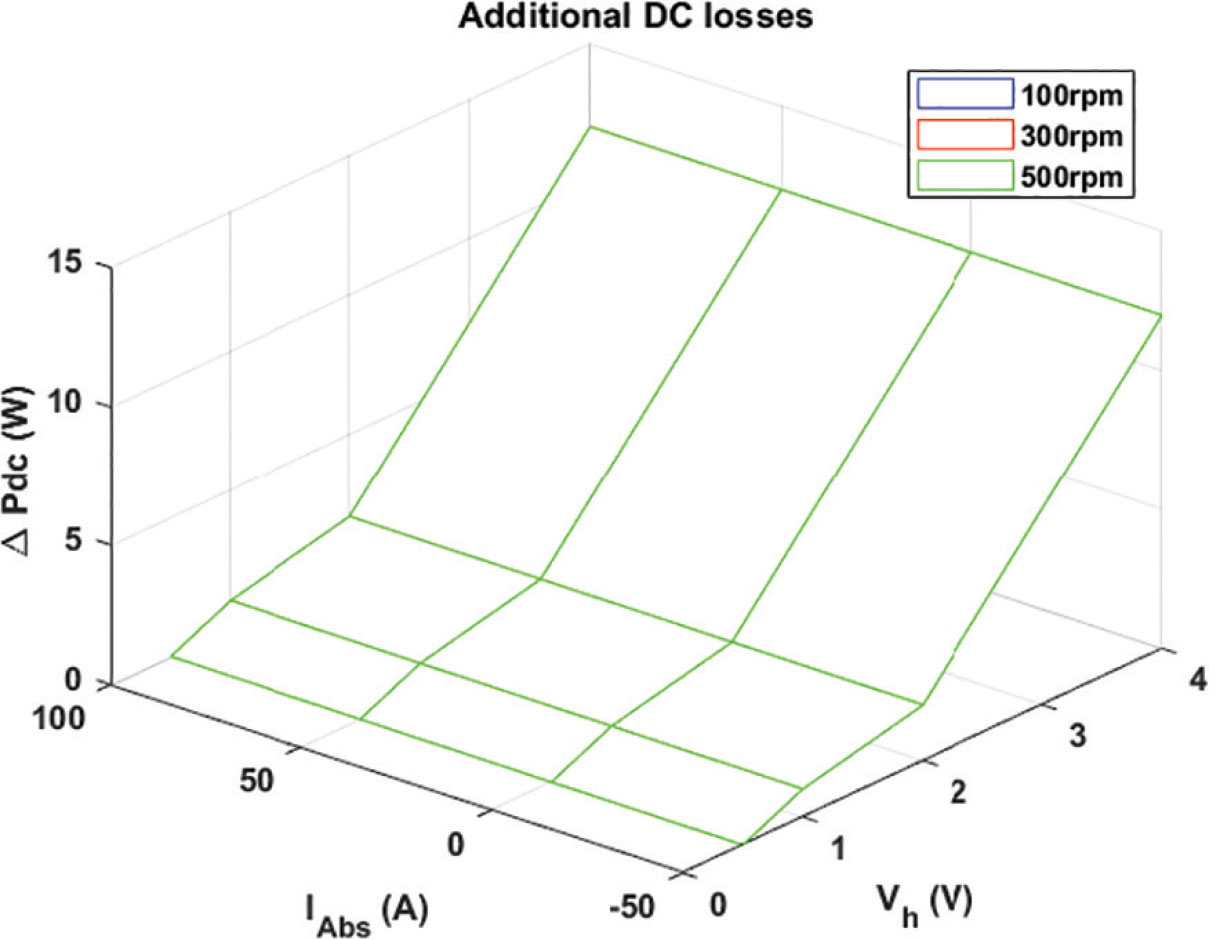
Figure 9.
Variation of the additional DC losses as a function of Vh and IAbs.
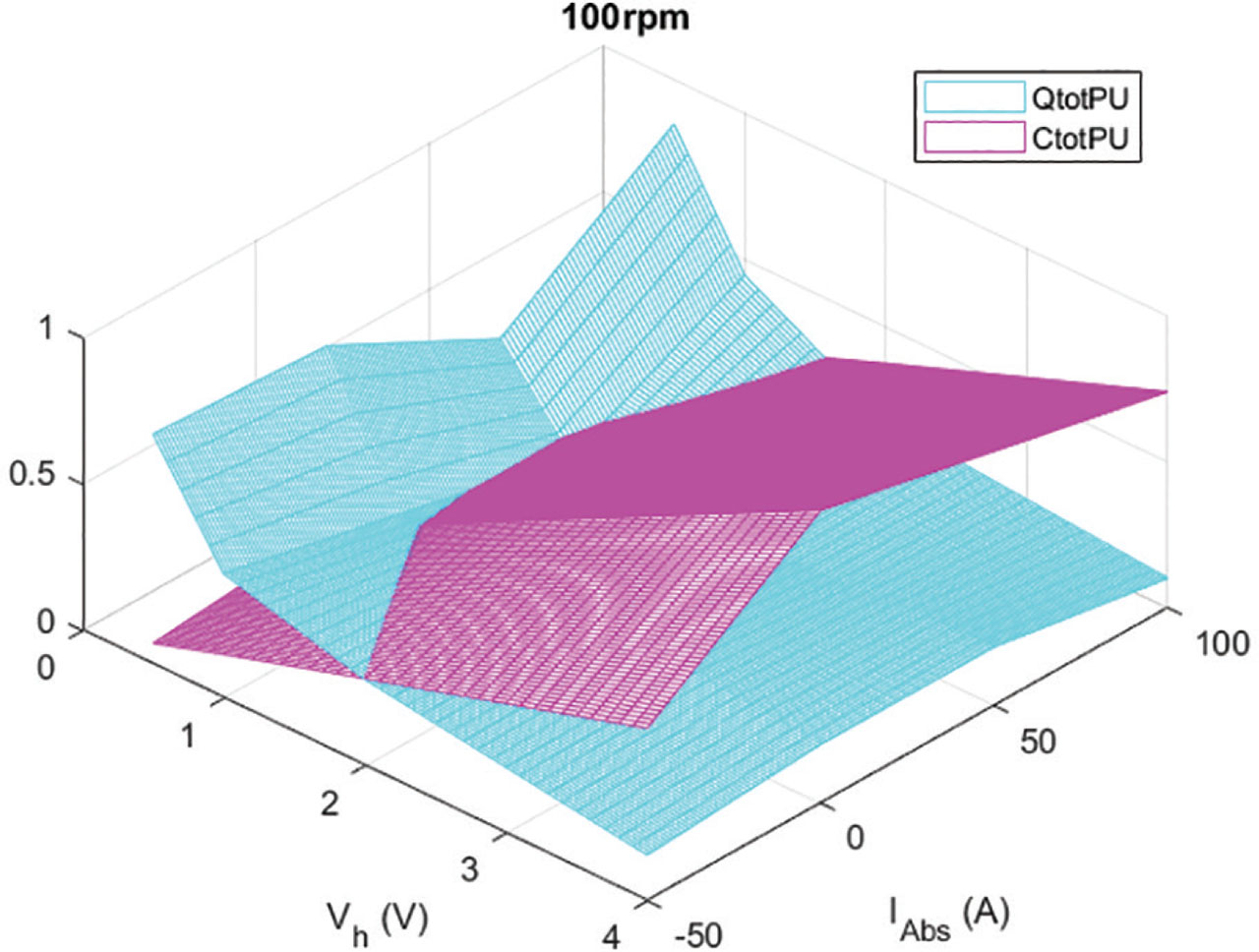
Figure 10.
Example of VhOpti calculation at 100 rpm.
4.2. Optimisation scenarios and results
In this section, we present the influence of the weights wqi and wcj on the calculation of VhOpti. To emphasise the impact of the quality and cost variables under study, we present a step-by-step optimisation approach. All the results shown in this section were obtained with a numerical interpolation with a current step of 1 A, a Vh voltage step of 0.1 V and a speed step of 10 rpm. In the first scenario, denoted S1, the optimisation problem focuses on balancing the variance of the estimated position error (q1) and the torque perturbation (c1). In S1, wq1 = wc1 = 1 and wq2 = wc2 = 0. Figure 11 shows the results of calculating VhOpti as a function of the machine speed and phase current. As the variance of the estimated position error depends slightly on the speed, and ΔTHF (%) is independent of it, the optimisation result is almost independent of speed; therefore, VhOpti in S1 depends only on the stator phase current.
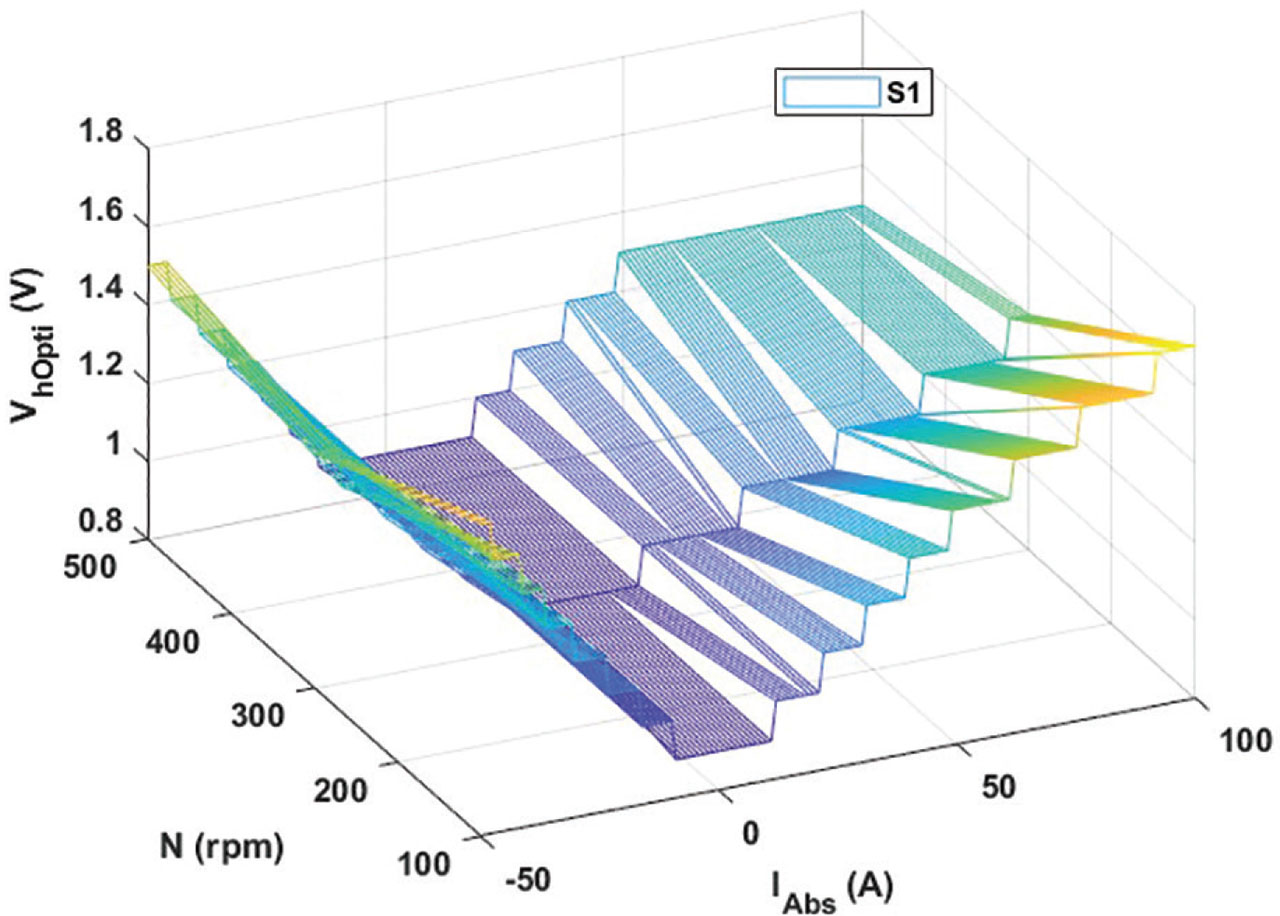
Figure 11.
VhOpti calculated with S1 scenario (wq1 = wc1 = 1 and wq2 = wc2 = 0).
To visualise the impact of position error on Vh optimisation, scenario S2 considers the average position error, which is a speed-dependent parameter. Figure 12 shows the optimal injection voltage obtained with wq1 = wq2 = wc1 = 1 and wc2 = 0. The results show a slight increase in VhOpti voltage values compared to S1 for speeds in the range between 300 rpm and 500 rpm, particularly when the current is high. This is understandable, as obtaining a better quality position estimation requires a higher injection voltage. Assigning greater weight to position accuracy and introducing the average position error accordingly increases the injection voltage.
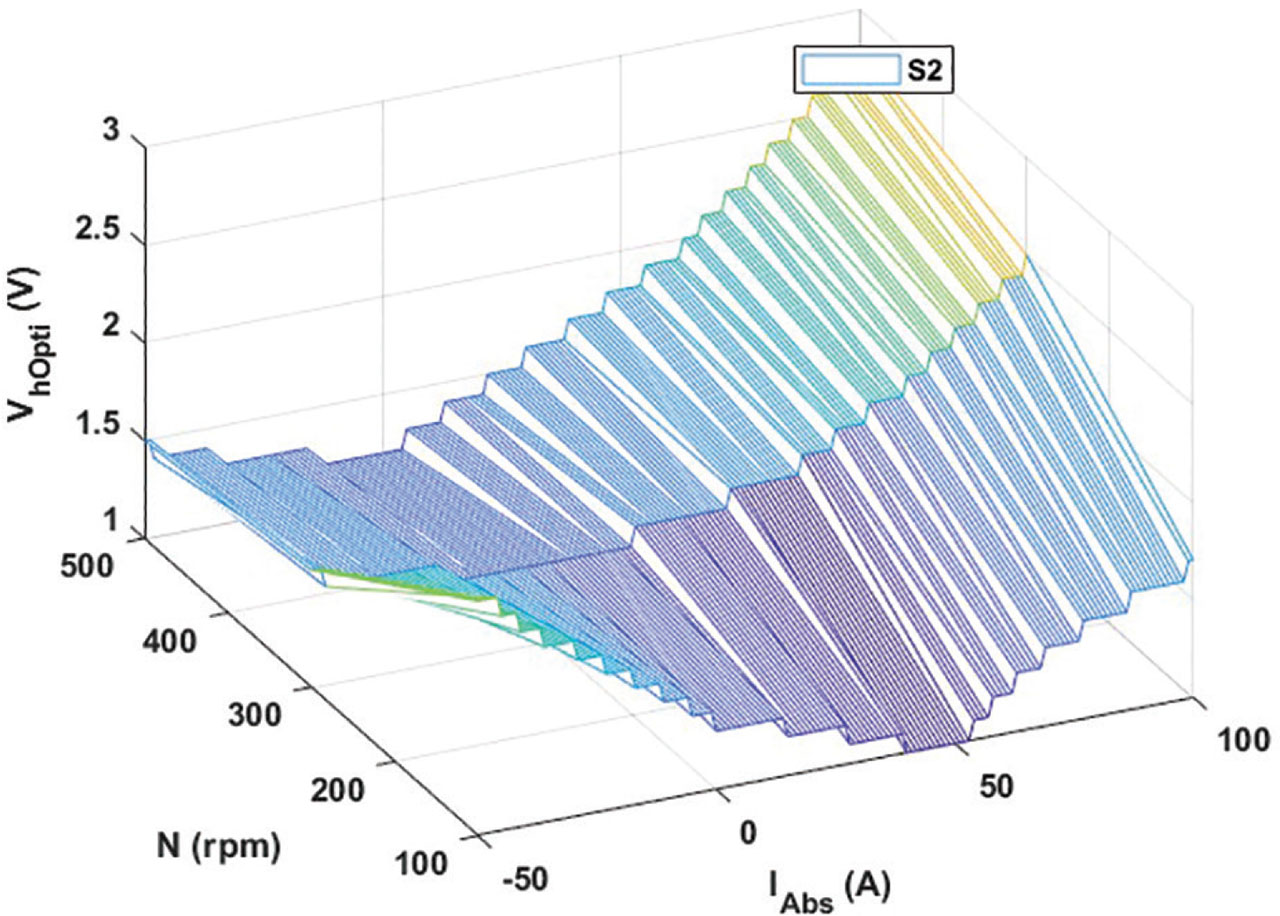
Figure 12.
VhOpti calculated with S2 scenario (wq1 = wc1 = wq2 = 1 and = wc2 = 0).
Finally, in scenario S3, the DC losses generated by the injection are also considered with wq1 = wq2 = wc1 = wc2 = 1. As the voltage injections are relatively small, the DC losses generated are also relatively low. Figure 13 shows that considering the ΔPdc losses slightly modifies the optimisation results compared to scenario S2.
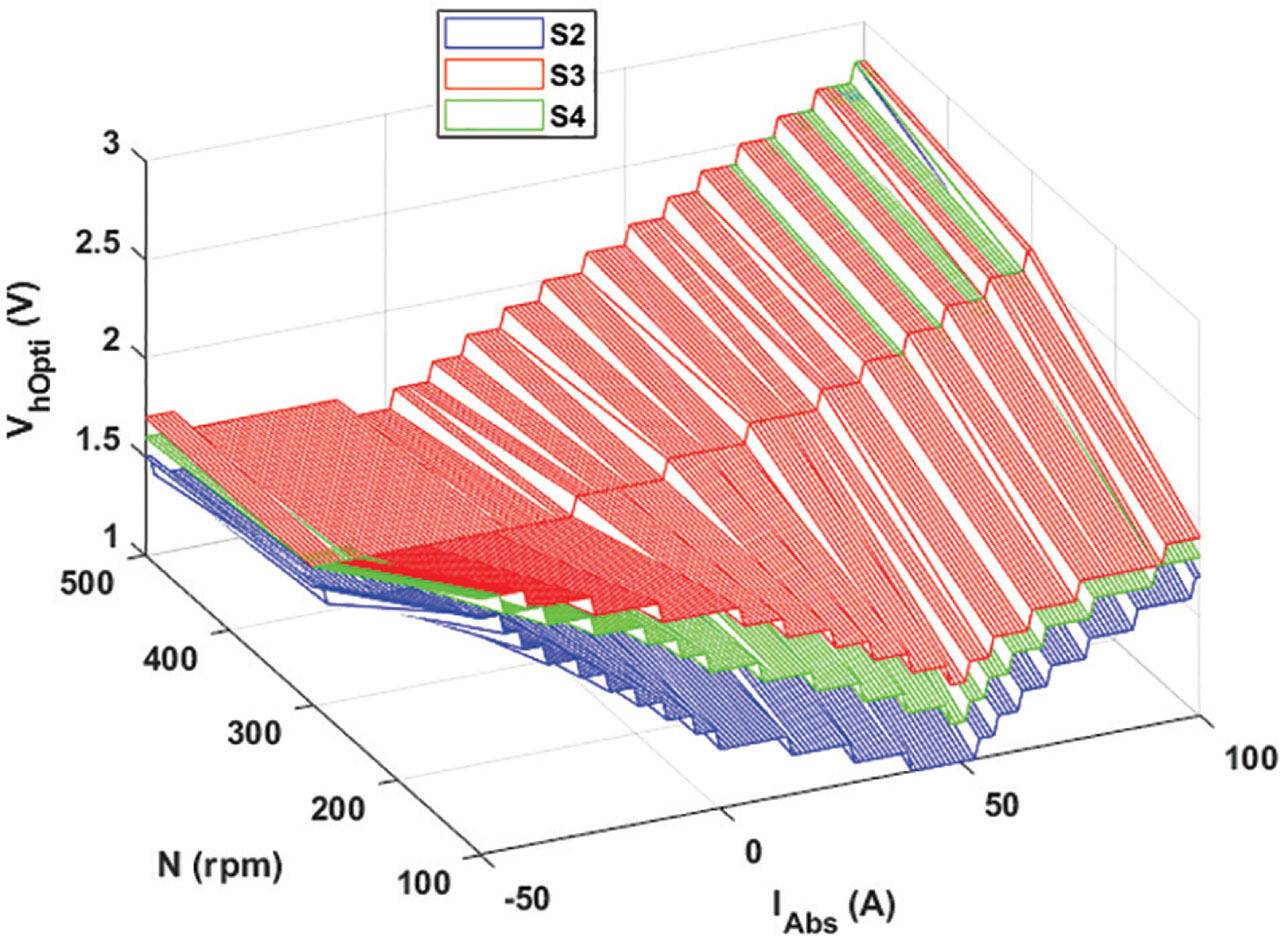
Figure 13.
HF injection voltage amplitude for different scenarios. HF, high-frequency.
It should be noted that, for this study, all parameters were considered to have equal weighting in determining the optimal HF injection voltage. However, the impact of some parameters may be considered more significant than that of others. Figure 13 shows an example of the variation in the weights of ΔPdc and ΔTHF, obtained using the fourth optimisation scenario, S4, with wq1 = wq2 = 1, wc1 = 2 and wc2 = 1. Figure 13 presents a comparison of VhOpti obtained with Scenarios S2, S3 and S4. These three scenarios produced similar results, with an increase in VhOpti for S3 and S4 compared to S2.
4.3. Experimental implementation of the optimisation
This section aims to validate the chosen VhOpti strategy experimentally. The results obtained from scenario S2 have been adopted. As such, torque quality was prioritised over DC losses in terms of cost. Figure 14 presents the block diagram of the experimental implementation of VhOpti using a look-up table (LUT).
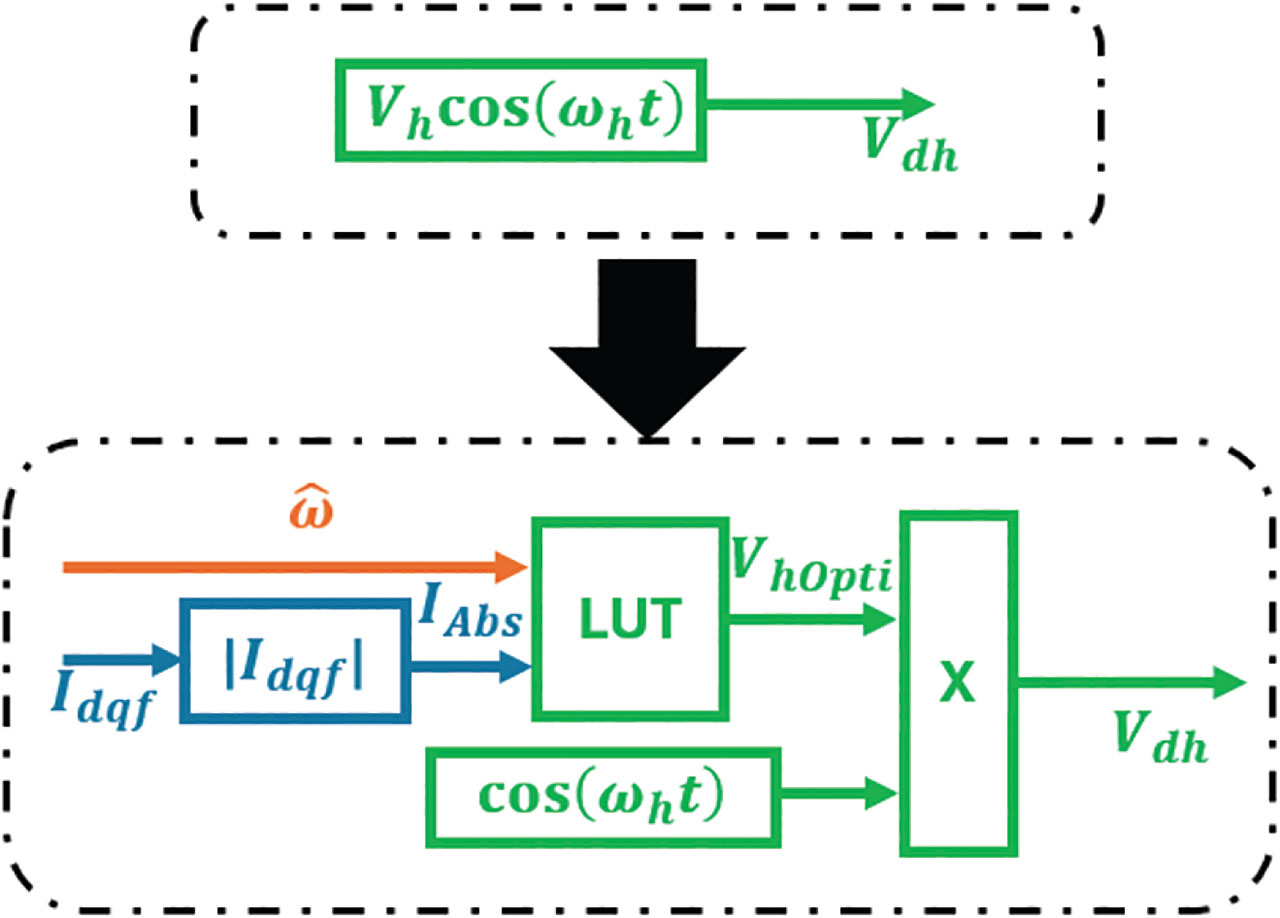
Figure 14.
Experimental implementation of VhOpti using LUT. LUT, look-up table.
Figures 15 and 16 show examples of the experimental implementation of VhOpti. The slopes have been chosen in order to reproduce a standard dynamic behaviour of light electrical vehicle. Figure 15 shows an example of load variation ranging from −75 A to 120 A at a speed of 100 rpm with a current ramp of 200 A/s. It shows a comparison between the estimated and measured speed, the current load level in the (dq) reference frame, the variation of VhOpti as a function of the operating point, and the position error. At 100 rpm, VhOpti varies from 1 V to 2.2 V while maintaining correct speed estimation and a position error of <2°. Therefore, using a variable voltage injection does not affect speed or position estimation. In this figure, we can also observe that the position estimation error varies with the load but remains very low. This error depends on the amplitude of the HF injection as well as the modelling assumptions. The amplitude of the HF injection has been optimised to strike a balance between quality and cost. The modelling assumptions mainly concern the non-consideration of coupled cross-inductance, which is very small but not equal to zero. A similar observation can be made for Figure 16, which corresponds to a speed variation from 0 rpm to 500 rpm at a constant current load of 100 A with a speed ramp of 1000 rpm/s. As can be seen, the position estimation is operational at 0 rpm, which is outside the optimisation zone, with a position error of around 1°. At 100 A, VhOpti increases with speed, varying from 1.8 V to 2.9 V, and offering a position error between 0° and 5°. As expected, Figure 16 also shows a direct correlation between the position estimation error and speed; the error increases with speed because the assumption of negligible back-EMF is no longer valid.
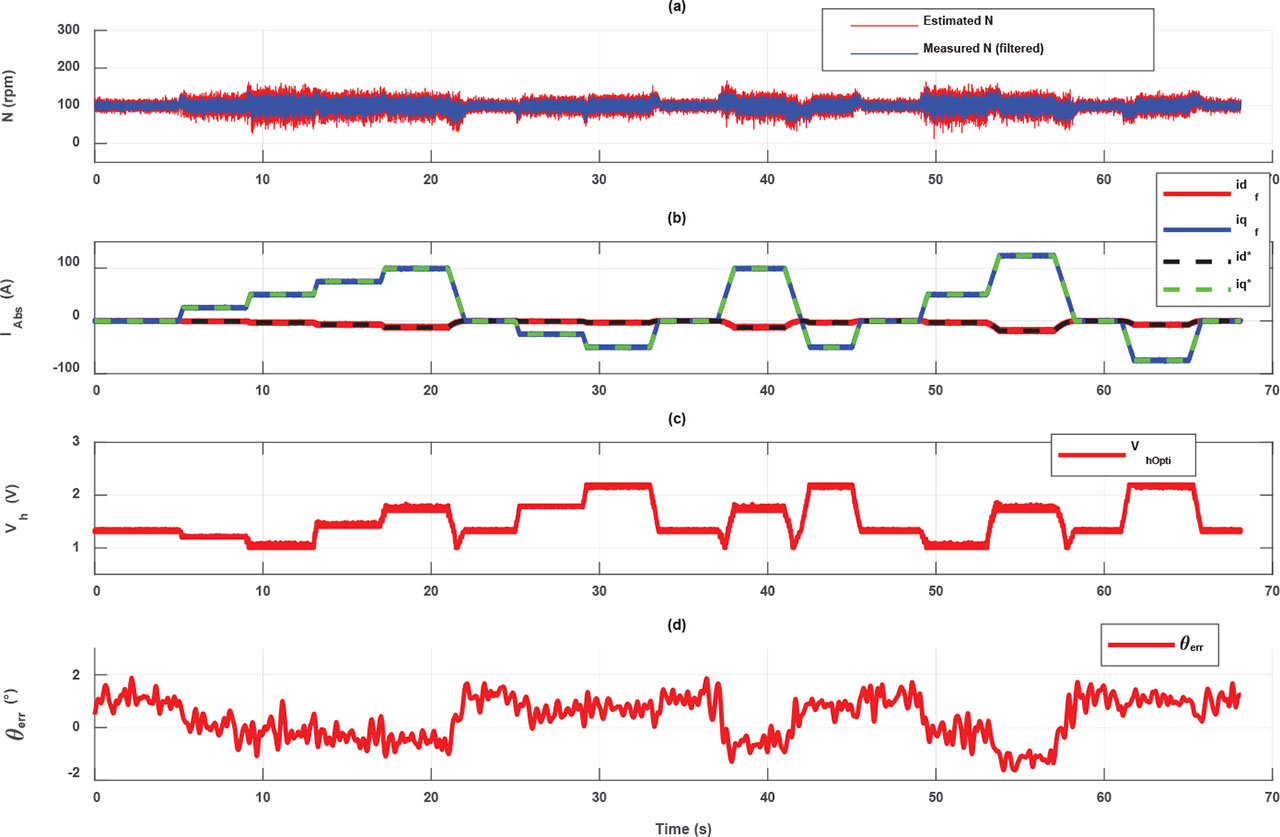
Figure 15.
Experimental studied profile: (a) estimated and measured mechanical speed, (b) idq currents, (c) VhOpti, (d) θerr at 100 rpm.
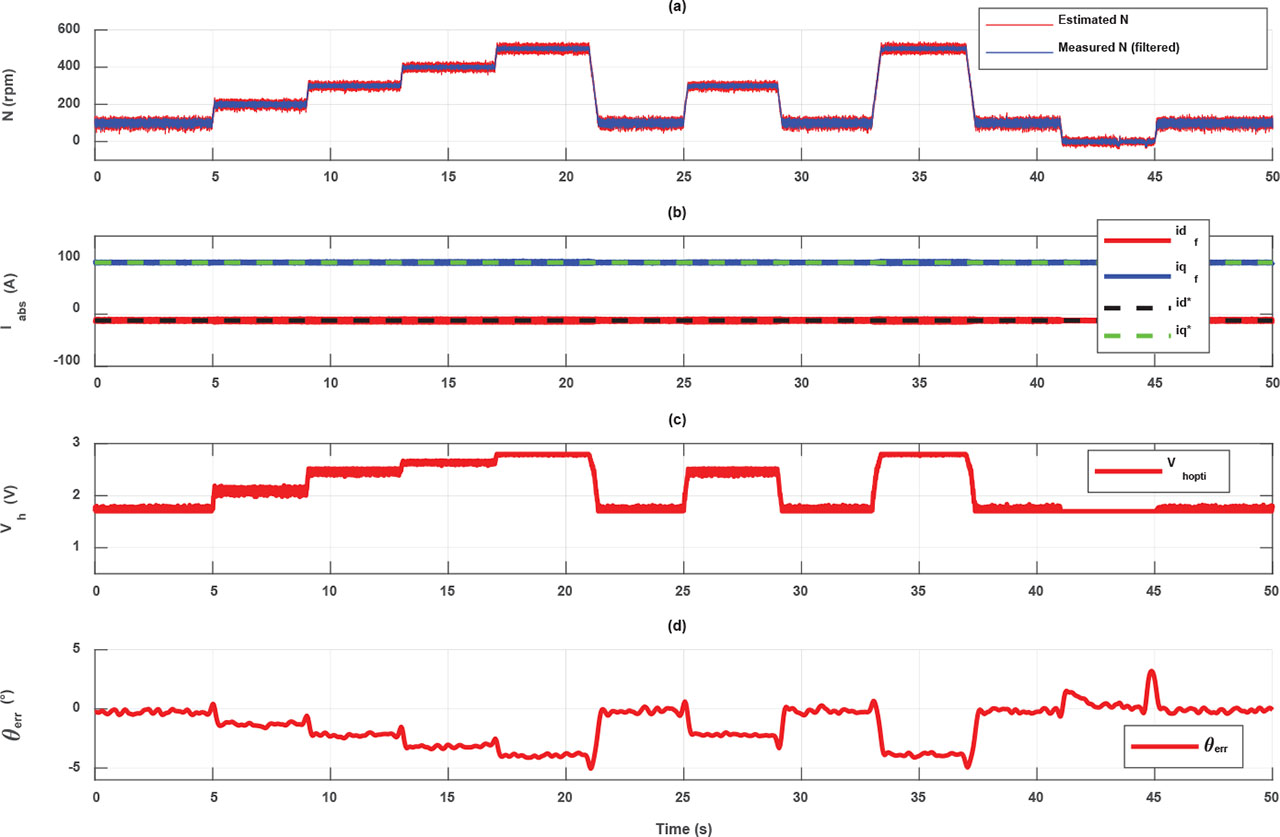
Figure 16.
Experimental studied profile: (a) estimated and measured mechanical speed, (b) idq currents, (c) VhOpti and (d) θerr at 100 A.
This optimum strategy is now being compared with the standard approach of using a constant amplitude injection voltage. This comparison is based on three criteria that determine the optimal injection voltage: the mean position error, the variance of the estimated position error, and the torque distortion rate. The comparison includes four Vh values: 0.5 V, 1 V, 2 V and 4 V.
It begins with an example at 100 rpm, with a current load varying from −50 A to 100 A. Figure 17 shows the variance of the estimated position error at 100 rpm as a function of the current load, obtained using constant Vh values and VhOpti. It shows that the optimised variance of the estimated position error lies between the results for Vh at 1 V and 2 V. The optimisation reduces the variance of the estimated position error by 75% compared to 0.5 V and by 20% compared to 1 V, improving position quality to around 4°2, equivalent to a standard deviation of 2°. Indeed, lower variance means less dispersion of the position error around its mean, improving positioning regularity and consequently system accuracy. Finally, Figure 17 confirms the varθerr results obtained with numerical interpolation on an experimental test cycle.
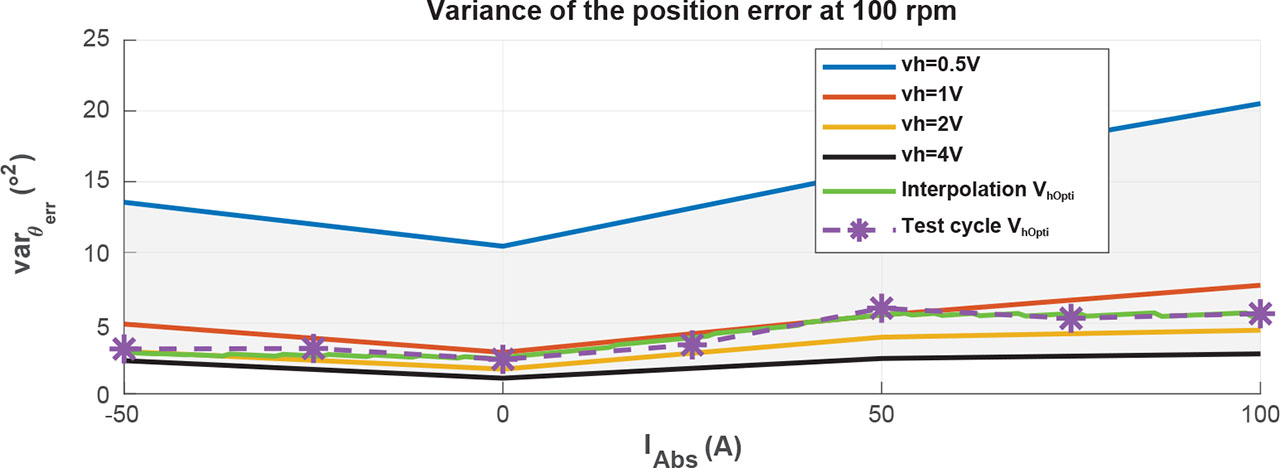
Figure 17.
Impact of Vh and IAbs on the variation of variance of varθerr at 100 rpm.
Figure 18 shows the mean position errors as a function of the current load obtained with constant Vh values and with VhOpti. It can clearly be seen that the mean position error value for VhOpti) lies between the ⟨θerr⟩ obtained for Vh equal to 1 V and 2 V, which is consistent with the VhOpti values in Figure 15. The figure also shows that the optimisation procedure reduces ⟨θerr⟩ by 1°compared to using Vh equal to 0.5 V. Finally, Figure 17 enables the validation of the ⟨θerr⟩ results obtained using numerical interpolation on an experimental test cycle.
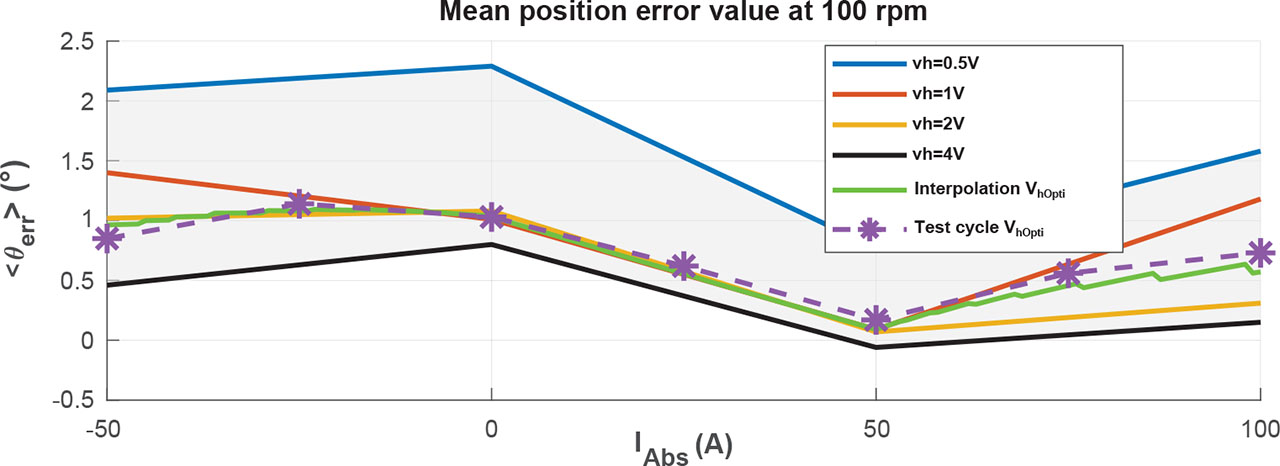
Figure 18.
Impact of Vh and IAbs on the variation of ⟨θerr⟩ at 100 rpm.
Figure 19 illustrates the HF torque disturbance induced by the injection of HF voltage, expressed as a percentage of the average electromagnetic torque. As discussed earlier in this article, increasing Vh amplifies the disturbance to the torque, but reduces the mean position error and its variance. Figure 19 confirms the optimised ΔTHF experimentally and shows that the data-driven optimisation procedure allows the optimised ΔTHF to be situated between the results obtained with injections between 1 V and 2 V. Thus, it reduces ΔTHF from a maximum of around 3.5% of the mean torque value with Vh equal to 4 V to 1.2% with VhOpti. For 100 rpm, the comparative study shows that VhOpti strikes the best balance between the three criteria: ⟨θerr⟩, varθerr and ΔTHF.
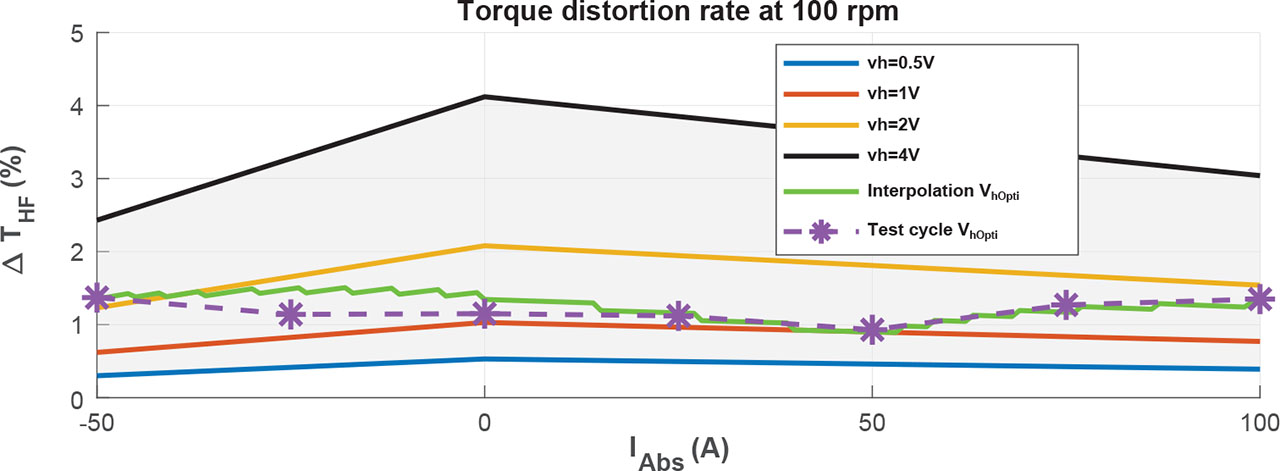
Figure 19.
Impact of Vh and IAbs on the variation of ΔTHF (%) at 100 rpm.
The same comparison study was conducted for an example involving a constant load of 100 A and a speed variation ranging from 100 rpm to 500 rpm. Figure 20 shows the variation in the estimated position error. The optimisation reduces the variance of the error by 80% compared to 0.5 V and by 50% compared to 1 V. This improves the quality of the position and places it at around 2.5°2, equivalent to a standard deviation of 1.5°.
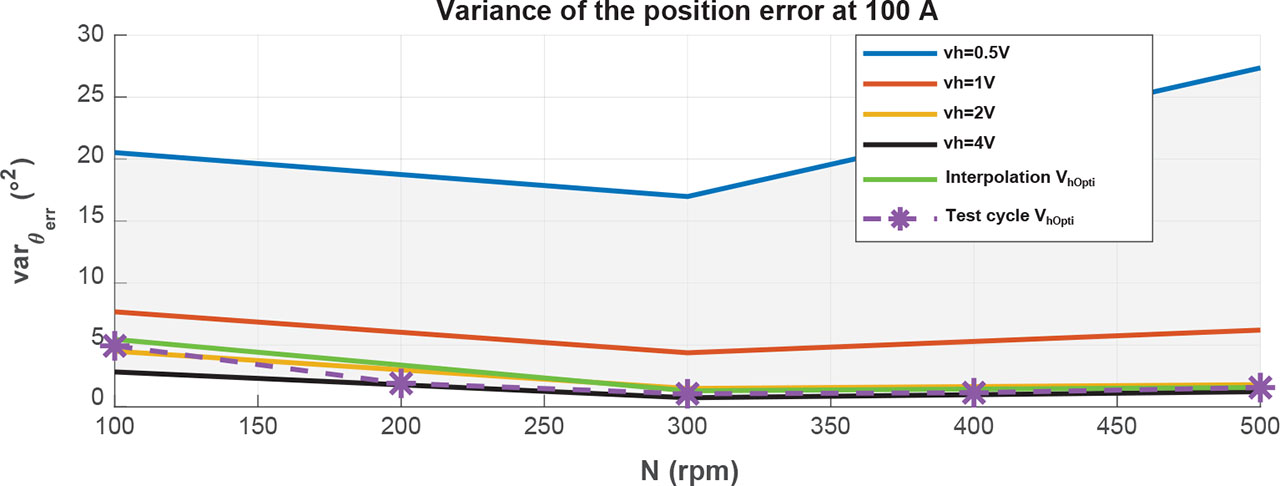
Figure 20.
Impact of Vh and N on the variation of varθerr100 A.
Figure 21 shows the mean position error values as a function of mechanical speed, obtained with constant Vh values and with VhOpti. Since increasing Vh decreases ⟨θerr⟩ and ⟨θerr⟩ increases with speed, VhOpti is variable and increases with speed. The mean position error obtained with VhOpti lies between the results for Vh equal to 2 V and 4 V, which confirms the optimised ⟨θerr⟩ experimentally. Figure 21 also shows that the optimisation procedure reduces the mean position error by 1° compared to the result obtained with Vh equal to 0.5 V and 1 V.
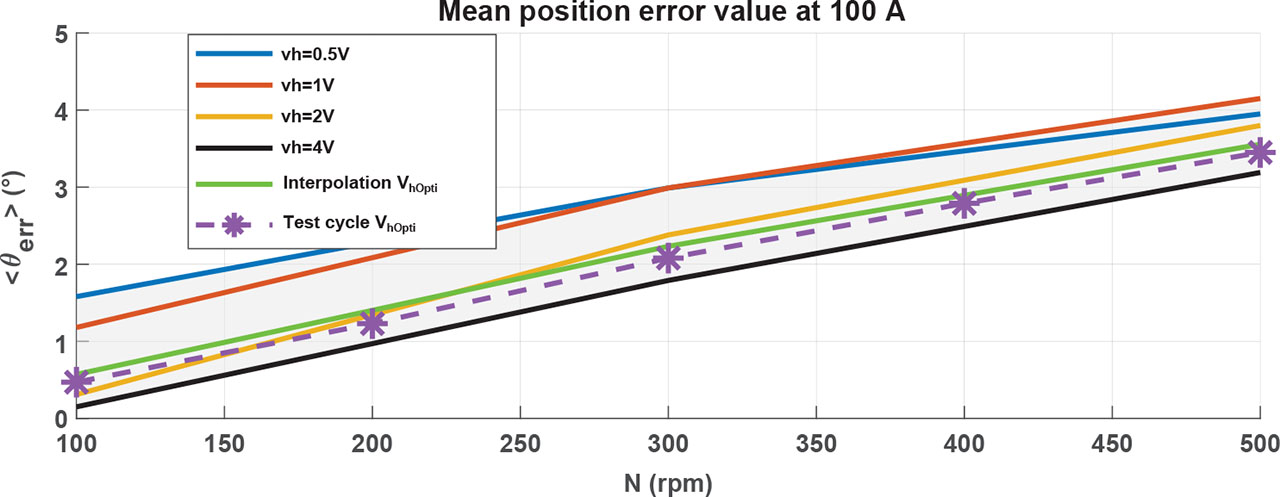
Figure 21.
Impact of Vh and N on the variation ⟨θerr⟩ at 100 A.
Figure 22 shows the torque disturbance caused by HF voltage injection, expressed as a percentage of the average electromagnetic torque. ΔTHF depends on the current load and is independent of the speed value. The results presented in Figure 22 confirm the optimised ΔTHF experimentally. As VhOpti increases with the speed, the corresponding ΔTHF increases from 1.4% to 2.1% falling between the results obtained with injections between 1 V and 4 V. Thus, the optimisation allows to reduce ΔTHF from 3% of the mean torque to 1.4% at 100 rpm. Finally, the comparison study shows that, for 100 A, VhOpti strikes the best balance between the three studied criteria ⟨θerr⟩, varθerr and ΔTHF.
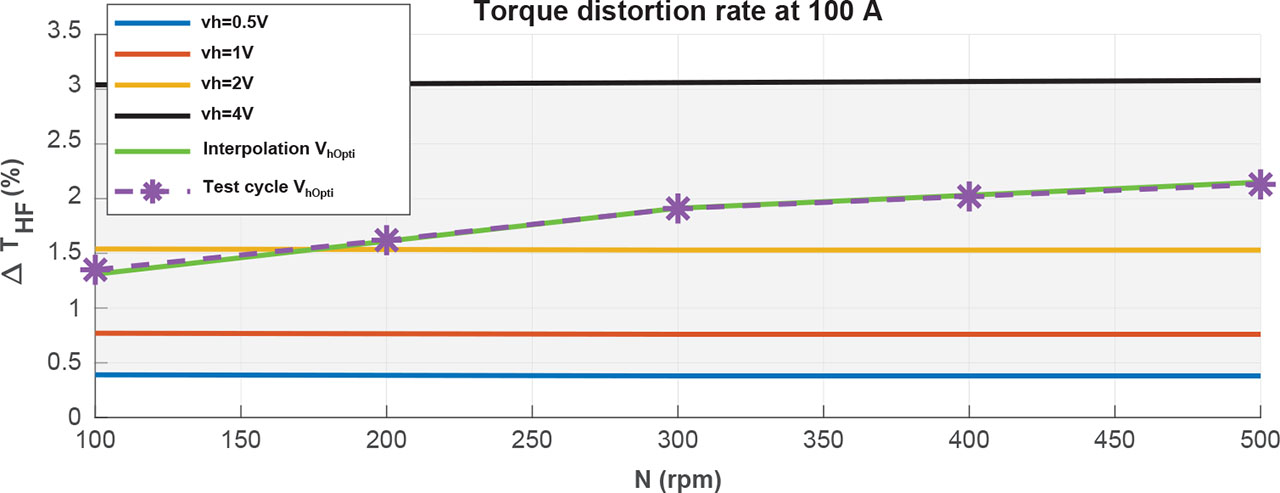
Figure 22.
Impact of Vh and N on the variation of ΔTHF (%) at 100 A.
From the previous analysis, it can be concluded that, for every operating point, using an optimally chosen voltage amplitude injection allows the best trade-off to be found in terms of position estimation quality and reduction of torque oscillations.
5. Conclusion
This paper studies an encoderless control method that uses HF voltage injection. In particular, it focuses on the pulsating carrier signal injection method. The aim is to minimise the amplitude of the injected HF voltage to reduce system disturbances, particularly torque ripples, while ensuring accurate rotor position estimation. This is of particular interest for extra-low voltage machines, such as the one studied in this article, where the effect of HF injections cannot be ignored.
The data used for the optimisation algorithm were obtained based on a reduced set of experimental tests. The proposed method relies on a reduced database consisted of 48 operating points (4 different stator current values, 3 different rotation speeds and 4 different Vh amplitudes). To enrich it, numerical interpolation was performed with a current step of 1 A, a Vh voltage step of 0.1 V and a speed step of 10 rpm.
The study shows that increasing the HF injection voltage minimises the position estimation error. However, to limit its impact on torque ripples, the voltage must be kept as small as possible. It is this balance that makes optimisation interesting. The study also demonstrated that additional DC losses have a limited impact on the optimisation results and can be neglected.
An experimental validation was carried out to test the optimised injection strategy. This showed that implementing the optimised injection voltage, despite its magnitude constantly evolving about the operating point considered, has no impact on the motor’s controllability. It also showed that a reduced experimental database is sufficient for the proposed algorithm, allowing a good compromise to be found between the quality of position estimation and torque disturbance.