
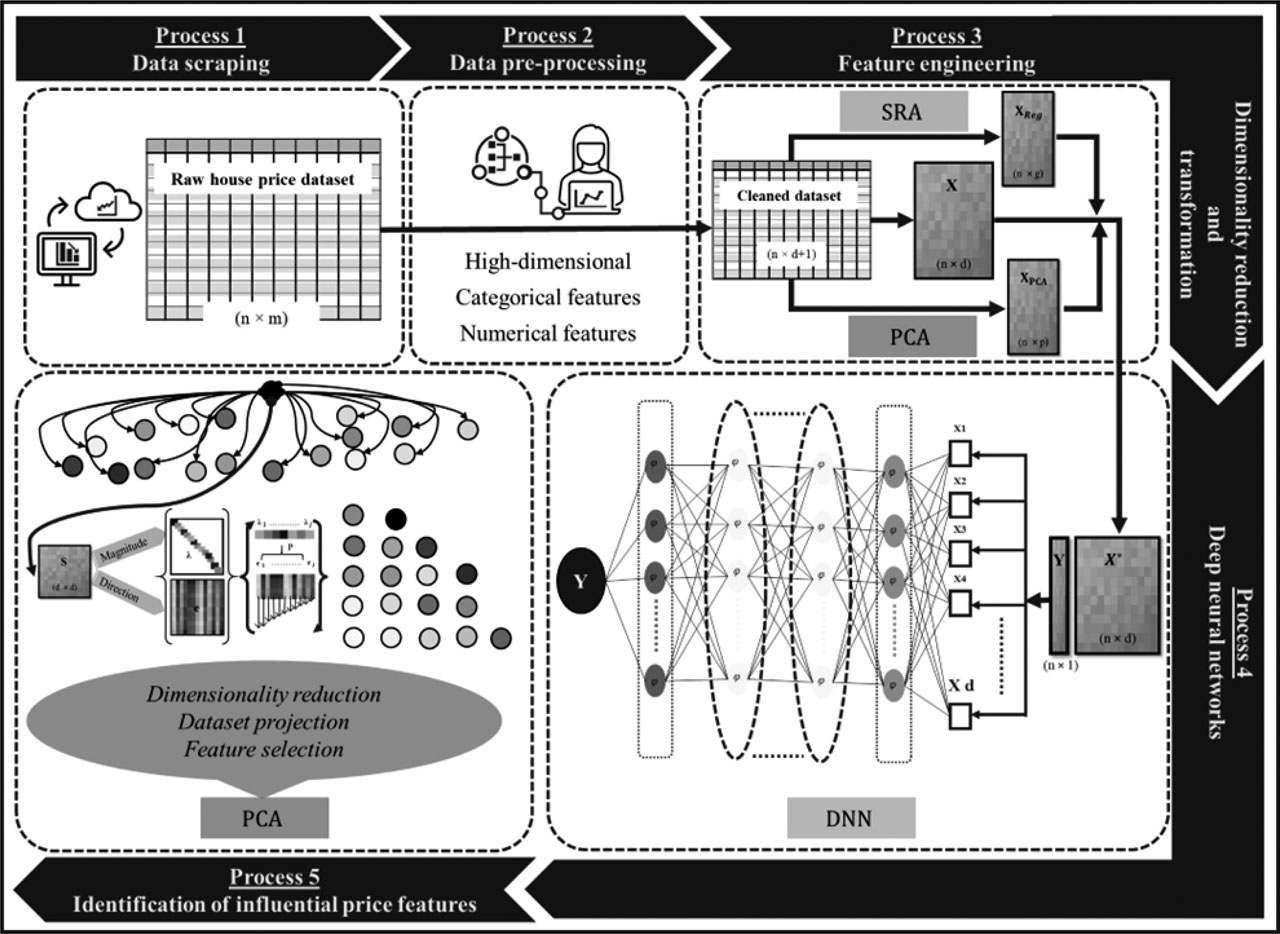
Fig. 1
The methodology followed in this study. DNN, deep neural networks; PCA, principal component analysis; SRA, stepwise regression analysis.
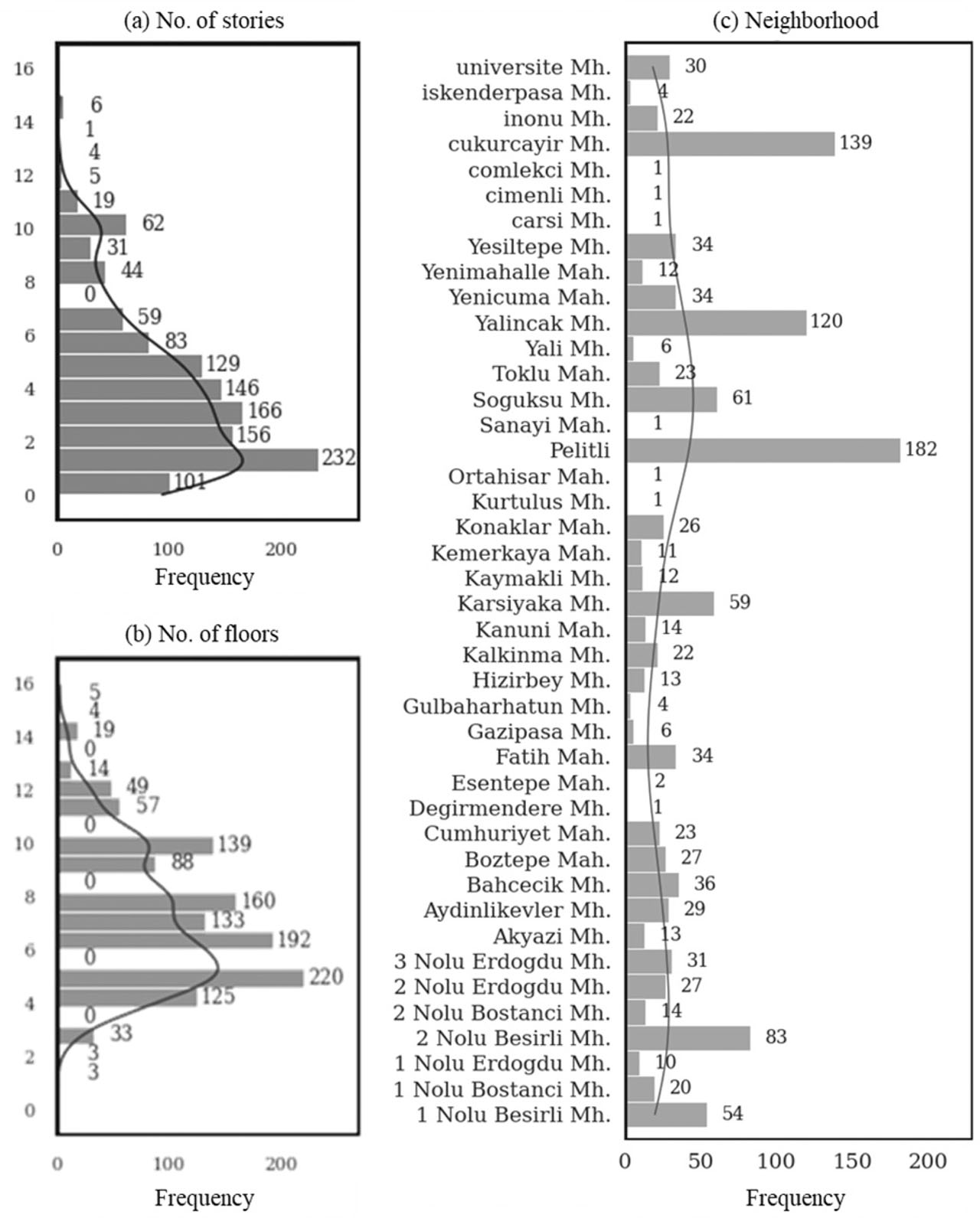
Fig. 2
Frequency of (a) No. of stories, (b) No. of floors and (c) neighbourhood.
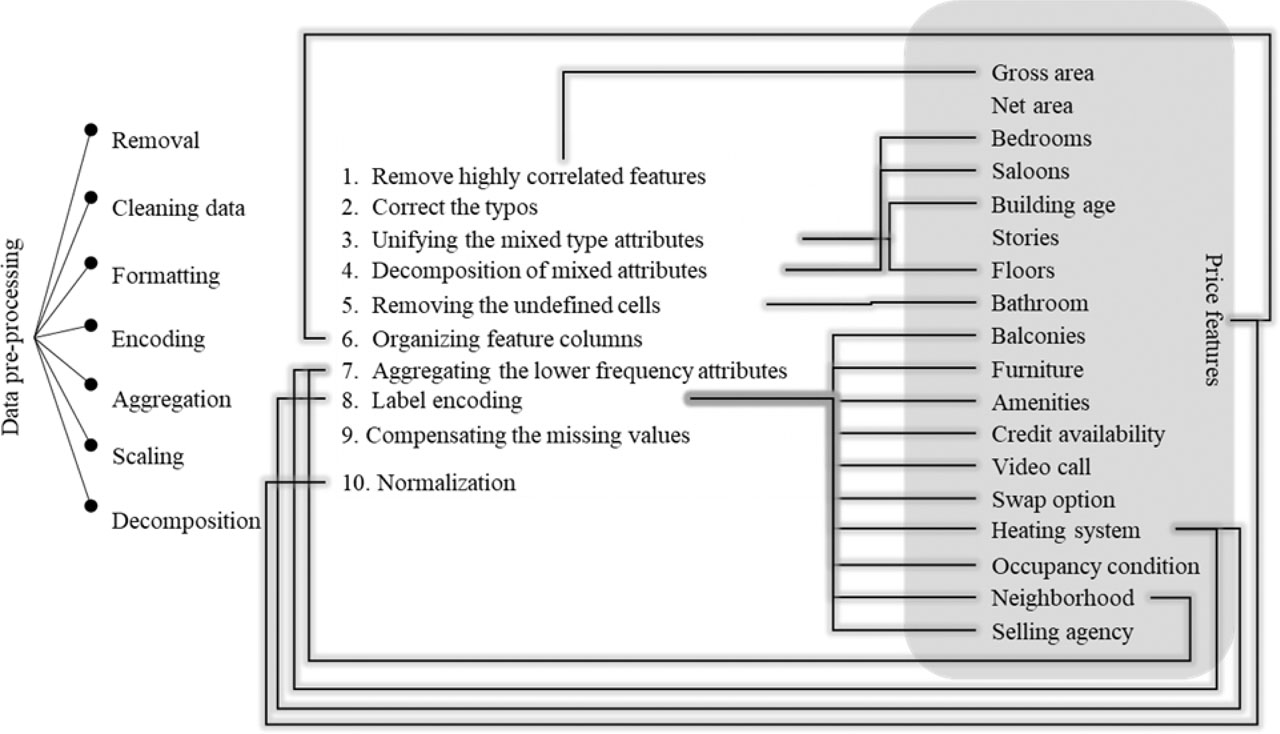
Fig. 3
Data pre-processing stage.
Tab. 1
PC attributes – numerical and categorical labels and frequencies.
| Identifier | Feature name | Mean | Standard deviation | Feature type | Feature attributes | Frequency of attribute |
|---|---|---|---|---|---|---|
| PC1 | Area | 313.88 | 105.94 | Numerical | (89, 286] | 497 |
| (286, 482] | 664 | |||||
| (482, 678] | 74 | |||||
| (678, 874] | 7 | |||||
| (874, 1070] | 2 | |||||
| PC2 | Room | 3.08 | 0.86 | Numerical | 1 bedroom | 45 |
| 2 bedrooms | 168 | |||||
| 3 bedrooms | 776 | |||||
| 4 bedrooms | 166 | |||||
| 5 bedrooms | 79 | |||||
| 6 bedrooms | 9 | |||||
| 7 bedrooms | 1 | |||||
| PC3 | Saloon | 1.04 | 0.20 | Numerical | 0 saloon | 3 |
| 1 saloon | 1,191 | |||||
| 2 saloons | 50 | |||||
| PC4 | Building age | 11.14 | 11.95 | Numerical | 0–4 years | 595 |
| 5–10 years | 218 | |||||
| 11–15 years | 163 | |||||
| 16–20 years | 135 | |||||
| 21–25 years | 71 | |||||
| 26–30 years | 38 | |||||
| ≥31 years | 24 | |||||
| PC5 | No. of stories | 7.27 | 2.66 | Numerical | 1–15 stories | Illustrated in Figure 2a. |
| PC6 | Floor No. | 3.90 | 3.05 | Numerical | –1 to 15 floor | Illustrated in Figure 2b. |
| PC7 | No. of bathrooms | 1.61 | 0.59 | Numerical | 1 bathroom | 549 |
| 2 bathrooms | 635 | |||||
| 3 bathrooms | 54 | |||||
| 4 bathrooms | 6 | |||||
| PC8 | Balconies | 0.05 | 0.22 | 1 | With balcony | 1,182 |
| 2 | Without balcony | 62 | ||||
| PC9 | Furniture | 0.97 | 0.18 | 1 | Furnished | 42 |
| 2 | Not furnished | 1,202 | ||||
| PC10 | Amenities | 0.68 | 0.46 | 1 | Amenities included | 394 |
| 2 | Amenities not included | 850 | ||||
| PC11 | Credit availability | 0.10 | 0.30 | 1 | Available | 1,118 |
| 2 | Unavailable | 126 | ||||
| PC12 | Video call | 0.53 | 0.50 | 1 | Available | 589 |
| 2 | Unavailable | 655 | ||||
| PC13 | Swap option | 0.84 | 0.37 | 2 | Ready for swap | 200 |
| No swap | 1,044 | |||||
| PC14 | Heating system | 0.78 | 1.66 | 1 | Natural gas | 1,006 |
| 2 | Central | 173 | ||||
| 3 | gas stove | 6 | ||||
| 4 | Air conditioning | 6 | ||||
| 5 | Stove | 29 | ||||
| 6 | Underfloor heating | 17 | ||||
| 7 | Fireplace | 7 | ||||
| PC15 | Occupancy condition | 0.54 | 0.80 | 1 | Unoccupied | 812 |
| 2 | Occupied by owner | 243 | ||||
| 3 | Under rent | 189 | ||||
| PC16 | Selling agency | 0.18 | 0.46 | 1 | Real-estate agent | 1,052 |
| 2 | Construction company | 36 | ||||
| 3 | Private owners | 156 | ||||
| PC17 | Neighbourhood | 42 | 1–42 districts | Illustrated in Figure 2c. |
[i] PC, project characteristic.
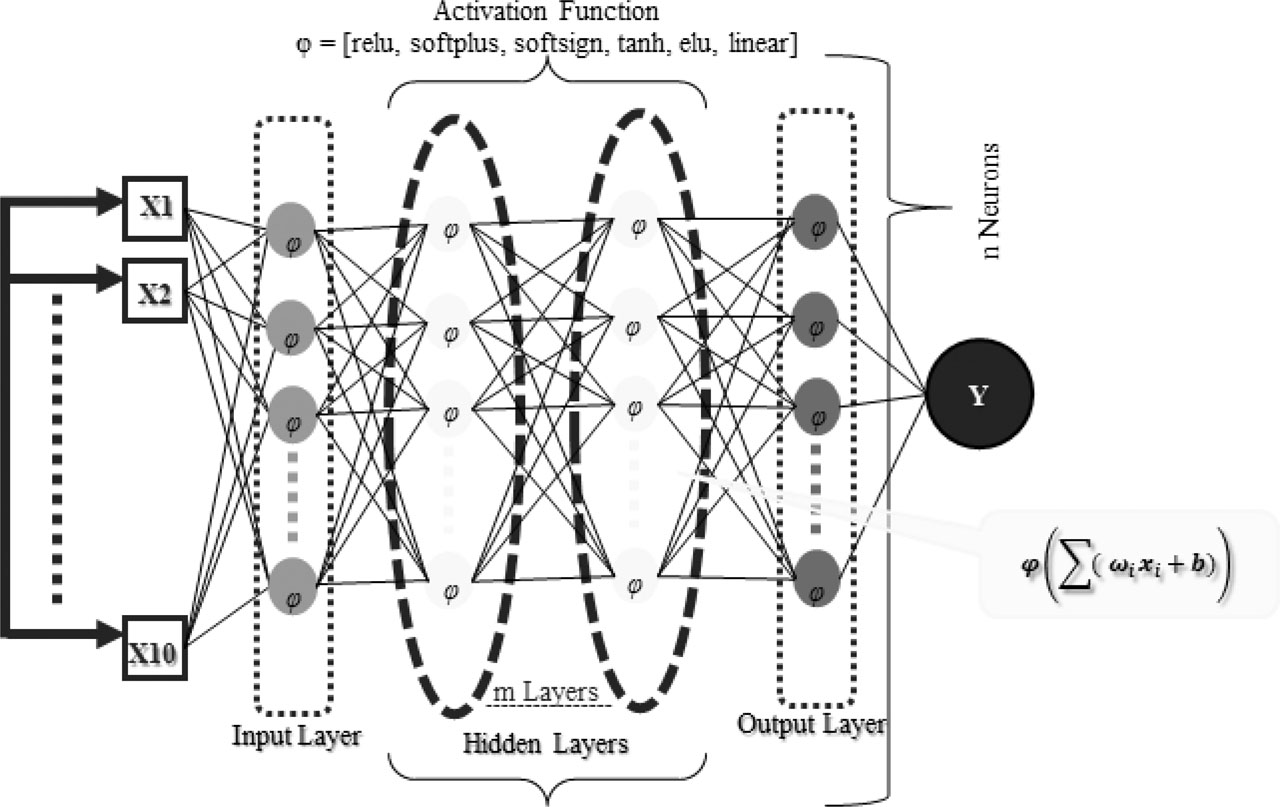
Fig. 4
Outline of DNN procedure. DNN, deep neural networks.
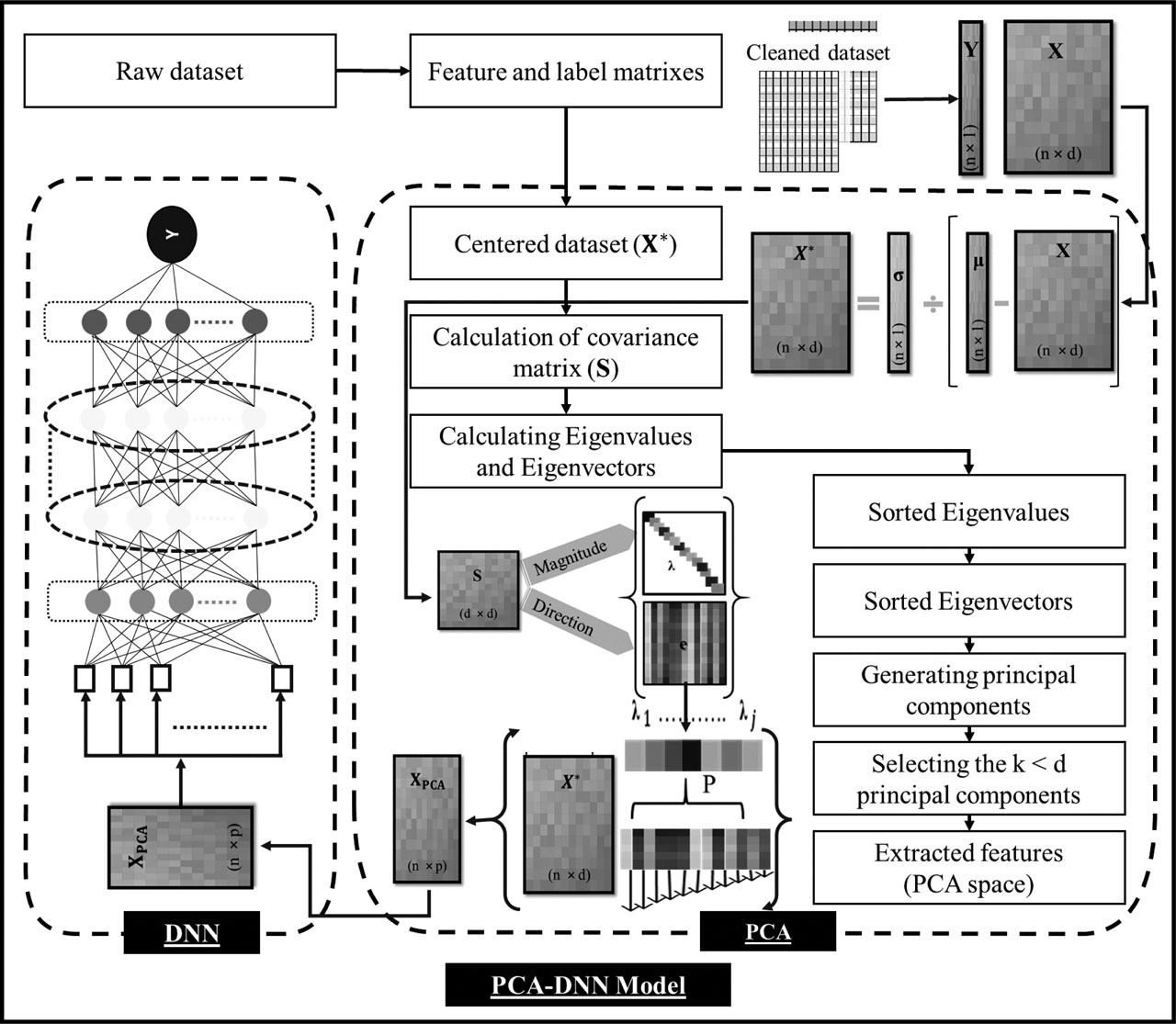
Fig. 5
PCA-DNN model. DNN, deep neural networks; PCA-DNN, principal component analysis-deep neural networks; PCA, principal component analysis.
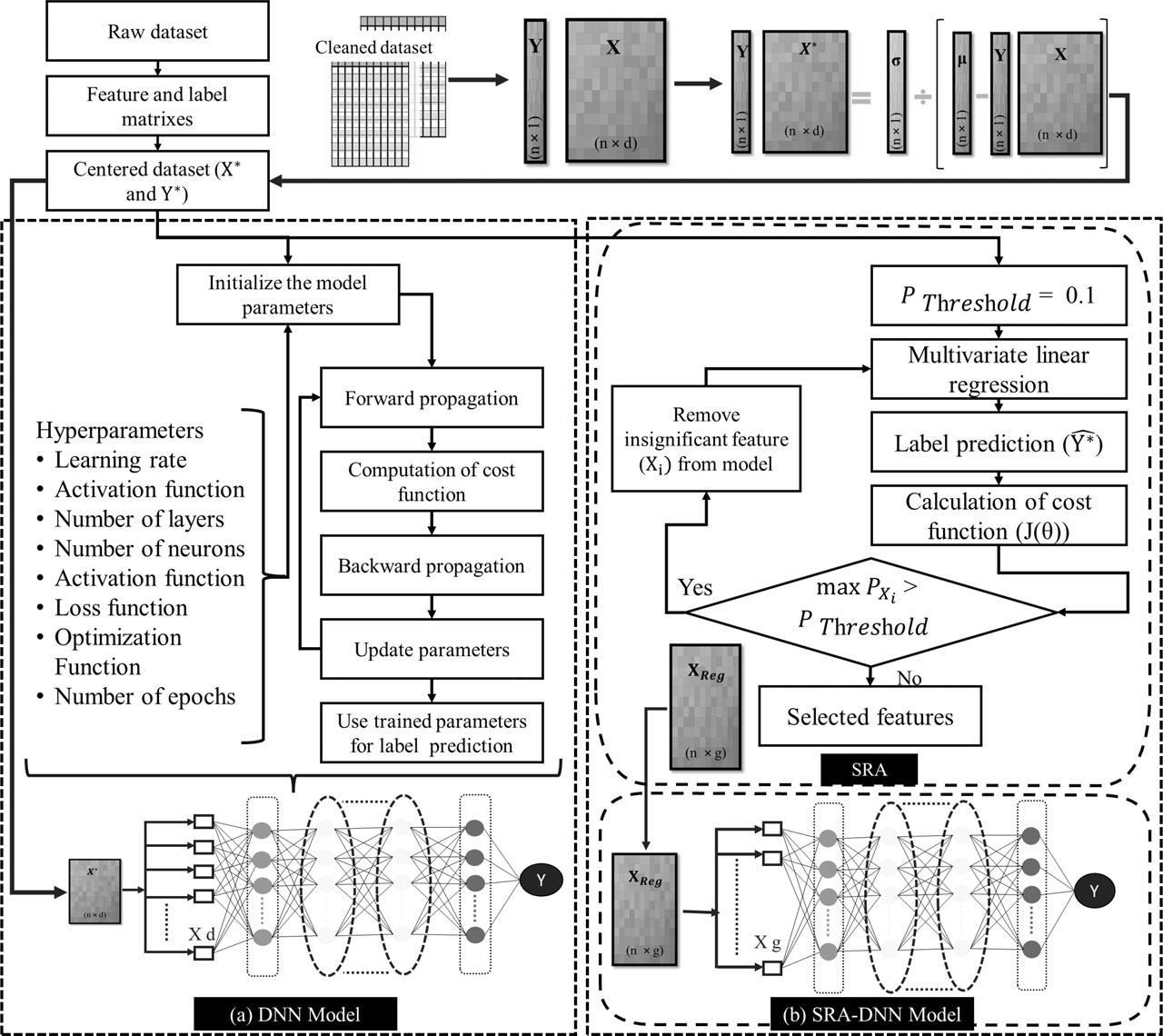
Fig. 6
Structure of (a) DNN and (b) SRA-DNN models. DNN, deep neural networks; SRA-DNN, stepwise regression analysis-deep neural networks.
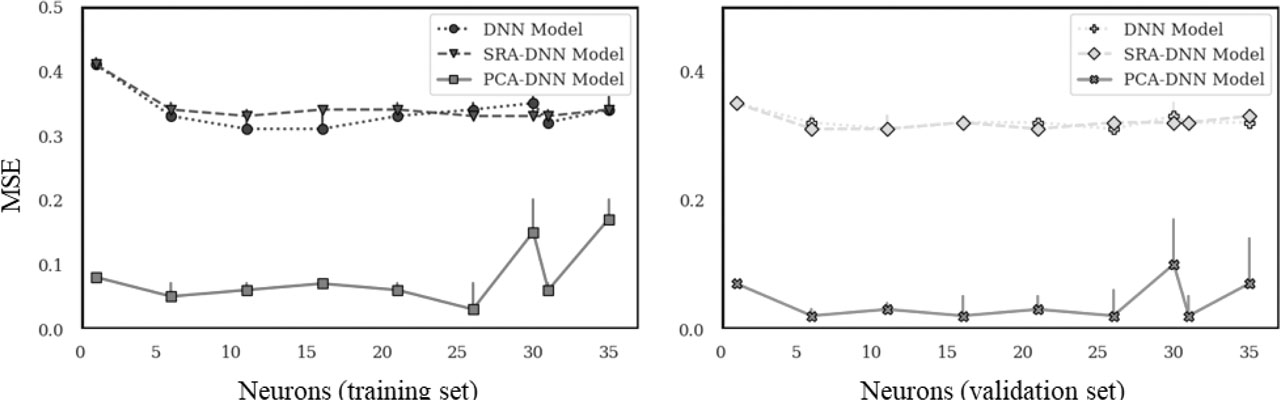
Fig. 7
Training and validation of MSE for the different number of neurons, in supervised learning scenarios of DNN, SRA-DNN and PCA-DNN models. DNN, deep neural networks; MSE, mean square error; PCA-DNN, principal component analysis-deep neural networks; SRA-DNN, stepwise regression analysis-deep neural networks.
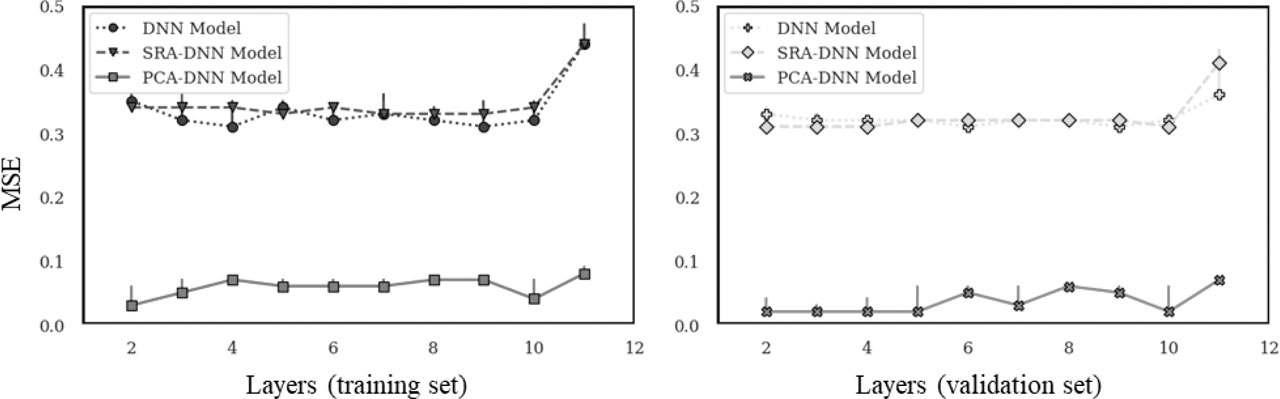
Fig. 8
Training and validation of MSE for the different number of layers, in supervised learning scenarios of DNN, SRA-DNN and PCA-DNN models. DNN, deep neural networks; MSE, mean square error; PCA-DNN, principal component analysis-deep neural networks; SRA-DNN, stepwise regression analysis-deep neural networks.
Tab. 2
The optimum network architecture of the three selected models.
| Factors | DNN Model | SRA-DNN Model | PCA-DNN Model |
|---|---|---|---|
| Number of neurons | 30 | 20 | 30 |
| Number of neurons (output layer) | 20 | 20 | 20 |
| Number of layers | 5 | 5 | 5 |
| Total trainable parameters | 2,061 | 1,921 | 2,041 |
| Activation function (output layer) | Linear | Linear | Linear |
| Activation function | relu | relu | relu |
| Optimisation function | Adam | Adam | Adam |
| Loss function | mse | mse | mse |
| Number of features | 17 | 10 | 15 |
[i] DNN, deep neural networks; PCA-DNN, principal component analysis-deep neural networks; SRA-DNN, stepwise regression analysis-deep neural networks.
Tab. 3
Performance of selected optimum DNN, SRA-DNN and PCA-DNN models.
| Model | Wall times | CPU time | Epoch | MAE | MAPE | MSE |
|---|---|---|---|---|---|---|
| DNN | 3.02 s | 3.32 s | 20 | 0.43 | 27% | 0.42 |
| SRA-DNN | 6.06 s | 7.05 s | 30 | 0.42 | 22% | 0.39 |
| PCA-DNN | 6.27 s | 7.27 s | 160 | 0.23 | 14% | 0.10 |
[i] DNN, deep neural networks; MAE, mean absolute error; MAPE, mean absolute percentage error; MSE, mean square error; PCA-DNN, principal component analysis-deep neural networks; SRA-DNN, stepwise regression analysis-deep neural networks.
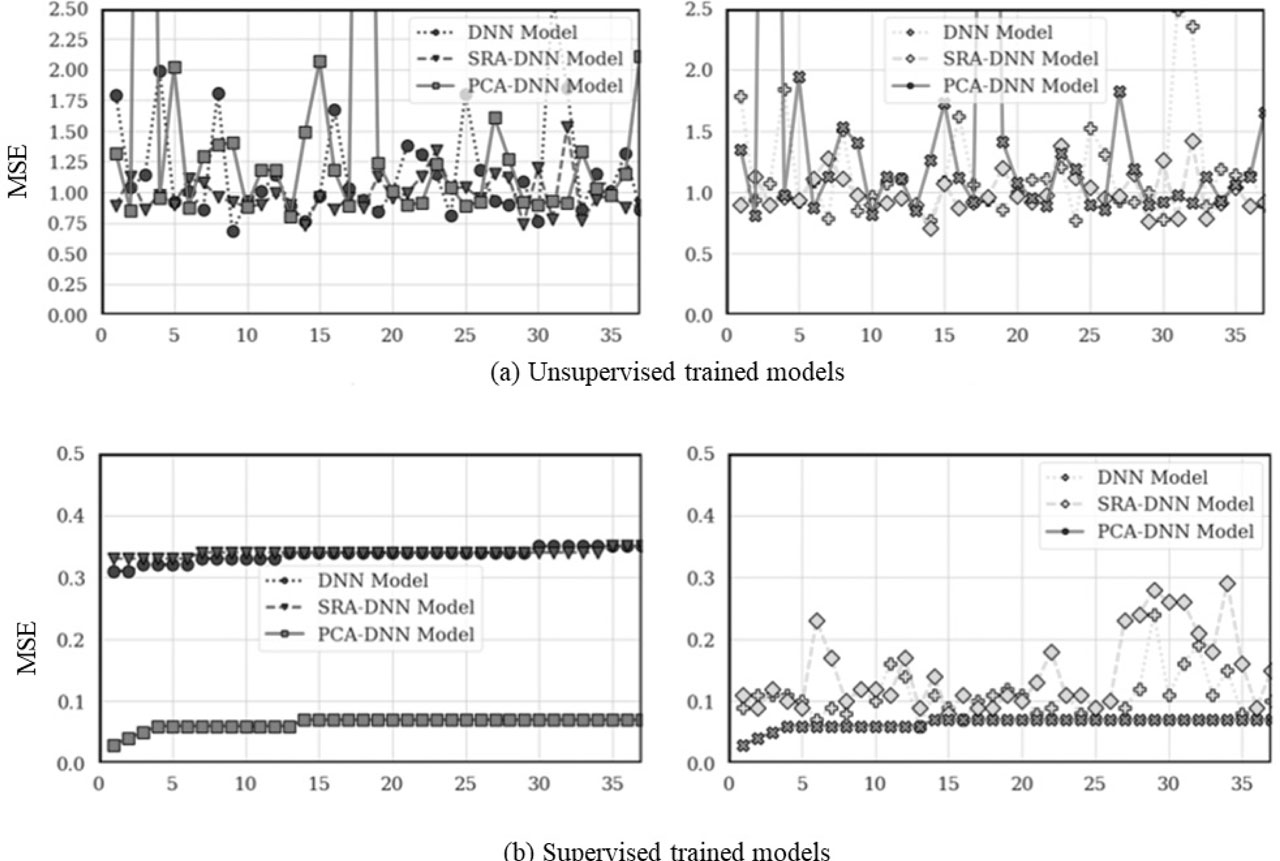
Fig. 9
Unsupervised (a) and supervised (b) training and validation of MSE values for best performing DNN, SRA-DNN and PCA-DNN models. DNN, deep neural networks; MSE, mean square error; PCA-DNN, principal component analysis-deep neural networks; SRA-DNN, stepwise regression analysis-deep neural networks.
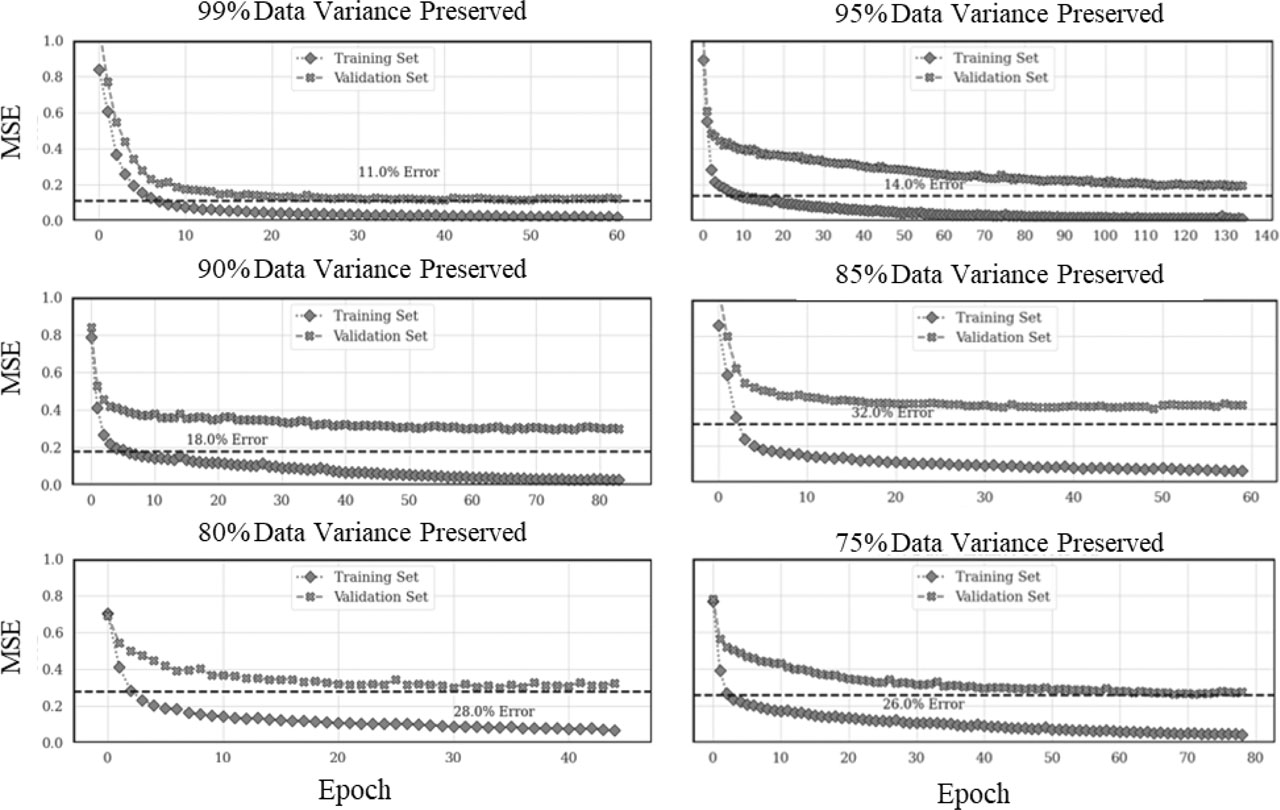
Fig. 10
Contribution of number of principal components in error obtained in PCA-DNN model. MSE, mean square error; PCA-DNN, principal component analysis-deep neural networks.
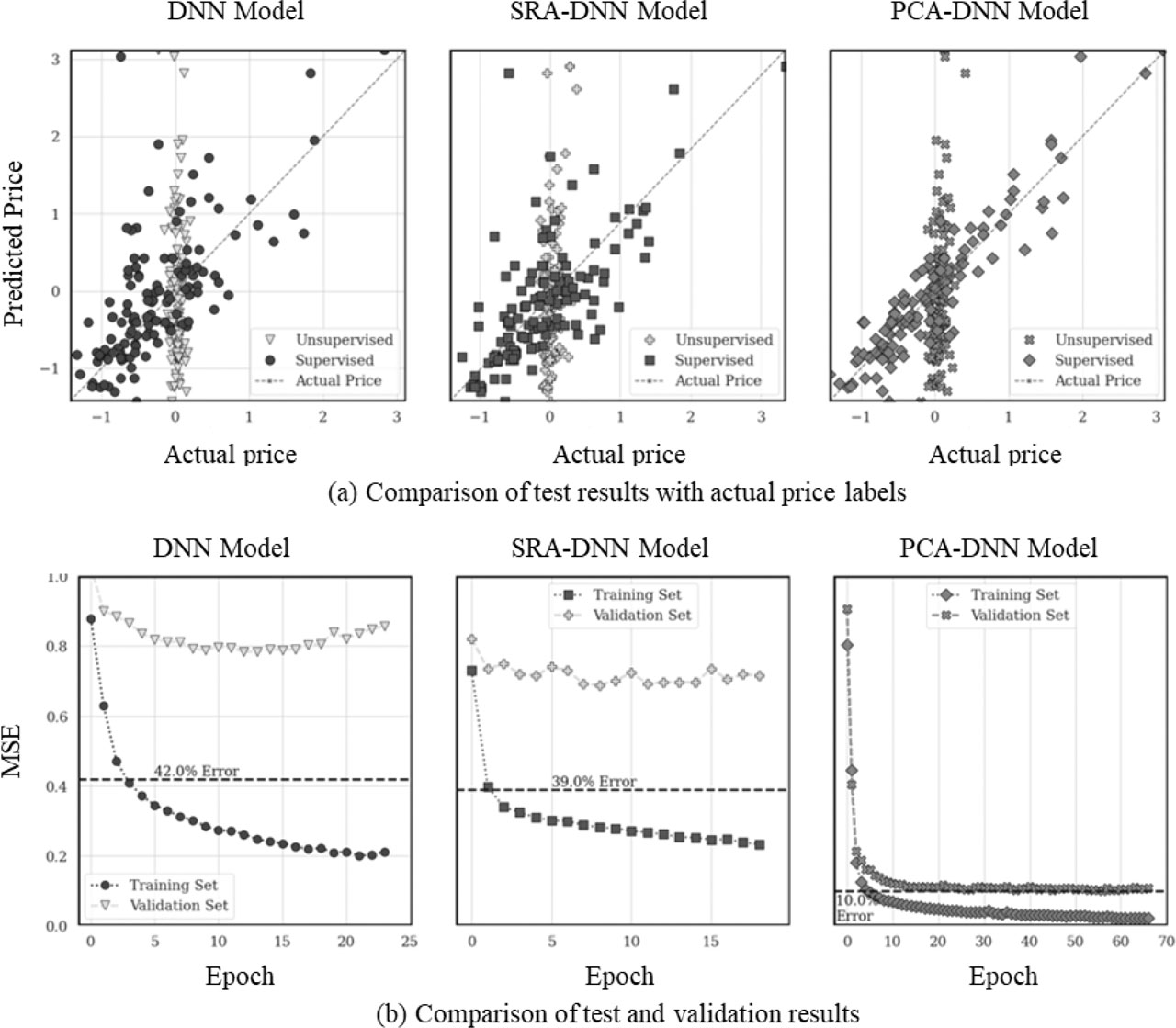
Fig. 11
Learning pattern for unsupervised learning and supervised learning (a) and training and validation accuracy (b) for DNN, SRA-DNN and PCA-DNN models. DNN, deep neural networks; PCA-DNN, principal component analysis-deep neural networks; SRA-DNN, stepwise regression analysis-deep neural networks.
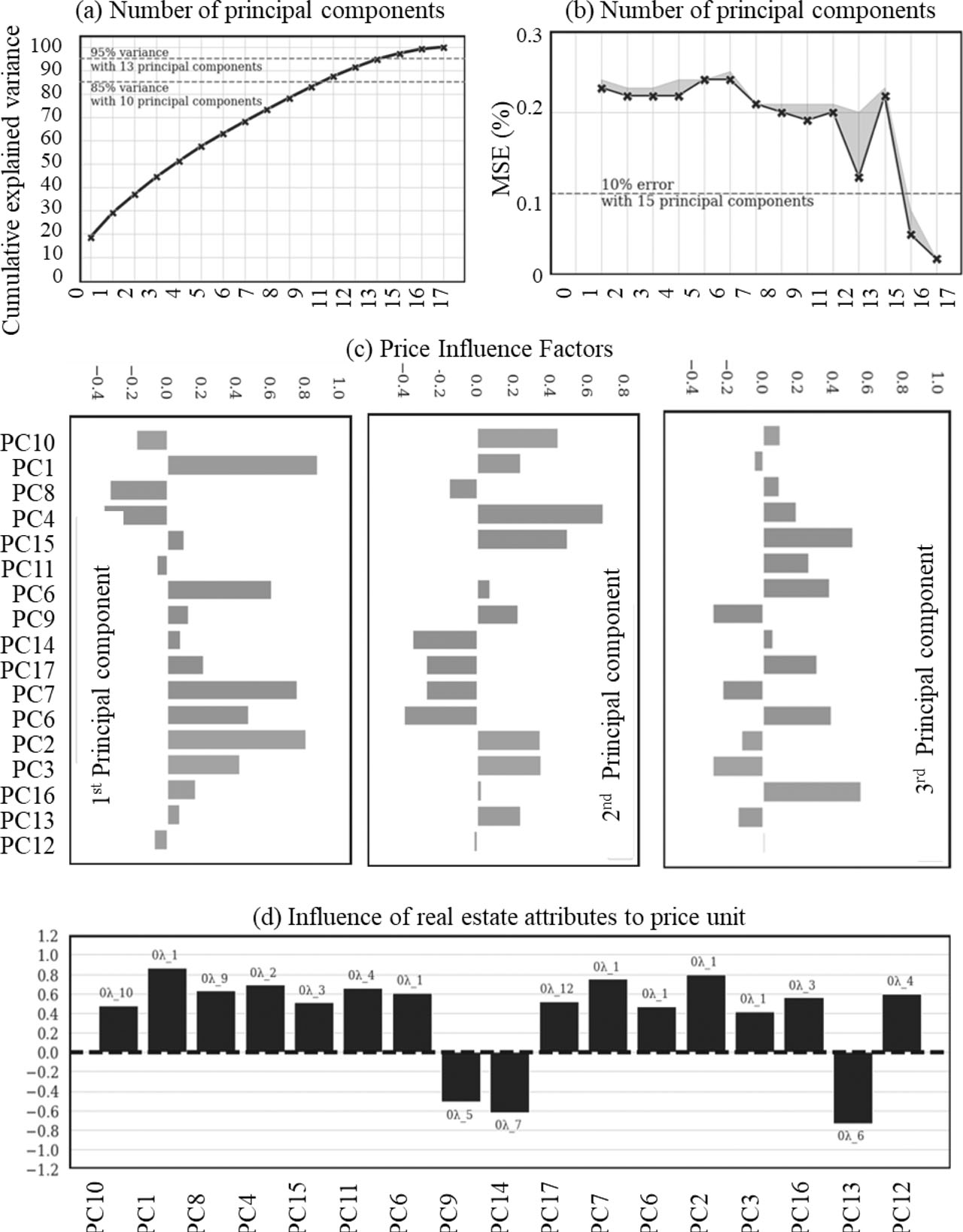
Fig. 12
Total variance preserved by principal components (a). MSE values were obtained for selected principal components (b). Detailed influence of first three principal components (c). Influence of all principal components (d). MSE, mean square error; PCs, project characteristics.
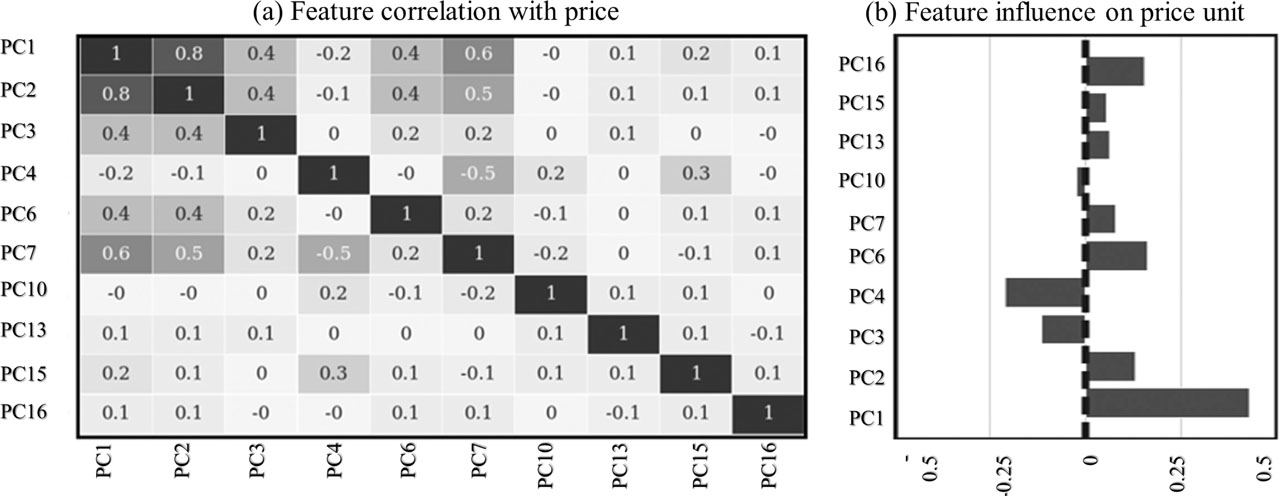
Fig. 13
Feature correlation with price (a). Feature influence on price unit (b). PC, project characteristic.