
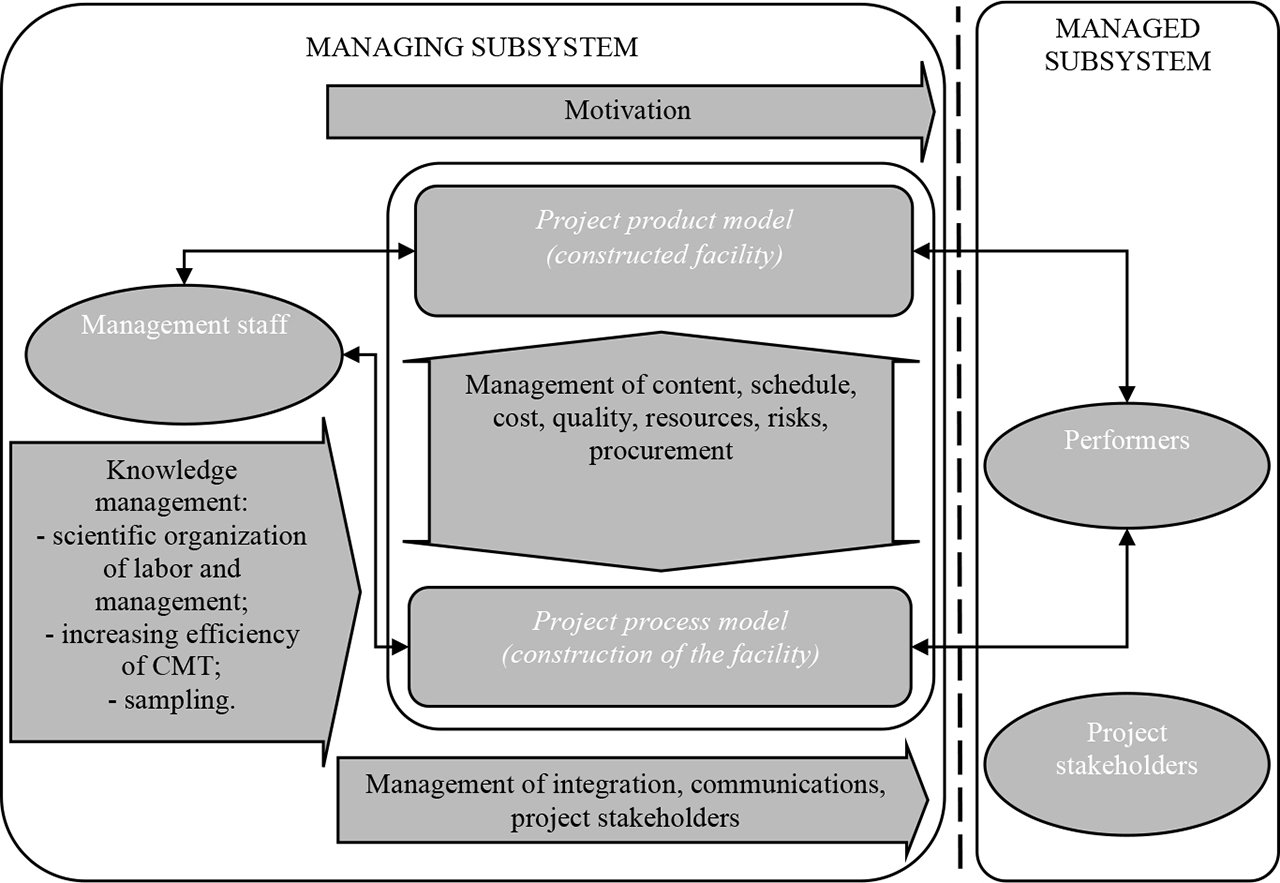
Fig. 1
Diagram of the knowledge fields of project management when using CMT and product and project processes models. CMT, construction management template.
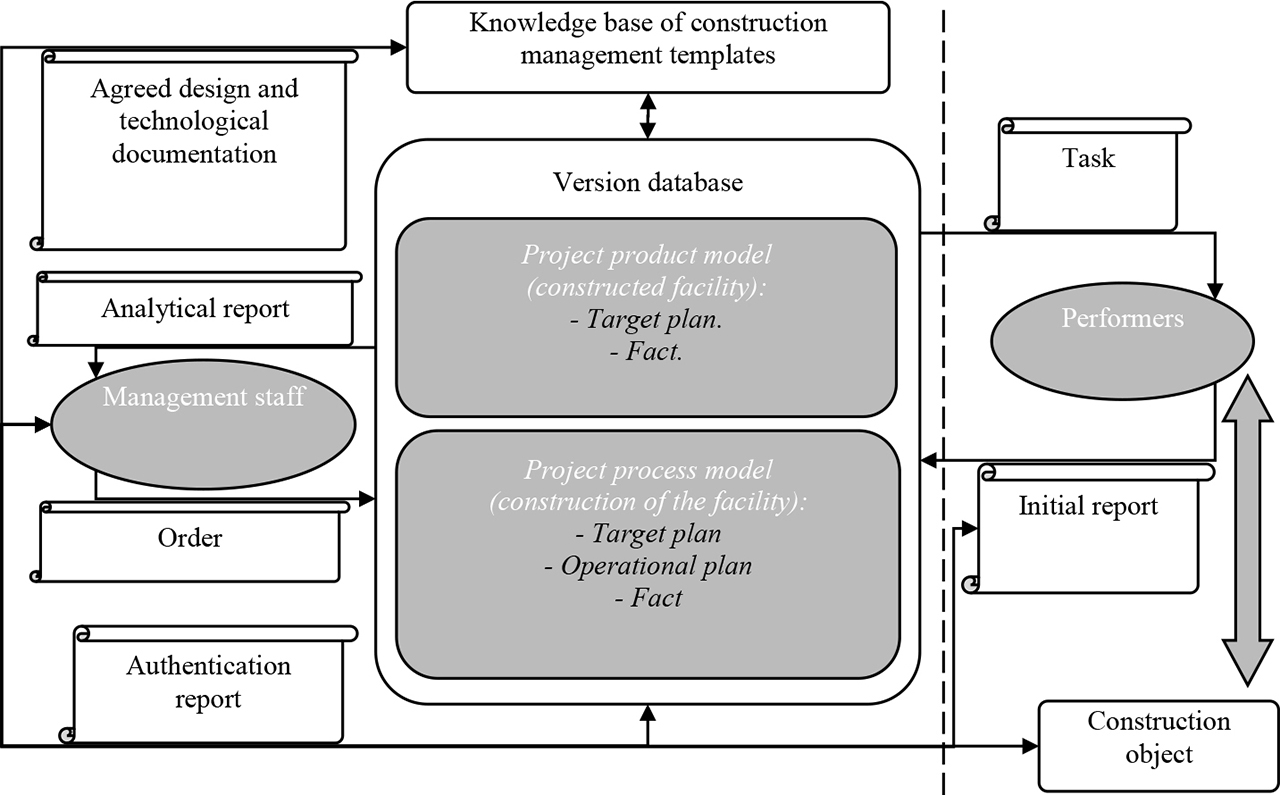
Fig. 2
Diagram of the managerial documents movement when using CMT and product and project processes models. CMT, construction management template.
Tab. 1
Using the concept of ‘CMT’
| Direction of use | How the CMT is used |
|---|---|
| Commercial use | The CMT is a model of construction product. |
| The use of CMT allows to assess its investment attractiveness at any stage of the project. | |
| Communication use | The CMT is a formalized unit that regulates the procedure for issuing, processing, and receiving production information. |
| The CMT increases the speed of data logistics, the accuracy of its provision, thereby reducing the cost of communications. | |
| Management use | The CMT is formed under the influence of the organizational structure of construction. |
| The CMT is an element of the business model of construction. | |
| The CMT is used for the delivery of tasks and control of production. | |
| Architectural use | The CMT allows to evaluate and increase technical, economic, and ecological efficiency of architectural decisions. |
| The CMT reduces labor costs for changes and coordination of design decisions and increases their visibility. | |
| Technological use | The CMT formalizes the method of production, the resources needed to create products, requirements for the beginning, result, and culture of production. |
| The CMT allows to estimate and increase technical, economic, and ecological efficiency of the used technologies. | |
| Operational use | The CMT shows the main operational indicators of the product of investment construction activity. |
| The CMT serves as a basis for the operational model of the constructed facility. | |
| The CMT allows to estimate and increase the energy efficiency of construction. |
[i] CMT, construction management template.
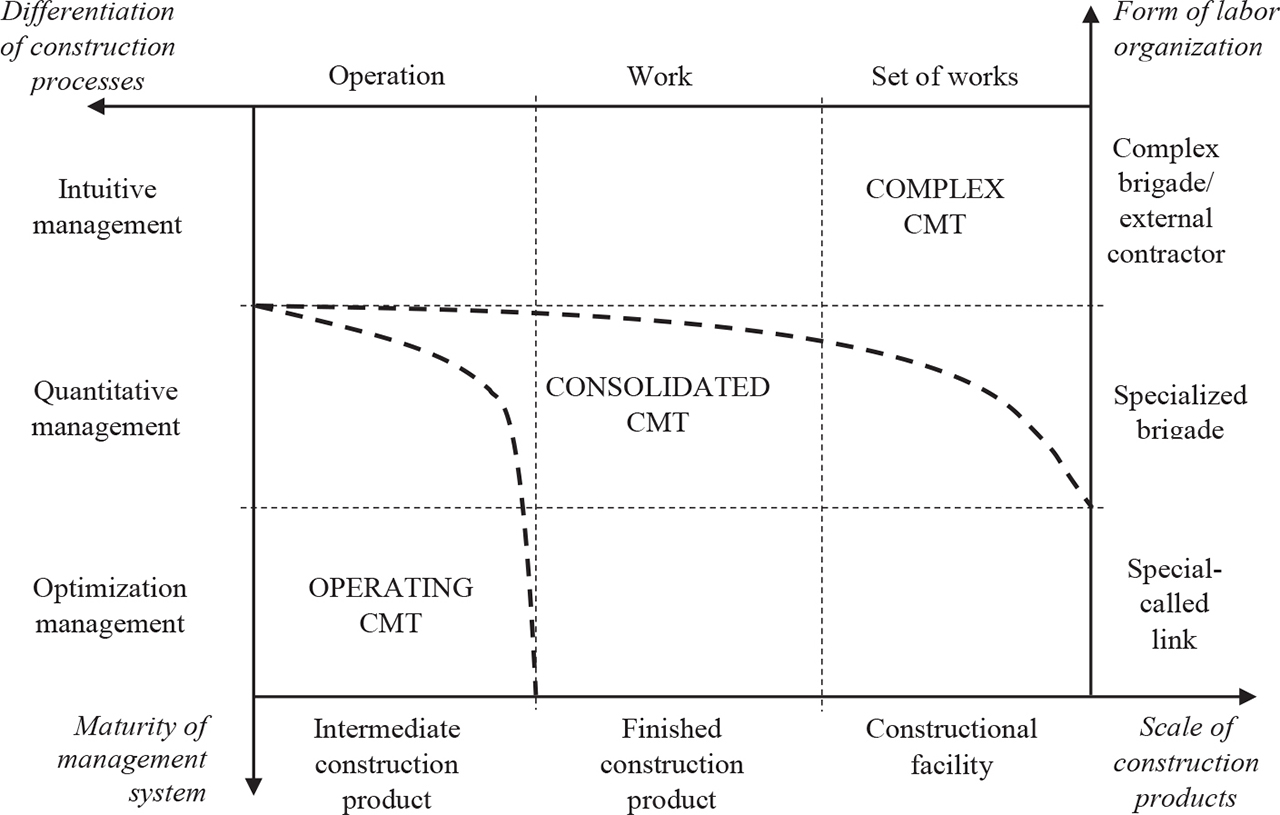
Fig. 3
Differentiation of CMTs for different organizational factors of the enterprise environment. CMT, construction management template.
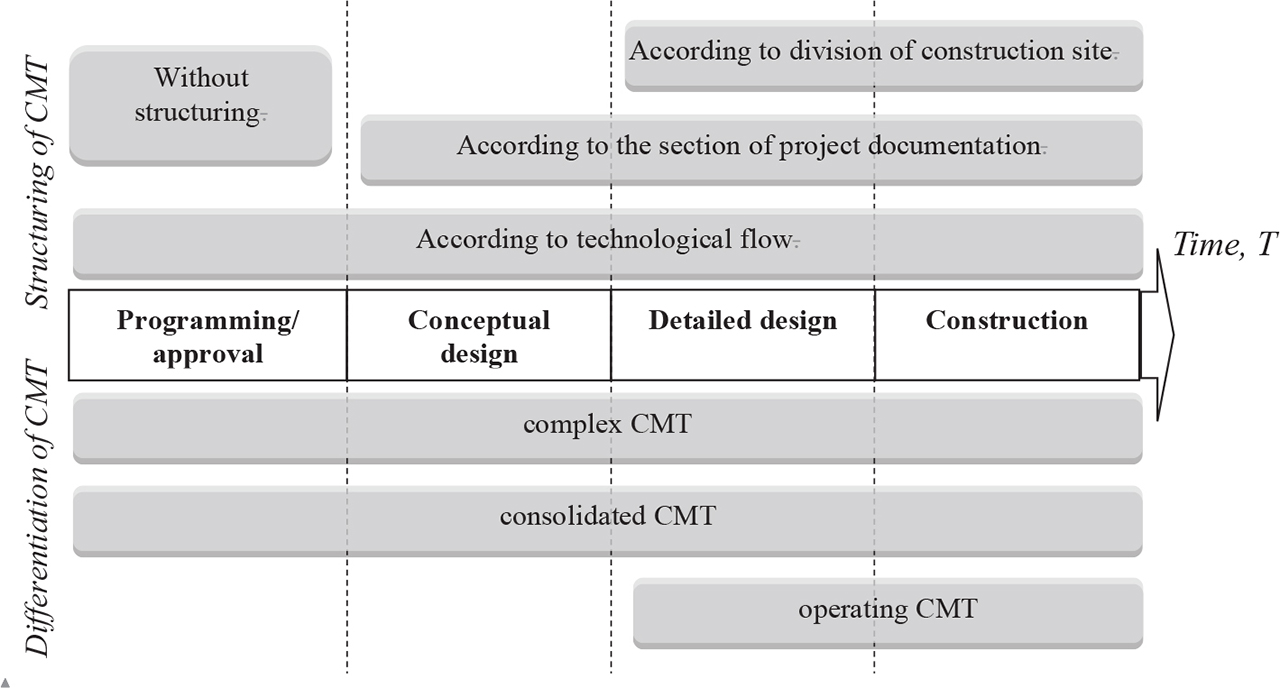
Fig. 4
Differentiation and structuring of CMTs at different phases of the investment construction project. CMT, construction management template.
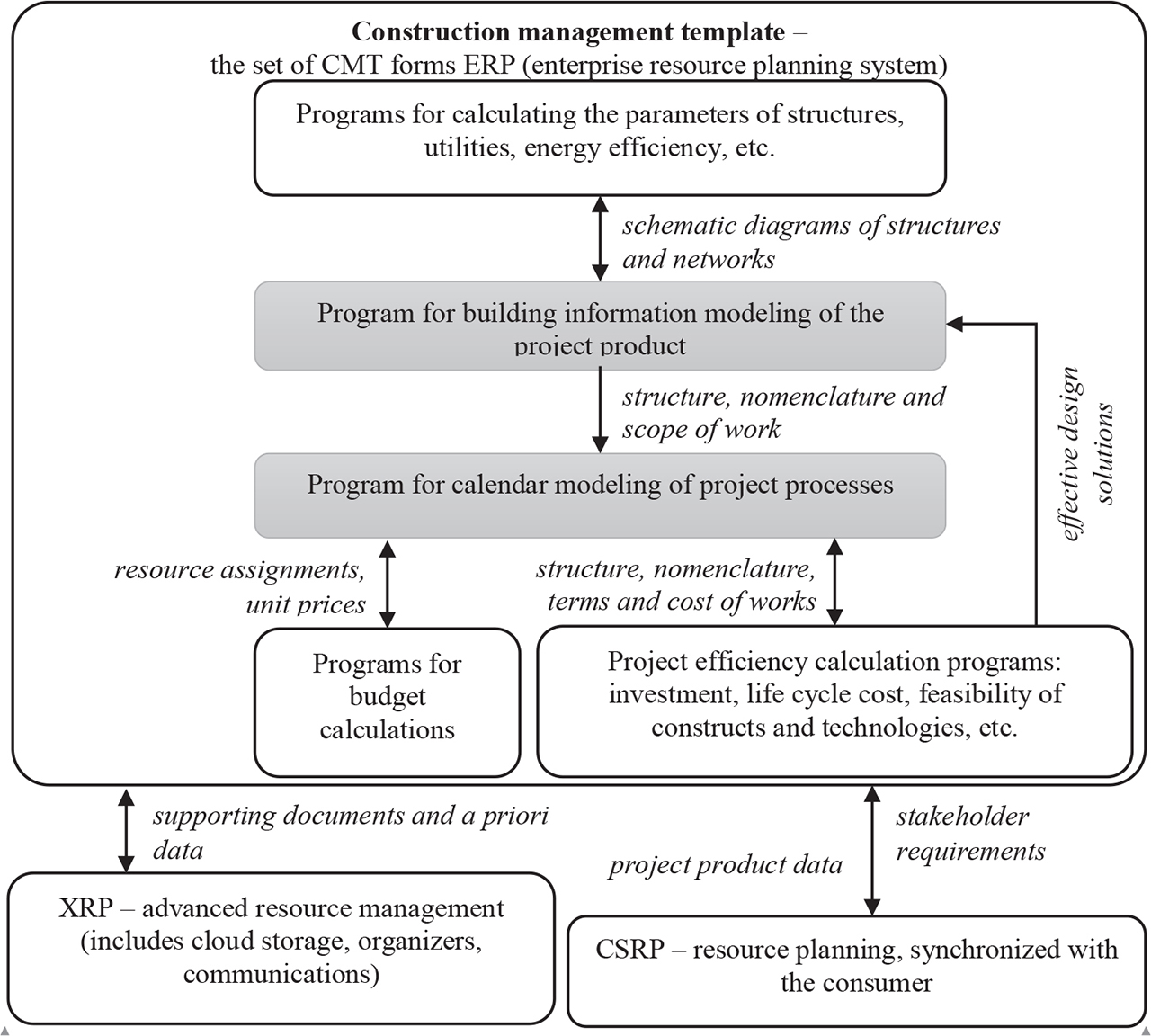
Fig. 5
Interaction of software within the concept of ‘CMT’ (programs containing CMT are highlighted by dark gray (product models and project processes); transmitted information – by italics; arrows show the direction of information transfer). CMT, construction management template; CSRP, customer synchronized relationship planning; ERP, enterprise resource planning; XRP, extended resource planning.
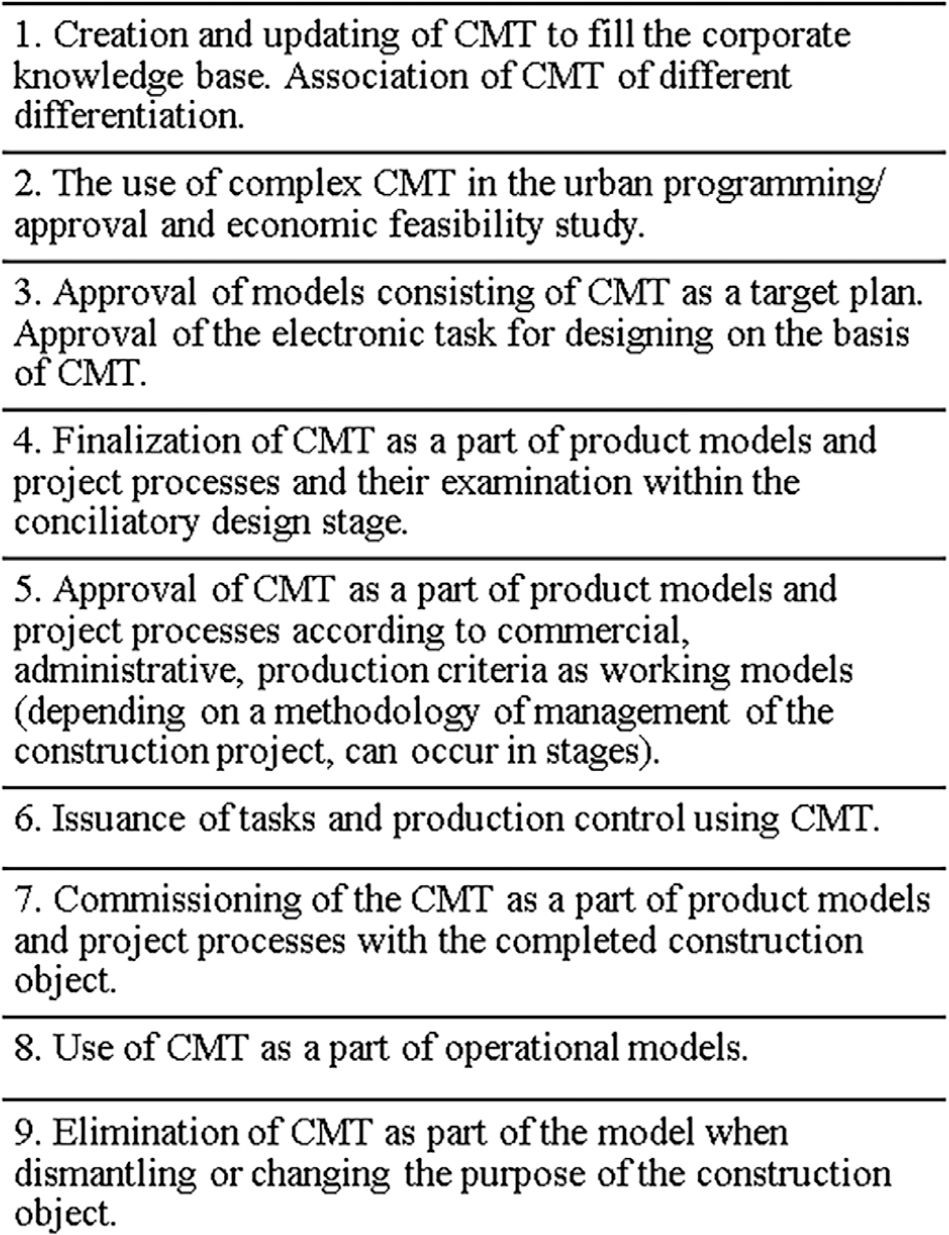
Fig. 6
Life cycle of CMTs within the investment construction project. CMT, construction management template.
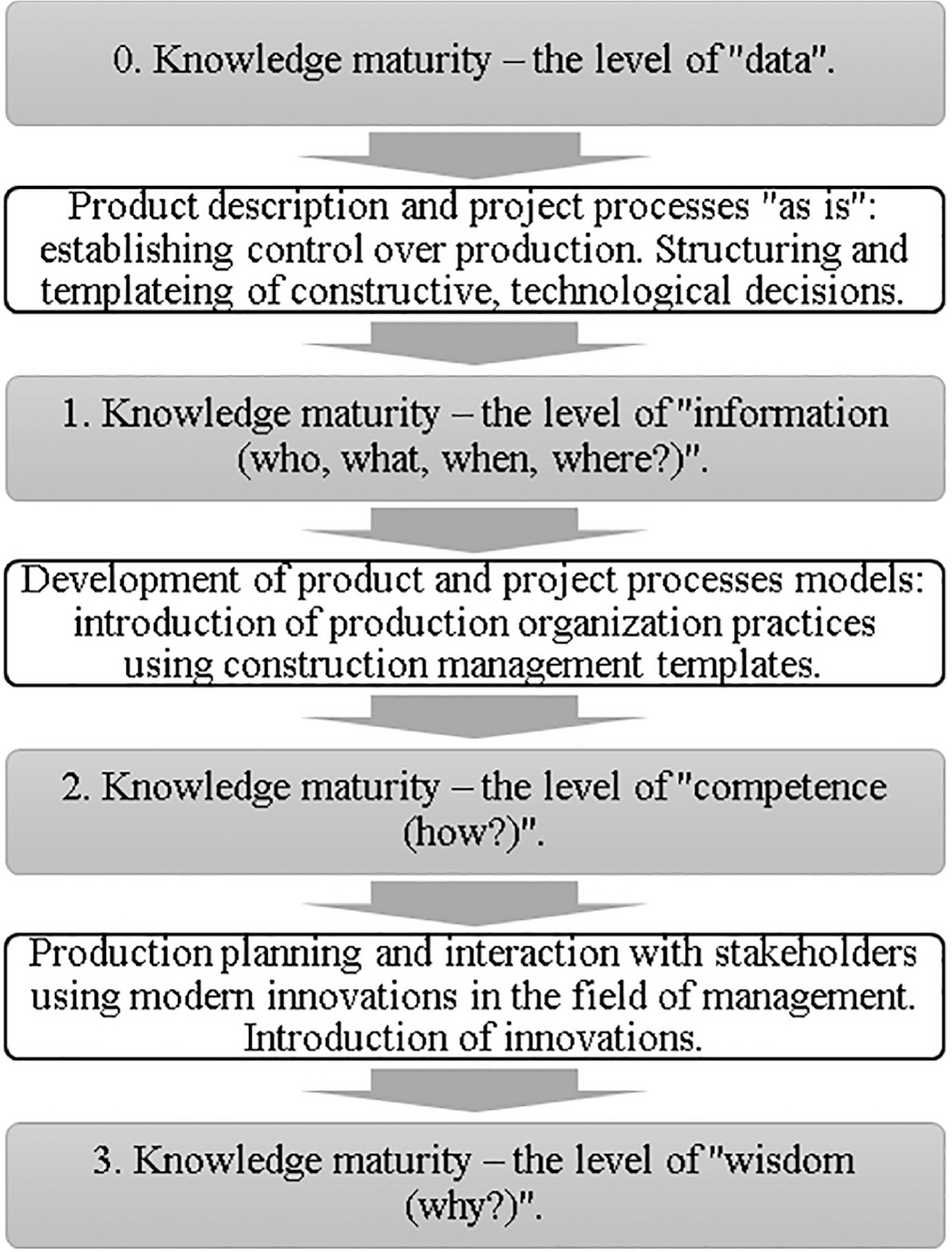
Fig. 7
Management of knowledge maturity with the help of CMTs (gray highlights the levels of knowledge maturity; white – practices, the establishment of which moves to the appropriate level of maturity). CMT, construction management template.
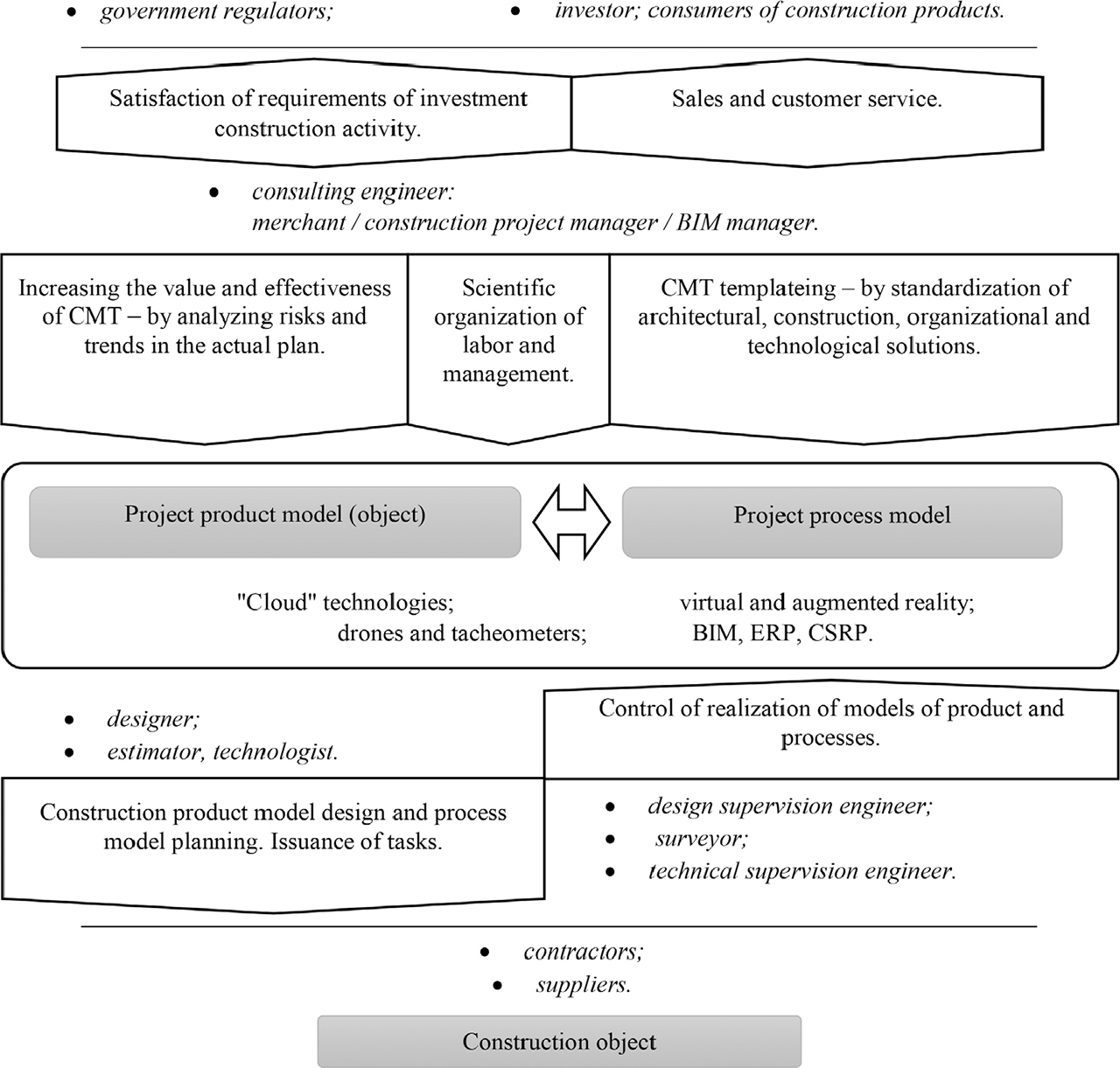
Fig. 8
Schematic diagram of stakeholder communication using the project management approach and the concept of ‘CMT’ (Notes: 1 BIM – construction building information modeling; 2 ERP – enterprise resource planning; 3 CSRP – customer synchronized relationship planning). CMT, construction management template.
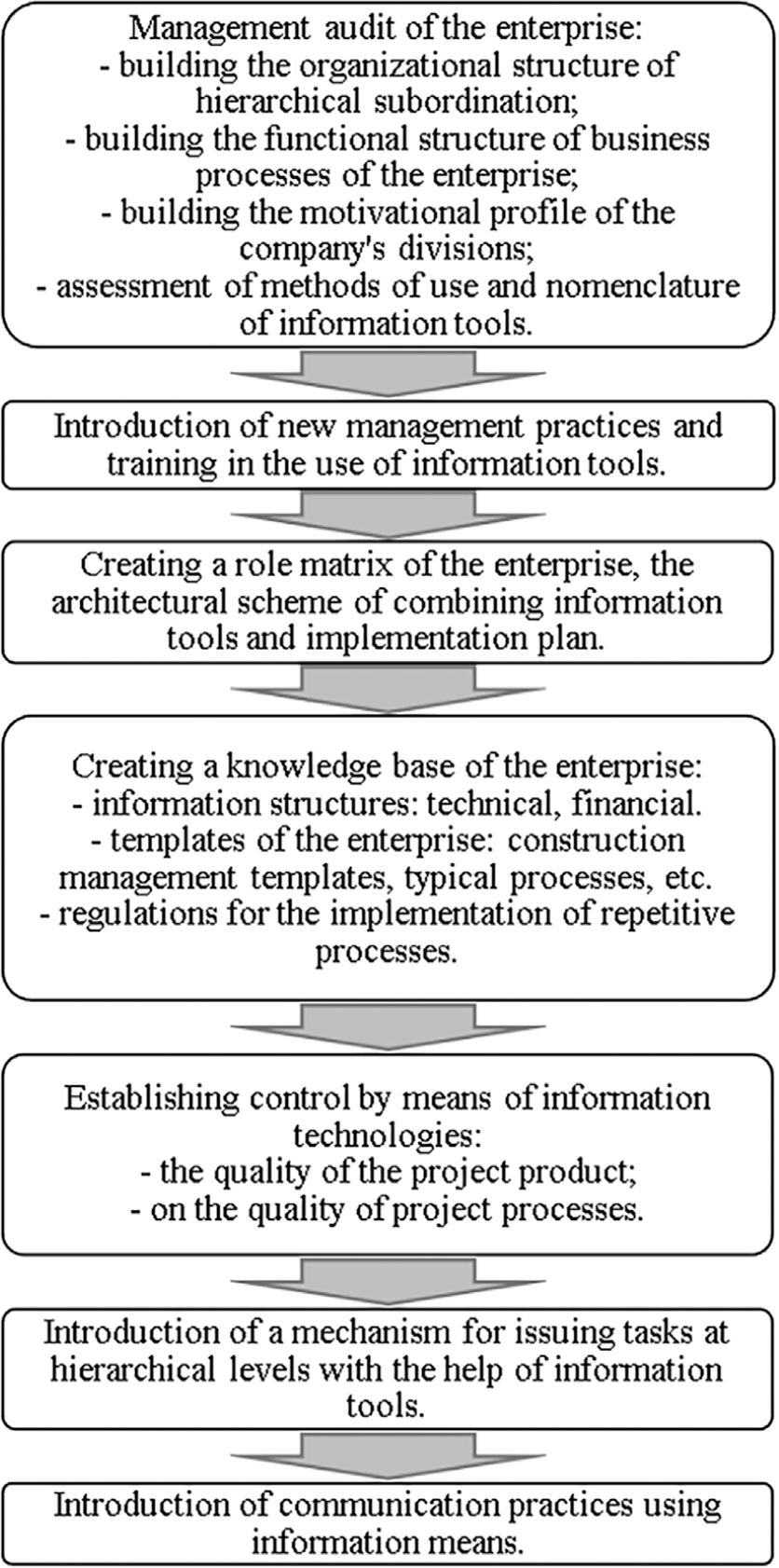
Fig. 9
Algorithm for implementing construction management models using information technology.
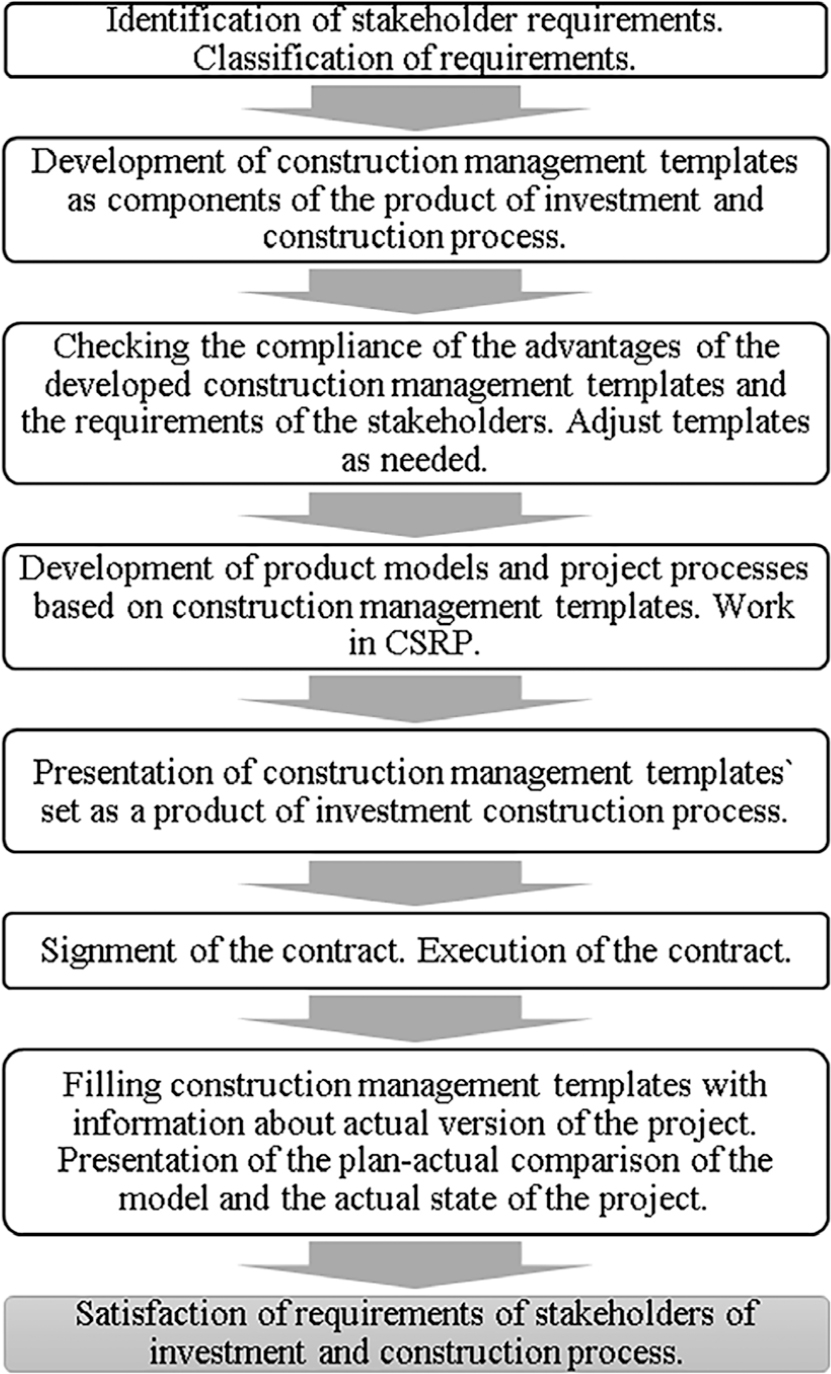
Fig. 10
Use of CMTs in commercial activity (1CSRP – Customer Synchronized Relationship Planning). CMT, construction management template.
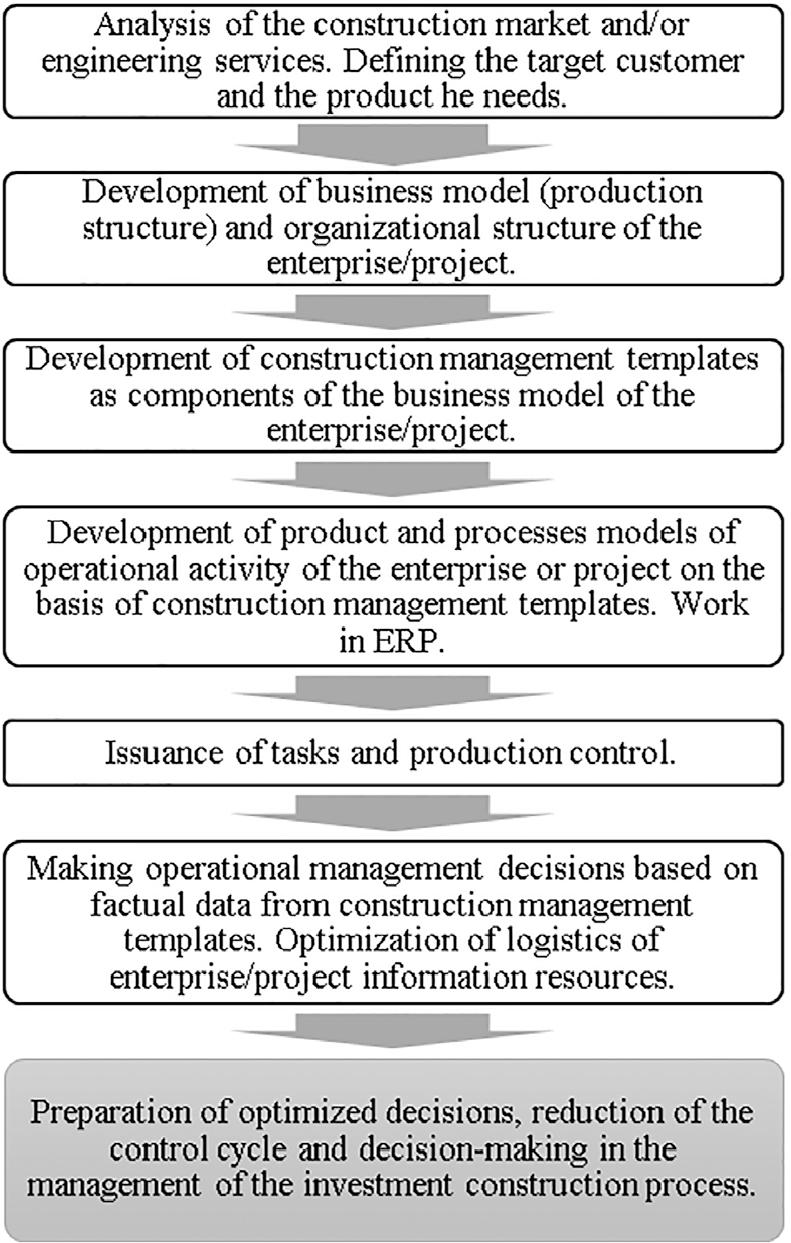
Fig. 11
Use of CMTs in management (1ERP – Enterprise Resource Planning). CMT, construction management template.
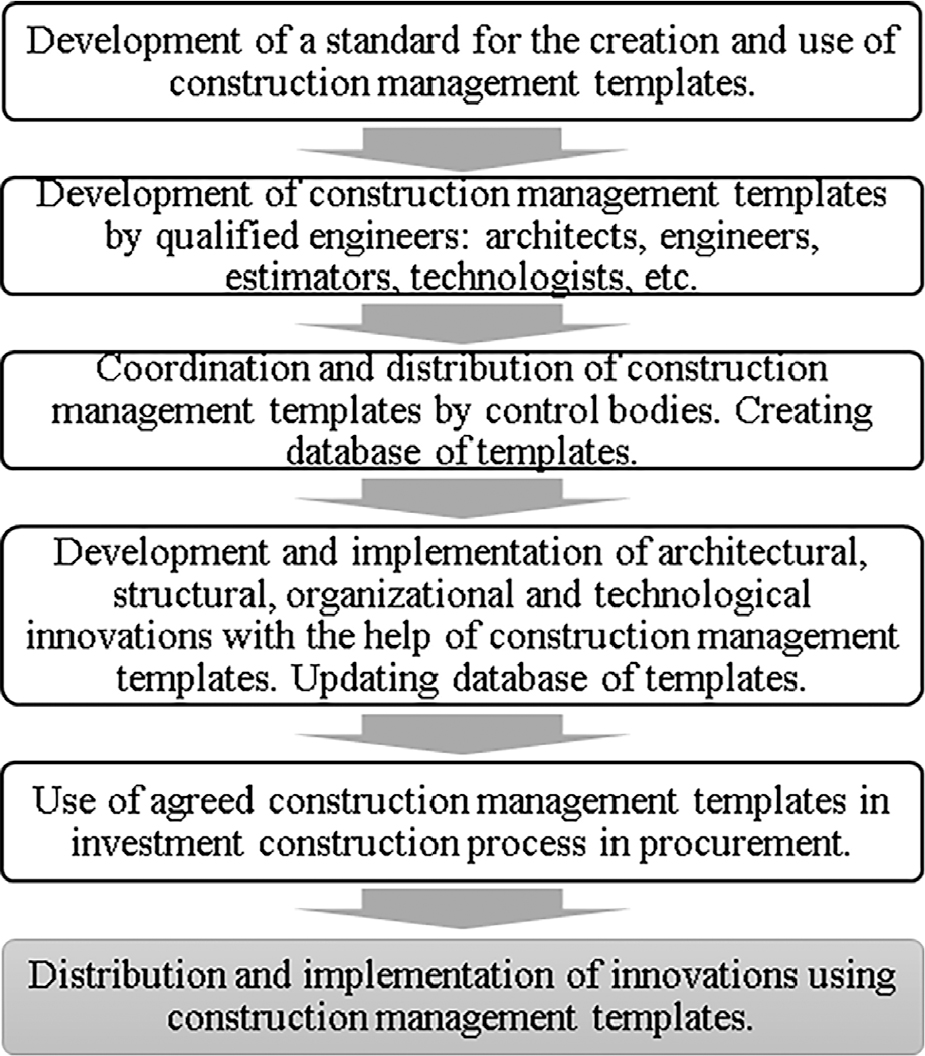
Fig. 12
The use of CMTs in the introduction of architectural, structural, organizational, and technological innovations. CMT, Construction management template.
Tab. 2
Economic and technical effect for stakeholders of the investment construction process when using CMTs
| Stakeholder | Due to which the effect is achieved | Efficiency indicator |
|---|---|---|
| State control bodies | Accurate and reliable control of investment construction process – through the control of versions of the CMT at the stages: certification of materials, technologies, and equipment for inclusion in the databases of CMT; issuance of urban-planning conditions and restrictions and technical conditions; electronic examination (including the use of automated tools for deter-mining conflicts: spatial, technological, financial, etc.); commissioning of the building (by comparing the CMT and the actually erected building). | Percentage of mutual conformity of versions of CMT, acceleration of capital turnover (direct). Reducing the cost of construction, operating costs, building life cycle cost; increasing the profitability of the construction industry, energy efficiency, indicators of requirements for buildings, CSI (indirect). |
| Investor (consolidated and distributed) | Quality control of investment construction project management through control of conformity of versions of CMT at stages of the technical and economic substantiation, designing, construction on technological packages of works: | |
| Consumer of construction products | comparative analysis of CMT versions for compliance of architectural decisions, cost, and terms of construction; transparent communication with the consulting engineer, as a result – high quality of construction service. | |
| Consulting engineer | Improving the quality of management through: acceleration of logistics of project resources (initially informational, as a result – communication, financial, labor, material). reducing routine, increasing the role of leadership in management. | The interval between control points for decision-making, the accuracy of production information (direct). |
| CMT developers (architects and designers, estimators, and technologists) | Use of modern software products. Use of agreed pre-prepared information blocks from databases of CMT. Regulation of business processes. | Reducing the complexity of modeling, increasing labor efficiency (direct). Increase in wages (indirect). |
| Contractors and suppliers | Reduction of non-production costs due to well-established logistics of resources. Implementation of innovative design and technological solutions. Regulation of business processes. | Reducing the complexity of work, increasing profits, reducing the duration of work, accelerating capital turnover (direct). |
[i] CMT, construction management template.
Tab. 3
The choice of performance indicators of the consulting engineer depending on his role and the degree of subordination of participants in the investment construction process
| Participant in the investment construction process | The role of a consulting engineer | ||
|---|---|---|---|
| Merchant | Construction project manager | BIM manager | |
| Developers and controllers of the project product model (designers; engineers of author's supervision; surveyors) | The cost of the construction object, the total cost of construction and operation of the building during the life cycle; the coefficient of usable area of the house, the speed of the technological process, and labor costs of service personnel; dynamics of labor costs of designers; indicators of mechanical resistance and stability, fire safety, the safety of life and environmental protection, operational safety, noise protection, energy saving | The total cost of construction and operation of the building during its life cycle; building energy efficiency class; the percentage of mutual compliance of the versions of the CMT, the accuracy of production information; the percentage of executive documentation on the quality of work | |
| Developers and controllers of the project process model (estimators, technologists, technical supervision engineers); suppliers | Economic efficiency of production; accelerating capital turnover | The percentage of mutual compliance of the versions of the CMT, the accuracy of production information; the percentage of presence of executive documentation on the quality of work | |
| Contractors | Dynamics of labor costs, mechanical production; the speed of construction of a building or individual structural elements | Accuracy of production information | |
| Regardless of the subordination of the participants | Sales dynamics; economic efficiency of marketing; CSI | The interval between control points for decision-making; the degree of entropy of management, the level of risk of resource use. | |
[i] BIM, building information modeling; CMT, construction management template; CSI, consumer satisfaction index.