
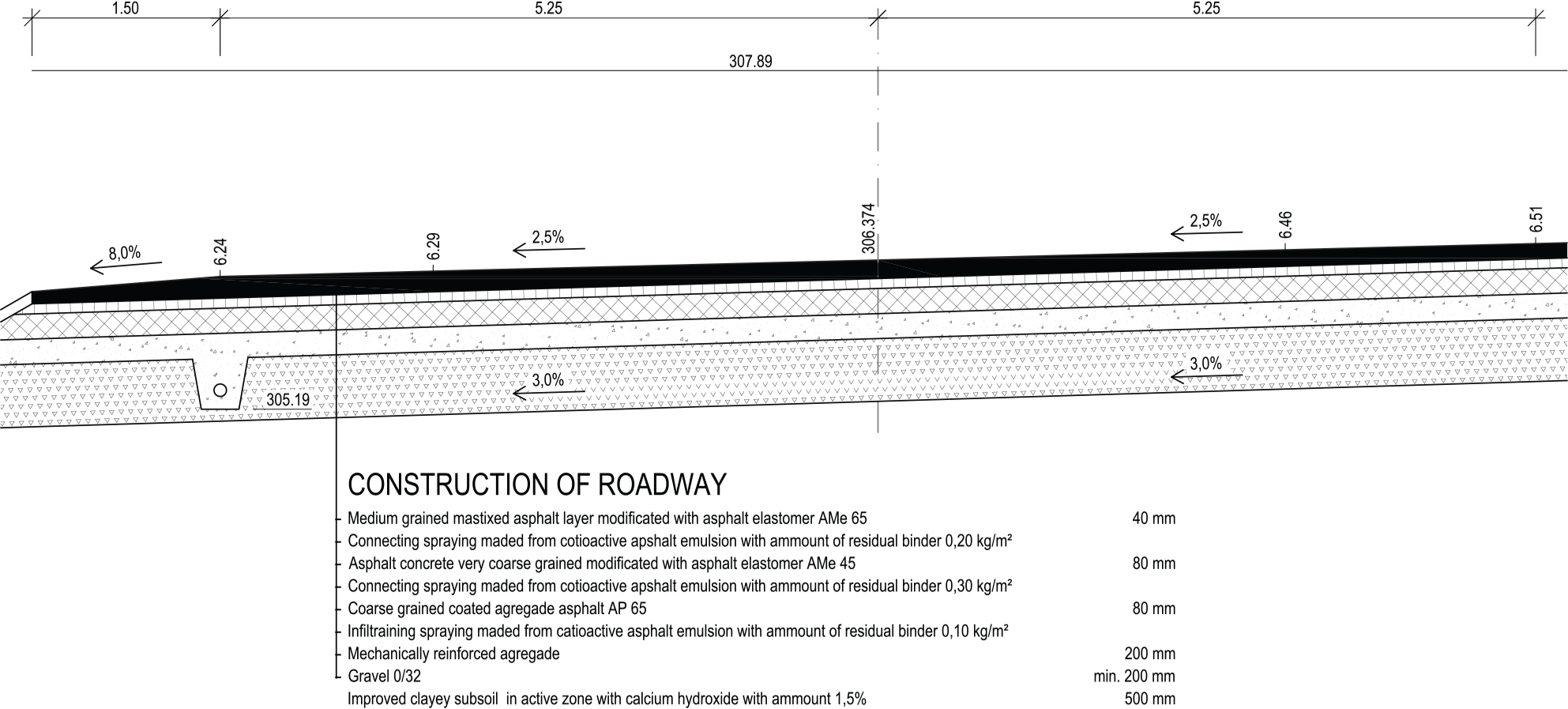
Fig. 1
Road cross-section with the original reconstruction measurements.
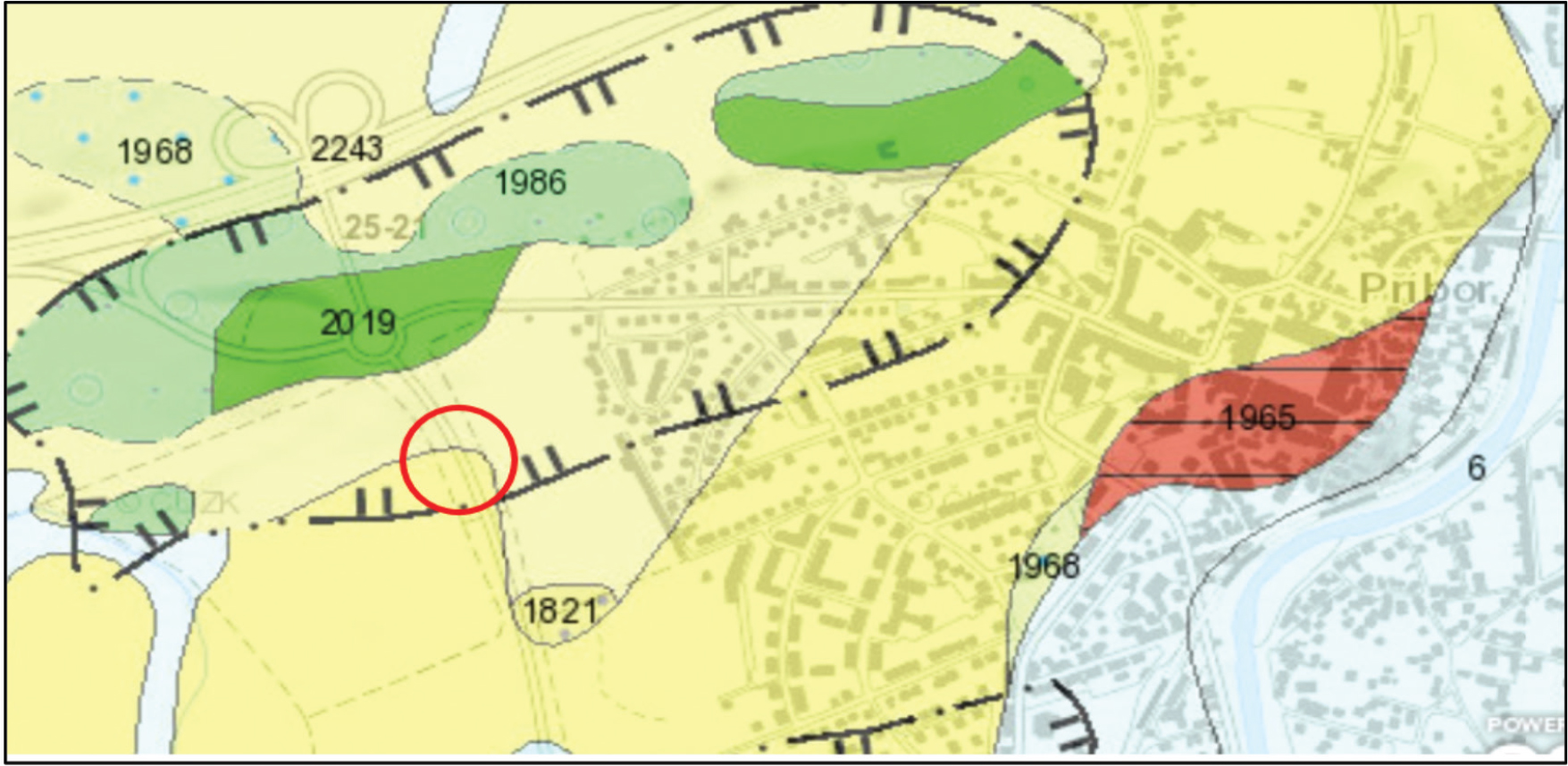
Fig. 2
Area according to the geological map [explanation of geological structures (the structures themselves relate only to the bold geological structure) is as follows: 19 light yellow-loess clay, genesis-eolic sediment, system-Bohemian Massif-covering formations, formation-quaternary, era-kenozoic, Pleistocene department; 2,243 ocher to pink-eluvial sediments (weathered mantle) stone-sand-clayey eluvia of sedimentary rocks, system-Carpathians, formation-quaternary to neogene, era-kenozoic, department Pleistocene; 1,821 ocher-yellow-marinated sediments, calcareous clay (tégl), in places with sand system-Carpathian Foredeep, formation-neogene, era-kenozoic, department-miocene, grade-Baden; 2,019 green-volcanites, cucumber, picrit, tuff, tuffite, system-Carpathians, area-flysch zone, region-outer group of nappes, regional unit-Silesian, formation-chalk, era-mesozoic, department-lower chalk, degree-berrias, Valangin, Hauteriv, Barrem, Apt, Formation-Volcanicities of the Ashtree Association; 1,986 bluish-marinated, sandstone, conglomerate, claystone, limestone, system-Carpathians, area-flysch zone, region-outer group of nappes, regional unit-Silesian, formation-chalk, era-mesozoic, department-lower chalk, degree-apt-alb, formation-Tešín-Hradiště; 1,968 grey-yellow with blue dots-marinated, claystone, sandstone, conglomerate, system-Carpathians, area-flysch zone, region-outer group of nappes, regional unit-Ždánice unit, sub-Silesian unit, formation-chalk to paleogene, era-mesozoic to kenozoic, department-Upper Cretaceous to Paleocene, degree-Turon, Coniak, Santon, Campan, Maastricht, Formation-Frýdek].
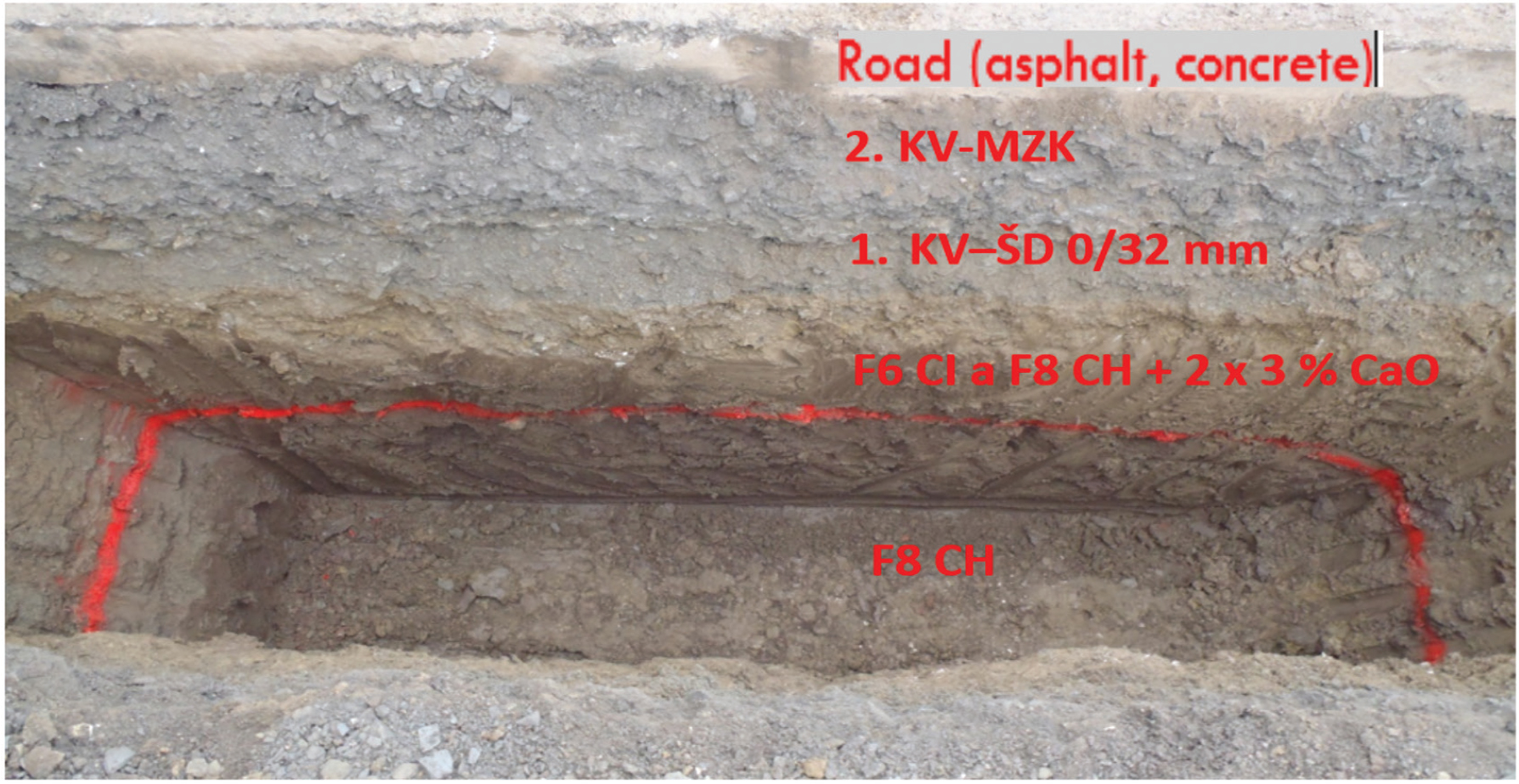
Fig. 3
Profile of the excavated survey probe showing the deformation of the underbase layer.
Tab. 1
Results of the analysis of natural moisture content in the soil
| Probe | Depth (m) | Moisture content, wn (%) | CaO treatment | Level |
|---|---|---|---|---|
| KS1 | 0.6–0.8 | 31.41 | Yes | Active zone, ceiling |
| 0.8–0.9 | 49.90 | Yes | Active zone, middle | |
| 0.9–1.1 | 45.70 | Yes | Active zone, base | |
| 1.1–1.2 | 25.70 | No | Base, ceiling |
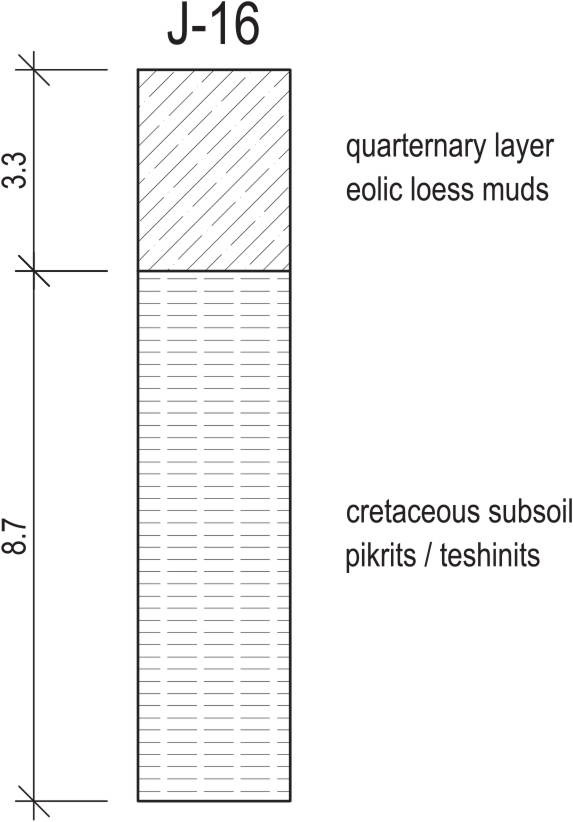
Fig. 4
Diagram of a geological borehole at the location of deformations.
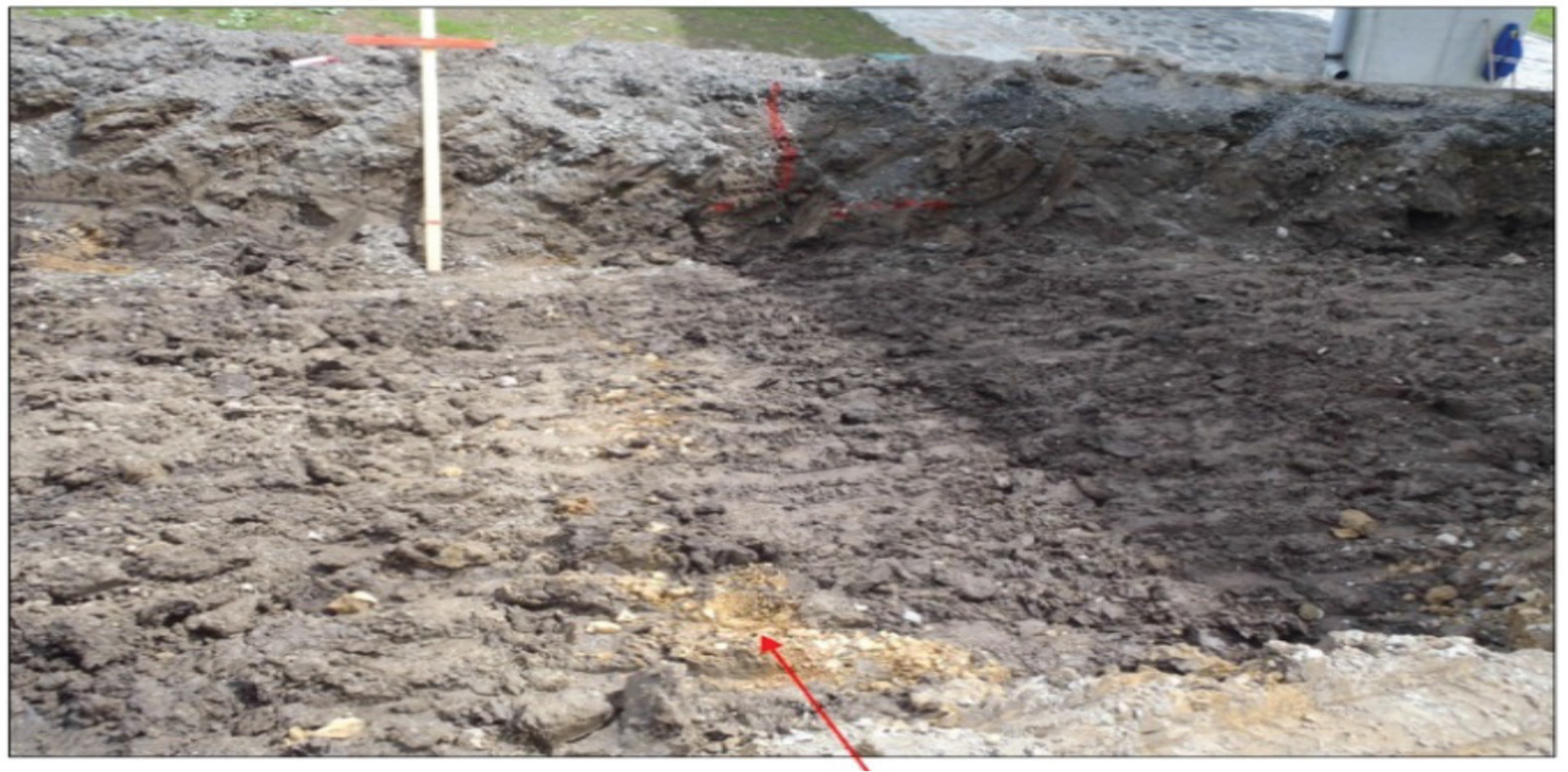
Fig. 5
Location of highly permeable rocks in the contact aureole in the active zone’s bedrock.
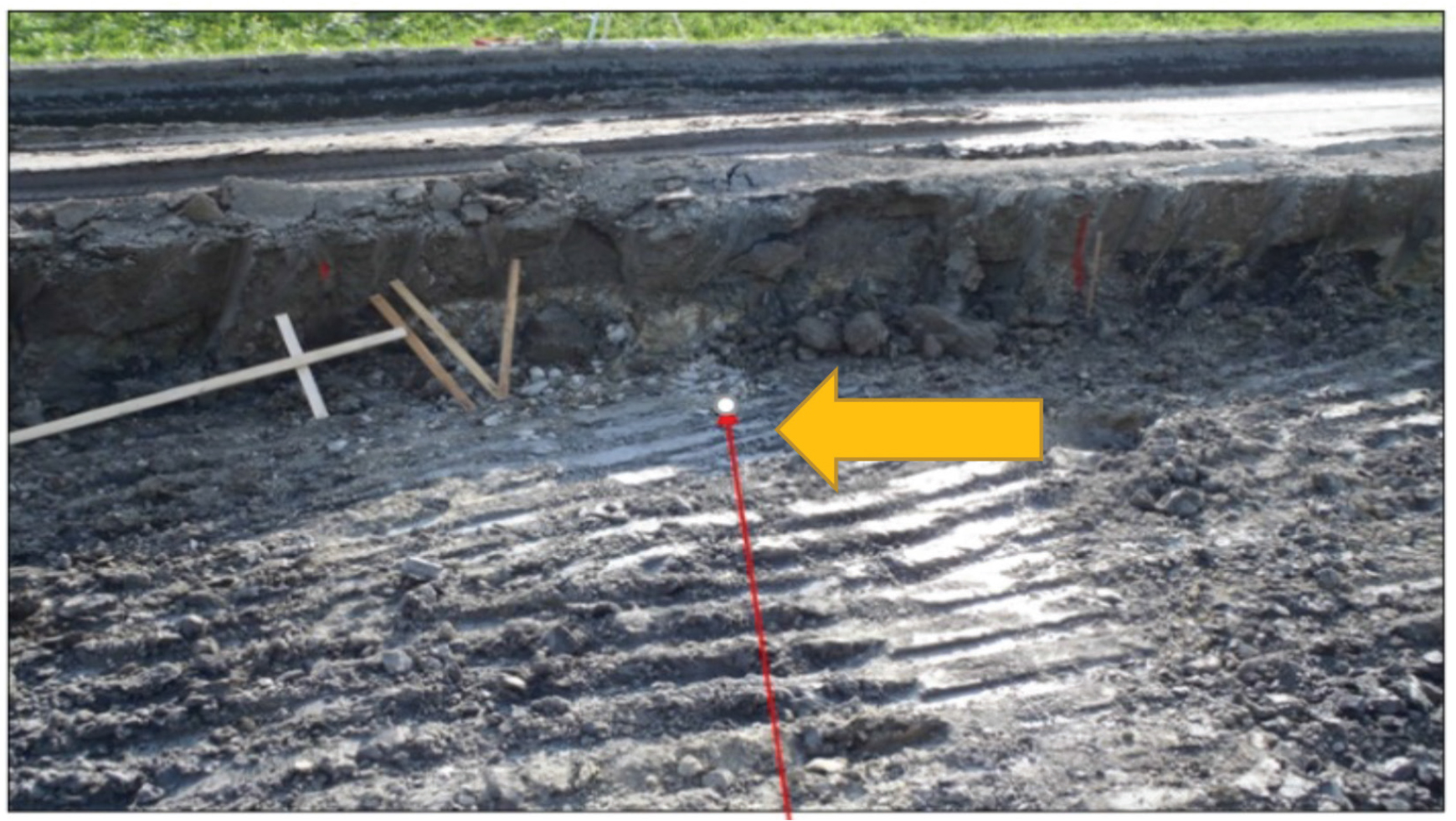
Fig. 6
Location of highly permeable rocks (limestone) in the active zone’s bedrock.
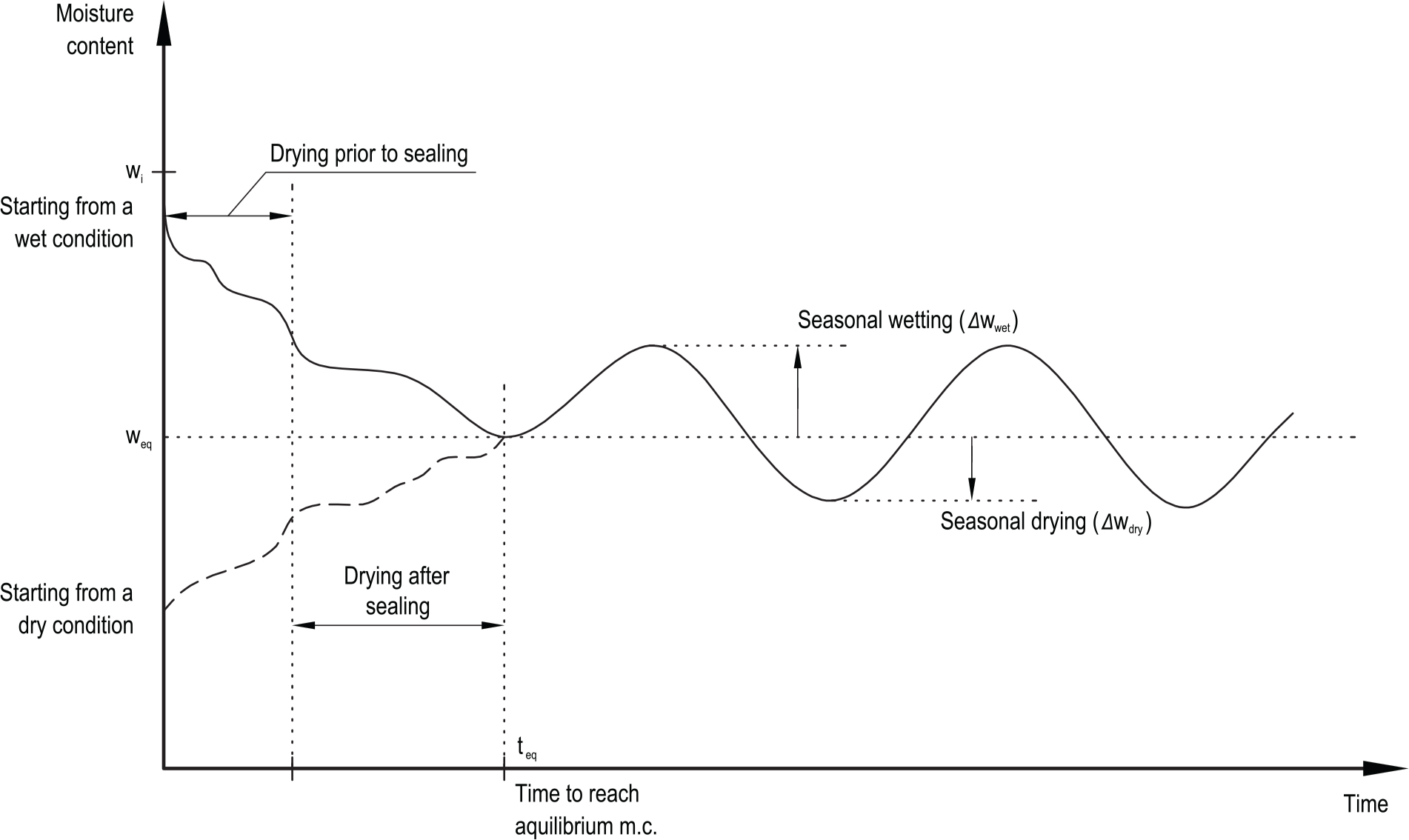
Fig. 7
Moisture content as work is conducted.
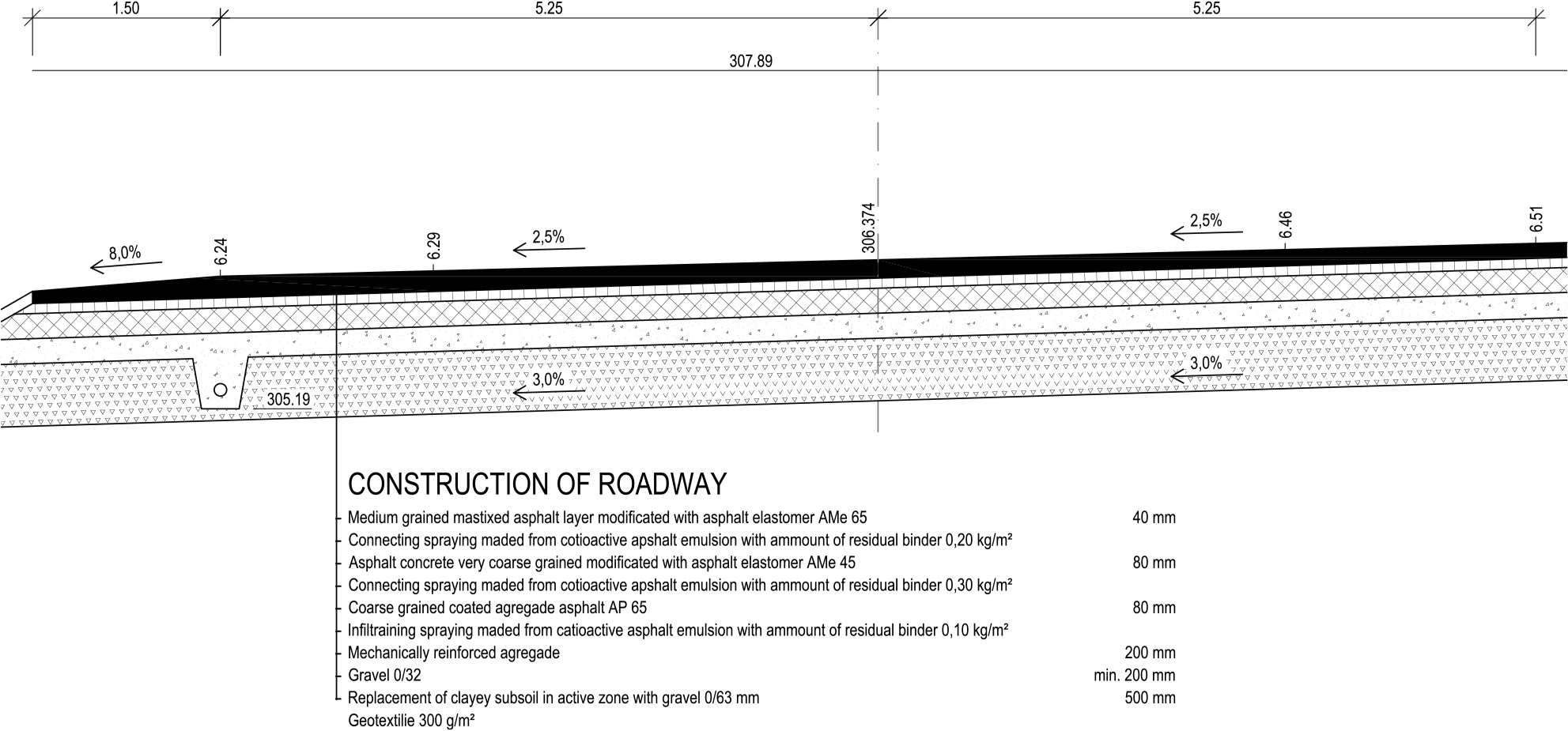
Fig. 8
Cross-section of the road according to the new reconstruction procedures.