
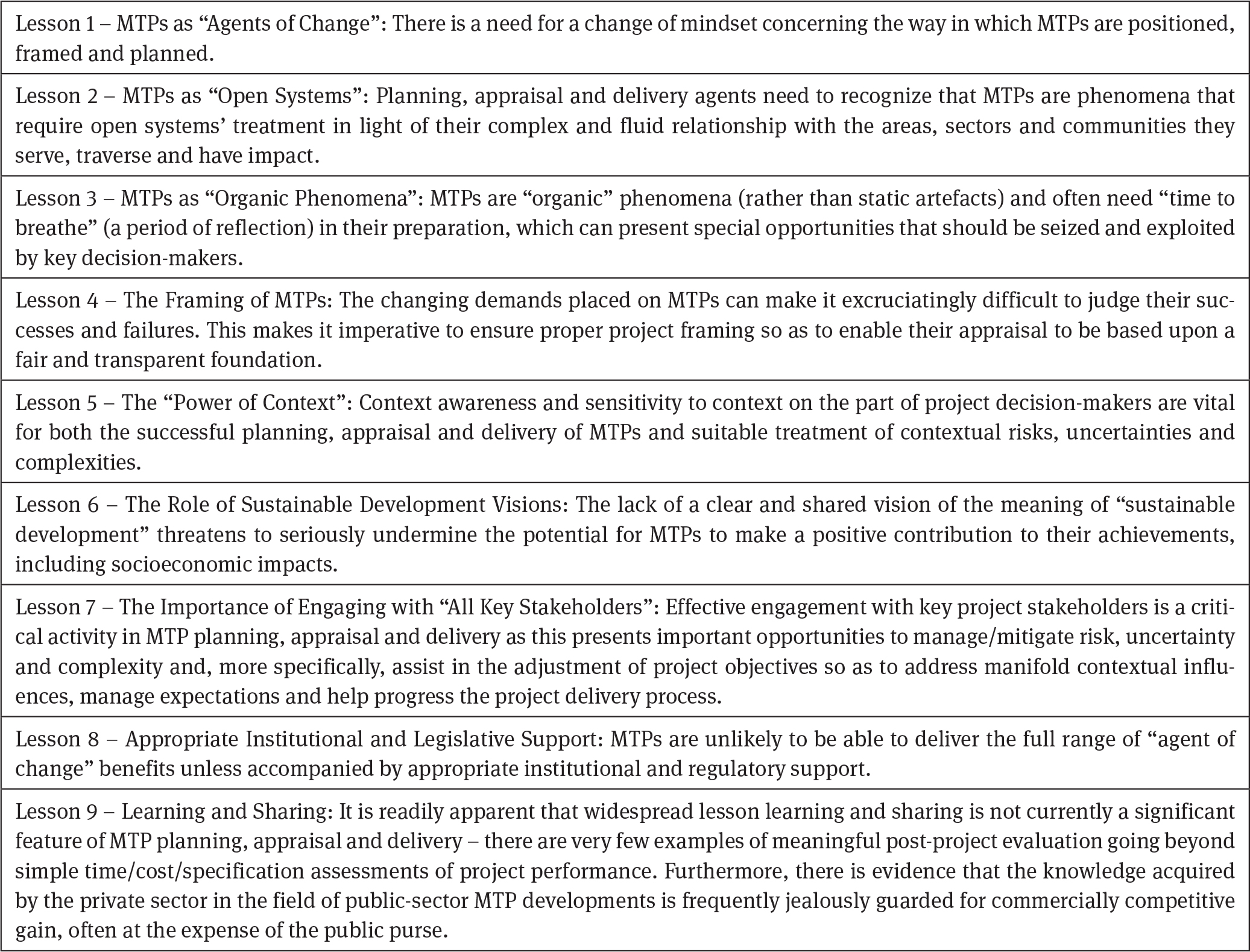
Fig. 1
OMEGA 2 nine clusters of lessons of relevance to PLMCA application to PPPs. Source: Adapted from OMEGA Centre (2012)
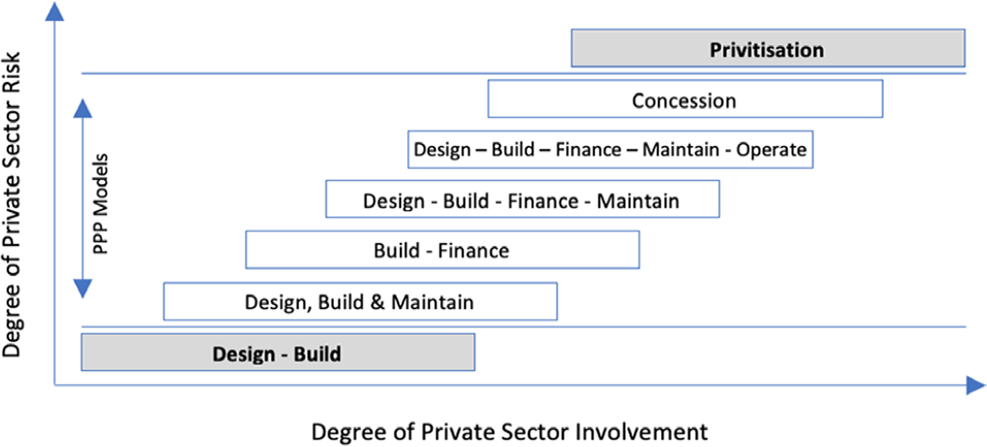
Fig. 2
PPP models and the risk-sharing continuum. Source: adapted from Rodrigue (2017)
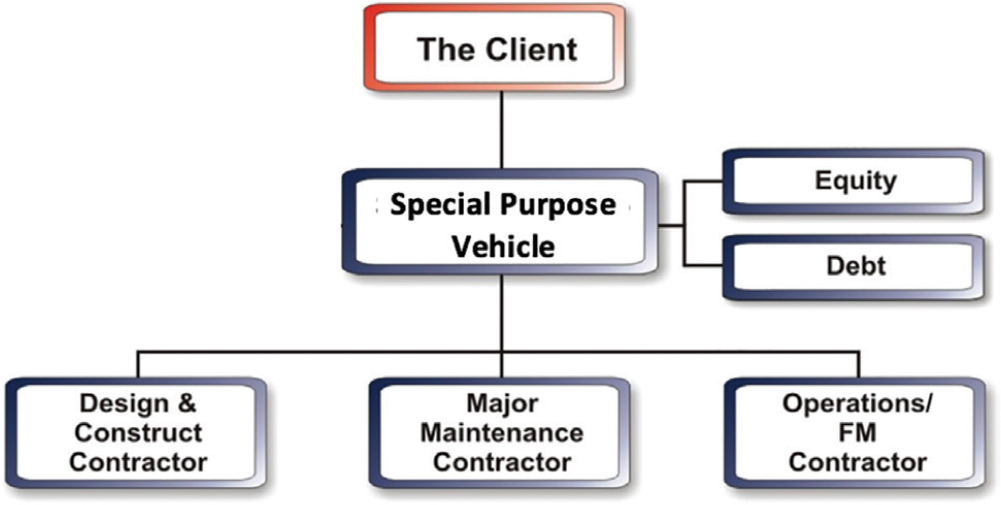
Fig. 3
A typical PPP structure. Source: Dimitriou and Field (2017)
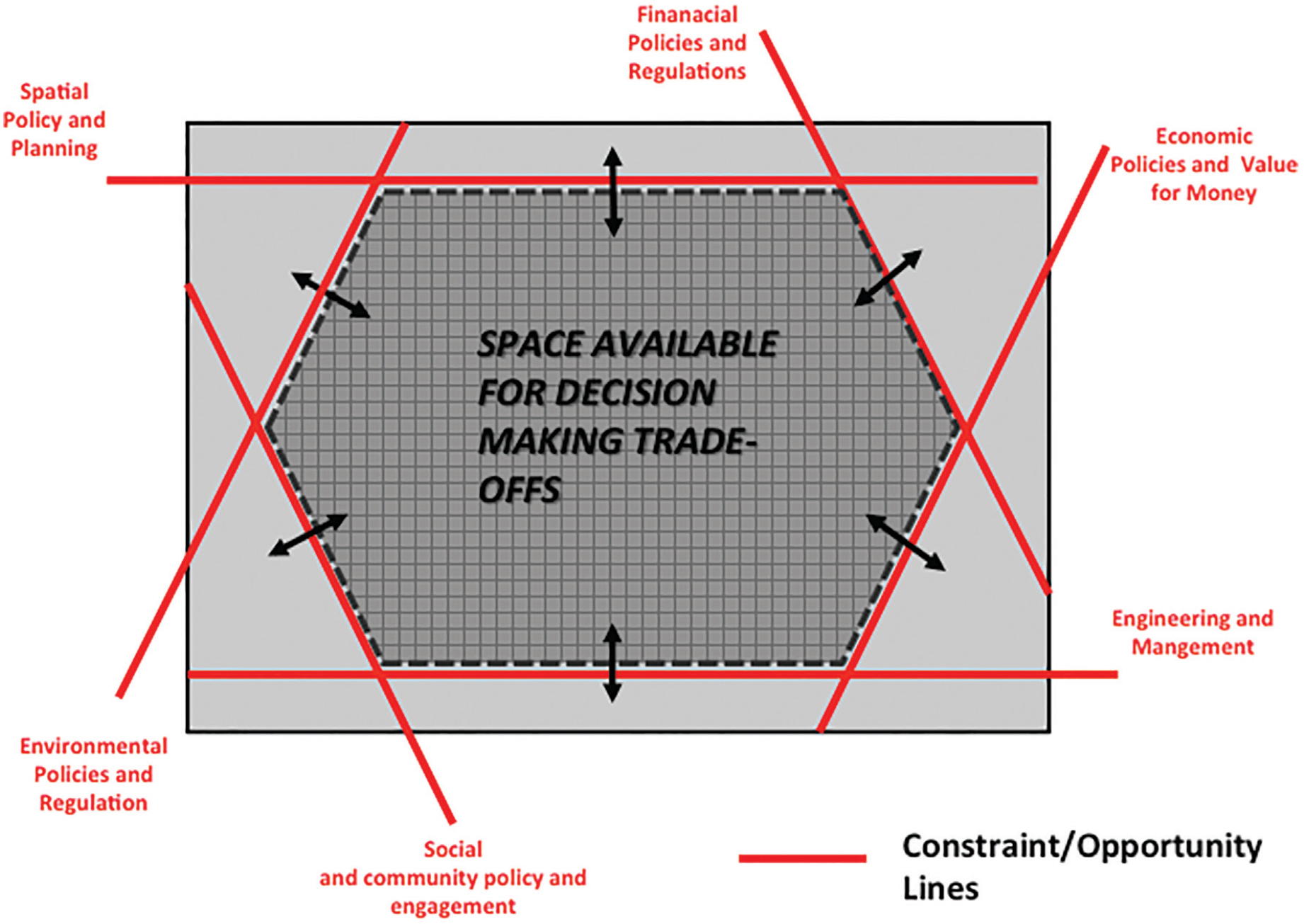
Fig. 4
Policy constraints defining the decision-making space in a PLMCA exercise. Source: Dimitriou et al. (2013)
Tab. 1
Generic phases and of the PLMCA appraisal process and stakeholders. Source: Adapted from Belton and Stewart (2002).
| PLMCA framework phases | Actors involved | PLMCA steps/activities undertaken within each phase |
|---|---|---|
| Phase 1: The problem-structuring phase | Client agency and analyst team (closed approach) Analyst team and project stakeholders (open approach) | Step 1.1: Problem definition (including issue analysis) Step 1.2: Design of PLMCA Step 1.3: Context analysis and boundary definition Step 1.4: Option identification Step 1.5: Policy analysis Step 1.6: Stakeholder identification Step 1.7: Scenario building |
| Phase 2: The model-building phase | Analyst team (closed approach) Analyst team and project stakeholders (open approach) | Step 2.1: Formulation of objective/appraisal criteria (adopting an open or closed process) Step 2.2: Derivation of weightings (adopting an open or closed process) |
| Phase 3: The model-use phase | Analyst team (closed approach) Analyst team and project stakeholders (open approach) | Step 3.1: Scoring (adopting an open or closed process) Step 3.2: Further development of issues, objective/criteria, options and scenario (adopting an open or closed process) |