
1. INTRODUCTION
Pujada Bay is a 21,000-hectare protected landscape and seascape located in the City of Mati, Davao Oriental, Philippines. With its rich biodiversity, the bay provides critical ecosystem services, including fisheries, coastal protection, and tourism opportunities, supporting both environmental and socio-economic systems [Tianye 2021]. This semi-enclosed bay is recognised as one of the most beautiful bays in the world and a marine protected area (MPA), and it is adjacent to Mount Hamiguitan Range Wildlife Sanctuary (MHRWS), a UNESCO World Heritage Site and ASEAN Heritage Park. The bay has been proposed as an extension of MHRWS to emphasise its ecological value and significance for global conservation [UNESCO World Heritage Centre 2024].
Despite its designation as a nationally protected area, Pujada Bay continues to face serious threats from plastic pollution — a pervasive environmental problem in the 21st century [UNEP 2016; Jambeck et al. 2015]. Improper waste management practices, marine-based activities, and tourism-related littering have led to increasing levels of plastic debris in the bay [Abreo et al. 2018; Abreo et al. 2021; Morales et al. 2023]. These pollutants disrupt marine ecosystems, endanger biodiversity, and threaten the livelihoods of local communities reliant on fisheries and coastal resources [Prapanchan et al. 2023; Herdiansyah et al. 2021].
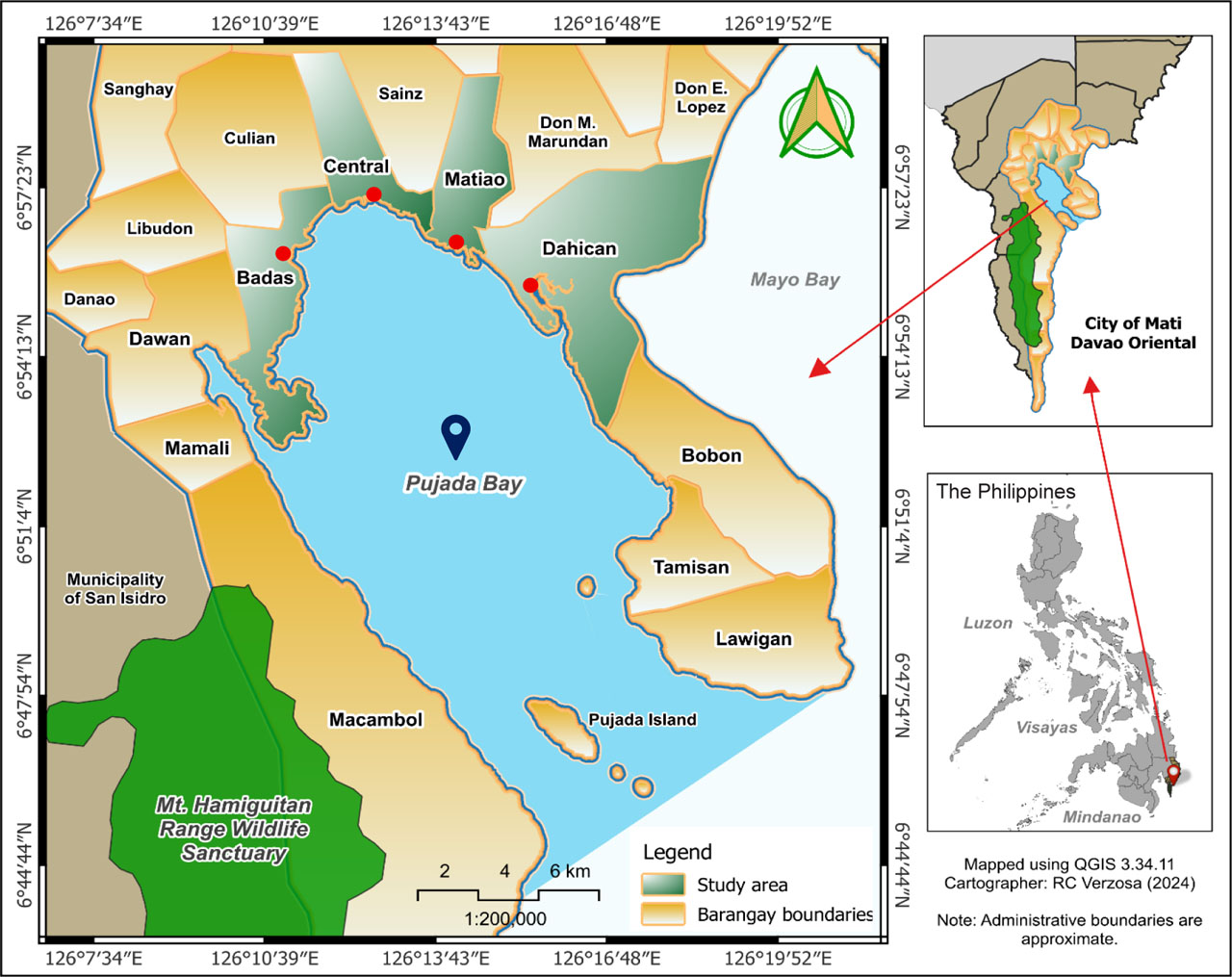
Figure 1.
Map showing Pujada Bay and the study sites in the City of Mati, Davao Oriental, the Philippines
Source: Global Administrative Areas, www.gadm.org
Over time, larger plastic items fragment into smaller particles through physical, chemical, and biological processes, giving rise to microplastics. Microplastics are commonly described as synthetic polymer particles, 1 μm to 5 mm in size, originating from primary production or from the breakdown of larger plastics [Frias, Nash 2019]. The accumulation of microplastics in marine environments is particularly concerning given their potential impacts on food security, human health, and the functioning of ecosystems [Borowski 2017].
Engaging local communities in mitigating plastic pollution is crucial, as their knowledge, attitudes, and practices (KAP) significantly influence environmental consequences [Coco Chin et al. 2023]. KAP studies are especially valuable in coastal areas, where socio-economic, cultural, and educational factors shape behaviours toward waste management and ecological conservation [Soares et al. 2021b]. Despite global campaigns to raise awareness of plastic pollution, translating knowledge into sustainable practices remains a significant challenge, particularly in developing countries, where resource constraints and competing priorities can interfere.
This study aims to evaluate the knowledge, attitudes, and practices of coastal communities in Pujada Bay concerning microplastics and plastic pollution. By employing the KAP framework, the research seeks to identify socio-demographic factors associated with community awareness, engagement in waste management, and conservation efforts. The findings are expected to inform policy recommendations and community-based interventions that support the sustainable management of Pujada Bay's coastal and marine resources. These efforts are particularly important given the bay's nomination as a World Heritage Site, which make community involvement and environmental stewardship critical to achieving conservation goals.
2. MATERIALS AND METHODS
2.1. Study area
Pujada Bay lies at 6° 52′ 27.0″ N, 126° 13′ 55.1″ E in the City of Mati, Davao Oriental, Mindanao Island. The bay has a U-shaped morphology, with a semi-enclosed configuration that limits water exchange with the open sea. This shape, along with prevailing currents and wind patterns, contributes to the retention and accumulation of buoyant debris like microplastics, especially in inner coastal zones and shoreline areas. Such geomorphological features make the bay particularly vulnerable to plastic pollution.
The bay's coastal area and islands are bordered by 10 coastal barangays. For this study, sampling was conducted in four of the most densely populated coastal barangays: Badas, Dahican, Central, and Matiao (Figure 1). These areas were selected due to their proximity to fishing grounds, tourism hotspots, and residential settlements. According to the 2024 Philippine Census of Population, the City of Mati had a total population of 148,672, with approximately 50.10% residing in these four barangays [PSA 2025].
2.2. Study design and sampling
A descriptive cross-sectional study design was used to evaluate the KAP of coastal communities with regard to microplastics and plastic pollution between July and September 2024. The respondents for this study are the residents of four coastal barangays. These barangays were selected because these residents are likely to have direct interaction with the coastal and marine environment, and may experience the impacts of plastic pollution.
To ensure practicality and feasibility, the sample size (n = 366 households) was determined using Cochran's formula based on the total household population (N = 7,413) of the selected coastal communities. A two-stage sampling method was applied to select respondents. First, proportionate sampling allocated the sample size to the four barangays in proportion to their populations. Subsequently, systematic random sampling was employed to select respondents from every two households within each barangay, using fixed landmarks in the area (e.g., puroks, churches, or activity centres) as reference points to determine sampling intervals.
Only one representative per household, aged 18 years or older and preferably the household head, was included in the study. This ensured the participation of individuals capable of providing reliable information on their practices and perspectives regarding microplastics and plastic pollution. All of the selected respondents completed the survey.
2.3. Survey tool and administration
A researcher-developed survey questionnaire was used to assess the knowledge, attitudes, and practices (KAP) of coastal communities regarding microplastics and plastic pollution. The tool consists of four sections: respondent profile, knowledge level, attitude level, and practice level. It contained 45 KAP items answered using a 5-point Likert scale. Responses for knowledge and attitude levels ranged from “strongly agree” to “strongly disagree,” while responses for practice level ranged from “always” to “never.” To ensure understanding, the survey was available in both English and Bisaya, the local language.
The research tool was validated by five evaluators, including two content experts, a registered psychologist and psychometrician, a sociologist, and a statistician. Following validation and refinement, it was pilot-tested on a group of 60 respondents outside the target population. Reliability testing using Cronbach's alpha yielded a high internal consistency of 0.919, confirming the instrument's reliability.
The survey was administered to the selected respondents through guided face-to-face interviews using the KoboCollect application on Android devices. This paperless data-collection method streamlined response recording and facilitated efficient storage of data on a secure server for subsequent analysis.
2.4. Data management and analysis
The collected data were downloaded as spreadsheets, processed in Microsoft Excel 365, and exported to IBM SPSS Statistics 27 for statistical analysis. Descriptive statistics summarised the respondents' demographics and KAP levels. Mean scores were interpreted descriptively using a predefined scale, as recommended by Pimentel [2019].
The Shapiro-Wilk test confirmed that KAP scores were not normally distributed. Therefore, the Kruskal-Wallis H-test was applied to evaluate significant differences in the KAP scores across socio-demographic variables. This non-parametric test serves as an alternative to one-way ANOVA when the assumptions of data normality and homogeneity of variance are not satisfied [Yousaf et al. 2020]. Additionally, post-hoc comparisons were conducted using the Mann-Whitney U test with Bonferroni corrections to identify which specific sociodemographic groups differed significantly. Statistical significance level was set at p < 0.05.
2.5. Ethical considerations
Ethical considerations were strictly upheld throughout the study to ensure the integrity and rights of participants. Approval was secured from the Davao Oriental State University – Research Ethics Board (UREB) with Certificate No. 2023-18, as well as the Protected Area Management Board (PAMB). Formal permissions were also granted by the barangay local government units. Informed consent was obtained from all respondents. They were thoroughly briefed on the study's purpose, their voluntary participation, and their right to withdraw at any stage of the survey process.
Vulnerable groups, such as children, pregnant women, and persons with special needs, were excluded as respondents. Senior citizens aged 60 to 65 years were included only if they were the sole household heads and expressed willingness to participate. Measures were taken to ensure that senior participants were comfortable and capable of responding effectively during the survey. Furthermore, all collected data were handled in strict compliance with the Philippine Republic Act No. 10173, or the Data Privacy Act of 2012, to ensure the confidentiality and privacy of participant information.
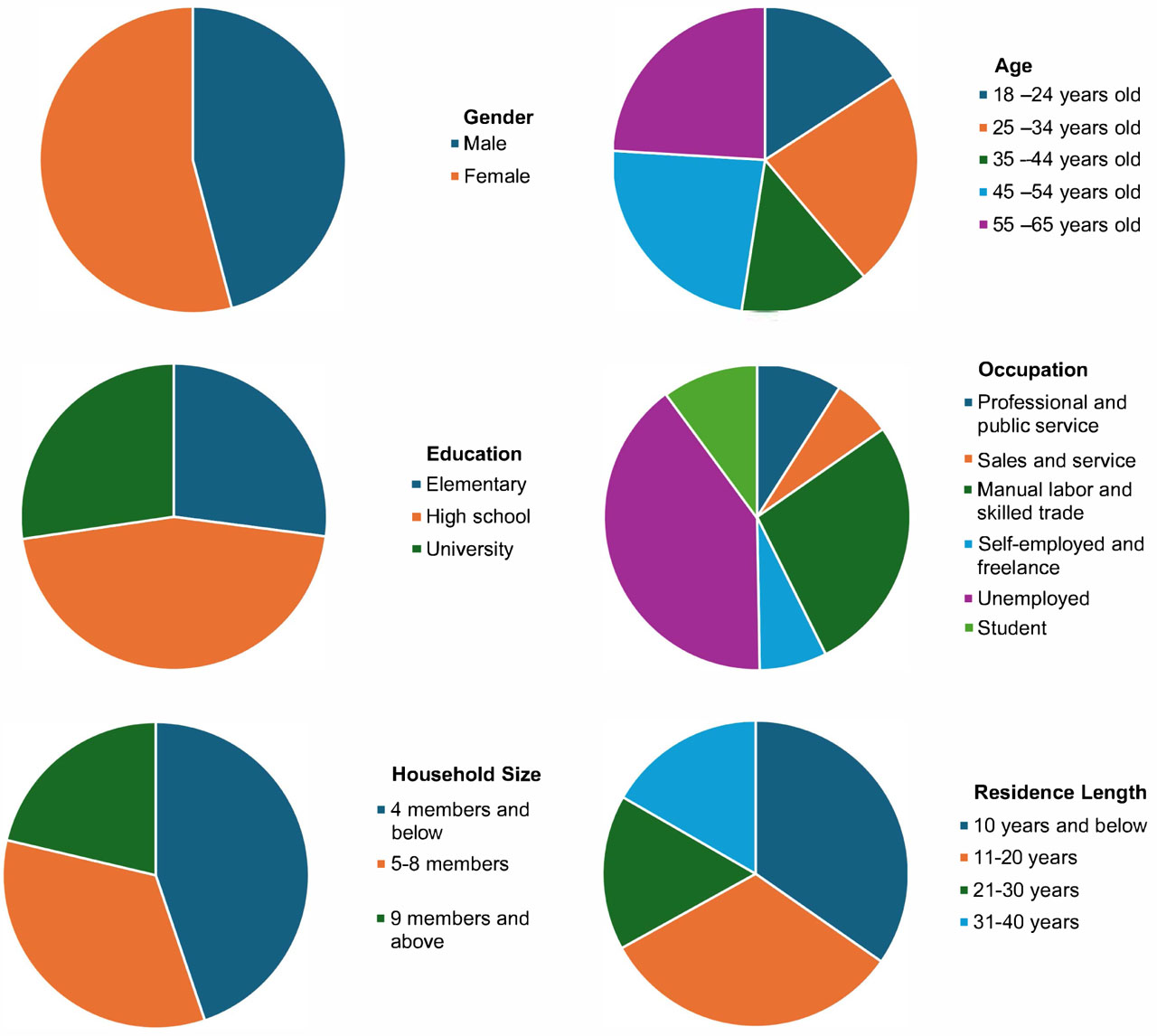
Figure 2.
Sociodemographic profile of respondents
3. RESULTS
3.1. Respondents' profile
The demographic characteristics of the 366 respondents are illustrated in Figure 2. A slightly higher proportion of respondents were female compared to male. The majority of the respondents belonged to three age groups: 25–34 years, 45–54 years, and 55–65 years. Formal educational attainment varied across the surveyed population. A significant portion of the respondents had a high school level education, followed by those who had reached the elementary level and those who had attended college but did not graduate. A smaller portion were college graduates.
The most common occupation among respondents was manual labour or skilled trade (27.30%), including fisherfolk and farmers. Students made up 10.10% of the respondents, while 7.10% were engaged in the informal sector (unregistered self-employment, odd jobs) or self-employment (registered business owners or freelancers). Those involved in sales or service accounted for 6.30%, and professionals or those in public service comprised 9.00%. Conversely, unemployed individuals represented the largest group, at 40.20%.
Household sizes varied, with 44.80% comprising four members or fewer. Households with five to eight members made up 33.90%, while 21.30% reported having nine or more members. Regarding years of residency in the coastal barangays, 34.70% had lived in the area for 10 years or less, 32.20% for 11 to 20 years, 16.40% for 21 to 30 years, and 16.70% for over 30 years.
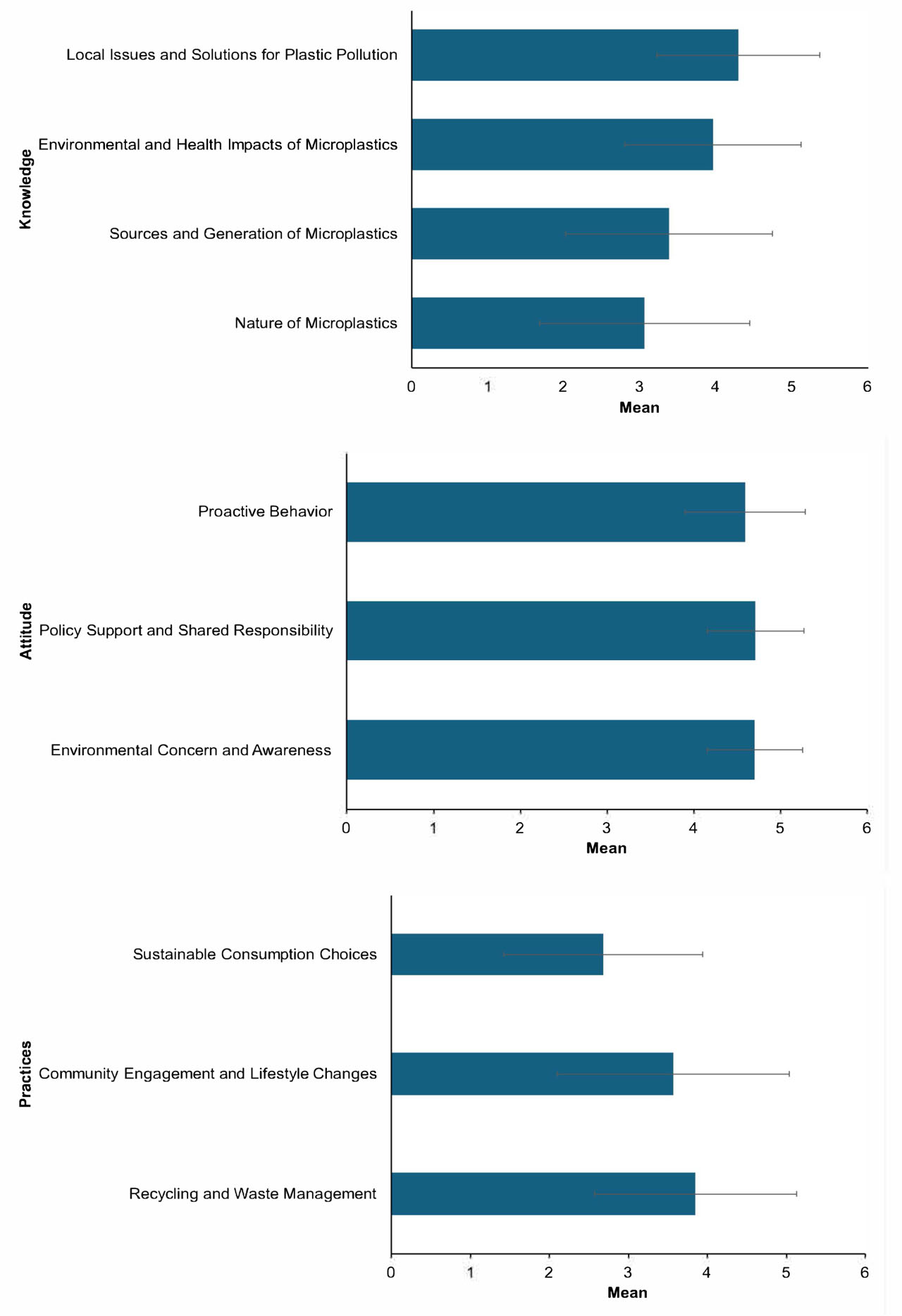
Figure 3.
Levels of knowledge, attitudes, and practices (KAP) of coastal communities in the City of Mati
3.2. Knowledge of microplastics and plastic pollution
The respondents reported a high level of knowledge about microplastics and plastic pollution, with an overall mean score of 3.67 (SD = 1.24), as shown in Figure 3. Awareness of local issues and solutions for plastic pollution received the highest mean score among the knowledge factors (X̅ = 4.29, SD = 1.07), indicating that respondents were well-informed about the challenges and initiatives aimed at mitigating plastic waste. Notably, knowledge about the environmental and health impacts of plastics was the most commonly recognised, as reflected in the high mean score of 3.96 (SD = 1.16). Respondents demonstrated knowledge of the harmful effects of microplastics and were familiar with how microplastics are ingested by marine animals and enter the human food chain.
Awareness about the nature of microplastics (MPs) and their sources and generation, on the other hand, was considered moderate, with mean scores of 3.06 (SD = 1.38) and 3.38 (SD = 1.36), respectively. Respondents displayed limited understanding of how MPs are generated, their sources, and the everyday products contributing to their presence in the environment. Products such as cosmetics, synthetic clothing, and plastic packaging were not known to respondents as potential sources of microplastics.
3.3. Attitude towards microplastics and plastic pollution
Respondents reported an overall very positive attitude level (X̅ = 4.67, SD = 0.60) regarding microplastics and plastic pollution (Figure 3). The results showed strong concern and awareness (X̅ = 4.70, SD = 0.55), with the majority recognising microplastics as a pressing environmental issue and acknowledging the seriousness of plastic pollution. This collective concern and awareness suggest that the community is ready to address the environmental crisis through individual and group efforts.
Support for policy initiatives and shared responsibility was also very high (X̅ = 4.71, SD = 0.56). Respondents expressed strong support for measures such as bans on plastic bags, bottle deposit programs, and increased funding for research on plastics. Additionally, there was a shared belief that the government and businesses should take a more active role in addressing plastic pollution. These findings indicate a favourable context for implementing policy-based solutions and fostering partnerships with the private sector.
Attitudes related to proactive behaviour were similarly very positive (X̅ = 4.59, SD = 0.69), but slightly less pronounced than those for other indicators. Respondents expressed readiness to engage in local initiatives, reduce their plastic consumption, and promote awareness among younger generations about microplastics. This included a willingness to make sustainable choices, such as opting for products with less plastic packaging, reflecting the community's commitment to environmentally responsible behaviour. Overall, these attitudes highlight the potential for both individual and collective action to effectively mitigate plastic pollution.
3.4. Practices regarding microplastics and plastic pollution
The overall level of practice concerning microplastics and plastic pollution was rated as moderate (X̅ = 3.37, SD = 1.33), highlighting the need to translate knowledge and attitudes into actionable behaviours (Figure 3). Among the three practice factors rated, recycling and waste management had the highest mean score (X̅ = 3.85, SD = 1.28), indicating that respondents actively engage in proper waste disposal and adhere to local SWM regulations. Practices such as using designated waste bins and following local recycling guidelines were prevalent. However, practices concerning household recycling were rated as moderate. This suggests potential barriers to comprehensive recycling practices at the household level, such as limited access to recycling facilities, lack of time, or insufficient awareness of recycling protocols.
Community engagement and lifestyle changes also scored high (X̅ = 3.57, SD = 1.47), reflecting respondents' active participation in activities aimed at reducing plastic pollution. Many reported engaging in beach clean-ups, encouraging others to reduce plastic use, and making lifestyle changes to minimise their plastic footprint. Despite these positive efforts, support for community initiatives, such as organising or participating in educational events and local campaigns, was rated as moderate. This suggests that while respondents are willing to act individually, there may be gaps in community-level engagement, possibly due to limited access to well-publicised and accessible initiatives. Strengthening local campaigns and promoting collaboration within communities could further enhance this practice area.
In contrast, sustainable consumption choices (X̅ = 2.68, SD = 1.26) had the lowest rating, demonstrating notable gaps in adopting environmentally responsible consumption habits. While respondents demonstrated a relatively high tendency to use reusable alternatives and biodegradable materials, they were less likely to avoid single-use plastics, purchase products with excessive plastic packaging, or support establishments with sustainable policies. The avoidance of microplastic-containing products, such as certain cosmetics and personal care products, was also limited, with some respondents indicating a lack of awareness about which products might contain microplastics. These findings point to challenges in changing consumer behaviour that may stem from the limited availability or affordability of sustainable alternatives, as well as inadequate consumer education.
Table 1.
Kruskal-Wallis's test results for knowledge levels across respondents' socio–demographics
| Socio-demographics | n | MR | H | p | |
|---|---|---|---|---|---|
| Gender | Male | 168 | 195.88 | 4.26 | .039* |
| Female | 198 | 172.99 | |||
| Age | 18–24 y/o | 58 | 184.18 | 2.02 | .732 |
| 25–34 y/o | 84 | 195.51 | |||
| 35–44 y/o | 50 | 182.39 | |||
| 45–54 y/o | 86 | 172.51 | |||
| 55–65 y/o | 88 | 182.96 | |||
| Educational Attainment | Elementary level | 70 | 179.41 | 23.30 | <.001** |
| Elementary graduate | 29 | 157.03 | |||
| High School Level | 112 | 177.66 | |||
| High School graduate | 55 | 148.50 | |||
| College level | 64 | 205.63 | |||
| College graduate | 36 | 245.08 | |||
| Occupation | Professional/Public service | 33 | 221.98 | 6.71 | .243 |
| Sales/Service | 23 | 173.30 | |||
| Manual labor/Skilled trade | 100 | 178.45 | |||
| Self-employed/Freelance | 26 | 181.12 | |||
| Unemployed | 147 | 175.74 | |||
| Student | 37 | 201.68 | |||
| Household size | 4 members and below | 164 | 175.99 | 4.11 | .127 |
| 5–8 members | 124 | 199.15 | |||
| 9 members and above | 78 | 174.40 | |||
| Length of residency | 10 yrs and below | 127 | 171.56 | 5.46 | .141 |
| 11–20 yrs | 118 | 193.47 | |||
| 21–30 yrs | 60 | 202.26 | |||
| 31–40 yrs | 61 | 170.64 | |||
3.5. Differences in KAP levels by socio-demographic profiles
The analysis of socio-demographic factors using the Kruskal-Wallis test revealed significant differences in the knowledge, attitudes, and practices (KAP) levels of respondents regarding microplastics and plastic pollution. A significant difference in knowledge levels (H(1) = 4.26, p = .039) was observed based on gender (Table 1), with males (MR = 195.88) scoring higher on average compared to females (MR = 172.99). This result suggests a potential gender-based disparity in exposure to, or engagement with, information about microplastics and plastic pollution. A highly significant difference was also found among respondents who were at different levels of educational attainment (H(5) = 23.30, p < .001). Respondents with higher education levels, particularly those who were college graduates, MR = 245.08, as well as those at the college level, MR = 205.63, showed substantially greater knowledge compared to respondents with lower educational backgrounds, such as high school graduates, MR = 148.50, and elementary graduates, MR = 157.03. Other variables, such as age, occupation, household size and length of residency, were not associated with significant differences in knowledge about microplastics and plastic pollution.
As shown in Table 2, gender was observed to be associated with the differences in attitude levels towards plastic pollution (H(1) = 8.68, p = .003). Male respondents (MR = 200.28) exhibited more positive attitudes toward addressing microplastics and plastic pollution compared to their female counterparts (MR = 169.27). These findings suggest that males may be more inclined to support proactive environmental behaviours or policies.
Moreover, the test showed a significant difference in attitude levels among household-size categories (H(2) = 13.25, p = .001). Post-hoc analysis revealed that respondents from households with five to eight members (MR = 209.10) exhibited significantly more positive attitude scores than those from smaller households with four members and below (MR = 165.85, p = .001). However, the difference between respondents from households with nine members and above (MR = 179.91) and the other two groups was not statistically significant after adjustment (p = .924 vs. four members and below; p = .132 vs. 5–8 members). These findings suggest that moderate household sizes may foster more positive attitudes toward environmental issues, potentially due to increased social interactions and shared responsibilities within the household.
Table 2.
Kruskal-Wallis's test results for attitude levels across respondents' sociodemographic categories
| Socio-demographics | n | MR | H | p | |
|---|---|---|---|---|---|
| Gender | Male | 168 | 200.28 | 8.68 | .003** |
| Female | 198 | 169.27 | |||
| Age | 18–24 y/o | 58 | 170.13 | 6.92 | .140 |
| 25–34 y/o | 84 | 175.63 | |||
| 35–44 y/o | 50 | 166.35 | |||
| 45–54 y/o | 86 | 189.36 | |||
| 55–65 y/o | 88 | 203.85 | |||
| Educational Attainment | Elementary level | 70 | 202.44 | 9.73 | .083 |
| Elementary graduate | 29 | 193.91 | |||
| High School Level | 112 | 171.35 | |||
| High School graduate | 55 | 162.53 | |||
| College level | 64 | 181.45 | |||
| College graduate | 36 | 211.76 | |||
| Occupation | Professional/Public service | 33 | 198.76 | 2.49 | .778 |
| Sales/Service | 23 | 176.48 | |||
| Manual labor/Skilled trade | 100 | 189.69 | |||
| Self-employed/Freelance | 26 | 192.81 | |||
| Unemployed | 147 | 178.74 | |||
| Student | 37 | 169.89 | |||
| Household size | 4 members and below | 164 | 165.85 | 13.25 | .001** |
| 5–8 members | 124 | 209.10 | |||
| 9 members and above | 78 | 179.91 | |||
| Length of residency | 10 yrs and below | 127 | 161.65 | 10.93 | .012* |
| 11–20 yrs | 118 | 203.00 | |||
| 21–30 yrs | 60 | 192.17 | |||
| 31–40 yrs | 61 | 182.76 | |||
In addition, there were also significant differences in attitude levels based on length of residency (H(3) = 10.93, p = .012). Post hoc pairwise comparisons with Bonferroni adjustment revealed that respondents who had lived in the community for 11–20 years (MR = 203.00) exhibited significantly more positive attitude scores than those who had resided there for 10 or fewer years (MR = 161.65, p = .008). However, no significant differences were observed between other residency groups (p > .05). These findings suggest that longer-term residents, particularly those who have lived in the community for more than a decade, may develop stronger feelings toward environmental issues, possibly due to deeper community engagement and familiarity with local environmental challenges.
In terms of practice levels, household size was the only socio-demographic variable with a statistically significant difference in respondents' practices related to microplastics and plastic pollution (H(2) = 7.46, p = .024), as shown in Table 3. Post-hoc analysis indicated that respondents from households with five to eight members (MR = 196.56) and those with nine or more members (MR = 197.92) exhibited higher practice scores compared to those from smaller households of four members or fewer (MR = 166.76), though the differences were not statistically significant (p = .096).
No significant differences were observed between households with five to eight members and those with nine or more members (p = 1.000). This suggests that larger households may adopt more collaborative or community-oriented waste management practices, potentially due to the higher volume of waste they generate or a greater reliance on shared responsibilities in waste handling.
Table 3.
Kruskal-Wallis test results for practice levels across respondents' sociodemographic groups
| Socio-demographics | n | MR | H | p | |
|---|---|---|---|---|---|
| Gender | Male | 168 | 188.59 | .72 | .396 |
| Female | 198 | 179.18 | |||
| Age | 18–24 y/o | 58 | 165.49 | 5.58 | .233 |
| 25–34 y/o | 84 | 180.55 | |||
| 35–44 y/o | 50 | 165.90 | |||
| 45–54 y/o | 86 | 194.83 | |||
| 55–65 y/o | 88 | 197.11 | |||
| Educational Attainment | Elementary level | 70 | 198.75 | 4.18 | .523 |
| Elementary graduate | 29 | 163.07 | |||
| High School Level | 112 | 176.21 | |||
| High School graduate | 55 | 179.97 | |||
| College level | 64 | 181.80 | |||
| College graduate | 36 | 201.40 | |||
| Occupation | Professional/Public service | 33 | 212.95 | 3.76 | .584 |
| Sales/Service | 23 | 173.87 | |||
| Manual labor/Skilled trade | 100 | 182.03 | |||
| Self-employed/Freelance | 26 | 185.60 | |||
| Unemployed | 147 | 183.35 | |||
| Student | 37 | 166.32 | |||
| Household size | 4 members and below | 164 | 166.76 | 7.46 | .024* |
| 5–8 members | 124 | 196.56 | |||
| 9 members and above | 78 | 197.92 | |||
| Length of residency | 10 yrs and below | 127 | 168.68 | 5.19 | .159 |
| 11–20 yrs | 118 | 184.03 | |||
| 21–30 yrs | 60 | 193.84 | |||
| 31–40 yrs | 61 | 203.17 | |||
In terms of gender, no significant differences in practice levels were observed (H(1) = 0.72, p = .396), with male (MR = 188.59) and female (MR = 179.18) respondents showing comparable mean ranks. Similarly, age did not yield significant differences (H(4) = 5.58, p = .233). However, respondents aged 55–65 years (MR = 197.11) and 45–54 years (MR = 194.83) exhibited slightly higher mean ranks compared to the younger age groups. This pattern may reflect the gradual development of environmentally responsible behaviours over time, though the differences were not statistically significant.
For education, while respondents with higher educational attainment (e.g., college graduates, MR = 201.40) displayed slightly better practice levels compared to those with lower levels (e.g., high school level, MR = 176.21), the differences were not statistically significant (H(5) = 4.18, p = .523). Similarly, occupation did not significantly influence practices (H = 3.76, p = .584). However, professionals and public service workers (MR = 212.95) exhibited higher practice levels than other occupational groups, such as students (MR = 166.32) or those in sales and service (MR = 173.87).
Lastly, length of residency showed no significant association with practice level (H(3) = 5.19, p = .159). However, respondents with a longer duration of residency (31–40 years, MR = 203.17) demonstrated slightly better practices compared to those with shorter residency (10 years and below, MR = 168.68), indicating that longer-term exposure to local environmental challenges might foster more responsible waste management behaviours.
4. DISCUSSION
Plastic pollution is among the many anthropogenic threats to coastal and marine ecosystems. This means it is crucial to understand how society perceives plastics and their environmental impacts in order to develop targeted interventions. The findings of this study reveal insights into the knowledge, attitudes, and practices (KAP) of the coastal community in Pujada Bay regarding microplastics and plastic pollution. Respondents demonstrated a high level of overall knowledge, particularly regarding the environmental and health impacts of plastic pollution, as well as awareness of local issues and solutions. However, gaps remain in understanding the nature and sources of microplastics, including those from cosmetics, synthetic fabrics, and packaging. This finding is consistent with those of Henderson and Green [2020] and Charitou et al. [2021], who reported limited public comprehension of the science behind microplastics. Addressing these gaps through public education and the media is critical, as foundational knowledge is a precursor to sustained behavioural change [García-Salirrosas et al. 2023].
In terms of attitudes, the community demonstrated very high levels of concern and environmental awareness, as well as policy support and shared responsibility for addressing microplastics and plastic pollution. Respondents' willingness to support initiatives such as plastic bag bans and bottle deposit programs highlights the crucial role of public buy-in in successful policy implementation. While the present study's findings align with those of Molloy et al. [2022], who reported strong public support for government-led interventions, this study demonstrates that such support is not merely abstract — rather, it is accompanied by a willingness to engage in concrete actions at the household and community levels. This reinforces the idea that successful policy implementation relies not only on raising awareness but also on fostering a strong sense of shared responsibility and localised engagement.
Moreover, the community's attitudinal indicators toward proactive behaviours, such as reducing plastic use and educating the youth, suggest that they may serve as key catalysts for long-term behavioural and cultural shifts in plastic consumption. This parallels global trends identified by Tang [2023], who found that negative attitudes toward plastic pollution are accompanied by public support for sustainable alternatives. The consistency of these attitudes across diverse contexts, including coastal communities in the Global South, offers another perspective on the existing literature by affirming that environmental concern is not limited to industrialised nations, but may also be strongly present in vulnerable, front-line communities.
Despite high knowledge and positive attitudes, moderate practice levels were observed, revealing a knowledge-behaviour gap commonly identified in environmental studies [Shaira et al. 2020]. Respondents engaged in waste segregation and recycling but faced challenges in adopting other sustainable consumption behaviours, such as reducing single-use plastics or opting for eco-friendly alternatives. These findings are consistent with Mishra et al. [2024] and Tang's [2023] emphasis on the critical role of affordable options and supportive infrastructure in facilitating sustainable behaviour. Addressing these barriers through improved SWM infrastructure, public campaigns, and incentives for eco-friendly consumption will be essential to bridging the gap between knowledge and practices.
Socio-demographic factors were associated with significant differences in KAP levels of the community. Educational attainment was significantly related to knowledge levels on plastic pollution, with higher education linked with increased environmental literacy. These findings echoed the results of Coco Chin et al. [2023] and Miguel et al. [2024], who noted that education level correlates with higher knowledge and awareness of plastic pollution. Interestingly, male respondents showed slightly higher levels of knowledge and attitudes, contrary to global trends, in which female respondents typically demonstrate greater environmental awareness [Li et al. 2022; Soares et al. 2021a]. This discrepancy may reflect the specific occupational exposures prevalent in coastal communities, where men are more actively involved in marine-related activities such as fishing.
Similarly, household size and length of residency were associated with significant differences in attitudes and practice levels. Respondents from larger households and those who have resided in the community for longer durations (11–20 years) exhibited stronger environmental attitudes and practices. Jeremias and Fellizar [2019] found that households with more members tended to participate more in solid waste management because they generated more waste, necessitating enhanced waste management practices. The higher awareness among long-term residents is likely attributable to greater exposure to local environmental challenges. These dynamics suggest that extended interaction with the local environment fosters a more profound commitment to conservation efforts. Recognising these socio-demographic patterns can lead to more effective and tailored interventions in addressing plastic pollution.
The implications of these findings extend to both policy and practice. Integrating plastic pollution education into school curricula and conducting community workshops could effectively address the knowledge gaps it has identified. Additionally, establishing accessible waste management infrastructure, such as barangay-level recycling centres and regular waste collection services, may promote better waste segregation and recycling practices. These interventions, combined with strict enforcement of penalties for improper waste disposal, could significantly enhance community compliance and drive the adoption of sustainable behaviours.
These findings are significant to Pujada Bay's UNESCO World Heritage Site nomination. Efforts addressing plastic pollution not only align with UNESCO's sustainability and community engagement criteria but also strengthen the region's ecological conservation efforts. By strengthening the community's knowledge, attitudes, and practices (KAP) regarding plastic pollution and promoting sustainable waste management practices, Pujada Bay can position itself as a model for the preservation of its ecological and cultural heritage.
While this paper recognises plastic pollution as a possible challenge to the nomination process, there is a need to outline clear measures to manage and mitigate plastic pollution in the bay. This requires setting up policies that prioritise environmental education and waste-management improvements, as well as involving local communities in decision-making processes. It is also essential to engage stakeholders at all levels, from local government units to community organisations, in the development and implementation of effective and sustainable strategies. In the end, the success of these efforts will depend on a coordinated approach that combines policy reform, community empowerment, and infrastructural development to safeguard Pujada Bay's ecological and cultural value for future generations.
5. CONCLUSION AND RECOMMENDATIONS
This study provided valuable insights into the knowledge, attitudes, and practices of the coastal communities in Pujada Bay regarding microplastics and plastic pollution. While the community demonstrates very positive attitude levels, significant gaps exist in understanding the nature, sources, and creation of microplastics, as well as translating positive attitudes into consistent, sustainable practices. Socio-demographic factors, including gender, education, household size, and residency duration, were found to be associated with the differences in the residents' KAP levels.
Despite high knowledge levels and positive attitudes, the overall level of sustainable practices remained moderate. While recycling and waste management behaviours were relatively high, gaps in consumer choices and broader community-level engagement indicate that additional measures are needed to bridge the gap between awareness and action. This disconnect implies that challenges in infrastructure, economic conditions, and behaviour may hinder the complete adoption of sustainable practices. Effective management must include policies such as the ban on single-use plastics; the establishment of barangay-level recycling centres; and the improvement of waste collection systems, particularly in densely populated or geographically isolated areas. Integrating environmental education into local school curricula, conducting regular clean-up drives, and promoting bottle deposit-return schemes can also foster long-term behavioural change. Policy makers and implementers may also revisit existing regulations, such as the Ecological Solid Waste Management Act of 2000 [Republic… 2001] and other local ordinances, to explicitly address microplastics as part of the broader plastic pollution issue. Moreover, involving local stakeholders, from LGUs (local government units) to civil-society organisations, in both planning and implementation phases ensures that solutions are rooted in the local context and capacity.
These findings are particularly relevant in the context of Pujada Bay's nomination as part of the Mount Hamiguitan Range Wildlife Sanctuary (MHRWS) UNESCO World Heritage Site extension. By fostering community engagement and practising sustainable waste management, local initiatives can contribute significantly to the bay's environmental conservation and cultural preservation, thereby aligning with UNESCO's stringent criteria for heritage sites.