
1. INTRODUCTION
Cities constitute a core area in the global effort to counteract climate change and achieve climate neutrality (IPCC 2023). At the same time, they are struggling with the effects of climate change, which disrupts the operation of infrastructure and exacerbates urban living conditions. It becomes necessary to accurately identify and assess the risks associated with climate change and develop an effective strategy for countering its effects, protecting urban infrastructure, ensuring citizen safety, and minimizing damage caused by extreme weather.
EU Frameworks and Strategies, such as the European Green Deal [Fetting 2020], the Biodiversity Strategy for 2030 [European Commission 2021], and the new EU Strategy on Adaptation to Climate Change [European Economic and Social Committee 2021], play a key role in directing funds and support for urban adaptation efforts. These actions are integrated within broader EU initiatives to combat climate change and protect the environment [European Commission 2020; Regulation (EU) 2021/783… 2021].
Cities aligning with these strategies help achieve climate neutrality goals and contribute to creating more sustainable, climate-resilient, and citizen-friendly cities. Adaptation measures have long-term benefits, both in terms of environmental protection and quality of life for residents, making them extremely important in pursuing sustainable development [Hasselmann et al. 2003; Markanday et al. 2019; Coelho et al. 2020].
One of the key challenges faced by cities is growing urbanization and its derivatives [Hallegatte, Corfee-Morlot 2011; Xinyue, Mingxing 2019]. Urbanization entails a rapid increase in the city's population, resulting in, among other things, the development of urban infrastructure and land use change, often at the expense of natural areas. Furthermore, the ecological balance is disturbed, the instability of which can raise the risk of flooding, drought, soil erosion, and thermal risk. Soil sealing leads to the formation of so-called urban heat islands (UHI)—a phenomenon in which certain parts of a city become significantly warmer than surrounding areas [Fokaides et al. 2016]. With high sealing, heavy rainfall overloads sewers, leading to waterlogging and urban flooding. Cities also experience increased air pollution emissions associated with transportation, industry, and heating.
The permanent process of urban transformation requires a responsible and balanced approach to decision-making, especially in the context of planning and managing the elements of its dynamically changing structure. Decisions should result from an ongoing and accurate analysis of the needs, conditions, and opportunities for further development without increasing the level of sensitivity and vulnerability of cities to the effects of climate change.
It is necessary to find a balance between the city's spatial expansion and environmental protection [Casteli et al. 2025]. This requires a comprehensive approach that particularly integrates green and blue infrastructure (GBI) with other elements of the system. In 2013, the European Commission published a green infrastructure strategy, highlighting the effectiveness of this tool in protecting Europe's natural potential [Communication from the Commission 2013].
The concept of green infrastructure is extremely broad. Benedict and McMahon [2006] define it as an interconnected network of natural areas and other open spaces that protects natural ecosystem values and services, maintains clean air and water, and provides a wide range of benefits for people and wildlife. In the context of climate change adaptation, green infrastructure is considered an integral and coherent element with blue infrastructure and is also an object of social action. It is emphasized that the systemic implementation of blue-green infrastructure brings a range of benefits, including climate change adaptation, mitigation, health and well-being, and enhancing biodiversity [Brown, Mijic 2019].
Implementing the elements of blue-green infrastructure is fundamental to the concept of ecosystem services (ESS), which emphasizes and indicates the benefits that people derive from urban nature. Additionally, ESS can support policy-making to prioritize strategies and actions to maximize the benefits of implemented solutions and can therefore be considered as a type of concept that combines a wide range of ideas related to blue-green infrastructure [Cortinovis 2020; Vollmer et al. 2022]. ESS is a frequently used notion to strengthen the role of nature in decision making, which incorporates an element of the management that is sensitive to community needs and new adaptation challenges into the process of shaping urban ecosystems [Balzan et al. 2021; Guerrero et al. 2022; Mosleh et al. 2023].
It becomes important to answer the question, not only about the form of ‘green’ solutions implemented covering a wide range of concepts, but also about the purpose and effectiveness of their implementation. It becomes crucial to put solutions into the context of the city and place [Voskamp, Van de Ven 2015; Albert et al. 2019], and therefore to use effective methods of selecting solutions in conjunction with existing risks and needs. The negative effects of climate change occurring in cities should be minimized by selecting solutions that fulfill the ESS needed to reduce the vulnerability of a place.
An effective analysis of the city's functional structure requires tools that will accurately identify areas or even specific locations for implementing adaptation measures, including, in particular, elements of blue-green infrastructure. It is required not only to discern the city's social and economic status and potential but also to identify and accurately interpret physical dimensions such as topography, hydrological systems, urban ecological networks, and structure of buildings, as well as areas potentially threatened by the effects of increasing weather events and areas prone to extreme events.
A data-driven and GIS spatial analysis approach makes decisions on adaptation measures more objective and effective. This is essential because climate change is an increasingly complex problem that requires a precise approach to adaptation differences, especially in the context of urban space. Currently, adaptation solutions are often chosen intuitively or based only on financial [Kordana, Słyś 2016] or ownership criteria; GIS spatial analysis, which allows for a more scientific approach, is used less frequently.
In the scientific literature, practice and policy to measure phenomena and elements of physical structure are often applied indicators. They are commonly used due to their ability to convey complex information in a synthetic way that can be understood by a wide audience [Purvis, Genovese 2023]. There is a group of indicators that relate directly to ecology and environmental planning [Heink, Kowarik 2010]. These are measures used for assessing and monitoring various natural and climatic aspects of a city. Therefore, they can be used to understand the impact of climate change on the city, identify risks, and plan and implement adaptation measures. Indicators, as a methodological element, can be considered in this case both as a description of the city's structure or the processes and phenomena occurring within it that undermine its adaptive capacity, as well as measures of these phenomena [Heink, Kowarik 2010].
Indicators in the context of a climate change adaptation are used to determine the value of natural areas, including economic value [Rodenburg et al. 2001], assess environmental change [Roo-Zielińska et al. 2011], determine a city's natural resources, considering factors such as the quality and accessibility of green spaces [Yao et al, 2014; Li et al. 2021], define equitable access to green space [Schwarz et al., 2018], value ESS [Stange et al. 2022], determine the effectiveness of NBS (Nature-based Solutions) [Calliari et al. 2019] and their efficiency [Mosca et al. 2023].
The aim of this study is to define and select indicators that allow the targeted and most effective application of blue-green infrastructure elements in urban space. The starting point of the described research, therefore, was the selection of such tools characterizing the physical space of the city, which will most accurately locate vulnerable areas and allow the proper selection of actions and implementations, tailored to the needs and risks of the place. Areas in need of adaptation measures for GBI have been identified and prioritized within separate spatial units of cities. The indicators were tested within the framework of the project “Strategic consulting within the framework of the City with Climate project: Stage II”. Strategic consulting on urban greening consisted of diagnosing and/or programming adaptation measures for more than a dozen cities, which were the basis of the “City Transformation Roadmap towards Climate Neutrality and Resilience”, done separately for each of the selected cities.
Although the study encompassed four cities located in different regions of Poland—Olsztyn, Bielsko-Biała, Rzeszów and Sztum—the results are presented using Olsztyn as a case study to allow for a more focused and in-depth analysis, as well as to provide a clear illustration of the applied methodology and key findings. The research consisted of identifying and localizing the city's spatial conditions that reduce its resilience regarding adverse climatic conditions using an indicator method and then selecting solutions based on blue-green infrastructure. The basis for the programming of actions was a thorough understanding of the spatial context to select GBI-based solutions tailored individually to each city, taking into account optimal conditions and implementing the ESS needed for the site.
2. MATERIAL AND METHODS OF STUDY
2.1. Application of the indicator-based method and the concept of ESS
The general model developed for a method of selecting blue-green infrastructure solutions with applied indicators, based on the concept of ESS, can be described as structured steps:
1) selection of indicators to locate areas of the city with reduced resilience and conduct of spatial analyses oriented to threats and derivatives of climate phenomena within the city's structure;
2) analysis of the results of calculated indicators within the adopted value range system for spatial units of the city;
3) ranking of the threat of adverse effects of climate change and increasing urbanization;
4) determination of ESS and selection of actions to mitigate or reduce the resulting risks, depending on the values and interrelations of the indicators.
The method is based on the use of selected indicators to identify a problematic area or area suitable for potential implementation. Indicators inform about the location of particularly strong intensity and density of problematic areas of a given type. Identification of such areas is carried out on two levels. The first level involved a spatial visualization of the elements of land use or functions of the area in the place of their actual occurrence regardless of the administrative division.
The second level involved the use of a municipal auxiliary unit corresponding to the LAU2 scale—statistical district, neighbourhood or settlement—for ranking and prioritizing intervention areas. In the literature, there are many cases of spatial analyses concerning broadly defined geographic indicators based on other spatial units [Birch et al. 2007; Wanga et al. 2018; Burdziej 2019]; however, selected spatial units can be effectively managed and funded, for example, through a green citizen budget or integrated neighbourhood development plans. Therefore, the indicators were calculated for spatial units selected by the city, most often districts.
For each city, a consistent set of indicators was applied to describe and rank districts and to indicate areas where hazards exist. High temperature, the occurrence of an urban surface heat island, strong sealing density causing rapid rainwater runoff, areas with poor quality and low state of irrigated vegetation, and areas with poor accessibility to green space, were adopted as the main threats to cities resulting from intensive urbanization related to a changing climate. These are factors that can significantly affect the health and quality of life in the city; however, they can affect also the condition of built-up areas and the quality of public spaces [WHA61.19 2008]. In response to the defined threats, six groups of indicators were identified: sealing, Surface Urban Heat Island (SUHI), the Normalized Difference Vegetation Index (NDVI), biologically active area (BAA), availability of green space, and development and selected forms of land use (e.g., parking lots, historic buildings.) Individual indicators were calculated as follows:
a) S1: average sealing level;
b) S2: average sealing intensity level;
c) S3: ratio of the area of sealed surfaces with values above 60% relative to the spatial unit area;
d) S4: ratio of built-up area to sealed surfaces with values above 60% relative to the spatial unit area;
e) SUHI: ratio of the SUHI area to the spatial unit area;
f) BAA: ratio of the BAA to the spatial unit area;
g) NDVI: ratio of the area where NDVI exceeds 0.2 to the spatial unit area;
h) AV: ratio of residential area not covered by a 300-m AV buffer to residential area;
i) B: dominant type of building development for spatial units;
j) P: parking area in the spatial unit [m2];
k) HB: share of historic buildings in the building area [%].
Indicators a–c and e–h represent threat indicators. The remaining indicators (i–k) are identified as auxiliary indicators, i.e., identifying conditions.
The method of calculating individual indicators affects their interpretation; therefore, the precise calculation method is presented in the results section.
Based on the calculated indicator values for the districts, a matrix was created to position the value of each indicator in relation to the respective city districts. To determine the value ranges, a quantile classification method was applied, dividing the data into six classes ranging from 0 to 5 (Table 1). The first set denotes the values for which a higher group is associated with higher risk, and the second set represents values for which a lower group is associated with higher risk.
Table 1.
Groups of classification ranges of the indicator values: 0 and 1: first group of hazards; 2: second group of hazards; 3: third group of hazards; 4: fourth group of hazards; 5: fifth group of hazards
| 0 | lower outliers | 5 |
| 1 | < 25% | 4 |
| 2 | 25%–50% | 3 |
| 3 | 50%–75% | 2 |
| 4 | 75% | 1 |
| 5 | Upper outliers | 0 |
| 1 SET | 2 SET |
The two factors linking spatial analysis stages with real GBI planning are:
1) levels of classification calculated based on district indicator values (indicator value interval groups), and
2) ESS or their derivatives, identified as missing, mitigating, or minimizing a given threat, depending on the type of problem and its intensity occurring in the district or specific location.
How to select GBI solutions in combination with a set of indicators is shown in Table 2. The application of ESS in the method of selecting solutions allows for targeting actions that need to be implemented for specific conditions. Green and blue solutions provide a variety of ESS beneficial for urban environments. Some of them have a particular impact on the examined threats related to climate change. These include water flow control and prevention of excessive stormwater runoff, temperature regulation (mitigating the urban surface heat island effect), and mitigation of extreme phenomena such as floods or droughts. Elements of GBI, in the context of ESS, serve significant functions such as water retention in soil, rainwater storage or capture, groundwater infiltration, regulation of evapotranspiration processes, and absorption of kinetic energy. The above functions have been adopted as the main differentiating directions for actions. As part of the project, a group of experts developed a catalog of 40 green and blue solutions directly linked to the analyzed factors.
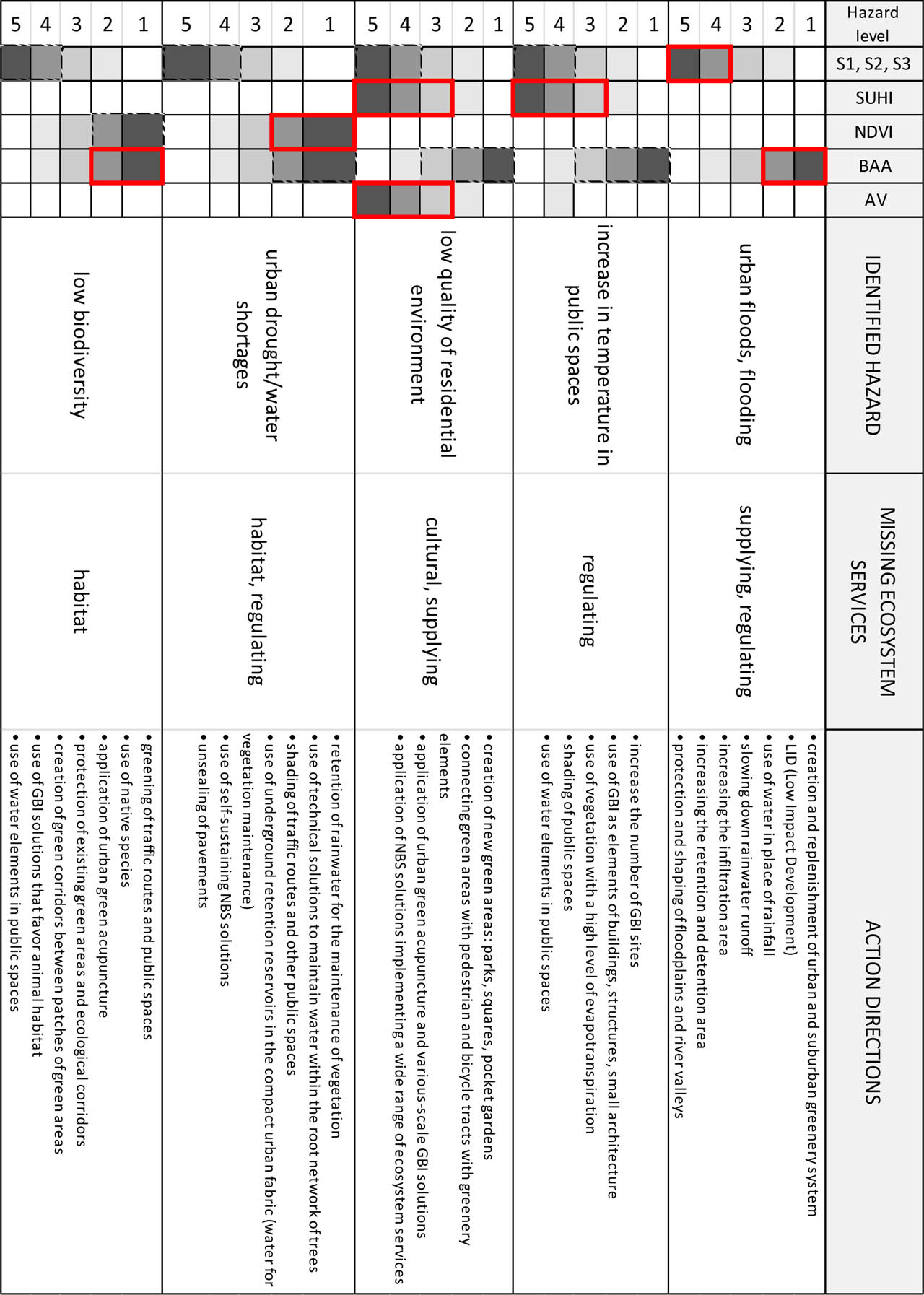
2.2. Importance and interpretation of indicators
Indicators supporting the selection of GBI solutions should comprehensively identify the physical space of occurrence of hazards and sensitivities that weaken the city, understood as a multiple complex structure or an organism composed of interrelated networks [Chmielewski 2010; Filip 2015]. The decision-making process aided by indicators helps identify potential hazards as a consequence of climate change or conditions that intensify its effects in urbanized space. Seven main indicators, supplemented by four additional ones, were analyzed across four cities: Olsztyn, Rzeszów, Sztum, and Bielsko-Biała. The results of the study in this paper are presented based on the city of Olsztyn only.
2.3. Surface sealing
In the first group of indicators, the density of sealing was addressed, which has become an important issue within the contemporary context of climate change. Strong surface sealing generates numerous environmental challenges in cities, including the SUHI effect associated with the intense heating of artificial surfaces. Additionally, the overload of the sewage system caused by the rapid runoff of rainwater over sealed surfaces leads to more frequent floods. Sealing analysis allows for the identification of built-up areas or surfaces that are impermeable to rainwater infiltration or allow infiltration to a very limited extent. As part of the sealing analysis, four indicators concerning spatial units were determined and interpreted:
a) S1: The average sealing level describes the percentage value of average sealing for all surface types and land cover types, including green areas, relative to the spatial unit area. This allows for a preliminary estimate of the condition of the city unit's surface coverage causing rapid runoff of rainwater into the sewage system, and therefore the amount of rainwater that cannot be infiltrated. The indicator ranks districts in terms of the level of occurrence of the sealing problem, but taken alone it cannot be the basis for selecting adaptation actions: areas with significant disparities in land use result in a high generalization of the indicator. A low level of the indicator may indicate a large area of green spaces within the unit, but it does not exclude the occurrence of sealed areas requiring intervention.
The average sealing level (S1) was calculated based on the raster database of the Copernicus Program, determining the percentage of sealed surfaces within raster pixels, and it is calculated according to the formula:
where n – number of observations: the number of pixels in a district, and xi represents single observations xi...xn: the average sealing value for a single pixel.The sealing density is in the range from 0% to 100%, with a spatial resolution of 10 m.
b) S2: The average sealing intensity level describes the average sealing level for sealed areas relative to the spatial unit. The indicator does not include non-sealed areas such as agricultural land and green areas, so it more accurately depicts the actual level of sealing within urban areas. The amount of the indicator identifies the scale of the problem but does not define the phenomenon of sealing in a quantitative context. The indicator does not differentiate areas by land use type, so the selection of solutions specific to dense urban development and areas covered with impervious surfaces must be further differentiated by indicator S4 and is dependent on the predominant type of development within a given area. The average sealing intensity level was calculated according to the formula for S1, except that it applies to areas with soil sealing ranging from 1% to 100%, with a spatial resolution of 10 m.
c) S3: The ratio of sealed areas with a value of more than 60% in relation to the area of the auxiliary unit informs about the coverage of the area of this unit with a sealed area with low and very low levels of rainwater infiltration. A high level of the indicator indicates a large amount of impervious surfaces in the unit or dense development, so it determines the quantitative range of measures needed to be implemented. Like the average sealing intensity index, the index does not distinguish between land developed with buildings and land sealed by impervious pavement. This information is supplemented by indicator S4.
The ratio of sealed areas with a value of more than 60% in relation to the area of the spatial unit, is calculated according to the formula:
d) S4: The ratio of built-up areas to sealed areas with a value of more than 60% in relation to the area of the auxiliary unit differentiates areas developed with buildings from areas covered with impervious surfaces, therefore complementing the other indicators related to sealing. The indicator allows directional differentiation of solutions for dense development and for sealed soil covered with impervious surfaces. A high value of the indicator indicates a high density of development, while a low value of the indicator indicates the predominance of impervious surfaces that are distinctive for the infrastructure accompanying the built-up areas and for communication areas.
The ratio of built-up area to sealed areas with a value of more than 60% in relation to the area of the spatial unit [S4], is calculated according to the formula:
Indicators S1, S2, S3, and S4 depicting the level of sealing in auxiliary units complement each other, so they should be considered together. Indicator S1 forms the basic ranking for units, prioritizing actions. Activities in units with the highest value of sealing rates should be undertaken first. In these areas, there is a tendency for soil sealing hazards to deepen most rapidly. Units with a high S2 indicator require intensified and efficient measures in terms of rainwater infiltration, including spot measures targeting areas with the highest sealing. In units characterized by a higher S3 index value, point and systemic measures should be taken in parallel, since there is a sealing problem which is widespread and applies to areas of significant size.
Indicator S4 distinguishes whether buildings or other impervious surfaces predominate in a sealed area. A value S4 > 50 % signifies that buildings occupy more than half of the impervious area, whereas S4 < 50 % indicates that pavements, roads, or other non building surfaces dominate. Because no universal threshold exists for this indicator, the 50 % cut off was chosen pragmatically, guided by related research. For example, Tang et al. [2025] analysed the cooling effects of 40 urban green spaces and found that heat mitigation benefits varied with the “core proportion” of green space; cooling performance plateaued when the core proportion was around 20%–55 % and increased markedly beyond 55 %. This suggests that mid range thresholds around 50 % can mark shifts in thermal performance. Similarly, Mehrotra et al. [2019] used the Built Coverage Ratio (BCR) to explain urban heat island intensity; they reported that increases in built up fractions (particularly when built ratios exceeded 50 %) were associated with heightened microclimate stress in heterogeneous urban forms (see their geographically weighted regression results). Xu et al. [2023] compared satellite and GIS based local climate zone (LCZ) classifications for Guangzhou; LCZ schemes differentiate compact and open building forms using density thresholds that often hinge on or exceed 50%, distinguishing heavily built up zones from green or low density areas. Collectively, these studies justify using a midrange (around 50%) benchmark to indicate when buildings rather than other impervious surfaces dominate.
The high value of the S4 indicator should target solutions to those using building elements to create green roofs and walls, as well as the use of green vertical elements overgrown with climbing plants in public spaces, especially in the space of road lanes. The low value of the S4 index requires intensive greening and unsealing of the land, e.g., by replacing surfaces to allow full or partial infiltration of rainwater. The high level of sealing indexes, combined with the presence of a SUHI, requires immediate action to reduce the temperature in public spaces.
2.4. SUHI
As a result of the presence of surface sealing and buildings accumulating thermal energy, the temperature in specific areas in the city is higher than in suburban and rural areas, causing the so-called effect of a UHI [Zhou 2015]. An increase of the temperature of the ground surface has significant implications for the city's ecological system and causes changes in the structure of this system. Among other things, it affects the hydrological situation, soil properties, and the health of citizens [Yang et al. 2016]. High temperatures also affect the functionality and usability of public spaces, especially those intended for pedestrians, which are more often and more willingly used if they provide thermal comfort to the users [Kleerekoper et al. 2012]. The indicator determining the occurrence of SUHIs in the city was defined as the ratio of the SUHI area to the area of the spatial unit. The extent of the heat island was increased by a 100-m buffer around the designated high-temperature areas. The indicator identifies spatial units, particularly affected by higher temperatures, where it is necessary to implement systemic solutions to reduce the amount of accumulated thermal energy. A high SUHI correlates with high sealing rates, so the key objective of the solutions used for high SUHI values should address solar reflection or shading, as well as cooling by the evapotranspiration process. This approach requires the use of appropriate qualitative selection of vegetation (species, habit, height) and the selection or replacement of structural and material solutions for canopies of large-scale facilities and building roofs.
2.5. Green areas: BAAs, availability, and condition of plants
Urgent implementation actions are required in areas where a high level of sealing-related risk and a low number of BAAs are observed simultaneously. The shortage of BAAs contributes to exacerbating the negative consequences of soil sealing. Reducing the negative effects of rapid urbanization and consequent urban sealing requires solutions that emulate natural hydrological processes, especially through urban greening and sustainable stormwater management [Artmann 2016]. Urban greening is significant due to numerous ecosystem benefits and its positive impact on residents' well-being and health [Jim et al. 2004]. The BAA index was used to determine the quantitative status of areas providing plant vegetation in the city. This indicator illustrates the ratio of such areas to the total area of a spatial unit. A high level of the indicator points to a significant proportion of biologically active land in the spatial unit. BAAs are crucial for determining the city's adaptability level and sensitivity to climate change and involve a wide range of ESS. Greening practices are aimed not only at using rainwater in rainfall places, but also at purifying the air, lowering the temperature, and creating a good quality living environment. It is therefore important to select solutions that make wide use of GBI elements. These can be spot actions called green acupuncture in the existing urban fabric or the designation of new green areas in the city. Actions should achieve goals such as increasing biodiversity and integrating fragmented habitats resulting from urban structural development. The BAA index should be considered in conjunction with the NDVI, used to detect vegetation coverage of the terrain and assess its condition. Values of the calculated NDVI index range from −1 to 1. Values of the index for vegetation-covered areas have positive values between 0.2 and 1 [Bhandari et al. 2012]. The NDVI was calculated as the ratio of the area where NDVI exceeds 0.2 to the area of the spatial unit, allowing the indication of vegetation cover at least in good condition. The interpretation of the NDVI combined with the biologically active land area index served as a determinant of the risk associated with low vegetation quality caused by factors such as urban drought and low biodiversity.
The last of the indicators identifying potential threats is the green-space AV index. Accessibility to green spaces is currently one of the determinants of the so-called 15-minute city, indicating a functional living environment in the city. Contact with nature, located directly adjacent to residential areas, is essential for maintaining the mental well-being and mitigating environmental stress of residents [Gidlöf-Gunnarsson, Öhrström 2007]. The accessibility of green spaces in cities is now a key area of planning considerations. In many cities, recommendations are emerging regarding the minimum distance between residential areas and green spaces [Kabisch et al. 2016]. The green spaces AV index was calculated as the ratio of the area of residential zones not covered by a 300-m accessibility buffer to the total area of residential zones. A high AV index indicates a large area of residential areas located more than 300 m away from green spaces. Low accessibility requires organizational actions to designate new urban green spaces or transform existing areas towards greening. If the area is heavily urbanized, green acupuncture should be intensified so that small-scale solutions such as pocket parks can supplement missing ESS.
2.6. Auxiliary indicators
In addition to the threat indicators, additional auxiliary indicators defining local conditions were determined. To diagnose constraints and potentials, the dominant type of development for each spatial unit was identified, as well as the area of parking spaces and the share of historic buildings in the built-up area.
Parking area (P) measures the share of parking in the spatial unit. The United Nations' “Five Principles” for sustainable neighbourhood planning note that efficient street networks and parking typically require 20%–30% of urban land, rising to 40%–60% in commercial centres [United Nations Human Settlements Programme (UN Habitat). A New Strategy of Sustainable Neighbourhood Planning: Five Principles. UN Habitat, 2014]. So, a provisional threshold of P > 20% was adopted.
Indicator HB expresses the proportion of buildings subject to heritage or conservation protection. Given the wide variation in protection criteria and inventories across countries and districts, an illustrative threshold of HB > 10% is applied. In Trondheim, Norway, heritage protected buildings make up about 10% of the building stock, but this is not typical across Europe [Bjelland et al., 2025]. A 2022 report for the Concerted Action on the Energy Performance of Buildings Directive notes that approximately 35% of EU buildings are over 50 years old and that member states lack consistent data on heritage buildings. Therefore, any quantitative threshold should be adapted to local and national contexts, considering both the age of the building stock and the extent of conservation regulations.
The existing development of urbanized space can significantly limit or disable the application of specific GBI solutions within a given spatial unit. The dominance of compact urban development indicates the need for small-scale but systemic solutions that have a small footprint, allowing for the integration of diverse functional and transportation needs. It is also necessary to use vertical elements and fragments of buildings or structures for greening. In such spaces, small-scale solutions with a wide range of ESS or linear actions that connect and allow movement between larger patches of green spaces work best. Residential multifamily housing poses challenges in shaping public and semi-private green spaces with strong public support and advocacy. The solutions can cover a larger area and contribute more to improving biodiversity in the city. At the same time, GBI elements in housing estates should create coherent systems enabling efficient management, including stormwater management. Single-family development requires solutions tailored to the individual needs of private property owners. Regardless of the type of development, education and financial support as well as the dissemination of good practices are necessary, along with linear solutions used in road corridors.
Some areas in the city indicate potential opportunities for systemic action, such as paved parking lots, which can be gradually transformed to achieve a better level of rainwater infiltration. Multihectare parking spaces serve as a surface resource for retaining water in underground tanks. At the same time, through permeable and semi-permeable surfaces, surface runoff of rainwater can be significantly reduced.
3. RESULTS
3.1. Characteristics of indicators for the city of Olsztyn
The city of Olsztyn is located in the northeastern part of Poland. It covers an area of 8832 hectares as a county-level city and serves as the capital of the Warmian-Masurian Voivodeship. It is the central city of the Olsztyn agglomeration. The population for 2022 was 168,21 thousand [BDL 2022]. Population density is 1904.6 people per km2 [BDL 2022]. Olsztyn is dominated by built-up and urbanized land (42.34% of the area) [POŚ, 2020], but there are many green areas located within the city, including 103.05 hectares of walking and recreational parks and 1351.64 hectares of communal forest land, which shapes the ratio: 80.4 m2 of communal forest land per capita [BDL 2022]. A significant part of biologically active land is occupied by land under water: 9.62% [POŚ 2020]. Olsztyn is divided into 23 districts (i.e., local communities of residents). For the city of Olsztyn, indicators were calculated according to the methodology's specified division into five groups: sealing (indicators S1, S2, S3, S4), SUHI, BAA, NDVI, and AV. The purpose of using the indicators is to identify potential threats, which are the basis for determining the ESS that are missing in the area and need to be introduced. The types of threats and missing ESS, in turn, form the basis for determining strategic directions of action, within which subsequent implementations of GBI should be carried out.
The average sealing level S1 in the city of Olsztyn is 5.3%– 55.4% and is much lower than the average sealing intensity level S2, which is 37.6%–71%. The difference in the value of S1 and S2 indicators reflects the occurrence of spatial units within the city with a significant number of green areas and the need to differentiate the intensification of activities in the individual areas. A statistical outlier value of the U2 indicator shows the occurrence of a spatial unit where a particular threat associated with strong sealing has been diagnosed. At the same time, the strong sealing density (> 60%) of most spatial units does not reach 30% of their area. The S4 index at 45%–65% for most spatial units shows the predominance of built-up area over sealed surface. GBI solutions should therefore include the adaptation of facilities and building elements as an important support for the GBI system. The outliers for the SUHI index reveal the presence of two spatial units under the strong influence of the SUHI. The index of the amount of BAA in the spatial unit represents a wide range of values, which indicates the significant diversity of land use in the city area. The irregular distribution of values of the AV index indicates unequal access to green space for residential areas in the individual spatial units. A statistical chart of indicator values for the city of Olsztyn is illustrated in Figure 1. A summary of the indicators for each spatial unit is illustrated in Figure 2 and Table 3.
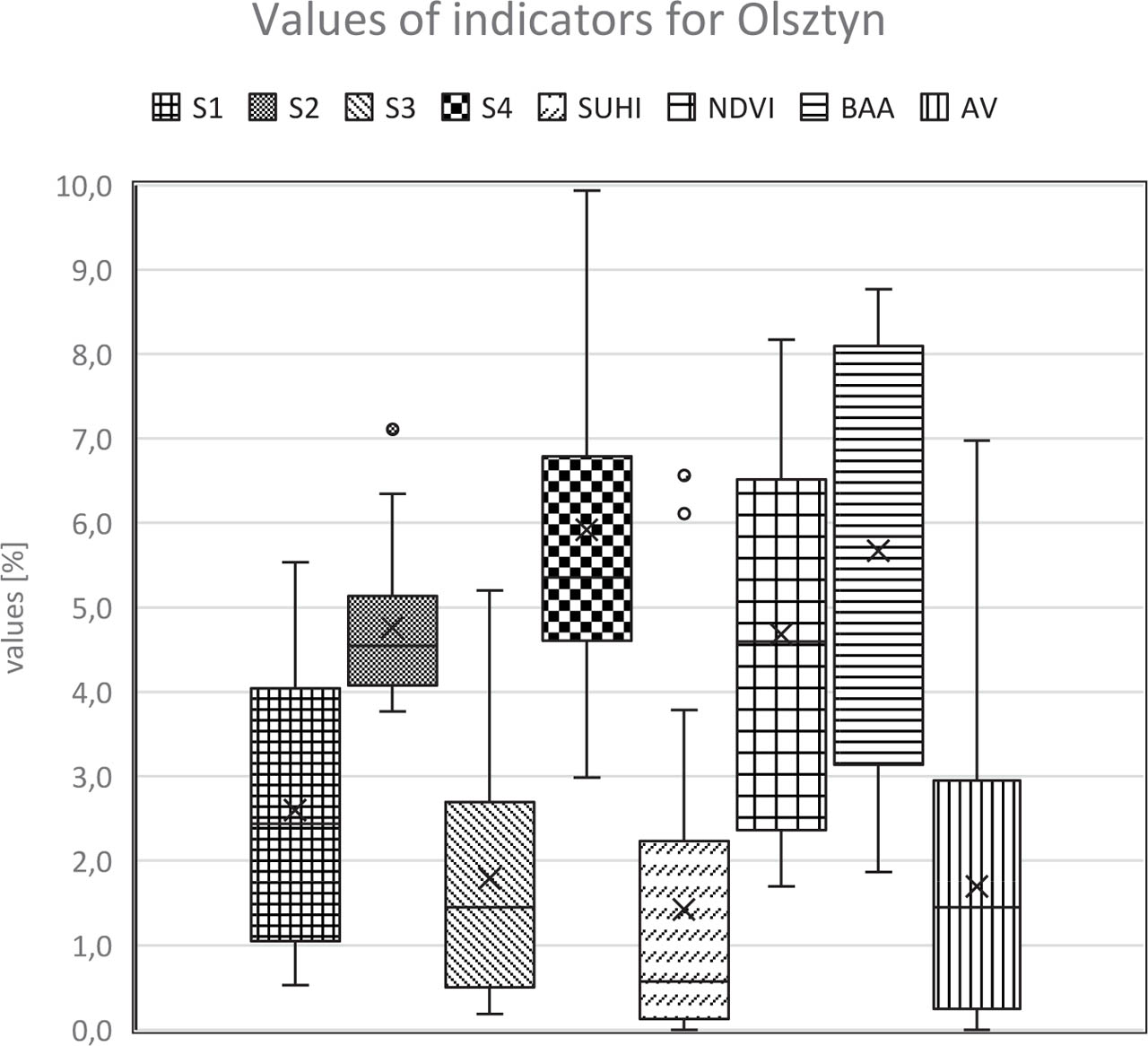
Figure 1.
Statistical chart of indicator values for the city of Olsztyn. The graph shows the distribution of data in quartiles, distinguishing the mean (−), median (x), and outliers (single dot). Vertical lines mark the range of values from minimum to maximum, and any point that lies outside the lines is an outlier.
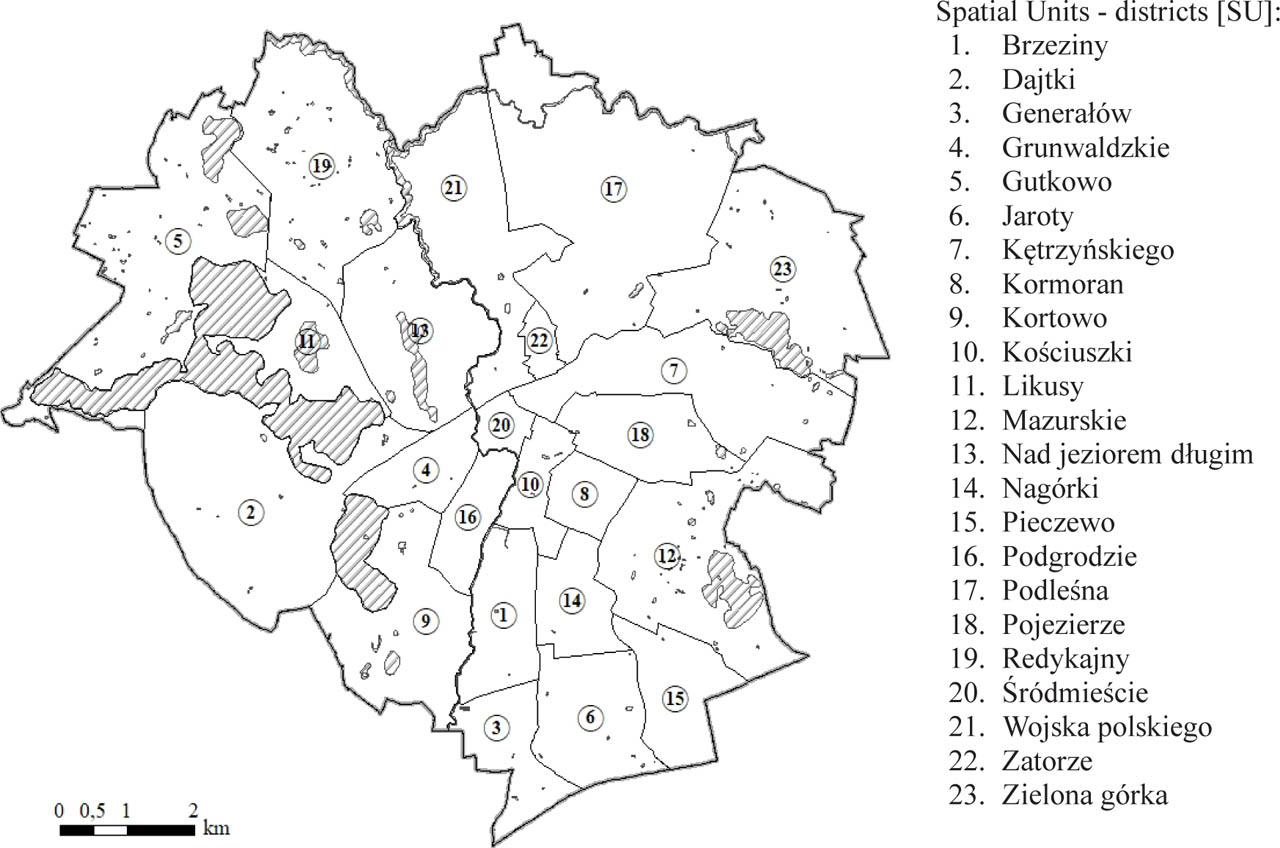
Figure 2.
Map of Olsztyn divided into spatial units. Based on the BDOT10k database
Table 3.
Indicators calculated for the spatial units of the city of Olsztyn: degree of hazard intensity
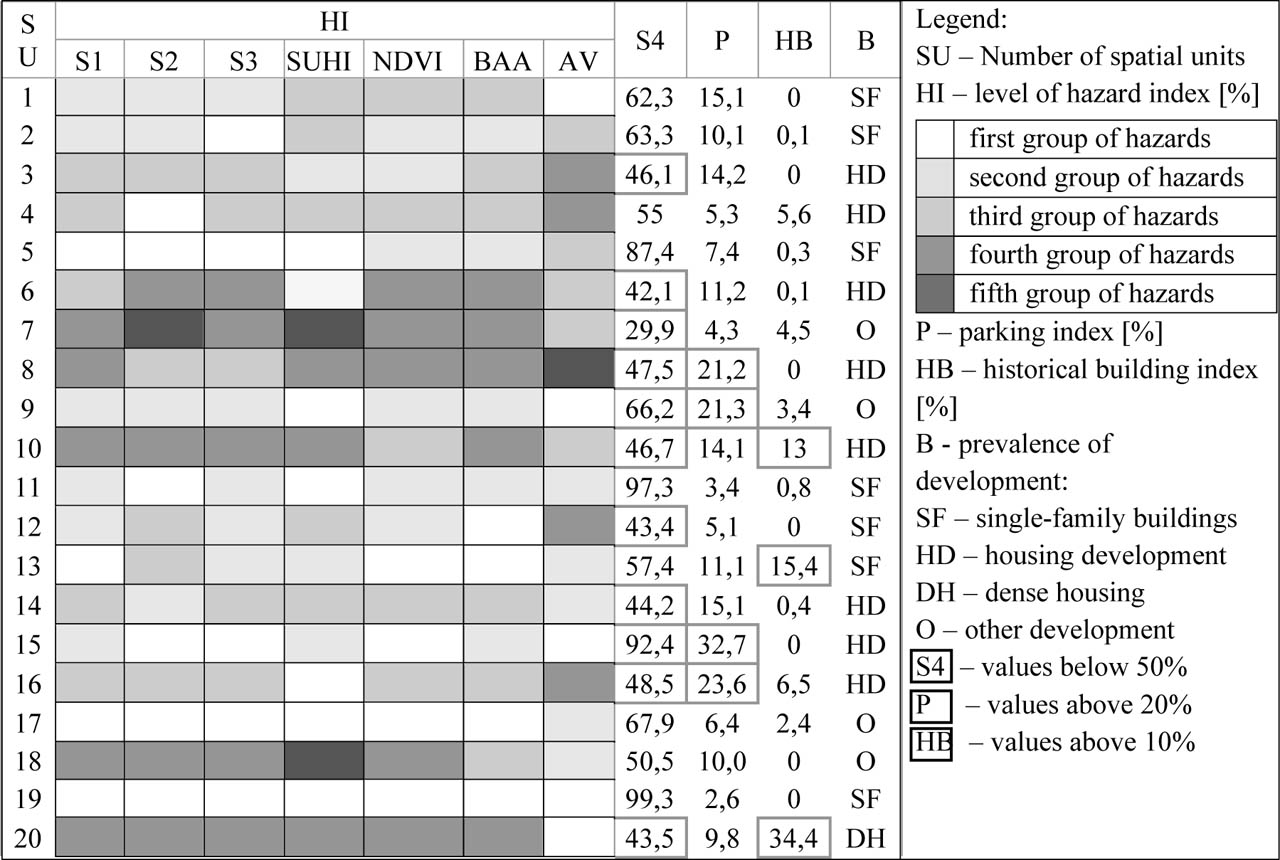
Olsztyn's spatial units are variable in terms of the intensity of risks occurring (Table 3). In the city space, there are units with a high degree of threat identified using all or most of the applied indicators (SU: 6, 7, 8, 10, 18, 20, 22). Some spatial units show moderate threat levels (SU: 3, 4, 14, 16) or low threat levels (SU: 1, 2, 5, 9, 11, 12, 13, 15, 17, 19, 21, 23). High threat levels concern certain areas with a predominance of neighbourhood (B) development, compact, or other types of development such as industrial. High levels of indicators are not achieved for areas with predominantly single-family housing. Sealing indicators S1, S2, and S3 are diverse concerning each other: when selecting detailed solutions, they should be interpreted together with indicator S4 determining the predominance of buildings (S4 > 50%) in the sealed area or the predominance of tight surfaces in the sealed area (S4 < 50%). Targeted solutions should also be diversified based on the potential surface area of spaces that can be unsealed, such as parking areas (P > 20%), or due to the presence of a large number of buildings under conservation protection (HB > 10%). All high-hazard spatial units are characterized by two or more high sealing index values. High threat level due to the presence of the SUHI correlates with strong soil sealing but does not apply to all heavily sealed areas. A high S4 indicator particularly concerns areas with predominantly single-family housing. A U4 indicator value below 50% indicates extensive infrastructure accompanying urban development that needs to be unsealed.
The districts subject to the highest threat are characterized by high values of most indicators; however, the intensity of the problems varies. The method adopted in the work assumes a combined interpretation of indicators within the city's spatial units. This not only leads to setting priorities for action but above all to diversifying solutions and determining strategic directions that differentiate actions.
4. DISCUSSION
The article presents a method for selecting GBI solutions in a strategic scope to guide and prioritize specific adaptive action packages. The proposed method is one stage of the decision-making process, supporting the management and planning of GBI systems in cities. The method relates to the analysis of the city's physical space, elements of which can increase or decrease the city's sensitivity to the negative effects of climate change. Proper identification allows for aligning goals and action directions appropriate to the conditions of individual spatial units within the city. However, effective management of GBI in cities requires combining the proposed method with parallel or subsequent actions involving complementary aspects. Identifying specific GBI solutions should always be preceded by an analysis of individual conditions for a given location, such as existing land use, network location, soil quality composition, surface water level, spatial character, available area size, ground filtration coefficient, legal regulations, residents' safety, and others [Kordana, Słyś 2016].
Further complementary elements, but necessary in selecting GBI solutions based on ESS, include the assessment of economic and social aspects [Syrbe, Walz 2012]. One of the most advantageous methods for achieving appropriate solutions is stakeholder participation. When using the proposed methodological approach, the above aspects should be considered to ensure that the process is fully adapted to individual urban conditions. In addition to the indicated contexts necessary for analysis, the method can be supplemented with additional elements such as multicriteria analysis, a method commonly used in a strategic approach to selecting solutions implemented in cities, including green and blue solutions. The multicriteria analysis allows for prioritization of the selected scope of actions or identified threats based on weights assigned by stakeholders or beneficiaries [Saaty 2003]. This method creates a hierarchy of actions based on the municipality's possibilities, not only spatial but also social, financial, and economic. However, the application of multicriteria analysis in the decision-making process regarding the selection of GBI is not sufficient and usually refers only to the use of a single ecosystem service dedicated to implementation [Croeser et al. 2021]. Multicriteria analysis, which is not preceded by spatial diagnosis, relies on an intuitive approach, depending on the level of knowledge and experience of the participants of analysis. The method described in the article, based on scientific foundations, can be a tool for local governments to support decision making regarding the selection of adaptive actions.
Therefore, the described research aimed to identify physical conditions for which the best diagnostic method is GIS-based analysis, which is crucial for identifying and spatially locating in a given landscape context [Sarabi et al. 2019]. The described method does not exclude other elements related to the selection of adaptive actions but serves as a basis for them and determines the framework. The GIS-based method, although rarely used in the selection of adaptive actions, allows for their proper placement and selection. Multicriteria analysis should be the next stage and simultaneously the stage preceding the implementation of specific actions to ensure that the final solutions also consider the impact of factors other than physical on the city, as well as to take into account the dynamics of changes over time. The variability of conditions poses a challenge for further monitoring of the urban fabric of the city and transformations, which are an integral part of its development. In the context of updates, relevance, and data quality, the adopted method poses a challenge related to the adequate utilization of existing databases tailored to the need. The choice of data will determine the quality of the work outcome, its accuracy, or reliability. Moreover, it may influence the choice of adaptation direction in the final stage of the process and ultimately its success [Głogowska, Bronder 2019].
Calculating indicators should be automated as much as possible in a given city. However, the final results must reflect the actual situation of the described area, so they should be adjusted to the city's circumstances, thus requiring expert processing of calculations. Additionally, the specificity of the urban area sometimes yields distorted calculation results should be considered. An example of this is the NDVI indicator, where satellite imagery, even with an accuracy of up to 10 m, will provide averaged values for individual raster pixels, which in turn may lead to false interpretations of this indicator.
The described research shows that a quantitative approach, supplemented with qualitative data regarding the selection of solutions, planning, and management based on ESS, can be an effective tool. This is due to the spatial specificity of these services. Additionally, their mapping can aggregate complex information [Burkhard et al. 2012]. The presented method complements spatial approaches, which not only identify urban areas sensitive to the negative effects of climate change but also allow for planning actions in these areas.
5. CONCLUSIONS
The interaction between the climate and the urban structure of the city occurs in two directions. On the one hand, weather conditions affect the functioning of the city, and on the other hand, its spatial layout and land use methods affect the regional climate [Yang et al. 2016]. Cities are faced with the need to adapt to climate change by strengthening their resilience and maintaining a balance between the dynamics of development and the protection of the natural environment. The effects of increasing urbanization compound the risks of climate phenomena, which are increasingly violent. The process of incorporating adaptation actions into the city's policies, considered as a response to the challenges, is multidimensional and should have at its core a diagnosis of spatial conditions [Ven 2015]. Selecting appropriate adaptive solutions that fit local conditions and needs, and address emerging threats, is crucial for ensuring their effectiveness. One of the priority directions for adaptive action is the use of GBI elements directly within the urban structure, as well as the protection of existing ecological networks. The need for location-specific and strategically targeted actions in the urban environment, based on nature, is emphasized by many researchers [Croeser et al. 2021; Wickenberg et al. 2021; Gonzalez-Ollauri et al. 2023]. It is also necessary to combine GBI to enhance the ESS needed to weaken the city's sensitivity to the effects of climate change and also to enhance the quality of the living environment. The selection of activities must therefore be correlated with the spatial distribution of risks, tailored to scale and conditions [Gonzalez-Ollauri et al. 2023], and at the same time should provide the widest possible range of ESS. When planning the development of GBI, it is necessary to compromise on the benefits of solutions, so the identification of priority directions becomes essential. The paper proposes a method for selecting solutions using selected indicators that determine the potential spatial distribution and intensity of threats. They make it possible to indicate the dominant type and scale of danger in each spatial unit of the city. In the described studies, indicators from the sealing group, SUHI, accessibility to green areas, BAAs, and NDVI were used to select solutions. The indicators were defined and calculated in such a way as to describe the physical space of the city as fully as possible while taking into account various aspects of this space. Spatial analysis of the city of Olsztyn made it possible to determine the type of ESS that should be developed in a given place and, consequently, what strategic directions to adopt for selecting green and blue solutions. Despite limitations related to accuracy, timeliness, and access to detailed spatial data specific to each city, the indicator-based method is the right approach for describing the city's physical space and locating adaptive actions. It can be applied to cities with access to publicly available data sources, such as those in most European cities. The proposed method can be a supportive tool for spatial planning, especially in terms of managing, conserving, and developing GBI. Further refinement of the method with participatory elements and detailed analysis of conditions for implementing GBI solutions is necessary. Every city has different needs and capabilities, so ultimately, selected solutions should undergo individual analysis tailored to each specific space. Indicators allow for identifying action directions and pointing out problems that, through the appropriate selection of solutions, should be mitigated. The correct application of the method needs to consider indicators collectively, as they complement each other and address various aspects affecting the city's adaptive capacity.
The main purpose of applying the method is to develop an assessment instrument to effectively shape a city management strategy that takes into account its wholeness and resilience regarding potential risks and long-term growth. The creation of such a tool will help effectively support sustainable development and ensure the stability of urban areas in the face of a changing climate. In addition, some of the indicators, such as the share of BAA or the availability of green spaces, can be used in the city's strategic documents to monitor spatial changes. As a result, there is a need to continuously improve this tool to meet the dynamic needs of developing cities and ensure their harmonious and sustainable development.
ACKNOWLEDGEMENTS
The publication is the result of work carried out as part of the “City with Climate” project. The project, which was carried out between 2020 and 2023, was an initiative of the Polish Ministry of Climate and Environment. The aim of the project was to improve the quality of life of city dwellers.
Notes
Communication from the Commission to the European Parliament, the Council, the European Economic and Social Committee and the Committee of the Regions, Green Infrastructure [GI] — Enhancing Europe's ntural capital, 2013.
Concerted Action EPBD. 2022. Implementing the energy performance of buildings directive (CA EPBD). Report. European Commission.
European Commission, Directorate-General for Environment. 2021. EU biodiversity strategy for 2030: Bringing nature back into our lives. Publications Office of the European Union. https://data.europa.eu/doi/10.2779/677548.
European Commission. 2020. Proposal for a regulation of the European Parliament and of the Council Establishing a Recovery and Resilience Facility, Brussels [Proposal].
European Economic and Social Committee. 2021. New EU strategy on adaptation to climate change [Report].
Regulation [EU] 2021/783 of the European Parliament and of the Council of 29 April 2021 establishing a Programme for the Environment and Climate Action [LIFE], and repealing Regulation [EU] No 1293/2013 [Text with EEA relevance] [2021] Official Journal of the European Union, 17/05/2021, PE/14/2021/INIT.