
Table 1
Survey replies distribution by stakeholders’ group
| Stakeholders’ group | Share in the survey population |
|---|---|
| Governmental administration involved in climate policy development and implementation | 30 (27,5%) |
| Governmental administration involved in the EU ETS implementation | 10 (9,2%) |
| Governmental administration not directly involved in climate policy development and implementation | 8 (7,3%) |
| Local authorities | 4 (3,7%) |
| Public research centre providing climate policy assessment | 18 (16,5%) |
| Non-governmental think-tanks providing climate policy assessment | 11 (10,1%) |
| Non-governmental organisation – climate policy | 8 (7,3%) |
| Other | 20 (18,3%) |
[i] Source: own study
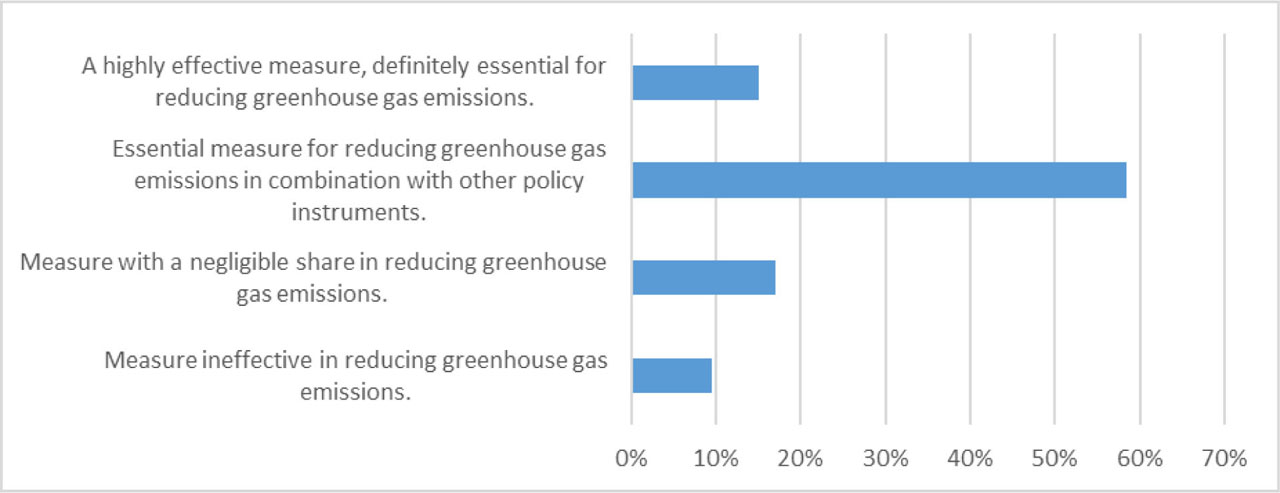
Figure 1
Respondents’ replies to the question “What is your opinion on the EU ETS effectiveness in reaching the EU climate policy emission reduction targets?” (Source: own study)
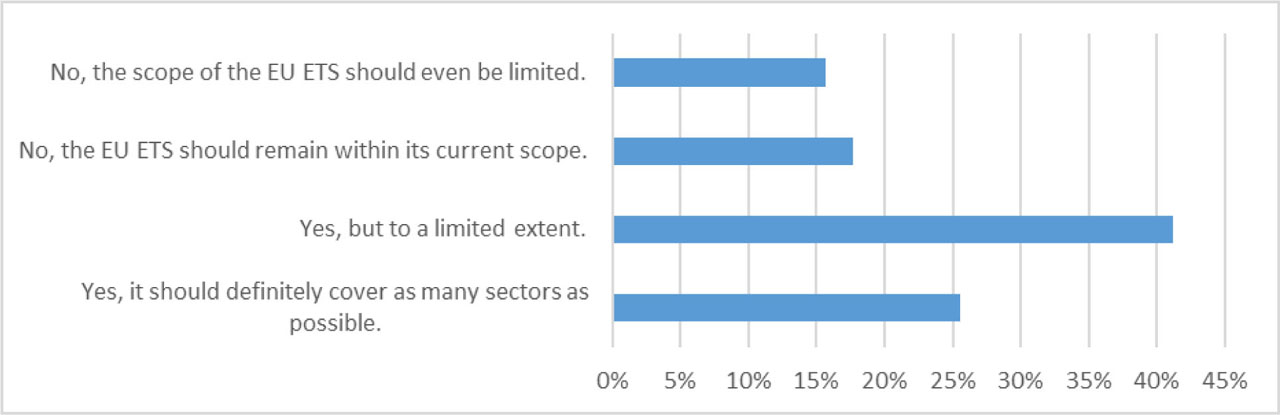
Figure 2
Respondents’ replies to the question “Should the EU ETS be extended to new sectors (e.g. construction, transport, international aviation, municipal and housing sector)?” (Source: own study)
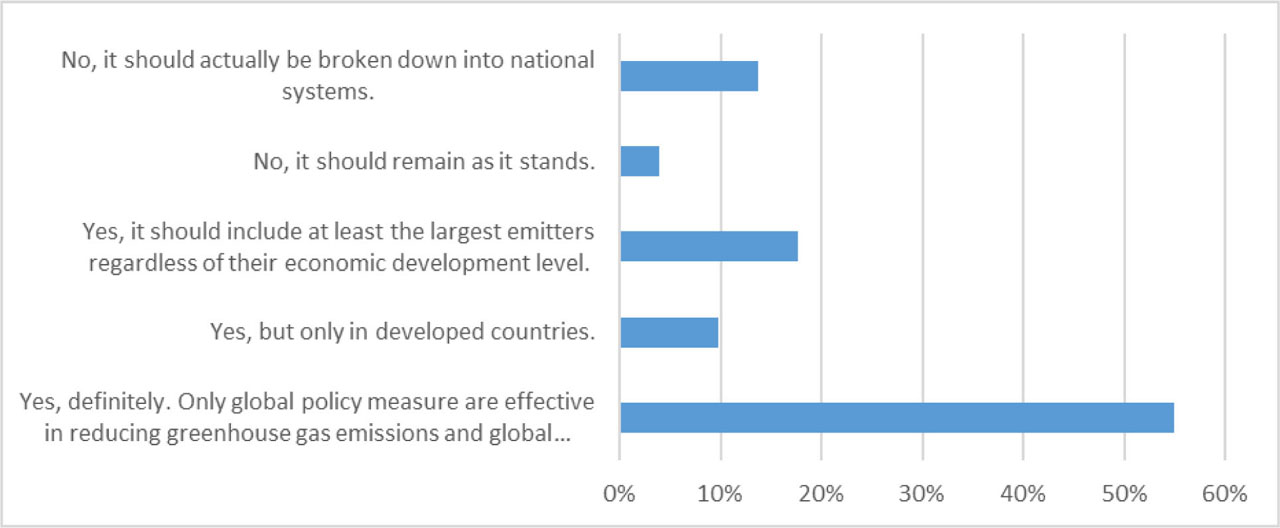
Figure 3
Respondents’ replies to the question “Do you think the EU ETS should be integrated with other similar systems in the world, striving for a global emissions trading system?” (Source: own study)
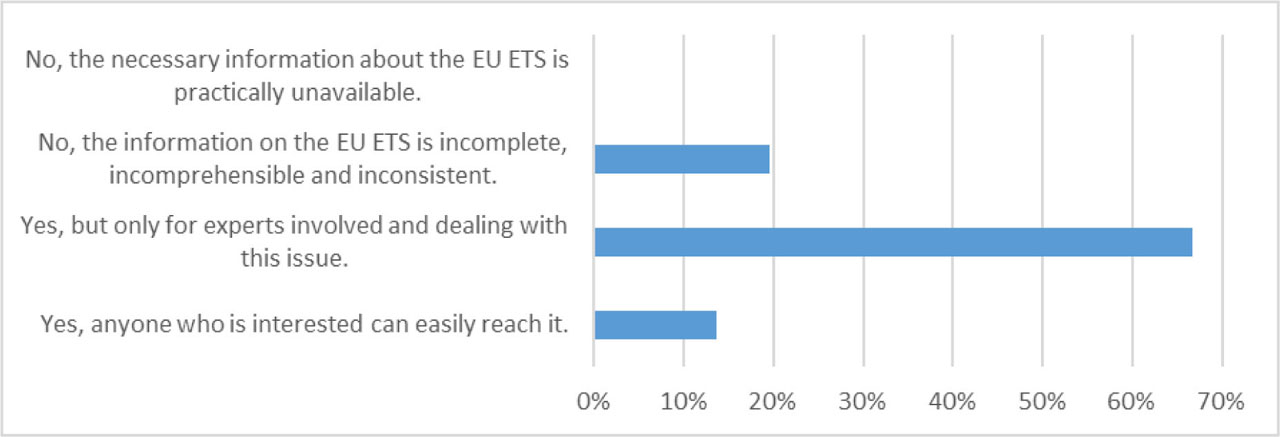
Figure 4
Satisfaction level concerning the available information on the regulations, rules and functioning of the EU ETS. (Source: own study)
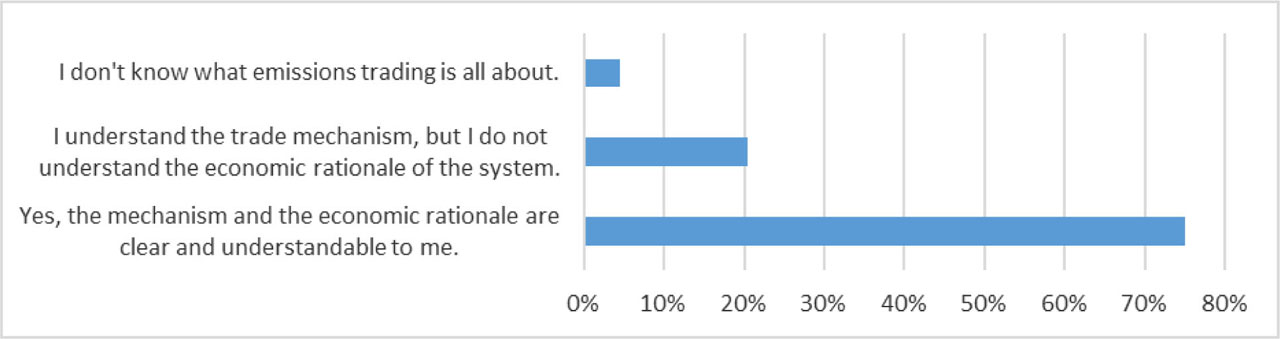
Figure 5
Understanding the mechanism and economic rationale of the emission trading systems. (Source: own study)
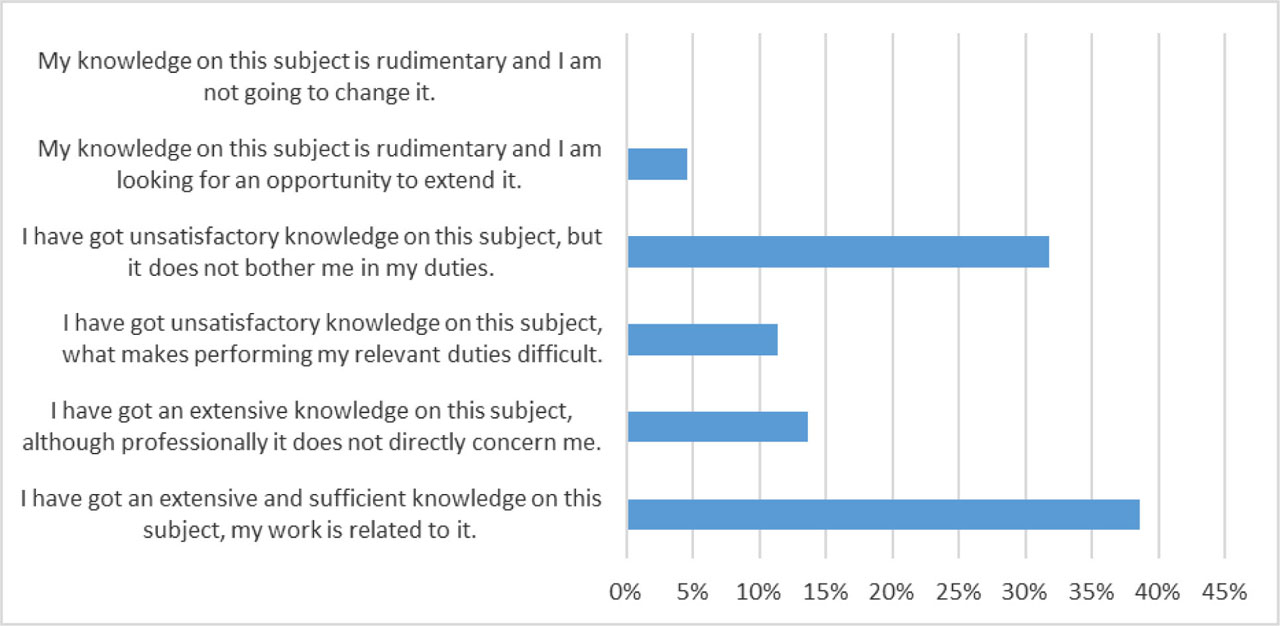
Figure 6
Evaluation of individual knowledge of the EU ETS. (Source: own study)
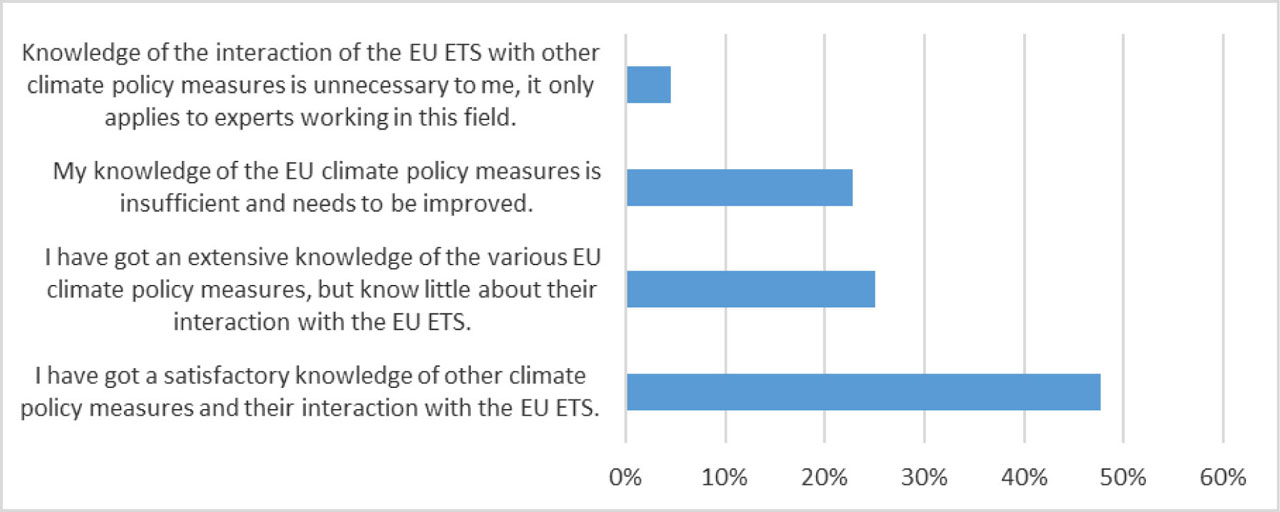
Figure 7
Evaluation of own knowledge concerning the EU ETS interaction with other EU climate policy measures. (Source: own study)
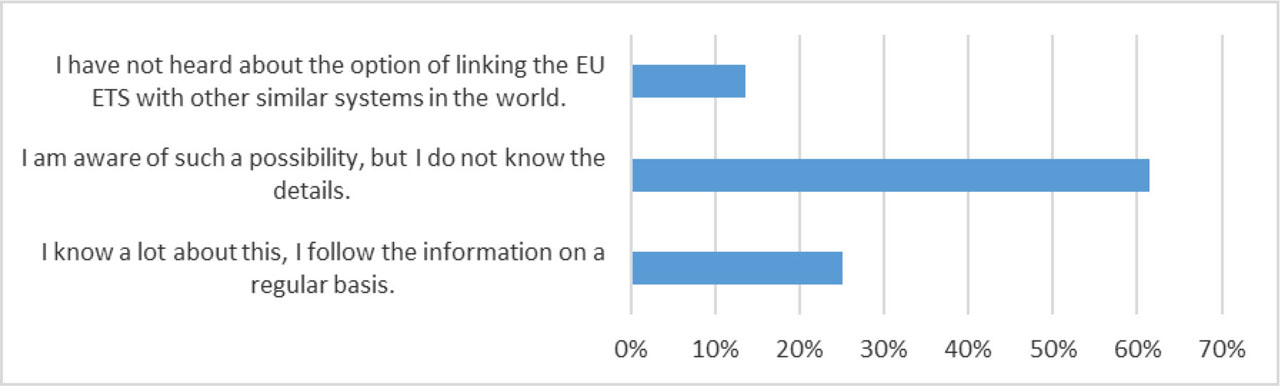
Figure 8
Evaluation of knowledge of the current and future integration of the EU ETS with other emission trading systems in the world. (Source: own study)