
Table 1
Protection status of amphibians in Poland
| Species | Protection Type | Red Data Book of Animals |
|---|---|---|
| Commonfrog (Rana temporaria) | PP | |
| Moor frog (Rana arvalis) | SP | |
| Pool frog (Pelophylaxlessonae) | PP | |
| Marsh frog (Pelophylaxridibundus) | PP | |
| Edible frog (Pelophylaxesculentus) | PP | |
| Agile frog (Rana dalmatina) | SP | NT |
| Common toad (Bufo bufo) | PP | |
| European green toad (Pseudepidaleaviridis) | SP | |
| Natterjack toad (Epidaleacalamita) | SP/A | |
| European common spadefoot (Pelobatesfuscus) | SP | |
| European fire-bellied toad (Bombinabombina) | SP/A | |
| Smooth newt (Lissotritonvulgaris) | PP | |
| Northern crested newt (Trituruscristatus) | SP/A | NT |
| Alpine newt (Ichthyosauraalpestris) | PP | |
| Carpathian newt (Lissotritonmontandoni) | SP/A | LC |
| European tree frog (Hylaarborea) | SP/A | |
| Yellow-bellied toad (Bombinavariegata) | SP/A | |
| Fire salamander (Salamandra salamandra) | PP |
[i] SP – strict protection, SP/A – strict protection requiring active protection, PP – partial protection, NT – near threatened, LT – least concern
[ii] Source: Regulation of the Minister of Environment of 6 October 2014, on the protection of animal species (Journal of Laws No 2014, item 1348), Krzysztofiak L., Krzysztofiak A., 2016. Active protection of amphibians, the “Man and Nature” Association, Krzywe, p. 68, IUCN 2020. The IUCN Red List of Threatened Species. Version 2020-2. https://www.iucnredlist.org.
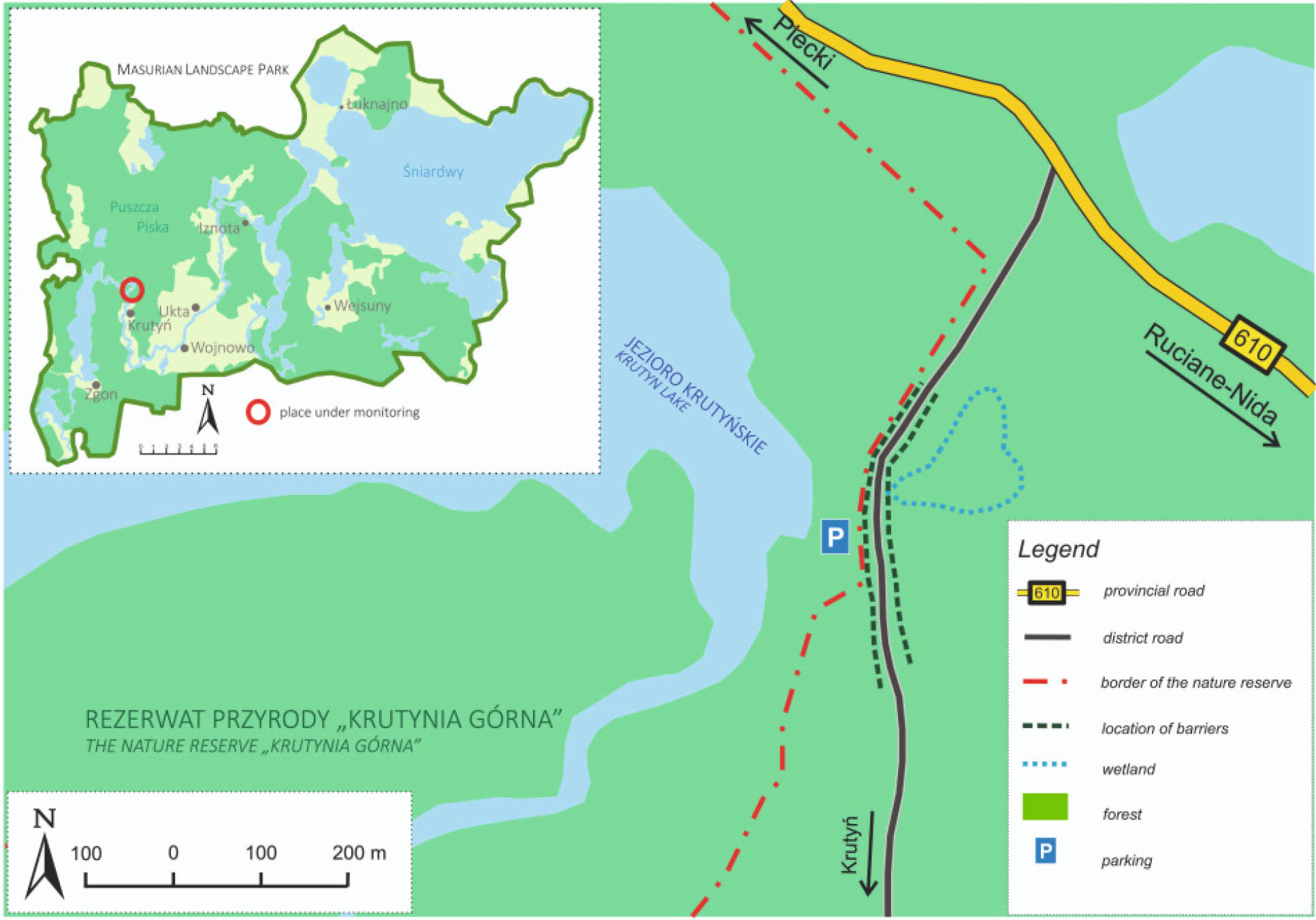
Figure 1
The location of field research
Source: Own research
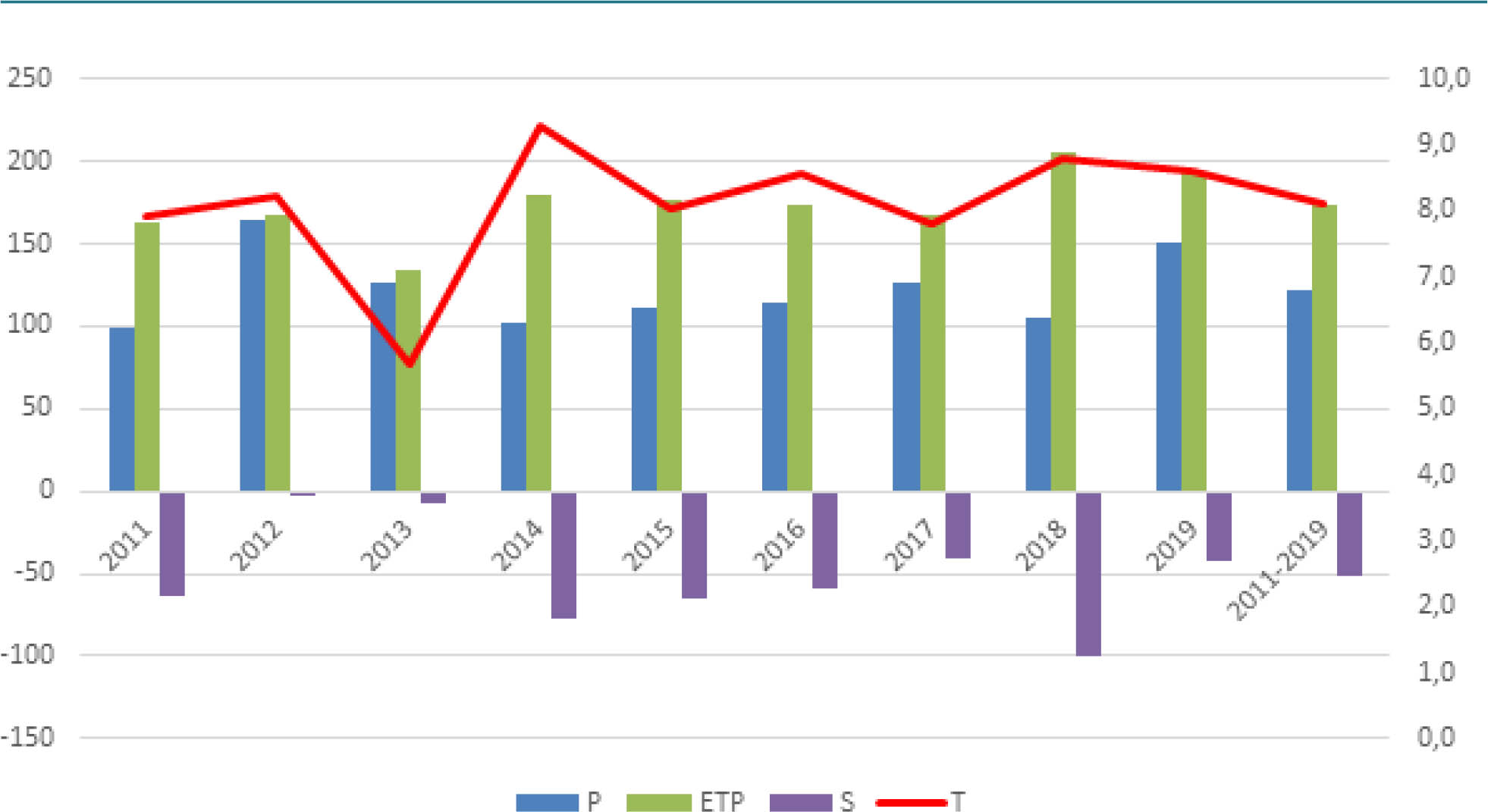
Figure 2
Average annual values of the temperature, total precipitation and the climatic water balance during the spring period (from March to May) in the Masurian Landscape Park in the years 2011–2019. (P – precipitation, ETP – potential evapotranspiration, S – climatic waterbalance, T – the average annual air temperature)
Source: Own research
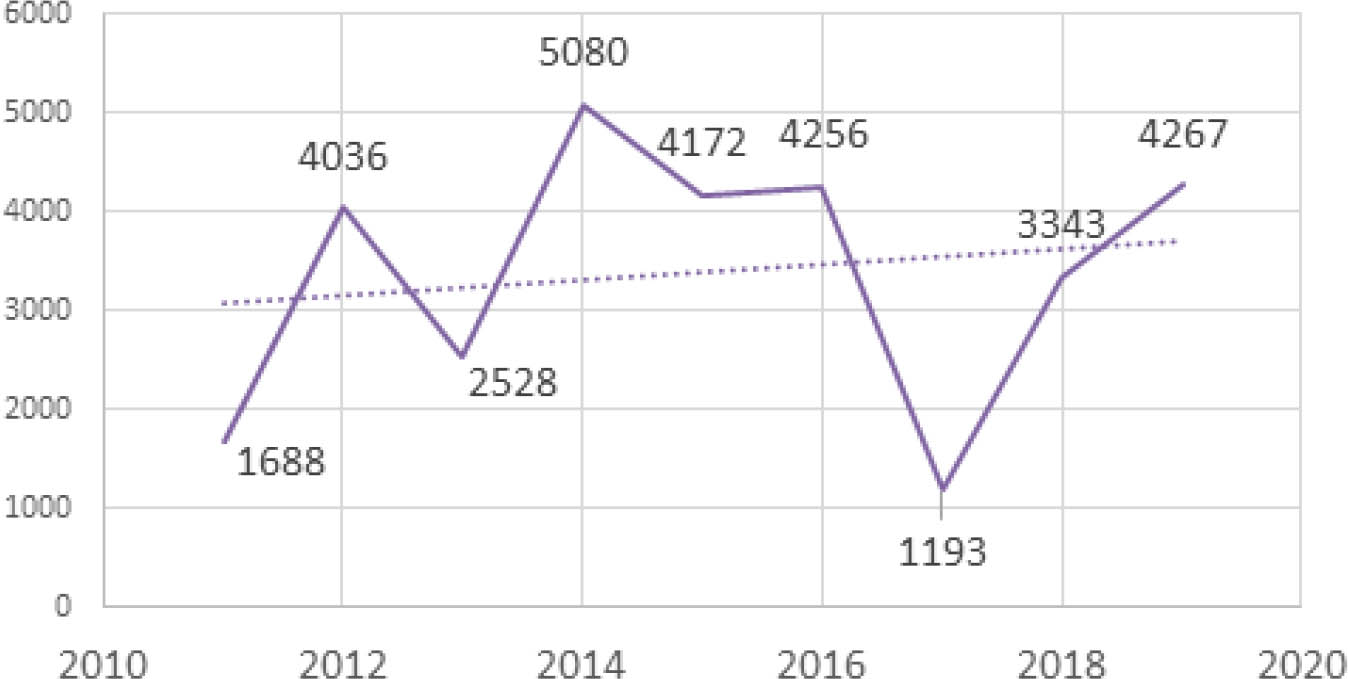
Figure 3
Amphibian population numbers in the years 2011–2019
Source: Own research
Table 2
Amphibian population numbers in terms of affiliation to individual families
| Family | n | % |
|---|---|---|
| True frogs (Ranidae) | 22,253 | 84.9%. |
| True toads (Bufonidae) | 3,208 | 12.2% |
| True salamanders and newts (Salamandridae) | 649 | 2.5% |
| European spadefoot toads (Pelobatidae) | 92 | 0.3% |
| Firebelly toads (Bombinatoridae) | 17 | 0.1% |
| Tree frogs (Hylidae) | 4 | 0.02% |
| Total | 26,223 | 100.00% |
[i] Source: Own research
Table 3
Population numbers for individual amphibian species in the years 2011–2019
| Species | 2011 | 2012 | 2013 | 2014 | 2015 | 2016 | 2017 | 2018 | 2019 |
|---|---|---|---|---|---|---|---|---|---|
| Rana temporaria | 684 | 2,730 | 1,458 | 3,620 | 2,631 | 2,871 | 466 | 1,011 | 204 |
| Rana arvalis | - | 81 | 2 | 124 | 468 | 554 | 200 | 1,368 | 3,026 |
| Pelophylaxlessonae | - | 2 | 17 | 48 | 330 | 49 | 50 | - | 230 |
| Pelophylaxridibundus | - | - | - | - | 17 | - | 31 | - | - |
| Pelophylaxesculentus | 449 | 520 | 640 | 890 | 219 | 134 | 135 | 454 | 305 |
| Bufo bufo | 535 | 649 | 374 | 342 | 380 | 263 | 259 | 401 | 299 |
| Pseudepidaleaviridis | - | - | - | - | - | - | - | 4 | 1 |
| Epidaleacalamita | 1 | - | - | - | - | - | - | - | - |
| Pelobatesfuscus | 1 | 5 | 11 | 6 | 17 | 4 | 21 | 27 | 7 |
| Bombinabombina | - | - | 3 | 2 | 2 | - | 5 | 5 | 1 |
| Lissotritonvulgaris | 17 | 31 | 17 | 48 | 108 | 358 | 17 | 39 | 147 |
| Trituruscristatus | 16 | 6 | - | 23 | 8 | 34 | 47 | ||
| Hyla arborea | 1 | 2 | - | - | - | - | 1 | - | - |
| Total | 1,688 | 4,036 | 2,528 | 5,080 | 4,172 | 4,256 | 1,193 | 3,343 | 4,267 |
[i] Source: Own research