Have a personal or library account? Click to login
New chamber stapes prosthesis: Effect of ionizing radiation on material and functional properties Cover

New chamber stapes prosthesis: Effect of ionizing radiation on material and functional properties

Open Access
|Nov 2024

Figures & Tables

Fig. 1.

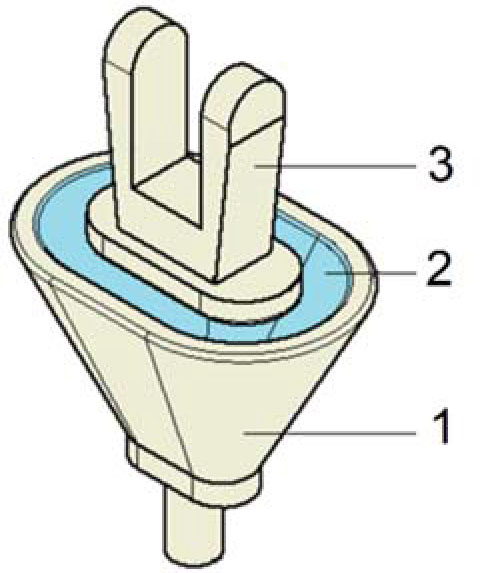
Chamber stapes prosthesis. 1 – chamber, 2 – flexible membrane, 3 – rigid plate as a function of applied field.
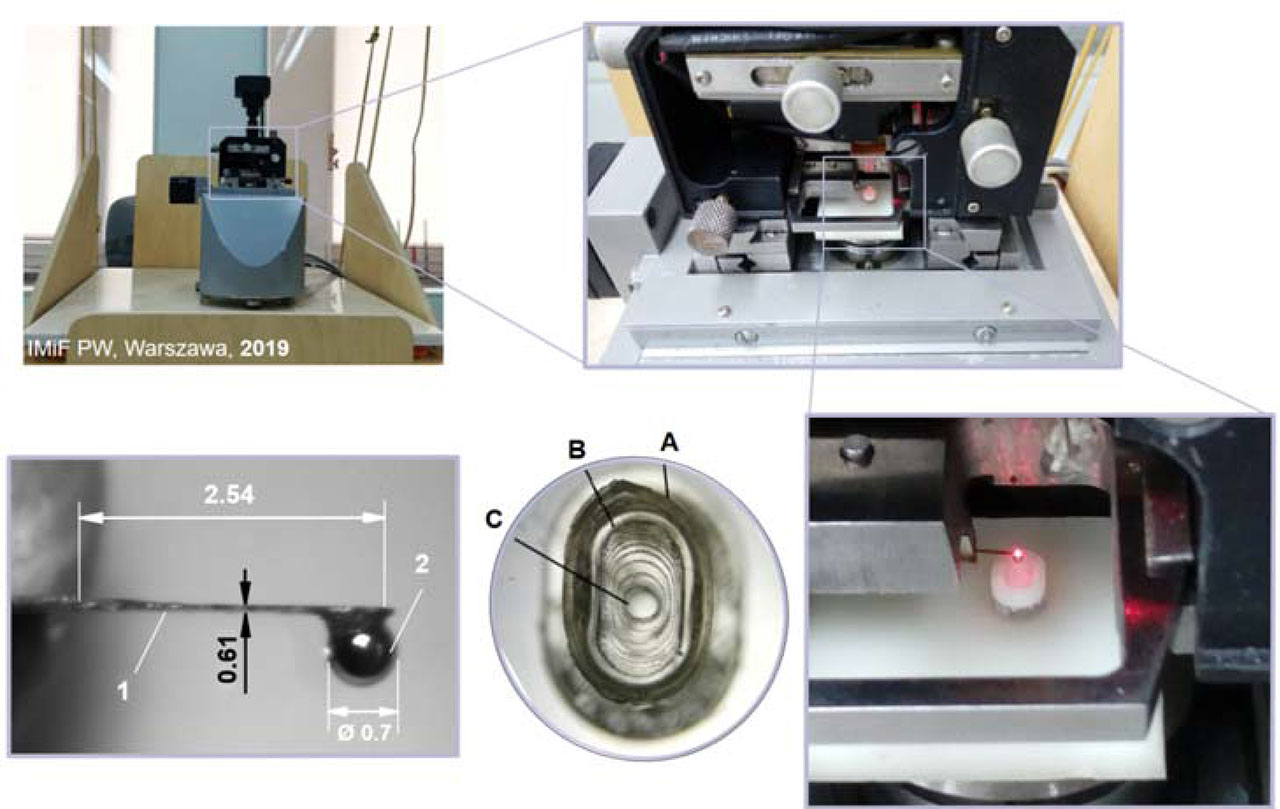

Fig. 2.

Measurement of stiffness of the chamber stapes prosthesis membrane. Top left – the AFM system; top right – the scanning unit of the AFM; bottom left – the cantilever; bottom middle – ChSP; bottom right – the cantilever mounted in the holder and the sample placed on the AFM Table 1 – cantilever beam, 2 – tip of the cantilever. A – a ring for attaching the membrane to the chamber, B – the chamber, C – the membrane.

Fig. 3.

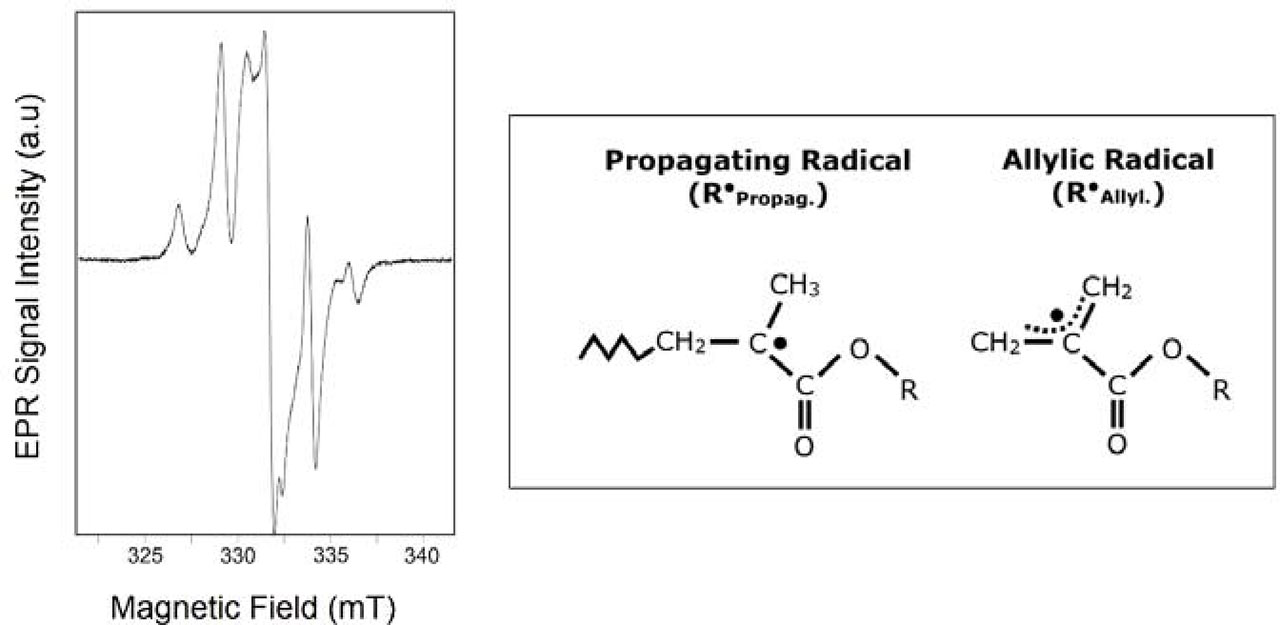
Left – EPR spectrum of polymerized DS3000 recorded at room temperature after the irradiation with a dose of 25 kGy in the Elektronika 10/10 electron accelerator. Right – the propagating and allylic radical in dental resin.
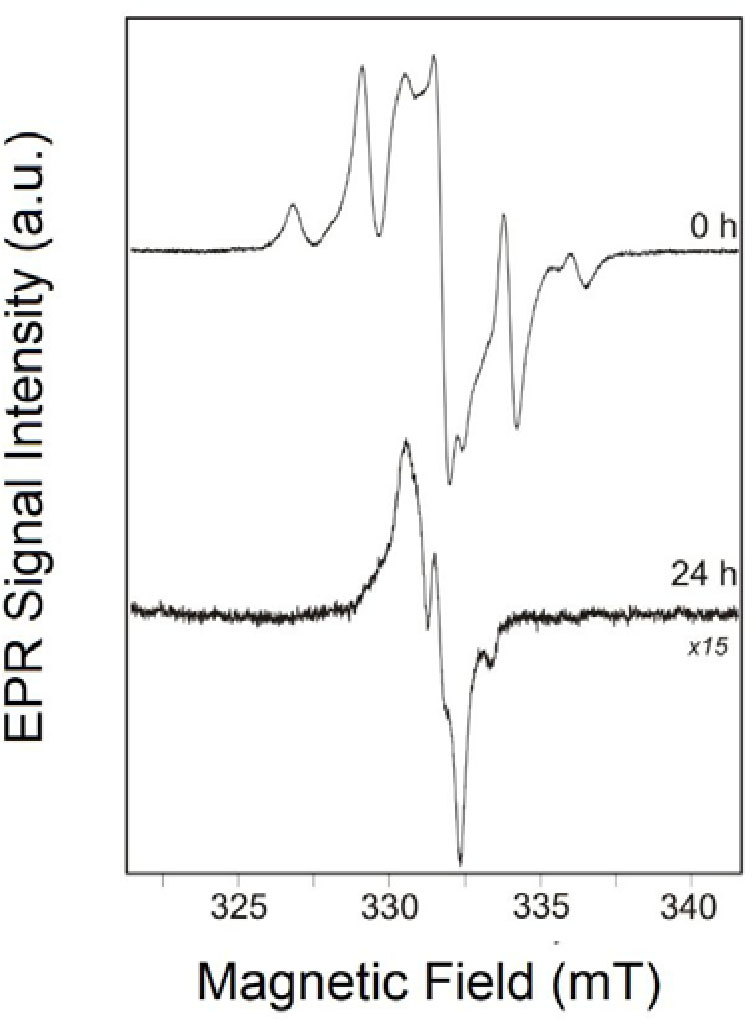

Fig. 4.

EPR spectra of the polymerized DS3000 irradiated in the GC5000 gamma source with a dose of 25 kGy recorded immediately after irradiation and after 24 h.
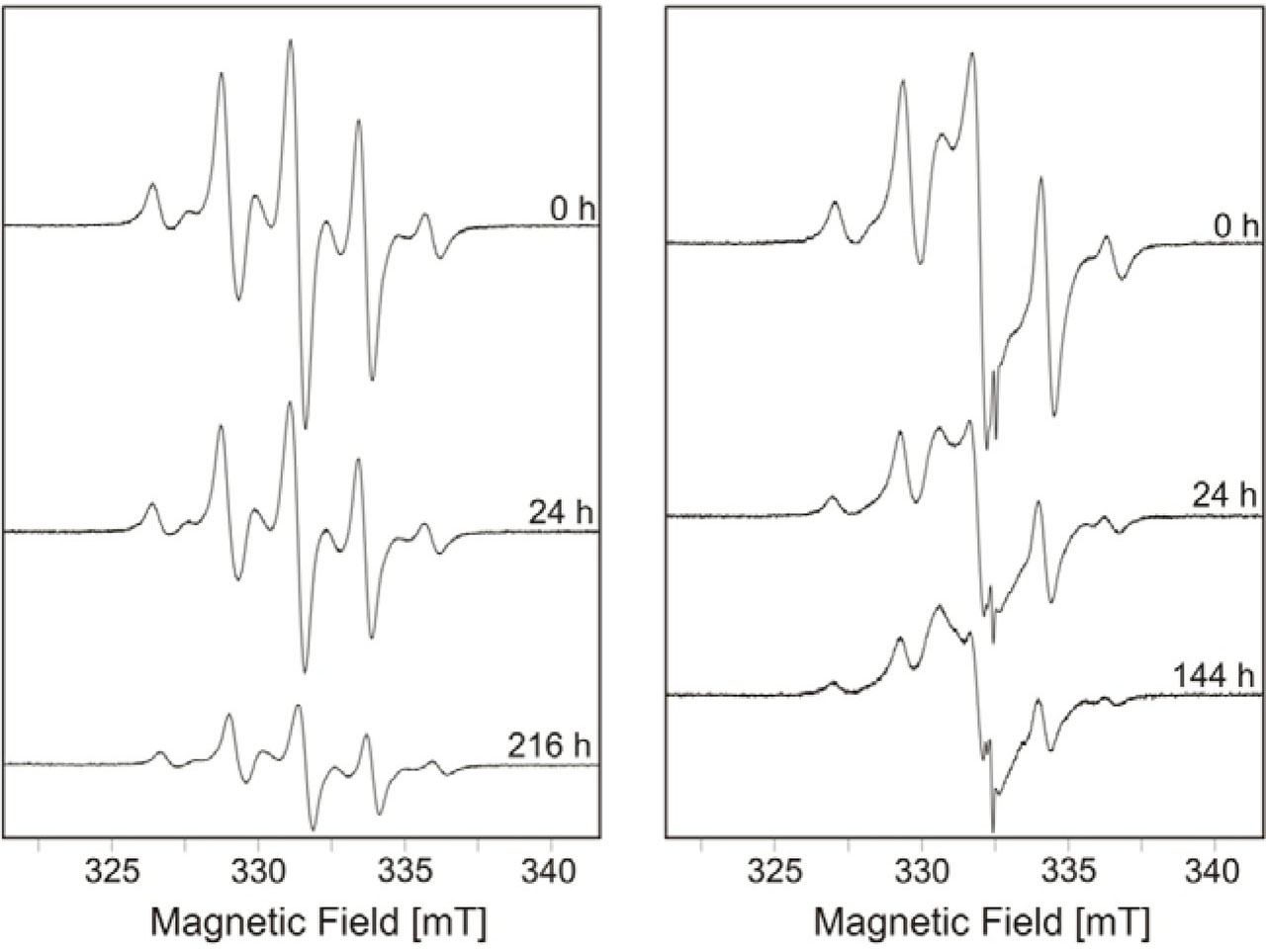

Fig. 5.

The EPR spectra of the chamber stapes prosthesis irradiated in the Elektronika 10/10 electron accelerator recorded directly, 24 h and 216/144 h after irradiation. Left – the sample irradiated in deionized water. Right – the sample irradiated in vacuum.
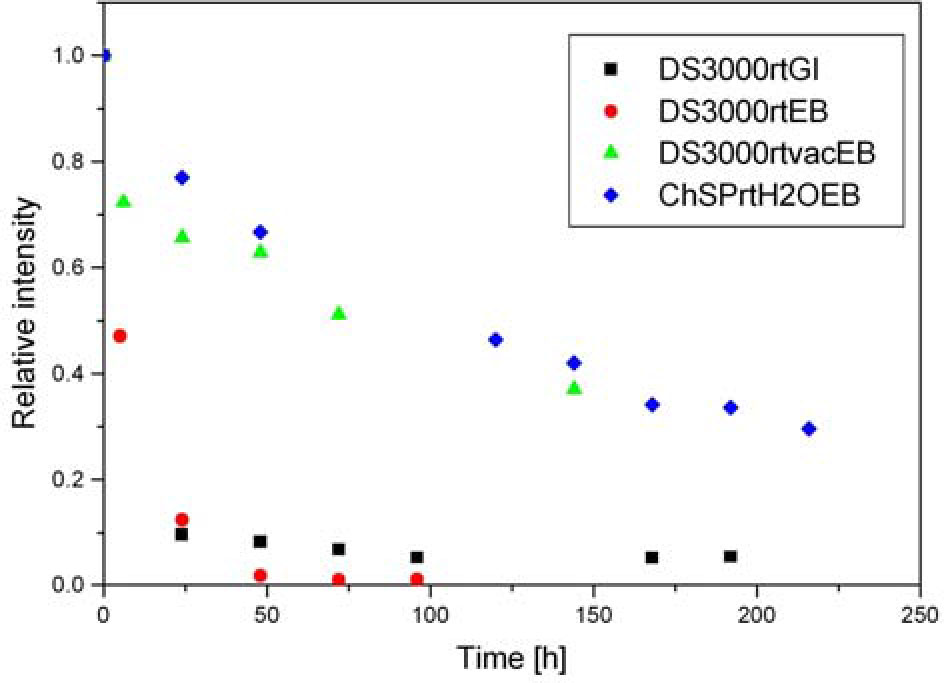

Fig. 6.

Relative contributions of the EPR signal intensity for the DS3000 and chamber stapes prosthesis samples after irradiation under different conditions as a function of time. The spectra were recorded at a microwave power of 1 mW. GI, gamma; EB, electron beam; rt, room temperature; vac, vacuum; H2O, deionized water.

Fig. 7.

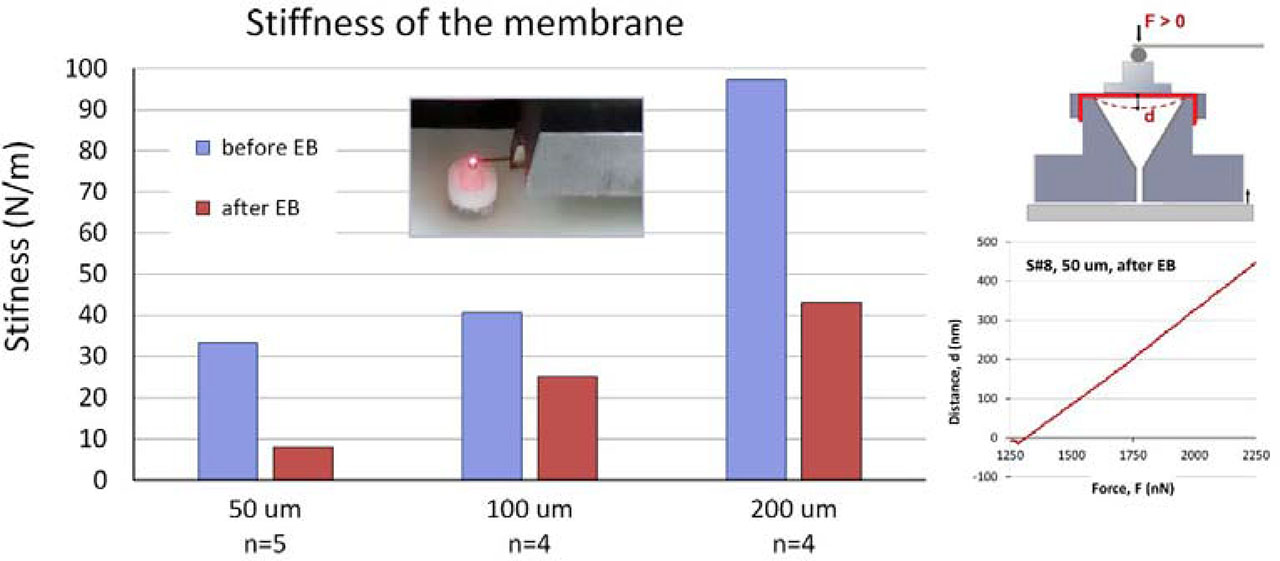
Stiffness (average value, before and after irradiation with 25 kGy) of the Silpuran membrane (thickness 50 μm, 100 μm, and 200 μm) attached to the chamber.
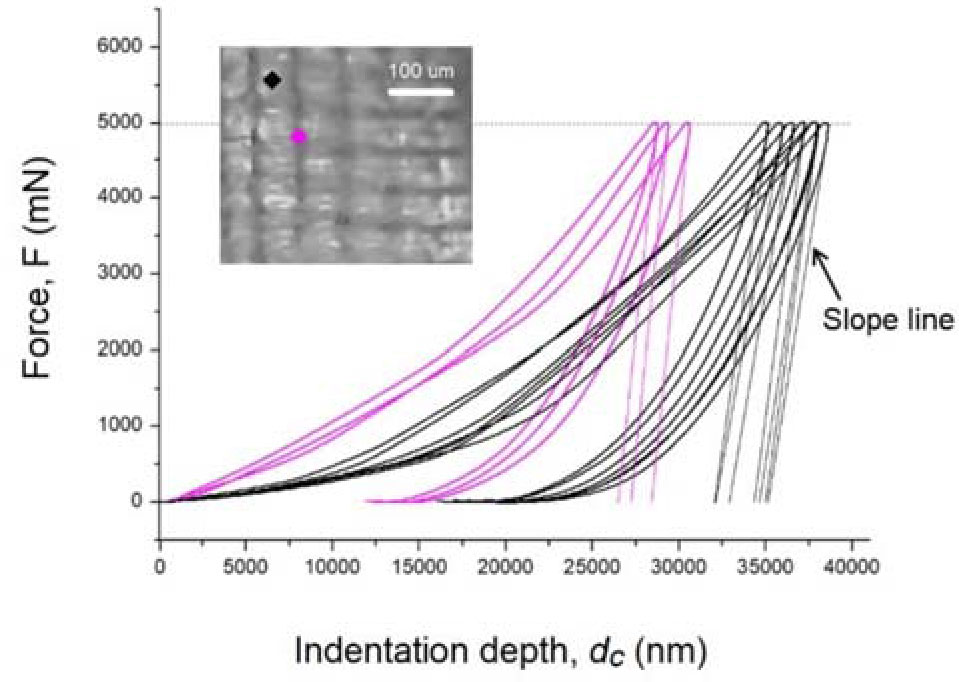

Fig. 8.

Ten micro-indentation F-dc curves (thick lines) for the polymerized DS3000 sample after the EB sterilization. The slope lines (thin lines) are added to the unloading curves to visualize the S parameter. Magenta F-dc curves correspond to indentations on a slope or between the flat rasters (magenta diamond). Indentations were made with a trapezoidal loading scheme with maximum force of 5 N.

Limits of quantification (LOQ) for the determined elements

ElementAsSbSeHgCdTl
LOQ (μg/kg)0.00050.00080.030.040.00020.008

Hardness (H) and elastic modulus (E) of the polymerized DS3000 before and after irradiation (25 kGy)

DS3000Hardness, H (MPa), n = 4Elastic modulus, E (MPa), n = 4

Average value1 SDAverage value1 SD
Before EB84.53.585001800
After EB203.05.08900400

Content of elements in the polymerized DS3000 sample (powered and sterilized)

ElementAsSbSeHgCdTl
(mg/kg)<LOQ<LOQ<LOQ<LOQ<LOQ<LOQ
DOI: https://doi.org/10.2478/nuka-2024-0028 | Journal eISSN: 1508-5791 | Journal ISSN: 0029-5922
Language: English
Page range: 205 - 214
Submitted on: Mar 10, 2024
|
Accepted on: May 24, 2024
|
Published on: Nov 20, 2024
In partnership with: Paradigm Publishing Services
Publication frequency: 4 issues per year

© 2024 Monika Kwacz, Jarosław Sadło, Marta Walo, published by Institute of Nuclear Chemistry and Technology
This work is licensed under the Creative Commons Attribution-NonCommercial-NoDerivatives 4.0 License.