
Table 1.
Methods previously used for the removal of CQ from aqueous solutions
| Methods | Conditions | Removal efficiency | Ref. |
|---|---|---|---|
| Membranes | |||
| Membrane bioreactors – tyrosinase enzyme on Escherichia coli biopolymer | pH 7.5, 20 h | 98% with 140 ± 6 mg·g-1 No apparent capacity loss over three consecutive cycles | [33] |
| Adsorbents | |||
| Activated carbon Palm kernel (Elaeis guineensis) shells | Large surface areas, strong mechanical characteristics | [27] | |
| PPAC-ZnO | 313 K 10 ppm CQ | 78.89% Adsorption capacity increases with temperature | [28] |
| A-GO hydrogel | Adsorption 63 mg·g-1 | [29, 30] | |
| GAC-GO | Equilibrium time 18 h | 37.65 mg·g-1 Adsorption | [32] |
| Organo-clay raw kaolinite treated with citric acid | 20 mg·L-1 CQ 120 min | 99.28% Maximum sorption capacity is 4.03 mg·g-1 | |
| Soybean hull residues functionalized with iron oxide nanoparticles (SBH-Fe3O4) | 120 min 318 K | Adsorption capacity 98.84 mg·g-1 Reuse five cycles | [34] |
| Iron and magnesium comodified rape straw biochar (Fe/Mg-RSB) | pH (3–11) CQ 4–25 mg·L-1 at 180 r·min-1 for 8 h 308 K | Adsorption capacity of 42.93 mg·g-1 | [35] |
| MOF sheet, namely BUC-21(Fe) FeSO4·7H2O, 1,3-dibenzyl-2-imidazoli-done-4,5-dicarboxylic acid (H2L) and 4,4’-bipyridine (bpy) | pH = 5.0 30 min | 100% C•OH 242.5 mmol·L-1, H2O2 consumption 83.2% | [36] |
| Catalysts | |||
| Ferrate-Fe(VI) | CQ 10 μM Fe(VI) 40–180 mM time 1–20 min | 59% CQ removal Algae, antimicrobial, toxicity reduction | [19] |
| CWAO HEO – (MgCuMnCoFe) Ox | Oxygen pressure of 15 bar, catalyst dosage of 1.4 g·L-1, and temperature of 230°C | 34.6% and 41.2% higher than that without the HEO system | [11] |
| Single cobalt atoms in a defined Co–N3 coordination structure | pH range (3–11) employing the SA Co-N-C (30) | 100% | [24, 25] |
| Biochar-supported RM-BC activated persulfate process | 20 mg·L-1 40 min | 84.8% | [26] |
| Carbon nanotube-loaded CoFe2O4 (CoFe2O4@CNTs) composite | 10 mg·L-1 CQ pH 7 | Mineralization efficiency 33%, removal efficiency 98.7% | [37] |
| Advanced oxidation processes | |||
| SR-AOP | Peroxymonosulfate (PMS, ) peroxy disulfate (PDS, ) 10.0 mg·L-1 | P25M175-94.6% within 30 min | [23] |
| UV/PS | pH = 6.9 10 min | 91.3% CQ reactions with •OH and were 8.9 × 10⁹ L·(mol·s)-1 and 1.4 × 10¹⁰ L·(mol·s)-1 | [38] |
| Photocatalysis-activated SR-AOP over PDINH/MIL-88A(Fe) composites | 10.0 mg·L-1 CQ P25M175 30 min | 94.6% Good reusability and stability | [23] |
| Electrocoagulation | 66.89 mA·cm–2, 600 rpm 60 min electrolysis time 3 mg·L-1 CQ, pH = 6.5 | 95% dissolved aluminum electrodes 0.228 kg·m-3 energy consumption of 12.243 kWh·m-3 | [39] |
| EFP | Carbon felt cathode and BDD anode | 92% (TOC) | [20] |
| FBER | BDD electrodes batch recirculation mode 9 h, pH 5.38, 34.4 mA·cm-2, and liquid flow rate (Q) of 1.42 L·min-1 | Degradation 89.3%, COD 51.6%, mineralization 53.1% energy consumption 0.041 kWh·L-1 | [40] |
| Electro-Fenton with pyrite (FeS2)-modified graphite felt (FeS2/GF) cathode | pH of 3.0 FeS2 loading-10 mg, current density 150 mA, electrode spacing 2.0 cm | 83.3 ± 0.4% 60 min CQ removal, retains 60.0% CQ removal in consecutive batch tests | [41] |
1 A-GO, agar-graphene oxide; BDD, boron-doped diamond; CQ, chloroquine; CWAO, catalytic wet air oxidation; EFP, electro-Fenton processes; FBER, flow-by electrochemical reactor; GAC-GO, granular activated carbon–graphene oxide; HEO, high entropy oxide; PPAC-ZnO, plantain peel-activated carbon-supported zinc oxide; RM-BC, red mud catalyst; SR-AOP, sulfate radical-advanced oxidation process; TOC; total organic carbon; UV/PS, UV-activated persulfate system; PDINH/MIL, 34,910-pyrenetetracarboxydiimine (Materials of Institute Lavoisier).
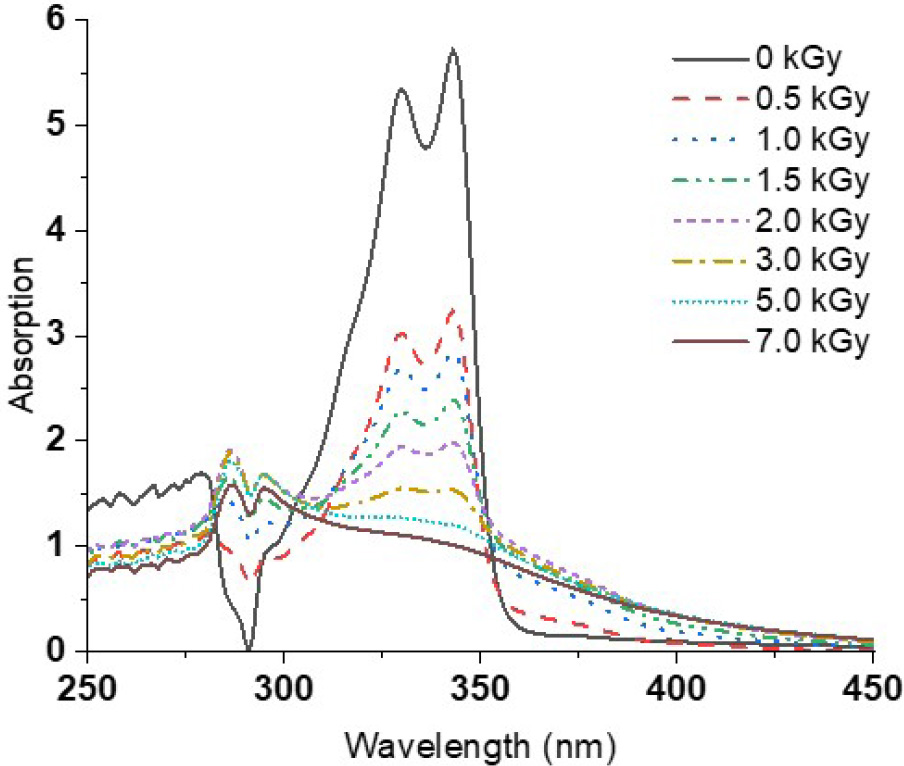
Fig. 1.
UV-VIS absorption spectrum for 125 mg·L 1 chloroquine solution observed at 343 nm at irradiation doses ranging from 0 kGy to 7 kGy.
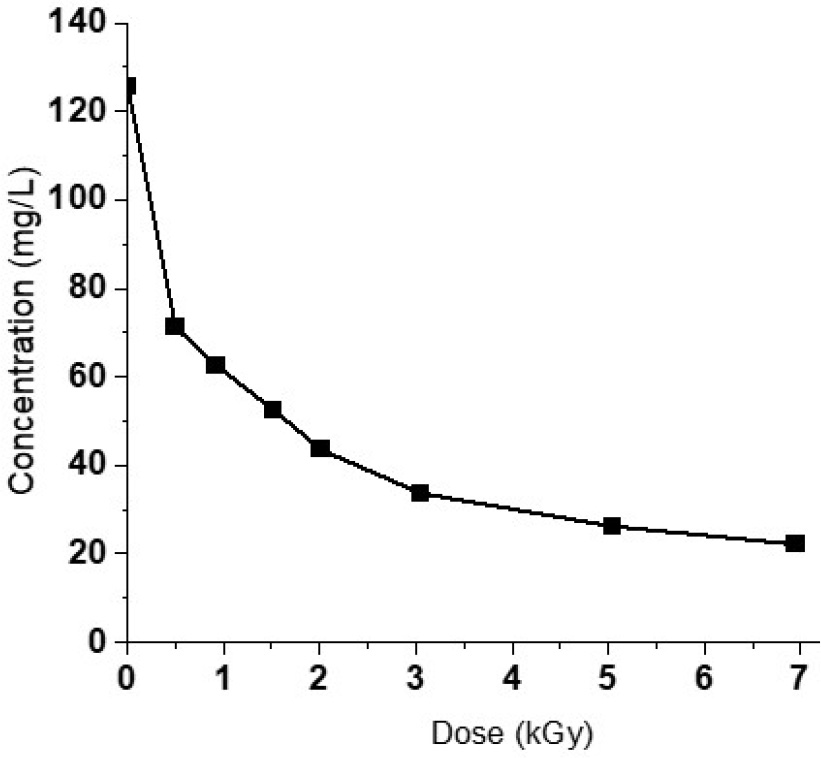
Fig. 2.
Degradation of 125 mg·L-1 of chloroquine solution under EB radiation.
Table 2.
Species formed in the radiolysis of water and their corresponding G-values and reaction rates (k) with CQ
| Species | G (mmol·J-1) | Molecules/100 eV | k (dm3·mol-1·s-1) |
|---|---|---|---|
| 0.28 | 2.8 | 4.8 × 10¹⁰ | |
| •OH | 0.28 | 2.8 | 7.3 × 10⁹ |
| •H | 0.06 | 0.6 | – |
| H3O+ | 0.26 | 2.6 | – |
| H2 | 0.045 | 0.45 | |
| H2O2 | 0.07 | 0.7 |
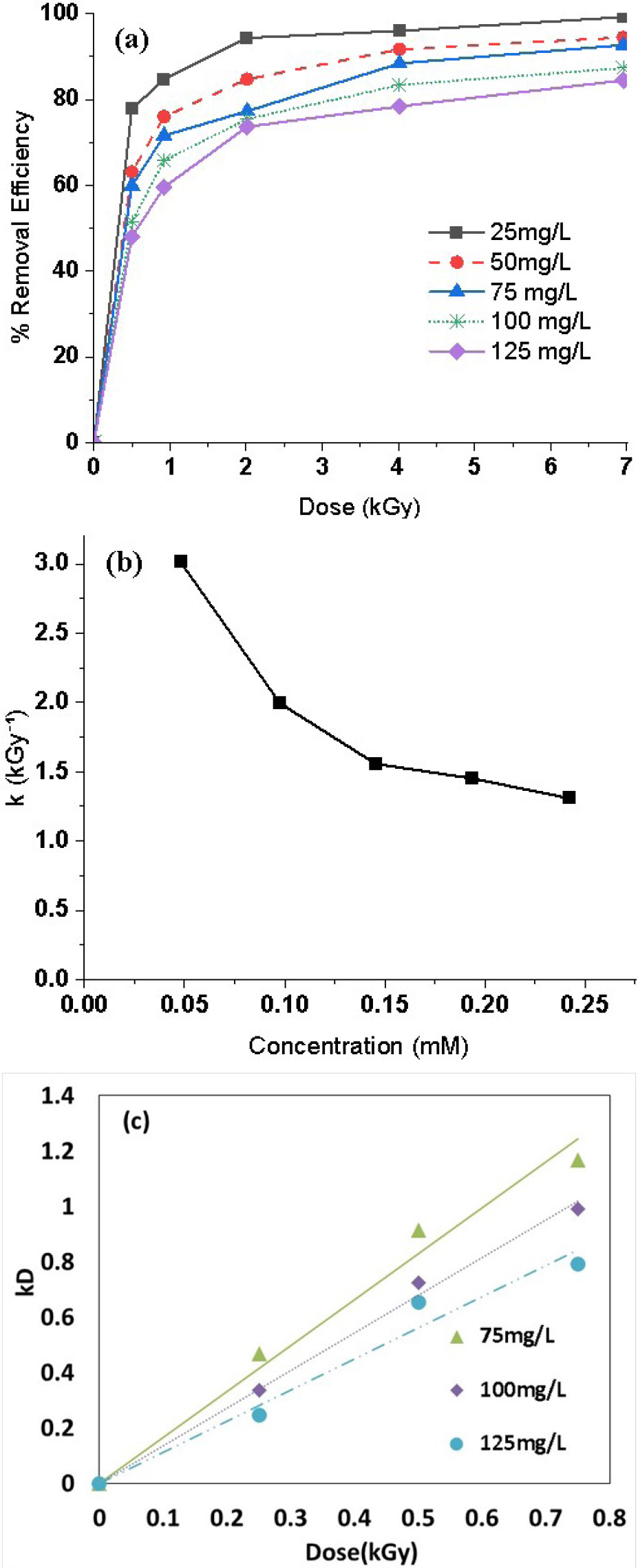
Fig. 3.
Degradation of different concentrations of chloroquine solutions under EB irradiation. (a) Removal efficiency of chloroquine at different initial concentrations. (b) k (kGy-1) values for removal of chloroquine at 0.5 kGy. (c) Plot of the rate constant against dose.
Table 3.
Reaction rates (k) for degradation of different concentrations of chloroquine and corresponding R2
| Concentration CQ (mg·L-1) | k (kGy-1) | R2 |
|---|---|---|
| 75 | 1.6567 | 0.9935 |
| 100 | 1.3603 | 0.9982 |
| 125 | 1.1224 | 0.9891 |
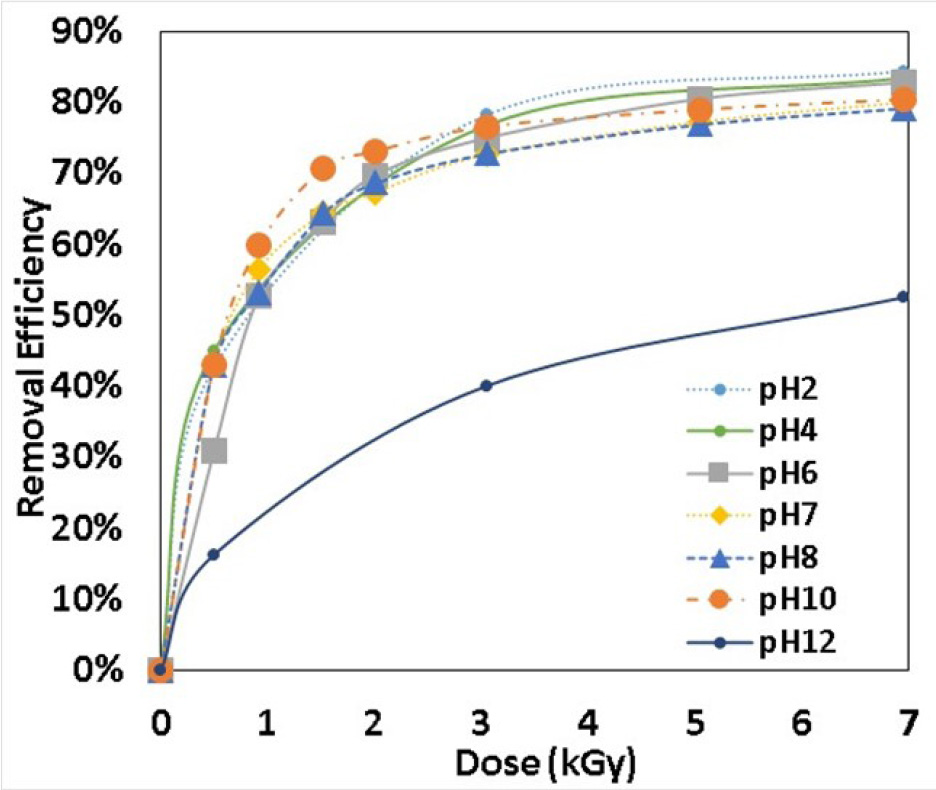
Fig. 4.
Removal efficiency of 125 mg·L 1 of chloroquine solution under EB irradiation at different initial pH.
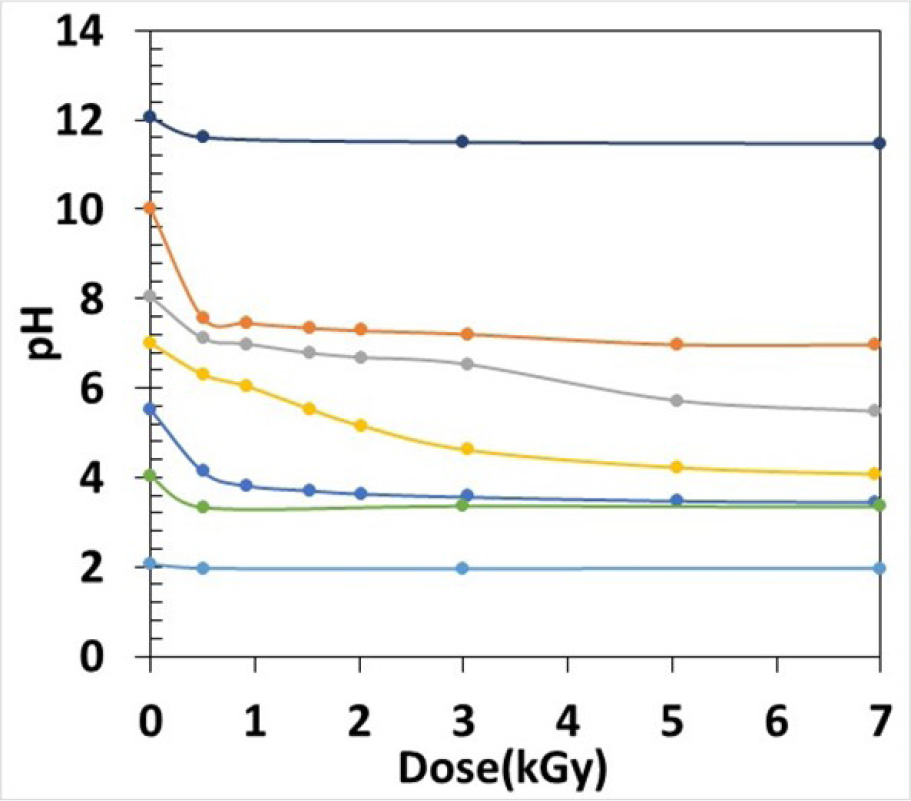
Fig. 5.
Changes in the pH of the solution with dose during the degradation of 125 mg·L-1 chloroquine solution.
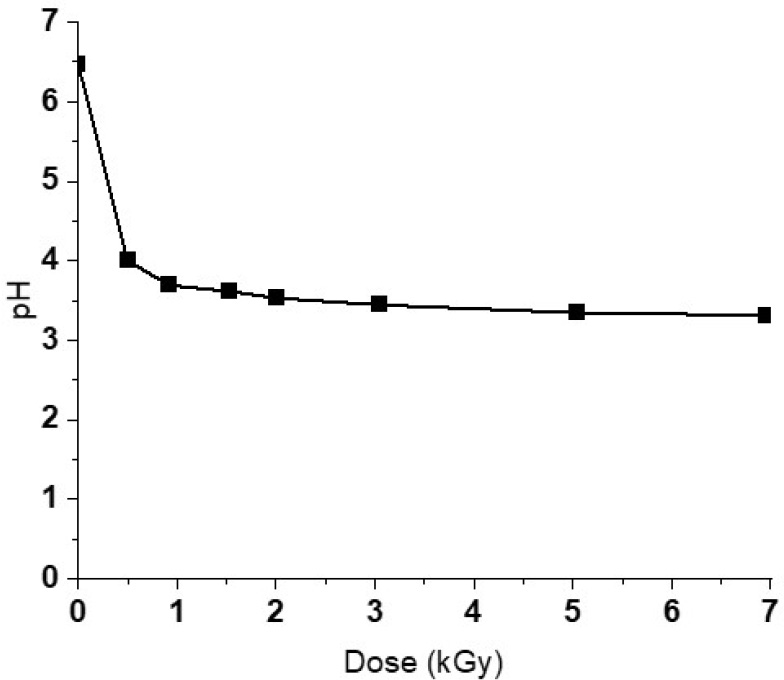
Fig. 6.
Changes in the pH concentration during EB irradiation of 125 mg·L-1 chloroquine. The pH varied from slightly acidic before irradiation to acidic at the end of irradiation.
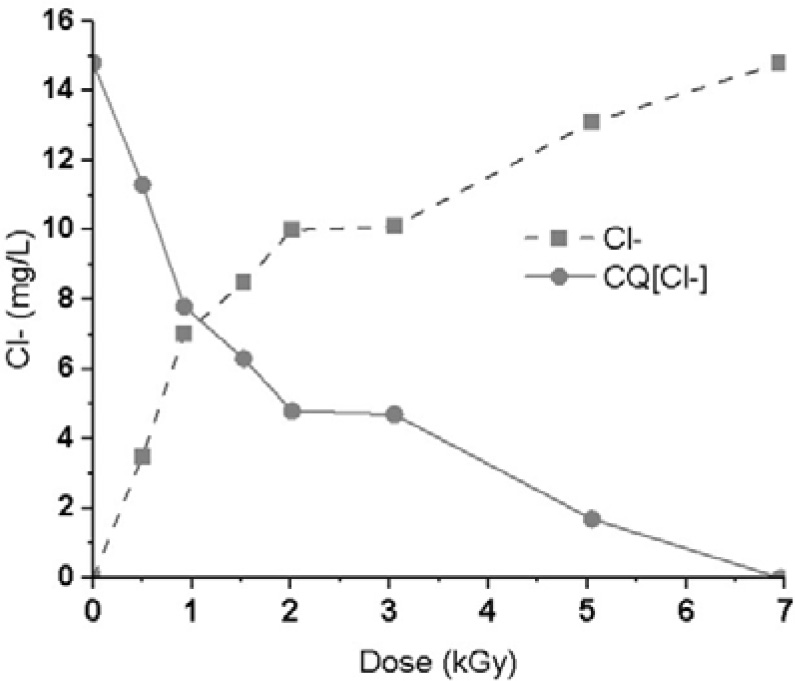
Fig. 7.
Release of Cl with increasing dose during radiolysis of chloroquine (125 mg·L-1) solution under the EB treatment.
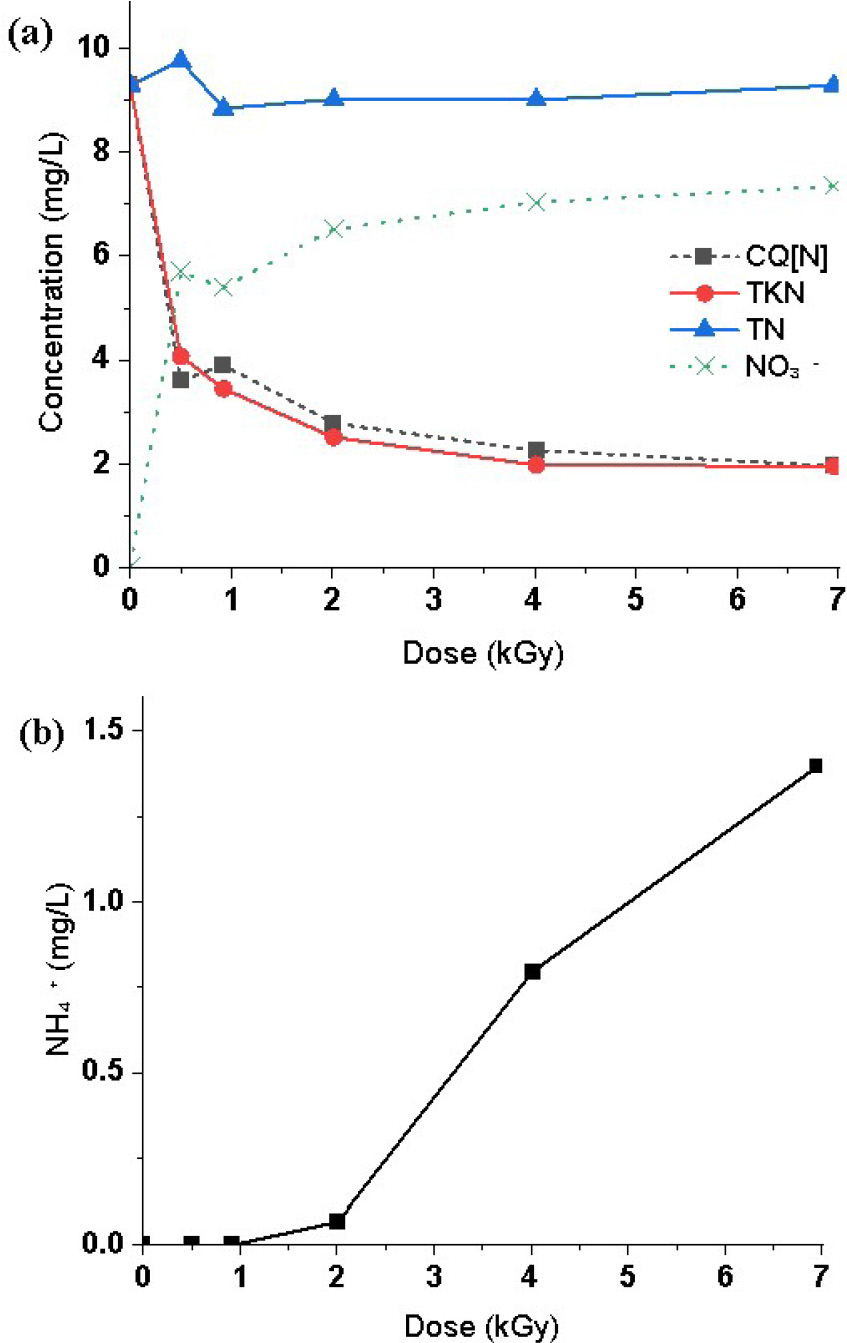
Fig. 8.
(a) Reduction in total Kjeldahl nitrogen, formation of , and (b) generation of in the degradation of 125 mg·L-1 of chloroquine solution under EB irradiation.
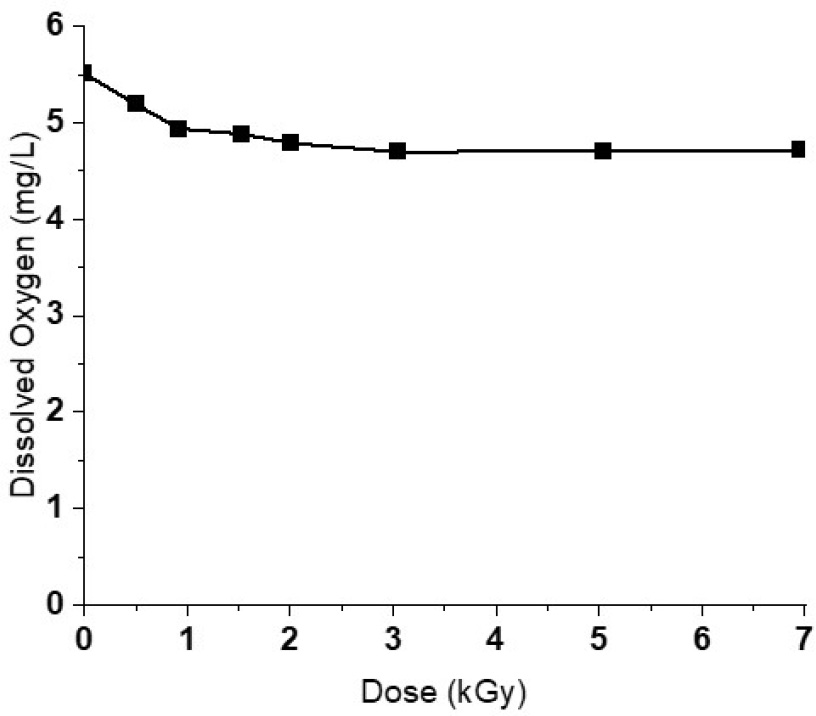
Fig. 9.
Changes in dissolved oxygen concentration during electron beam irradiation of 125 mg·L-1 chloroquine solution.
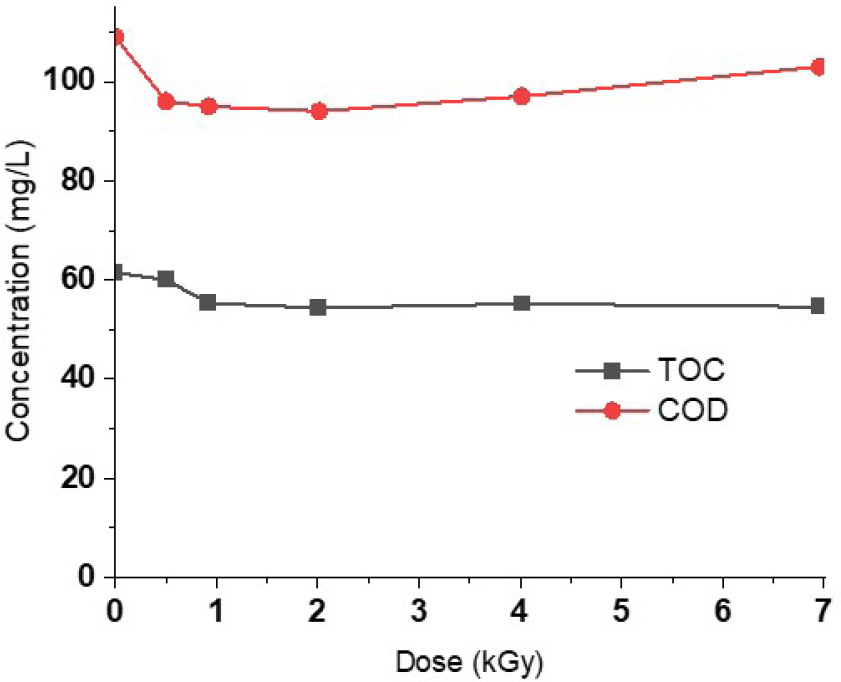
Fig. 10.
Variation in COD and TOC during EB degradation of 125 mg·L-1 solution of chloroquine.