
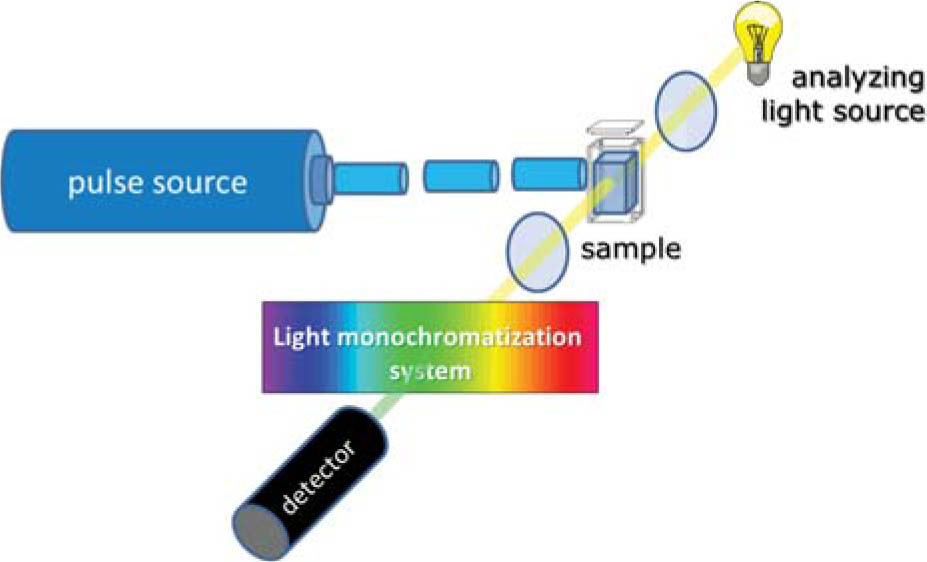
Fig. 1
Simplified diagram illustrating the operation principle of laser flash photolysis and pulse radiolysis with fast spectrophotometric detection.
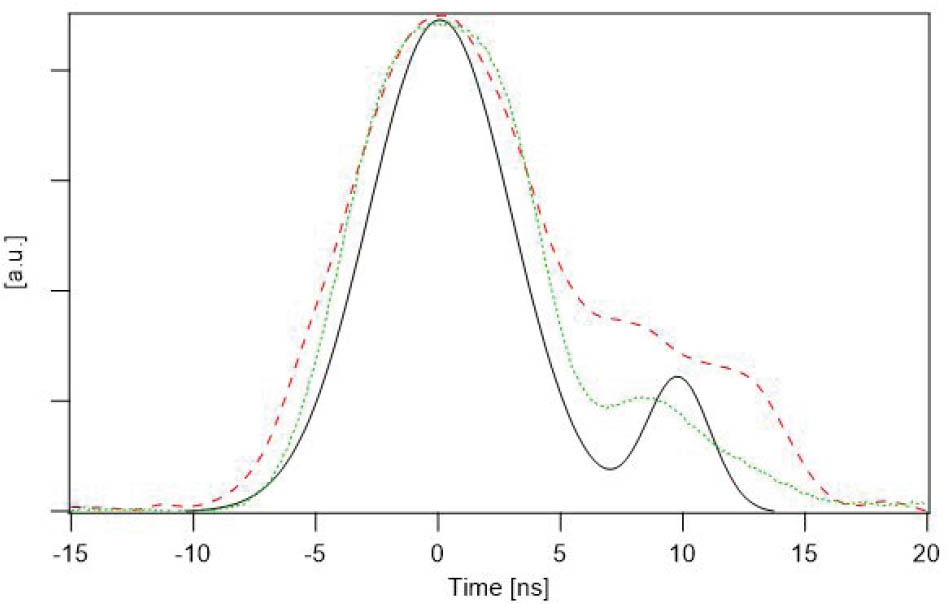
Fig. 2
Pulse time duration recorded as the first derivative of a signal recorded at 700 nm for pulse-irradiated Ar-saturated water (solid black line); the Faraday cup signal (dashed red line), and the Cherenkov radiation recorded for pulse-irradiated Ar-saturated water at 390 nm (dotted green line).
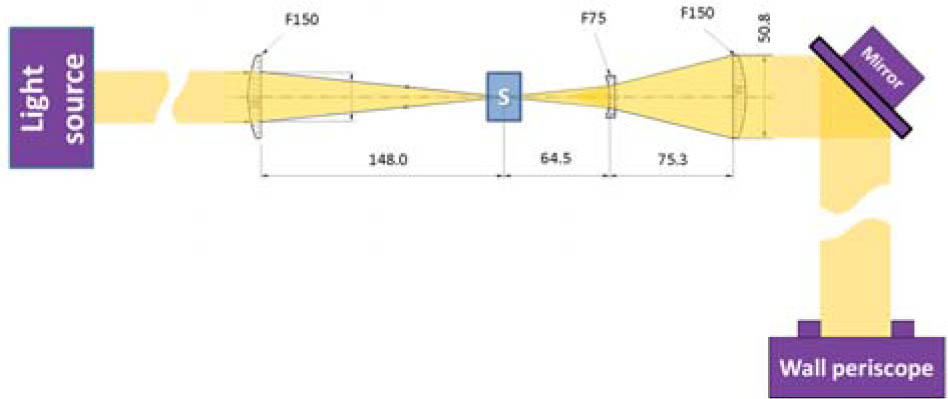
Fig. 3
Simplified scheme of the optical pathway of the PR system in the irradiation chamber (PR IC). S – sample; F150, F75 – lenses.
Table 1
Description of available gratings of the MSH-301 monochromator/spectrograph
| ID | Spectral range (nm) | Blaze (nm) | Lines (g/mm) | Resolution per slit size (nm/mm) | Comment |
|---|---|---|---|---|---|
| 1 | 260–900 | 500 | 300 | 30 | Intended for use with the ICCD detector; cutoff filters are required depending on the measurement range |
| 2 | 250–525 | 350 | 1200 | 15 | Dedicated for the PMT detector; recommended for wavelengths <525 nm; a BK-7 cutoff filter is required for wavelengths >415 nm |
| 3 | 520–1200 | 750 | 1200 | 15 | Dedicated for the PMT detector; recommended for wavelengths >525 nm; RG-5 filter is required for wavelengths >685 nm |
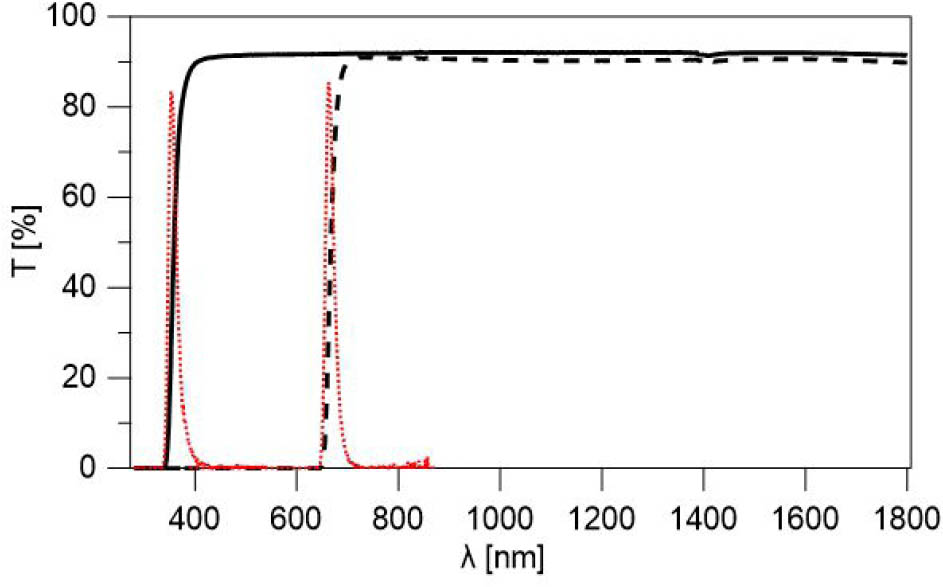
Fig. 4
Optical characteristics of the cutoff filters BK-7 (solid line) and RG-5 (dash line) used in the automatic filter wheel in front of the MSH-301 monochromator. The dotted lines represent the first derivative of the transmittance T.
Table 2
List of available detectors at the INCT PR system
| Model (Manufacturer) | Spectral range (nm) | Rise time/time resolution (ns) | Comment |
|---|---|---|---|
| R955 (Hamamatsu) | 160–900(1) | Subnanoseconds(4) | PMT detector |
| iSTAR A-DH720-18F-03 (Andor) | 180–850(2) | <5 | ICCD detector |
| PDA10A (Thorlabs) | 200–1100(3) | 2.3 | Silicon-amplified photodiode |
| APD430A2/M (Thorlabs) | 200–1000(3) | <0.88 | UV-enhanced, silicon avalanche photodiode |
| PDA10CF (Thorlabs) | 800–1700 | 2.3 | InGaAs-amplified photodiode |
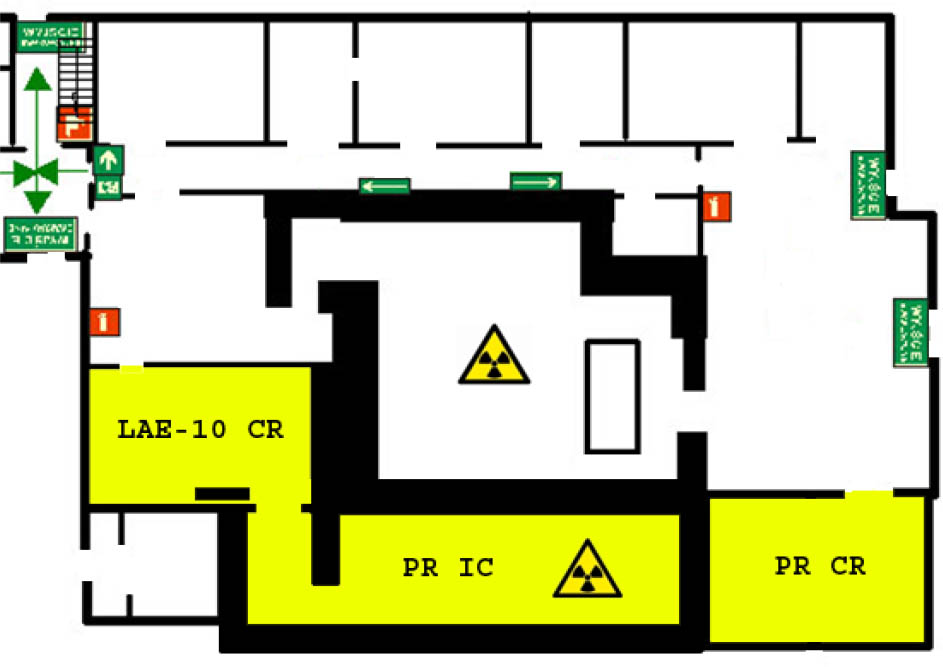
Fig. 5
Layout of the PR facility at the INCT.
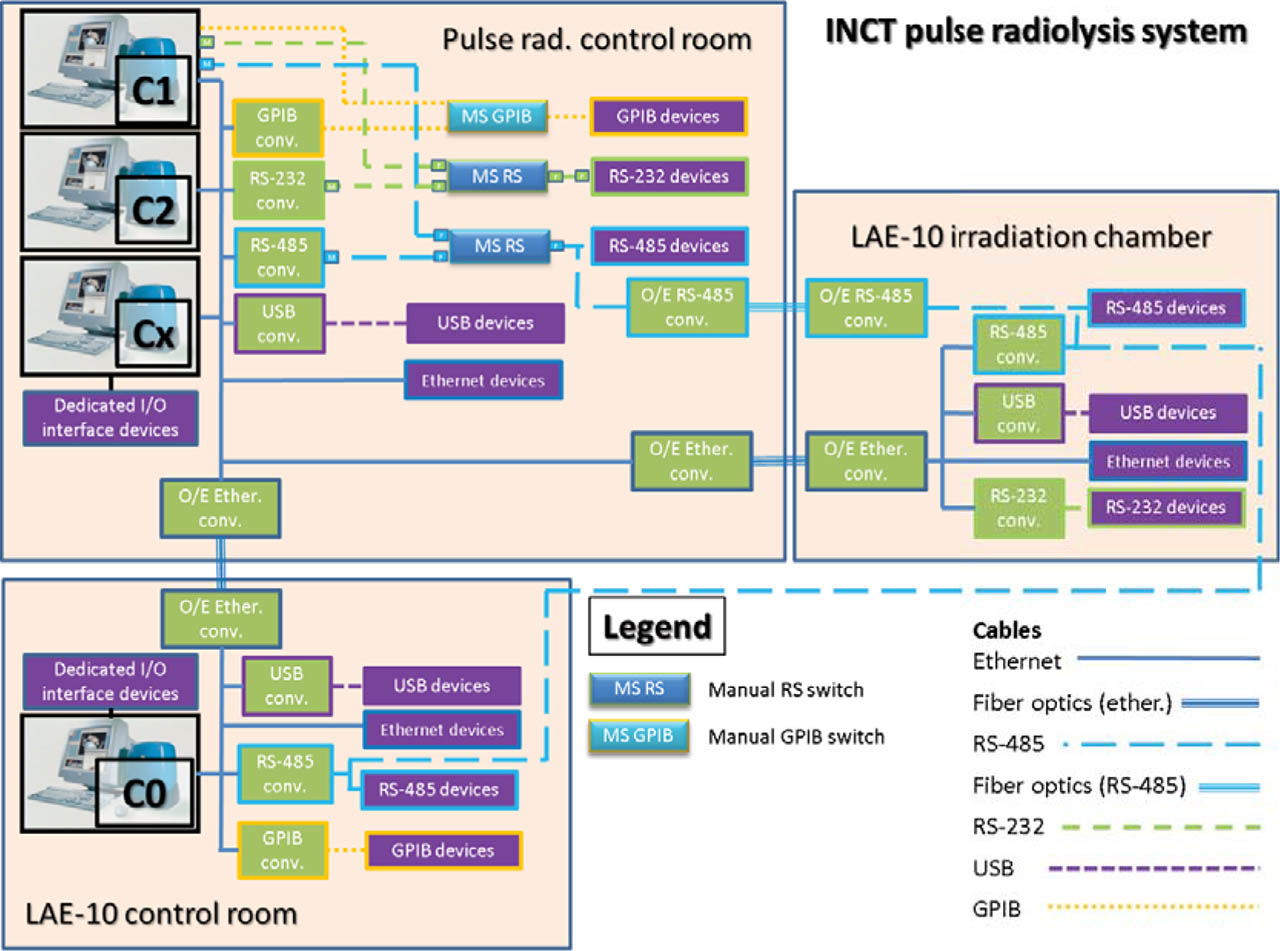
Fig. 6
Simplified scheme of the network/communication core at the INCT PR system.

Fig. 7
Optical pathway of the monitoring light of the LFP system. S – sample; F150 – lenses.
Table 3
Description of SpectraPro 275 monochromator gratings
| ID | Range of application (nm) | Blaze (nm) | Lines (g/mm) | Resolution per slit size (nm/mm) | Comment |
|---|---|---|---|---|---|
| 1 | 200–310 | 250 | 1800 | 30 | – |
| 2 | 310–570 | 500 | 1200 | 10 | BK-7 cutoff filter (or its equivalent) should be used at wavelengths >415 nm |
| 3 | 550–1200 | 1000 | 600 | 20 | RG-5 filter (or its equivalent) should be used at wavelengths >685 nm |
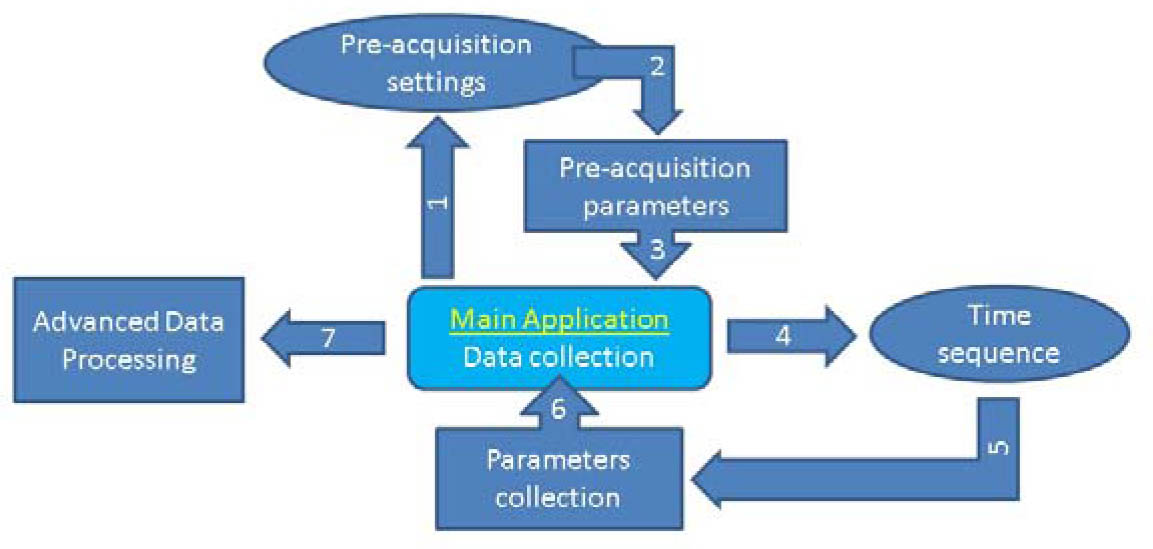
Fig. 8
Simplified block diagram of the TSFF system communication.
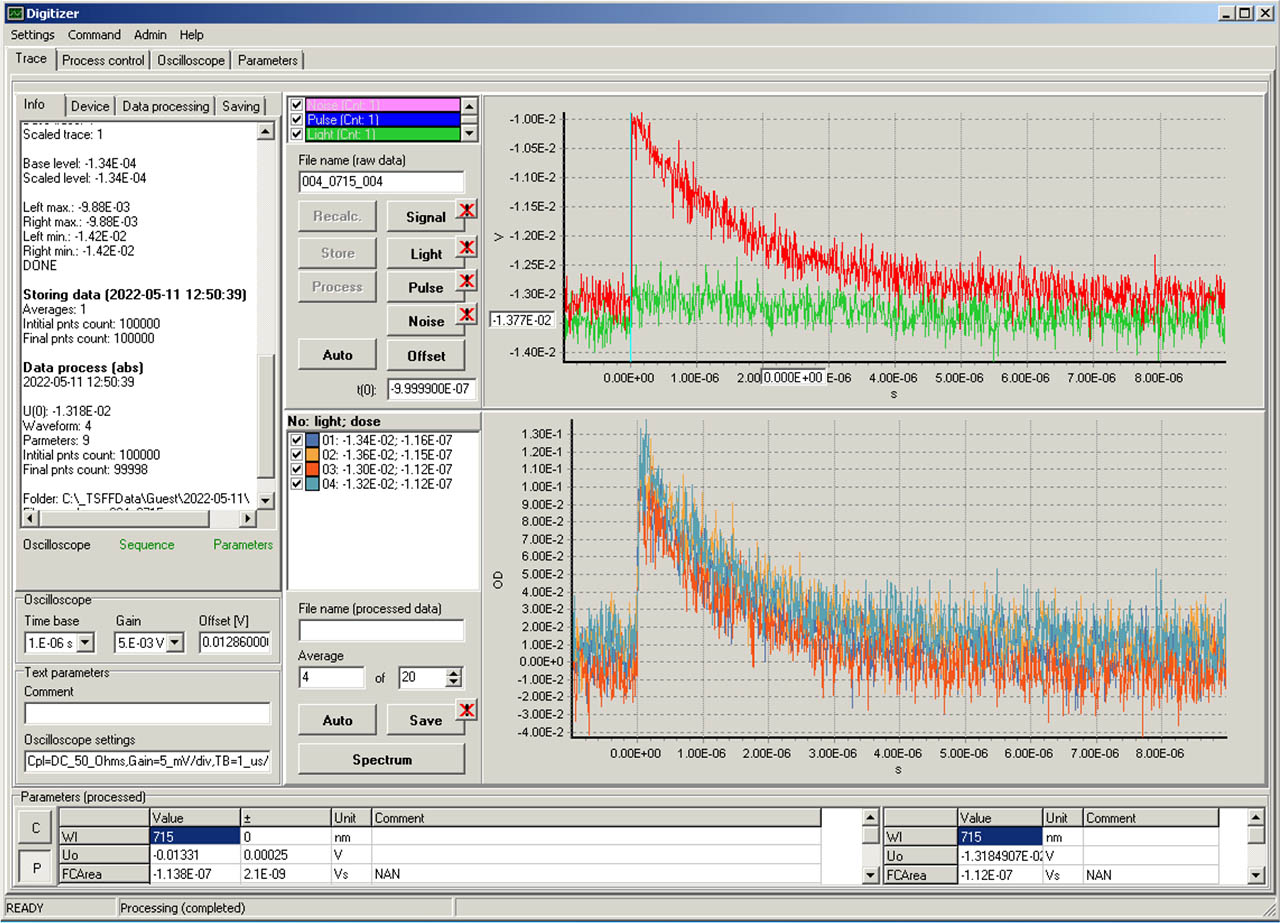
Fig. 9
Graphical user interface of the Digitizer application.
Table 4
Description of types of data time traces collected by Digitizer application
| Type of trace | Incident beam | Monitoring light shutter | Description |
|---|---|---|---|
| SGN(t) | ON | ON | This trace carries the main information about the chemical/physical changes of the irradiated sample. |
| LIGHT(t) | OFF | ON | Trace carries information about the shape of the monitoring light. It is optionally used to correct the resulting output for time-dependent monitoring of light fluctuations. |
| PULSE(t) | ON | OFF | Response of the detection system on the incident beam pulse. Important for elimination of emission of sample from absorption output data. |
| NOISE(t) | OFF | OFF | Response of detection system on electromagnetic noise generated due to triggering of high-energy incident pulse. In general, it is used for diagnostic purpose or automatic measurement of optical detector offset current. In some cases, it can be used to eliminate electromagnetic, reproducible noise from the detector output (if it is not possible to eliminate noise by hardware handling). |
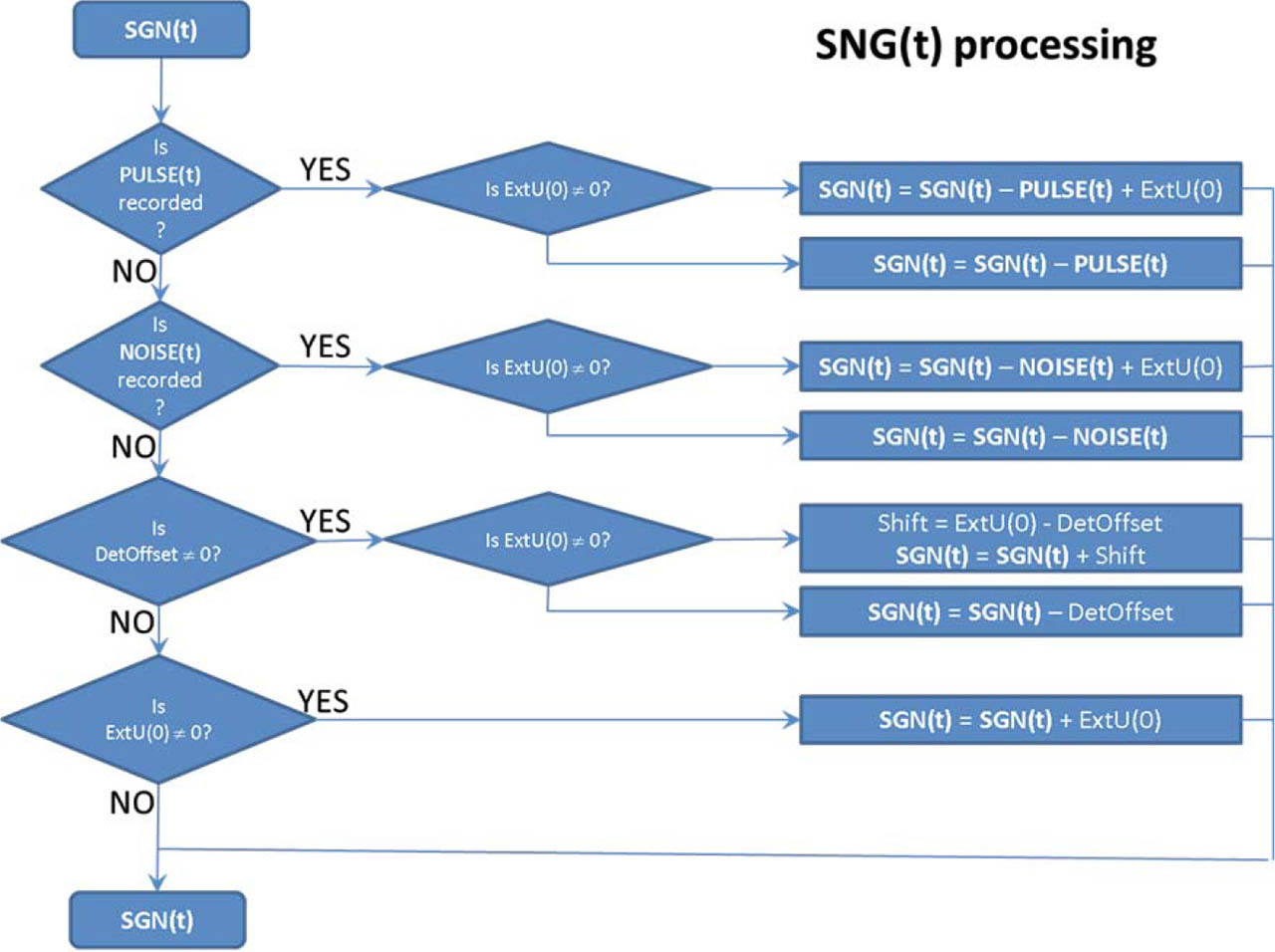
Fig. 10
Algorithm of SGN(t) trace preprocessing. DetOffset is the detector offset value; ExtU(0) denotes the absolute value of the light level measured by the external device (so-called back-off system).
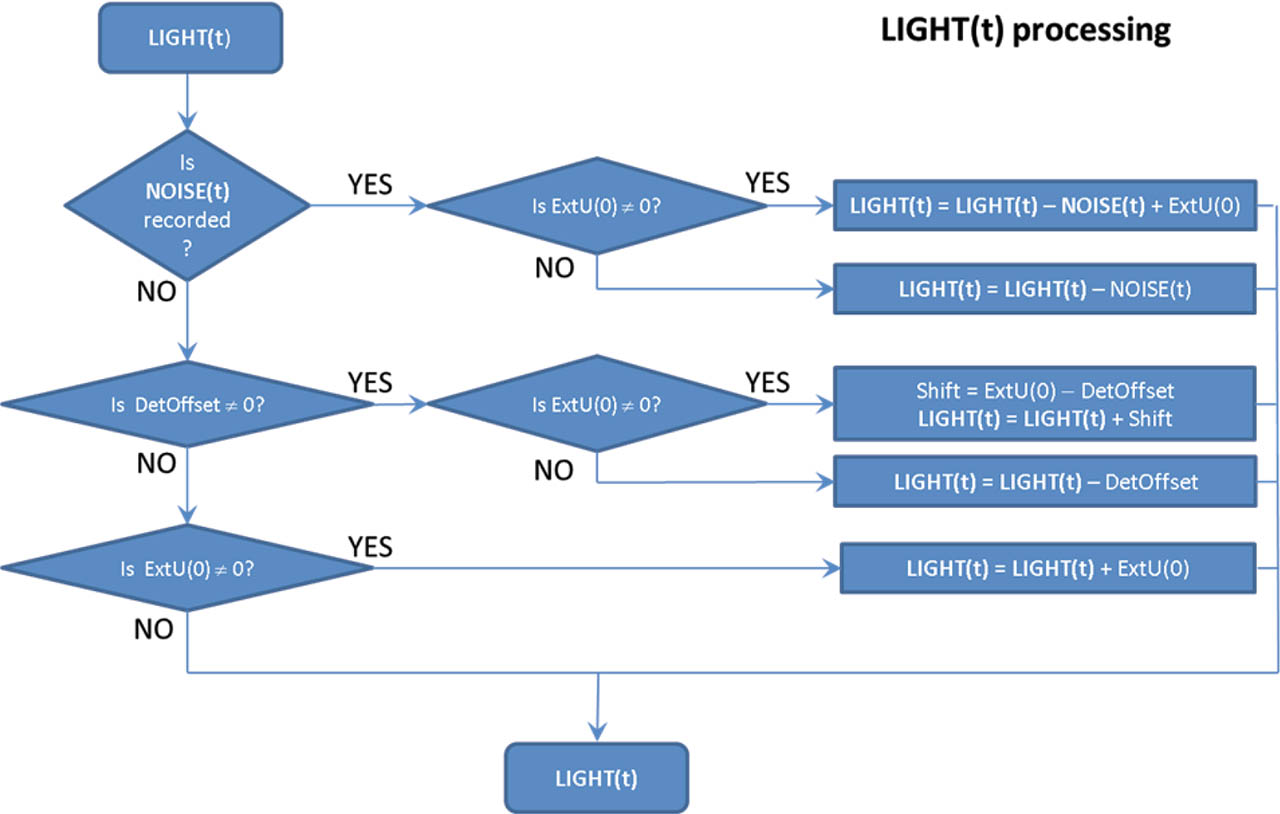
Fig. 11
Algorithm diagram of LIGHT(t) trace processing.
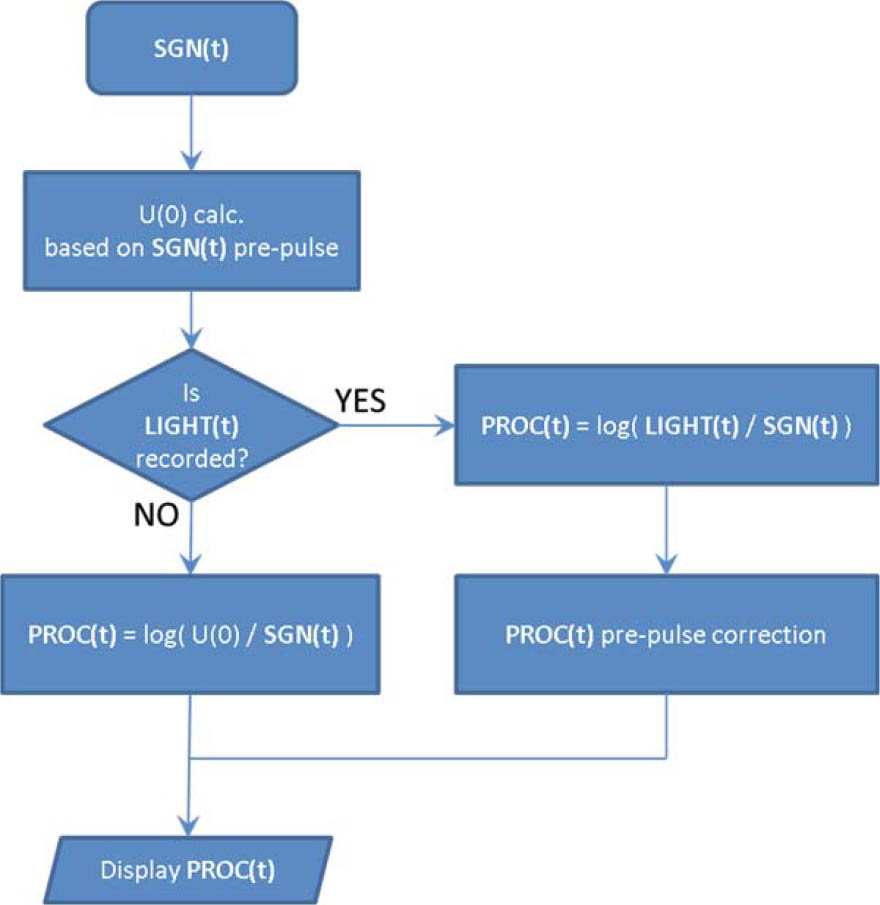
Fig. 12
Algorithm diagram for calculation of optical absorption of the investigated system based on traces recorded by the oscilloscope. U(0) is the light level calculated based on the selected range of SGN(t) prepulse trace.
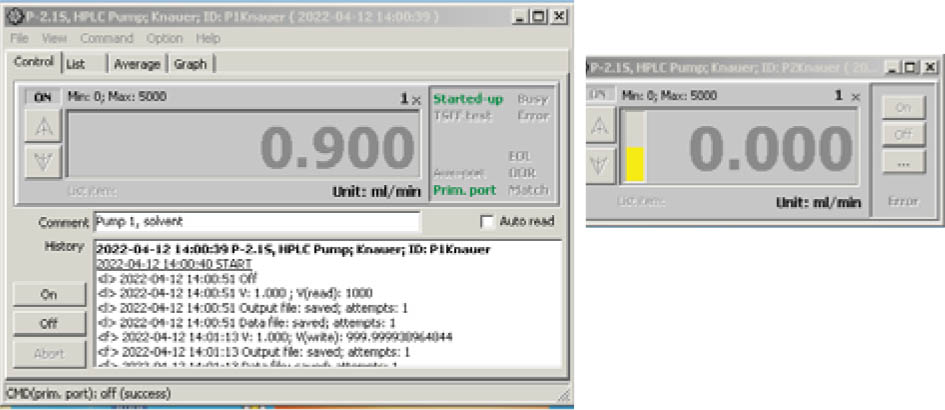
Fig. 13
Examples of advanced (left) and simplified (right) user interfaces of the DeviceCtrl application.
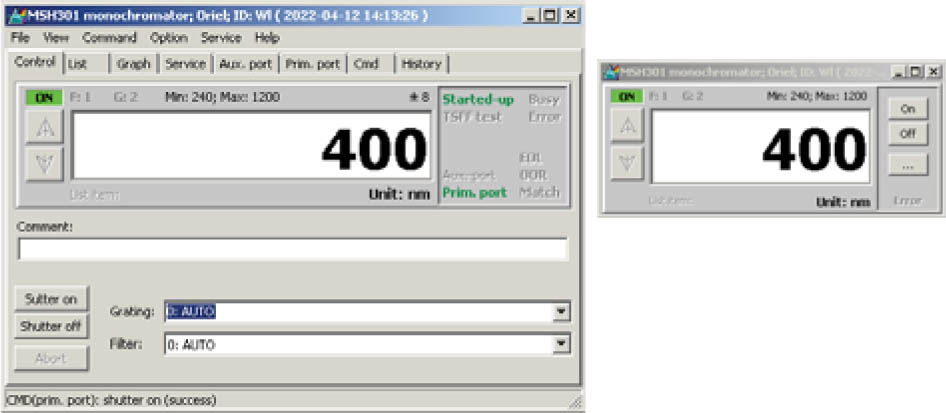
Fig. 14
Advanced (left) and simplified (right) graphical user interface of Mnhr application.
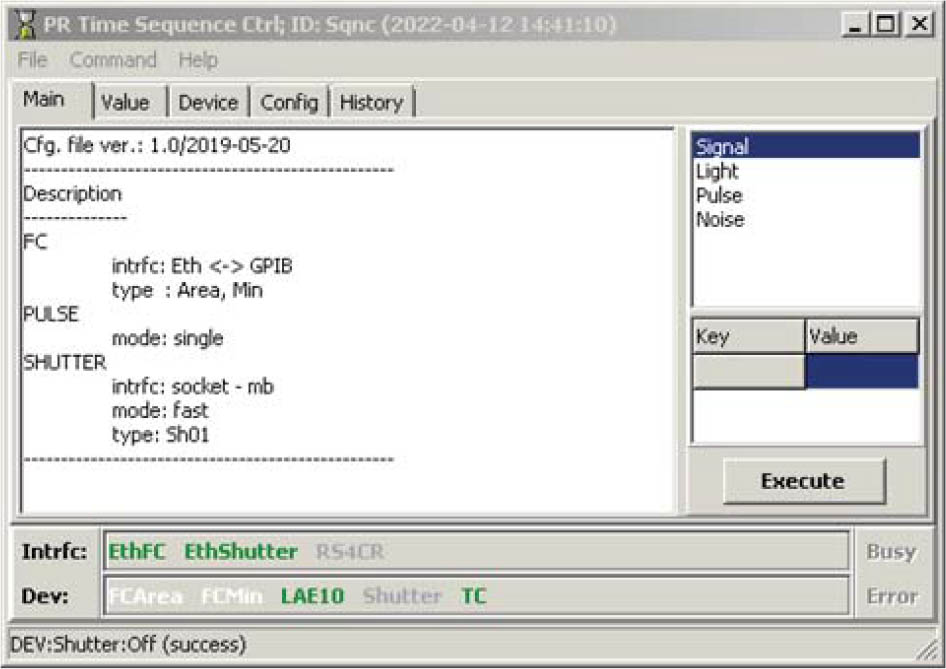
Fig. 15
User interface of the Sqnc application.
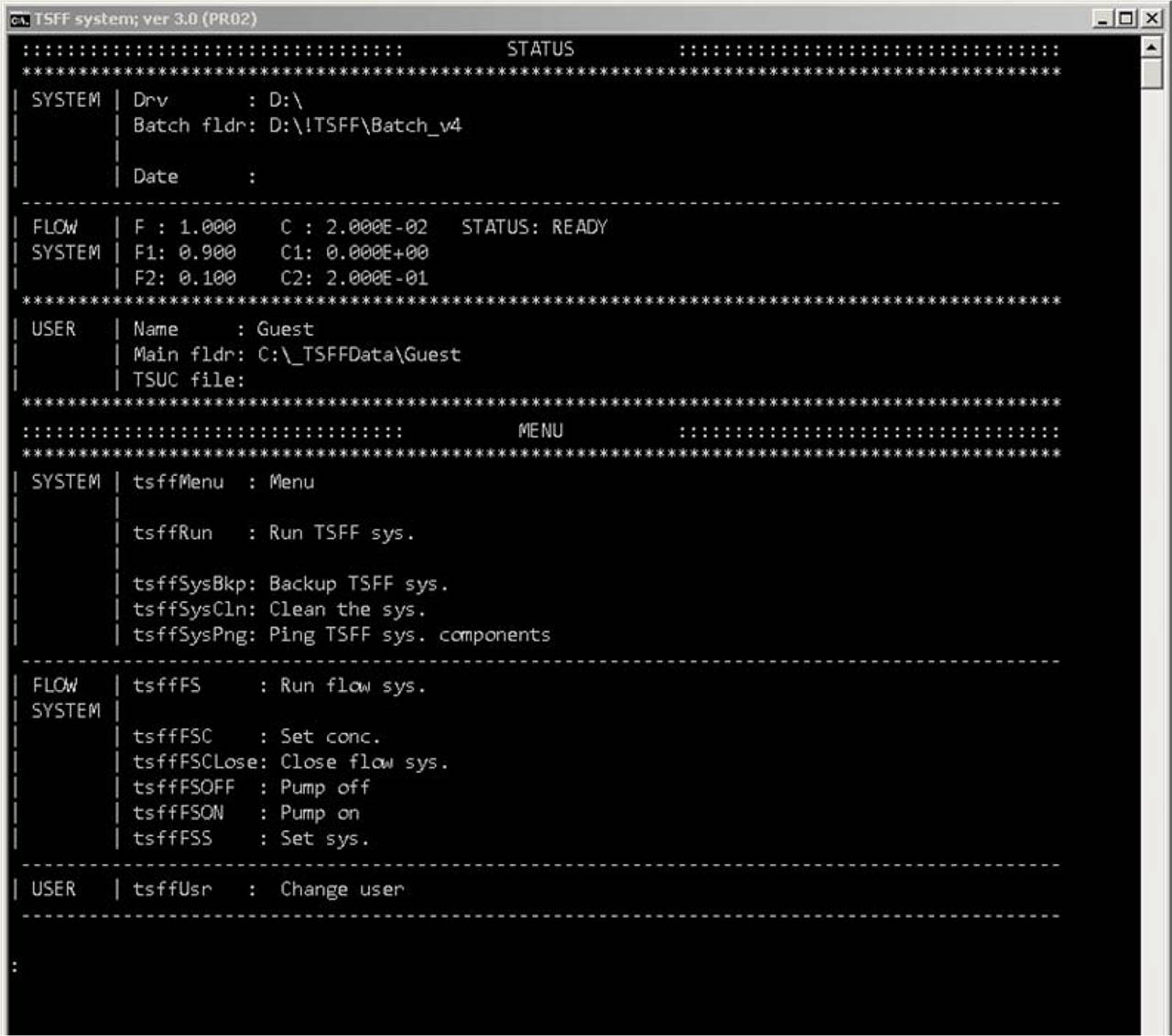
Fig. 16
TSFF package batch script execution interface.
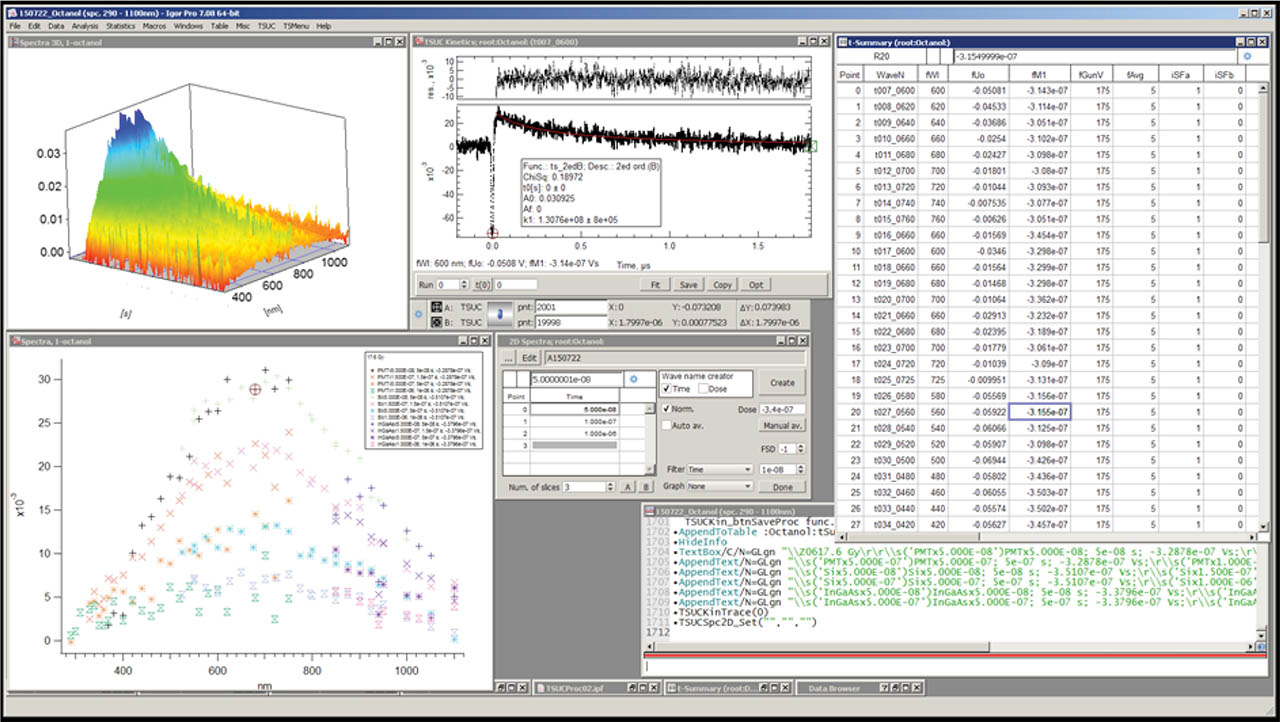
Fig. 17
The advanced data processing application (TSUC).