
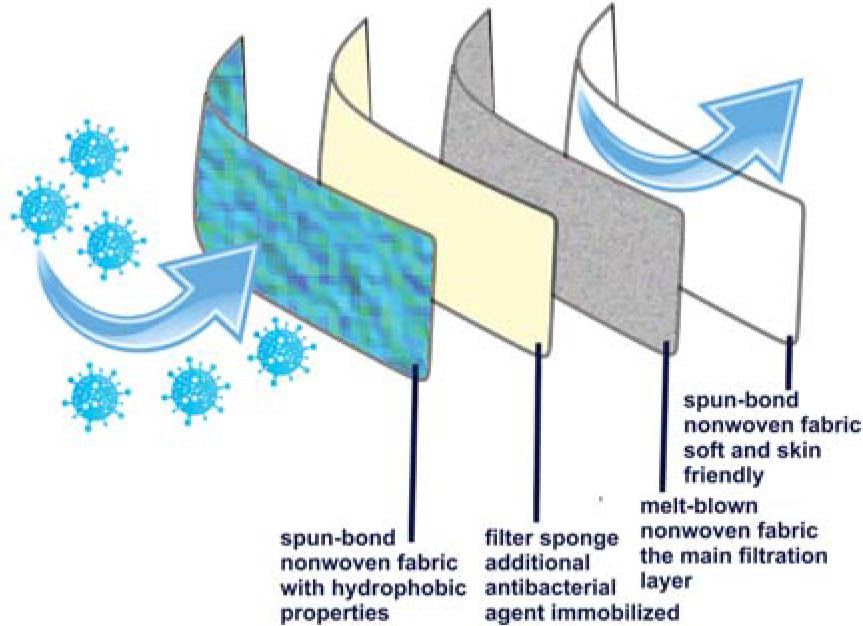
Fig. 1
Schematic of FFR showing different filtration layers.
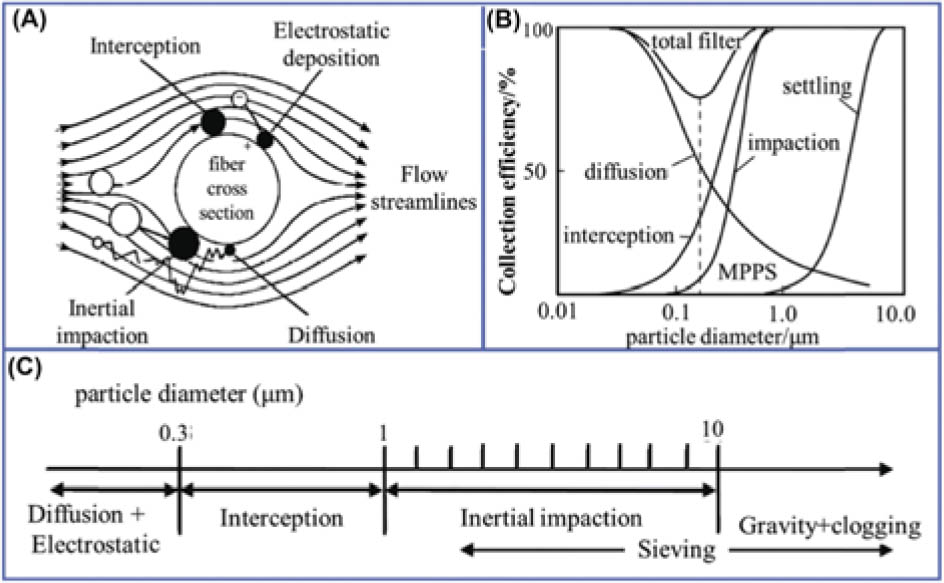
Fig. 2
The scheme of main particles deposition mechanisms on fiber material (A), diagram of the relationship between the filtration efficiency and the particle diameter for a given deposition mechanism; MPPS (B), the main filtration mechanism based on a given range of particle diameters (C). Reproduced with permission [17] Copyright © 2019 Elsevier Inc.
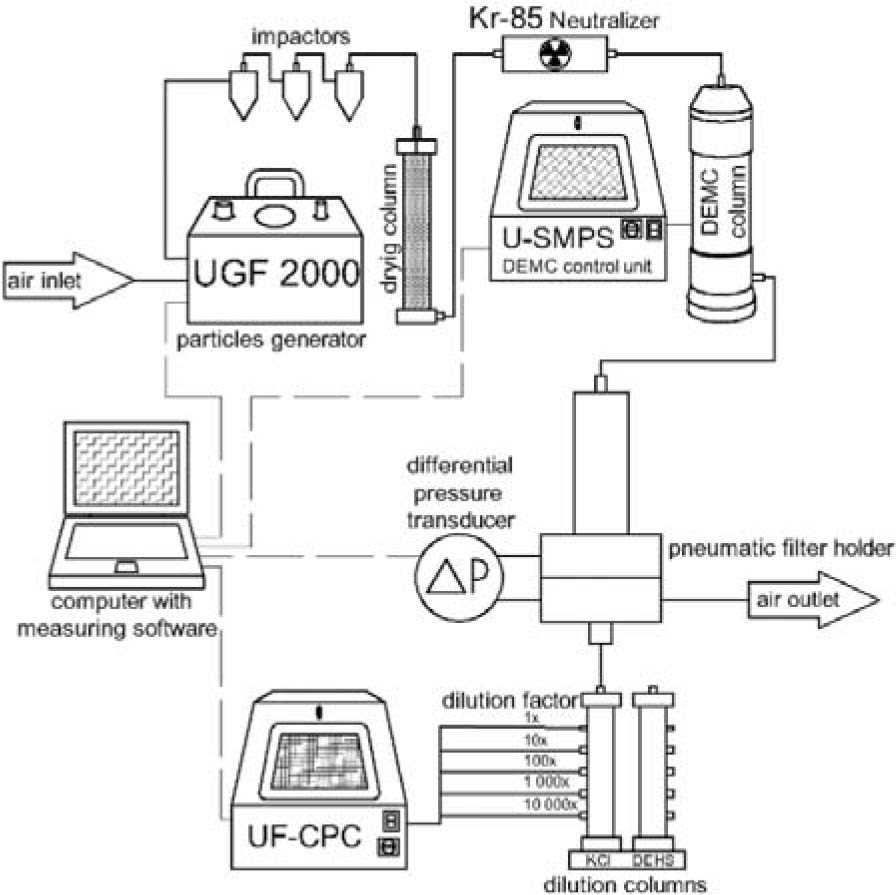
Fig. 3
Scheme of the MFP nanoPlus – test bench for nanoparticle filtration. Reproduced with permission [35] Copyright © Taiwan Association for Aerosol Research.
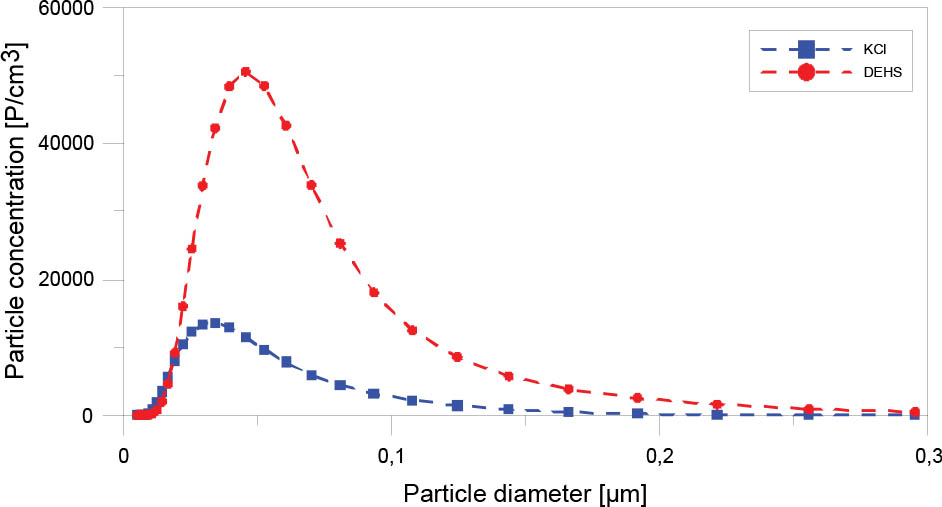
Fig. 4
The particle distribution of aerosol generated by the UGF2000.
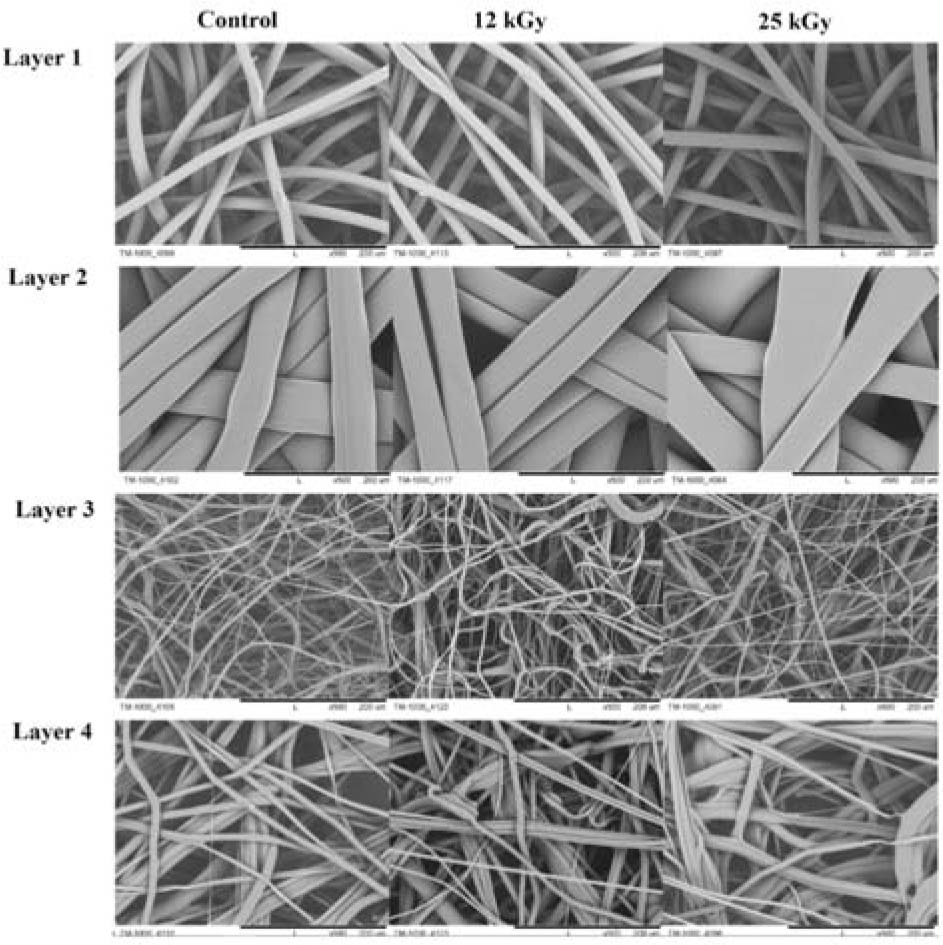
Fig. 5
SEM images of the separate layers of Aura respirators before and after irradiation with electron beam (magnification 500×).
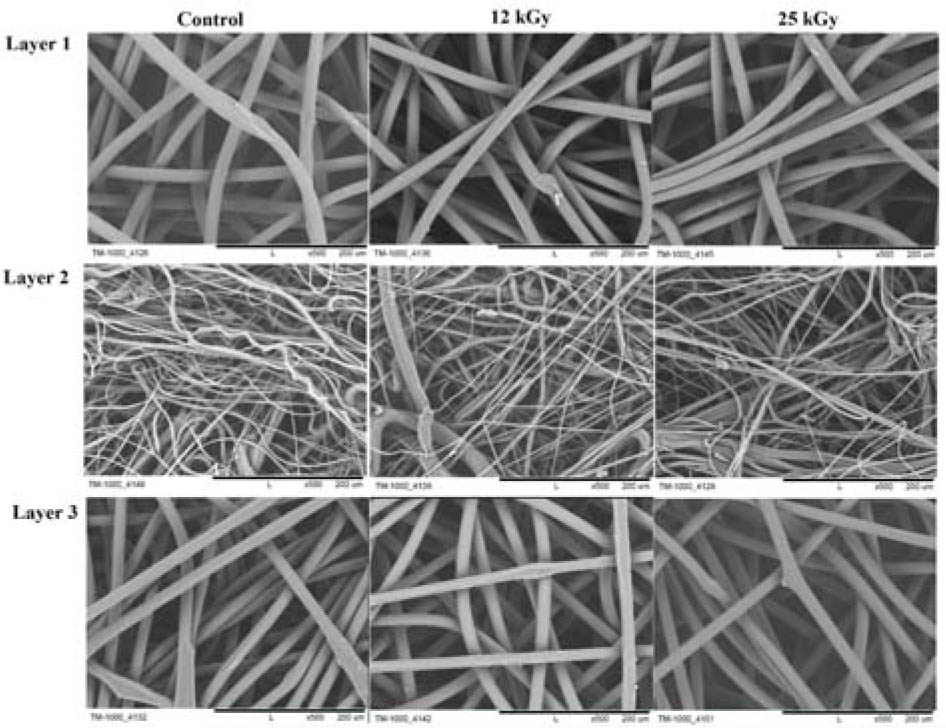
Fig. 6
SEM images of the separate layers of VFlex respirators before and after irradiation with electron beam (magnification 500×).
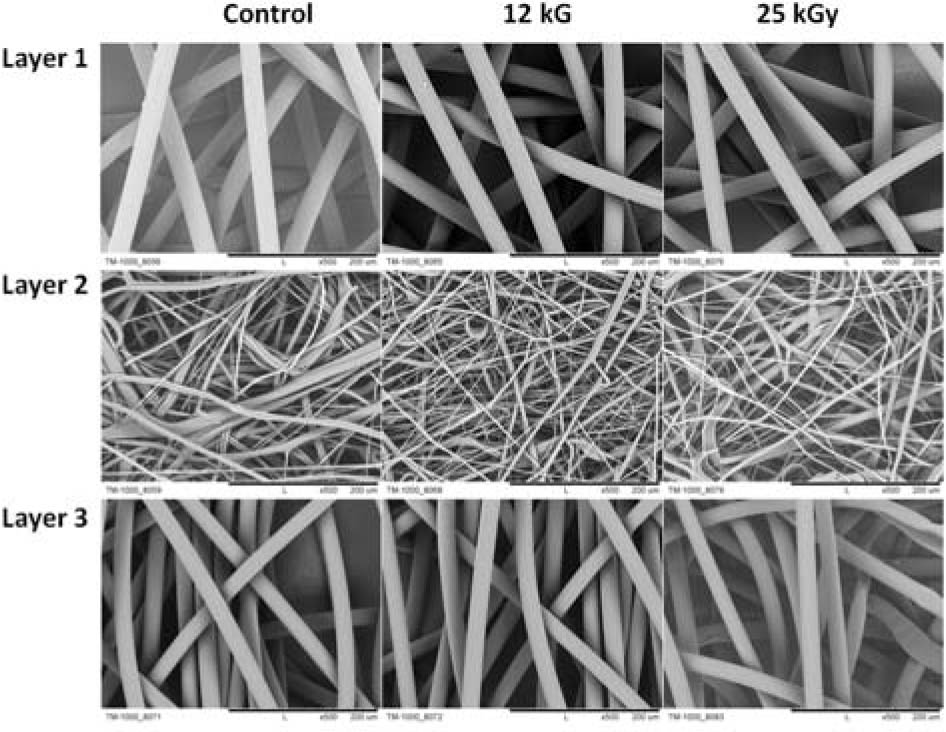
Fig. 7
SEM images of the separate layers of surgical respirators before and after irradiation with electron beam (magnification 500×).
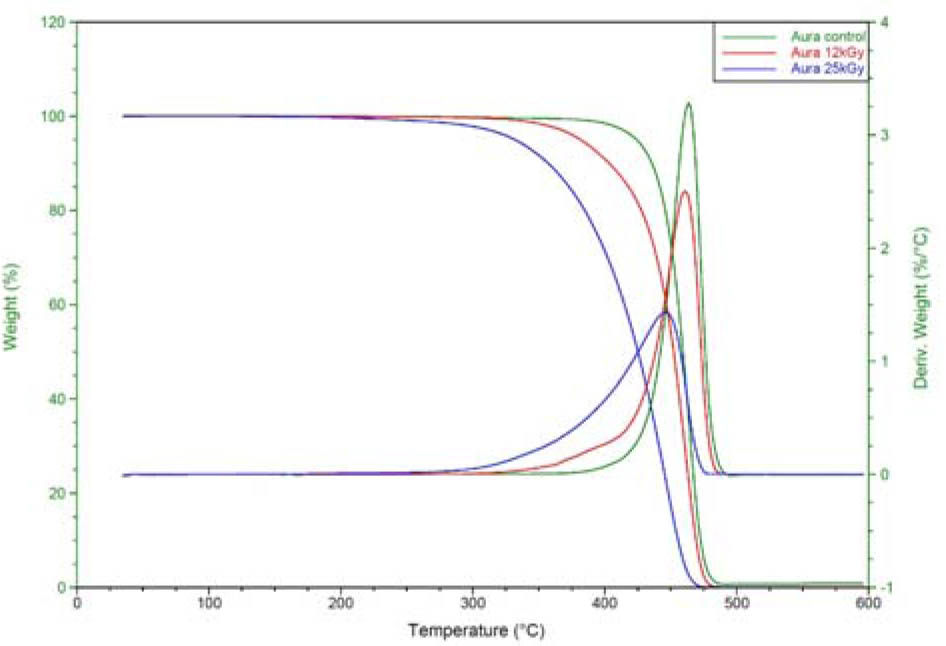
Fig. 8
Thermograms of Aura respirators irradiated with different doses.
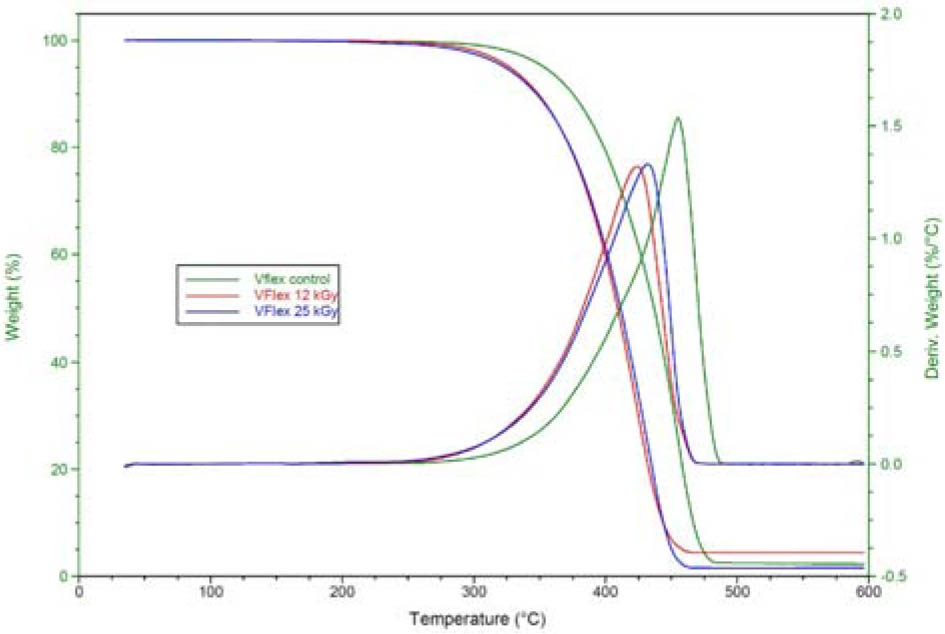
Fig. 9
Thermograms of VFlex respirators irradiated with different doses.
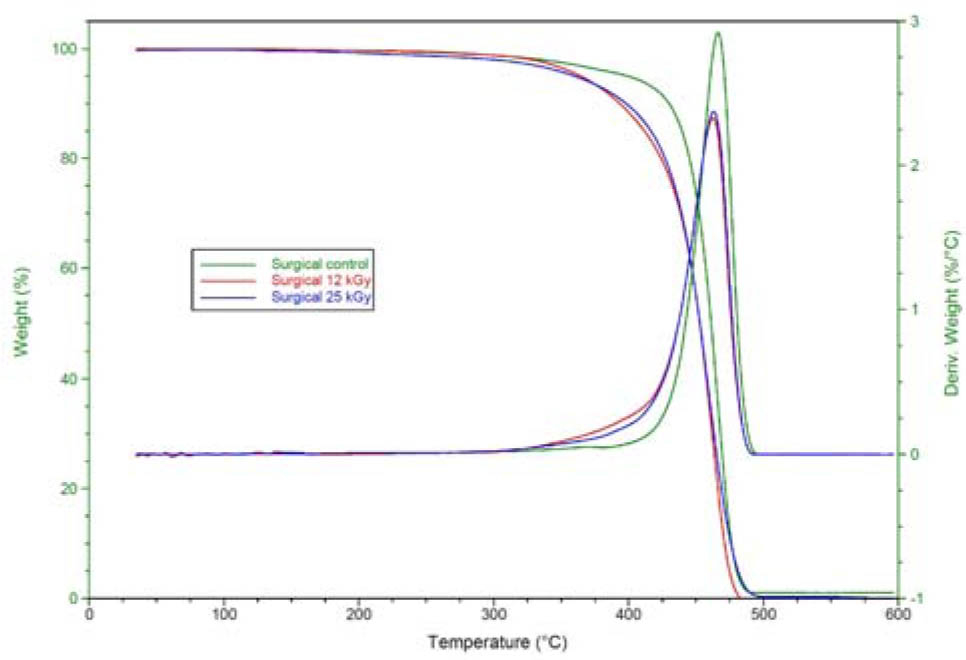
Fig. 10
Thermograms of surgical respirators irradiated with different doses.
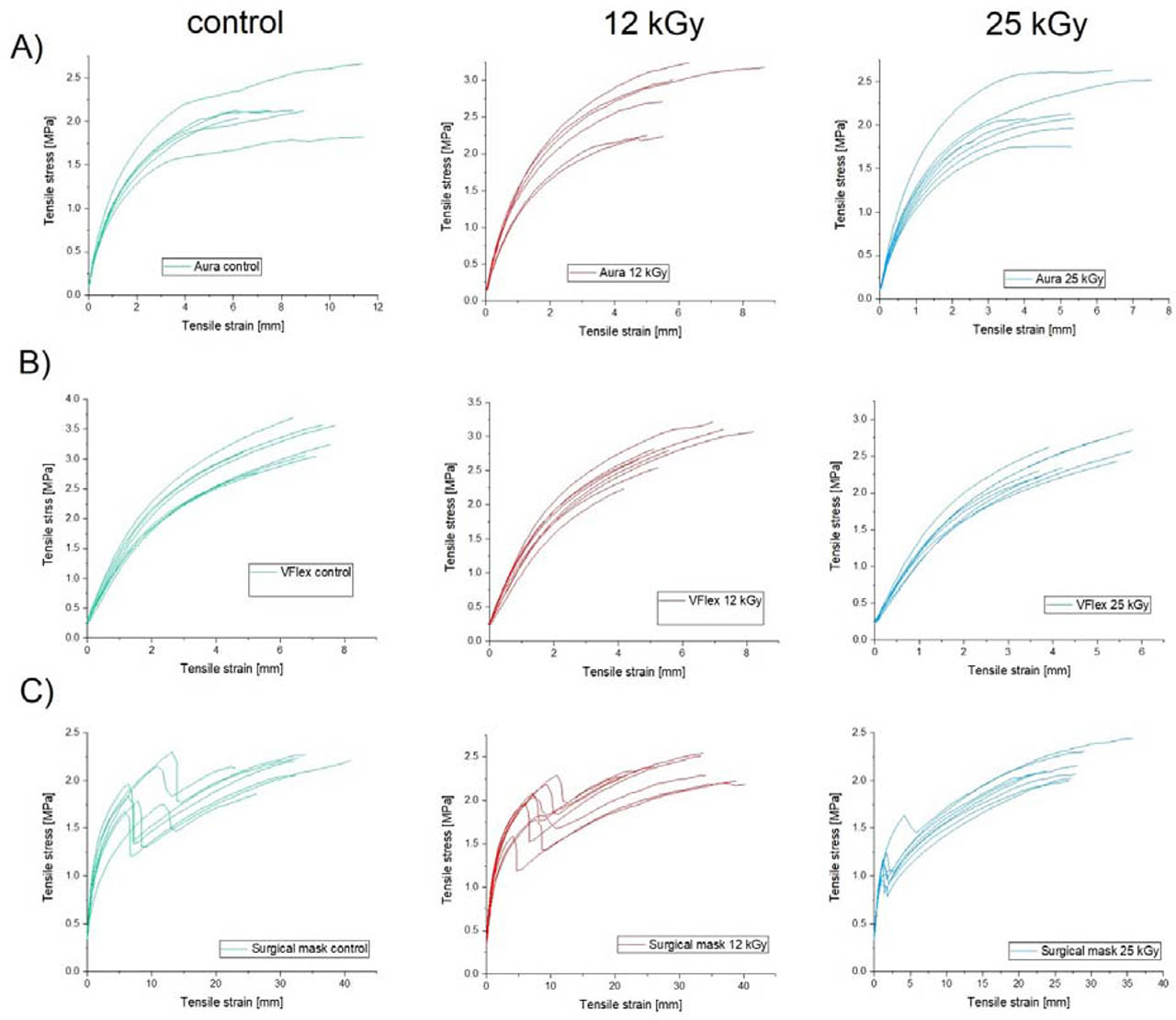
Fig. 11
Changes of tensile strain for Aura mask (A), VFlex mask (B), and surgical masks (C) for different irradiation doses.
Table 1
Average values of tensile strength together with SDs for all studied FFRs before and after irradiation
| Mask type | Aura | VFlex | Surgical | |||
|---|---|---|---|---|---|---|
| Dose (kGy) | Tensile strength (MPa) | SD | Tensile strength (MPa) | SD | Tensile strength (MPa) | SD |
| 0 (control) | 1.91 | 0.14 | 3.17 | 0.34 | 2.20 | 0.16 |
| 12 | 2.35 | 0.66 | 2.78 | 0.33 | 2.21 | 0.32 |
| 25 | 2.05 | 0.32 | 2.51 | 0.20 | 2.07 | 0.22 |
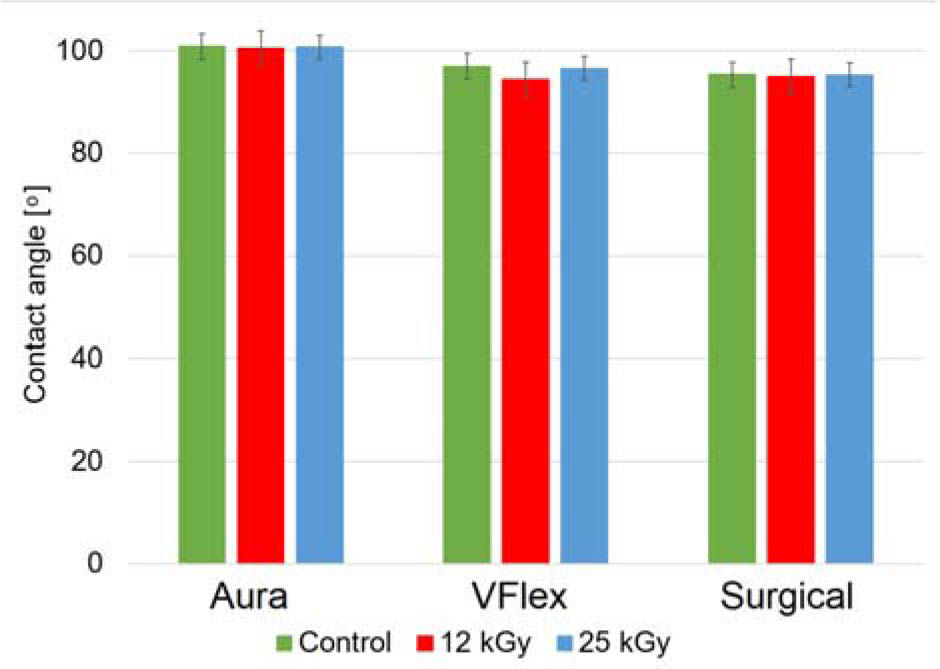
Fig. 12
Water contact angle values for FFRs before and after EB irradiation.
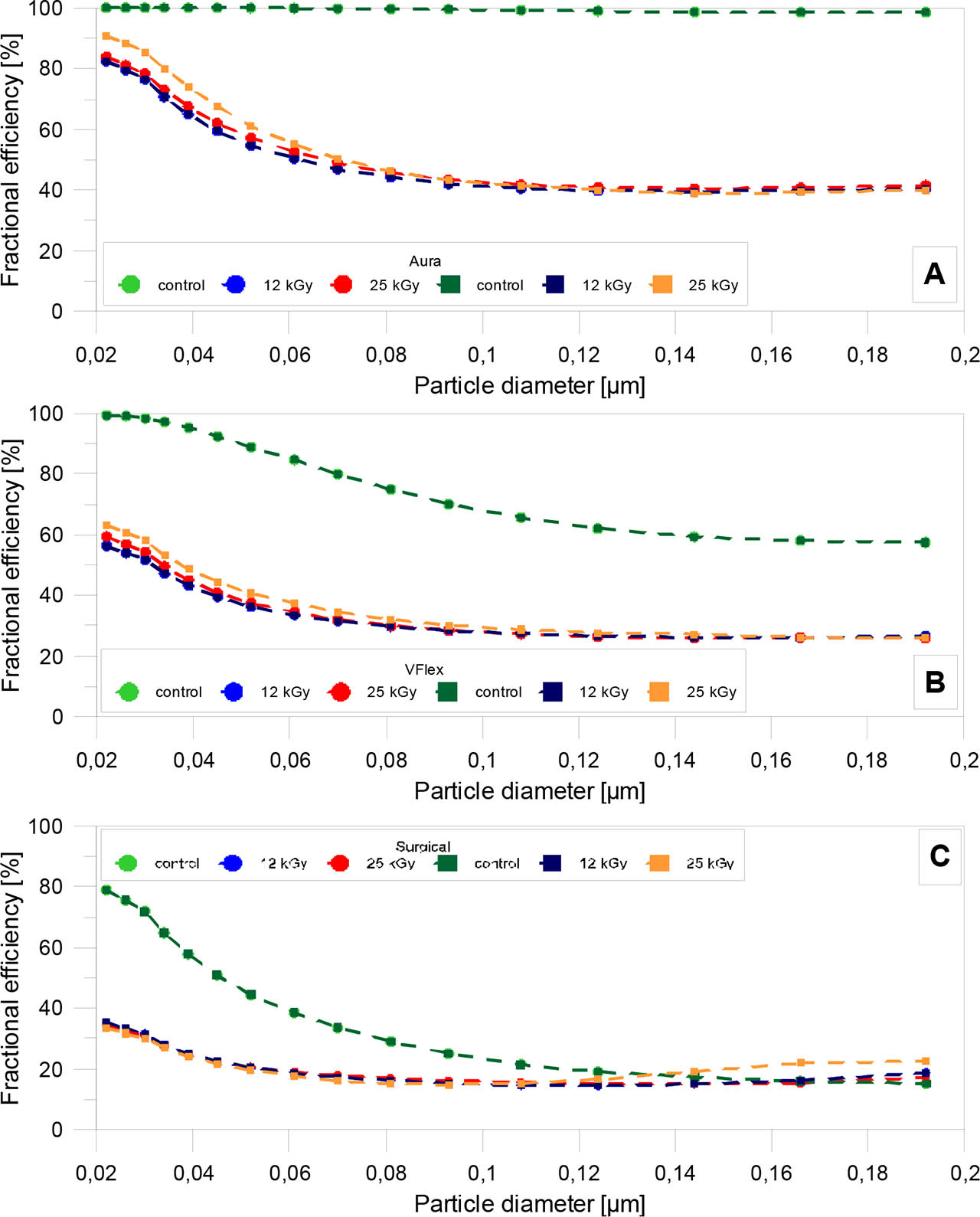
Fig. 13
Fractional efficiency of removal KCl and DEHS particles for Aura (A), VFlex (B), and surgical (C) respirators before and after irradiation with EB.
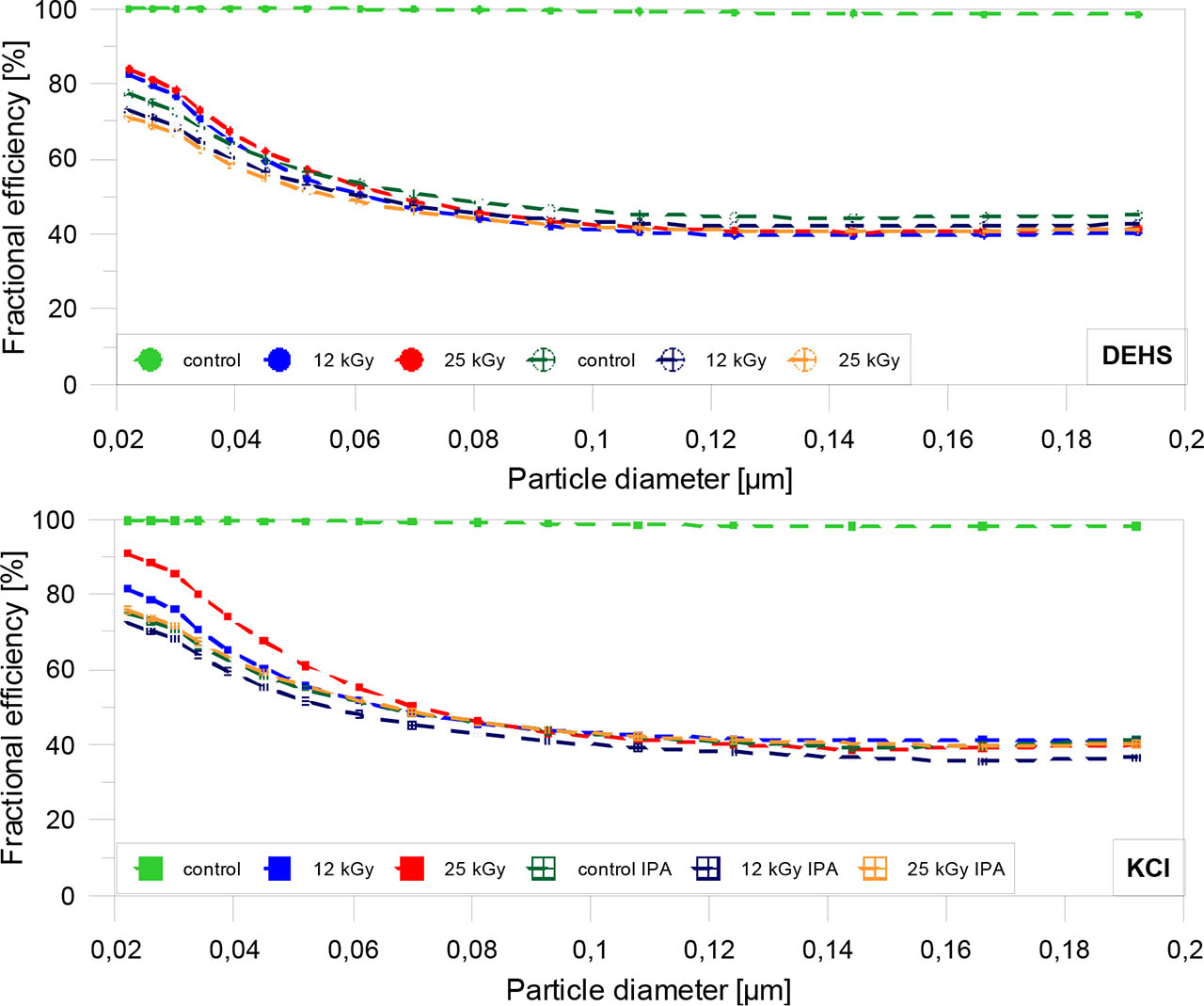
Fig. 14
Fractional efficiency of removal DEHS and KCl particles for Aura respirators after conditioning in IPA vapours.
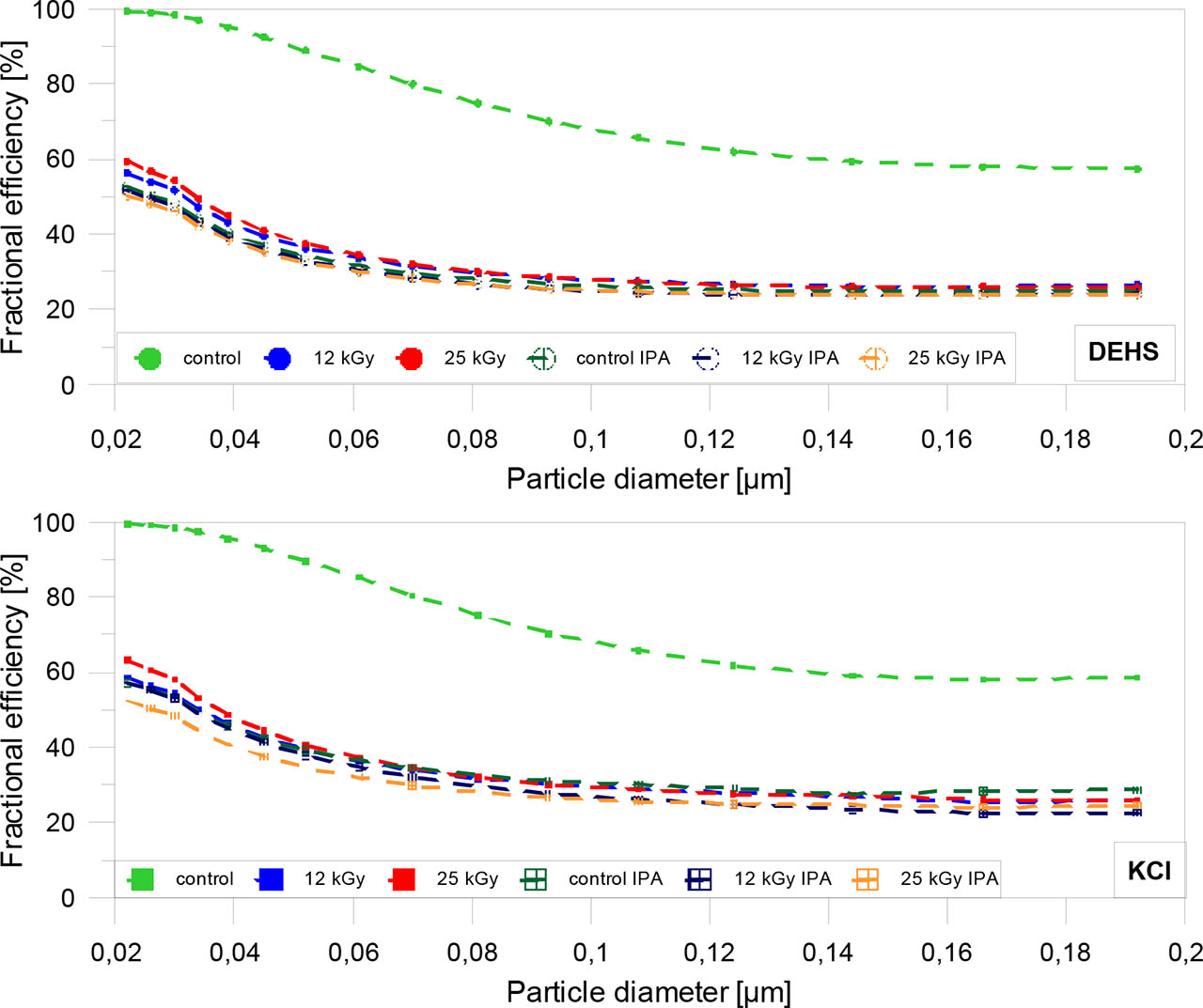
Fig. 15
Fractional efficiency of removal of DEHS and KCl particles for VFlex respirators after conditioning in IPA vapours.
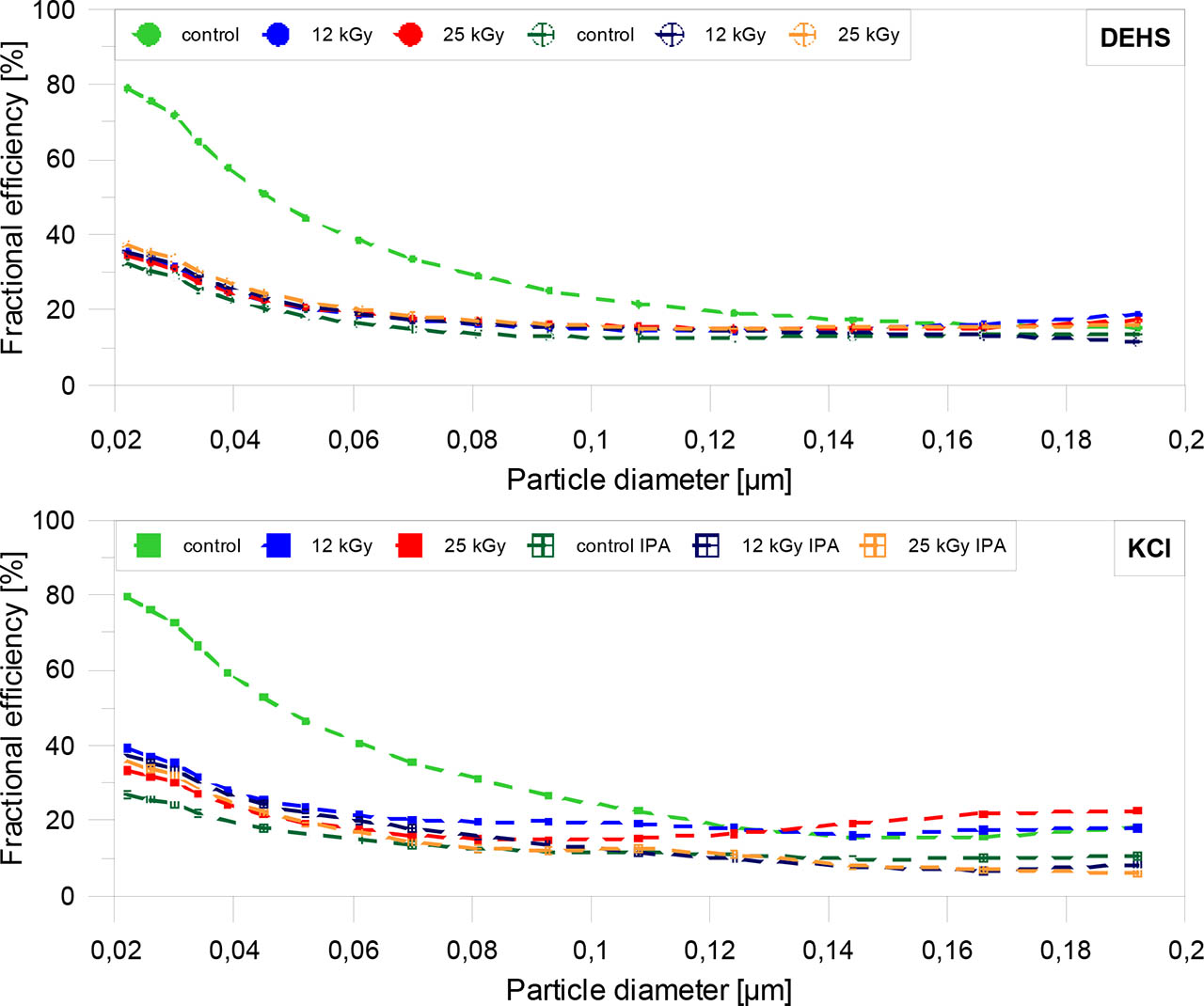
Fig. 16
Fractional efficiency of removal DEHS and KCl particles for surgical mask after conditioning in IPA vapours.
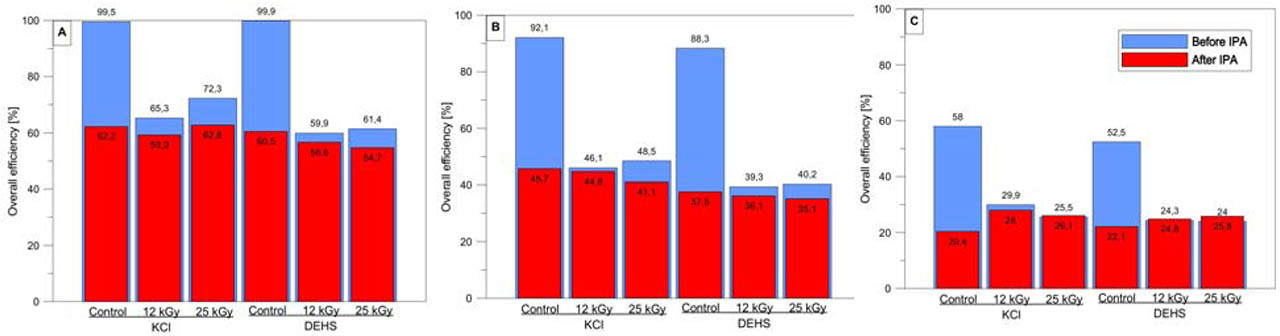
Fig. 17
Comparison of overall filtration efficiency of removal KCl and DEHS particles for Aura (A), VFlex (B), and surgical (C) respirators before and after irradiation and conditioning in IPA vapours.
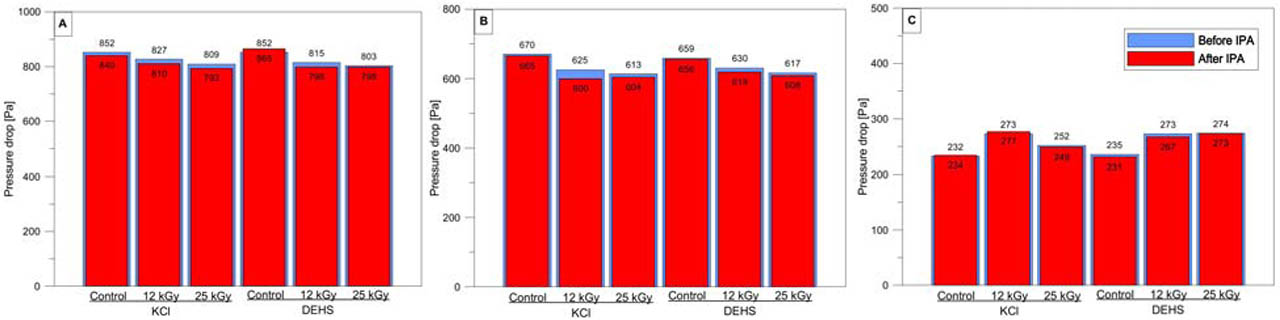
Fig. 18
Pressure drops across the filtrating materials determined for Aura (A), VFlex (B), and surgical (C) respirators before and after irradiation and conditioning in IPA vapours.