
1. Introduction
Stone paper is a composite material primarily made from polymers and inorganic fillers, with a small amount of additives, produced through polymer melt extrusion and calendering processes. It offers advantages such as water resistance, fog resistance, oil resistance, insect resistance, flame retardancy, and nontoxicity, making it widely applicable in industries such as construction materials, decoration, packaging, and printing [1]. Traditional papermaking not only consumes large amounts of wood and water resources but also discharges wastewater, malodorous gases (such as hydrogen sulfide, methyl mercaptan, and sulfur dioxide), and heavy metal-containing sludge, posing a significant burden on the ecological environment. In contrast, the production process of stone paper does not use plant fibers and does not generate pollutants such as wastewater or exhaust gases [2]. Clearly, stone paper possesses environmental advantages, aligns more closely with green development requirements, and holds broad market prospects [3].
Inorganic fillers are a crucial component of stone paper, directly influencing its physical properties and cost structure [4]. In recent years, to reduce reliance on natural mineral resources and enhance material sustainability, researchers have focused on developing new types of inorganic fillers [5,6]. Iron tailings, as a bulk solid waste generated during iron ore beneficiation, have a large cumulative stockpile and low comprehensive utilization rate. Their resource utilization has become a key issue in solid waste management and the development of a circular economy [7,8]. As a type of iron tailings, siderite tailings primarily consist of chemical components such as SiO2, CaO, MgO, and Fe2O3, with mineral compositions mainly including quartz and calcite, giving them potential value as inorganic fillers [9,10,11,12,13]. Preliminary studies have shown that using siderite tailings as a filler for stone paper is technically feasible [14]. Previous systematic investigations on the effect of siderite tailings content (0–60 wt%) on the microstructure and physical properties of stone paper showed that at a content of 20 wt%, the material exhibited optimal comprehensive physical properties, with tightness, smoothness, tear resistance, and tensile strength increased by 11, 8.1, 49.5, and 42.1%, respectively. When the content was increased to 40 wt%, although the properties were slightly lower than those at 20 wt%, they remained superior to those of the unmodified polypropylene system, and the microstructure remained dense. When the tailings content exceeded 40 wt%, agglomeration of the tailings intensified, interfacial defects increased, and all properties deteriorated significantly. Considering the balance between solid waste utilization and material performance, this study selected 40 wt% as the baseline content of siderite tailings. This approach not only enables the high-value utilization of tailings but also alleviates environmental pressure and creates economic benefits.
However, in the preparation of siderite tailing-based stone paper, the interfacial compatibility between the polymer matrix and inorganic fillers is a critical factor affecting the comprehensive performance of the material [15,16,17]. Additives, as important components for improving interfacial bonding, regulating processing fluidity, and enhancing the mechanical properties of the final product, have a decisive influence on the mechanical strength, molding stability, and ultimate application performance of stone paper [18,19,20]. Therefore, systematically studying the regulatory mechanism of additive dosage on the properties of siderite tailing-based stone paper is of great significance for optimizing material formulations, improving product quality, and promoting the efficient and high-value utilization of tailings resources.
2. Materials and methods
2.1. Materials and instrument
Materials: Siderite tailings, a company in Shaanxi, as shown in Figure 1; polypropylene, PetroChina Lanzhou Petrochemical Company; calcium stearate (CaSt, C36H70CaO4, AR, purity ≥99.9%) and liquid paraffin (C n H2n+2, n = 17~35, AR, purity ≥99.9%), Tianjin Huasheng Chemical Reagent Co., Ltd.; maleic anhydride grafted polypropylene (MAH-g-PP) and polypropylene toughening agent, Dongguan Dinghai Plastic Chemical Co., Ltd.; silane coupling agent (KH550), Dongguan Shanyi Plastics Chemical Co., Ltd.
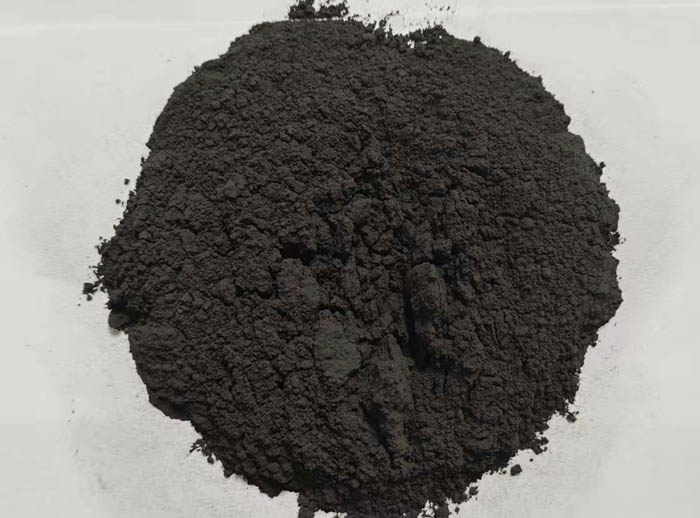
Figure 1
Appearance morphology of the siderite tailings powder.
Instrument: XU-XQM-2A Planetary Ball Mill, Xi’niu Technology; 101-0 A Electrically Heated Constant Temperature Forced Air Drying Oven, Shaoxing Shangcheng Instrument Manufacturing Co., Ltd.; LC-ES-60 High-Speed Mixer, Lichen Technology; QE-70C Micro Mixer, Wuhan Qien Technology Development Co., Ltd.; R3212 Hot Press, Wuhan Qien Technology Development Co., Ltd.; MIRA4 Scanning Electron Microscope, TESCAN; ZY-PHB Smoothness Tester, Shandong Zhongyi Instrument; 60-2600-PROTEAR Paper Tear Tester, BRAZIL; CL-5000N Multi-Function Universal Testing Machine, Jiangdu Changlong Testing Machinery Factory; SS-7862 Ultraviolet Aging Test Chamber, Songshu SARTEC; GG988-MAZ2011 Laser Particle Size Analyzer, Malvern Panalytical.
The siderite tailings used in the experiment is black powder, as shown in Figure 1.
Figure 2 shows the particle size distribution histogram of the siderite tailings powder, which shows that the particle sizes are mainly distributed between 0.166 and 51.8 μm, exhibiting a unimodal and positively skewed distribution. The characteristic particle sizes D50 and D90, corresponding to cumulative volume percentages of 50 and 90%, are approximately 12.0 and 27.5 μm, respectively. This particle size characteristic meets the basic requirements for stone paper fillers.
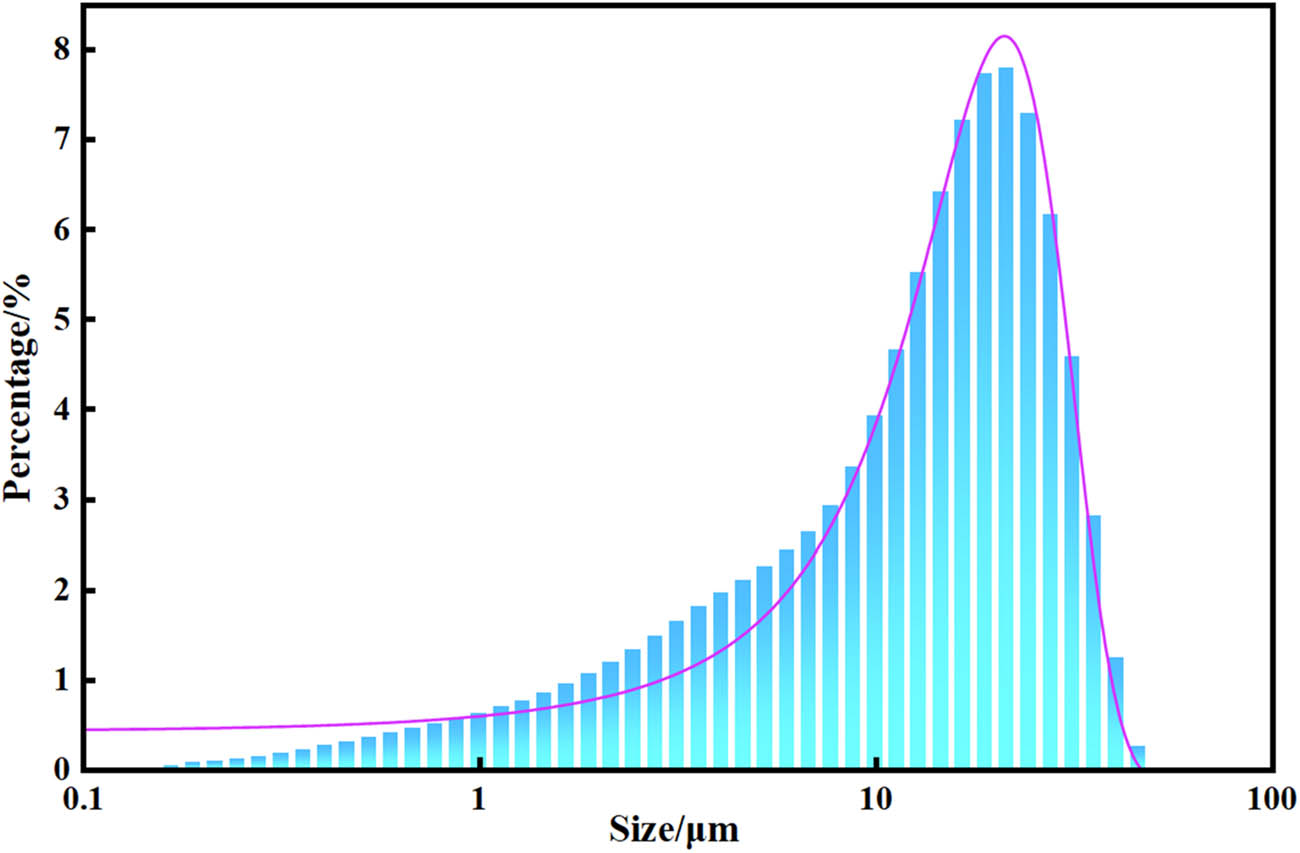
Figure 2
The particle size distribution histogram of the siderite tailings powder.
2.2. Synthetic preparation
Figure 3 shows the synthesis process diagram of stone paper, as shown in Figure 3, and according to the formulations shown in Tables 1–4, each raw material is weighed and mixed thoroughly using a high-speed mixer. The mixture is then transferred to an internal mixer and knead at 180℃ for 30 min. After kneading, the resulting material is cut into masterbatches with a radius of 0.5 mm. In the molding process, a hot-pressing technique is adopted: weigh 3 g of the masterbatches and spread them evenly in a standard mold measuring 100 × 100 × 0.2 mm. Hot-pressing is performed at 180℃ for 30 minutes, with pressure applied in stages up to 15 MPa. Subsequently, the material is cooled under pressure to room temperature and demolded to obtain stone paper substrates. These substrates are then cut into specimens of different specifications for subsequent performance testing. Figure 4 presents a mechanism diagram of powder modification.
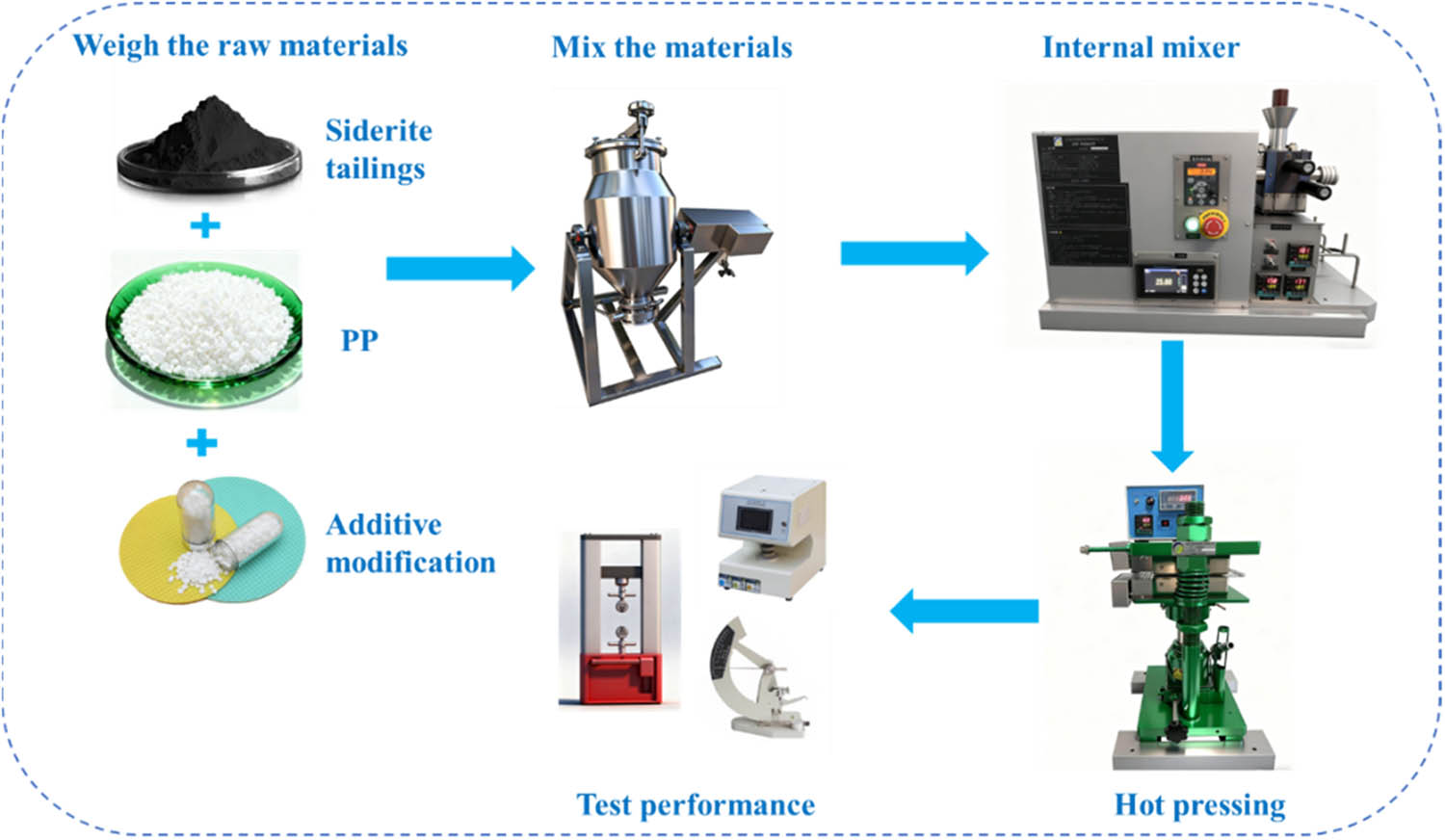
Figure 3
Synthesis process diagram of stone paper.
Table 1
Component content of siderite tailings-based stone paper under different calcium stearate contents (wt%)
| Group | Siderite tailings | PP | CaSt | MAH-g-PP | SCA-KH550 | Liquid paraffin | PP toughener |
|---|---|---|---|---|---|---|---|
| 1 | 40 | 49 | 1 | 2 | 2 | 1 | 5 |
| 2 | 40 | 48 | 2 | 2 | 2 | 1 | 5 |
| 3 | 40 | 47 | 3 | 2 | 2 | 1 | 5 |
Table 2
Component content of siderite tailings-based stone paper under different maleic anhydride grafted polypropylene contents (wt%)
| Group | Siderite tailings | PP | CaSt | MAH-g-PP | SCA-KH550 | Liquid paraffin | PP toughener |
|---|---|---|---|---|---|---|---|
| 1 | 40 | 49 | 2 | 1 | 2 | 1 | 5 |
| 2 | 40 | 48 | 2 | 2 | 2 | 1 | 5 |
| 3 | 40 | 47 | 2 | 3 | 2 | 1 | 5 |
Table 3
Component content of siderite tailings-based stone paper under different silane coupling agent contents (wt%)
| Group | Siderite tailings | PP | CaSt | MAH-g-PP | SCA-KH550 | Liquid paraffin | PP toughener |
|---|---|---|---|---|---|---|---|
| 1 | 40 | 49 | 2 | 2 | 1 | 1 | 5 |
| 2 | 40 | 48 | 2 | 2 | 2 | 1 | 5 |
| 3 | 40 | 47 | 2 | 2 | 3 | 1 | 5 |
Table 4
Component content of siderite tailings-based stone paper under different toughening agent contents (wt%)
| Group | Siderite tailings | PP | CaSt | MAH-g-PP | SCA-KH550 | Liquid paraffin | PP toughener |
|---|---|---|---|---|---|---|---|
| 1 | 40 | 51 | 2 | 2 | 2 | 1 | 2 |
| 2 | 40 | 48 | 2 | 2 | 2 | 1 | 5 |
| 3 | 40 | 45 | 2 | 2 | 2 | 1 | 8 |
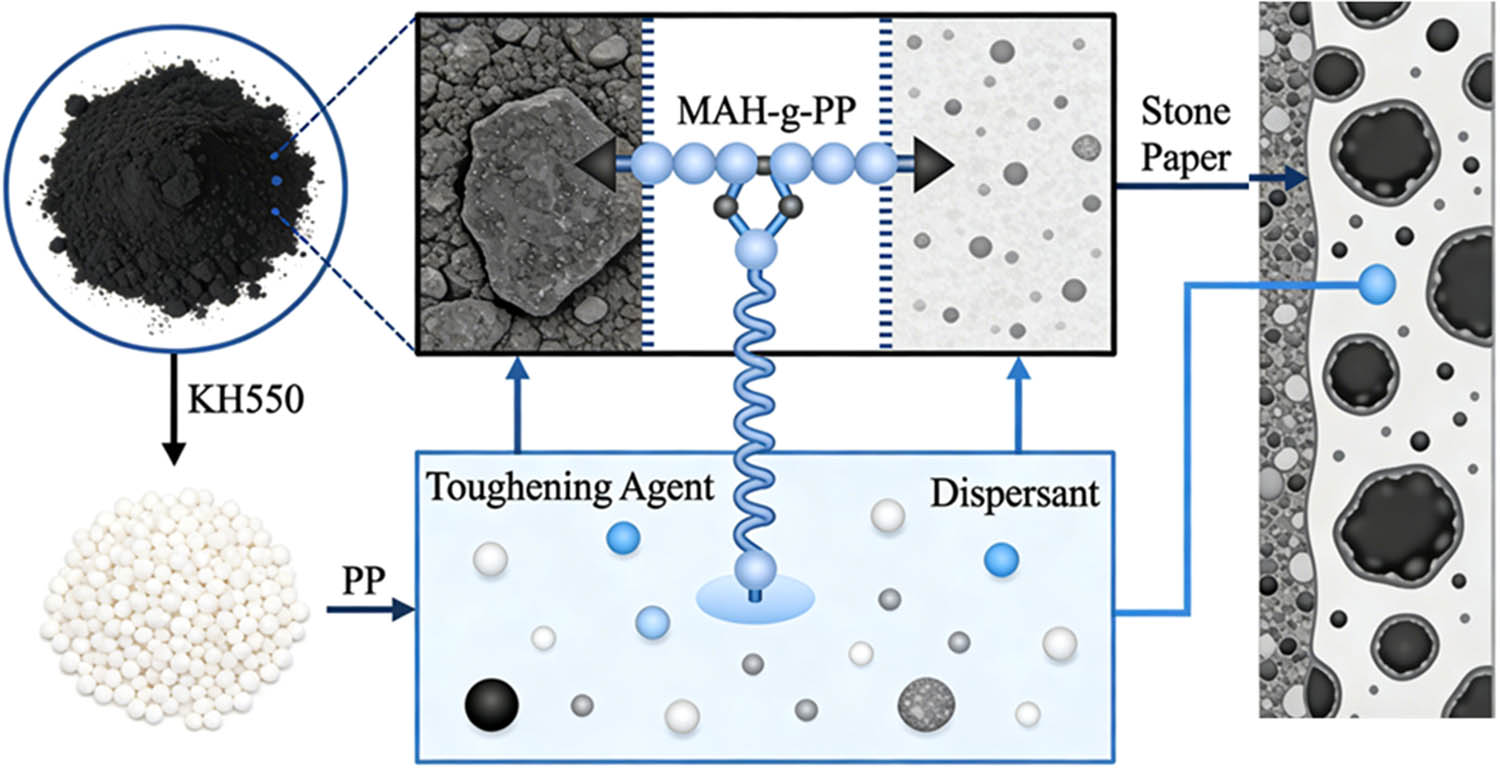
Figure 4
Mechanism diagram of powder modification.
2.3. Test performance
2.3.1. Microstructure of the surface and cross-section of stone paper
The microstructure of the surface and cross-section of the stone paper was observed using scanning electron microscopy (SEM). The stone paper was cut into 0.5 × 0.5 cm pieces, adhered to the sample stage with conductive adhesive, and sputter-coated with gold before observation.
2.3.2. Tightness test of stone paper
The tightness is calculated using equation (1):
where D is the tightness of the paper, g/cm3; G is the basis weight of the paper, g/m2; and σ is the thickness of the paper, mm. Five specimens were prepared for each formulation. The results are presented as mean values with standard deviations.2.3.3. Smoothness test of stone paper
The test was conducted in accordance with GB/T 456-2002, with sample dimensions of 100 × 100 mm. The smoothness of each stone paper was measured using a smoothness tester [21]. Ten specimens were tested for each formulation. The results are expressed as mean ± standard deviation.
2.3.4. Tear strength test of stone paper
Sampling and testing were performed according to GB/T 455-2022, with sample dimensions of 75 × 63 mm [22]. Ten specimens were tested for each formulation. The results are expressed as mean ± standard deviation.
2.3.5. Tensile strength test of stone paper
A multifunctional universal testing machine was used, and the test was conducted in accordance with GB/T 1040.3-2006 [23]. Five specimens were tested for each formulation, and the average value with standard deviation is reported.
3. Results and discussion
3.1. Effect of additive content on the microstructure of stone paper
3.1.1. Effect of calcium stearate content on the microstructure of siderite tailings-based stone paper
Figures 5 and 6 show the surface and cross-sectional SEM images of siderite tailings-based stone paper with different calcium stearate contents, respectively. It can be seen from the figures that the structure of the siderite tailing-based stone paper is composed of siderite tailings particles and a PP matrix. The siderite tailings exhibit typical granular characteristics, while the PP forms a three-dimensional continuous molten matrix with a microporous structure. As the calcium stearate content increases, the SEM images show signs of progressively poorer interfacial bonding. At a calcium stearate addition of 1 wt%, particle agglomeration is somewhat reduced, indicating that calcium stearate forms a lubricating layer at the interface, weakening the direct bonding between the powder and the matrix. At an addition of 2 wt%, interfacial gaps become more common, and the powder appears to be embedded in the matrix without actual fusion. At 3 wt% addition, the tailings powder particles easily detach from the matrix, leaving clear holes, indicating very weak interfacial adhesion. The calcium stearate molecule consists of a polar calcium carboxylate head and a nonpolar long alkyl chain tail. Its head adsorbs onto the polar inorganic powder surface, while the nonpolar long alkyl chain extends outward. This alkyl chain layer is highly compatible with the PP matrix, but it is a soft, low-strength physical lubricating layer that isolates the PP molecular chains from direct contact and entanglement with the powder surface, thereby weakening the physical bonding strength at the interface.
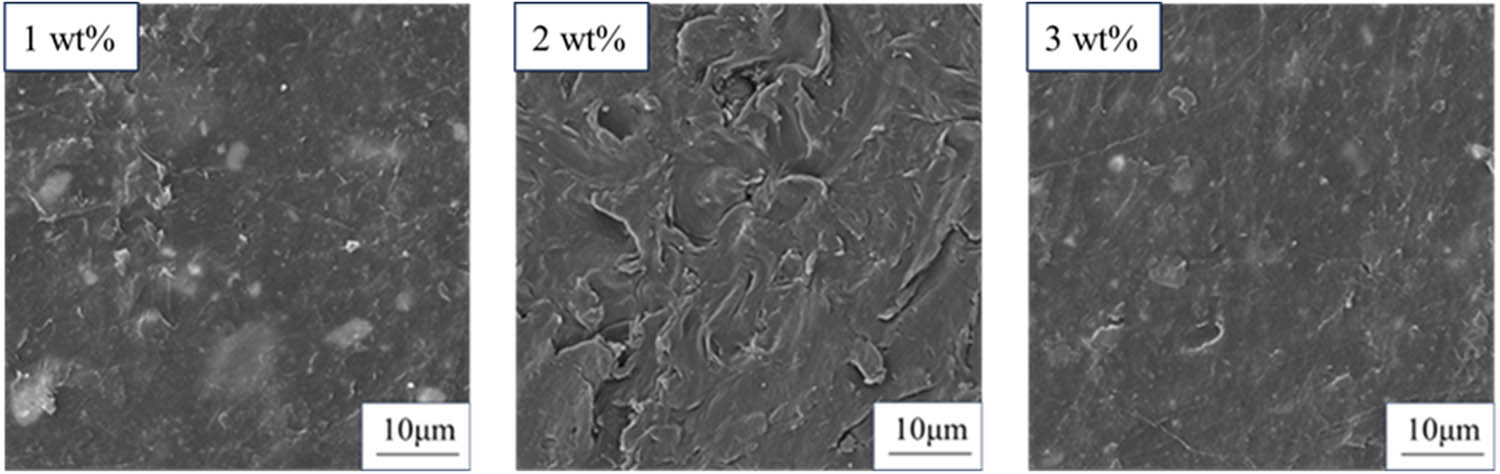
Figure 5
Scanning electron microscopy images of the surface of siderite tailings-based stone paper with different calcium stearate contents: 1, 2, and 3 wt%.
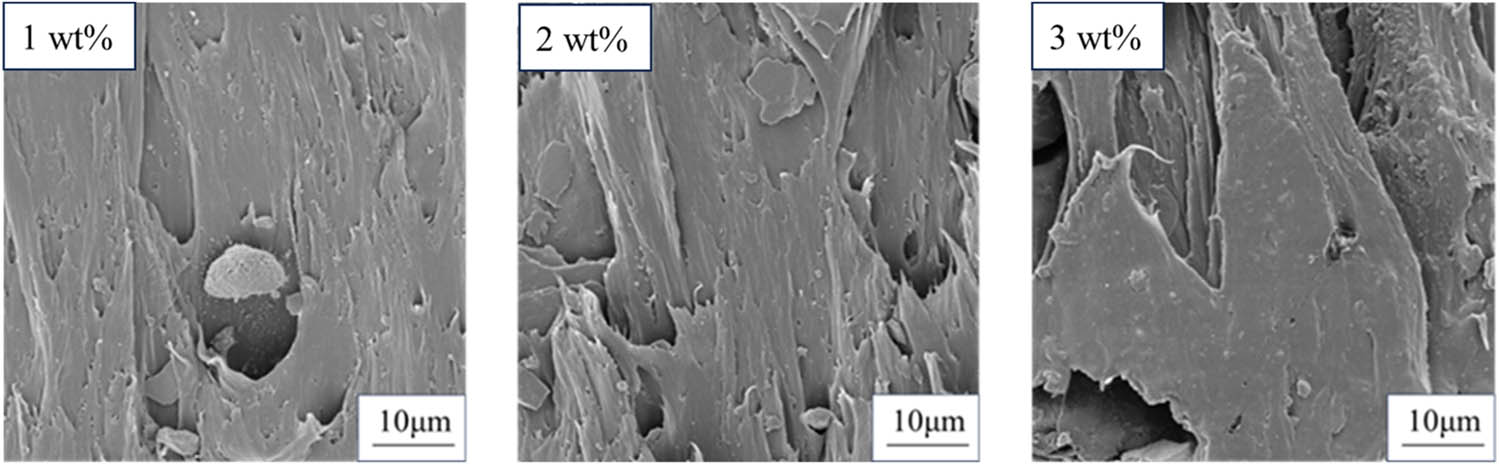
Figure 6
Scanning electron microscopy images of the cross-section of siderite tailings-based stone paper with different calcium stearate contents: 1, 2, and 3 wt%.
3.1.2. Effect of maleic anhydride grafted polypropylene content on the microstructure of siderite tailings-based stone paper
Figures 7 and 8 show the surface and cross-sectional SEM images of siderite tailings-based stone paper with different MAH-g-PP contents. It can be observed from the figures that as the MAH-g-PP content increases from 1 to 3 wt%, the interfacial morphology of the material shows a clear improvement trend. At 1 wt% MAH-g-PP, there are numerous gaps and voids between the tailings powder and the PP matrix, and the powder is not tightly bonded to the matrix; some interfaces remain clearly distinguishable, indicating weak interfacial adhesion. When the content increases to 2 wt%, the interface between the powder and the matrix tends to become blurred, the powder particles are tightly wrapped by the PP matrix, particle agglomeration is reduced, and dispersion uniformity is significantly improved, indicating effective enhancement of interfacial adhesion. Upon further increasing the content to 3 wt%, the interfacial adhesion is significantly strengthened, the phase interface becomes indistinct, and a relatively continuous transition layer structure forms between the powder and the matrix. MAH-g-PP, as a typical interfacial compatibilizer, possesses maleic anhydride functional groups on its molecular chains that are highly polar and can undergo esterification or form strong hydrogen bonds with hydroxyl groups on the surface of inorganic fillers, thereby achieving chemical bonding to the filler surface. Simultaneously, the polypropylene segments in the MAH-g-PP chain have an identical chemical structure to the matrix PP resin, allowing mutual diffusion and chain entanglement during melt blending, achieving complete compatibility. Ultimately, one end of MAH-g-PP chemically bonds to the inorganic filler, while the other end integrates into the PP matrix through chain entanglement, greatly enhancing the interfacial adhesion between the originally incompatible phases.
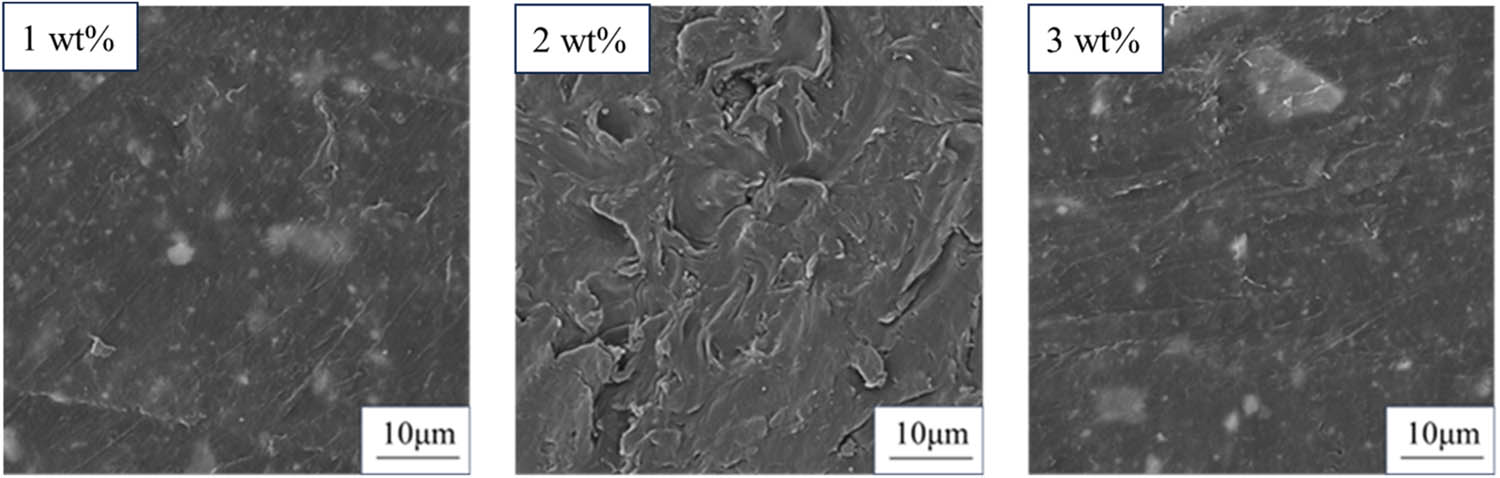
Figure 7
Scanning electron microscopy images of the surface of siderite tailings-based stone paper with different MAH-g-PP contents: 1, 2, and 3 wt%.
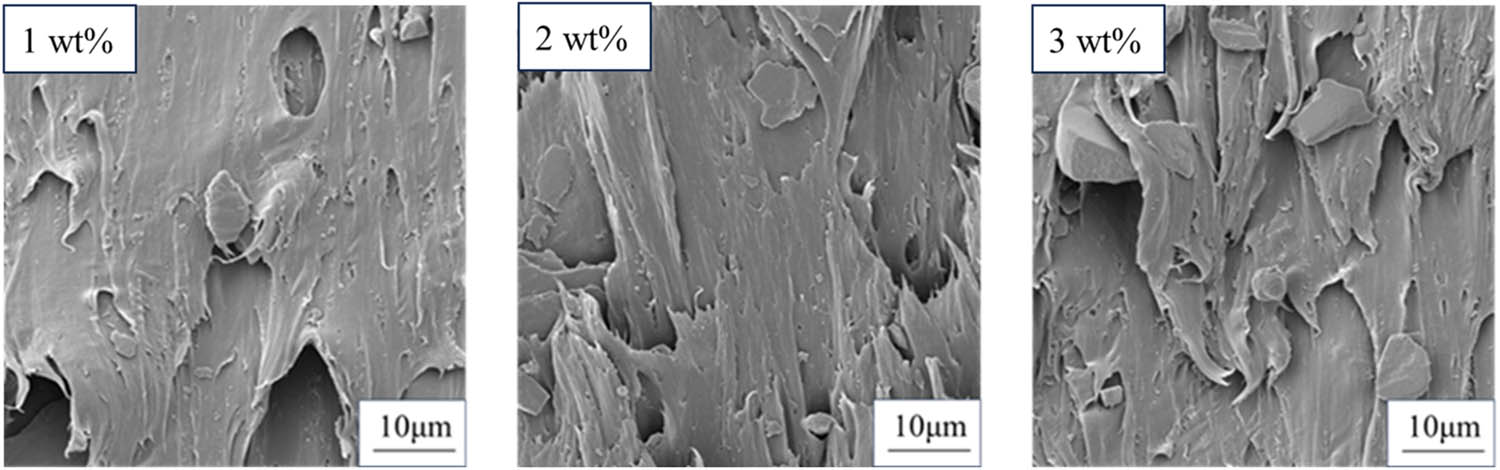
Figure 8
Scanning electron microscopy images of the cross-section of siderite tailings-based stone paper with different MAH-g-PP contents: 1, 2, and 3 wt%.
3.1.3. Effect of silane coupling agent KH550 content on the microstructure of siderite tailings-based stone paper
Figures 9 and 10 present the surface and cross-sectional SEM images of siderite tailings-based stone paper with different KH550 silane coupling agent contents. It can be seen that at 1 wt% KH550, there are many obvious gaps and voids between the powder and the PP matrix, significant powder agglomeration is observed, and the interface is clearly defined, indicating insufficient interfacial adhesion and ineffective stress transfer. When the content increases to 2 wt%, the interface between the powder and the matrix becomes blurred, the powder particles are tightly encapsulated by the PP matrix, particle distribution uniformity is markedly improved, and although some defects remain in the cross-sectional structure, they are mitigated, indicating enhanced interfacial compatibility. When the content increases to 3 wt%, this likely exceeds the saturated adsorption capacity of functional groups on the powder surface. The ethoxy groups in KH550 molecules hydrolyze during processing to form silanol groups, which can undergo condensation reactions with hydroxyl groups on the inorganic filler surface, forming stable siloxane covalent bonds, thereby achieving chemical anchoring of the coupling agent molecules onto the powder surface. Meanwhile, the amino group at the other end of the KH550 molecule, as a polar functional group, can undergo physical entanglement and hydrogen bonding with the PP matrix, thus establishing effective interfacial coupling between the filler and the matrix. However, when the KH550 content exceeds the maximum number of functional groups that can chemically bond to the powder surface, the excess coupling agent molecules cannot all participate in chemical bonding reactions at the interface; instead, they physically adsorb onto the powder surface, forming a poorly crosslinked silane layer of low mechanical strength. This weak boundary layer cannot effectively transfer stress at the interface and instead becomes a weak link in the composite, thereby weakening the interfacial adhesion.
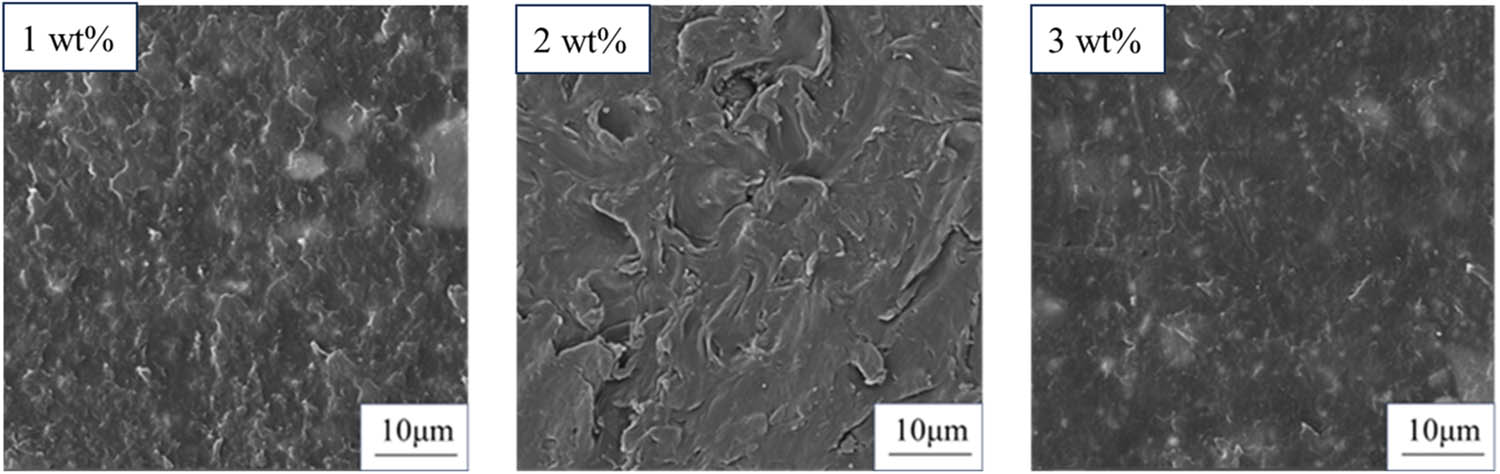
Figure 9
Scanning electron microscopy images of the surface of siderite tailings-based stone paper with different SCA-KH550 contents: 1, 2, and 3 wt%.
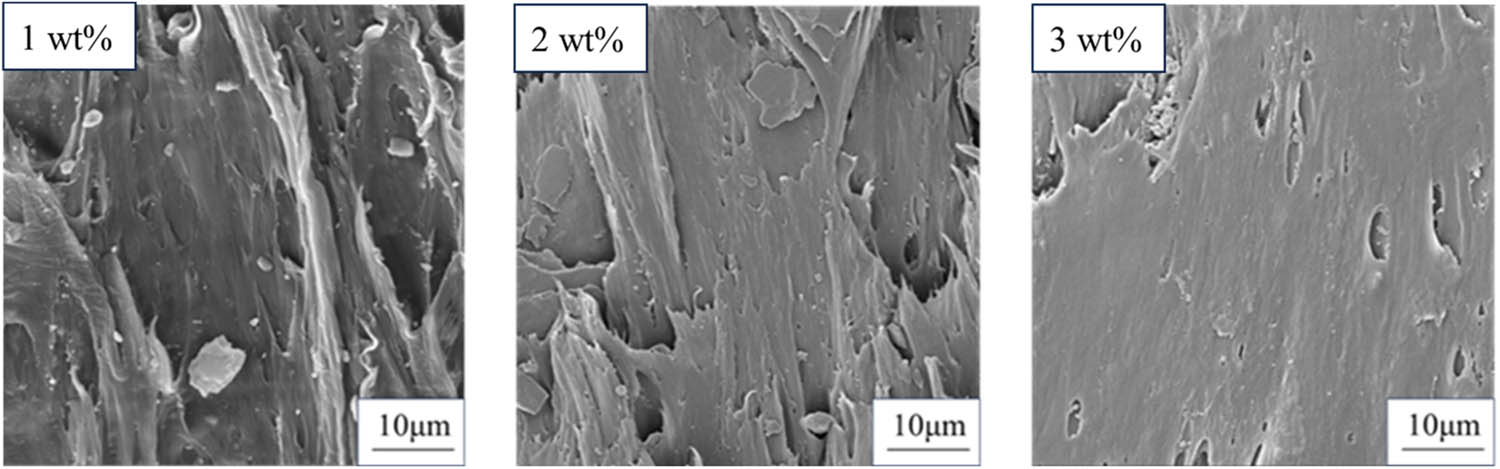
Figure 10
Scanning electron microscopy images of the cross-section of siderite tailings-based stone paper with different SCA-KH550 contents: 1, 2, and 3.
3.1.4. Effect of polypropylene toughening agent content on the microstructure of siderite tailings-based stone paper
Figures 11 and 12 show the surface and cross-sectional SEM images of siderite tailings-based stone paper with different polypropylene toughener contents. At 2 wt% addition, the elastomer is dispersed in the PP matrix as a small number of isolated particles. At 5 wt% addition, the number of dispersed-phase particles increases significantly, particle size slightly increases, and distribution density rises. At 8 wt% addition, the morphology of the dispersed phase evolves from isolated particles to a partially interconnected island–sea structure. At higher addition levels, local agglomeration of the dispersed phase occurs, forming larger irregular particles. At low toughener content, the elastomer is mainly dispersed within the PP matrix; as content increases, some elastomer gradually accumulates around the powder, making the interface more distinct. The toughener is partially compatible with the PP matrix but incompatible with the powder, leading to phase separation during melt blending, with the elastomer forming an independent dispersed phase. The higher the content, the larger the dispersed-phase domains and the higher their distribution density, making it easier to form local stress concentration points in the interfacial region. From the dispersion characteristics, at low toughener content, the elastomer is mainly distributed inside the PP matrix, having little direct influence on the powder–matrix interface. As the content increases, some elastomer gradually enriches around the powder, resulting in a clearer interface. The toughener is partially compatible with PP but incompatible with the powder; phase separation occurs during melt blending, and the elastomer forms an independent dispersed phase. Higher content leads to larger dispersed-phase sizes and higher distribution density, making it easier to form local stress concentration points in the interfacial region, which can become preferential sites for microcrack initiation when the material is loaded.
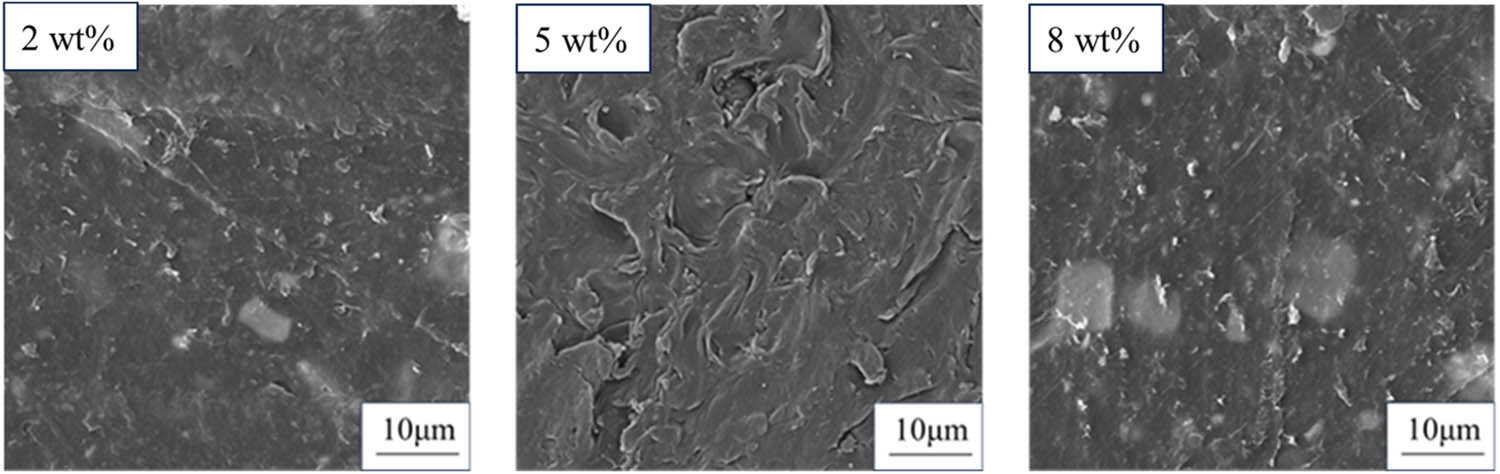
Figure 11
Scanning electron microscopy images of the surface of siderite tailings-based stone paper with different PP toughener contents: 2, 5, and 8 wt%.
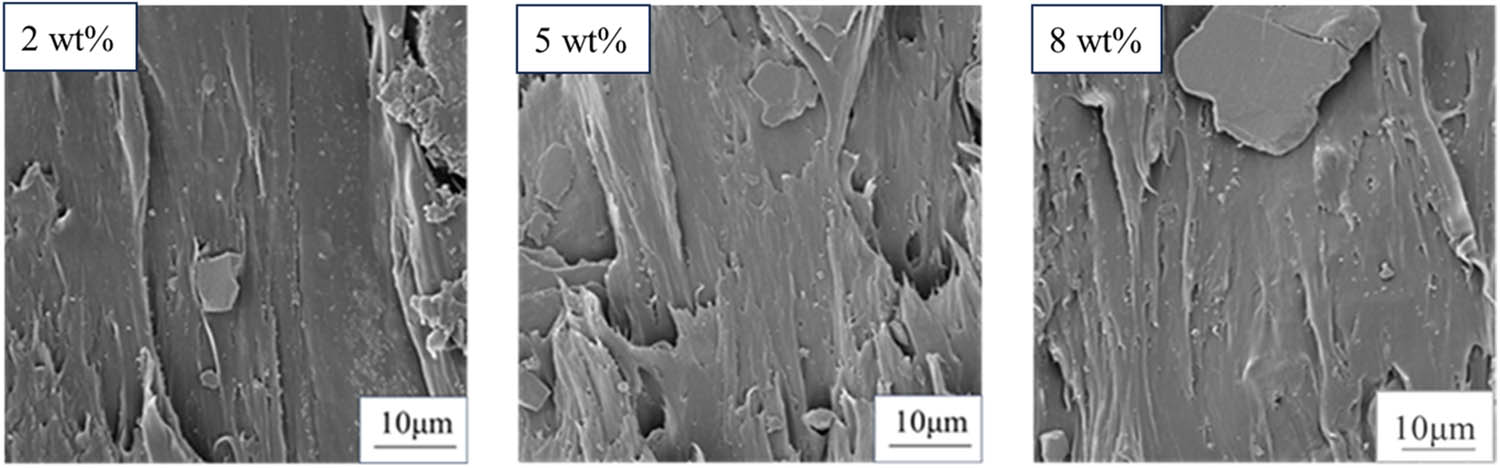
Figure 12
Scanning electron microscopy images of the cross section of siderite tailings-based stone paper with different PP toughener contents: 2, 5, and 8 wt%.
3.2. Effect of auxiliary agent dosage on the tightness of stone paper
3.2.1. Effect of calcium stearate content on the tightness of siderite tailings-based stone paper
Figure 13 shows the tightness of stone paper with different calcium stearate contents. As the calcium stearate addition increases from 1 to 3 wt%, the tightness gradually decreases. This is because the lubricating layer of calcium stearate isolates the direct contact between PP and the powder, forming a weak interface. Under external force, this interface layer is more prone to slippage and deformation, failing to achieve a solid filling like a strong interface, thus leaving more microscopic defects. The weak interface acts as a potential defect source, easily developing into micro-voids during processing or subsequent treatment, reducing the overall densification of the material. Although high lubricity improves surface smoothness, it may also cause the material to slip more easily during hot pressing, which is detrimental to achieving the maximum theoretical density. The lubricant sacrifices interfacial strength for processability and smoothness, inevitably introducing more microscopic defects and pores, leading to decreased tightness.
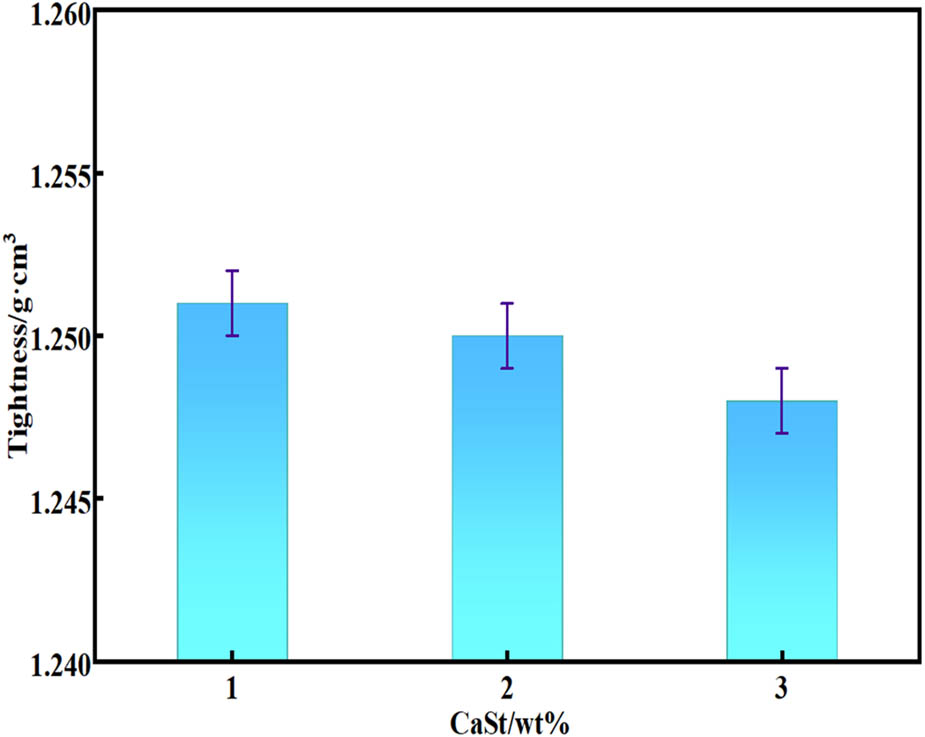
Figure 13
Tightness of stone paper with different calcium stearate contents.
3.2.2. Effect of maleic anhydride grafted polypropylene content on the tightness of siderite tailings-based stone paper
Figure 14 shows the tightness of stone paper with different MAH-g-PP contents. As the MAH-g-PP addition increases from 1 to 3 wt%, the tightness gradually increases. MAH-g-PP is not completely compatible with the matrix; at appropriate levels, it disperses well and acts at the interface. When over-added, excess molecules that cannot effectively migrate and anchor onto the inorganic filler interface will self-aggregate in the PP matrix, forming tiny agglomerated phases that become new stress concentration points, leading to deteriorated mechanical properties. The improvement in tightness is mainly because, without a compatibilizer, the inorganic powder and PP matrix have poor interfacial adhesion. MAH-g-PP enhances interfacial bonding through its bridging action, eliminating interfacial voids, while also reducing inorganic powder agglomeration, making the powder dispersion more uniform. The air and pores trapped inside agglomerates are consequently eliminated, resulting in a denser composite system and higher tightness.
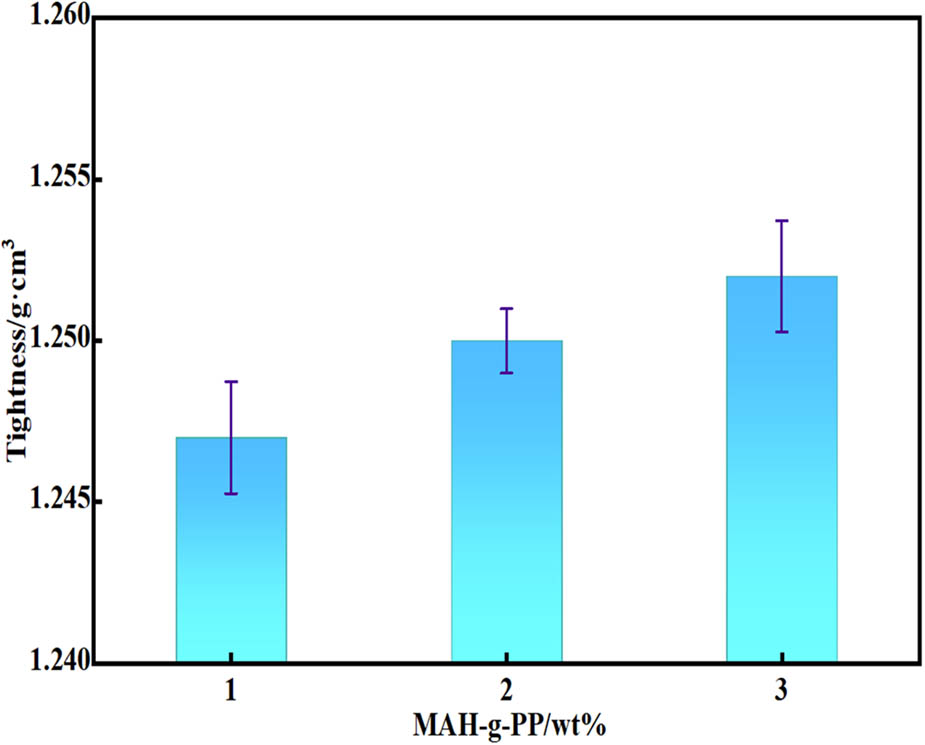
Figure 14
Tightness of stone paper with different contents of maleic anhydride grafted polypropylene.
3.2.3. Effect of silane coupling agent KH550 content on the tightness of siderite tailings-based stone paper
Figure 15 shows the tightness of stone paper with different KH550 contents. Within the addition range of 1–3 wt%, the tightness first increases and then decreases with the increasing KH550 content, reaching a maximum at 2 wt%. KH550 enhances the interfacial bonding between the powder and the matrix through chemical bonding, reducing micro-voids and gaps at the interface, which is the main reason for the increased tightness. At 1 wt% addition, the coupling agent is insufficient to fully cover the powder surface, resulting in inadequate interfacial modification. At 2 wt% addition, a complete chemical bonding layer forms on the powder surface, and tightness reaches its optimum. When the addition further increases to 3 wt%, excess silane molecules physically adsorb onto the powder surface, forming a weak boundary layer of low mechanical strength, which has a slight negative effect on close packing, causing a slight decrease in tightness.
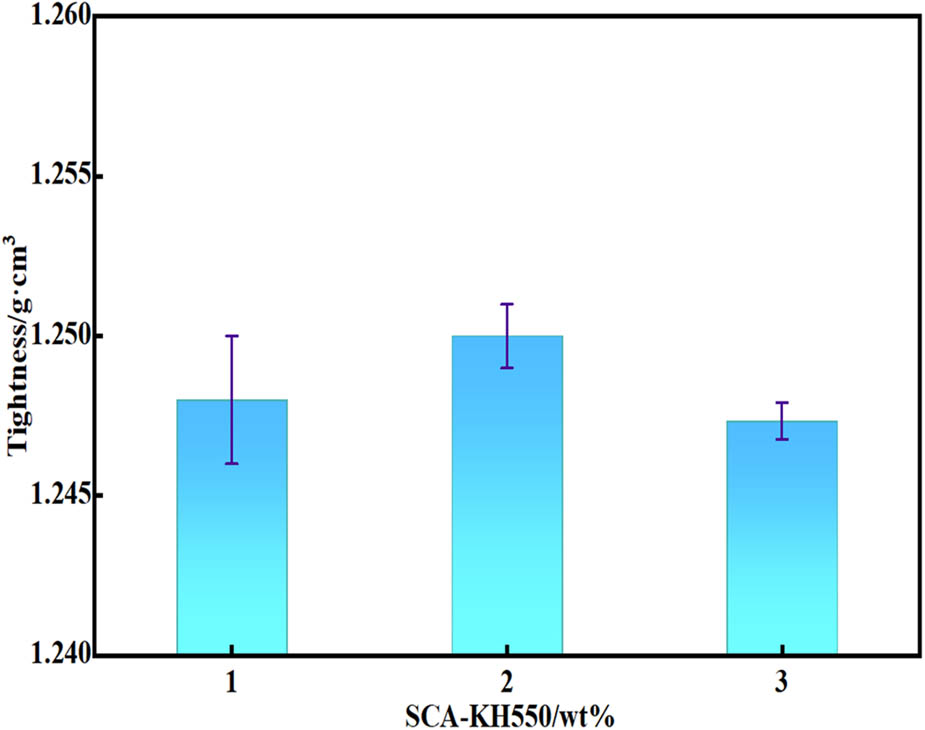
Figure 15
Tightness of stone paper with different contents of silane coupling agent KH550.
3.2.4. Effect of polypropylene toughening agent content on the tightness of siderite tailings-based stone paper
Figure 16 shows the tightness of stone paper with different PP toughener contents. As the toughener addition increases from 2 to 8 wt%, the tightness gradually decreases. This is because the tightness of the toughener itself is lower than that of polypropylene; replacing part of the high-tightness PP with a low-tightness component theoretically reduces the overall tightness. The toughener combines with the PP matrix through physical blending, forming a phase interface. The packing and entanglement of the two molecular chains are not as dense as in the homogeneous pure PP system, creating more micro-voids and free volume at the phase interface. By introducing a low-tightness component and increasing micro-defects, the toughener reduces the overall densification of the material.
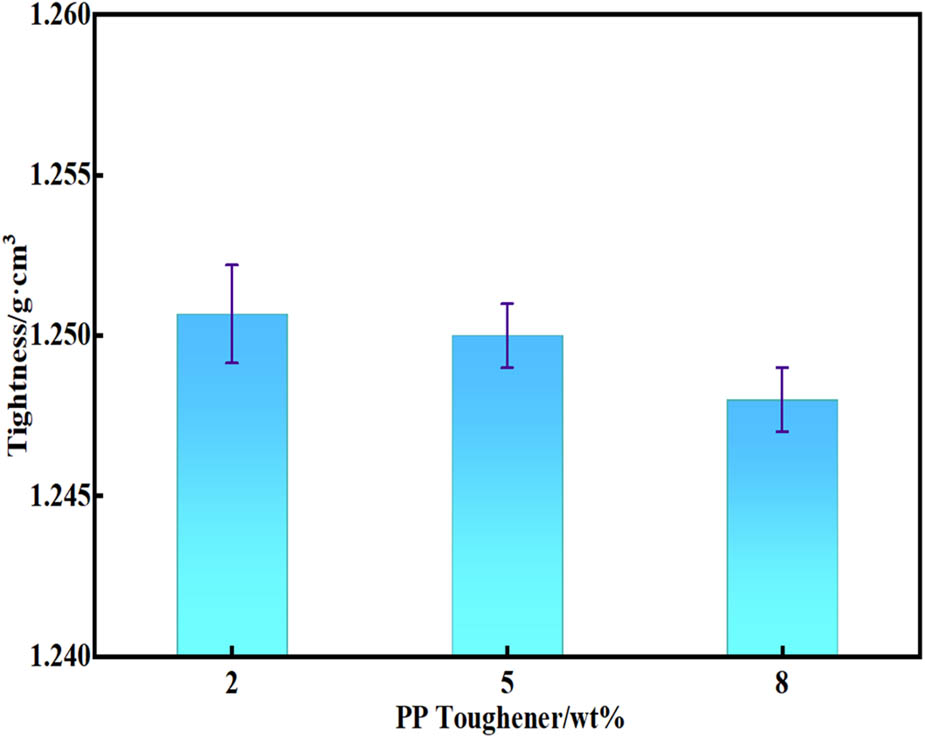
Figure 16
Tightness of stone paper with different contents of polypropylene toughening agent.
3.3. Effect of additive content on the tensile strength of stone paper
3.3.1. Effect of calcium stearate content on the tensile strength of siderite tailings-based stone paper
Figure 17 shows the tensile strength of stone paper with different calcium stearate contents. Within the addition range of 1–3 wt%, as calcium stearate content increases, tensile strength first increases and then decreases. At 1 wt% addition, the tensile strength is slightly lower than that at 2 wt%, mainly because the amount of calcium stearate does not match the amount of tailings; although the dispersion uniformity of the inorganic powder in the matrix is improved, local agglomeration still exists, leading to uneven stress distribution. At 2 wt% addition, the dispersion effect is optimal. At 3 wt% addition, tensile strength decreases because the lubricating layer formed by calcium stearate on the powder surface, while beneficial for dispersion, has low mechanical strength, creating a weak boundary layer at the interface. Under tensile stress, this weak boundary layer cannot effectively transfer load from the matrix to the rigid powder, leading to preferential interfacial debonding, easy initiation and propagation of microcracks, and thus fracture of the material at lower stress.
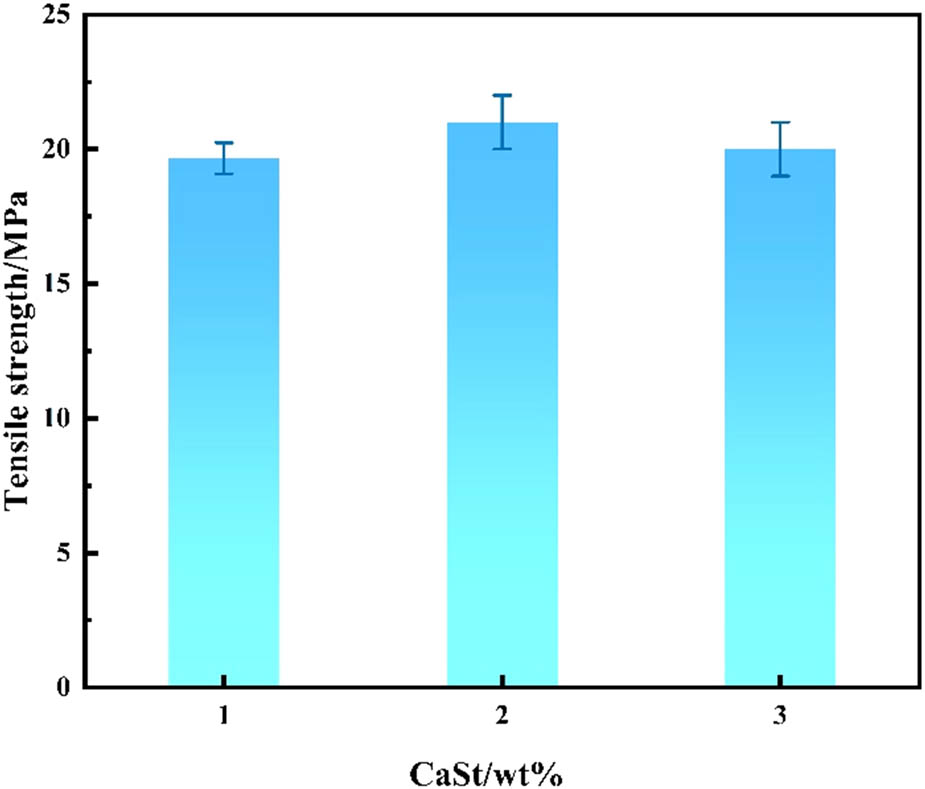
Figure 17
Tensile strength of stone paper with different calcium stearate contents.
3.3.2. Effect of maleic anhydride grafted polypropylene content on the tensile strength of siderite tailings-based stone paper
Figure 18 shows the tensile strength of stone paper with different MAH-g-PP contents. Within the addition range of 1–3 wt%, tensile strength increases with the increasing MAH-g-PP content. The maleic anhydride functional groups on the MAH-g-PP molecular chain can undergo esterification or form strong hydrogen bonds with hydroxyl groups on the siderite tailings powder surface, achieving chemical anchoring; its polypropylene segments have an identical chemical structure to the matrix PP resin, allowing mutual diffusion and chain entanglement during melt blending, achieving complete compatibility. Through this dual action, MAH-g-PP establishes a strong interfacial bond between the powder and the matrix, enabling efficient stress transfer from the matrix to the rigid powder and fully utilizing the reinforcing effect of the filler. Unlike silane coupling agents, the PP segment of MAH-g-PP is fully compatible with the matrix; even with excess addition, no weak boundary layer forms at the interface, so no performance decline inflection point is observed within the addition range of this study.
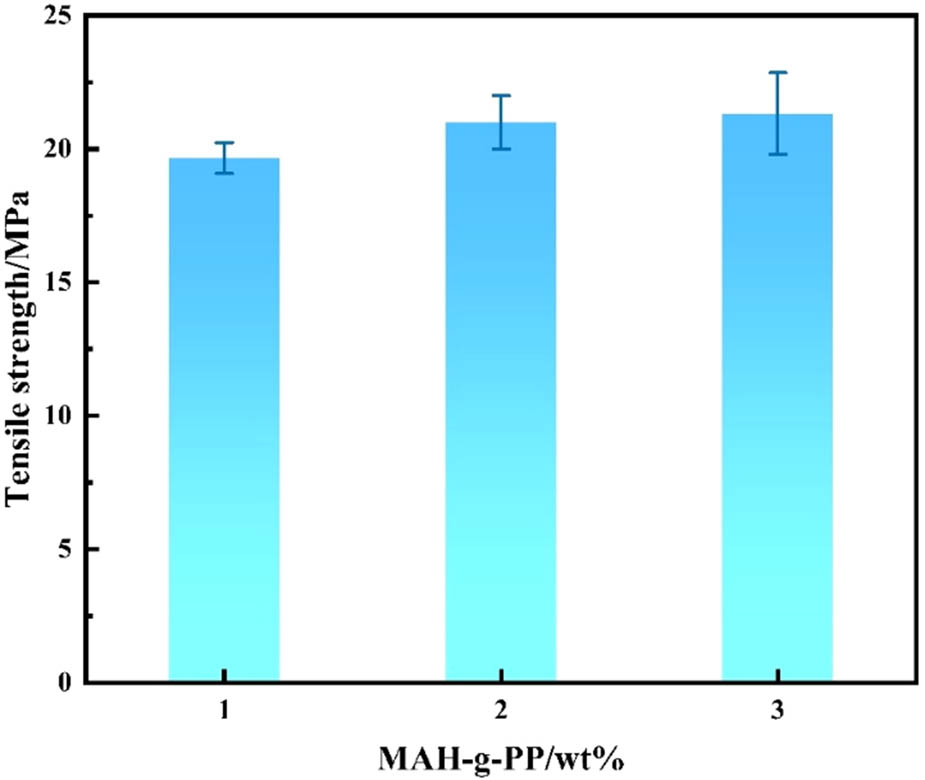
Figure 18
Tensile strength of stone paper made from polypropylene grafted with maleic anhydride with different contents.
3.3.3. Effect of silane coupling agent KH550 content on the tensile strength of siderite tailings-based stone paper
Figure 19 shows the tensile strength of stone paper with different KH550 contents. Within the addition range of 1–3 wt%, as the coupling agent content increases, tensile strength first increases and then decreases, reaching a maximum at 2 wt% addition. KH550 molecules, after hydrolysis of their ethoxy groups, undergo condensation reactions with hydroxyl groups on the powder surface to form siloxane covalent bonds, and their amino ends undergo physical entanglement and hydrogen bonding with the PP matrix, thereby establishing effective coupling at the interface. At 1 wt% addition, the coupling agent is insufficient to fully cover the powder surface, resulting in incomplete interfacial modification, with some regions still having interfacial defects. At 2 wt% addition, a complete monolayer of chemical bonding forms on the powder surface, providing the highest interfacial bond strength and optimal tensile strength. At 3 wt% addition, excess silane molecules physically adsorb onto the powder surface, forming a low-mechanical-strength weak boundary layer, which instead weakens the interfacial bonding effect and causes a decrease in tensile strength.
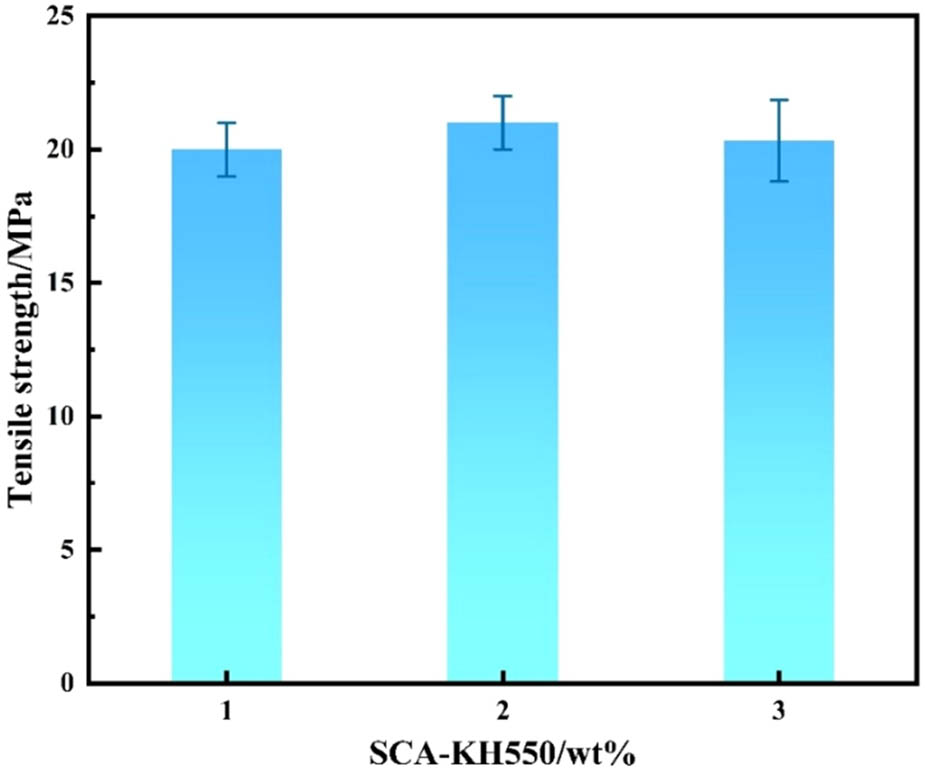
Figure 19
Tensile strength of stone paper with different contents of silane coupling agent.
3.3.4. Effect of polypropylene toughening agent content on the tensile strength of siderite tailings-based stone paper
Figure 20 shows the tensile strength of stone paper with different PP toughener contents. Within the addition range of 2–8 wt%, the tensile strength of stone paper decreases. This is attributed to the replacement of part of the rigid PP resin with a flexible elastomer, diluting the strength of the matrix. The elastomer modulus is much lower than that of the PP matrix; when subjected to tensile stress, these soft particles become stress concentration points, causing the matrix PP to prematurely craze and crack around them, which macroscopically manifests as a decrease in tensile strength and yield strength. Furthermore, excessive elastomer may worsen the interfacial bonding between the inorganic powder and the matrix, further reducing load-bearing efficiency.
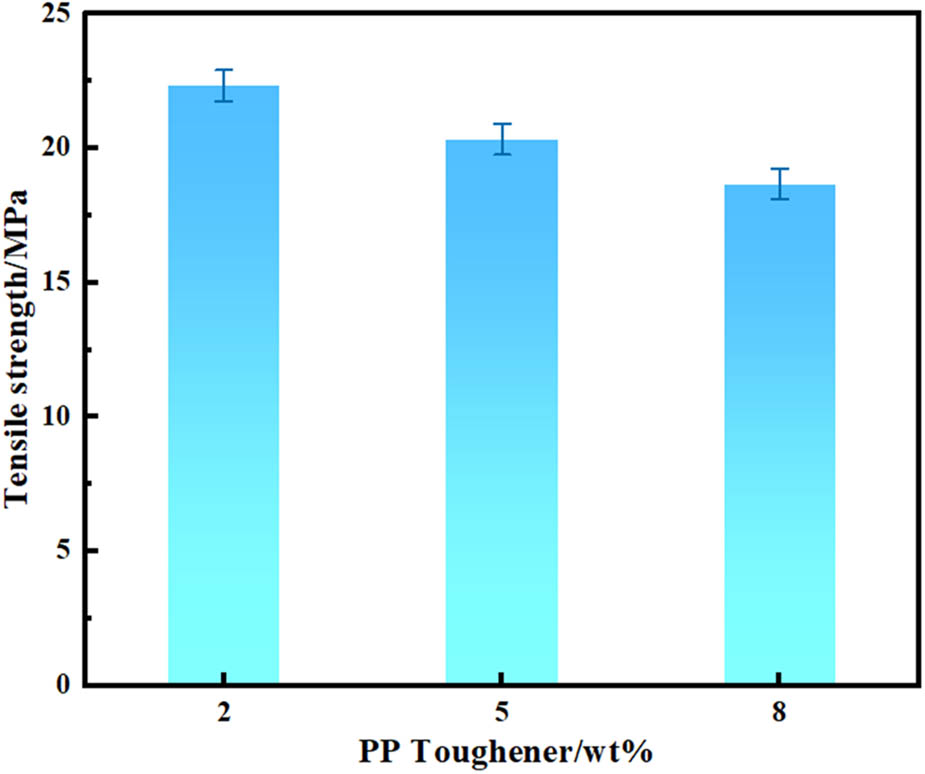
Figure 20
Tensile strength of stone paper with different contents of PP toughening agent.
3.4. Effect of auxiliary agent content on the smoothness of stone paper
3.4.1. Effect of calcium stearate content on the smoothness of siderite tailings-based stone paper
Figure 21 shows the smoothness of stone paper with different calcium stearate contents. Within the addition range of 1–3 wt%, the smoothness gradually increases. This is because calcium stearate reduces the friction between resin molecular chains, improves melt uniformity, and makes the material easier to level during processing. It also reduces adhesion between the melt and processing equipment surfaces, making it easier for the specimen to detach from the mold, thus achieving a high-smoothness surface. The lubricating layer coated on the powder surface reduces the detrimental effect of powder particles on surface smoothness. Higher content results in stronger lubrication and better smoothness. However, excessive addition should be avoided, as it may lead to an overly slippery surface, affecting subsequent printing.
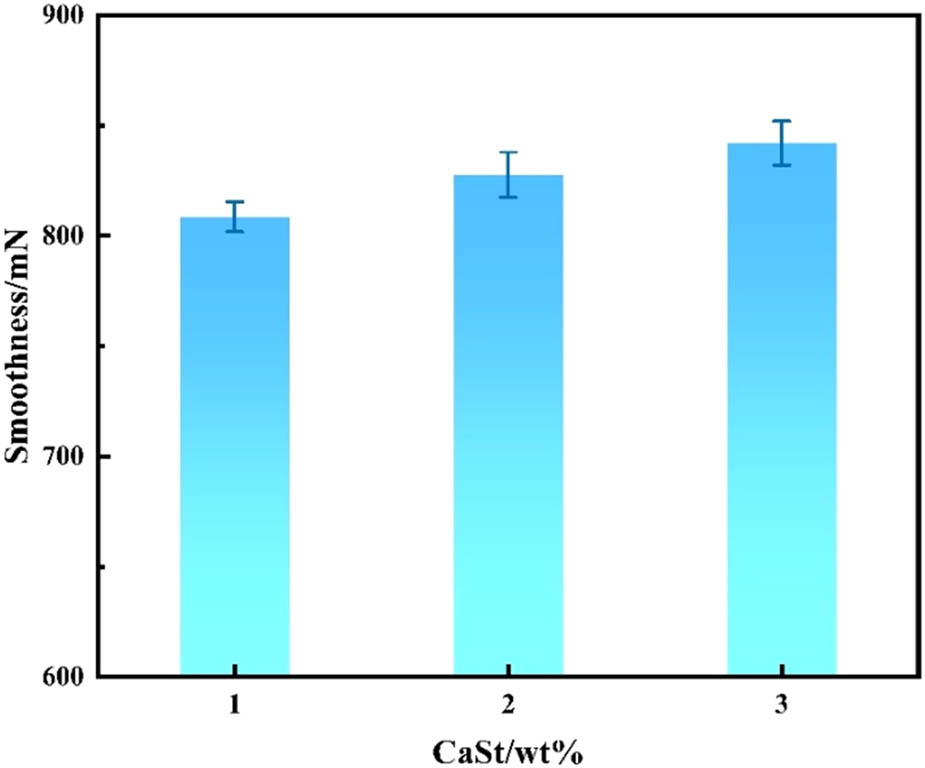
Figure 21
Smoothness of stone paper with different contents of calcium stearate.
3.4.2. Effect of maleic anhydride grafted polypropylene content on the smoothness of siderite tailings-based stone paper
Figure 22 shows the smoothness of stone paper with different MAH-g-PP contents. Within the addition range of 1–3 wt%, the smoothness increases. As MAH-g-PP content increases, the powder is better encapsulated by the PP matrix, reducing its protrusion onto the surface, resulting in a more uniform surface composition. Strong interfacial bonding reduces micro-voids between the powder and the matrix. During hot pressing, this more uniform structure is more easily compressed into a smooth surface. The introduction of MAH-g-PP may slightly alter the surface polarity, making it interact better with the mold during hot pressing, thereby achieving better smoothness.
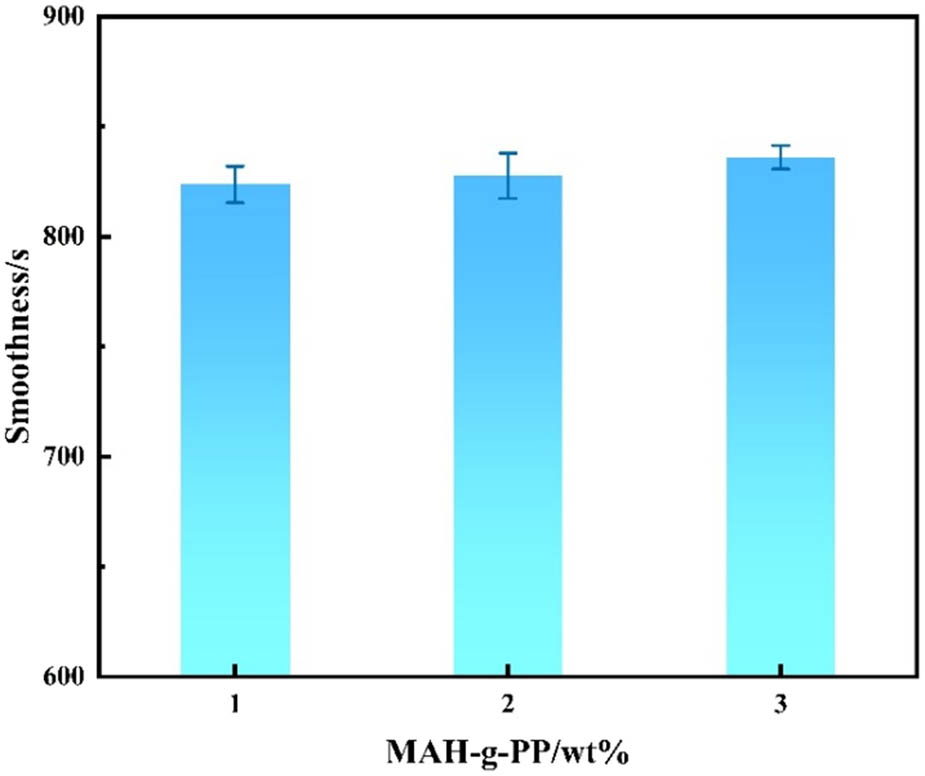
Figure 22
Smoothness of stone paper with different contents of maleic anhydride grafted polypropylene.
3.4.3. Effect of silane coupling agent KH550 content on the smoothness of stone paper based on siderite tailings
Figure 23 shows the smoothness of stone paper with different KH550 contents. Within the addition range of 1–3 wt%, smoothness first increases and then decreases. This is because the coupling agent enables the powder to be better encapsulated by the matrix, reducing the influence of powder on the surface. Strong interfacial bonding reduces micro-voids, making the material surface smoother after hot pressing. The coupling agent reduces powder agglomeration, making the surface composition more uniform. At 3 wt% addition, excess unreacted silane coupling agent may migrate to the material surface; due to its certain viscosity and different surface energy, it disrupts surface uniformity, leading to decreased smoothness.
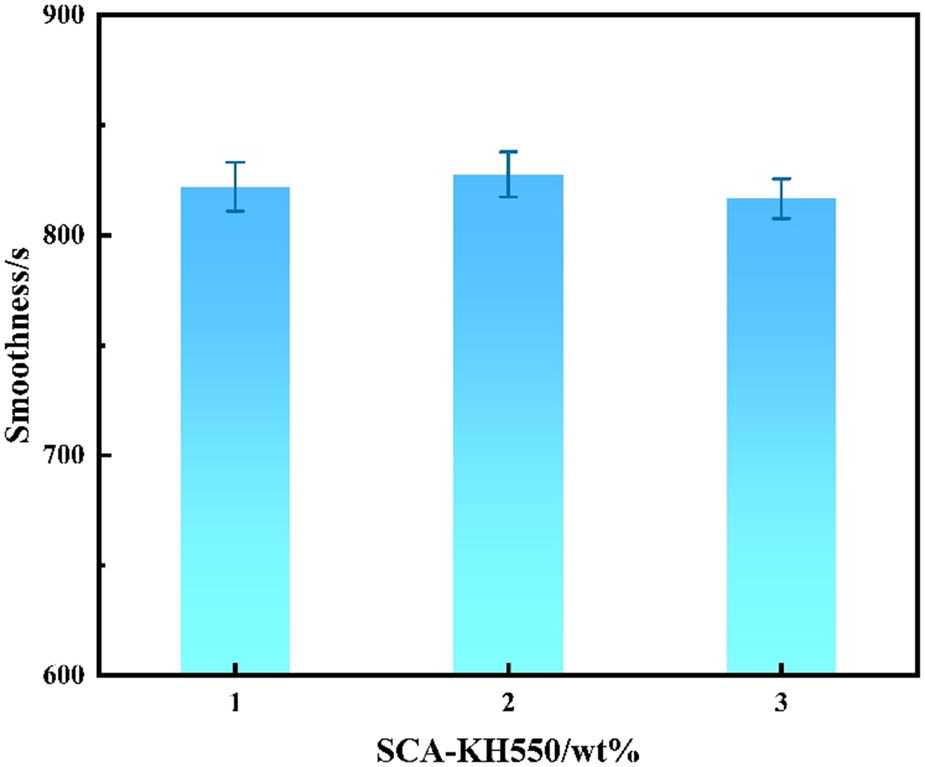
Figure 23
Smoothness of stone paper with different contents of silane coupling agent.
3.4.4. Effect of polypropylene toughening agent content on the smoothness of siderite tailings-based stone paper
Figure 24 shows the smoothness of stone paper with different PP toughener contents. Within the addition range of 2–8 wt%, smoothness gradually decreases with increasing addition. The reason is that the hardness of the elastomer is lower than that of the PP matrix and inorganic powder. Under hot pressing pressure, components with different hardness exhibit different degrees of elastic recovery and plastic deformation. The softer elastomer regions become depressed under pressure, while the hard PP and powder regions maintain their shape, creating microscopic surface unevenness, leading to decreased smoothness. The higher the toughener content, the more pronounced these micro-reliefs become.
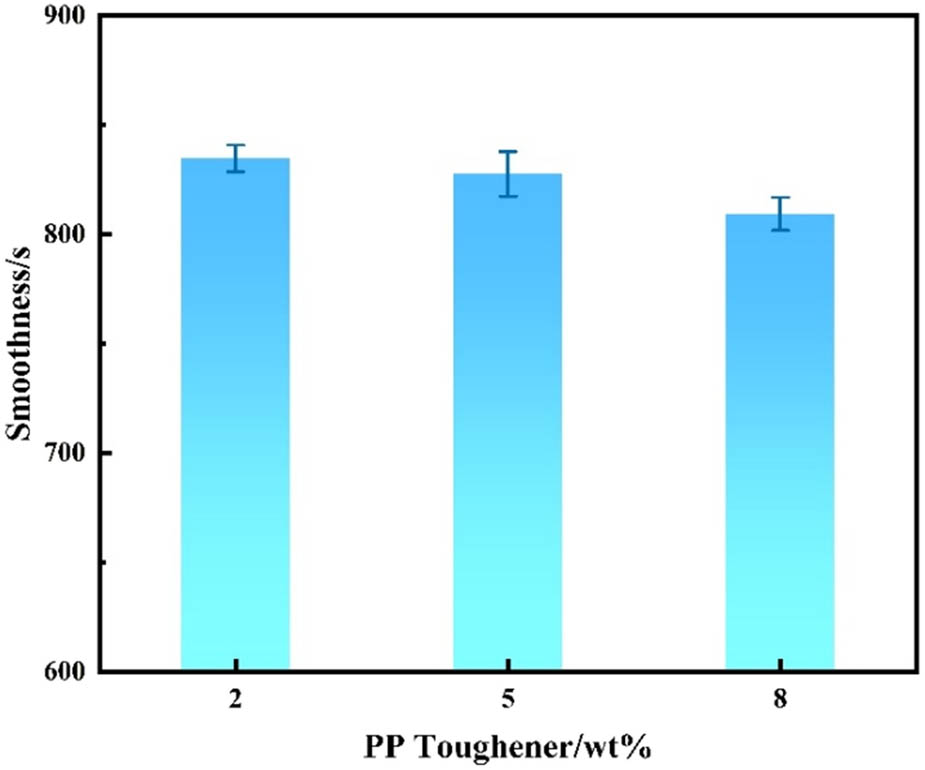
Figure 24
Smoothness of stone paper with different contents of polypropylene toughening agent.
3.5. Effect of auxiliary agent content on the tear strength of stone paper
3.5.1. Effect of calcium stearate content on the tear strength of siderite tailings-based stone paper
Figure 25 shows the tear strength of stone paper with different calcium stearate contents. As the calcium stearate addition increases from 1 to 3 wt%, the tear strength continuously decreases. Tear failure essentially involves crack propagation. When interfacial bonding is strong, crack propagation requires substantial energy to bypass filler particles or fracture the particles themselves. In the calcium stearate–treated system, due to extremely weak interfacial bonding, cracks can propagate along the powder surface with low resistance, leading to interfacial debonding. The energy required for powder particles to debond and pull out from the matrix is extremely low, thus macroscopically exhibiting low tear strength.
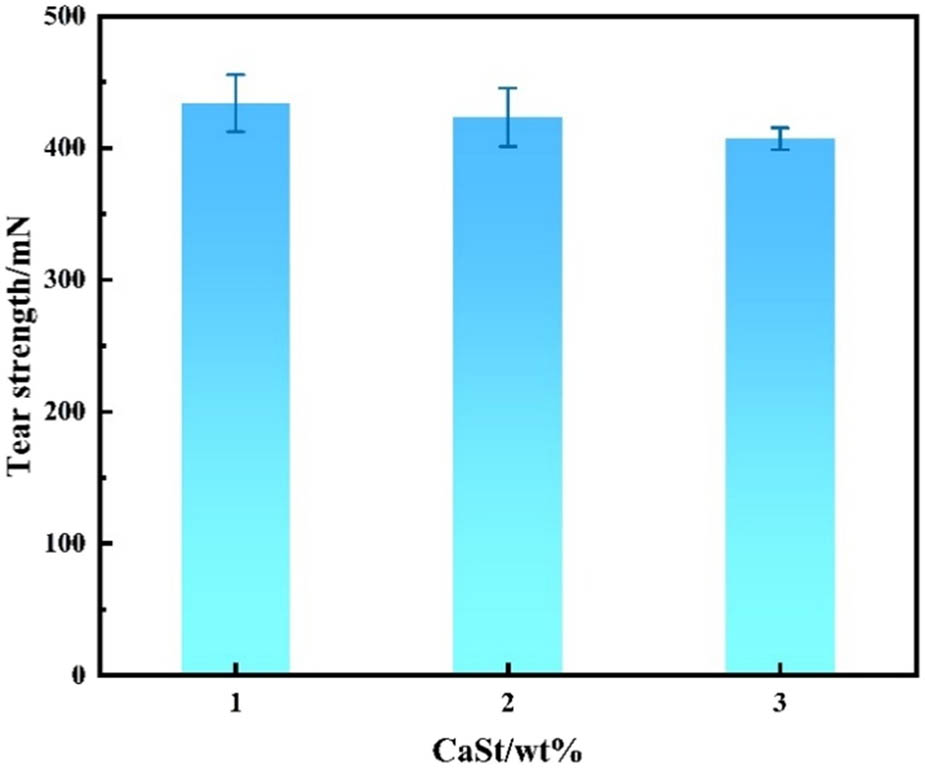
Figure 25
Tear resistance of stone paper with different calcium stearate contents.
3.5.2. Effect of maleic anhydride grafted polypropylene content on the tear strength of siderite tailings-based stone paper
Figure 26 shows the tear strength of stone paper with different MAH-g-PP contents. Within the addition range of 1–3 wt%, the tear strength of stone paper increases with increasing MAH-g-PP content. The enhanced interfacial adhesion due to MAH-g-PP requires greater energy to break the powder–PP interface. Strong interfacial bonding forces prevent cracks from simply propagating along the weak interface. Instead, cracks must bypass particles or penetrate the particles themselves, resulting in a more tortuous propagation path and higher energy consumption. Therefore, the tearing process must overcome greater resistance, which macroscopically manifests as increased tear strength.
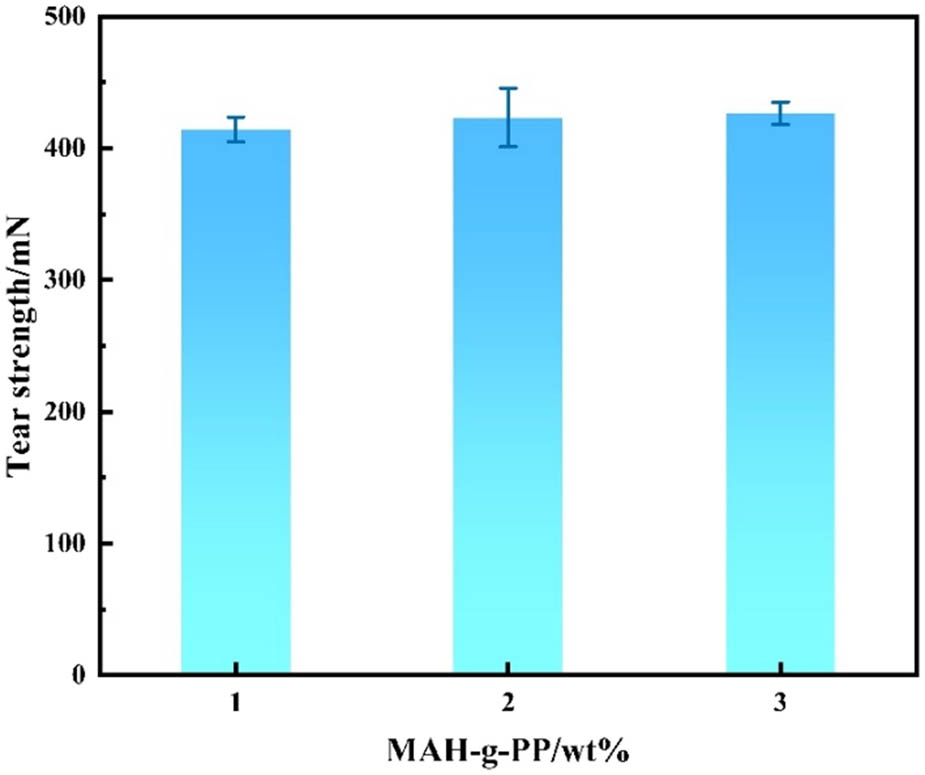
Figure 26
Tear resistance of stone paper with different contents of maleic anhydride grafted polypropylene.
3.5.3. Effect of silane coupling agent KH550 content on the tear strength of siderite tailings-based stone paper
Figure 27 shows the tear strength of stone paper with different KH550 contents. Within the addition range of 1–3 wt%, tear strength first increases and then decreases with increasing KH550 content, reaching a maximum at 2 wt% addition. This trend is attributed to the effective chemical bonding formed by an appropriate amount of silane coupling agent at the interface between the inorganic filler and the polypropylene matrix, which significantly enhances interfacial adhesion and forces cracks to avoid propagating along the original weak interface during tearing. During tearing, cracks must bypass the firmly anchored tailings particles or directly cause particle fracture; the process of powder debonding and pull-out is significantly suppressed, macroscopically resulting in a marked increase in tear strength. When the silane coupling agent addition exceeds 2 wt%, tear strength decreases because excess coupling agent forms a multilayer physical adsorption layer on the filler surface, constituting a weak boundary layer of low mechanical strength, which again becomes the preferential path for crack propagation, leading to reduced tear performance.
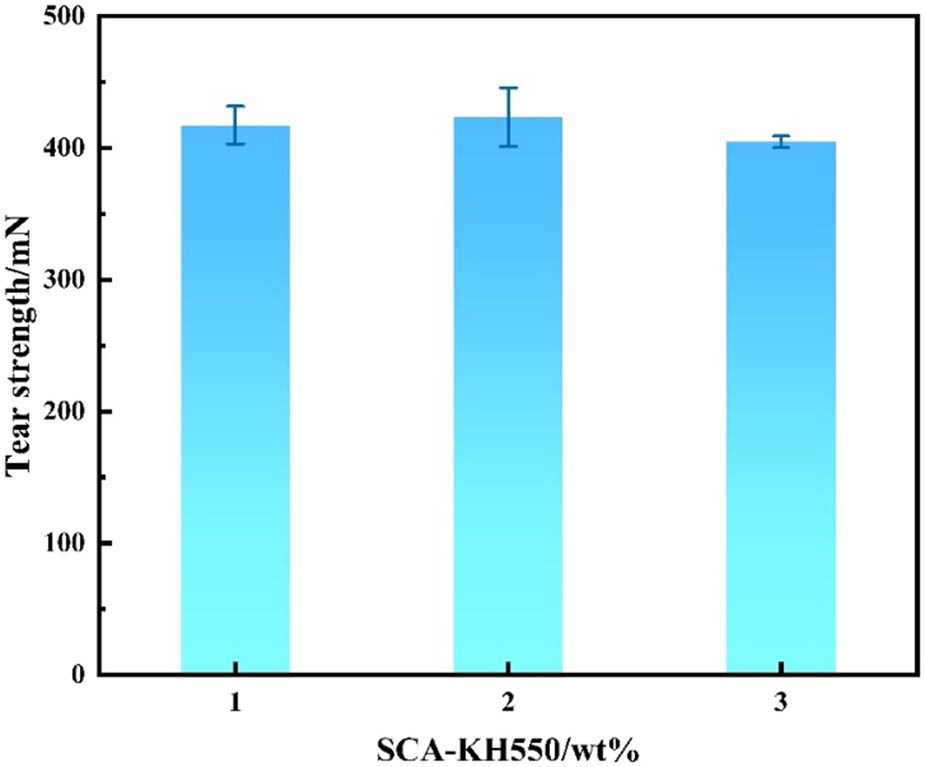
Figure 27
Tear resistance of stone paper with different contents of silane coupling agent KH550.
3.5.4. Effect of polypropylene toughening agent content on the tear strength of siderite tailings-based stone paper
Figure 28 shows the tear strength of stone paper with different PP toughener contents. Within the addition range of 2–8 wt%, the tear strength of the stone paper exhibits an increasing trend with the increase of toughening agent content. This is attributed to the crazing-shear band toughening mechanism of the elastomer: the dispersed elastomer particles act as stress concentration points, inducing the PP matrix to generate a large number of crazes and shear bands, while dissipating energy through their own deformation and cavitation. As a result, crack propagation is effectively hindered, forcing the tear path to become more tortuous, which macroscopically manifests as improved tear resistance. A higher elastomer content enhances this energy dissipation effect; however, due to cost considerations and the need to balance overall performance, the amount of toughening agent should not be excessively increased.
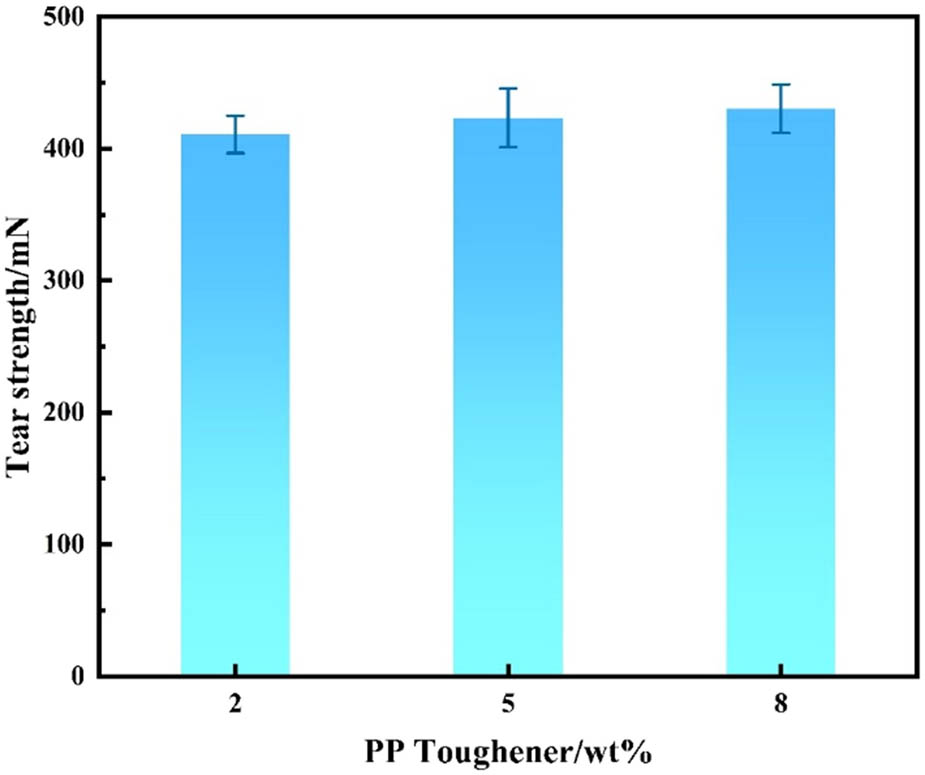
Figure 28
Tear resistance of stone paper with different polypropylene toughening agent contents.
4. Conclusions
This study systematically elucidated the effects of four additives on the structure and properties of 40 wt% siderite tailings-based stone paper, clarified the action mechanisms and optimal dosage ranges of each additive, and provided key experimental evidence for interfacial regulation in high-filling solid waste-based composites. The main conclusions are as follows: the core role of calcium stearate is lubrication and dispersion, which improves processability and surface smoothness, but it forms a weak interfacial boundary layer that weakens mechanical properties; an addition level of 2 wt% is recommended to balance dispersibility and performance loss. MAH-g-PP achieves interfacial reinforcement through a dual mechanism of chemical bonding and molecular chain entanglement, significantly enhancing tensile strength and tear resistance, and exhibits no performance inflection point within the addition range of 1–3 wt%, demonstrating optimal interfacial modification. The silane coupling agent KH550 constructs interfacial coupling via siloxane covalent bonds, improving interfacial compatibility and reducing water absorption, with an optimal addition of 2 wt%; excessive addition forms a weak boundary layer, leading to performance decline. The polypropylene toughening agent dissipates energy through a crazing-shear band mechanism, markedly improving material toughness and tear resistance at the expense of rigidity, and its addition level should be controlled according to toughness requirements. Furthermore, the action mechanisms of the different additives are fundamentally different: calcium stearate is a “physical lubrication type,” MAH-g-PP and KH550 are “chemical reinforcement types,” and the polypropylene toughening agent is a “matrix toughening type.” In practical applications, synergistic regulation of material properties can be achieved by compounding these additives.
Funding information
Authors state no funding involved.
Author contributions
Pengfei Li designed the research scheme, conducted all experiments, processed data, wrote the paper and completed pilot tests. Junping Deng and Le Kang co-supervised the project, optimized the scheme and reviewed the manuscript. Lang Jia assisted in sample preparation and performance tests; Xiaoqing Lian and Hao Zhang supported data calculation, microscopic and property analysis. All authors have read the full text and warrant data authenticity, bearing corresponding academic responsibilities.
Conflict of interest statement
Authors state no conflict of interest.