
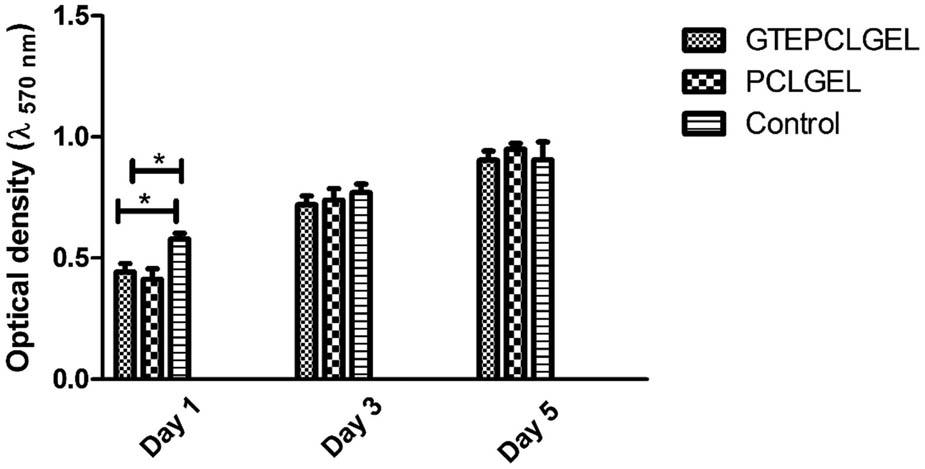
Figure 1
MTT assay with PC-12 cultured on GTEPCLGEL and PCLGEL scaffolds. * shows p-value <0.05.
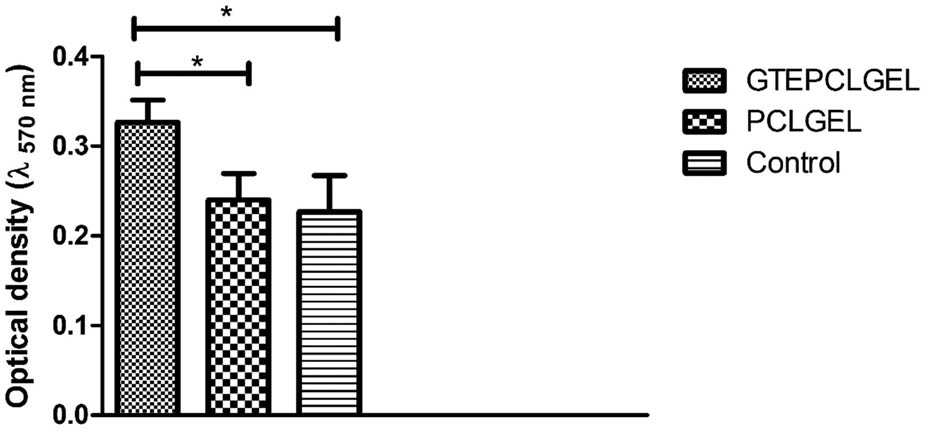
Figure 2
MTT assay under 1% H2O2 with PC-12 cells cultured with GTEPCLGEL and PCLGEL scaffolds. * shows p-value <0.05.
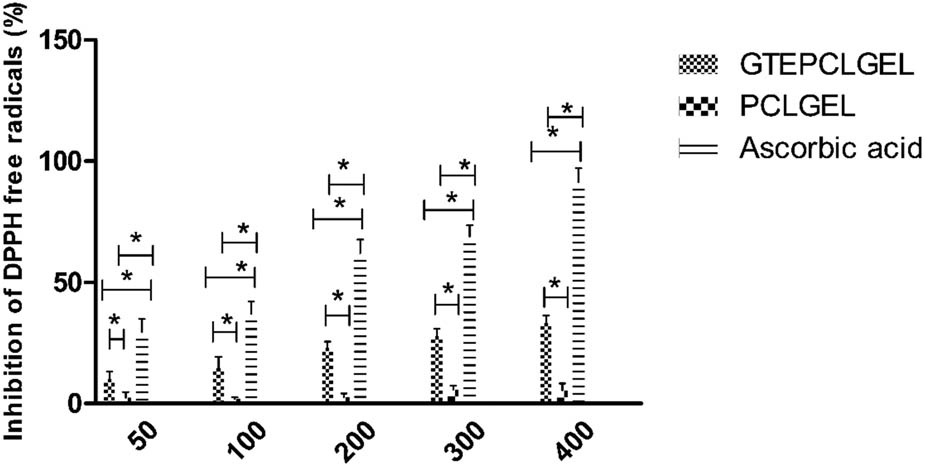
Figure 3
DPPH assay with GTEPCLGEL and PCLGEL scaffolds compared with ascorbic acid as the control group. * shows p-value <0.05.
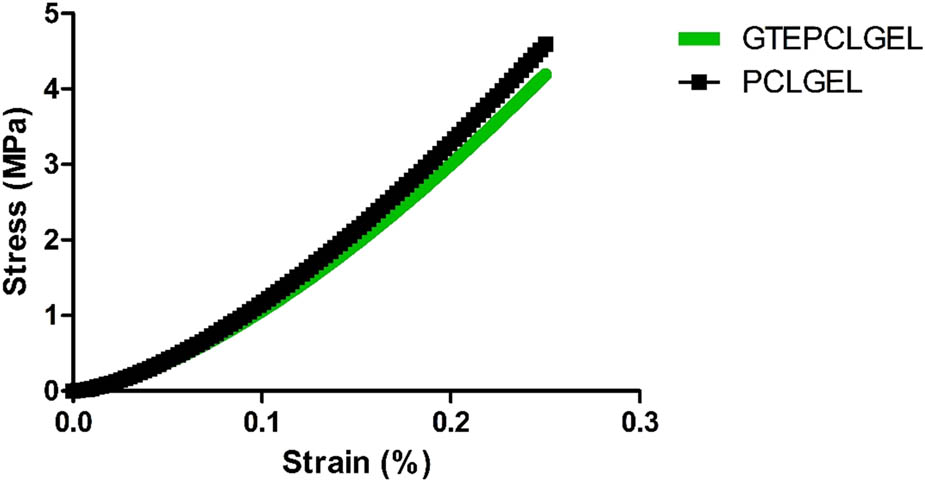
Figure 4
Stress–strain curve for GTEPCLGEL and PCLGEL scaffolds.
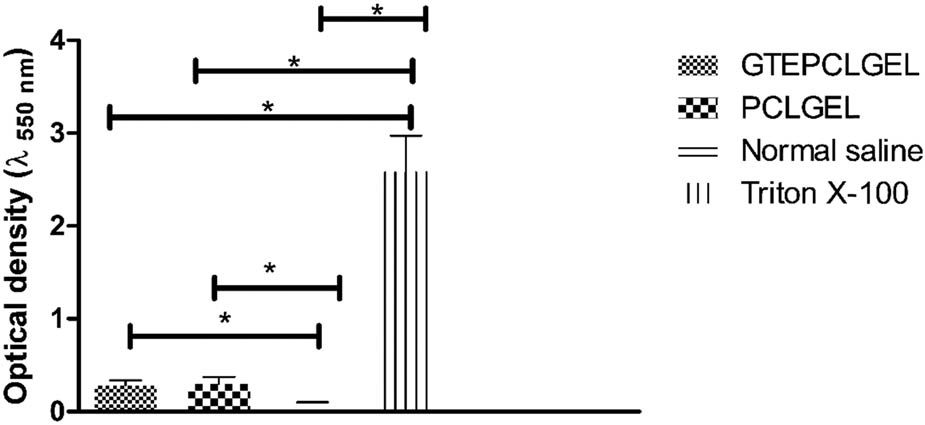
Figure 5
Hemolysis activity of GTEPCLGEL and PCLGEL scaffolds compared with normal saline and triton x-100 as the negative and positive control groups, respectively. * shows p-value <0.05.
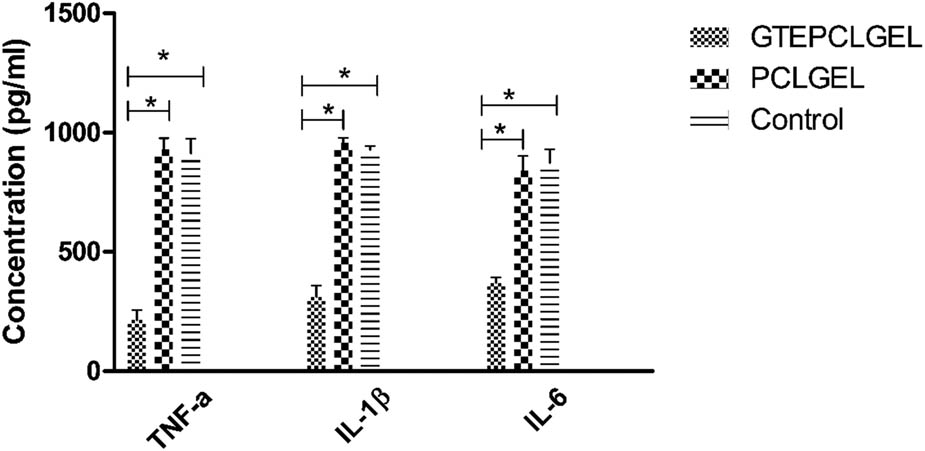
Figure 6
Anti-inflammatory assay with GTEPCLGEL and PCLGEL scaffolds compared with the macrophage cells cultured on the tissue culture plate as the control group. * shows p-value <0.05.
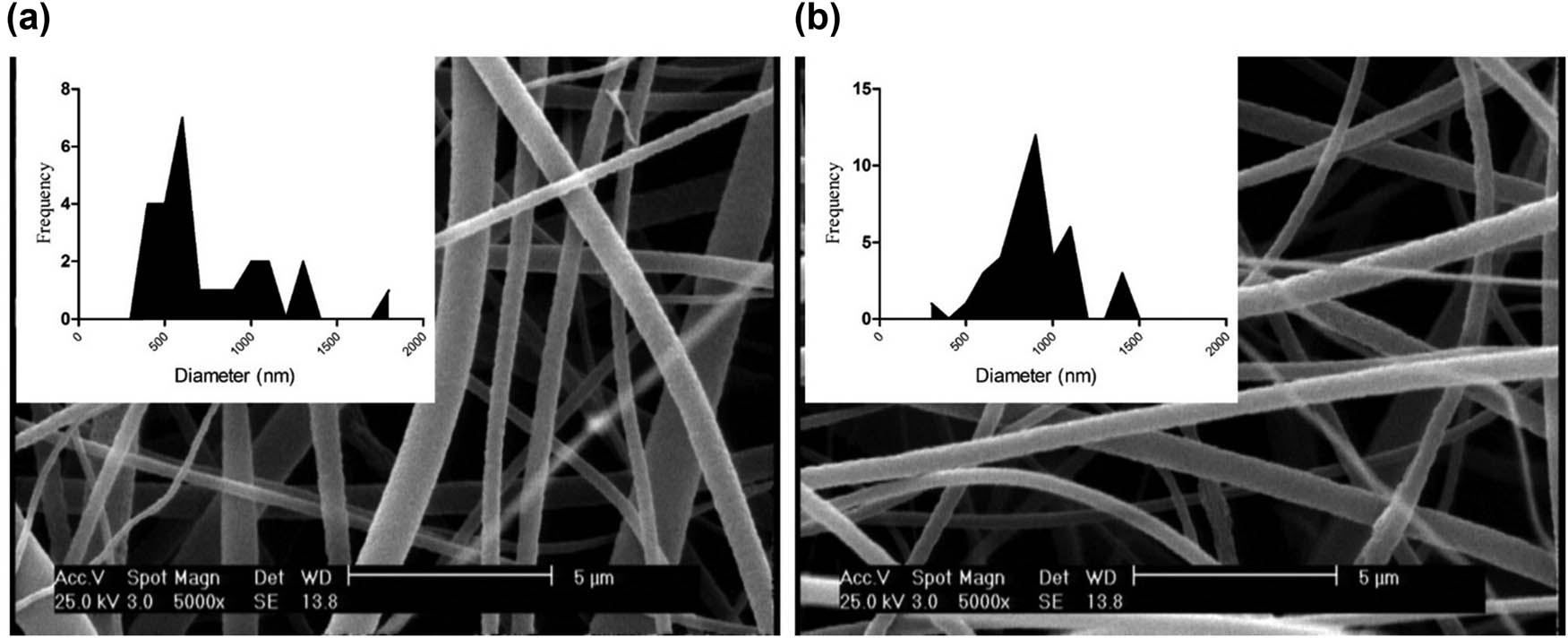
Figure 7
SEM images and size distribution of (a) GTEPCLGEL and (b) PCLGEL scaffolds.
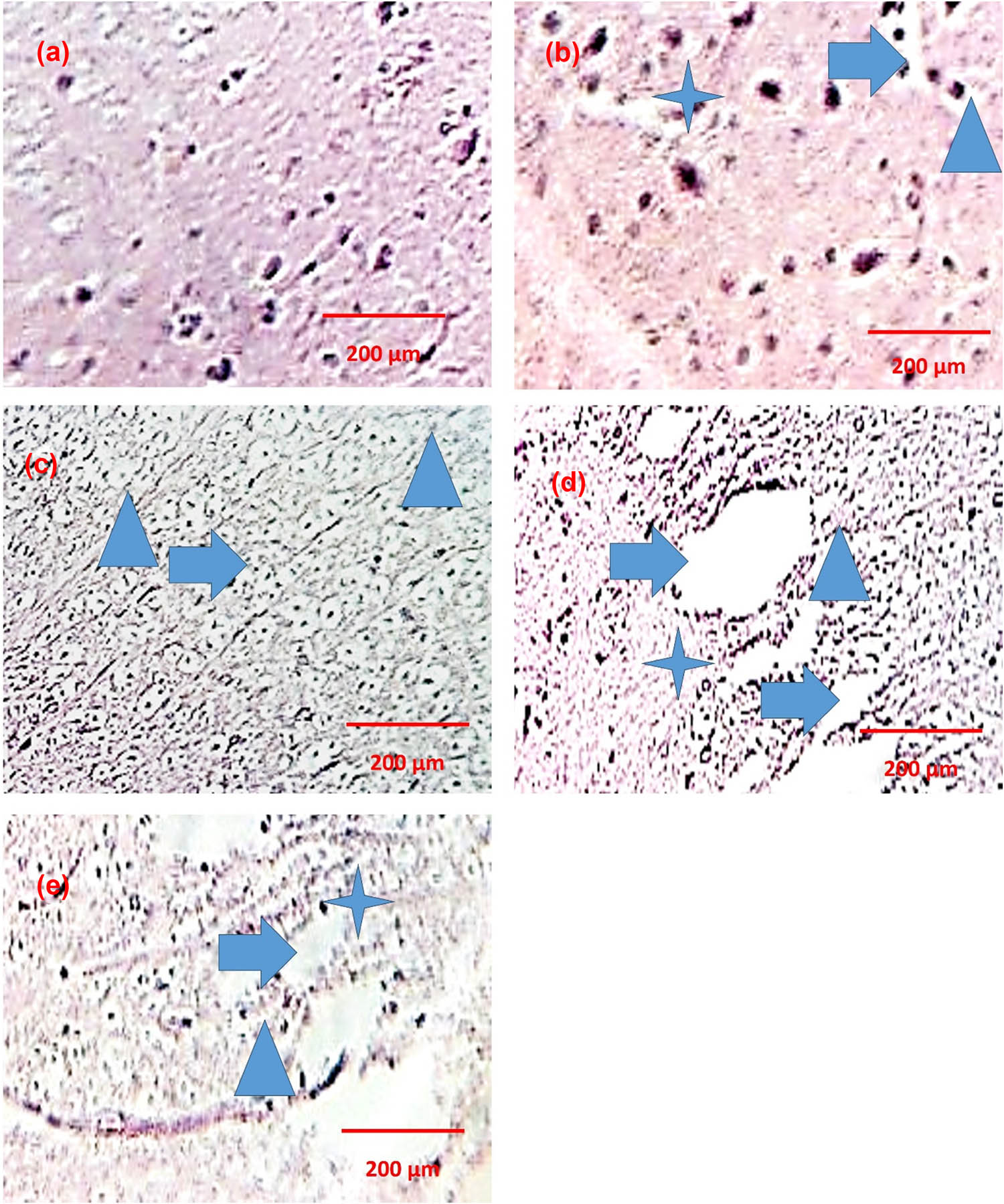
Figure 8
H&E staining images of spinal cord tissues in animals treated with (a) GTEPCLGELBM-MSCsPH, (b) GTEPCLGELBM-MSCs, (c) PCLGELPH, (d) PCLGEL, and (e) negative control. Arrows indicate vacuolation, asterisks denote edema, and axonal disintegration is indicated by arrowheads.
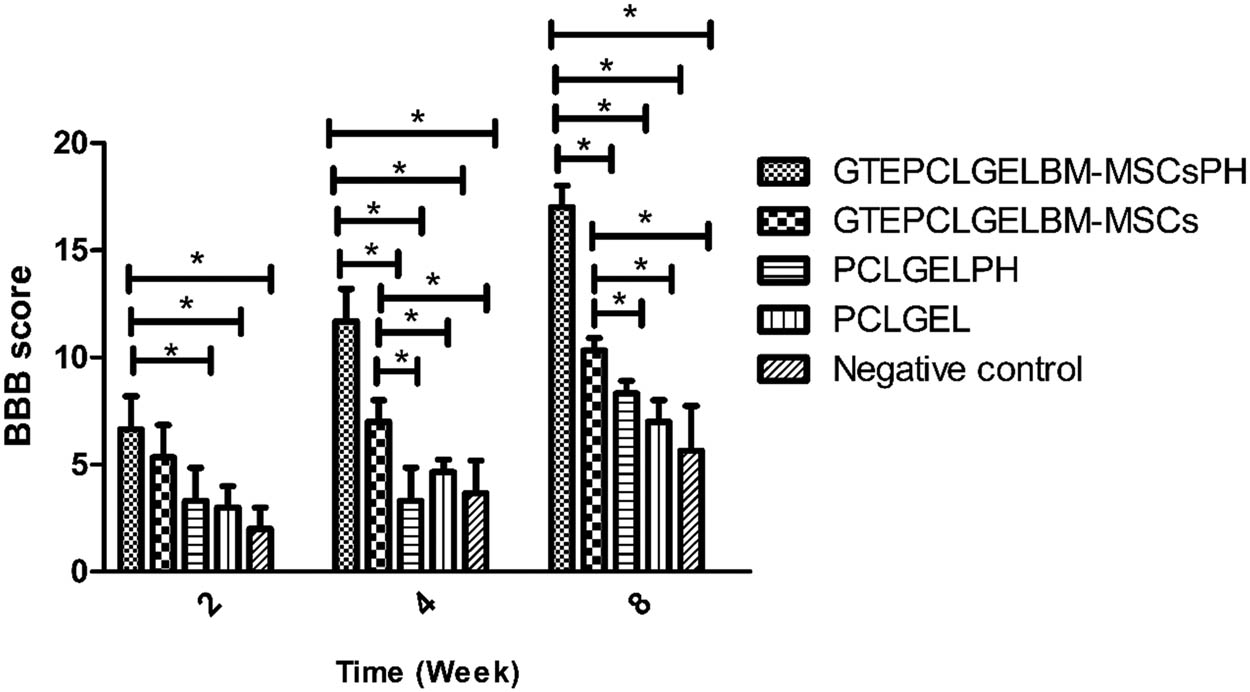
Figure 9
BBB scores in rats treated with different strategies on weeks 2, 4, and 8 after surgery. * shows p-value <0.05.
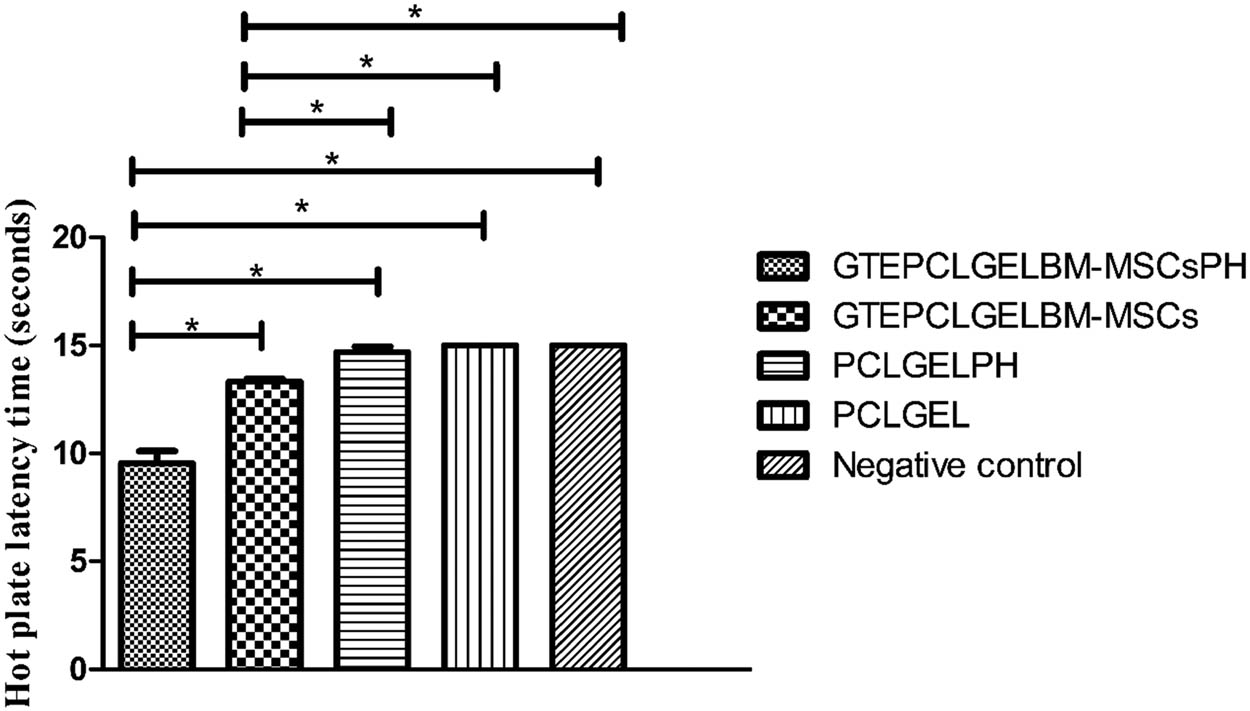
Figure 10
Hotplate latency test results in animals treated with different strategies, * shows p-value <0.05.
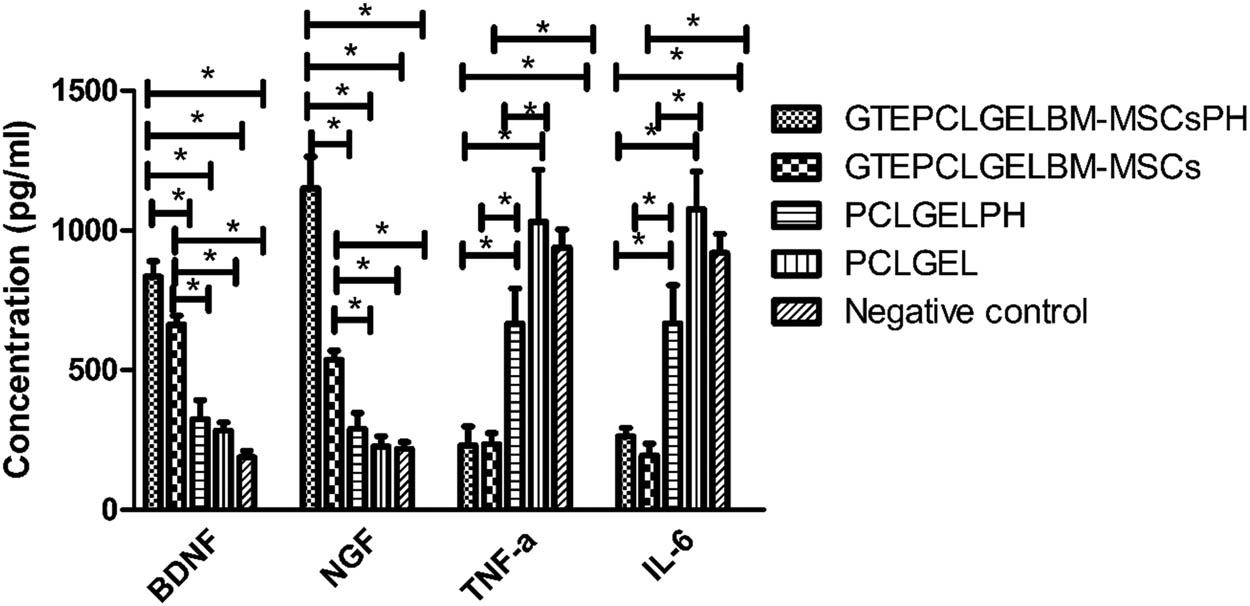
Figure 11
Tissue concentrations of BDNF, NGF, TNF-α, and IL-6 in spinal cord tissues treated with different strategies. * shows p-value <0.05.