Have a personal or library account? Click to login
Metallurgical aspects of the corrosion resistance of 7000 series aluminum alloys – a review Cover

Metallurgical aspects of the corrosion resistance of 7000 series aluminum alloys – a review

Open Access
|Mar 2024

Figures & Tables

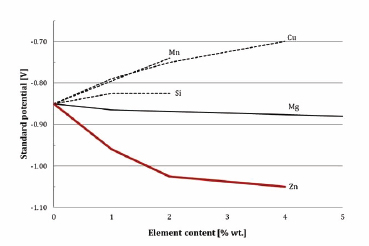
Fig. 1.

Effect of selected alloying elements on the standard potential of a solid aluminum solution [19]. The effect of zinc is marked in red
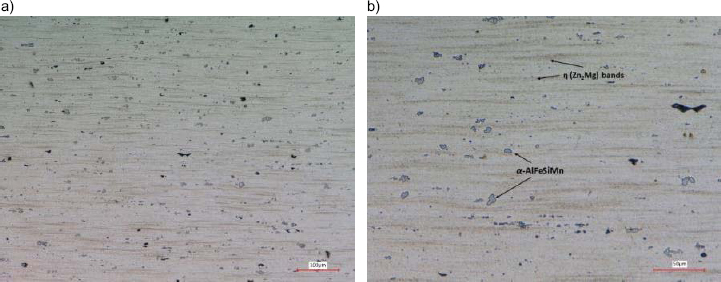

Fig. 2.

(a) Microstructure of alloy AW 7075-T6. Visible bands of fine-dispersive precipitates of precipitation hardening phases and grey precipitates of phase α-AlFeSiMn; (b) a magnified fragment of the area from (a). Light microscopy, etched state
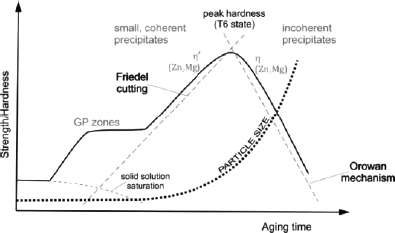

Fig. 3.

A diagram presenting the effect of the phases in the strengthening of 7000 alloys [61]
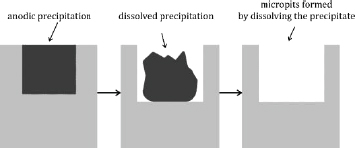

Fig. 4.

A scheme of the consecutive stages of corrosion in the case of the occurrence in the microstructure of isolated precipitates of phase Zn2Mg, anodic with respect to the aluminum solid solution [15]
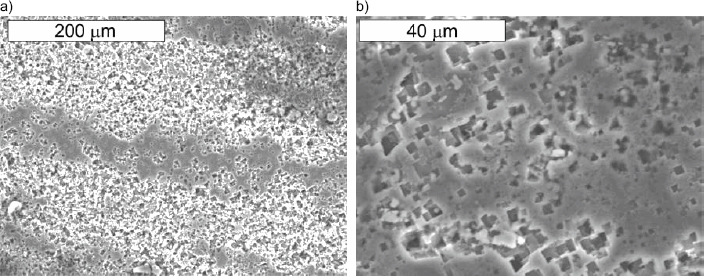

Fig. 5.

(a) Microscopic image (SEM) of the surface of an AW 7020 alloy sample after electrochemical tests ended at the potential of +250 mV with respect to Ecorr. Visible lower intensity of corrosion processes in PFZ [15]; (b) a magnified fragment of the area from (a) in the PFZ zone [author’s own unpublished research]
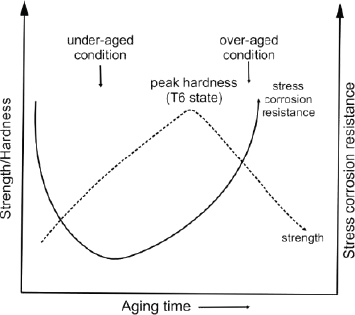

Fig. 6.

Effect of the aging time on the strength and SCC resistance of 7000 alloys [64]
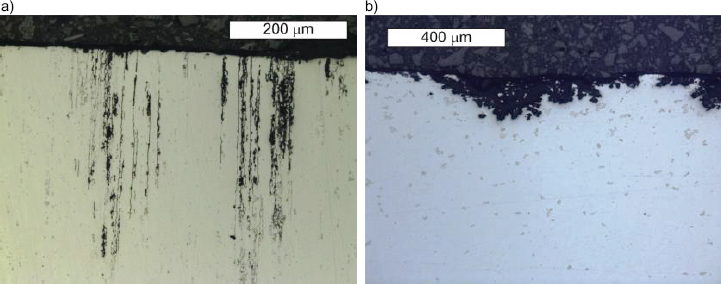

Fig. 7.

(a) Advanced intergranular corrosion of grains deformed in the metal working direction on a longitudinal section with respect to the metal working direction; (b) surface corrosion observed on a cross section with respect to the metal working direction. Light microscopy, etched state [author’s own unpublished research]
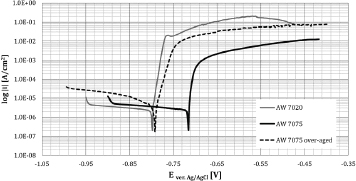

Fig. 8.

Exemplary potentiodynamic polarization curves obtained for copperless alloy AW7020 and copper containing alloy AW7075 [15]
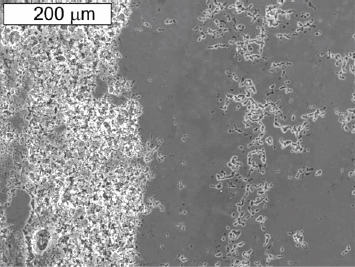

Fig. 9.

SEM image illustrating the different degrees of corrosion advancement in different areas of a welded joint made on alloy AW 7020 [author’s own unpublished research]
DOI: https://doi.org/10.2478/msp-2023-0041 | Journal eISSN: 2083-134X | Journal ISSN: 2083-1331
Language: English
Page range: 159 - 180
Submitted on: Jan 14, 2024
Accepted on: Feb 9, 2024
Published on: Mar 2, 2024
Published by: Wroclaw University of Science and Technology
In partnership with: Paradigm Publishing Services
Publication frequency: 4 issues per year

© 2024 Marzena Małgorzata Lachowicz, published by Wroclaw University of Science and Technology
This work is licensed under the Creative Commons Attribution-NonCommercial-NoDerivatives 4.0 License.