Have a personal or library account? Click to login
Application possibilities of scanning acoustic microscopy in the assessment of explosive welding Cover

Application possibilities of scanning acoustic microscopy in the assessment of explosive welding

Open Access
|Dec 2022

Figures & Tables

Fig. 1

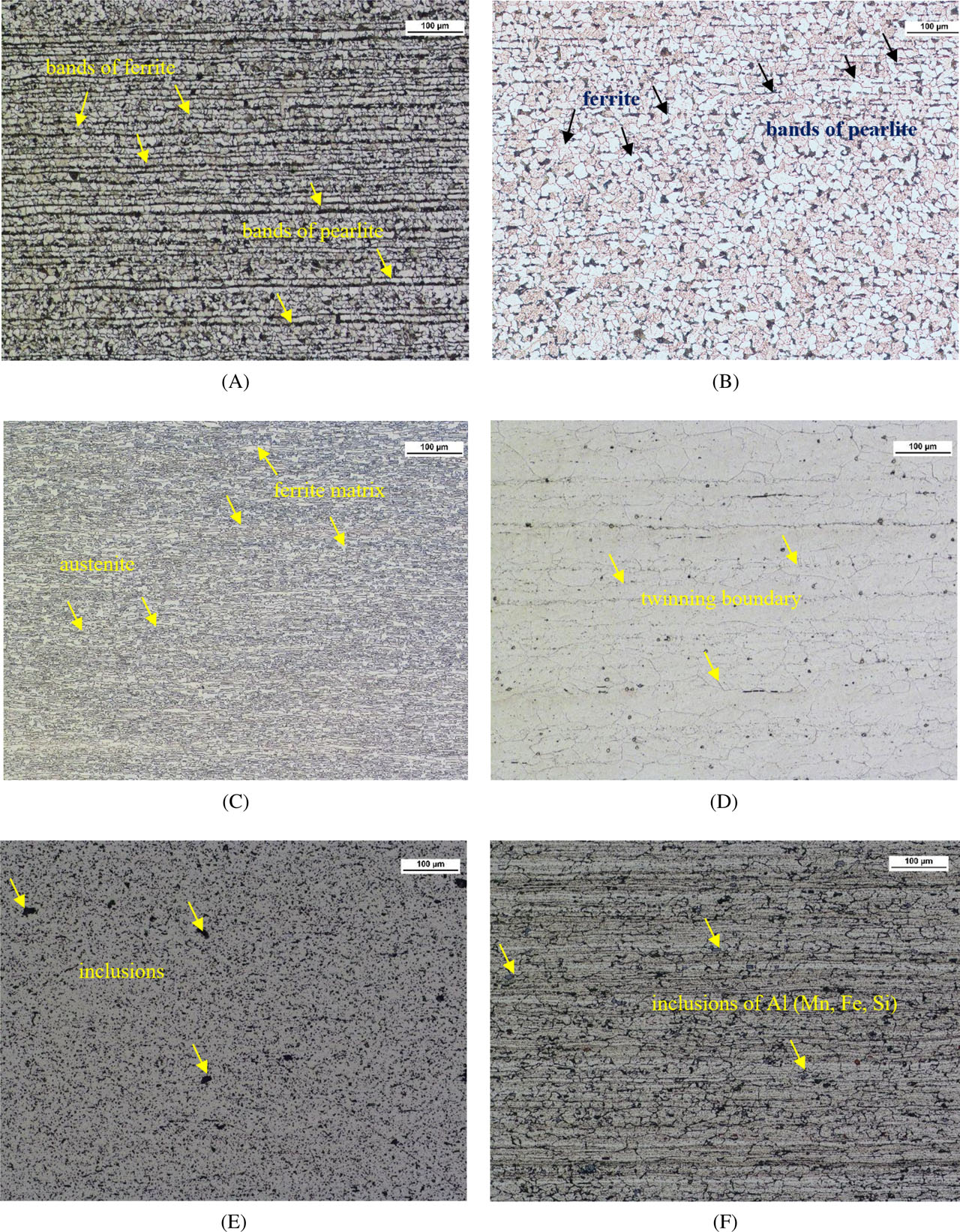
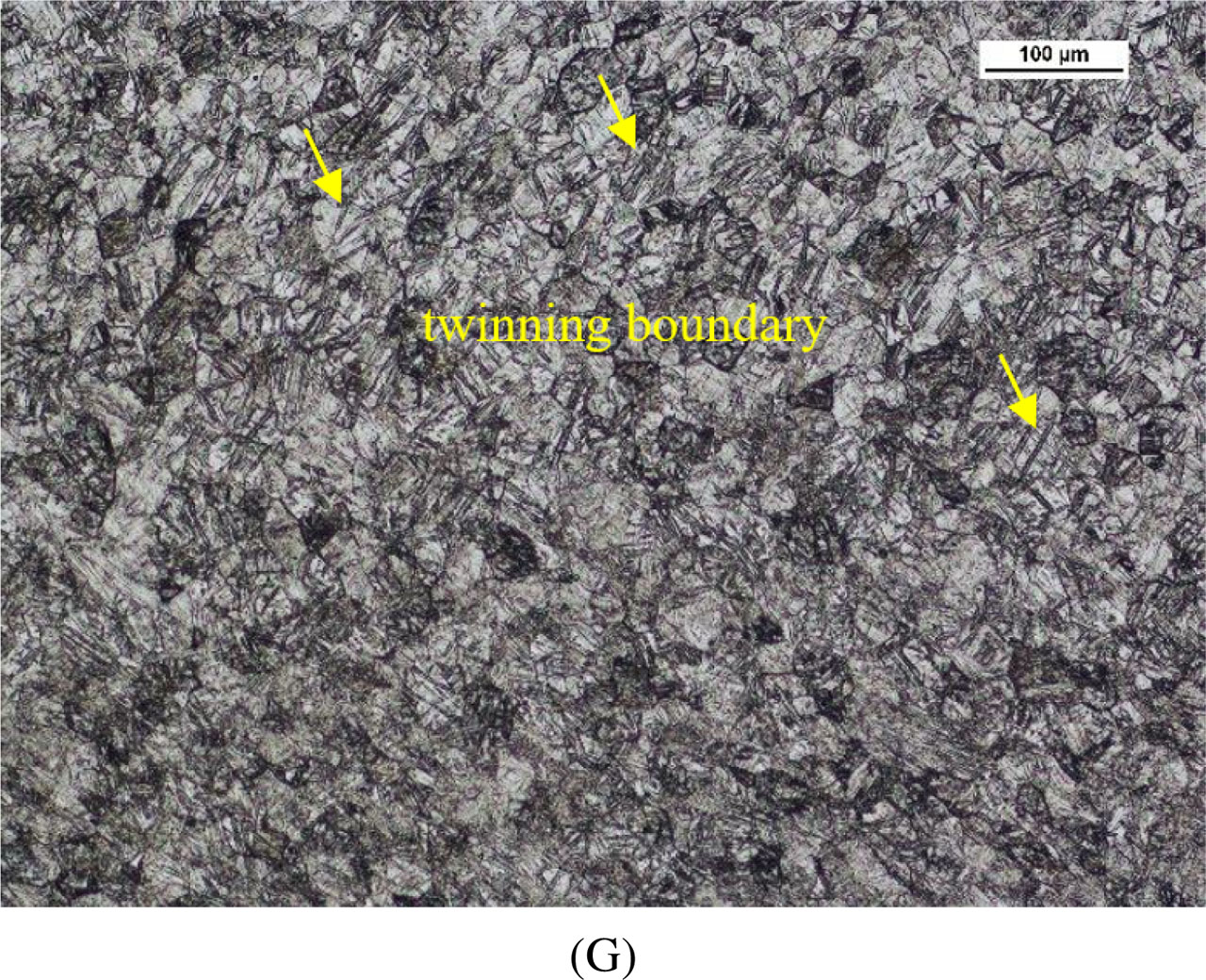
Structure of analysed materials: (A) steel P355NH, visible ferrite and pearlite bands; (B) steel grade D, visible ferrite and pearlite grains, pearlite locally shows a slight banding; (C) steel SAF 250, visible austenite islands in a ferritic matrix; (D) Inconel 625, visible austenite grains with twinning boundaries; (E) Al 1050, dark inclusions; (F) Al 5083, state after plastic deformation and annealing. Visible solution α grains and Al (Mn, Fe, Si) inclusions, inter-metallic phases of Al3Mg2 and texture of deformation and (G) titanium grade 1, visible grains with twinning boundaries. Etched state, light microscopy
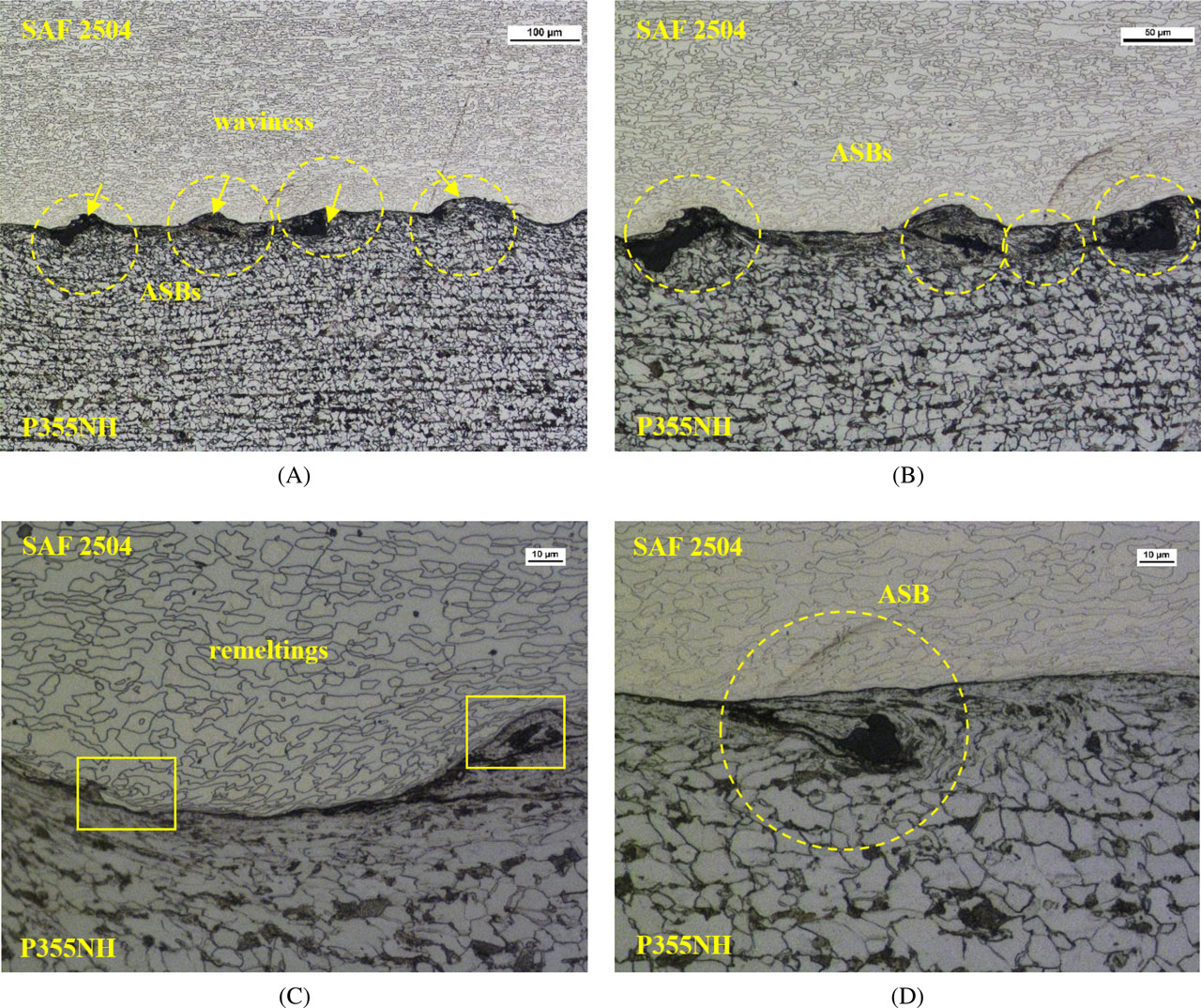

Fig. 2

Microstructure of bimetal SAF 2504 – P355NH: (A) 100× magnification; (B) 200× magnification; and (C) 500× magnification. Etched state, light microscopy, (D) 500× magnification
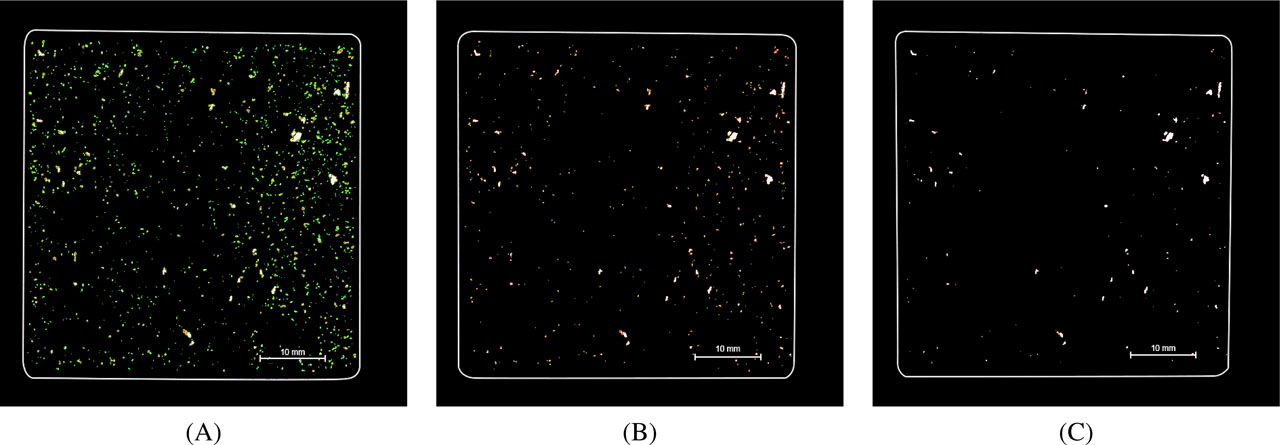

Fig. 3

Results of SAM C-scan ultrasonic tests, SAF 2504 – P355NH joints: (A) threshold 45% of reference range; (B) threshold 65% of reference range and (C) threshold 85% of reference range
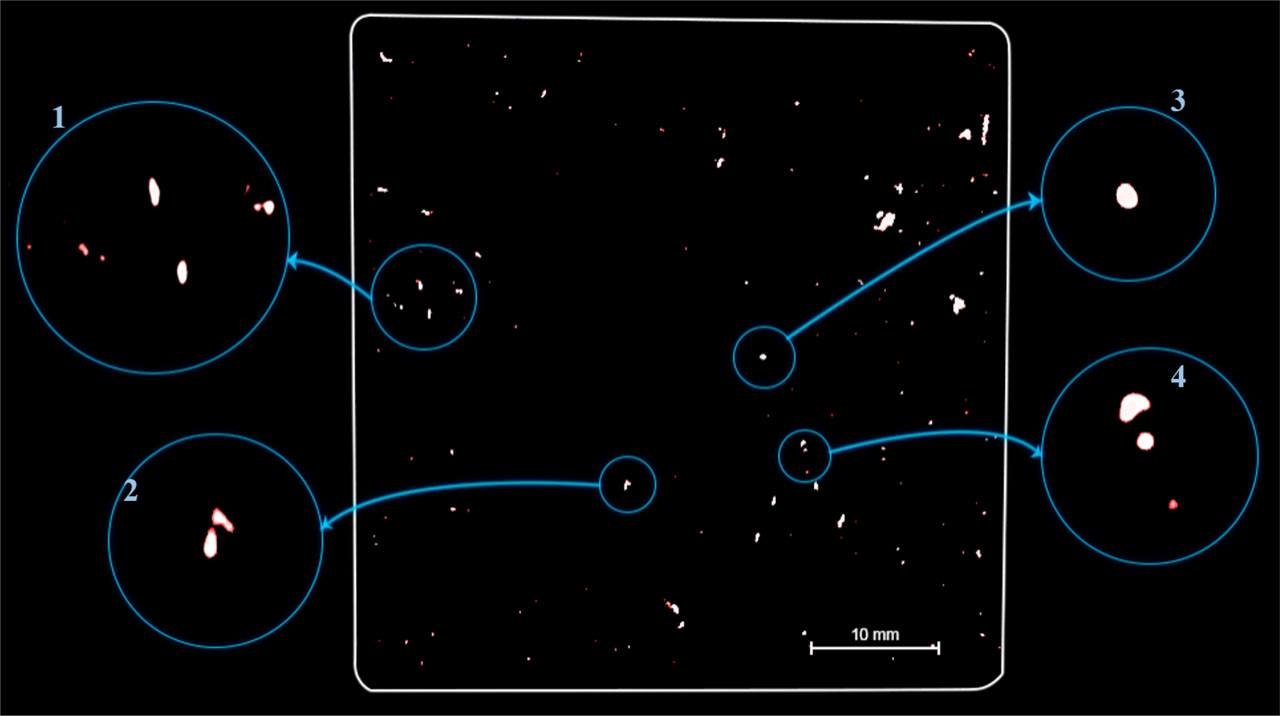

Fig. 4

Results of ultrasonic tests of SAF 2504 – P355NH joint: (1) surface 0.63 mm2, (2) surface 0.14 mm2, (3) surface 0.11 mm2 and (4) surface 0.23 mm2
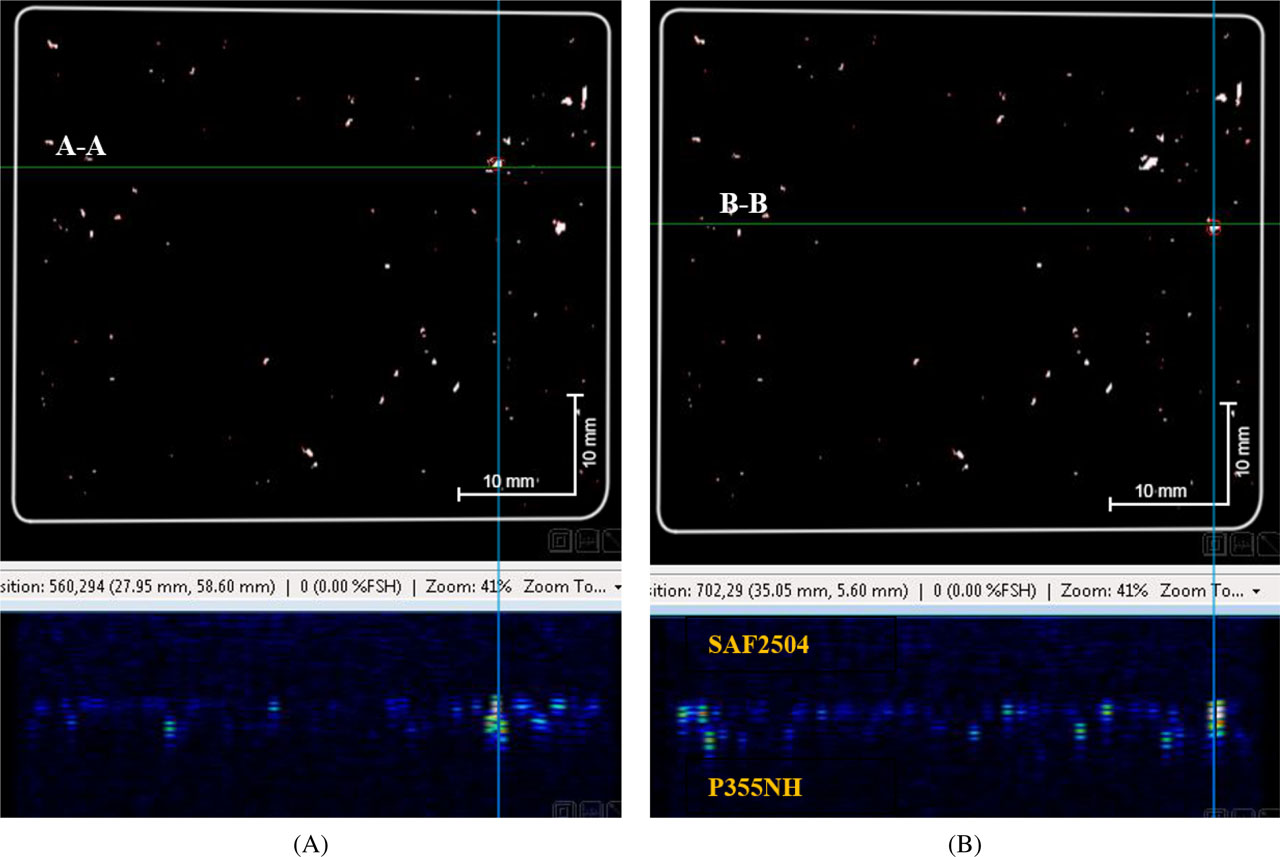

Fig. 5

C-scan and B-scan acoustic cross-sections of SAF 2504 – P355NH bimetal for two selected scanning lines: (A) cross section A-A and (B) cross section B-B
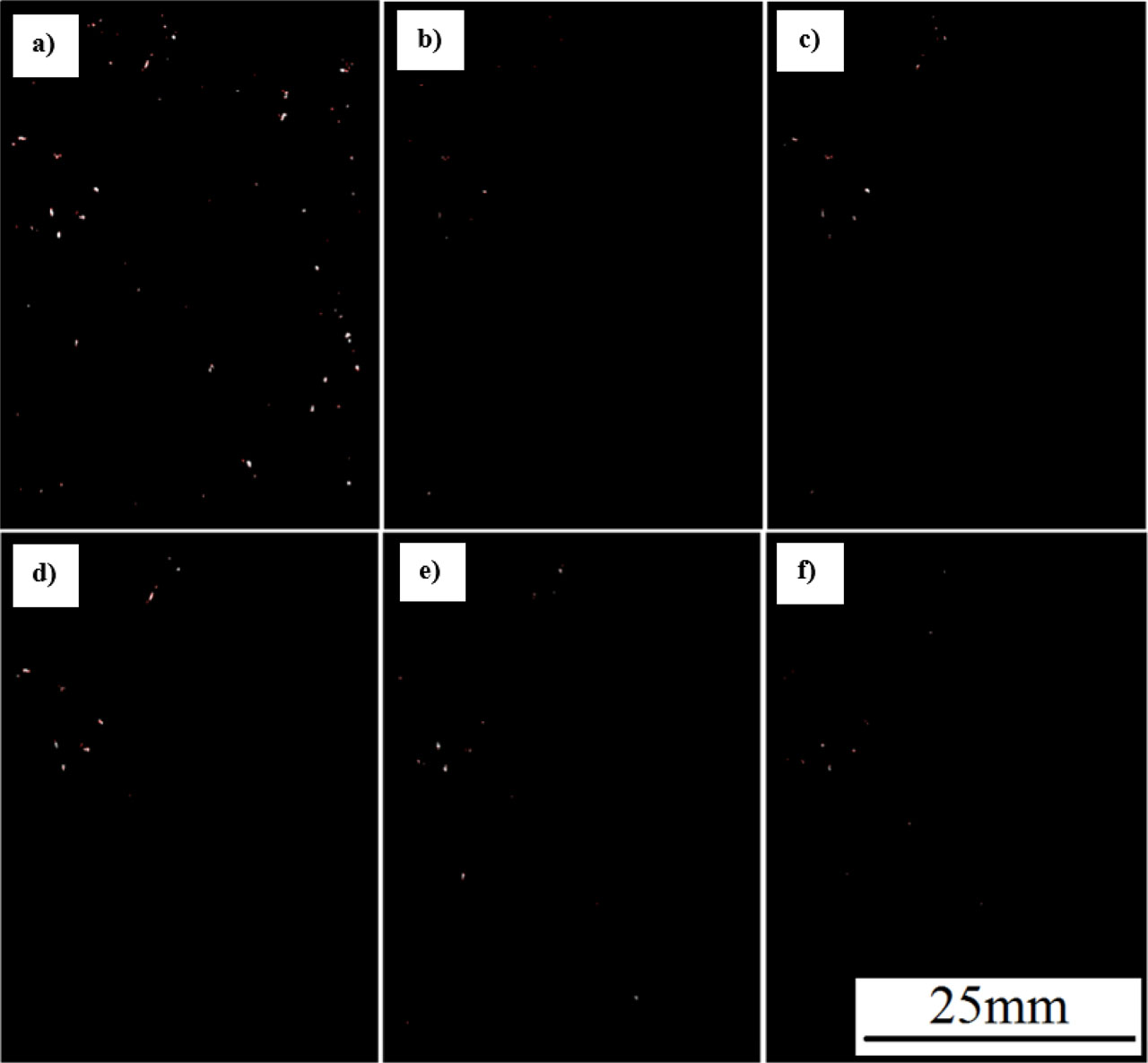

Fig. 6

X-scan presentations of SAF 2504 – P355NH joint: (A) C-scan registered in 2.9–3.00 mm range; (B) depth 2.94 mm; (C) depth 2.95 mm; (D) depth 2.96 mm; (E) depth 2.97 mm and (F) depth 2.98 mm
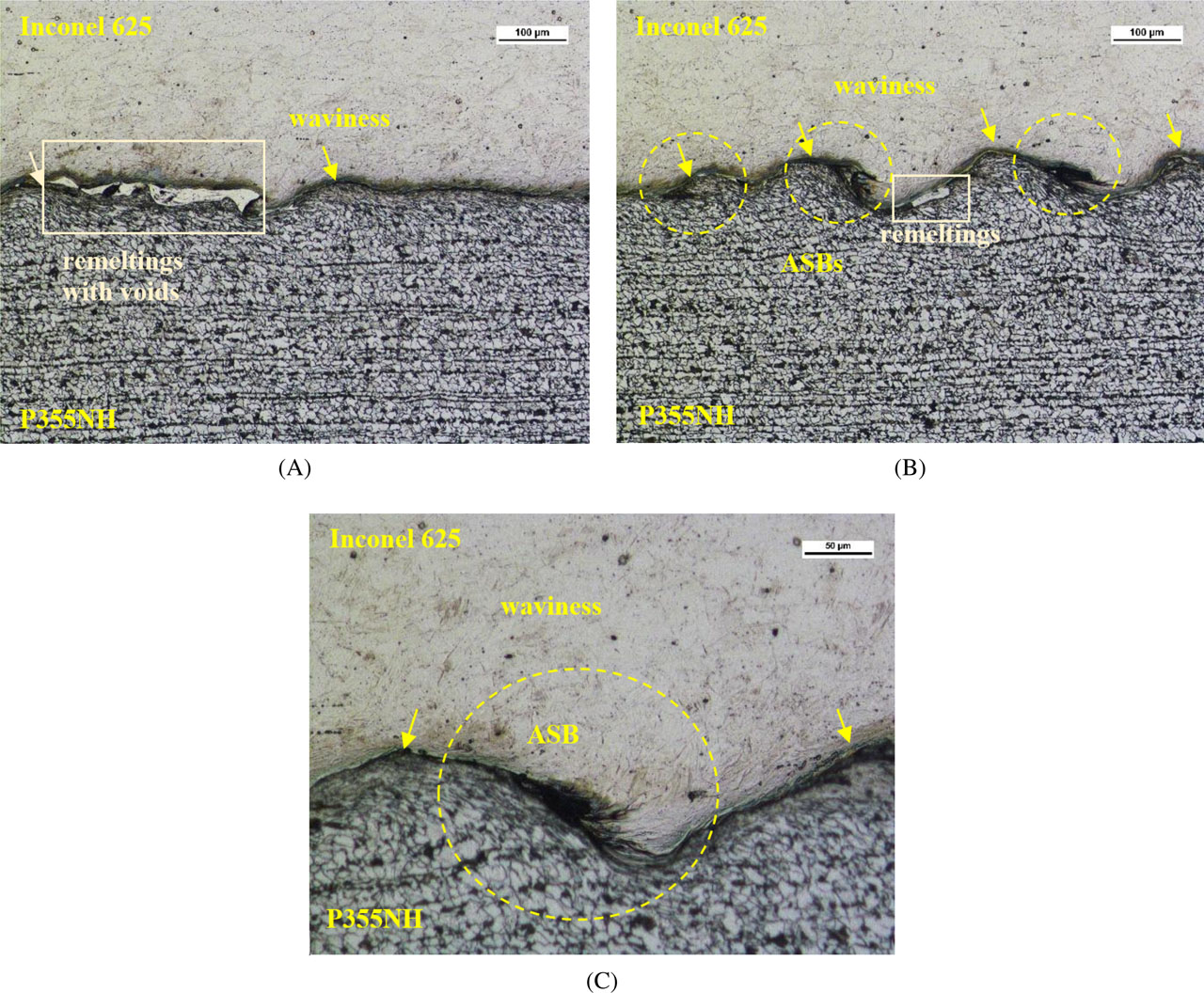

Fig. 7

Microstructure of Inconel 625 – P355NH bimetal: (A) magnification 100×; (B) magnification 100×; and (C) magnification 200×. Etched state, light microscopy
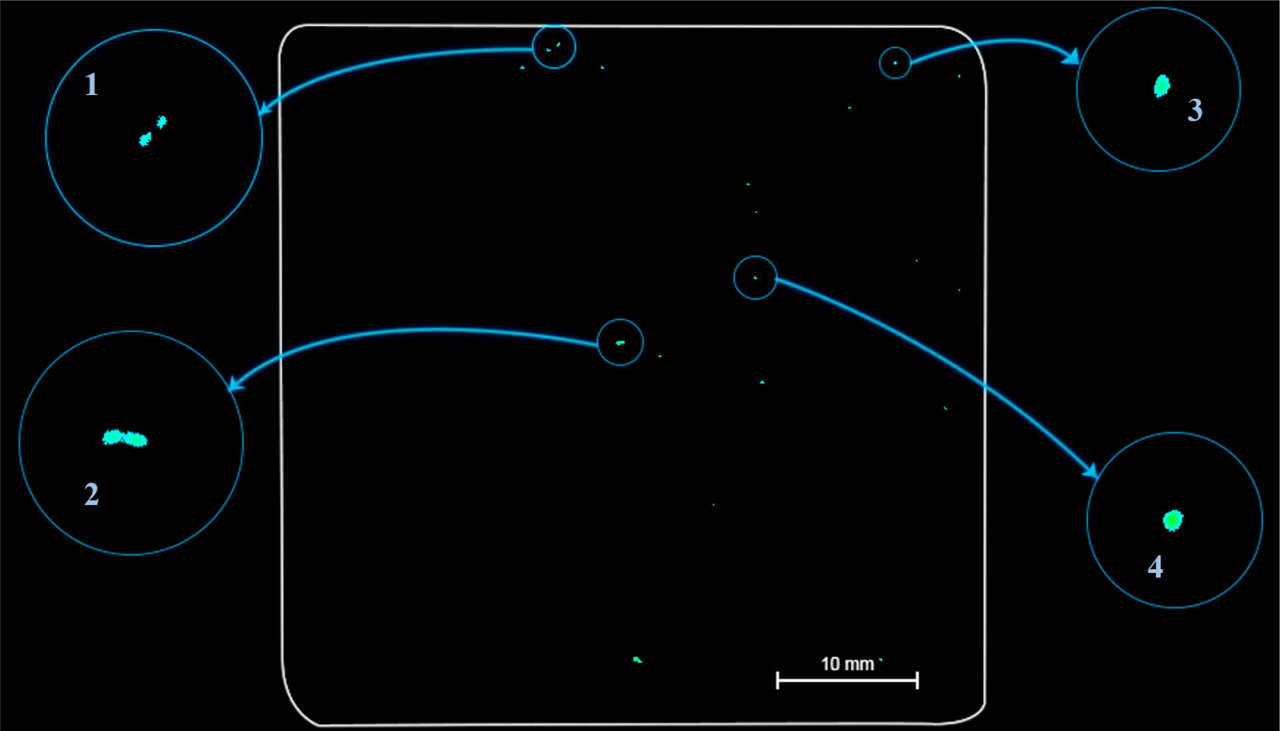

Fig. 8

Results of C-scan indications of ultrasonic tests of the Inconel 625 – P355NH joint. Close-ups of particular indications: (1) surface 0.03 mm2; (2) surface 0.09 mm2; (3) surface 0.05 mm2 and (4) surface 0.06 mm2, scanning acoustic microscope
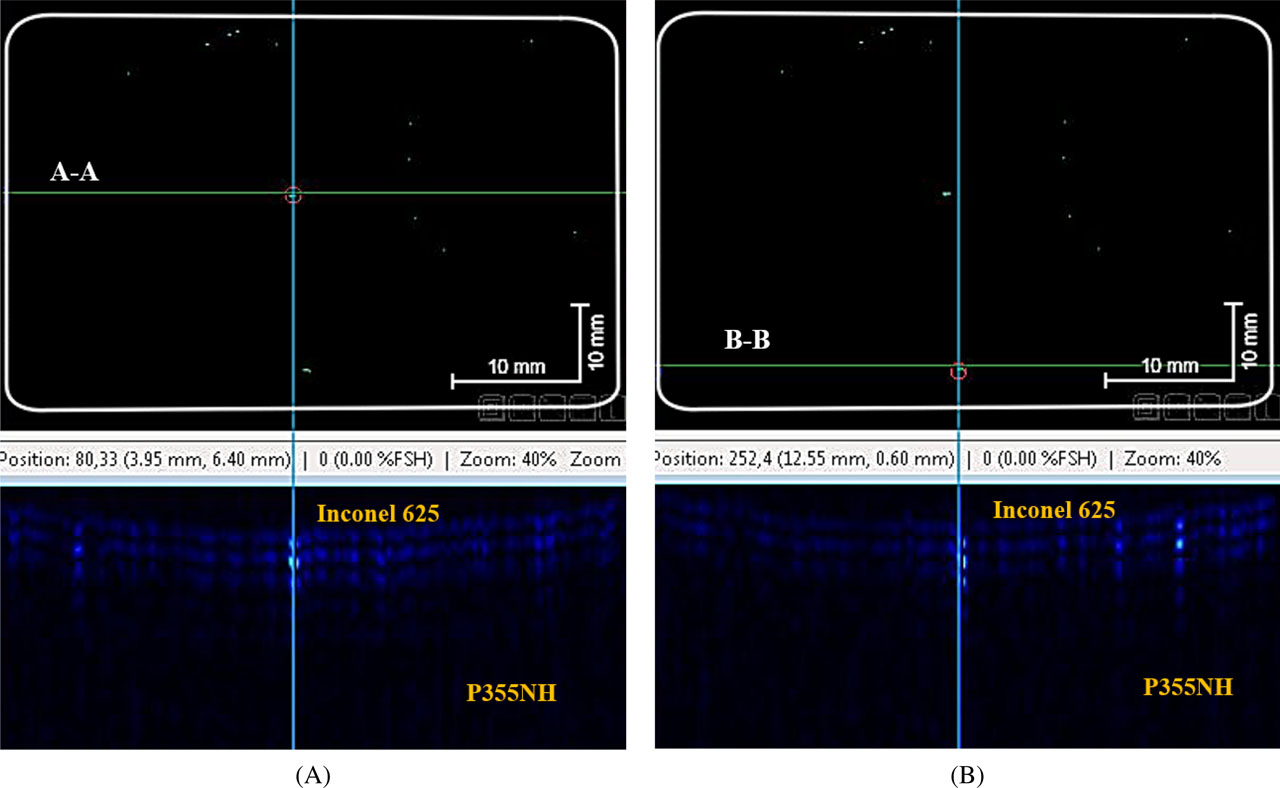

Fig. 9

C-scan and B-scan acoustic cross-sections of Inconel 625 – P355NH bimetal for two selected scanning lines: (A) cross section A–A and (B) cross section B–B
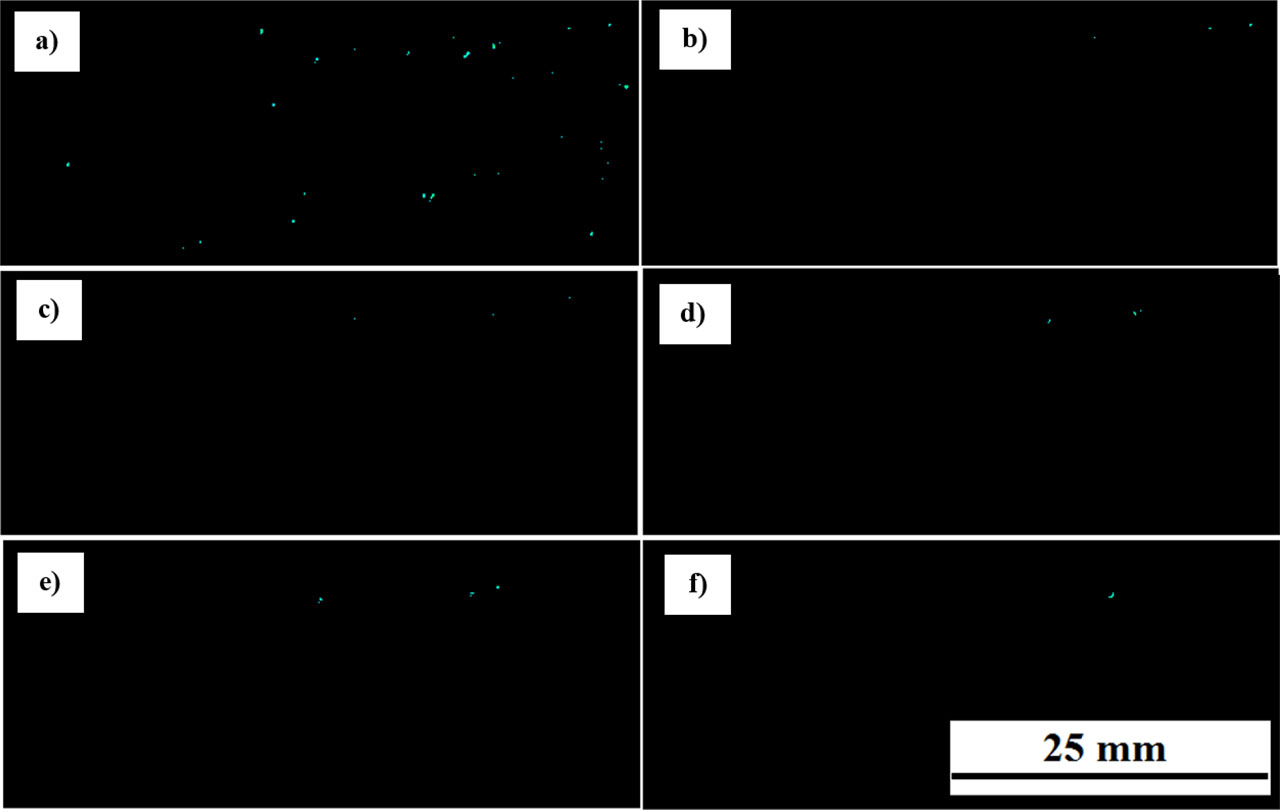

Fig. 10

X-scan presentations of Inconel 625 – P355NH joint: (A) C-scan registered in the range of 3.01–3.06 mm; (B) depth 3.01 mm; (C) depth 3.02 mm; (D) depth 3.04 mm; (E) depth 3.05 mm and (F) depth 3.06 mm
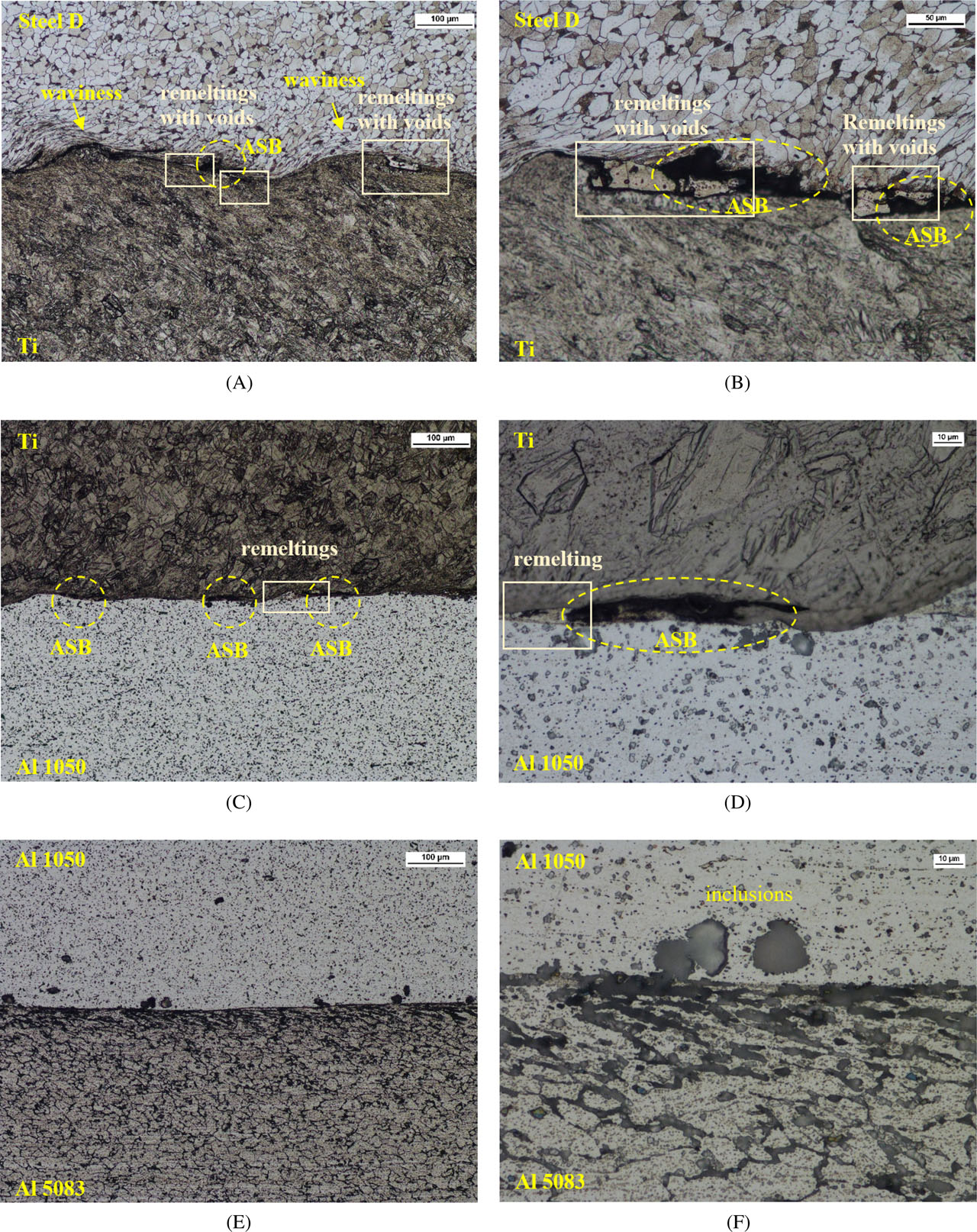

Fig. 11

Microstructure of a four-layer clad plate: steel grade D – Ti grade 1 – Al 1050 – Al 5083: (A) steel grade D – Ti grade 1, magnification 100×; (B) steel grade D – Ti grade 1, magnification 200×; (C) Ti grade 1 – Al 1050, magnification 100×; (D) Ti grade 1 – Al 1050, magnification 500×; (E) Al 1050 – Al 5083, magnification 100× and (F) Al 1050 – Al 5083, magnification 500×. Etched state, light microscopy
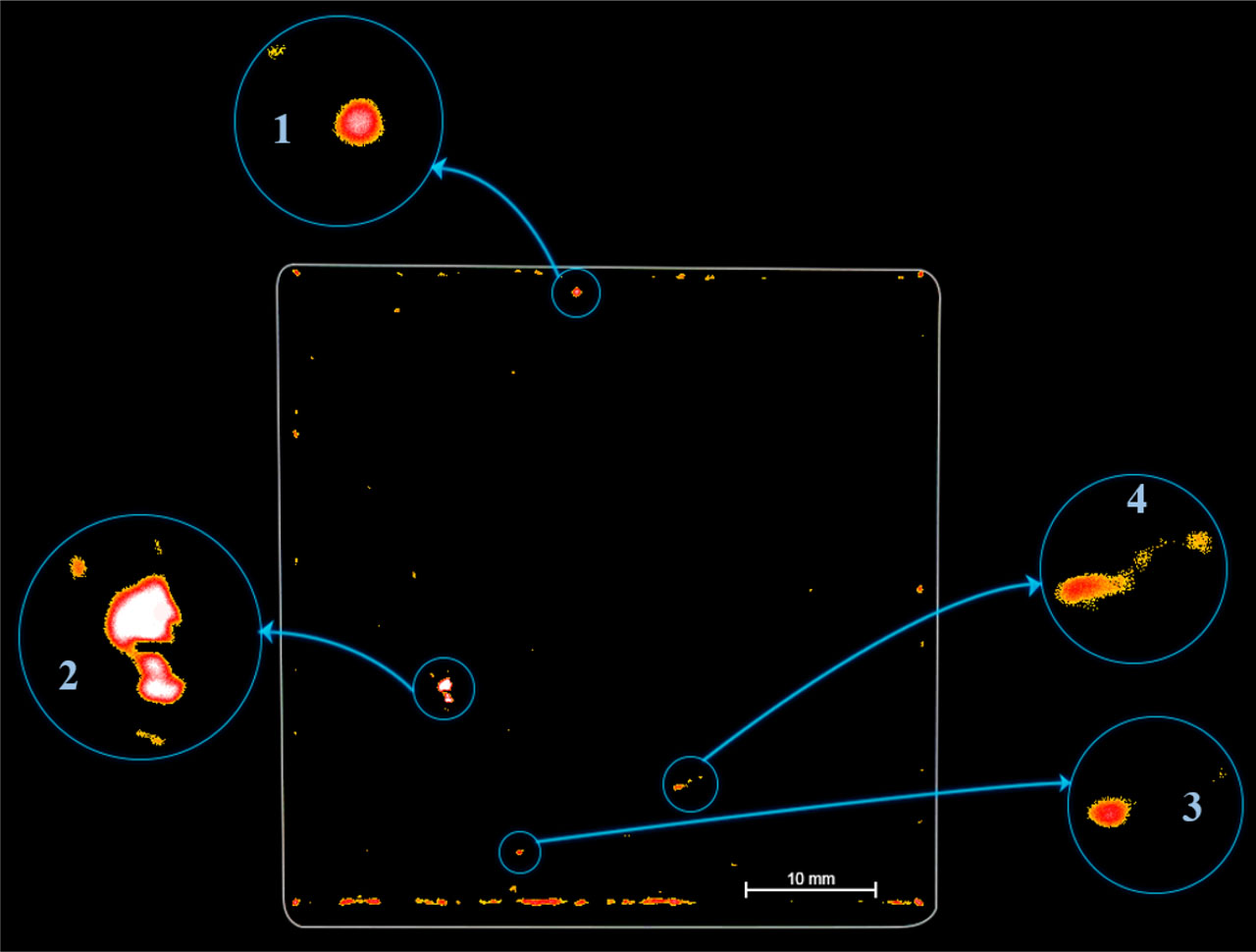

Fig. 12

Results of C-scan indications of ultrasonic tests of a four-layer clad plate: steel grade D – Ti grade 1 – Al 1050 – Al 5083. Close-ups of particular indications: (1) surface 0.44 mm2, (2) surface 1.51 mm2, (3) surface 0.27 mm2 and (4) surface 0.52 mm2
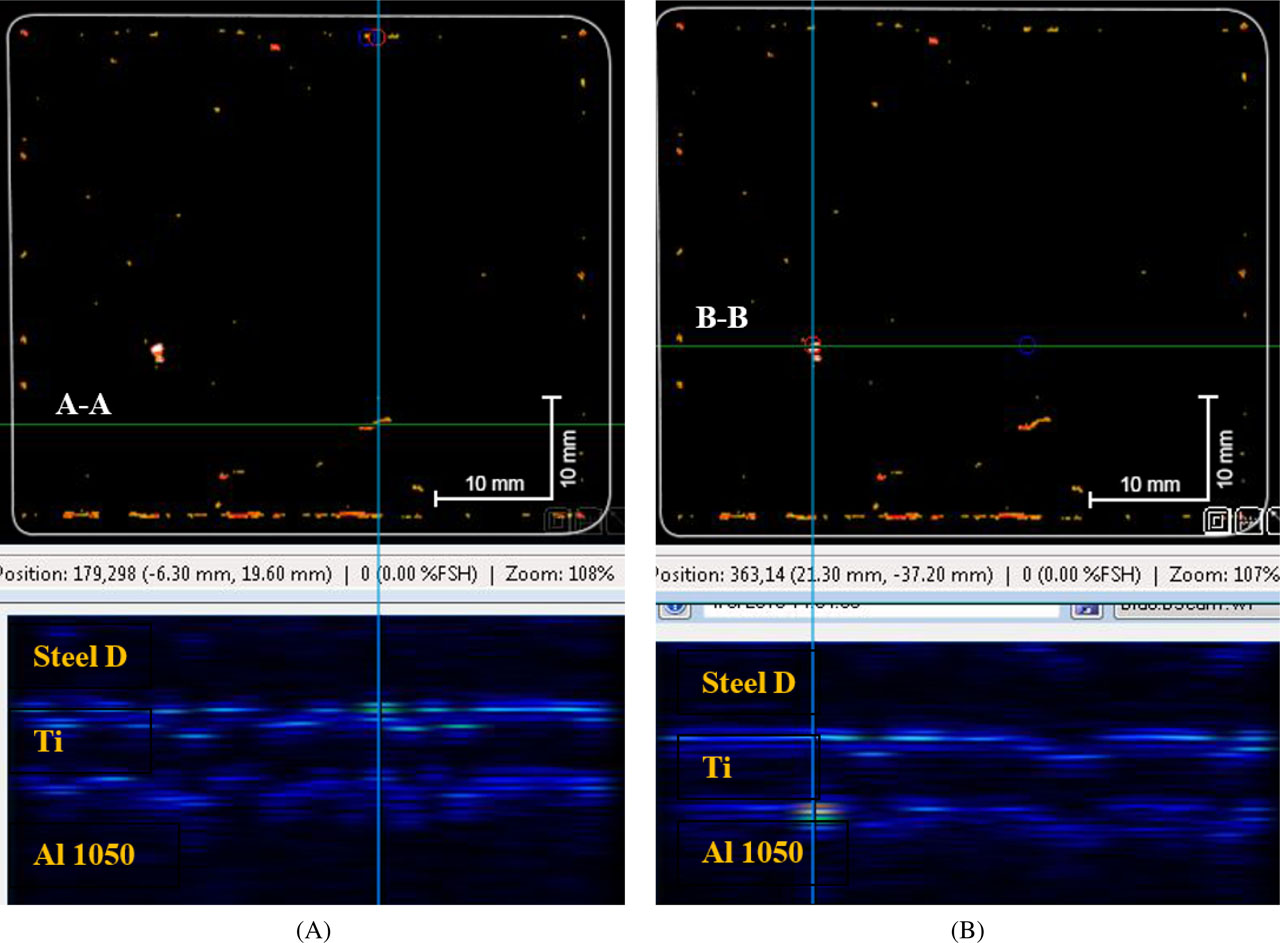

Fig. 13

Results of C-scan and B-scan indications of ultrasonic tests of a four-layer clad plate: steel grade D – Ti grade 1 – Al 1050 – Al 5083 for two selected scanning lines (in both cases steel grade D – Ti grade 1 – Al 1050 are visible): (A) cross section A–A and (B) cross section B–B
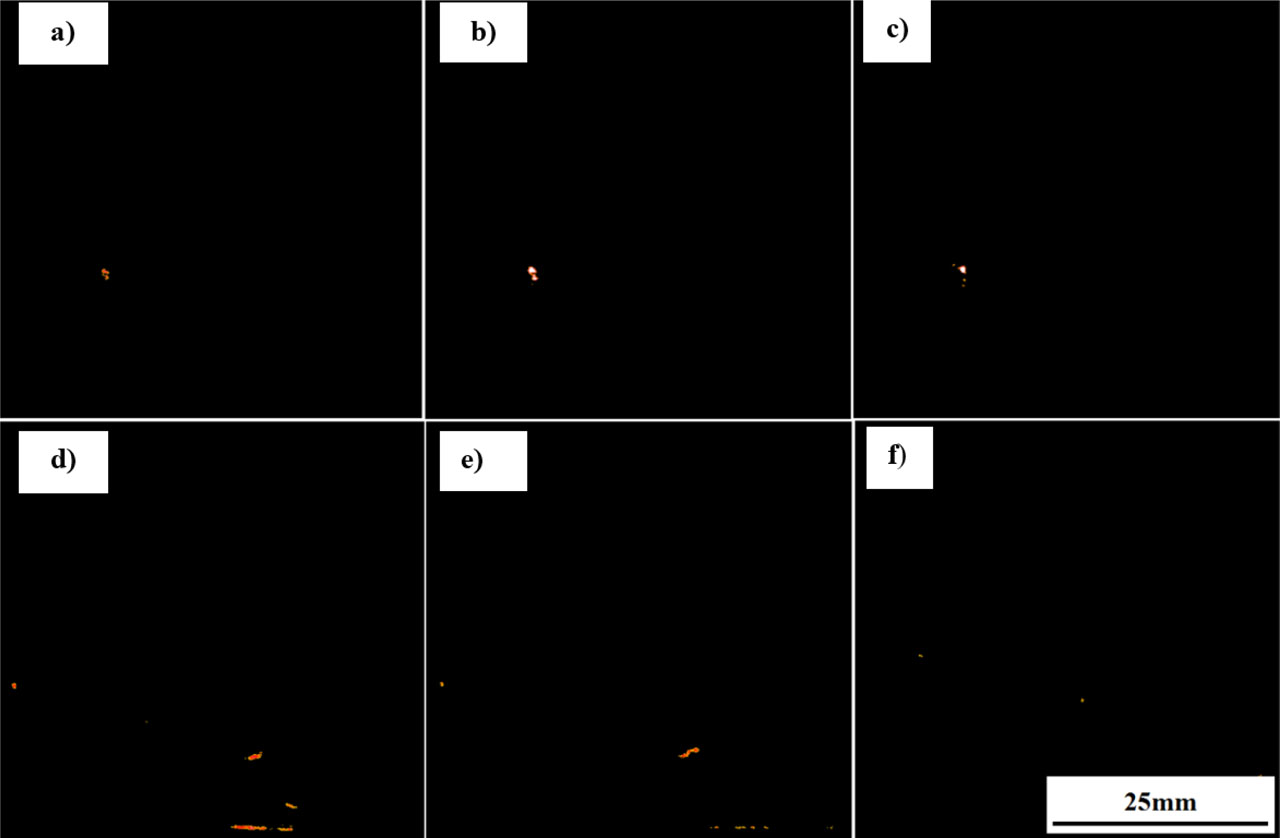

Fig. 14

A four-layer clad plate: steel grade D – Ti grade 1 – Al 1050 – Al 5083, X-scan: (A) depth 11.90 mm, (B) depth 11.91 mm, (C) depth 11.92 mm, (D) depth 11.93 mm, (E) depth 11.94 mm and (F) depth 11.95 mm, scanning acoustic microscope
DOI: https://doi.org/10.2478/msp-2022-0035 | Journal eISSN: 2083-134X | Journal ISSN: 2083-1331
Language: English
Page range: 93 - 111
Submitted on: Dec 13, 2022
Accepted on: Dec 21, 2022
Published on: Dec 31, 2022
Published by: Wroclaw University of Science and Technology
In partnership with: Paradigm Publishing Services
Publication frequency: 4 issues per year

© 2022 Marcin Korzeniowski, Beata Białobrzeska, Anna Lewandowska, published by Wroclaw University of Science and Technology
This work is licensed under the Creative Commons Attribution-NonCommercial-NoDerivatives 4.0 License.