
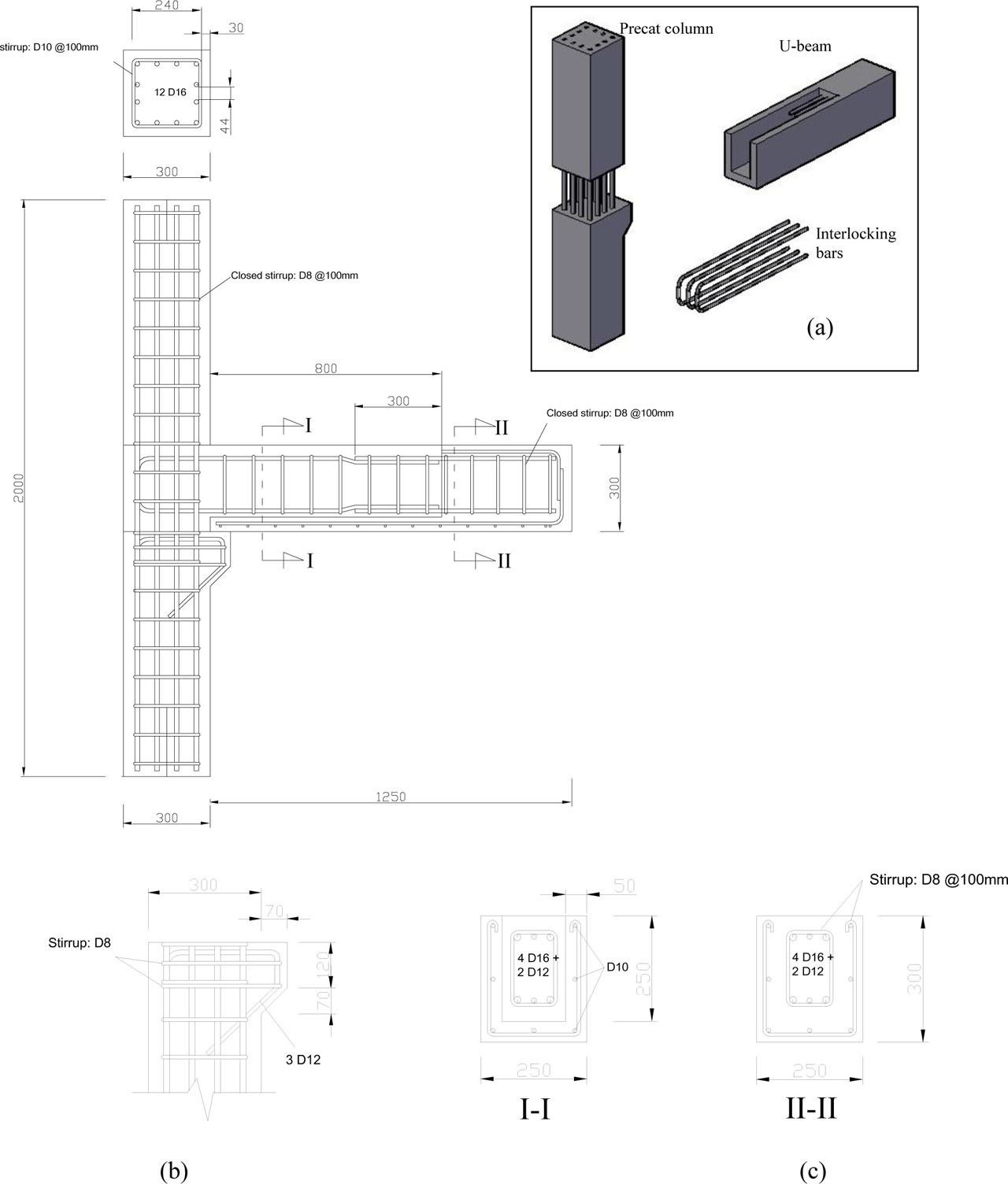
Fig. 1
Reinforcement detail of PCBC specimen, (A) Isometrics of PCBC connections, (B) Corbel reinforcement, (C) Beam cross sections. PCBC, precast concrete beam-column.
Table 1
Properties of the steel fibers
| Brand | Dramix RC 65 35 BN |
| Length (lf) | 35 mm |
| Diameter (df) | 0.55 mm |
| Aspect ratio (lf/df) | 65 |
| Tensile strength | 1345 N/mm2 |
| Young's Modulus (Emod) | 210000 N/mm2 |
Table 2
Material composition of precast elements and CIP-connection of specimens P2, P3, and P4
| Materials | Precast elements | CIP-connection of P2 | CIP-connection of P3 | CIP-connection of P4 |
|---|---|---|---|---|
| Coarse aggregate (kg/m3) | 1000.55 | 1028.4 | 1028.4 | 1028.4 |
| Fine aggregate (kg/m3) | 818.63 | 685.6 | 685.6 | 685.6 |
| Cement (kg/m3) | 335.82 | 441 | 441 | 441 |
| Water (kg/m3) | 208 | 210 | 213 | 213 |
| Steel fiber (kg/m3) | – | – | 39.25 | 78.5 |
| w/c | 0.62 | 0.47 | 0.52 | 0.52 |
| Slump (mm) | 150 | 140 | 125 | 85 |
[i] CIP, cast-in-place.
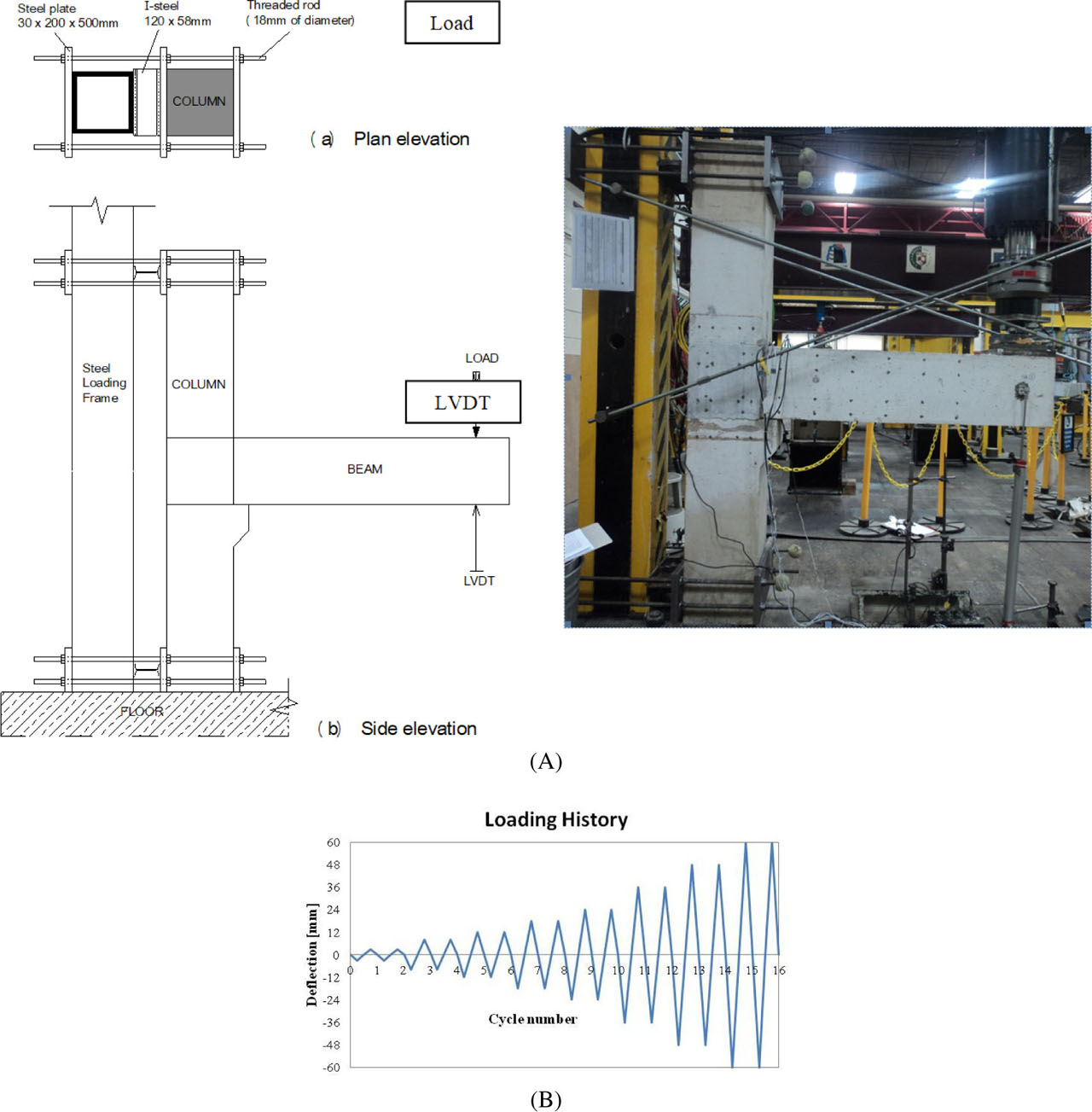
Fig. 2
(A) Test setup of PCBC specimens; (B) Loading history for reversed cyclic load test. PCBC, precast concrete beam-column.
Table 3
Average of compressive strength, modulus of elasticity, and modulus of rupture
| Specimen | Average compressive strength (MPa) | Average modulus of elasticity (MOE) (GPa) | Average modulus of Rupture (MOE) (MPa) | |
|---|---|---|---|---|
| P2 | Precast beam | 40.95 | 30.697 | 4.03 |
| Precast column | 55.87 | 28.940 | 5.42 | |
| CIP-concrete | 50.86 | 31.518 | 5.99 | |
| P3 | Precast beam | 36.82 | 30.461 | 5.36 |
| Precast column | 42.83 | 28.009 | 5.21 | |
| CIP-concrete | 47.36 | 33.782 | 6.06 | |
| P4 | Precast beam | 50.58 | 31.304 | 5.88 |
| Precast column | 51.35 | 29.841 | 5.65 | |
| CIP-concrete | 60.26 | 42.679 | 7.76 | |
[i] CIP, cast-in-place.
Table 4
Comparison of the mechanical properties of the CIP-concrete of the PCBC specimens
| (Vf = 0%) | (Vf = 0.5%) | (Vf = 1.0%) | Increase compared to (Vf = 0%) | ||
|---|---|---|---|---|---|
| (Vf = 0.5%) | (Vf = 1.0%) | ||||
| Average of compressive strength (MPa) | 50.86 | 47.36 | 60.26 | −6.88 | 18.48 |
| Average modulus of elasticity (GPa) | 31.518 | 33.782 | 42.679 | 7.18 | 35.41 |
| Average modulus of rupture (MPa) | 5.99 | 6.06 | 7.76 | 1.17 | 29.55 |
[i] CIP, cast-in-place; PCBC, precast concrete beam-column.
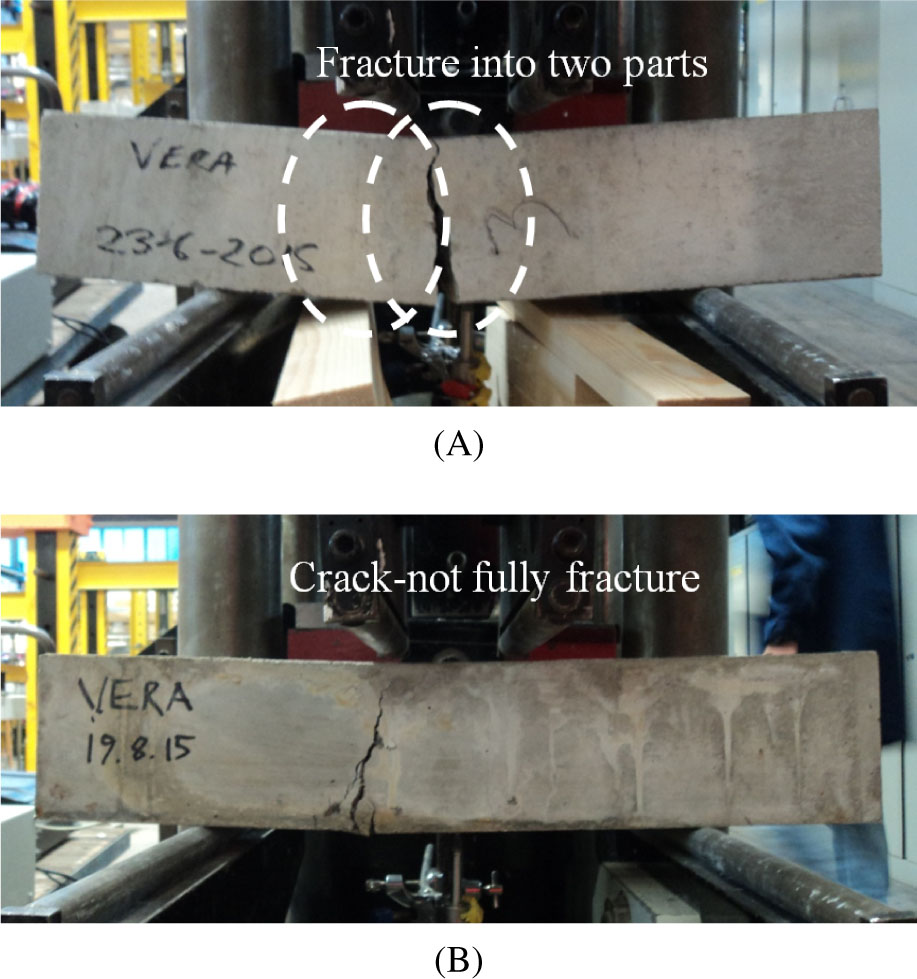
Fig. 3
Failure mode of the flexural test of the prism, (A) plain concrete, (B) steel fiber reinforced concrete.
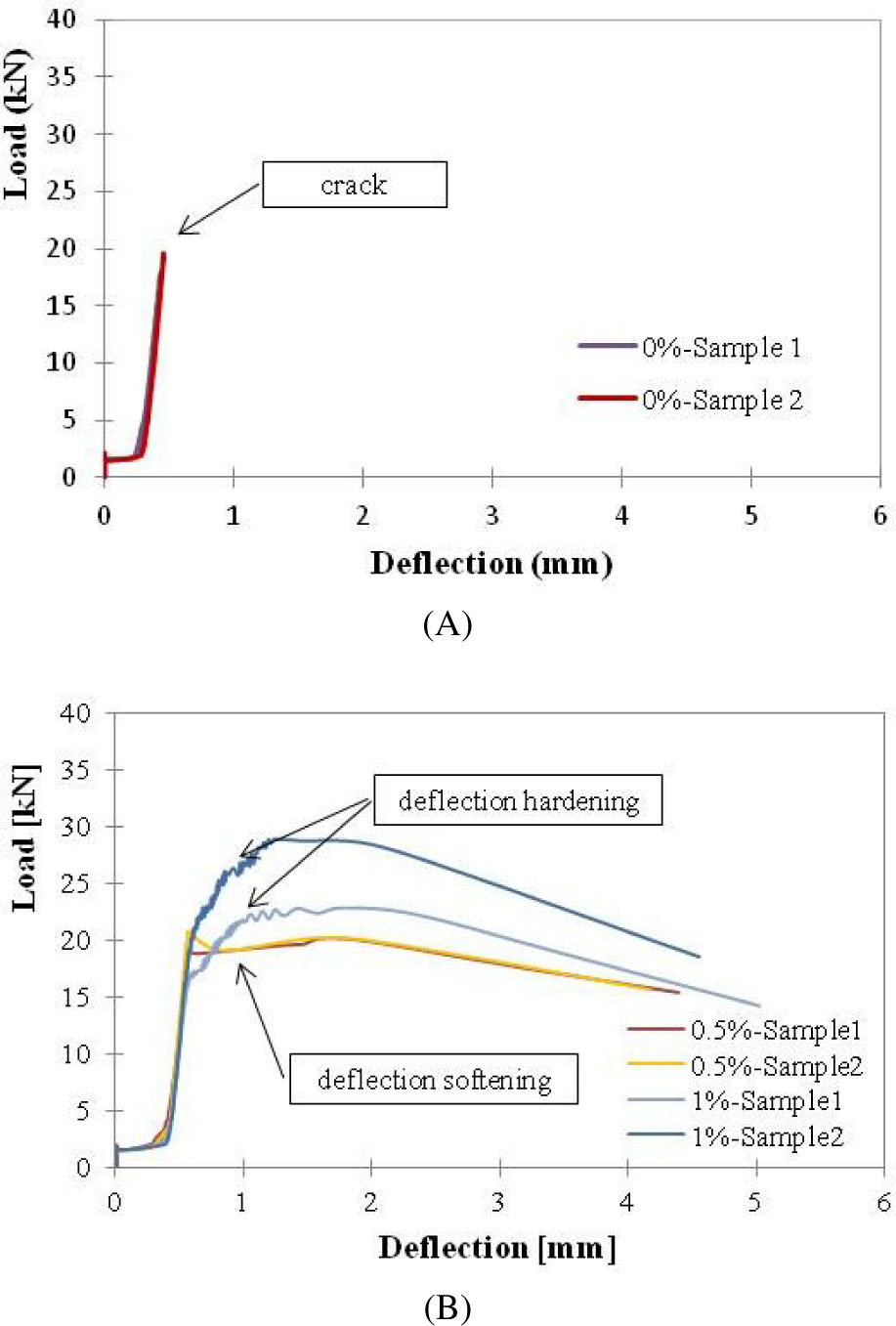
Fig. 4
Load-deflection comparison for the prisms made of the concrete used in the CIP-connections of (A) Specimen P2 (Vf = 0%); (B) Specimen P3 (Vf = 0.5%) and P4 (Vf = 1%). CIP, cast-in-place.
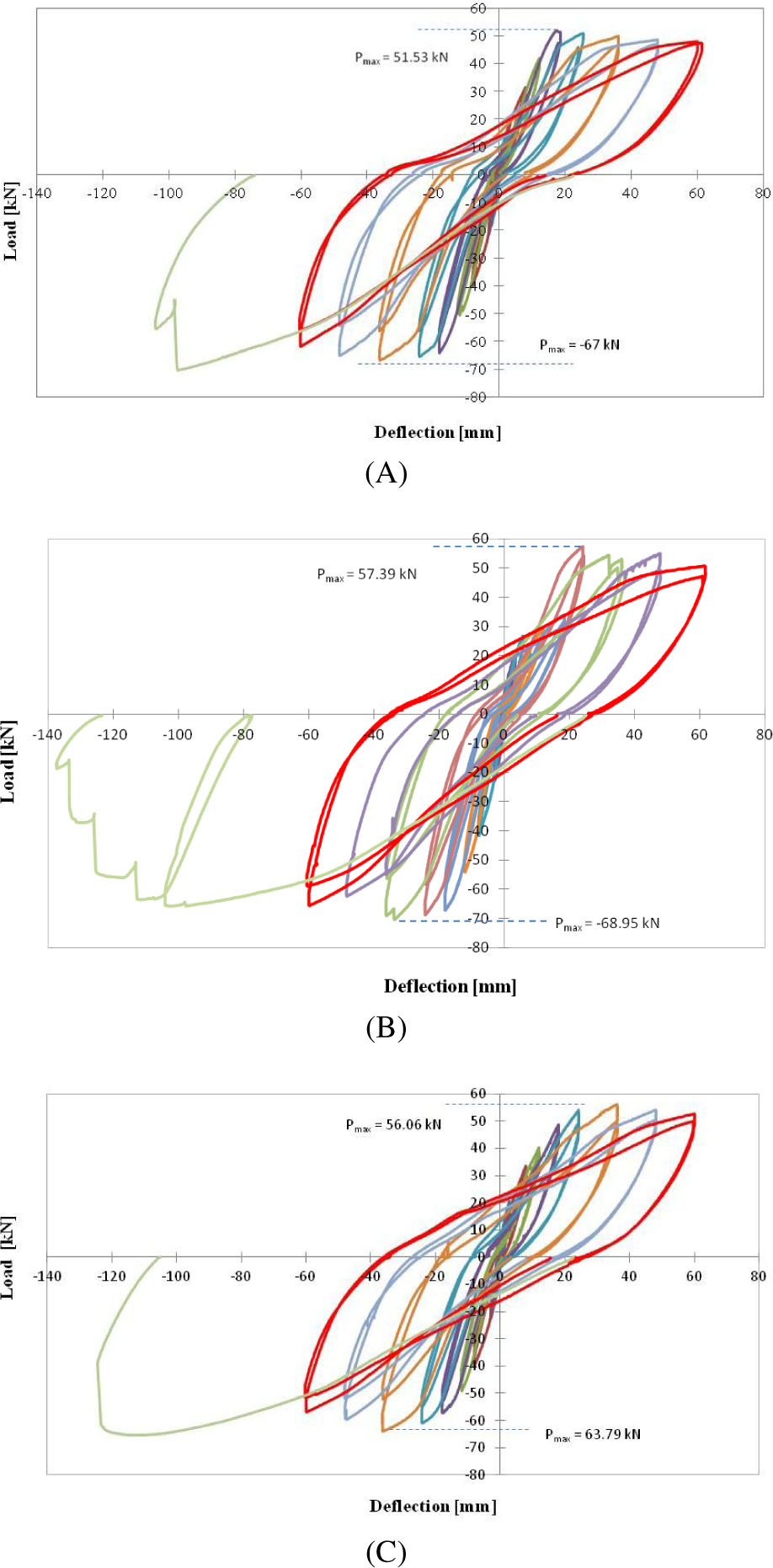
Fig. 5
Load-deflection hysteresis loops of PCBC specimens: (A) P2 with Vf = 0%, (B) P3 with Vf = 0.5%, (C) P4 with Vf = 1%. PCBC, precast concrete beam-column.
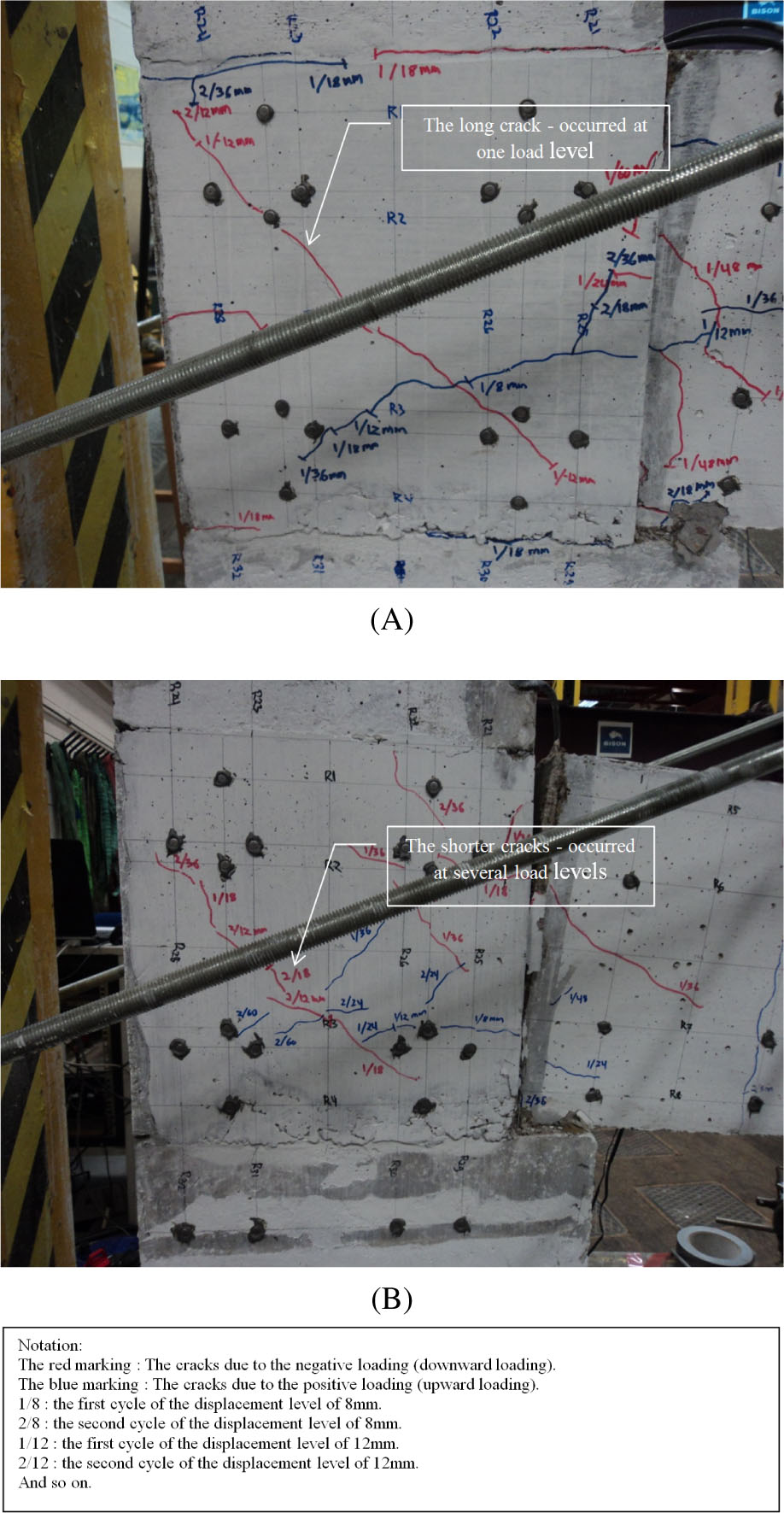
Fig. 6
Crack pattern in the joint core (CIP-concrete): (A) P2 with Vf = 0%, (B) P4 with Vf = 1%. CIP, cast-in-place.
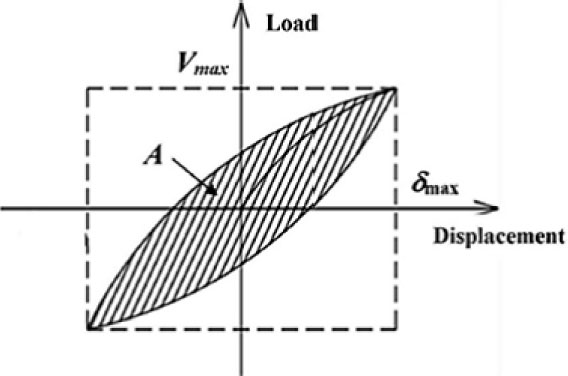
Fig. 7
Definition of normalized dissipated energy normalizing hysteretic energy dissipation at each load cycle [12].
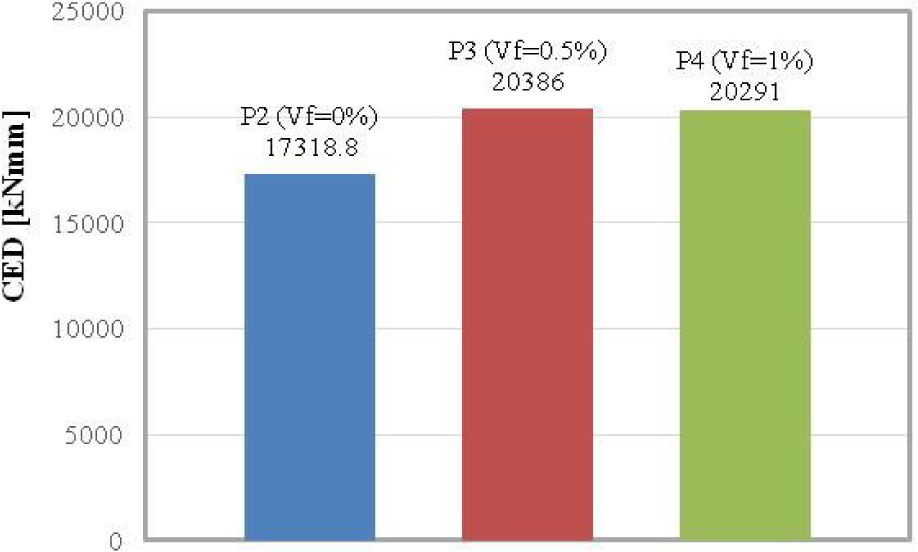
Fig. 8
CED of PCBC specimens. CED, cumulative energy dissipation; PCBC, precast concrete beam-column.
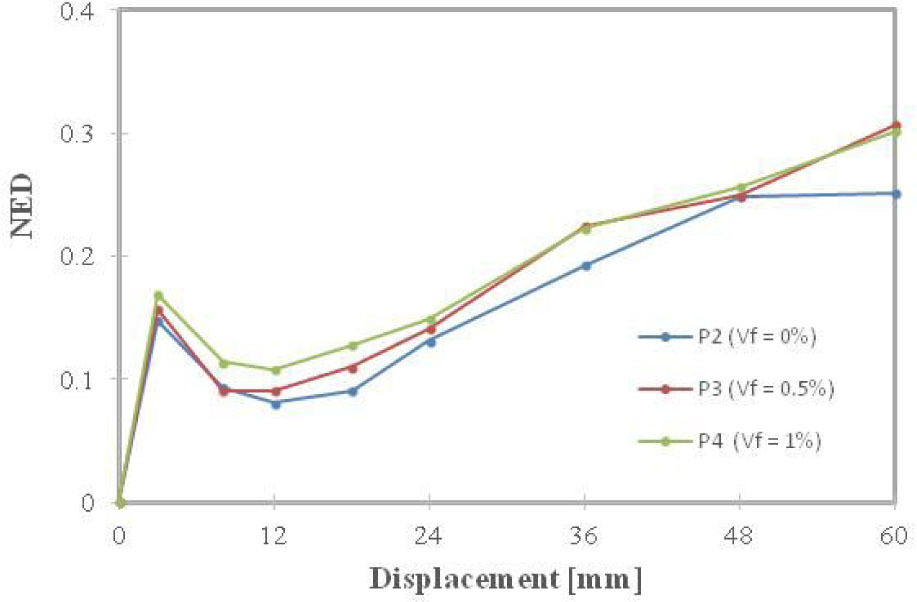
Fig. 9
NED of PCBC specimens P2, P3, and P4. PCBC, precast concrete beam-column; NED, normalized energy dissipation.
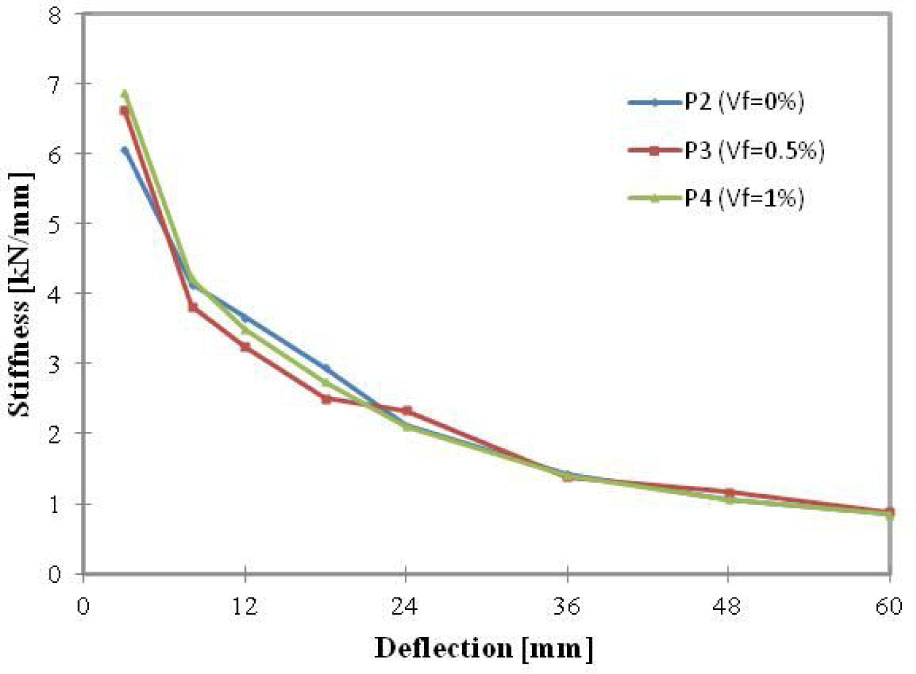
Fig. 10
Secant stiffness degradation of the PCBC specimens. PCBC, precast concrete beam-column.