
1. Introduction
Artificial intelligence (AI) is revolutionizing a wide array of fields, from healthcare and education to transportation and economics. In recent years, AI’s potential has also been recognized in the realm of environmental economics, where it offers innovative approaches to addressing complex challenges related to resource management, sustainability, and climate change. As AI tools such as machine learning (ML), deep learning, and data analytics advance, they are increasingly applied to analyze and predict economic outcomes under various environmental conditions, optimize resource allocation, and model the impacts of economic activities on ecosystems.
The scope of this study is to explore the current applications of AI in environmental economics and to identify potential future directions for this evolving field. By conducting a bibliometric analysis, we aim to map the research landscape and highlight the key contributors, dominant themes, and emerging trends. Our findings provide a comprehensive overview of the interdisciplinary efforts combining AI with environmental sciences and economics, demonstrating how these technologies can be harnessed to promote sustainable development and economic optimization.
2. Literature review
The intersection of AI, environmental science, and economics has gained substantial attention over the last decade. Existing studies show that predictive modeling, ML, and optimization algorithms are increasingly applied to climate modeling, renewable energy optimization, waste management, and the economic evaluation of environmental policies (Barre et al., 2024; Di Ciaccio, 2024). For instance, AI has been applied to enhance climate modeling, optimize renewable energy production, improve waste management practices, and assess the economic impacts of environmental policies (Di Ciaccio, 2024). AI serves as the basis for many preventive maintenance systems, which prevent factory breakdowns, malfunctions, incidents, and failures, which are still not systematically studied and their impact not yet measured. The complexity of topics that result from associating these two main concepts has been spotted in recent years by other studies, including Barre et al. (2024) and Alhasnawi (2024).
Several bibliometric studies have examined the broader implications of AI within environmental sciences, but few have specifically focused on environmental economics. Existing studies have often explored the use of AI in environmental monitoring or policy assessment with a focus on specific topics, such as wastewater (Li et al., 2024) or operations within the field (Bashshur et al., 2020). Zejjari and Benhayoun (2024) have forecasted future trends in AI applications, emphasizing the increasing importance of data-driven decision-making and predictive analytics. However, there remains a gap in the literature regarding a comprehensive bibliometric analysis that spans the full spectrum of AI applications within environmental economics. Recent large-scale reviews further confirm the rapid consolidation of AI as a core tool for sustainability-oriented economic systems and environmental governance (Zhang et al., 2024).
Recent scholarship has increasingly explored how AI and ML can support sustainability, environmental management, and economic analysis, including areas closely aligned with environmental economics. Several recent overviews and empirical studies help delineate the current state of the field, key contributions, and remaining gaps.
Okafor et al. (2025) provide a comprehensive bibliometric and content-based overview of AI applications in environmental research, mapping a rapidly expanding body of literature from 2018 to 2024. Their analysis highlights the growth of AI-driven studies in smart cities, circular economy, carbon emissions monitoring, environmental forecasting, and resource optimization, with artificial neural networks and support vector machines emerging as dominant techniques. Although their scope is broader than environmental economics alone, the study confirms the accelerating convergence between AI and sustainability-oriented economic systems.
Similarly, Hernandez et al. (2025) conducted a systematic review of AI applications for advancing a sustainable economy using a PRISMA-based methodology. Their findings show that AI is increasingly employed for circular economy practices, energy optimization, waste reduction, sustainable production, and supply-chain efficiency. However, the authors emphasize that the current research remains fragmented, often lacking integrated analytical frameworks that jointly address environmental and economic performance. This supports the argument that focused bibliometric studies specifically targeting environmental economics remain necessary.
From an applied production and resource-efficiency perspective, Xue et al. (2025) demonstrate that AI-enabled optimization in sustainable materials management leads to measurable reductions in energy consumption, waste generation, production costs, and carbon footprints across multiple industrial stages. Their work provides concrete empirical evidence that AI-based optimization delivers simultaneous environmental and economic benefits, reinforcing the relevance of AI within environmental economic decision-making.
More directly related to environmental and energy economics, the empirical work of Busu (2024) applies panel-data econometric techniques to EU member states and demonstrates that business cycle dynamics, institutional quality, and regulatory effectiveness significantly influence renewable energy consumption. The results indicate that economic expansion alone does not guarantee sustainable energy transitions unless supported by stable governance and consistent environmental policies. These findings are highly relevant for future AI-based economic forecasting models applied to renewable energy and climate policy.
Complementing this macroeconomic perspective, earlier behavioral and institutional research by Busu (2019) applies structural equation modeling to assess the role of innovation capacity, regulatory frameworks, and human capital in advancing sustainable bioeconomic systems. The study confirms that behavioral mechanisms and institutional environments critically mediate the effectiveness of sustainability policies. Although conducted before the large-scale diffusion of AI tools, this contribution provides an essential conceptual foundation for contemporary AI-assisted sustainability modeling.
At the frontier between ecological economics and data science, Guo et al. (2024) introduce a global eco-economic dataset designed specifically for ML applications in sustainability research. Built on extended multiregional input–output structures, this resource enables ML-based prediction of sectoral emissions, environmental pressures, and economic interdependencies across countries. Such infrastructures significantly reduce entry barriers for future AI-driven research integrating environmental and economic dimensions on a global scale.
This study aims to fill this gap by providing a thorough analysis of the existing body of knowledge. We will examine how AI has been utilized to model economic behaviors related to environmental impact, assess resource allocation, and forecast economic outcomes under various scenarios of environmental change.
3. Methodology
This study employs a combination of bibliometric analysis and network co-occurrence mapping to assess the research landscape at the intersection of AI, environmental science, and economics. The methodology involves several distinct phases, including data collection, preprocessing, and bibliometric analysis.
We used the Clarivate’s Web of Science database to collect peer-reviewed articles, conference papers, and other scholarly works published between 1980 and 2023. The search strategy was designed to capture all relevant publications within the domains of AI, environmental science, and economics. The search query was constructed using the following keywords: “artificial intelligence,” “machine learning,” “deep learning,” “sustainability,” “climate change,” “economic impact,” and “resource allocation.” The search query was formulated to include these keywords in both the title and abstract fields to maximize the retrieval of relevant articles. Boolean operators (AND, OR) were used to refine the search and ensure comprehensive coverage of the interdisciplinary field. The results were filtered to remove non-English language publications, duplicates, and irrelevant entries. The initial dataset was cleaned by removing duplicate records and nonrelevant entries. The final dataset consisted of 448 documents published in 361 different journals, with an annual growth rate of 12%, disclosing from the starting point the expectation of sustained growth over the years.
Citation analysis was performed to identify influential articles, authors, and institutions in the field. This involved calculating the total number of citations received by each publication, determining citation counts for each author, and assessing citation networks. We utilized the R package “bibliometrix” to calculate common bibliometric indicators and total citation count. Keyword co-occurrence analysis was used to identify the primary topics and thematic trends in the field, using the same package to perform this analysis by constructing a keyword co-occurrence matrix from the titles, abstracts, and keywords of the publications.
4. Results and discussion
The bibliometric analysis revealed an exponential growth in publications at the intersection of AI, environmental science, and economics, particularly over the last decade, as shown in Figure 1. Only in the last analyzed period, from 2022 to 2023, an impressive increase with more than 100 published articles could be spotted. While a sharp increase in publications is observed after 2022, this trend should be interpreted cautiously. Although the wider diffusion of generative AI tools may have contributed to intensifying research activity, the increase more likely reflects broader structural drivers, including accelerated digitalization, climate policy pressure, and expanded availability of large-scale environmental datasets.
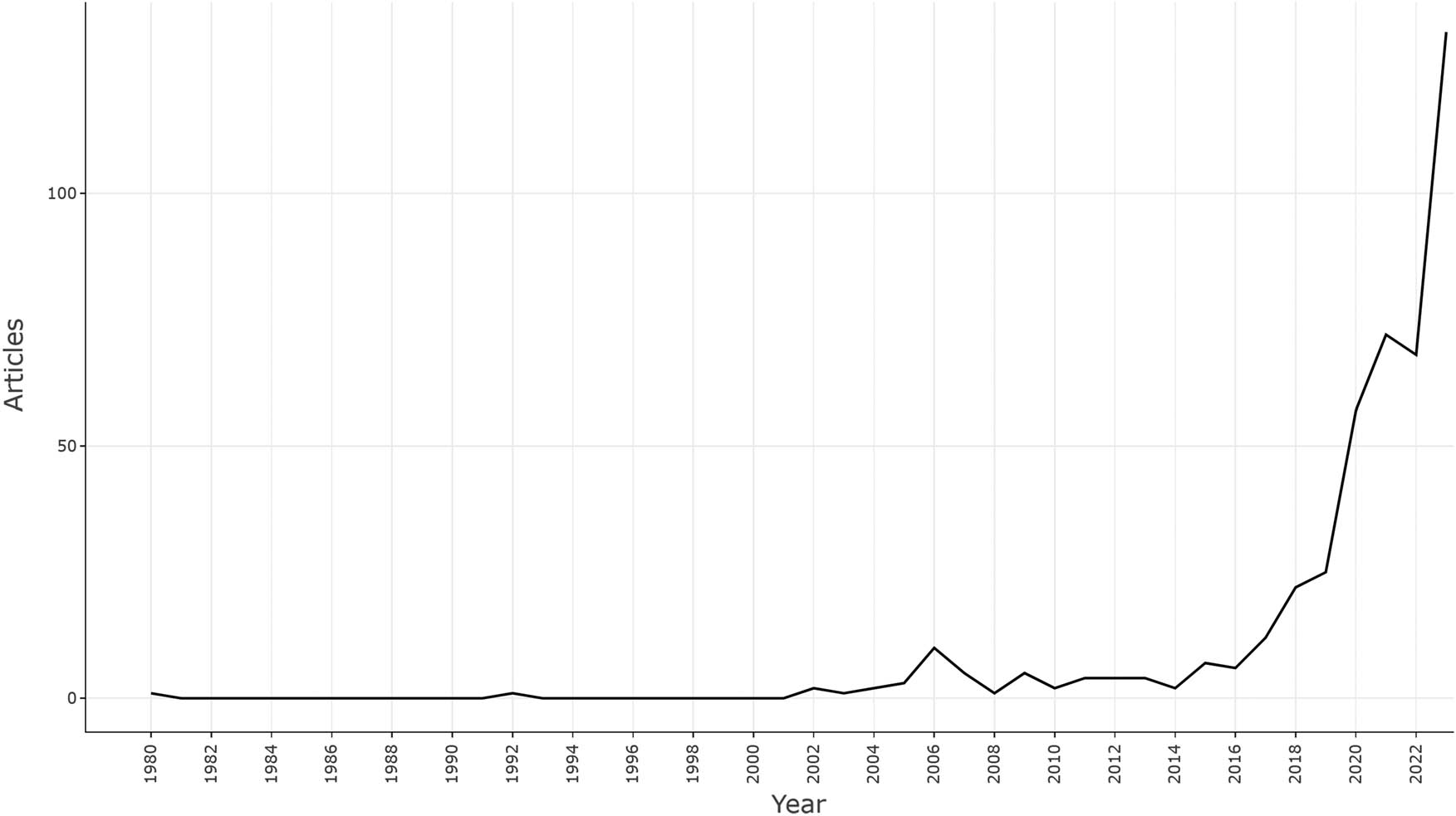
Figure 1
Evolution of number of articles.
Source: Authors’ computation using “Biblioshiny” R package.
Key contributors to the field were identified, including leading research institutions and authors who have produced highly cited works. Collaborative patterns demonstrated strong international partnerships, indicating a global interest in leveraging AI for environmental economic applications.
The single-to-multiple authorship ratio has been the highest in China and India, with more than five times published papers by single authors compared to those of several contributors. This finding contrasts the general trend of decreasing share of single-authored papers globally and in those countries and calls for subsequent research on what explains this divergence. It is also important to mention that the countries represented in Figure 2 appear in a similar order in other related studies, such as Bhagat et al. (2022) and Ramezani et al. (2024), demonstrating national support and targets on linked research.
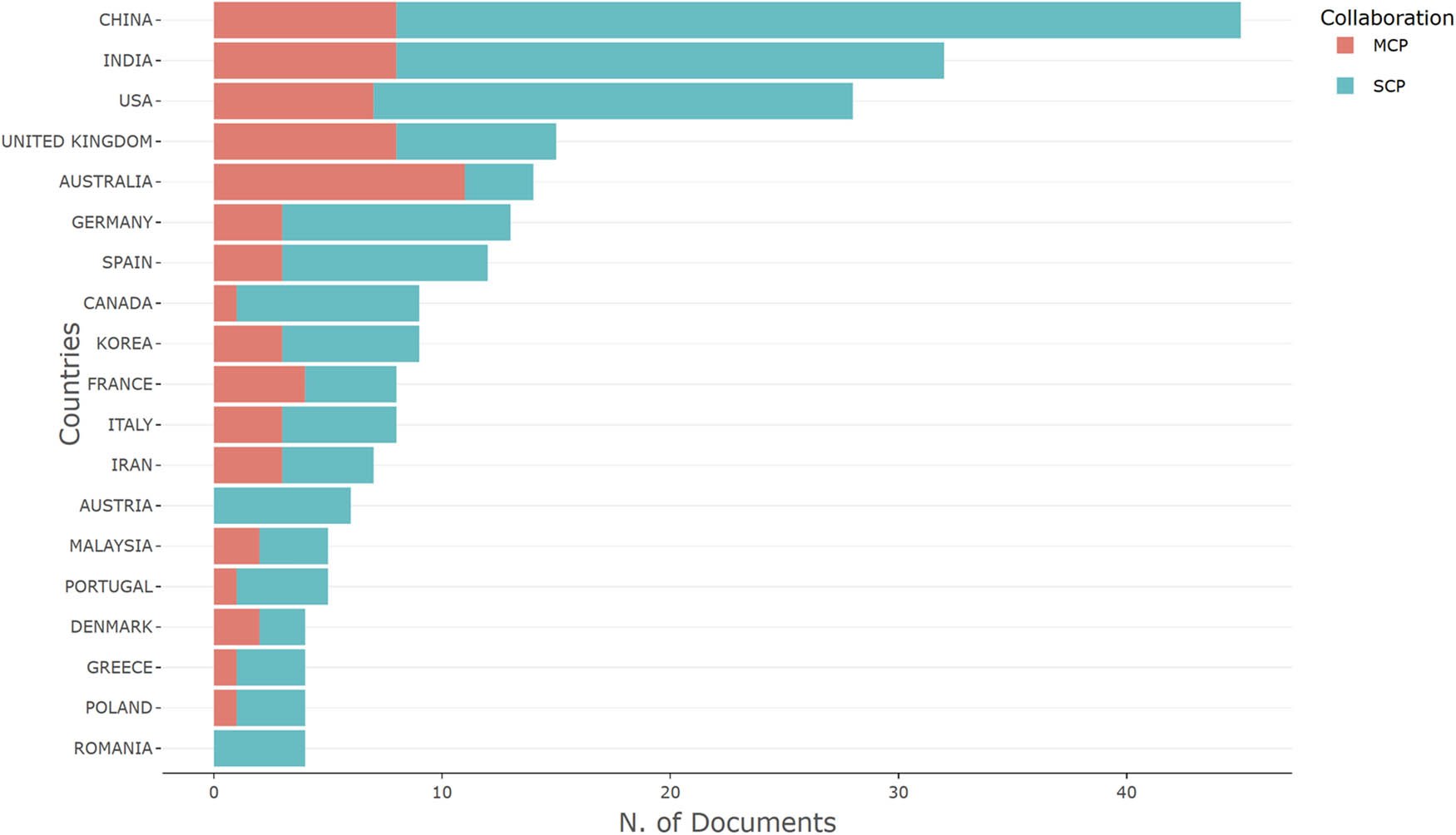
Figure 2
Most cited countries.
Source: Authors’ computation using “Biblioshiny” R package.
From a popularity perspective, Malaysian institutions have produced the most cited studies, followed by China and the United States, as presented in Figure 3.
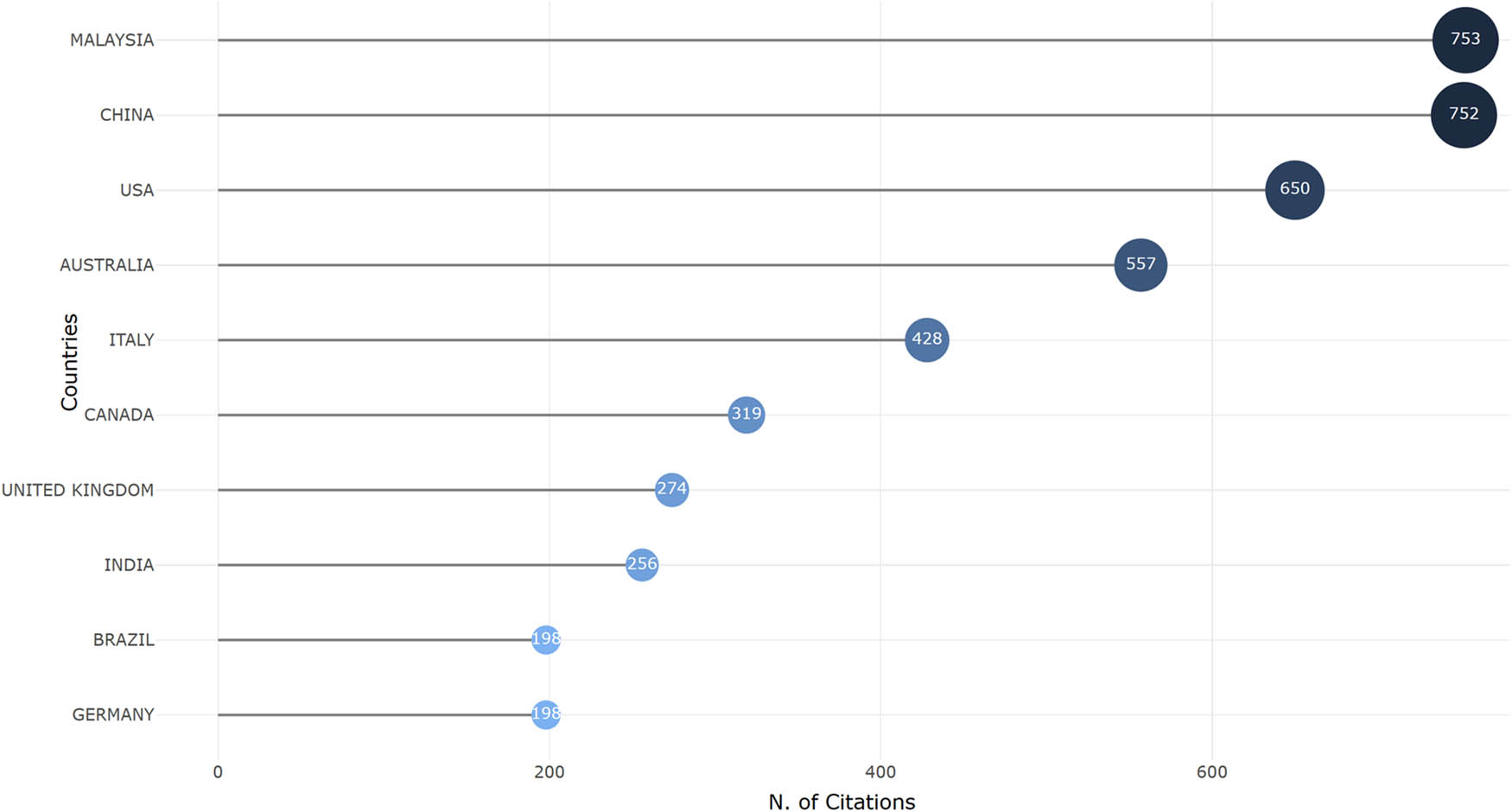
Figure 3
Most cited countries.
Source: Authors’ computation using “Biblioshiny” R package.
The timeline view in Figure 4 reveals pronounced fluctuations in average citations per year. These variations largely reflect the natural time-lag effect inherent to citation dynamics, whereby older publications accumulate more citations, while newer contributions have not yet reached their full citation potential. The visible peak around 2020 should therefore be interpreted as a consolidation phase of earlier high-impact research, rather than as a short-term intensity shock.
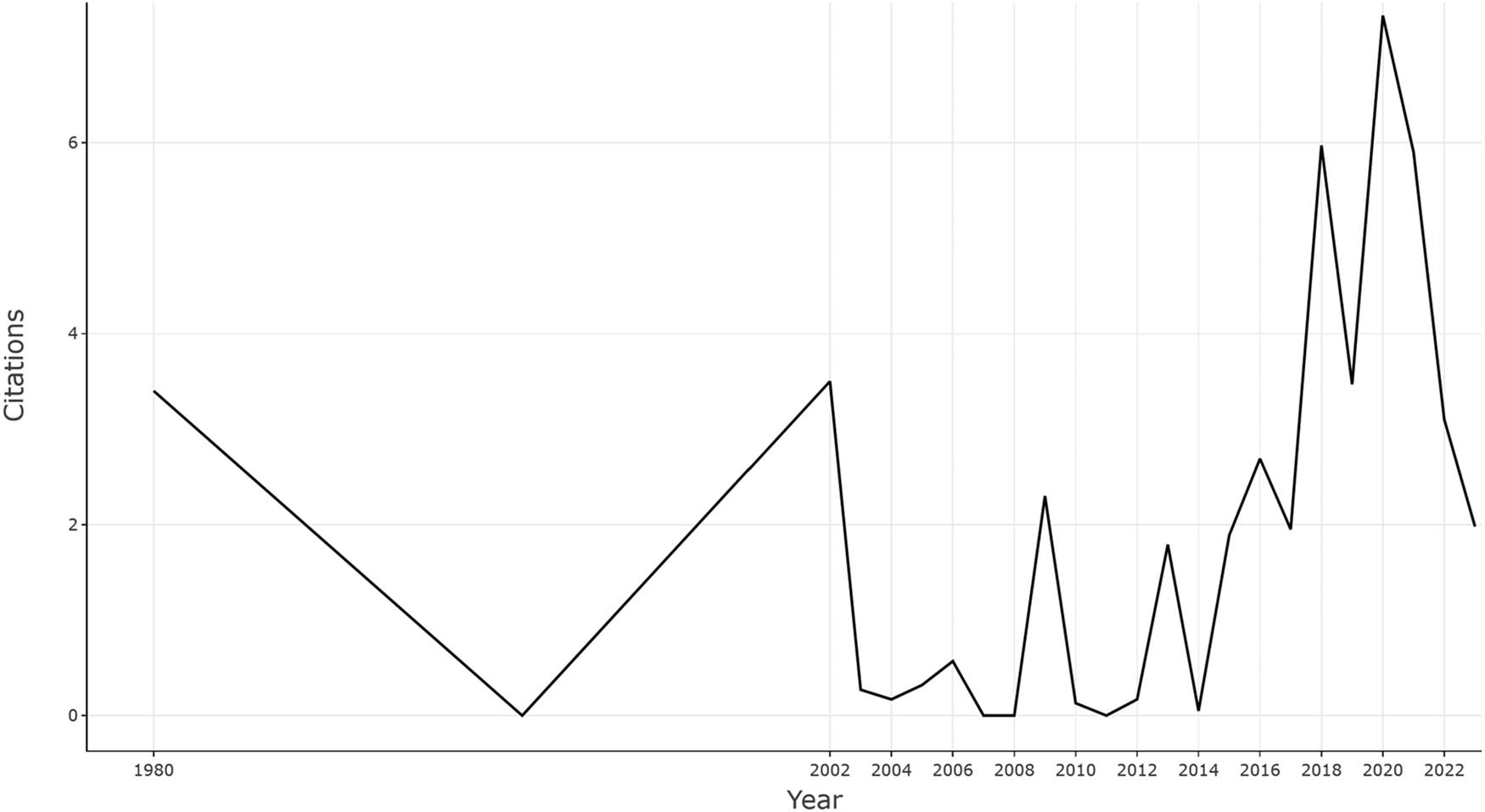
Figure 4
Average citations per year.
Source: Authors’ computation using “Biblioshiny” R package.
The most popular keywords in China and the United States have been artificial intelligence and ML, while in India, the latter word has been the focus. Using a three-field plot, as displayed in Figure 5, artificial intelligence, climate change, ML, sustainable development, and deep learning have been identified as the main drivers of the studies in the domain, followed by more specific terms such as economic and social effects, IoT, or remote sensing. This image already provides two directions, a business and a technical one.
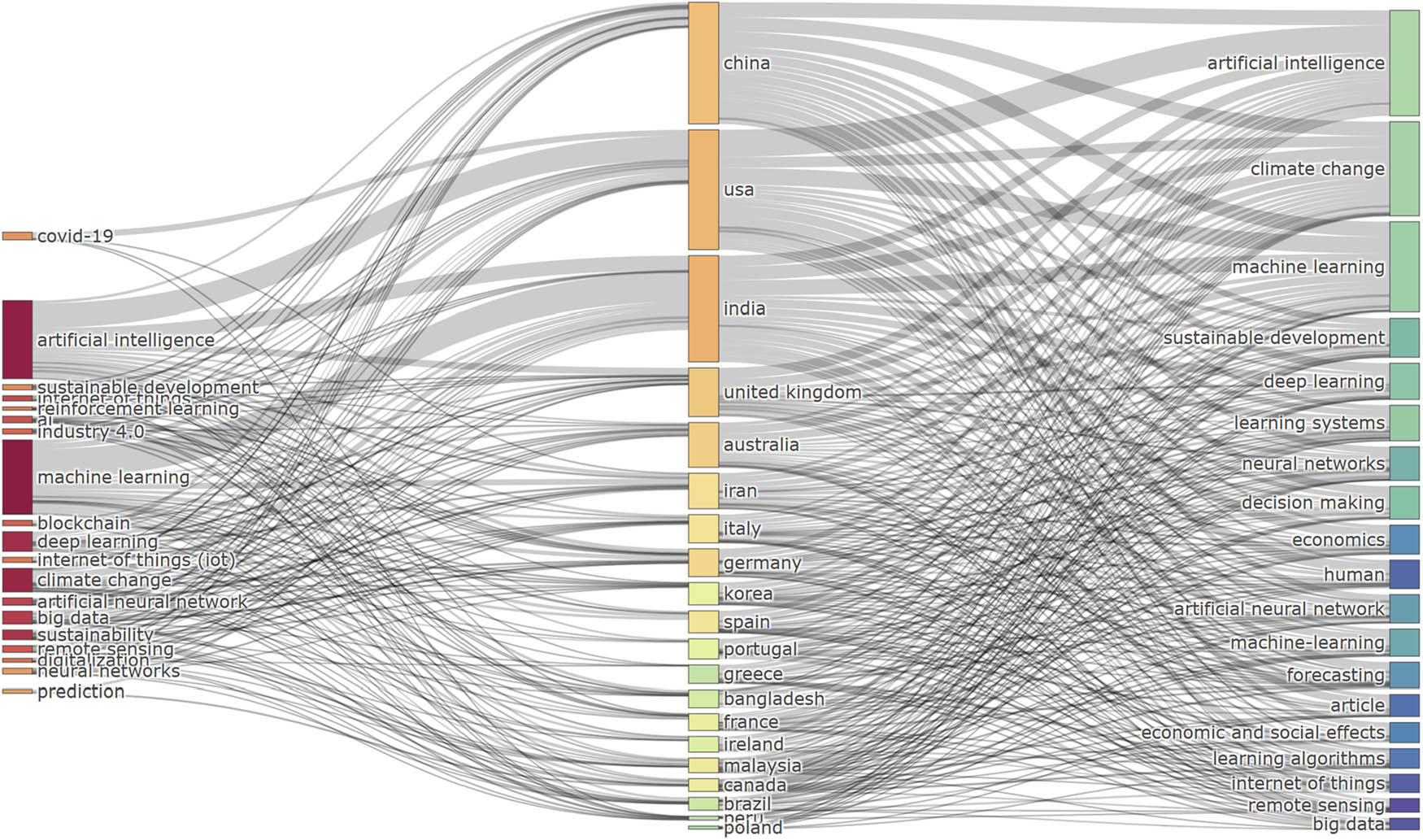
Figure 5
Three-field plot.
Source: Authors’ computation using “Biblioshiny” R package.
In conjunction with the temporal dimension, Figure 6 shows the environmental monitoring and data-centered topics as the latest trends, moving us further and further apart from the technical fundamentals of an AI solution, such as algorithms or decision support systems. When compared to Figure 7, climate change seems to have a steeper evolution than artificial intelligence, predicting an overcome in the future. Therefore, the environmental aspect of things would become of greater interest than the technical innovation.
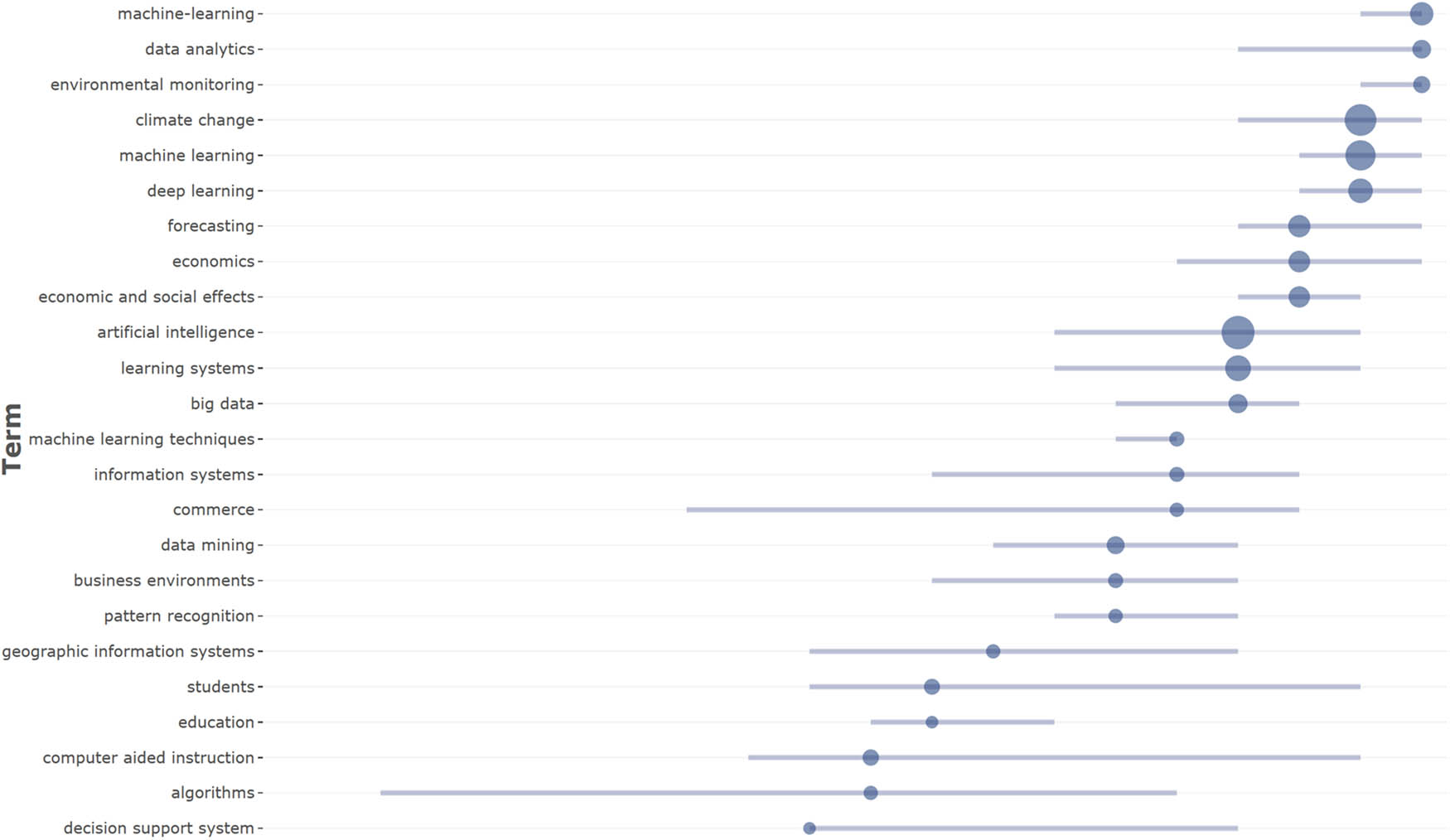
Figure 6
Trend topics.
Source: Authors’ computation using “Biblioshiny” R package.
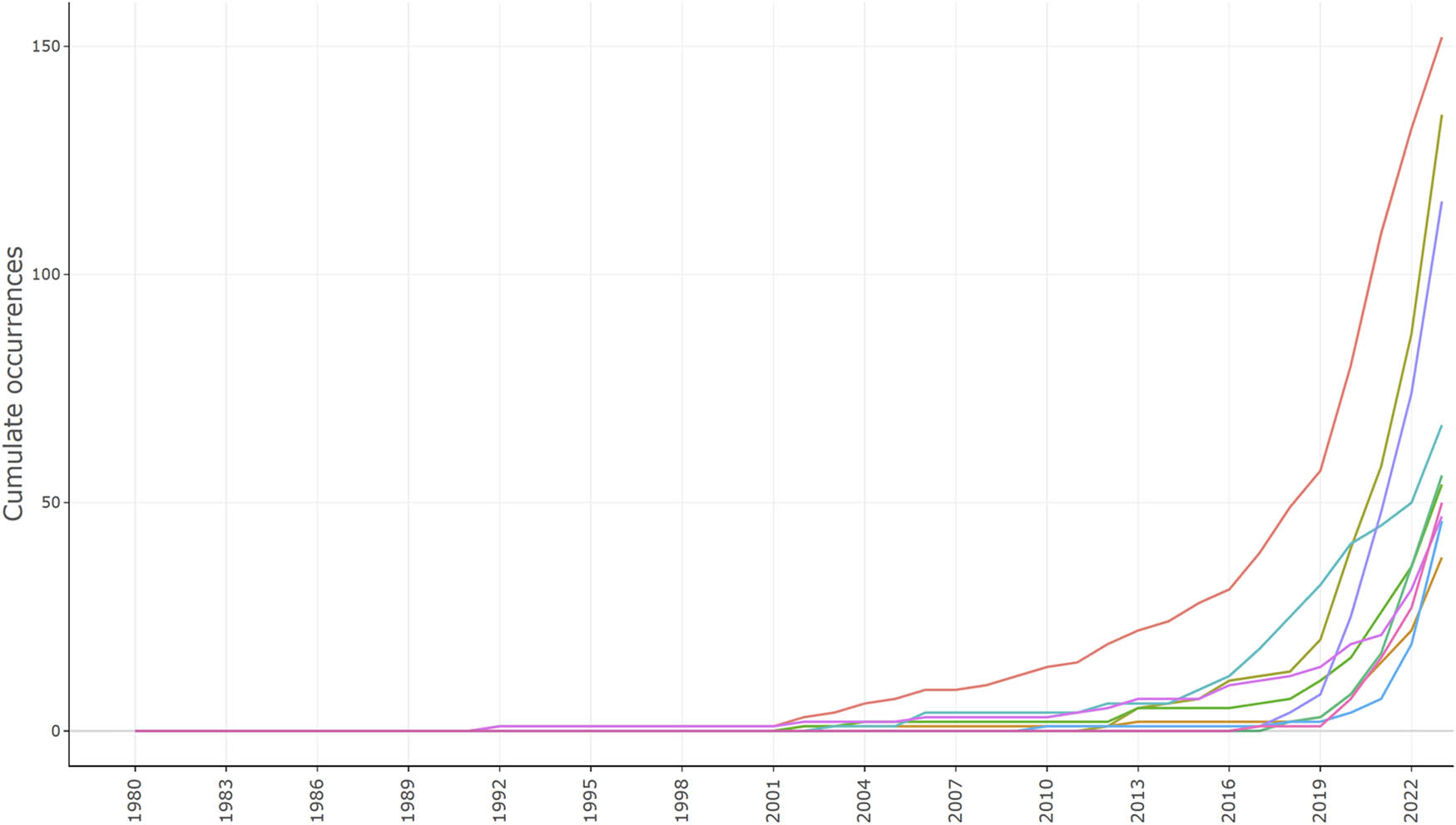
Figure 7
Words frequency over time.
Source: Authors’ computation using “Biblioshiny” R package.
The keyword co-occurrence analysis exposed several dominant themes, such as “sustainability,” “resource management,” and “economic impact assessment.” Emerging trends were also identified, with increased focus on “AI-driven predictive modeling” and “optimization algorithms for resource allocation,” also identified by Ogrean (2023). Three clusters have been highlighted through the analysis (Figure 8), centered around artificial intelligence and engineering processes, ML and statistical instruments, and sustainability with its main pillars. This result proves the natural adaptability and settlement of the research field to the real picture.
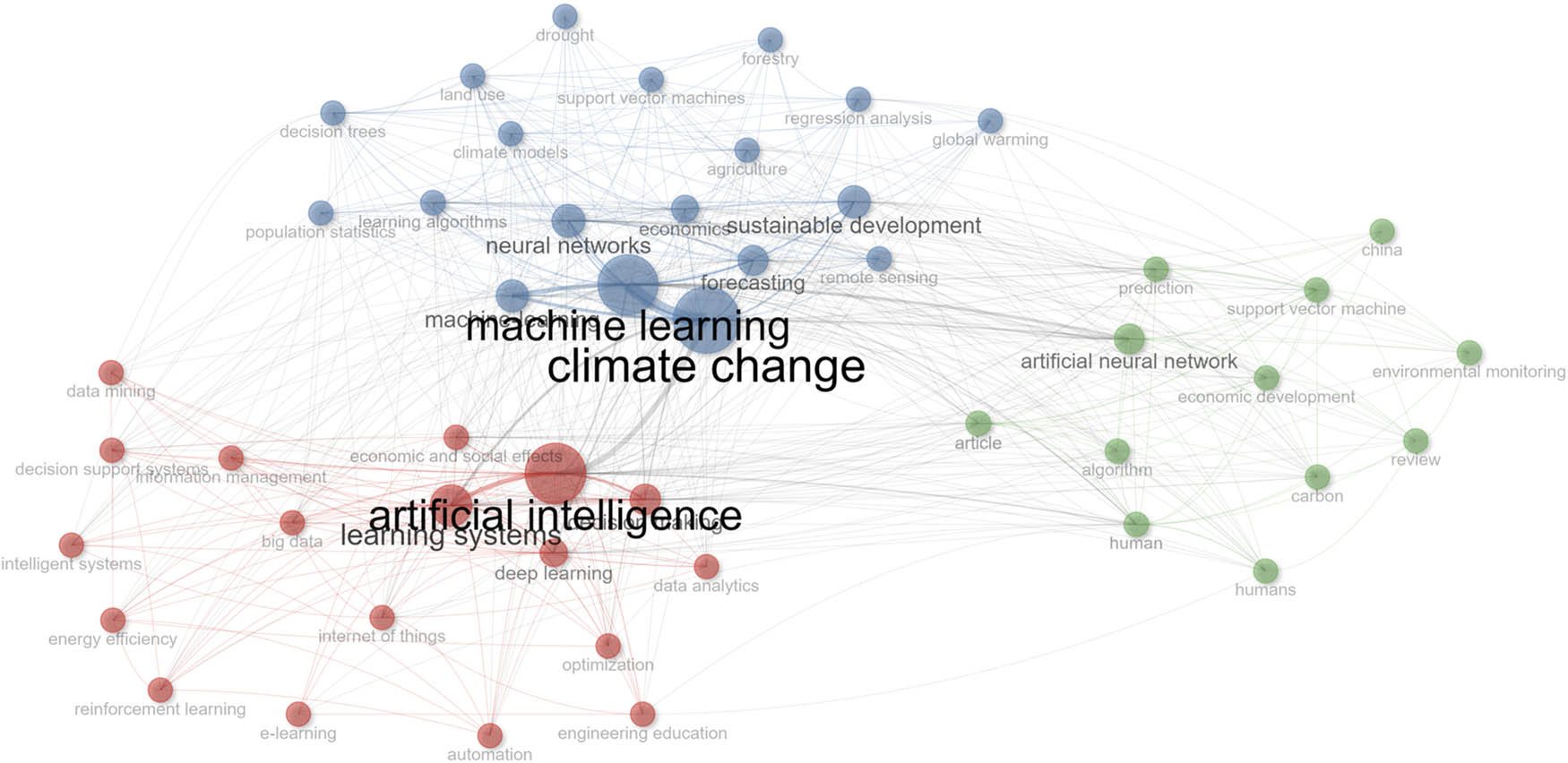
Figure 8
Keyword co-occurrence network showing three major thematic clusters: (1) artificial intelligence and engineering processes, (2) machine learning and statistical analytics, and (3) sustainability-oriented economic and environmental applications.
Source: Authors’ computation using “Biblioshiny” R package.
Prominent topics in high-level policy dialogue within the European Union such as green finance and green monetary policy are practically still underresearched in the context of AI challenges and digital euro adoption.
A similar conclusion can be drawn from the thematic map in Figure 9, which presents five groups centered around the same topics, with social and economic pillars treated distinctively. Similarly, the educational side plays an important independent role in the whole equation. Also in this case, the positioning of each cluster determines the strategy that the world leads to intentionally or unintentionally, with the focus on sustainability and data analysis rather than technical evolution. The human and educational aspects are treated as niche or emerging, pointing toward a rather forced boost driven by regulations, and not toward a general priority.
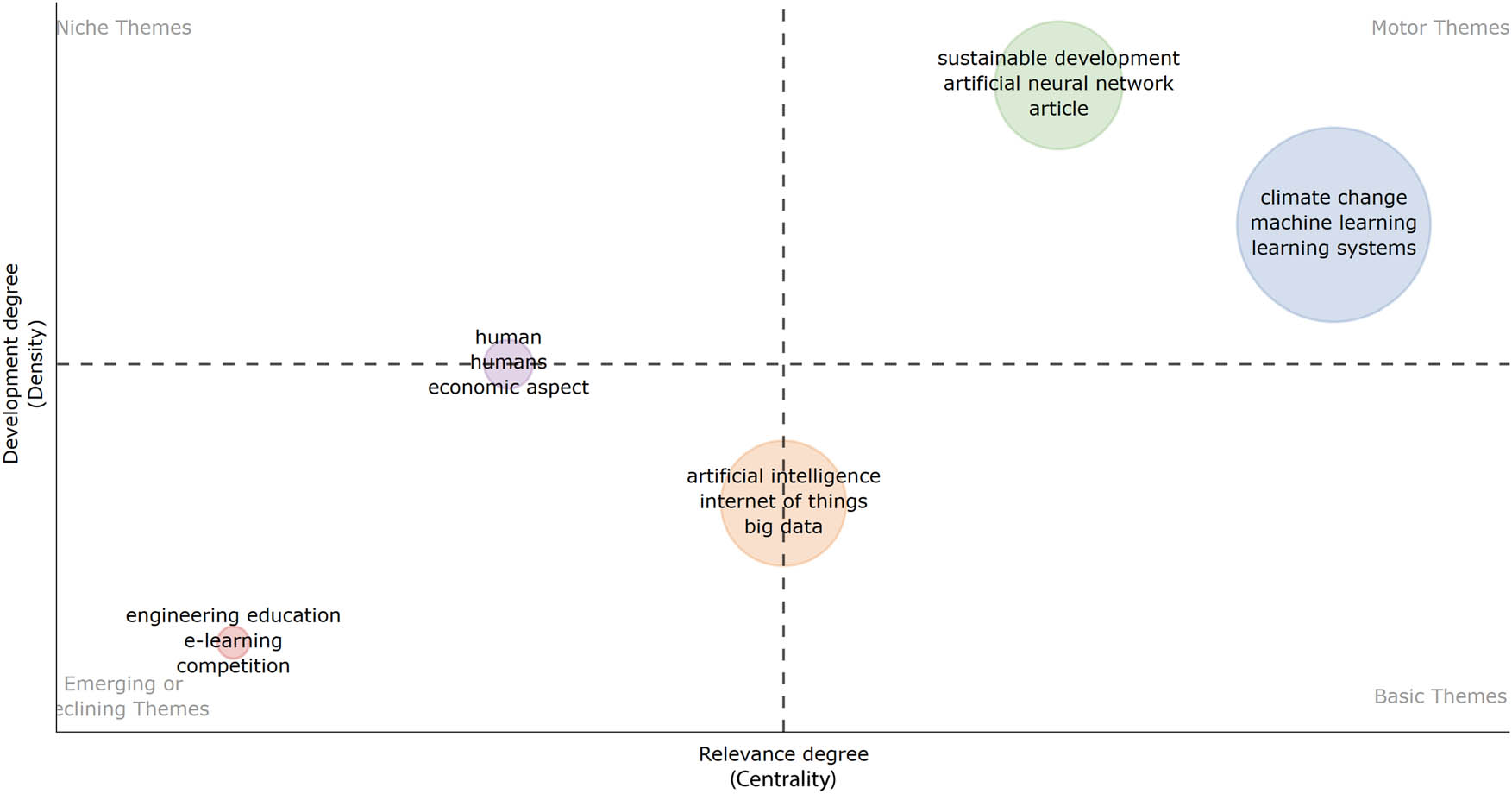
Figure 9
Thematic map of AI in environmental economics, displaying the strategic positioning of research themes according to centrality and development intensity.
Source: Authors’ computation using “Biblioshiny” R package.
5. Conclusion
This bibliometric analysis has mapped the research landscape at the intersection of AI, environmental science, and economics, highlighting key contributors, emerging trends, and dominant themes. The findings underscore the critical role of AI in addressing complex challenges related to sustainability, resource management, and economic optimization. The study also reveals a dynamic, rapidly evolving field that necessitates ongoing interdisciplinary collaboration to fully harness AI’s potential for environmental and economic advancement.
Future research should focus on further integrating AI methodologies with environmental economic models, exploring new AI techniques, and fostering global collaboration to ensure that AI technologies are effectively leveraged for sustainable development. This study serves as a valuable resource for researchers and policymakers, offering insights into the current state of the field and providing a roadmap for future research efforts. Among the most promising research gaps identified in our study is the need to comprehensively integrate AI’s own footprint into cost–benefit and welfare analysis.
Last but not least, although various papers find that environmental regulators often remain cautious toward AI/ML-based decision systems, there is still no article that provides a thorough explanation of why so and how to change the situation.
Acknowledgments
This work was funded by the EU’s NextGenerationEU instrument through the National Recovery and Resilience Plan of Romania – Pillar PNRR-III-C9-2022 – I8, managed by the Ministry of Research, Innovation and Digitalization, within the project entitled “CauseFinder: Causality in the Era of Big Data and AI and its applications to innovation management,” contract no. 760049/23.05.2023, code CF 268/29.11.2022.
Author contributions
All authors contributed equally to the conception, design, analysis, and writing of this manuscript. All authors reviewed and approved the final version of the paper.
Conflict of interest statement
Authors state no conflict of interest.